
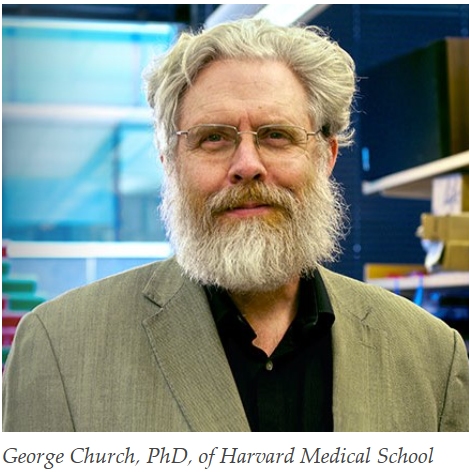
GRO Biosciences Inc. today announced that the company has secured $2.1 million in a seed funding round led by Digitalis Ventures and joined by Eric Schmidt’s Innovation Endeavors. The funds will support buildout of bioprocess development for GRO Biosciences’ platform of genomically recoded bacteria for the production of therapeutic proteins with enhanced properties, such as increased potency and stability, and improved targeting and delivery into cells and tissues.
GRO Biosciences was co-founded by the following:
- George M. Church, Ph.D., professor of genetics, Harvard Medical School, will serve as head of the company’s scientific advisory board.
- Andrew D. Ellington, Ph.D., professor of biochemistry, University of Texas at Austin, will serve on the company’s scientific advisory board.
- Daniel J. Mandell, Ph.D., will serve as the company’s CEO.
- Christopher J. Gregg, Ph.D., will serve as the company’s chief scientific officer.
- P. Benjamin Stranges, Ph.D., will serve as the company’s principal scientist.
- Marc J. Lajoie, Ph.D., and Ross Thyer, Ph.D., will serve the company in advisory roles on a consulting basis.
By recoding the genomes of bacterial strains used in biologics production, GRO Biosciences can expand beyond the 20 amino acid building blocks typically found in proteins to introduce non-standard amino acids that can customize the shape and chemical properties of the protein.
“For decades, bacteria have been used as the workhorses of the biotech industry in the production of blockbuster therapeutics, and we believe that we can dramatically expand their utility by recoding their genomes,” said Dr. Church. “GRO Biosciences’ technology addresses the fundamental limitations of producing proteins with non-standard amino acids, opening up the possibility of creating a new universe of designer proteins with enhanced therapeutic properties at commercial scale.”
Nearly all monoclonal antibodies, as well as many other therapeutic proteins, such as interferon, human growth hormone and insulin, used to treat common chronic conditions, rely on disulfide bonds to maintain their 3-dimensional structure needed for biological activity. However, disulfide bonds are not stable in the presence of reducing agents found in cells and in blood, which means that the therapeutic effect of the proteins is short lived after administration to the patient.

(Picture: Andrew D. Ellington at University of Texas at Austin)
GRO Biosciences is addressing the challenge of therapeutic protein instability by replacing disulfide-bond-forming cysteine amino acid residues with selenocysteine, a naturally-occurring amino acid that is rarely incorporated into proteins, but is found in the cell. Selenocysteine has a structure and chemical properties very similar to cysteine, however diselenide bonds are stable under the same conditions where disulfide bonds are not, leading to a much longer half-life of the therapeutic protein.
“Protein therapeutics represent a $180 billion market, yet product stability, targeting and delivery into the cell still remain significant challenges to be addressed if we are to enhance the patient experience, achieve better compliance and improve health outcomes,” said Geoffrey W. Smith, founder and managing partner of Digitalis Ventures. “If GRO Biosciences can make a therapeutic protein product that is more stable and requires less frequent dosing, then that is a win for patients and the healthcare system.”
GRO Biosciences is taking advantage of redundancies in the genetic code to reassign redundant codons to new, non-standard amino acids. For example, there are three different stop codons which are responsible for halting the elongation of a growing protein: UAG, UAA and UGA. GRO Biosciences has developed a recoded strain of bacteria that has replaced all of the UAG stop codons with UAA stop codons and reprogrammed the UAG codon to new amino acids such as selenocysteine. By replacing all codons that code for cysteine residues in a protein with UAG, selenocysteine can be selectively incorporated in place of cysteine residues to form stabilizing diselenide bonds.
“GRO Biosciences is literally reprogramming biology,” said Dror Berman, Managing Partner of Innovation Endeavors. “What I find most compelling is their ability to converge game-changing synthetic biology with powerful computational design to create a new class of living organisms, unlocking unprecedented capabilities in medicine, materials and biotechnology.”
GRO Biosciences has established preliminary proof of concept of its platform by producing diselenide stabilized antibody products as well as therapeutic proteins, such as human growth hormone, in its selenocysteine recoded bacteria. In all instances, yields were high, selenocysteine incorporation at the desired sites was 100 percent, and all diselenide bonds formed correctly leading to the properly folded protein. The diselenide bonds dramatically increased stability in physiologically relevant conditions, as confirmed by functional assays.
Many of the protein therapies available now, as well as many more still in development, got their start on computers. Software identifies the protein shapes best suited for therapeutic applications and those designs are tested in a lab. While computational techniques have advanced the design and development of new therapeutic proteins, even the most advanced of these are limited to 20 standard amino acids found in nature that are building blocks of all proteins. Harvard University spinout GRO Biosciences aims to improve protein therapies by expanding this amino acid alphabet.
GRObio has been quietly developing its technology for the past several years. The company has made progress in its preclinical research and it’s now positioning itself to advance its own therapies, and to strike up partnerships with pharmaceutical companies interested in working with the startup’s technology. To support those efforts, GRObio announced on Wednesday a $25 million Series A round of funding co-led by Leaps by Bayer and Redmile Group.
The science behind GRObio comes from the lab of George Church, a Harvard scientist whose discoveries have led to the founding of many life sciences startups. Dan Mandell, GRObio’s co-founder and CEO, was a research fellow in genetics at Harvard, where he worked with Church on computational design of new proteins whose folding and function depends on this new amino acids alphabet, comprised of non-standard amino acids (NSAAs).
Therapeutic proteins are produced by harnessing the protein-translation machinery of bacteria. Companies such as Ginkgo Biosciences, Synlogic, and Absci work with E. coli to produce their commodity chemicals and proteins. For many synthetic biology companies, E. coli are the bacteria of choice because they are inexpensive and easy to use, Mandell said. GRObio also works with an E. coli-based organism. But the company has gone further than what nature provides by recoding the E. coli genome so that these bacteria are able to produce proteins by using NSAAs. GRObio calls these bacteria “genetically recoded organisms,” or GROs.
“What’s special about these organisms is they can make proteins comprised of amino acids beyond the 20 standard amino acids,” Mandell said. “These organisms are the only organisms that can produce these NSAA proteins at high efficiency, and at scale.”
So why would anyone want a GRO-produced protein made from NSAAs? Mandell said that therapeutic proteins made with standard amino acids still have limitations ranging from safety issues to the durability of the treatment. Working with NSAAs enables the production of customized proteins whose shape and chemical properties offer advantages for a biologic drug.
GRObio is working with two families of NSAA chemistries so far. The first, which the company calls DuraLogic, makes a protein that is more stable and improves its half-life. Currently available biologic drugs dosed as frequent injections are inconvenient or undesirable (or both), which leads many patients to miss doses, Mandell said. By making a more stable protein, GRObio could produce a drug whose therapeutic effect lasts for a longer period of time, which means a protein therapy that requires less frequent injections.

The second NSAA family, which GRObio has dubbed ProGly, enables the biotech to directly modulate the immune system, offering a new way to address autoimmune diseases. The way the immune system distinguishes a foreign protein from one that is part of the body is by detecting sugar molecules called glycans on the protein’s surface, Mandell said. GRObio aims to express proteins decorated with human glycans, which would reeducate the immune system to recognize them as belonging to the body.

GRObio hasn’t disclosed what diseases it aims to address, other than to say the technology has applications in autoimmune and metabolic disorders. One of the company’s early projects was a form of insulin modified in a way to enable weekly dosing. The company was awarded a Phase I Small Business Innovation Research grant in 2019 for that research, followed by a Phase II grant in 2020. Mandell acknowledged that GRObio has worked on insulin, and said the company has received about $1.5 million in non-dilutive capital to support that work.
Without specifying a disease target, Mandell said he expects GRObio could begin its first human tests of a GRO-grown therapeutic protein in 2024. The new financing will support the preclinical research leading up to those tests. GRObio is also looking for pharmaceutical industry partners. Those partners could license GRObio therapeutic candidates, taking on the responsibility of clinical development and potential commercialization of new protein therapies.
Mandell said GRObio is also considering alliances with companies that want to work with NSAAs but can’t because they don’t have access to a production platform that can produce NSAA-based proteins at scale. Mandell said GRObio has been approached by companies that have already designed their own new molecules and are looking at GROs as a way to produce them.
Prior to Wednesday’s funding announcement, GRObio had raised $2.1 million in a 2017 seed financing led by Digitalis Ventures and Innovation Endeavors. Those firms also joined the Series A round, bringing the startup’s total investment to $31.2 million to date.
Genomics and synthetic biology pioneer George Church, PhD, says GRO Biosciences (GRObio), a developer of enhanced protein therapeutics he co-founded based on platform technology discovered in his Harvard Medical School lab, reflects a truism about startup formation.
“Every postdoc has an invention, but not every invention is something that we want to immediately launch,” Church, who heads GRObio’s scientific advisory board, observed recently on “Close to the Edge”, GEN Edge’s video interview series. “We try to incubate them as long as possible inside the lab until we’re sure that they’re mature enough so that we won’t get diluted out immediately by running out of VC [venture capital] money.”
GRO stands for “genomically recoded organisms”—the first production organisms made with modified genomes and engineered protein translational machinery, according to the company.
By recoding the genomes of bacterial strains used in biologics production, GRObio reasons that it can expand beyond the 20 amino-acid building blocks typically found in proteins to introduce non-standard amino acids (NSAAs) that can customize the shape and chemical properties of the protein.
“What we do is to systematically alter the genetic code,” Daniel J. Mandell, PhD, who is GRObio’s CEO, summed up to GEN Edge.
Church’s Harvard Medical School lab first described and characterized GROs in a paper published in 2013 in Science.
In 2015, Church, Mandell and seven co-authors reported in Nature their successful computational redesign of essential enzymes in the first organism possessing an altered genetic code, conferring metabolic dependence on NSAAs for survival.
The following year, Church led a research team in applying recoding to design and synthesize a bacterial genome, an exercise designed to show how new organisms could be created that feature functionality not previously seen in nature.
Also in 2016, Church, Mandell, and four others co-founded GRObio to commercialize the technology by developing protein therapeutics based on computational protein design and synthetic biology technologies. Among the co-founders are Andrew Ellington, PhD, whose lab at the University of Texas at Austin focuses on developing novel genetic codes and synthetic organisms based on engineering the translation apparatus; and Christopher Gregg, PhD, GRObio’s chief scientific officer (CSO).
Mandell was wrapping up a PhD in computational protein design at University of California, San Francisco, about a decade ago, and seeking a postdoctoral position when he came across Church’s research on GROs.
“It was an epiphany”
“For me it was an epiphany: Now we can go beyond the 20 amino acids and build designer proteins that can carry out almost any function. I came to George’s lab to bring these two worlds together of computational protein design and genome-wide recoding,” Mandell recalled.

“We did some early work demonstrating that you can in fact predictably engineer proteins whose folding and function depend upon non-standard amino acids, to convince ourselves that we really can do this in a rational way. That’s when we turned our attention to the question of what are the outstanding problems in the clinic that we might address using that technology.”
Mandell joined Church’s lab within a year of Gregg joining: “We very quickly realized we both had entrepreneurial designs and mesh very well, and we put a lot of time into thinking about how we could try to commercialize this technology.”
Gregg, now GRObio’s CSO, was pursuing a PhD in glycobiology, studying how glycans interact with the immune system. He started a short-lived synthetic biology startup focused on biofuel, before switching gears to integrating synthetic biology with organism and genome design.
“Luckily, I was able to get George’s interest in my thesis, which had to do with glycobiology and human-specific disease preponderances,” Gregg recalled. “I came in as the organism [GRO] was getting finished. It was just such a ripe platform for trying new things and solving new problems. Then when Dan and I realized that we had the same interests, we just started running with it.”
That pursuit paid off for GRObio last month, when it completed a $25-million Series A financing co-led by Leaps by Bayer and Redmile Group. Redmile is a San Francisco venture and private equity investment firm. Leaps is the equity investment arm created by Bayer to establish new companies and invest in early-stage technologies with breakthrough potential to “fundamentally change the world for the better.”
Bayer came to invest in GRObio, Mandell said, through relationships he had with the pharma/consumer goods/agbio giant and contacts from GRObio’s network of investors. Among investors joining the financing were Digitalis Ventures and Innovation Endeavors. (The Series A brings total investment in GRObio to $31.2 million so far.)
Proceeds from the financing, GRObio said, will support development of its GRO platform, a scale-up of bioprocess manufacturing, preclinical validation studies, and IND-enabling studies for GRObio’s pipeline of NSAA protein therapeutics designed to treat autoimmune and metabolic diseases.
“These are just initial focus areas,” says Mandell. “Autoimmune disease and metabolic diseases are a really a small part right of this broader universe [of opportunities]. But there are specific indications in there that we’re focusing on.” The company isn’t yet disclosing those indications, except to say they will address unmet clinical needs.
Beyond the pipeline
Taking this universe of NSAA chemistries, Mandell and colleagues want to ask some big questions. “Which problems really can’t be solved in the clinic without this new expanded universe of chemistries at the amino acid level? Some of these problems have interesting-looking solutions coming down the clinical development pipeline,” Mandell said. “That’s not really where we want to play. We want to play in areas where we think we can solve Holy Grail challenges and there isn’t another way to go about this.”
GRObio has constructed a “biofoundry” consisting of proprietary computational protein design and robotics pipelines, with the aim of streamlining development of NSAA translational machinery and NSAA protein products. The biofoundry applies strain and genome engineering, automation, analytics, and protein design software to build uniquely scalable NSAA protein “factories” from trillions of candidates.
GRObio emerged from stealth mode in 2017, raising $2.1 million in seed funding led by Digitalis Ventures, with participation from Innovation Endeavors, the venture capital firm whose co-founders include Eric Schmidt, Google’s former CEO and later executive chairman of Google and its parent company, Alphabet Inc.
From three people when it started, GRObio has since grown its staff to 16 people. “We will double in size by 2023,” Mandell said.
GRObio hopes its alphabet-expanding approach will enable it to grow its own significant share of a protein therapeutics market that according to Market Research Future (MRFR) is expected to increase over the next six years at a compound annual growth rate of 6.86%–for a nearly 60% rise to about $290.69 billion in 2027 from $182.69 billion this year.
GROs are intended for high-efficiency, commercial-scale production of proteins with NSAAs. These NSAAs are intended to enhance protein therapies with capabilities such as unprecedented duration of action and more precise control of the immune system.
GRObio is building its pipeline by advancing its first two product families of NSAA platform chemistries: DuraLogic™ is designed to enable flatter pharmacodynamic profiles and relaxed dosing schedules, while ProGly™—short for “programmable glycosylation”—are designed to produce biologics that enable the immune system to treat autoimmune disease, or to eliminate immunogenic side effects of protein-based therapies.
DuraLogic integrates NSAAs to enhance and maintain the three-dimensional structure of proteins needed for therapeutic activity. “That means things like resistance to proteases that can degrade the therapeutic, resistance to reducing agents that can break bonds in the protein that will render it inactive or misfolded, and the potential in some cases to increase the thermostability of the protein, so it can either last longer in storage, or just have a longer in vivo half-life,” Mandell said.
ProGly consists of glycan-containing NSAAs designed to induce or inhibit an immune reaction. GRObio says its GRO platform enables precise placement of defined ProGly compositions on the protein surface needed to elicit immune response.
Re-educating the immune system
“You can actually retrain or re-educate the immune system to treat a particular protein as self or non-self by administering that protein with a particular glycan’s signature. You give it what’s called a tolerizing signature,” Mandell explained. “The body will remember that this is a self-protein, and over a short period of time can begin to actually reverse the autoimmune response to that protein.”
GRObio expresses that protein in its platform, decorated with ProGly NSAAs that take on the form of human-like glycans.
“By putting that into your body, your immune system begins to learn that this is a self-protein and it builds up an immune memory of that protein and stops attacking it,” Mandell said. “This is really a way that we can begin to reverse a number of different autoimmune diseases, by taking an antigen-specific approach.”
That approach, he added, contrasts with broadly immunosuppressive drugs that turn down auto immune response by knocking down a patient’s immune system—an approach Mandell said increases susceptibility to infection and cancer and also often causing metabolic disorders: “What we want to do is re-educate the immune system to treat the one protein or the small number of proteins that you’re reacting to as self-proteins for the first time.”
The genetic code of each gene combines the four natural nucleotides of DNA—adenine (A), cytosine (C), guanine (G), and thymine (T)—to spell out three-letter codons specifying an individual amino acid. There are 64 different naturally occurring codons that encode 20 natural amino acids.
“What we did was to modify the genome to remove all the instances of one or more of those codons. Then, by installing on what we call new translational machinery from the cell that recognizes a particular codon, we can actually now reassign the meaning of part of the genetic code to direct the incorporation of a new amino acid,” Mandell said.
The company’s GRO platform expands the amino-acid alphabet to overcome limitations of protein therapeutics to address product stability, immunogenicity, and delivery into the cell.
Exploiting redundancies
“We’re exploiting redundancies in the genetic code to reassign redundant codons to new, non-standard amino acids, because there’s more than one way to specify a particular amino acid or stop,” Mandell explained.
For example, three codons code for the “stop” signal (UAG, UAA, and UGA), halting the elongation of a growing peptide chain. GRObio developed a recoded strain of bacteria that replaces all UAG stop codons with UAA stop codons and reprogrammed the UAG codon to new amino acids such as selenocysteine, a naturally occurring amino acid found in the cell, yet rarely incorporated into proteins.
By replacing all codons that code for cysteine residues in a protein with UAG, selenocysteine can be selectively incorporated in place of cysteine residues to form stabilizing diselenide bonds. Proteins stabilized with diselenides maintain stability and resist the reduction found both in human blood plasma, which destabilizes therapeutics, as well as in solvents and buffers, which destabilize industrial enzymes.
“It was quite evident that people were excited about working with the first recoded strain and they started looking around for what the best products were,” Church recalled. “The first thing we had published on the first NSAA we’ve published for biocontainment was bipA [biphenylalanine], and that did not seem like a good starting product. But diselenides, which we did in collaboration with Andy Ellington’s lab, looked like a great initial product, and that was quite enough to get the company launched.”
Gregg cited insulin as an example of a treatment that could be engineered for less frequent dosing through a selenocysteine NSAA that could be designed to prevent the breaking of bonds between the peptide chains that renders the molecule non-functional.
“Now all of a sudden,” he said, “you’ve got a fundamental mechanism by which you can say, this NSAA will support the survival of this molecule in this environment, on a timescale that we think will be beneficial to patients as a product.”
 BOSTON DR LIM