
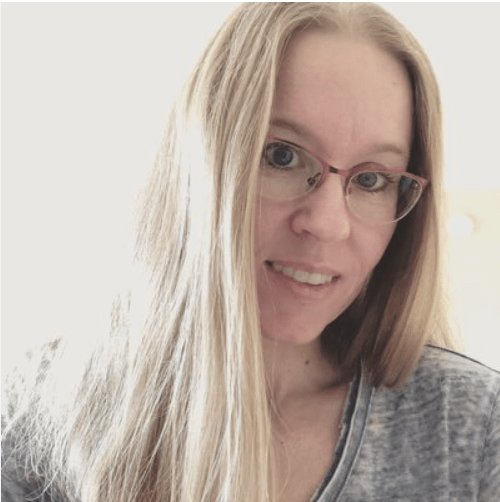
안녕하세요 보스턴 임박사입니다.
저는 최근 몇년간 제자신의 정체성 (생명과학자 vs 미래 예술가?)에 대해 많은 생각을 하게 되었습니다. 어쩌면 저의 블로그도 이런 제자신을 돕고자 하는 한토막의 조언 묶음이 아닐까하고 생각을 하곤 합니다. 처음에는 정말 막연했습니다. 대학에 들어가서 지금까지 생명과학자 (더 자세히는 Nucleic Acid Chemist) 로 사는 것이 당연하다는 식으로 생각하고 있다가 수년전에 프랑스 파리 Museo d’Orsay를 방문하고 인상주의 (Impressionism) 그림에 푹빠지게 되면서부터 저는 제자신이 단순히 생명과학자가 아닐지도 모른다는 정체성 갈등을 겪게 된 것이죠. 특히 이것은 제가 인생 2막 혹은 3막을 어떻게 여는게 좋을지를 고민하는 지금의 순간에 정말 반드시 필요했던 것이 아닐까하고 생각하게 되었습니다. 미술만 저의 관심사가 아니었습니다. 저는 K-Pop, US Pop, Hip-hop 등을 망라하는 대중음악과 A Capella를 포함하는 클래식 음악을 모두 좋아하는 사람이거든요. 이런 제자신이 많이 혼란스럽게 느껴지기도 했습니다.
“이제 새로운 직종 (Artist 나 Art 평론가 같은?) 으로 갈아타야 하지 않을까?”
그런데 저의 이런 질문에 대해 도움을 주는 글을 만나게 되었습니다. 그 분을 저의 ‘부러우면 지는거다’ 38번째 Role Model로 소개합니다.
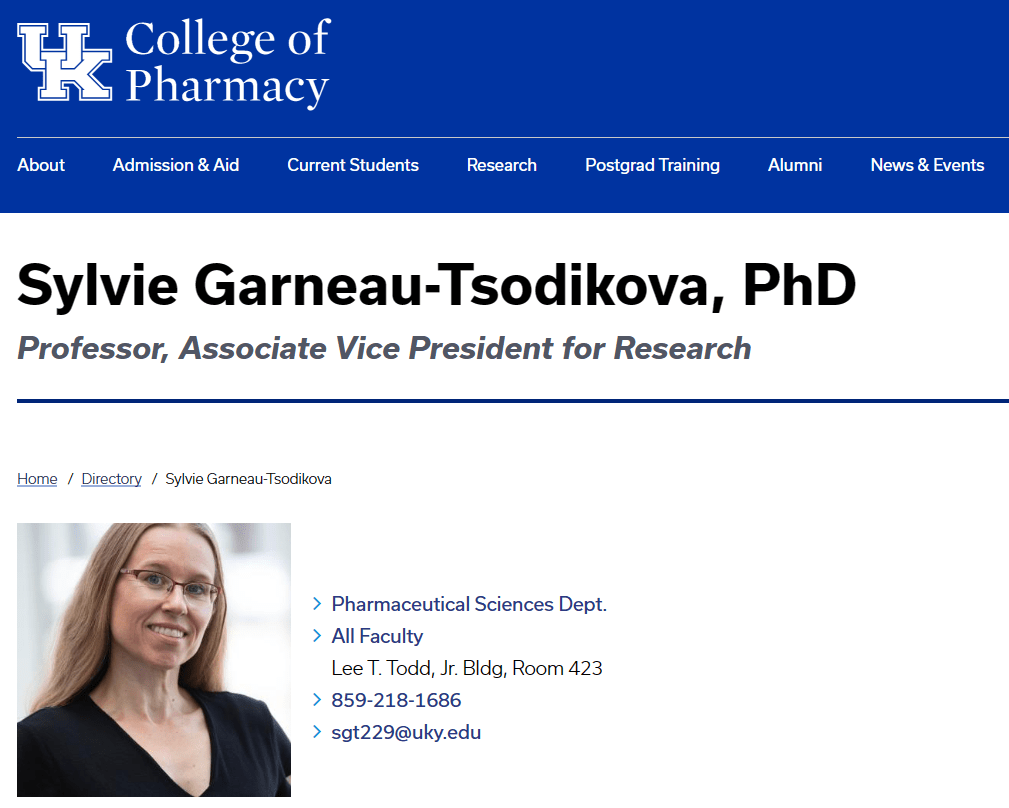
보시다시피 소개할 Sylvie 교수님은 켄터키 주립대학 약학과 교수이자 부학장이십니다. 그 이전에는 이 분에 대해 알지 못했지만 오늘 “Artistic Scientist”를 Googling 하는 과정에서 이 분을 만나게 되었습니다. AAAS에 이 분의 블로그 한토막이 저를 사롭잡았습니다.
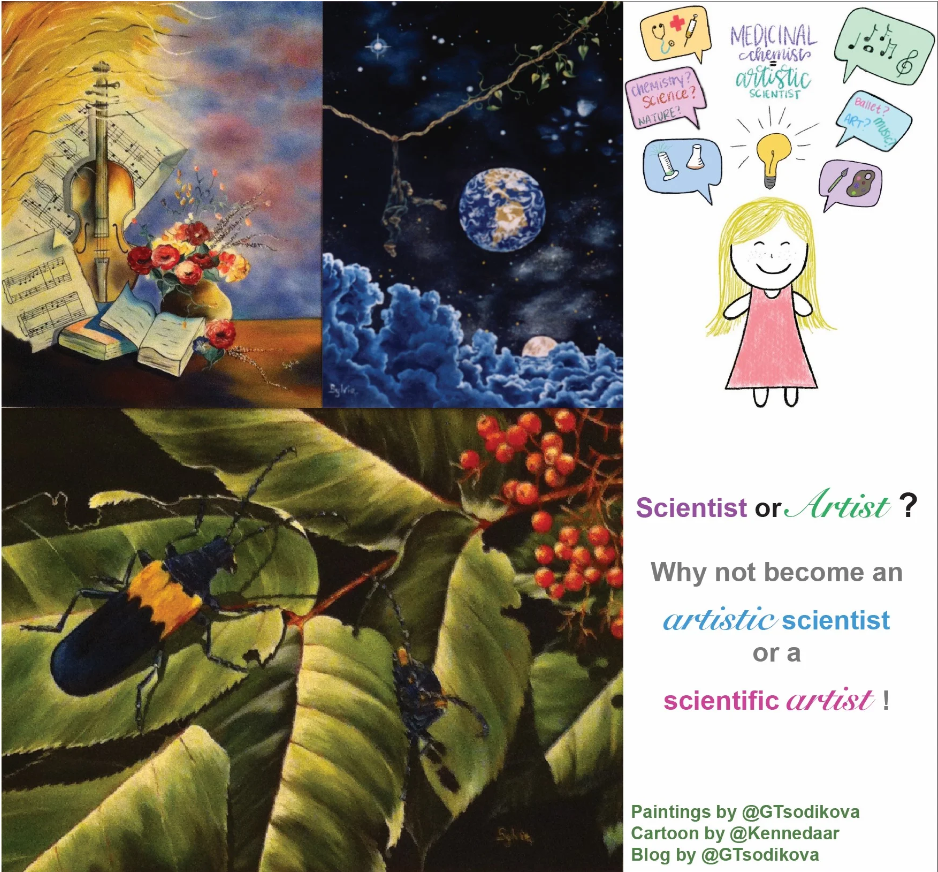
Sylvie 교수님은 어려서부터 그림그리기, 피아노, 댄스 등을 좋아하는 사람이어서 당연히 예술가가 되려고 했는데 고등학교 때 화학수업에서 과학의 세계를 배우게 되고 진로 변경을 위한 고민을 시작하게 되었다고 합니다. 아무의 도움도 받을 수 없는 상황에서 오랜 기간 방황한 끝에 그녀의 대답은 “두가지를 다할 수 있다” 였습니다.
“Artistic Scientist or Scientific Artist”
로 살면 된다는 것이었습니다.
그리고 그녀는 의약화학자 (Medicinal Chemist)로서 항생제 등을 연구하는 교수가 되었습니다. 그리고 또한 미래 과학자 꿈나무들을 키우는 SciCats (과학으로 유능한 학생을 키운다, Science Cultivates Academically Talented Students)라고 하는 초등학교 3학년-5학년 학생을 대상으로 하는 프로젝트를 대학원생 시절에 창설해서 지금까지 하고 계십니다.
Scientist or artist? – AAAS 3/2/2018 by Sylvie Garneau-Tsodikova
When I was younger I loved dancing, painting, and playing piano, but most of all, I treasured learning. When I was not doing homework, my evenings and weekends were consumed by painting, music, as well as ballet, jazz, contemporary, and tap dance lessons. It was obvious to me and to everybody in the small village where I grew up that one day I would become an artist!
Then, in high school, I was introduced to the world of science, more specifically to chemistry, a topic that most of my friends did not like in the least, but that totally fascinated me. The wonder of how atoms could get together in a multitude of ways to create life and cure diseases became a new passion of mine. However, with this newly found passion came a profound dilemma. What would I do for the rest of my life? What career path would I follow? Would I become an artist — my childhood dream — or a scientist?
The apparent conflict between these two career paths troubled me deeply. Nobody, including myself, could help me reconcile what seemed to be a world of differences. How could I choose one lifestyle over the other? How could I abandon the world of beauty as well as freedom of creativity and expression that art offered me to become a scientist? How could I let go of the possibility that science offered me of making new discoveries and understanding how nature functions, to become an artist?
My time in high school was approaching an end and I had to make a decision (of course, it is never too late to follow your passion in life, and I understand that very well now. However, at that time, I needed to make a decision for my next step). After countless hours of soul-searching and weighing the pros and cons of each career option, I came to a resolution:
I would become an artist… I would become a medicinal chemist!
Now, that might seem silly and indecisive to those who do not consider themselves artistic scientists, but it made total sense to me then, and 30 years or so later, makes even more sense.
Let me explain. I believe that all scientists, whether they realize it or not, are artists, as both disciplines require:
Creativity/Imagination: To be an artist, one has to be creative and imaginative and produce beauty out of raw materials (e.g., painters use blank canvas, colors, and brushes to create chef-d’oeuvres; sculptors form beautiful and inspiring pieces out of a variety of materials, some create masterpieces out of wood logs and chain saws; fashion designers design couture from unique fabrics and interesting patterns; musicians compose melodies from the alphabet of music; poets invent impactful stories out of simple words, etc.). Scientists, regardless of their field of research, need to be creative to come up with new ways to understand the intricacies of the world (e.g., chemists have to be creative in the way that they mix molecules to create new chemical matter; biochemists can create enzymes with new functions by manipulating DNA, etc.).
Inspiration: Both artists and scientists are inspired by what surrounds them: particularly by people and nature. People can inspire musicians to write new songs, painters and photographers to create beautiful images, dancers to combine movements into intricate choreographies, etc. People can also inspire scientists to work on understanding and combating various diseases or create new technologies to meet the needs of those they love/care about. Similarly, nature offers the beauty that inspires artists, and the puzzles that intrigue scientists.
Perseverance: Artists and scientists alike spend countless hours working on their craft, and have to persevere through the failed attempts, the days where inspiration is lacking, and many rejections and critiques of their work. Without perseverance, one cannot be an artist or a scientist.
Dedication/Passion: Not only does it take perseverance to be an artist or a scientist, it also takes dedication and passion. Without a love to create and a passion to make the world a better and more beautiful place to live, artists and scientists could not do what they do.
Since my first foray in the study of chemistry, I have expanded my love of science to biochemistry and microbiology. How nature produces molecules that can cure diseases is still something I am trying to understand and that I am sure will captivate me for the rest of my life. My analogy not only applies to medicinal chemistry. It applies to all fields of science.
For all of those who are trying to decide if you want to be an artist or a scientist, just like I did when I was a teenager, I ask: why not become both? Express your creativity in your favorite field of science or express your love of science in your chosen art form. Become an artistic scientist or a scientific artist!
If you are interested in being both an artist and a scientist, please feel free to get in touch to discuss. I’d also love to hear from those who already engage in both art and science, as to how they do so and what advice they would give to those struggling to marry the two.
About Sylvie Garneau-Tsodikova

I am a medicinal chemist (associate professor) at the University of Kentucky. My research focuses on understanding and combating infectious diseases, particularly bacterial and fungal infections. I am also the founder of the SciCats (Science Cultivates Academically Talented Students) outreach program. I paint, play piano, and love to dance. You can follow me on Twitter at @GTsodikova.
Blog Name: Public Engagement Reflections
그리고 Sylvie교수님이 멘토로 가르치는 Emily Dennis 박사가 SciCats를 통해서 배운 것들을 나누는 글도 있습니다. Sylvie 교수님은 Artistic Scientist로서 생명과학 현상을 깊이 연구하고 알리는 일을 할 뿐만 아니라 미래의 과학자들을 키우는 데에도 많이 애쓰고 계신 것이죠.
이 글을 쓰다보니 저도 미래 과학 꿈나무를 키워내는 일을 해보고 싶다는 생각도 듭니다. 매일 누군가를 통해 하나씩 배우는게 있어서 저는 참 행복한 사람이라고 느낍니다.
How going back to elementary school helped my Ph.D. – AAAS 10/10/2019 by Emily Dennis
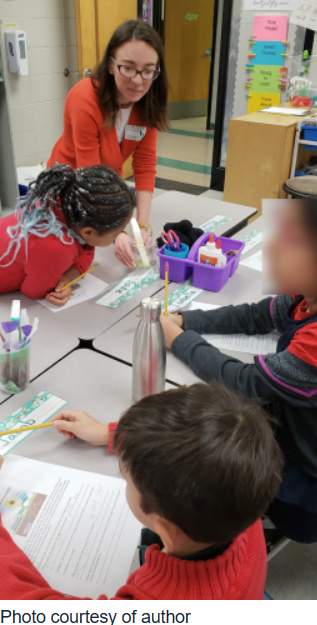
For the past four years, I have been lucky to actively participate in and serve as a leader for a science outreach program called SciCats (Science Cultivates Academically Talented Students). SciCats was started in 2013 by professor Sylvie Garneau-Tsodikova with the help of a graduate student, Maddy (Krentz) Gober. Originally, I joined SciCats to share my love of science with future scientists and also as a fun break from regular class and lab work. Currently, I am coordinator for about a half dozen grad students that go on a bi-weekly basis to do hands-on science experiments with 3rd-5th graders at two local elementary schools. In this short blog, I’d like to share how my experiences with SciCats have ultimately improved my grad school experience.
Public speaking: An important aspect of science is presenting your work; whether it’s to a committee or at a conference. Anyone who knows me, knows I am very soft-spoken and this has made presentations quite difficult. Before my first committee meeting, my PI, to get me to project my voice, asked me to sing very loudly the ABC’s to my lab group (my attempt was pitiful). However, with SciCats, I’m presenting to a whole class, which in past years has included students with hearing challenges. Each week, SciCats has been my time to practice projecting my voice and speaking with confidence. And I can say that, especially on days where we encourage group discussions, it is good practice for me to try talking over the whole class to get the young and very excited students’ attention. I’m happy to say that when I gave my departmental seminar last Spring, everyone could hear me, and I felt more empowered than I had been in past giving my talk.
Presenting ideas in easy to digest ways: It is one thing for the audience to hear you, it is another for the audience to understand you! Part of grad school is learning your field’s jargon, however, using jargon with 3rd-5th graders is a bad idea as you will receive blank expressions (Note: this will also happen with friends and family). Being able to put complex ideas (e.g., cells, DNA, molecules), into simple terms is very important when teaching young students and talking to the general public. We must be able to use analogies that can be understood by all. In my first year, I remember looking to the teacher to help me when I was getting blank stares from students, but now I’m better able to see when this is happening and guide other grad students away from jargon. I have learned that fancy words don’t mean anything if no one can understand what you are trying to explain. The simpler, the better!
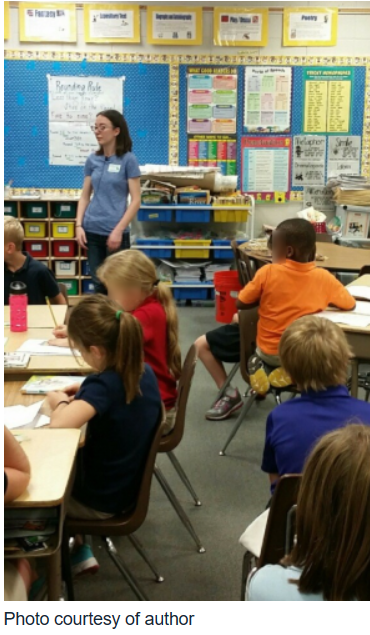
A reminder that science goes beyond a dissertation: While the main goal of grad school is to do research, put together a dissertation, and become an expert in a specific field of research, grad school is also often the first time for us to test our abilities as independent scientists. In this process, it is really easy to see our experiments as a reflection of ourselves; when our experiments work, we’re brilliant and when they continually fail, maybe we feel we shouldn’t be in grad school. For me, working with the elementary school students has been humbling. For one, I was in 3rd grade the first time I looked through a microscope, and I am happy I can provide similar experience for the students. Second, they remind me that I have gained so much knowledge between 3rd grade and now, but there is still so much more to learn. One experiment where this really struck me was when we were simply asking whether a boat would float better on fresh or saltwater. Most students guessed the answer would be fresh water. Instead of being disappointed for making the wrong guess, so many were excited to learn that new fact! Third, working with other grad students to develop activities has provided good lessons about how to collaborate and work in a team setting. And finally, I have been surprised to hear some students saying that they cannot do science. This has challenged me to make sure activities really are hands-on and fun because maybe if a student enjoys one experiment, they might look forward to the next and believe that indeed they too can do science. Science is for everyone! Also, this is a reminder for me that I am more than the success of my experiments.
SciCats has been a fun way to enhance my public speaking skills and to remind me that I am more than what happens with my experiments on a daily basis, while also helping grow the next generation of scientists. Working with kids who are eager to learn about the world we live in is refreshing. Even for grad students who are already great at public speaking, I believe outreach programs like SciCats could be highly beneficial, if only for bringing light to your day when experiments don’t work. I would highly encourage all grad students to take the time to seek out opportunities similar to SciCats. You won’t regret it!
About Emily Dennis

I am a 5th year graduate student in the Pharmaceutical Sciences Program at the University of Kentucky. My research focuses on discovery of novel antifungal agents. You can follow me on Twitter @emdennis8. I am writing this blog as a part of my public engagement class #UKCOPPublicEngagement #UKCOPSciComm.
I would like to thank my mentor Prof. Sylvie Garneau-Tsodikova (Twitter: @GTsodikova; Instagram: gtsodikova; YouTube: Sylvie Garneau-Tsodikova) for encouraging me on my outreach journey.
Blog Name: Public Engagement Reflections
 BOSTON DR LIM