내가 쓰는 나의 삶 (40) 4-Day Workweek: Magic or Myth?

(Illustration: Rafa Estrada)

안녕하세요 보스턴 임박사입니다.

제가 한국에서 신입사원으로 일하던 시기인 1990년대 중반에 대기업이었던 저희 회사는 주5.5 시간제를 채택하고 있었습니다. 즉, 토요일을 격주로 8시간을 일하는 것이었죠. 당시에 중학교 교사였던 아내는 주6시간제를 채택하고 있어서 토요일 가정일은 저의 몫이 되곤 했던 기억이 납니다.

시간이 지나서 이제 50대 중반에 접어든 지금 코로나 팬데믹 이후 재택근무 경험을 통해 주4일제 혹은 주4.5일제 근무에 대한 연구들이 진행되고 있습니다. 보스턴 지역의 회사들은 현재 모두 주5일제로 일하고 있고 특정 업무 분야에 따라 재택근무를 해오다가 최근 들어서는 그마저도 모두 오피스 근무형태로 하고 있어서 코로나 기간 몇년간을 제외하고는 주5일제를 하지 않은 적이 없다고 느껴집니다.

반면에 한국은 최근들어 주4일제 혹은 주4.5일제에 대한 뉴스가 많이 나오기 시작했는데요. 과연 어떻게 될지에 대해 궁금하기도 하면서 염려스러운 부분도 있습니다. 코로나 이전이던 2016년부터 최근까지 나온 주4일제와 관련한 뉴스기사들을 공유합니다. 주4일제에 대한 긍정적인 기사와 부정적인 기사를 함께 넣어서 가능한한 객관적인 시각을 담으려고 했고 관련한 연구논문도 첨부하여 보실 수 있게 했습니다.

주4일제에 대한 논의가 나오게 된 원인이 무엇일까?에 대한 저의 생각을 남기며 글을 마치고자 합니다.

코로나 팬데믹과 이후의 금융시장 환경이 인플레이션 압력을 받게 되었습니다 . 특히 청년세대인 MZ세대를 중심으로 한 FIRE Movement나 조용한 사직 (Quiet Resignation)과 같은 다양한 현상들이 나타났죠. 특히 신기술의 발달로 회사들이 앞다투어 채용을 늘리는 바람에 공고를 내놓고 1년 이상 뽑지 못하는 현상이 상당기간 나타났고 그로 인한 임금인상 압력이 다시 인플레이션에 영향을 주기 시작했습니다. 임금으로 인한 인플레이션은 고정비 성향이 강하기 때문에 기업 입장에서는 부담이었고 팬데믹 이후의 사무실 임대료도 상승을 했기 때문에 이러한 경향을 토대로 주4일제와 함께 임금을 다소 줄여야 겠다는 생각이 있었던 것이 아닐까 하고 생각합니다.

대부분의 회사가 팀단위 업무를 해야 경쟁력을 유지할 수 있는데 근무시간을 줄인다고 하면 팀 업무의 효율성이 늘기 보다는 줄어들 가능성도 꽤 있어 보입니다. 하지만 연구결과는 희한하게도 반대로 나오는군요. 그 연구결과에 참여한 기업의 수와 직원 표본의 수가 그리 크지 않기 때문에 그 결과를 곧이 곧대로 믿기는 어렵겠지만 특정 기업들의 경우에는 근로시간 단축이 곧바로 생산성 감소로 이어지지 않는다는 반증도 될 수 있을 것 같습니다.

생산성에 영향을 주는 것에는 노동과 투자가 있는데 투자가 잘 이루어지는 기업들의 경우는 노동이 생산성에 미치는 영향력이 미비할 수 있기도 하고 시스템이 잘 갖추어진 기업의 경우는 그렇지 못한 기업에 비해 개인에 의존하는 경향이 줄어들기도 하기 때문이죠.

몇가지 주4일제가 시행되게 되면 일어날 수 있는 문제점도 지적이 되었습니다. 예를 들면 나이든 노동자들의 임금이 상대적으로 줄어들게 될 수도 있고 정규직이 아닌 계약직의 업무 부담은 그대로이거나 늘어나는 대신 급여는 상대적으로 줄어들 수도 있을 것 같습니다. 그렇게 되면 정규직과 계약직 간의 임금 괴리현상이나 업무 강도 차이로 인한 소득 격차가 가중될 수도 있는 것 같습니다.

이제까지 직장생활에 임하면서 정규직과 계약직 그리고 지식산업을 하는 노동자와 육체노동을 하는 노동자 사이에 일어나는 상대적인 임금 격차, 워라벨 차이 및 나아가 노후준비에 대한 차이등으로 나타나는 경우를 보았습니다.

현재 아이슬란드나 덴마크, 노르웨이, 네델란드, 벨기에 등에서 주4일제를 많이 하고 있는 것 같습니다. 이런 국가들은 사회복지국가이고 투자기반이 강한 국가들이어서 개인의 노동 생산력 대비 투입자본의 투자 생산력이 더 중요한 생산성 증가 요소가 되는 국가들이라고 생각합니다.

1990년대 중반 이후 인터넷이 등장했지만 인터넷에 의한 수익성이 본격화되고 산업 재편이 된 것은 2020년대부터였던 것 같습니다. 요즈음은 AI/ML이 등장을 해서 인공지능 기술이 수익성 사업으로 본격화되기 시작하고 생산성의 중요한 요소를 인공지능이 차지할 수 있게된다면 주4일제를 하더라도 생산성의 하락이나 정체를 겪지 않을 수 있을 것 같습니다. 논의가 나오기 시작한 것이 얼마되지 않으니 지금부터 2-30년이 지나면서 서서히 자리잡지 않을까 하고 생각합니다.

Should Workers Over 40 Have Four-Day Weekends? – SHRM 7/26/2016

Research suggests shorter workweeks keep older employees sharp, productive.

​If new research suggests that cutting the hours of older workers could boost productivity—and a company’s bottom line—should employers take heed? 

While the prospect may sound outlandish, consider that Ford Motor Company founder Henry Ford was viewed as a radical—and was even called “crazy”—when in 1914 he doubled employees’ pay and reduced their work time from nine to eight hours a day. 

Of course, Ford’s move didn’t apply just to older workers. Researchers recently claimed workers older than 40 are more productive when working around 25 hours a week because, the researchers said, a shorter workweek reduces stress and keeps them alert. 

“Employers should not ignore any credible research that has implications for employee productivity,” said Jennifer Case, an attorney with Nelson Mullins Riley & Scarborough LLP in Atlanta, who weighed in on the researchers’ February study of more than 6,000 Australian workers. “Ford’s decision panned out and within a few years, Ford’s competitors made the same change. In more recent times, employers have responded to research that happier employers are more productive. Think Google and Facebook.” 

The researchers, who published their findings in the Melbourne Institute’s Working Paper Series, studied about 3,500 women and 3,000 men in Australia, with various education levels, the majority of whom were between 40 and 69 years old.

The researchers wrote that working 25 to 30 hours had a positive effect on middle-aged and older men’s cognitive skills and reported similar results for older women working 22 to 27 hours. In other words, the research findings suggest that workers over 40 should enjoy four-day weekends each week to stay sharp and vigorous. 

Benefits of Shorter Workweeks

While such a radical rethinking of the workweek seems implausible, the research raises compelling questions about the best ways to keep older Americans engaged and productive while on the job. At the same time, it raises equally compelling questions about equity in the workplace

“I do think that a significant percentage of employees who think of themselves as near retirement would like to have the option of remaining employed with a reduced schedule,” said Shane Muñoz, an attorney with FordHarrison in Tampa, Fla. “Some are afraid to suggest that because they are concerned that their employer might question their commitment or their stamina.  I think employers are also afraid to suggest it, for fear of creating an impression that they harbor stereotypical attitudes. Perhaps this study affords an opportunity for a more open dialogue on the subject.”

Some workplace consultants already recommend having employees work fewer hours to boost productivity, although not necessarily just for older employees. 

“We recommend to our clients that they experiment with alternative schedules, flexible schedules and shorter working hours to see if it drives better outcomes,” said Bruce Tulgan, founder of management training firm RainmakerThinking, a management research, training and consulting firm in New Haven, Conn. “That experimentation should be done one person at a time. It makes sense to start with more experienced workers who already have a track record. Then it can be applied to newer workers.” 

And some employers are already experimenting with shorter workweeks as a way to boost morale and productivity—although, again, not necessarily just for older workers. 

“Employers are already taking a look at having fewer work hours for new hires, ” said Dan Schawbel, founder of Millennial Branding, a Gen Y research and management consulting firm, and author of Promote Yourself: The New Rules for Career Success (St. Martin’s Press, 2013). “They’ve done this to prevent burnout, increase employee satisfaction and remain competitive.” 

Said Muñoz: “I certainly see clients who are open to considering accommodations for employees who prefer part-time schedules and situations where some measures of performance improve with reduced hours. I don’t expect, however, that well-advised employers will single out older workers, as a group, for reduced hours based on this study.”

And in some industries, longer-tenured employees enjoy shorter workweeks as a “rite of passage,” Schawbel said. 

As you gain authority in the financial world, it gives you more flexibility. A banker’s first two years are the most challenging and they are known to give up nearly all of their personal life to their companies as analysts. After the two-year mark, they are promoted and start to reclaim a more normal lifestyle.”

Dangers 

There are risks, however, to considering shorter workweeks for older employees. For instance, it could make older workers vulnerable if such research becomes an argument for employers to give them part-time work with no benefits. 

“You would essentially be creating a new category of employees that may consider themselves full-time but fall below the full-time threshold that exists today,” Case said. “For example, if they work less than 30 hours a week, then employers would not be required to make an offer of coverage in accordance with the Affordable Care Act.”  

Moreover, if they worked fewer hours, older workers may be viewed as more expendable than younger ones, Schawbel said. 

“The issue that many older workers have is the perception that they are less capable than younger workers, which is age discrimination, and that they are expensive, so many companies will lay them off and replace them with younger workers who will work for less [money].”

Discrimination and Resentment?

In general, it is not advisable to determine employees’ work schedules based on their age, Tulgan said.  

Workers older than 40 are a protected class under federal law, he noted, “so employers need to be very careful.” 

“It makes no sense to determine work conditions based on age,” he said. “The generational lens through which we can learn about the workforce tells us a lot, but we recommend against trying to have employment conditions, rewards or any such thing based on age or generation.”

Said Kris Duggan, CEO of BetterWorks, a goal-setting software and services provider in the San Francisco Bay area: “While there are some exceptions, like contract workers, requiring some employees to work less hours than others could create a backlash within your organization. Questions about compensation, employee evaluations and even bias from lack of face time will immediately surge.” 

Millennial workplace advisor Lindsey Pollak of The Hartford, which offers property and casualty insurance, group benefits, and mutual funds, said that “year over year, The Hartford’s Millennial research has shown that a flexible schedule is incredibly important to Generation Y.” 

In The Hartford’s most recent national survey, a majority or near-majority of Millennials said they want flexibility in the following: the timing of the workday, the days they work (weekdays vs. weekends), their amount of paid time off, where they work, and the number of hours they work. 

Resentment aside, treating workers of one age group differently from those of another almost always opens a company to liability, Muñoz said. 

“In today’s litigious environment, I absolutely would expect legal action, but I would expect it to come from those who aren’t given the opportunity to work a ‘full’ schedule based on an assumption that because they are over 40 years of age their productivity will drop off with extended hours.” 

Commentary: Four-day work week increases well-being and productivity – trials confirm it – CNA 12/4/2022

OXFORD: A group of companies that have been trialling a four-day working week have recently reported increased revenue, with fewer employees taking time off or resigning. While it’s easy to understand the effects of a shorter week on worker well-being, the positive effects on company earnings and productivity may be more of a surprise – but research backs this up.

These firms have been participating in a trial organised by non-profit 4 Day Week Global. The four-day working week trial, which involved 33 companies and nearly 1,000 employees, saw no loss of pay for employees – organisations paid 100 per cent of their salaries for 80 per cent of their time. But employees also pledged to put in 100 per cent of their usual effort over the shorter working week. And this kind of strategy doesn’t just work for nine-to-five office jobs.

Iceland trialled reduced working hours between 2015 and 2019 in a scheme that included hospitals, schools and social service workers. The country considered it an “overwhelming success” and reduced hours – without a reduction in pay – has since been rolled out to 86 per cent of Iceland’s workforce.

Throughout history, our working patterns have adapted to the challenges of the day: Whether that be more time toiling at an industrial loom, or a farmer shifting their hours to eke out productivity during fading daylight hours.

But now, almost a century on from Henry Ford introducing the two-day “weekend” to his factories, many nations are still stuck with a 40-hour week split across five days of work, regardless of the industry. This way of working is increasingly at odds with our 21st-century lifestyles.

The latest findings from the 4-Day Week Global pilot are in line with ongoing research into working patterns that show reduced hours boost employees’ mental health and their productivity. It also brings other benefits such as reducing emissions by cutting commutes and providing the basis for evaluating our lives in more than just monetary terms.

HUGE INCREASES IN STRESS AND BURNOUT

Despite much economic growth since the 1970s, very little progress has been made on freeing up time for workers. Worse, in some cases, the trend has started going in reverse: Americans now work more hours than they did in 2000, for example.

That is starting to take its toll on employee well-being and mental health. It doesn’t take much to realise that becoming many times more productive over the past century (thanks in no small part to technology) means our human brains are being asked to process a lot more during a five-day work week than in the past. This has led to huge increases in stress, anxiety and burnout.

This is hitting national health services and families particularly hard. But employers are also bearing the cost: Accountancy firm Deloitte estimated the annual cost to employers of mental health issues is £45 billion (US$55 billion) in the United Kingdom alone. This is mostly due to absenteeism, or worse “presenteeism” – where a person is physically present at work but not engaged because they feel ill.

The UK’s Office for National Statistics estimates that there were 17 million worker days lost to stress, depression or anxiety in the UK in the period of 2021 and 2022. And the same trends show up for most other wealthy countries.

FEWER HOURS, INCREASED PRODUCTIVITY

Of course, company bosses might think: “If my employees are working 20 per cent less time, surely output will drop, too?”

But several studies have shown that is not the case. In fact, countries doing the least hours of work are often the most productive on an hourly basis.

These countries, such as Denmark, Norway and the Netherlands, are also the happiest. All work less than 1,400 hours a year on average, compared with the US and UK average of about 1,800 hours.

My own research, in collaboration with British Telecom, helps explain why working less hours doesn’t necessarily mean an equivalent loss in output. We were able to show the positive effect of feeling better during the week on weekly productivity. We found evidence of more sales and more calls per hour when workers were happy.

Based on our research, we believe the work-life balance changes and improvements in well-being coming out of the 4 Day Week pilots could lead to an increase in productivity of about 10 per cent.

Of course, a 10 per cent increase in individual productivity will not immediately make up for employees working a day less. But these productivity gains would reduce the cost of a transition to a shorter work week.

So there might still be a need for investment and subsidies from government and business alike to support this change, but people and the planet have much to gain from doing so.

TIME, OUR MOST PRECIOUS COMMODITY

It’s also important to think more holistically about the benefits of the four-day week beyond productivity and well-being.

A shorter week might even reduce the UK’s carbon footprint by cutting commuting – assuming that most people won’t travel or will travel significantly less on their day off. A four-day week could have a positive effect on gender equality as well, since the pilots suggest that women report the largest increases in well-being.

The four-day week debate also scratches the surface of an ongoing discussion among economists. Gross domestic product has long been used as the ultimate measure of a nation’s progress, often with the effect of seeing policymakers chase growth at any cost. But a country is much more than its gross domestic product.

Seeing the successful results of attempts to implement a four-day working week might convince business and policy leaders to redistribute some of the gains in GDP in terms of our most precious commodity: Our time. Now that could be considered real progress.

Jan-Emmanuel De Neve is an economist and professor at Oxford University where he directs the Wellbeing Research Centre. This commentary first appeared on The Conversation.

How to Actually Execute a 4-Day Workweek – Harvard Business Review 12/8/2023

Coming out of the pandemic, the conversation about flexible work has largely focused on whether employees should return to the office — and how often. A third of U.S. workers who can do their jobs remotely now do so all the time. LinkedIn research shows that in May 2023, nearly one in nine U.S. job postings offered remote work, 13% of postings were hybrid, and 66% of applications were for remote and hybrid roles. A CEO told me that by putting the word “remote or hybrid” into the job description, the number of job applicants tripled.

But a potential new disruption looms: We’re starting to hear from organizations that have piloted a four-day workweek. Early results suggest this structure offers benefits in productivity and well-being.

Let’s look at the evidence. According to research from jobs platform Indeed, while the overall number of job posts advertising a four-day workweek remains low (0.3% of total posts), that number has tripled in the last few years. And it’s most commonly seen in sectors requiring in-person work, such as medical, dental, veterinary, manufacturing, and production. United Auto Workers initially included a four-day workweek in its bargaining demands, although this provision wasn’t included in the final agreements.

In June 2022, 61 UK-based companies participated in a pilot program to study a four-day workweek. As of February 2023, when the first results were published, 92% said they were continuing to test the concept, with 29% saying the policy is a permanent change. Average organizational revenue rose by 1.4%; pilot companies also reported a 57% decline in the likelihood that an employee would quit, plus a 65% reduction in the number of days taken off as paid sick time.

One of the trial participants was Rivelin Robotics. The firm opted to close on Fridays and extend the working day to 8 am to 5:30 pm on the other days of the week. The change has not been without its challenges. A small, fast-growing startup with just eight staff, Rivelin reports that sometimes the work cannot wait, and a big product launch meant some of the new three-day weekends had to be sacrificed. Senior execs had to accept they’d take Friday calls and queries, as the team had turned off their phones.

The Challenges of a Four-Day Workweek

In the 1960s and 1970s, a number of organizations sought to implement four-day workweeks. Unfortunately, most of these initiatives — which attempted to condense a full 40 hours of work into four days — didn’t see the results that organizations had hoped for. One 1975 study surveyed the reactions of 474 employees of an accounting division of a large multinational corporation to a four-day, 38-hour workweek. Fatigue and slowing down at the end of the day were reported, and servicing of customer needs and meeting with co-workers were more difficult. Supervisors perceived that work quality and output in their units were adversely affected by the four-day workweek.

Looking back, we can see how these initiatives failed to consider a few critical factors. First, there is a non-linear relationship between hours worked and productivity; there is a diminishing rate of productivity for each additional hour someone works. Longer working hours also are associated with increases in errors and work injuries, as well as decreases in employee well-being indicators like satisfaction and engagement.

But who says you have to do 40 hours in four days? There’s a growing body of evidence suggesting that reduced-hour work schedules for the same level of pay are not only feasible when it comes to maintaining outcomes but also potentially advantageous across a number of metrics. Since 2015, a new, more data-informed wave of reduced working week trials have now been conducted in growing numbers in Sweden, Ireland, North America, the UK, and Australasia. We also recently worked on our own study of nine global organizations to deepen our own understanding of the practicalities of conscious work redesign. We found that although there were some costs, trade-offs, and varying levels of work involved to prepare for a four-day workweek, the results were consistently positive when it came to things like employee well-being, retention, and even business outcomes.

These initiatives only work if companies undertake substantial work redesign to reduce hours while maintaining business outcomes. This means streamlining operations, removing administrative burdens, and prioritizing high-impact work. To achieve this, our study suggests organizations need to:

Clearly define the work that matters.

Frameworks such as OKRs (objectives and key results) can define company and team-level goals and ensure everyone’s work ladders up into those goals.

Run a meeting audit.

Meetings are often one of the first areas to get scrutinized as unproductive time.

Allow employees to operate to the full extent of their education and training.

Many employees are bogged down with other administrative or menial tasks, so they can’t focus on priority tasks. We recommend stopping, automating, or outsourcing all non-priority tasks.

Embrace asynchronous communication.

When implementing a four-day workweek, asynchronous communication becomes essential to help employees from having work interrupted. To maintain employee focus, there should be a clear understanding of what requires escalation, and who will handle it.

Resetting Employee Expectations

One major challenge that accompanies the shift to a four-day workweek is ensuring employees accept that you’re asking them to produce the same amount in fewer hours. Our own research shows organizations that successfully implemented a four-day workweek began with a well-defined three-month trial period at a minimum to assess whether they could successfully reduce work time while maintaining output. These pilots included documentation, and/or training in advance for employees on redesigning work tasks, as well as productivity coaching. (What’s interesting is that even just doing this prep to streamline operations, remove administrative burdens, and prioritize high-impact work can improve company productivity substantially.)

What does this look like in action? As part of our research project, we spoke to a workplace consultancy in Australia called Inventium that started a four-day pilot in 2020. Its leadership developed productivity training to help employees more effectively utilize their time. Tactics included calendar blocking, turning cell phones off for blocks of time, and scheduling deep work around when each employee is most productive.

At Inventium, employees are encouraged to take ownership of their time and utilize it in the way that works best for them. It seems to have worked, as the company reported a 26% increase in productivity, a 21% increase in energy levels, and an 18% decrease in employee stress.

The company refers to its program as the “gift of the 5th” — highlighting that the day off is not a given. Instead, it’s achieved by getting work done efficiently and maintaining outcomes. It also signals that there may be busier months when employees need to work that 5th day, which has now been cheerfully (so far) accepted by the entire team.

To ensure success, organizations need buy-in from leadership and employees. You can start by crowdsourcing potential obstacles and ideas from employees. It’s also critical to position the pilot as an experiment with clear expectations and to be transparent with clients and external stakeholders.

The four-day week can surface organizational problems in communication, trust, work inefficiencies, and barriers to productivity. And while it provides an opportunity to address these challenges, as Joe O’Connor, director and co-founder at the Work Time Reduction Center of Excellence and one of our co-researchers warns, “This is not a cheap fix, it’s very hard work.”

In today’s economy, employees have more power, agency, and freedom than ever. Unemployment reached a 54-year low this year, wages are increasing (5% annually), and open posts are very hard to fill. The U.S. Chamber of Commerce says even if every unemployed person in the country found a job, the U.S. would still have around 3 million open positions. And the worker shortage is likely to go on for years.

In today’s competitive labor market, where attracting and retaining top talent is an ongoing challenge, adopting a reduced-hour workweek can be an attractive benefit for job seekers — and could be a significant competitive advantage for recruitment teams. And for everyone else, it’s an opportunity to really get focused on what matters.

https://buy.tinypass.com/checkout/template/cacheableShow?aid=mbs77qtzUz&templateId=OTBSP342X41S&templateVariantId=OTV3DU7DCXX1T&offerId=fakeOfferId&experienceId=EX6OE1720PPS&iframeId=offer_2abeca1b1c01117ffed3-0&displayMode=inline&widget=template&url=https%3A%2F%2Fhbr.org

Readers Also Viewed These Items

Read more on Work environments or related topics Business managementHuman resource management and Flex time

  • Josh Bersin is founder and CEO of human capital advisory firm The Josh Bersin Company. He is a global research analyst, public speaker, and writer on the topics of corporate human resources, talent management, recruiting, leadership, technology, and the intersection between work and life.

There’s no magic in a 4-day workweek – The Hill 1/12/2024

The idea of a four-day workweek is catching attention. Young workers in particular see it as the wave of the future, while others worry it will undermine America prosperity.

Economists have pondered the viability of a four-day workweek since research by Janice Hedges in 1971. Recently, though, a magical idea has come to the fore: Let employees work one fewer day per week at the same hours per day and same pay, and they will accomplish just as much as in a standard five-day workweek.

All the fuss prompted us to ask several hundred American business executives and several thousand American workers some pertinent questions. What we uncovered is mundane, not magical. In the language of “Harry Potter,” there is support for a “muggle” version of the four-day workweek — but not for a magical one.

In October, we asked 602 senior managers across the U.S. whether their firms offer a four-day workweek to any full-time employees, and 20 percent said yes. For those who said yes, we also asked what share of their full-time employees work a four-day week — on average, 25 percent. So about 5 percent of full-time American employees currently work a four-day week. 

Is the U.S. on the cusp of a big shift to four-day workweeks? No. Of the 482 managers at firms that don’t currently offer four-day workweeks, two-thirds said there is no chance their firms will offer them by the end of 2024. The other one-third say the chances are only 16 percent, on average. 

In practice, there are several versions of the four-day workweek. One involves fewer but longer workdays, with no change in weekly hours. Another cuts the number of workdays without changing the length of each workday, but recognizes that fewer hours means less output and thus lower pay. Yet another version lets employees work from home on Fridays (or Mondays) but work onsite the other four days. 

We think of these variants as “muggle” versions of the four-day workweek, because they recognize the reality that output and pay are roughly proportional to time spent working.

Then there is the magical version: Let full-time employees work eight hours a day, four days a week rather than five — with no reduction in output or pay.

Keep an open mind, you say?

Consider some evidence. We asked managers at firms that currently allow four-day workweeks how many hours their full-time employees put into their jobs on those four days. The average is 9.5 hours. Just 22 percent of managers said their full-time, four-day workweek employees put in eight or fewer hours on their workdays. More than 75 percent of managers told us that some or all of their employees on a four-day workweek are expected to be available for work on “off days.”

In short, managers don’t see the magic.

But even with no magic, four-day workweeks can be beneficial. If your daily commute is 30 minutes each way, muggle versions of the four-day workweek save one hour a week. This also saves on the money costs of commuting, not to mention the aggravations of traffic jams and public transit. 

To assess these benefits, we turned to our Survey of Working Arrangements and Attitudes, which samples thousands of American workers each month. In October, we asked survey participants who usually work five days a week whether they would prefer to work the same weekly hours over four days. Nearly 60 percent said yes. They also said shifting to a four-day workweek was worth as much, on average, as a 4 percent pay hike. 

Employers can also benefit from muggle versions of the four-day workweek. For example, they can offer smaller pay raises in exchange for less commuting, perhaps by letting employees work from home one day a week. This arrangement also reduces office floorspace requirements, lowering overhead costs.

Sadly, we must live in the real world, not the world of wizards. It’s time to set aside the distractions of magical four-day workweek proposals. Happily, even realistic four-day workweek schedules can benefit both employees and their employers. 

Jose Maria Barrero is assistant professor of finance at Instituto Tecnológico Autónomo de México Business School. Steven J. Davis is a senior fellow at the Hoover Institution. This piece draws on research with Nick Bloom, Kevin Foster, Brent Meyer and Emil Mihaylov.

Why Germany is launching a six-month trial of 4-day work week from Feb 1 – The Economic Times 1/28/2024

Germany’s struggle to revive its sluggish economy is about to take an experimental turn as a host of companies test out the merits of working less. A six-month program starting Feb. 1 will grant a day off every week for hundreds of employees while keeping them on full pay. The study aims to find out if labor unions are right that it could not only leave staff healthier and happier, but also more productive.

“I’m absolutely convinced that investments in ‘new work’ pay off because they increase well-being and motivation, subsequently increasing efficiency,” said Sören Fricke, co-founder of event planner Solidsense, one of 45 companies taking part in the pilot. “The four-day week, if it works, won’t cost us anything either in the long run.”

The project underscores a broader shift taking place in the German labor market, where a lack of skilled workers is putting pressure on companies to fill their ranks. The shortage — coupled with high inflation — has emboldened employees across industries to seek wage increases and preserve the flexibility and independence they gained during the pandemic. About 45 companies in Germany will trial a four-day work week to measure any productivity gains from working fewer hours.

The imbalance is fueling employer-employee tensions. Germany’s train drivers are currently holding a six-day strike, demanding that Deutsche Bahn cut the work week to 35 hours from 38 hours without any wage reduction. The country’s construction union is asking for a pay rise of more than 20% for many of its 930,000 workers — a move some economists warn could stoke inflation.

According to an industry lobby survey last year, half of German companies are at least partly unable to plug vacancies. Software giant SAP SE stopped asking for university degrees from applicants in 2022, while real estate firm Vonovia SE recruited people from Colombia last year to cope with the shortage.

And the problem is set to get worse: more than 7 million people are expected to leave the German labor force by 2035, as birthrates and immigration fall well short of what’s needed to replace the aging population.

“I can either get involved and position myself as a modern company, or I can say that we all have to work more and at some point I won’t have anyone left to work for me,” said Henning Roeper, managing director of Eurolam, a Wiegendorf-based window maker that’s also taking part in the program.

And unhappy workers come at a hefty price tag. According to a recent Gallup study, low engagement costs the global economy €8.1 trillion ($8.8 trillion) last year. That’s 9% of global gross domestic product.

While staff work fewer hours during the experiment for the same pay, their output should stay steady — or even increase, according to New Zealand-based non-profit 4 Day Week Global, which is leading the pilot. Aside from that boost in productivity, companies are also expected to benefit from a drop in costly absences due to stress, illness and burnout. The average 21.3 days Germans were incapable to work in 2022 meant a loss of a staggering €207 billion in value added, according to the Federal Institute for Occupational Safety and Health.

Advocates of the four-day week also argue it could attract untapped potential to the labor market in Germany — a country that has one of the highest proportions of part-timers in the EU, also among women, according to Eurostat.

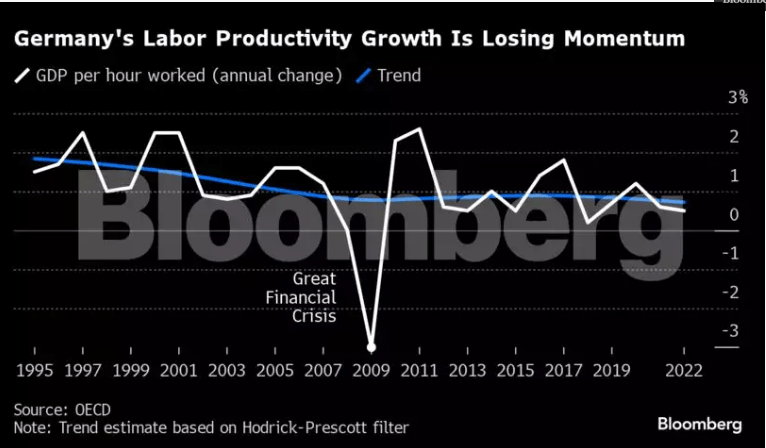
While Germany has by far the biggest economic output in Europe, a lack of investment in innovation and digitization has hindered productivity gains. Without improvements in those areas, it’s unlikely German workers would see a significant productivity boost simply by cutting back hours, according to Enzo Weber, an economist at the Institute for Labor Market Research in Nuremberg.
Finance Minister Christian Lindner, a member of the business friendly Free Democrats Party, has offered more pointed criticism of the shorter week, saying such a move would threaten economic growth and German prosperity.

But previous experiments in the US and Canada suggest gains are possible, according to 4 Day Week Global. Workers who took part reported improved physical and mental health while burnout dropped. Following the studies, none of the participating companies planned to return to a five-day week.

A program in the UK, the biggest one yet with 61 participating companies, showed similar gains, including a 65% drop in sick days. In Portugal, anxiety levels and sleeping problems receded by roughly 20%. The German companies are hoping for similar gains, and some participating workers plan to provide hair samples and data from fitness watches to track stress levels more accurately.

“If I have too much time I become a perfectionist, and this is not always necessary,” said Jasmin Galle, a user-experience designer at Solidsense. “If you have less time, you still get the same result.”

Belgium became the first European country to make a 4-day-week optional in 2022, though the total weekly hours must remain the same as in a five-day week. Japan has encouraged companies to offer shorter work weeks in hopes people will use the time to spend money and have children, boosting its economy and aging population.

Jan Bühren, co-founder of Intraprenör, a Berlin consultancy working with 4 Day Week Global on the pilot program, said achieving the gains requires flexibility and creativity at the companies.

“Of course it doesn’t always work and it’s also not for everyone,” he said. “But you just have to find out exactly where it can work and where it doesn’t.”

What Bloomberg Economics Says…
“A four-day week could lead to higher hourly productivity but it’s very unlikely that a productivity boost can compensate for the reduced working hours. Together with a shrinking labor force this would be a major obstacle to economic growth.” — Martin Ademmer

내가 쓰는 나의 삶 (39) 홍기빈 칼럼: 50대에게 인공지능 교육을

(Picture: 홍기빈 박사, 정치경제학자)

50대에게 인공지능 교육을 – 경향신문 2/28/2023

챗GPT로 촉발된 인공지능 이야기 잔치에 한마디 얹고자 한다. 인공지능은 범용기술이 될 것이 분명해졌으며, 그것도 전례가 드문 정도의 범용기술이 될 것으로 보인다. 산업 패러다임의 전환 정도가 아니라 사회와 인간 생활 전체를 상전벽해로 바꿀 것이다. 그런데 하필이면 한국은 지금 인구 구조에 있어서 중요한 변곡점에 서 있는 상황이다. 50대 이상의 사람들에게 인공지능으로 바뀔 미래를 스스로 준비할 수 있는 기회를 마련해줘야 한다.

범용기술이란 특정한 하나의 목적이나 용도에 복무하는 것이 아니라, 그 목적이 굉장히 넓게 심지어 무한대로 열려 있을 뿐만 아니라 누구나 일정한 자원만 투여하면 자신이 뜻하는 목적에 사용할 수 있는 종류의 기술을 뜻한다. 멀리 인류가 처음으로 출현했을 때 개발한 범용기술은 언어와 불의 사용을 들 수 있을 것이며, 문명이 시작된 이후 나타난 범용기술은 농경 목축, 수레, 화폐의 사용을 들 수 있을 것이다. 산업혁명이 시작된 이후 중요하게 이야기되는 것으로는 각종 이동수단, 전기, 컴퓨터 및 인터넷 등을 들 수 있다.

인공지능이 이러한 범용기술이 될 것이라는 주장이 계속 있었지만 반론도 있었다. 특정한 목적에 관한 데이터를 모아 학습시키는 과정은 너무 많은 비용이 들고 고도의 전문성이 개입하기 때문에 보편적·일반적으로 확산되어 모든 용도에 사용되기보다는 인공지능이 꼭 필요하거나 효율적인 부문에만 도입되는 기술에 머물 것이라는 의견이었다. 그런데 이번의 챗GPT는 중요한 두 가지 혁신을 보여주었다. 먼저 기존의 ‘지도형 기계학습’ 대신 ‘생성적 사전학습’과 ‘지도형 미세조정’의 두 단계 과정을 거쳐 질이 좋은 산출물을 적은 비용으로 즉각 낼 수 있게 되었다. 이뿐만 아니라 인공지능과의 교호과정을 우리가 쓰는 언어의 대화로 바꾸어 내어 누구나 접근할 수 있는 인터페이스를 가지게 되었다. 이렇게 되면 앞에서 말한 반론의 타당성은 크게 줄어든다. 이제는 누구든 어떤 목적에서든 아주 낮은 비용으로 아주 빠른 시간 안에 일정한 수준의 결과물을 얻을 수 있게 된다. 인공지능이 범용기술로 쓰일 날이 성큼 다가온 것이다.

게다가 인공지능이라는 범용기술이 가져올 파괴적·창조적 충격의 폭과 깊이를 짐작하기 힘들다. 수긍이 간다. 범용기술이라고 해도, 수레는 이동에 대한 것이며, 전기는 에너지에 대한 것일 뿐이다. 수레의 발명이 법률 체계를 바꾸지는 못하며, 전기의 발명이 교육 체계를 바꾼 것은 아니다. 그런데 역사적으로 누적된 인간 정신의 총량을 담고 이를 자유자재로 주물러서 주어진 목적에 맞게 원하는 내용을 ‘새로이 생성’해내는 인공지능의 발명은 과연 어디까지 바꿀 것인가? 산업 전반, 나아가 사회 및 인간의 존재에까지 충격을 미칠 것임을 예측할 수 있다. ‘옥스퍼드 AI 거버넌스 핸드북’의 한 저자는 범용기술로서의 인공지능이 가져올 충격이 18세기 산업혁명과 신석기 혁명의 충격에 맞먹을 것이라고 말한다.

새 범용기술 위한 사회적 계획 필요

여기까지는 많은 이들이 입을 모아 이야기하는 부분이다. 그런데 그다음에 생각할 것이 더 있다. 이렇게 산업과 사회와 인간 생활이 포괄적으로 바뀌는 과정은 어떤 것이며, 그 시간은 얼마나 될까? 이전에 있었던 여러 범용기술의 경우에 비추어 하나의 패턴을 찾아내보자. 우선 범용기술의 혁신은 상대적으로 소소한 다른 혁신의 경우와 달리 빨리 수용되지도 않으며 그 과정이 순탄하지도 않다.

첫째, 범용기술이 정말로 범용기술이 되기 위해서는 엄청난 규모의 인프라가 건설되어야 한다. 농경이 사회 전체 차원에서 체계적으로 이루어지기 위해서는 수리 관개 시설은 물론 역법과 도량형 제정이 필요했으며, 인터넷 세상이 펼쳐지기 위해서는 전화선에서 랜선으로의 전환이 필요했다.

둘째, 사회 성원 전체가 이 범용기술을 사용하는 방법을 익혀야 하며, 거기에 엄청난 비용이 투여된다. 반세기 전만 해도 ‘타이피스트’만 할 줄 알던 작업을 오늘날에는 모든 이들이 엄지손가락 두 개로 다 처리하게 되었지만, 그렇게 되기까지 훈련의 시간과 비용을 사람들의 머릿수로 곱해보라.

셋째, 새로운 범용기술의 도입으로 대체할 수 있는 산업과 기술과 숙련을 실제로 폐기하는 데에 들어가는 엄청난 저항과 사회적·인간적 비용이다.

요컨대, 범용기술의 도입은 몇 개 공장이나 산업에서의 생산 방식 변화와 같은 ‘소소한’ 사건이 아니라, 산업 전체, 나아가 사회 전체가 잘 훈련된 축구팀처럼 발맞추어 나아가야 달성할 수 있는 전 사회적 프로젝트이므로, 길고 다사다난한 과정을 거칠 수밖에 없다. 인공지능 또한 마찬가지다. 당장에 세상이 바뀔 것처럼 떠들썩하지만, 설령 기술적으로 보자면 범용기술의 자격을 충분히 갖춘 인공지능 서비스가 출현한다고 해도 그것이 실제로 상용화되는 세상이 금세 올 수는 없다. 사회적·인간적 고통과 마찰을 최소화하면서 더 빨리 더 효율적으로 새로운 범용기술의 도입을 이룰 사회적 계획이 필요하게 된다.

50대 교육이 미래 가름할 수도

이 대목에서 우리 사회의 현재 인구 구조 문제를 떠올리지 않을 수 없다. 인구절벽의 제목 아래 새로운 젊은 경제활동인구가 격감한다는 이야기만 자꾸 나오다 보니 쉬 간과되는 사실이 있다. 가장 많은 인구를 차지하는 베이비붐 세대가 지금 50대를 통과하고 있다는 점이다. 참으로 애매한 연령대와 애매한 타이밍이다. 50대는 쉽게 새로운 기술이나 트렌드를 흡수할 의욕이나 동기부여가 젊은 세대보다 떨어지지만, 그렇다고 해서 경제활동에서 물러나 노후 생활로 접어들 나이도 아니다.

게다가 평균수명은 늘어나고 건강 상태는 개선되고, 반대로 사회 전반적인 노후 준비나 노인 복지 등은 미비한 세상이니 이 세대에 속한 이들의 다수는 어떻게든 경제 생활의 일선에 남기를 원하고 있다. 범용기술을 받아들이는 포괄적인 산업 및 사회의 전환 과정은 어떤 경우에도 이렇게 많은 숫자를 차지하는 세대와 집단을 뒤처지게 두거나 무시하고서는 성공할 수가 없다. 그런데 어쩌면 인공지능이라는 미증유의 범용기술 도입이라는 미래의 물결이 다가오는 지금, 하필 우리나라에서는 그 세대가 참으로 애매한 연령대인 50대에 위치하고 있다.

그런데 이미 우리의 50대는 위기에 처해 있다. 거의 모두가 경제활동을 계속하기를 원하지만, 빠르게 바뀌는 산업과 사회 전반의 변화 속도로 인해 기존의 직장에서 밀려나는 경우가 많다. 재취업이나 창업 등을 시도하지만 여의치 못한 경우가 많으며, 이전에 비해 부가가치와 생산성이 낮은 쪽으로 하향 곡선을 그리면서 소득 또한 점점 감소하는 불안감에 시달리는 경우가 압도적으로 많다. 만약 여기에 인공지능의 보편화라는 거대한 전환의 물결까지 덮친다면, 이들의 존재가 산업적으로 ‘노후화’되는 속도도 더 빨라질 것이며, 이들의 소득 감소와 실업 등 경제적 곤경도 더 심해질 것이다. 그리고 이는 사회 전체에 큰 비용과 마찰을 초래할 것이다.

새로운 경제활동의 길을 찾는 50대 이상의 사람들을 ‘신중년’의 이름으로 부르며 돌봄노동 등에서 일자리 창출의 활로를 모색하는 이들도 있다. 소중하고 중요한 노력이라고 공감하지만, 그 길이 어떤 특정 부문이나 분야로 제한될 이유는 없다. 인구절벽 앞에 선 우리 사회와 경제에 있어서 숫자가 많은 베이비붐 세대는 대단히 중요한 ‘인적 자원’이다. 이들이 새로운 산업 및 사회의 패러다임에 적응할 수 있도록 전환시킬 수 있느냐 없느냐가 어쩌면 우리의 미래를 가름하는 결정적인 관건이 될지도 모른다.

지금 많은 대학에서 정부의 지원으로 어린 학생들에게 디지털 전환과 인공지능 등을 교육시키는 프로그램들을 제공하고 있다. 내용도 알차고 방향도 좋아 학생과 부모들에게 모두 큰 반향을 일으키고 있다. 그런데 왜 50대 및 그 이상의 연령대를 위한 디지털과 인공지능 교육 프로그램은 없을까? 자라나는 아이와 청년들은 그 정신의 유연성이라는 장점이 있겠지만, 50대 이상의 사람들은 축적된 경험과 안목이라는 암묵지를 가지고 있으며 어쩌면 이것이 인공지능 시대에 더욱 빛을 발하는 독특한 경쟁력이 될 수 있다. 그러한 장점을 끌어낼 수 있는 교육 방식과 만난다면 말이다. 50대 이상에게 인공지능 교육과 훈련을 허하라.

Image

MASTERPIECE (4) Conservation Chemistry Issues of 20th- & 21st Century Oil Paintings

(Picture: Illaria Bonaduce, PhD, University of Pisa, Italy)

Conservation Issues of Modern Oil Paintings: A Molecular Model on Paint Curing. Acc. Chem. Res. 2019, 52 (12), 3397–3406. Illaria Bonaduce et al.

The 20th and 21st century oil paintings are presenting a range of challenging conservation problems that can be distinctly different from those noted in paintings from previous centuries. These include the formation of vulnerable surface “skins” of medium and exudates on paint surfaces, efflorescence, unpredictable water and solvent sensitivity, and incidence of paint dripping which can occur within a few years after the paintings were completed.

Physicochemical studies of modern oil paints and paintings in recent years have identified a range of possible causal factors for the noted sensitivity of painting surfaces to water and protic solvents, including the formation of water-soluble inorganic salts and/or the accumulation of diacids at the paint surface, which are oxidation products of the oil binder. Other studies have investigated the relationship between water sensitivity and the degree of hydrolysis of the binder, the proportions of free fatty and dicarboxylic acids formed, as well as the relative content of free metal soaps. Thus far, data indicate that the qualitative and quantitative composition of the nonpolymerized fractions of the oil binder cannot be solely or directly related to the solvent sensitivity of the paint film. Conclusions therefore indicate that the polymeric network, formed upon the curing of the oil, plays a fundamental role, suggesting that water sensitivity, at least in some cases, may be related to the poor development and/or polar nature of the formed polymeric network rather than the composition of the nonpolymerized fractions.

Poorly developed polymeric networks, in combination with the migration of polar fractions, i.e., dicarboxylic and hydroxylated fatty acids toward the paint surface, can be related to other degradation phenomena, including the separation and migration of the paint binder which can lead to the presence of observable skins of medium as well as the more alarming phenomenon of liquefying or dripping oil paints. It is thus crucial to understand the molecular composition of these paints and their physicochemical behavior to aid the further development of appropriate conservation and preservation strategies, as the risks currently associated with surface cleaning treatments and other conservation procedures can be unacceptably high.

This Account reviews the relationships between the degradation phenomena associated with modern oil paintings and the chemical composition of the oil binder and proposes a molecular model for the development of water sensitivity and other noted degradation phenomena. It is suggested that water sensitivity (and possibly other degradation phenomena) is a consequence of processes that take place upon curing, and in particular to the rate of formation and decomposition of alkoxyl and peroxyl radicals. These reactions are strongly dependent on the type of oil present, the ambient environmental conditions, and the chemical and physical nature of the pigments and additives present in the paint formulation. When the curing environment is oxidizing, the chemistry of peroxyl radicals dominates the reaction pathways, and oxidative decomposition of the paint film overwhelms cross-linking reactions.

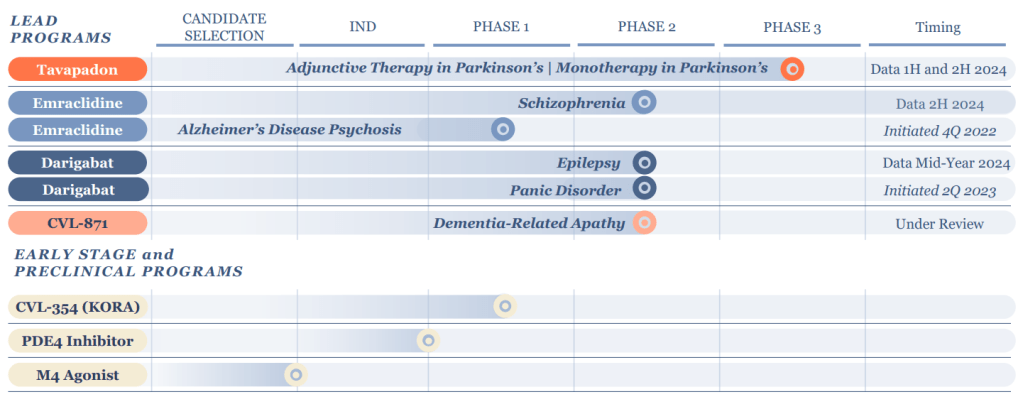
BIOTECH (161) Cerevel Therapeutics: Pfizer spin-off for Neuroscience Assets funded by Bain Capital

(Picture: Morris Birnbaum, MD, PhD, SVP of Pfizer Internal Medicine Unit)

Pfizer to Cut 300 Jobs as It Ends Alzheimer’s, Parkinson’s Quest – Biospace 1/8/2018

Pfizer announced Saturday, Jan. 6, that it was abandoning research and development into new neuroscience development, including Alzheimer’s and Parkinson’s disease. As a result, it will cut 300 jobs, primarily in Cambridge and Andover, Massachusetts and in Groton, Connecticut. About 200 of the job cuts will be in Massachusetts, the remaining in Connecticut.

The company indicated it will continue working on tanezumab, a late-stage drug for pain it is developing with Eli Lilly and Co., as well as Lyrica, for fibromyalgia. It also intends to continue working on developing neurological drugs for rare diseases.

In a statement, Pfizer said, “This was an exercise to re-allocate spend across our portfolio, to focus on those areas where our pipeline, and our scientific expertise, is strongest.”

Pfizer is one of the investors in a venture capital fund, the Dementia Discovery Fund, that was launched in 2015. Other drug companies that invest in the fund include GlaxoSmithKline and Lilly. Reuters notes, “However, some of Pfizer’s investments have resulted in disappointment. In 2012, Pfizer and partner Johnson & Johnson called off additional work on the drug bapineuzumab after it failed to help patients with mild to moderate Alzheimer’s in its second round of clinical trials.”

On Saturday, Pfizer indicated it plans to launch a new venture fund focused on neuroscience research.

The company also announced today that it was creating the Innovative Target Exploration Network (ITEN). This is a new, early-stage partnering model. It will allow collaborative relationships with specific academic institutions and principal investigators globally. The first three institutions to participate are The University of Cambridge and University of Oxford, both in the UK, and the University of Texas Southwestern (UTSW)Pfizer is planning to choose other academic institutions to be part of ITEN.

Each network is managed by an External Scientific Innovation Lead (ESIL) from Pfizer. That individual will liaise between researchers from Pfizer and the academic principal investigators from the involved institutions.

“The ITEN partnering model creates an environment of creative and agile scientific interaction,” said Uwe Schoenbeck, Pfizer’s senior vice president and chief scientific officer, External Science & Innovation, in a statement. “By establishing relationships with researchers early in the research and development process, we believe the ITEN model will better position us to identify potentially promising research projects—focused on seeking unique technology platforms and outstanding biology expertise—continually building on our mission to bring innovative new therapies to patients in need.”

The UK ITEN partnerships were established in 2017, and specific projects have already been reported. Both will focus on deubiquitinylation enzymes (DUBs), a gene family that has implications for cancer, and autoimmune, cardio-metabolic diseases and rare diseases.

The project with UTSW is a collaboration with Bruce Beutler, a Novel Prize-winning immunologist. It will focus on genetics approaches in oncology and metabolic disease.

The ITEN is expected to complement work at Pfizer’s Centers for Therapeutic Innovation (CTI), which was launched by Pfizer in 2010 to create academic-foundation-industry collaborations. CTI has 25 academic institutions and six foundations in its network, including the National Institute of Health (NIH).

“By focusing on research collaborations around early biology and therapeutic concepts, our ITEN collaborations will seek out innovative science and technology,” Schoenbeck said in a statement. “As research projects progress, we will work with the given institution to move them into the clinical phase using therapeutically aligned research units or through CTI.”

Backed by Bain, Pfizer loads prime CNS assets into new biotech – Fierce Biotech 10/23/2018

Pfizer has followed through on its pledge to divest a hunk of its neuroscience R&D, spinning several programs into a new company called Cerevel Therapeutics backed by $350 million in venture funding.

Pfizer is contributing a trio of clinical-stage drug candidates—including a Parkinson’s therapy due to start phase 3 testing next year—plus a clutch of earlier-stage programs, while Bain Capital and affiliates stumped up the initial funding.

It’s an approach the Big Pharma company also adopted last year when it hived off its rare disease assets into a company called SpringWorks, backed by Bain Capital and others including Double Impact, Orbimed and LifeArc.

The Cerevel spinoff “is similar [to SpringWorks], albeit on a larger scale in terms of number of assets, capital committed, and commercial potential,” explain Chris Gordon and Adam Koppel, M.D., Ph.D., managing directors at Bain Capital Private Equity and Bain Capital Life Sciences, respectively, who note there is also more cash in the offing if needed.

“It is a model that makes a lot of sense for pharma companies, if they can find the right partner,” they told FierceBiotech. This type of deal can push forward “assets that might not be optimally developed internally … while maintaining involvement and economic upside.”

Pfizer is retaining a 25% share in Cerevel, and two of its senior executives—Doug Giordano, senior VP of worldwide business development, and Morris Birnbaum, M.D., Ph.D., senior VP and chief scientific officer of internal medicine—will sit on the new company’s board alongside Gordon and Koppel. For now, there’s no word on who will fill the CEO role and other top positions.

Cerevel starts life with a pipeline headed by PF-06649751, a dopamine 1 partial agonist for Parkinson’s that is due to start a phase 3 study next year.

Following after are two phase 2-ready programs, including GABA 2/3 antagonist PF-06372865 for epilepsy and an M4 positive allosteric modulator that Cerevel will explore in “a psychosis-related indication,” according to Gordon and Koppel.

The remainder of Pfizer’s donated assets are all preclinical projects with “a diverse set of mechanisms [and] target indications currently in disease-modifying Parkinson’s, addiction/substance abuse disorder, psychosis, and neuroinflammation,” they noted.

Pfizer isn’t alone in deciding to downsize its direct involvement in central nervous system drug development, which tends to have a lower chance of success and higher costs than other therapeutic categories.

Other Big Pharma companies such as Sanofi, Johnson & Johnson, AstraZeneca and Merck have also cut back on CNS since its heyday in the late 20th century, when psychiatric drugs for diseases like schizophrenia and depression featured prominently among the top-selling medicines in the world, in favor of more lucrative areas such as cancer and diabetes

When Pfizer made the decision to exit internal neuroscience research, we determined that the most effective way to maximize the potential value to patients of a promising clinical and preclinical portfolio would be to invest in external opportunities with high expertise and dedicated focus in CNS,” said Birnbaum.

“We are convinced that Cerevel represents such an opportunity and will continue to develop the Pfizer compounds, fulfilling our responsibility to patients and our goal to invest in biotech companies conducting promising neuroscience research in areas of urgent unmet need.”

Pfizer spinoff Cerevel to raise $445M in merger with blank-check company – Biopharmadive 7/30/2020

Biotech companies have found investors to be eager backers of their research ambitions this year, even amid the economic fallout of the coronavirus pandemic. Forty-one biotechs have launched initial public offerings in 2020, one-third more than had done so by the same point in 2019.

Seeking cash to fund its drug development plans, Cerevel took a more unusual approach, turning instead to a special purpose acquisition company, Arya Sciences Acquisition Corp II. As the name suggests, these so-called SPACs raise funds specifically with the aim to acquire or merge with another company, at which point the combined firm takes the place of the SPAC on a public stock exchange.

More than 50 SPACs have been created this year, raising a record $21 billion for private company takeouts, including deals involving electric truck-maker Nikola, sports-betting company DraftKings and the health services firm Multiplan.

Arya Sciences, which is sponsored by the hedge fund Perceptive Advisors, has already raised $150 million, and expects proceeds of some $320 million from a wide range of healthcare investors as a result of the Cerevel deal.

Investors include Fidelity, T. Rowe Price and RA Capital, as well as existing Cerevel shareholders Pfizer and Bain.

The merger, expected to close in the fourth quarter, will result in a combined company that’s expected to be worth around $1.3 billion. Cerevel’s management team, including CEO Coles, will continue to lead the new firm, which will trade on the Nasdaq stock exchange under the ticker CERE.

At a value of $445 million, the deal is among the largest go-public transactions for biotech in recent years, behind the IPOs of companies like Moderna, Genmab and Legend Biotech.

Cerevel’s lead drug is an experimental treatment for early- and late-stage Parkinson’s disease. This January, Cerevel launched a Phase 3 development program for the drug, which will include three trials and is expected to yield results by 2023.

Nearer term are two earlier-stage drugs for schizophrenia and epilepsy, for which Cerevel anticipates data next year and in 2022.

While development of those three compounds will account for much of the money Cerevel is raising, the biotech is also advancing drugs for substance use disorder and apathy related to Alzheimer’s disease.

Pfizer spinout Cerevel sees stock double on success of early phase schizophrenia trial – Fierce Biotech 6/30/2021

Cerevel Therapeutics’ schizophrenia prospect has impressed in a phase 1b clinical trial, triggering a 136% surge in the stock price.

Shares rose to $29.69 in pre-market trading Wednesday. The Pfizer spinout is now preparing to move into phase 2 and looking into additional indications including dementia-related psychosis.

Having come through the multiple-ascending dose part of the study, Cerevel randomized 81 patients to receive placebo or one of two doses of CVL-231. The drug is designed to selectively target the M4 muscarinic receptor to provide antipsychotic activity without causing the side effects that contribute to limited patient compliance and high relapse rates associated with current treatment options.

Participants who received 30 mg of CVL-231 once a day experienced a 19.5-point reduction in severity of schizophrenia symptoms as assessed by the Positive and Negative Syndrome Scale (PANSS). Cerevel said the improvement is clinically meaningful and, when compared to the 6.8-point reduction in the placebo arm, statistically significant. 

A cohort of patients who received 20 mg of CVL-231 twice a day performed slightly worse, notably, on the PANSS Positive Score, but the combined treatment data set still beat placebo on the total and subscores.

Analysts at Jefferies said “PANSS improvement came in above expectations on both an absolute and placebo-adjusted basis and looked similar to, if not better than, competitor [Karuna Therapeutics].”

Cerevel’s data “look impressive,” according to Mizuho’s Vamil Divan, but he urged the company’s investors to hold their horses a bit given the small size of the study. Divan wants to see clearer data from both Karuna and Cerevel’s products before reaching a conclusion on which one is best. 

Karuna’s M1-M4 muscarinic agonist spurred 17.4- and 11.5-point improvements in schizophrenia symptoms on an absolute and placebo-adjusted basis. The trial benefited from a smaller reduction in the placebo group, however.

Divan believes the competing results from Karuna and Cerevel are similar. But Boston-based Karuna has the advantage of being ahead, as the company’s results—released 20 months ago—were for a phase 2 trial, whereas Cerevel is just now planning a phase 2. The schizophrenia market is also large and drugs for the condition can often move into adjacent indications, such as dementia-related psychosis.

Shares in Karuna, which is trying to resurrect an old Eli Lilly drug, fell 9% in the wake of Cerevel’s data.

Safety scuttled muscarinic receptor agonists in the 1990s and were an area of concern going into the phase 1b readout on CVL-231. Cerevel came through the early test, finding the dropout rates in the treatment and control groups were similar and the adverse event results were free from red flags. Notably, while one patient on CVL-231 suffered increased heart rate, the feared cardiovascular side effects otherwise didn’t materialize.  

“CVL-231 looks pretty clean on [cardiovascular] tox … and likely attributed to its selectivity for M4 and ability to avoid peripheral activation of M1,” the Jefferies analysts wrote in a note to investors. The study found no link between CVL-231 and extrapyramidal side effects or weight gain and only infrequent cases of gastrointestinal adverse events. 

Divan said both Karuna and Cerevel’s data helps bolster the idea that muscarinic receptor agonists can be used for schizophrenia.

Investors sent shares in Cerevel soaring after seeing the data. The surge reflects increased confidence that Cerevel can deliver on its vision of establishing CVL-231 as the new standard of care in the blockbuster schizophrenia market.

Cerevel still has a long way to go to deliver that vision, starting with a planned phase 2 study. 

This Pfizer Spinout Is Leaving Nothing to Chance – The Street 8/24/2022

You don’t become one of the largest and most successful drug developers on the planet by chance. Pfizer (PFE) has carefully curated its portfolio of drug products and managed pipelines across numerous therapeutic areas. More than once, the pharma titan has created spinoffs for strategic or competitive reasons.

That’s exactly how Cerevel Therapeutics (CERE) got its start. The drug developer was created in 2018 when Pfizer deprioritized its neuroscience pipeline and Bain Capital provided an initial cash infusion of $350 million. The business went public through a SPAC in late 2020 and bagged another $440 million in funding.

The assets provided by Pfizer proved to be quite valuable. Shares of Cerevel Therapeutics more than doubled in summer 2021 on phase 1 results for an experimental schizophrenia drug called emraclidine. The results were impressive, but the asset is behind a late-stage asset from Karuna Therapeutics (KRTX) that just crushed a phase 3 clinical trial.

Results from the competitive landscape forced the hand of Cerevel Therapeutics. It more than doubled its cash balance in a series of transactions to support the continued development of its pipeline — leaving nothing to chance as financial conditions tighten.

Juicing the Cash Balance

Cerevel Therapeutics, now valued at over $5 billion, is one of the premier precommercial drug developers. It wields a pipeline spanning eight unique neuroscience assets being investigated as potential treatments for schizophrenia, Parkinson’s disease, dementia, substance abuse, and other ailments.

A large, maturing neuroscience pipeline will be expensive to develop. Unlike rare diseases, the company’s therapeutic area of choice requires pivotal studies with hundreds of enrolled patients. The business reported R&D expenses of $127.5 million in the first half of 2022, an increase of 73% compared to the prior year.

Although Cerevel Therapeutics exited June 2022 with $531 million in cash, it decided to raise an additional $554 million from debt and stock offerings in mid-August. The competitive landscape shows why action was needed.

Keeping Pace with a Key Competitor

The funding creates a no-doubter funding pathway to develop the pipeline into the second half of this decade. Not many precommercial drug developers can boast that.

The fundraising was announced just two days after Karuna Therapeutics revealed a no-doubter of its own. The company’s lead drug candidate, KarXT, delivered a best-case scenario in a pivotal phase 3 clinical trial in schizophrenia. The drug candidate met the primary endpoint and key secondary endpoints, all measured against placebo for a period of five weeks.

Karuna Therapeutics expects to submit a new drug application (NDA) to the U.S. Food and Drug Administration (FDA) in mid-2023, which suggests the drug could earn approval in the first half of 2024 and launch by mid-2024. By comparison, Cerevel Therapeutics doesn’t expect to deliver phase 2 results for emraclidine until the first half of 2024.

The competition isn’t settled just yet. Investors need to focus on characteristics that could differentiate KarXT and emraclidine.

  • Selectivity: Both KarXT and emraclidine hit the same molecular target, the M4 muscarinic receptor. However, KarXT also whacks M1, M2, and M3 muscarinic receptors, whereas the emraclidine is selective for M4. That could provide a potential advantage if a more selective drug compound provides safer or more durable treatment over longer treatment periods. For instance, KarXT treatment was associated with elevated heart rates.
  • Dosing: KarXT was administered with a flexible dose given twice daily, with the dose level increasing over time. That could complicate the durability of treatment observed beyond five weeks. By contrast, emraclidine is administered as a fixed dose given once daily. That will be easier to track and model for longer treatment periods.

The late-stage data for KarXT appears to position the asset for eventual FDA approval and commercial success. While emraclidine is relatively far behind, it could provide a better and more convenient treatment option for individuals thanks to its selectivity.

In other words, KarXT may race to a commercial lead in this head-to-head matchup, but it may just be paving the way for its competitor to gobble up the opportunity.

Investors aren’t out of the woods yet. There are multiple development, regulatory, and commercial derisking events on the horizon for both Karuna Therapeutics and Cerevel Therapeutics. Just don’t make the mistake of sleeping on this Pfizer spinout. 

Bain scores over tenfold return with $8.7 billion Cerevel sale – Reuters 12/7/2023

Private equity firm Bain Capital stands to make more than 10 times the $250 million it invested in Cerevel Therapeutics Holdings Inc (CERE.O), opens new tab following the neurology-focused drug developer’s $8.7 billion sale to AbbVie Inc (ABBV.N), opens new tab, according to regulatory filings.

Boston-based Bain committed $350 million in 2018 to carve Cambridge, Massachusetts-based Cerevel out of Pfizer Inc (PFE.N), opens new tab, but only $250 million of that was drawn, the filings show. The deal with AbbVie, announced on Tuesday, now values Bain’s 36.5% stake in Cerevel at about $2.7 billion.

This more than tenfold return is significantly higher than the private equity industry’s average return on invested capital in the healthcare sector of 2.9 times, according to investment advisor Cambridge Associates.

A Bain spokesperson declined to comment.

Bain’s success reflects the high stakes of its bet on Cerevel’s drug portfolio. It is developing medicines for Alzheimer’s, Parkinson’s, psychosis, epilepsy and panic disorder. Its experimental drug emraclidine is in mid-stage trials as a treatment for schizophrenia that will yield data the company hopes can be used to seek regulatory approval.

Bain and Pfizer, which retained a 15% stake in Cerevel, took the company public in 2020 through the merger with a special purpose acquisition vehicle. It was one of the few such deals to have proved successful, as most companies that went public through that route in the past three years now trade at a fraction of their deal value.

Bain, which has about $180 billion in assets under management, is one of the private equity industry’s most prolific investors in the healthcare sector, completing more than 940 deals in the space since 1984.

Cerevel failed to draw Pfizer into a bidding war, but got AbbVie to up its price anyway, filing shows – Endpoints News 1/6/2024

AbbVie’s $45-per-share, $8.7 billion acquisition of the neuroscience drug developer Cerevel Therapeutics was $10 per share higher than its initial bid, according to details in an SEC filing, as the big pharma upped its price despite a lack of formal offers from other suitors.

The filing details several months of negotiations between Cerevel and other companies when it first explored a regional partnership in Japan for its lead schizophrenia and Alzheimer’s disease psychosis drug. Those talks eventually fell apart but would be reborn as full-fledged takeover discussions that led to the deal announced late last year.

AbbVie, which had originally been involved in the Japan partnership talks, returned to the table in October with an offer of $35 a share for the whole company. The investment bank Centerview, which has been involved in most of the major biopharma transactions this year, brought in other potential bidders.

The potentially interested parties included Pfizer, which had created Cerevel when it spun out its neuroscience work in a partnership with Bain Capital in 2018. Pfizer still owns about 15% of the biotech and had nominated two of the board’s directors, Deborah Baron and Suneet Varma, who were recused from the discussions.

Cerevel is in Phase II clinical trials with its lead schizophrenia asset, emraclidine. The drug works similarly to Karuna Therapeutics’ lead drug, KarXT, which is scheduled to get an FDA approval decision by Sept. 26. Karuna last month struck a deal to sell itself to Bristol Myers Squibb for $14 billion.

On Nov. 2, Pfizer told Cerevel it wasn’t interested in a deal before Cerevel’s clinical trial results read out in 2024 and said it wouldn’t make a competing offer. And while other companies were looking at Cerevel, they hadn’t made bids. Meanwhile, AbbVie continued to raise its offer to $40, then $41.50, while Cerevel told AbbVie that would be insufficient.

On the last day of November, as the Cerevel talks were ongoing, AbbVie said it would buy cancer drugmaker ImmunoGen for $10.1 billion — after bidding far more than its nearing rival. Cerevel inquired if that would affect any deal talks, and AbbVie said it was still interested.

On Dec. 4, an undisclosed Party C also said it would be willing to pay $40 per share, but Cerevel said it would not meet the bar.

Two days later, AbbVie said it would pay $45 per share in cash, and the deal was done. The companies expect the transaction to close in the middle of this year.

Despite FTC scrutiny picking up on the pharmaceutical sector, Gonzalez told analysts on the day of the announcement that he doesn’t expect any issues that will stop the deal.

PRODUCTIVE LONGEVITY (3) Productive Longevity: What can Work in Low- and Middle-Income Countries? – World Bank Policy Research Working Paper

Indhira Santos, PhD, Global Lead for Labor & Skills in the Social Protection & Jobs Global Practice at the World Bank

(Picture: Sara Johansson de Silva, PhD, Consultant of World Bank)

안녕하세요 보스턴 임박사입니다.

Productive Longevity에 대한 좋은 논문이 있어서 공유하며 저의 생각을 나눠보려고 합니다. 이번에 공유할 논문은 World Bank에서 나온 Policy Research Working Paper 10636 입니다. 제목은

Productive Longevity: Where Can Work in Low- and Middle-Income Countries?” 입니다.

이 논문은 2003년부터 World Bank에서 Consultant로 일하는 Sara Johansson de Silva 박사와 World Bank에서 Global Lead for Labor & Skills in the Social Protection & Jobs Global Practice로 있는 Indhira Santos 박사가 공동으로 연구하여 발표한 논문입니다.

World Bank (세계은행)은 전세계를 대상으로 한 정책연구를 하는 곳이기 때문에 거시적인 면에서 조사하는 연구논문을 내곤 하는데 전세계적으로 저개발국, 개발도상국 및 선진국을 막론하고 고령화 및 초고령화 사회로 진입하는 것은 사실상 큰 차이가 없는 큰 트렌드입니다.

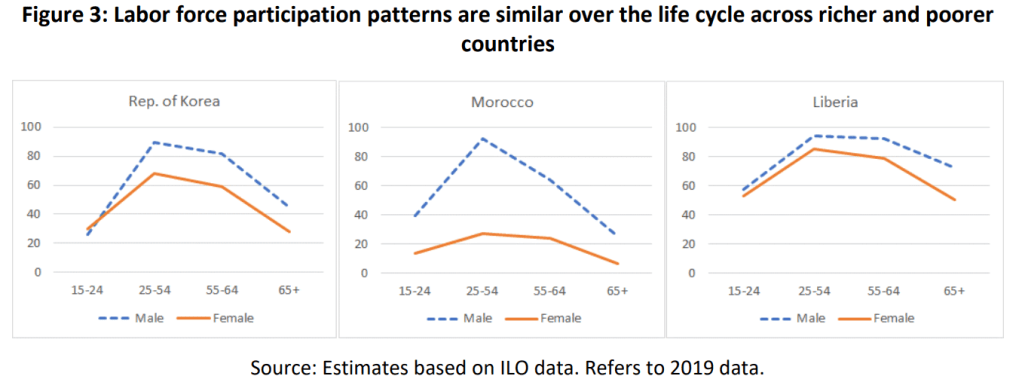
아래 도표에서는 한국과 모로코, 리베리아가 각각 선진국, 개발도상국 및 저개발국의 표본으로 나왔는데, 저개발국에서는 남녀가 거의 공히 나이가 들어서도 일을 하는 것을 알 수 있습니다.

반면 한국은 남성이 여성에 비해 많이 오래 일하죠. 25-54세 사이에 남성은 90% 정도, 여성은 70% 정도가 일을 하다가 서서히 줄어들어서 65세 이상에서는 남성의 50%, 여성의 30% 정도가 계속 일을 하고 있는 것을 알 수 있습니다.

오랜 기간 생산적인 일을 하려면 두가지가 중요하다고 전합니다.

  • 건강
  • 교육육

부러우면 지는거다 (39) 손석희 아나운서

안녕하세요 보스턴 임박사입니다.

말이 필요없는 분이죠. 손석희 아나운서를 소개합니다. 사진은 MBC 노조시절의 청년 손석희 아나운서를 실었습니다. MBC에 이제 안 계신데도 MBC 아나운서들의 존경을 받으시는 모양이군요.

일본에 교수로 가시게 된다고 합니다.

손석희, 올봄부터 일본 대학 객원교수 된다 – 서울신문 1/13/2024

MBC 아나운서들이 하는 아나운서 낭독회라는 것이 있는데 이번에는 손석희 아나운서의 이야기를 소재로 낭독회가 있었습니다.

  1. 손석희를 읽는 밤 – Intro 영상

2. MBC 아나운서 낭독회: 손석희를 읽는 밤 (풀버전)

24:19부터 박진 아나운서가 낭독하는 세월호 참사에 대한 낭독이 있습니다. (Agenda Keeping)

1:04:00부터 손석희 아나운서를 무대에서 전종환 아나운서가 인터뷰하는 편이 나옵니다.

손석희가 ‘세월호 참사’ 보도를 지속한 이유 – 독서신문 12/16/2021

언론인 손석희가 책 『장면들』에서 가장 중요하게 다루고 있는 것은 ‘어젠다 키핑(agenda keeping)’이다. 어젠다 키핑을 번역하면 ‘의제 지키기’다. 언론의 전통적인 기능 중 하나는 ‘의제 설정’을 뜻하는 ‘어젠다 세팅(agenda setting)’이다. 공론화가 되어 토론할 필요가 있는 사회적 이슈에 카메라와 마이크를 갖다 대는 행위가 바로 어젠다 세팅이다. 어젠다 키핑은 그러한 이슈에 카메라와 마이크를 갖다 대는 시간을 ‘오랫동안 지속하는’ 행위다.

손석희는 “이 책이 주로 다룬 것은 저널리즘의 한 방법론으로서의 ‘어젠다 키핑(agenda keeping)’이다. 이 표현은 내가 주장하긴 했지만 완전히 창의적인 것은 아닐 것”이라며 “그 이전에 의제설정 기능(agenda setting)은 이미 전통적인 미디어 이론으로 널리 알려져 있다. 그러나 미디어가 단지 의제를 세우는 데 그치지 않고, 그 의제를 꾸준히 지켜냄으로써 선한 기여를 할 수 있다는 믿음은 그것과는 좀 다른 얘기”라고 말한다.

손석희가 JTBC의 뉴스 책임자로 어젠다 키핑 개념을 실천한 가장 대표적인 사안은 바로 ‘세월호 참사’였다. 세월호 참사에 대한 언론과 국민들의 관심이 시들고 있을 때에도, JTBC는 참사 이후 200일 동안 쉬지 않고 해당 사안을 지키기 위해 지속적으로 보도했다. 그는 “세월호라는 어젠다를 유지하고 기억하는 것은 의지만 가지고는 안 되는 것이었다”며 “유가족들과 시청자들의 도움과 격려가 없었다면 불가능한 일이었다”고 술회한다

BIOTECH (160) Xilio Therapeutics: Tumor-Activated Immuno-Oncology

(Picture: John C. Williams, PhD, Professor of City Hope)

(Picture: Ulrich Rodeck, MD, PhD, Professor of Thomas Jefferson University)

Akriveia Therapeutics Raises $7.5M in Series A Funding – FinSME 10/13/2016

Akriveia Therapeutics LLC, a Thousand Oaks, Calif.-based immuno-oncology focused biotechnology company, raised $7.5m in Series A funding.

The round was led by F-Prime Capital Partners. Thomas Beck and Ben Auspitz of F-Prime Capital Partners will join Akriveia’s Board of Directors in conjunction with the funding. Dr. Beck will become Chairman of the Board.

The company intends to use the funds to expand the team to accelerate its therapeutic discovery efforts, and to build a pipeline of single agent and combination immunotherapeutics.

Led by Chief Executive Officer Simon Tomlinson, Akriveia Therapeutics leverages its proprietary platform to create immunotherapeutic products that are specifically activated in the microenvironment of the tumor. To this end, the company also announced that it has entered into exclusive license agreements for key enabling technologies with City of Hope and Thomas Jefferson University.

Akriveia was founded on the work of Professor John Williams at City of Hope and Professor Ulrich Rodeck at Thomas Jefferson University, experts in the fields of bioengineering and cancer therapeutic discovery.

Akriveia Therapeutics Announces Key Additions To Its Leadership Team – Biospace 11/11/2016

Akriveia Therapeutics, an emerging immuno-oncology focused biotechnology company, today announced recent key additions to its research leadership team.  Dr. C. Glenn Begley has joined the company as Chief Scientific Officer and Dr. Margaret Karow has joined as Vice President of Discovery and Preclinical Development.

Akriveia Therapeutics is harnessing its proprietary platform to create immunotherapeutic products that are specifically activated in the microenvironment of the tumor. It is anticipated that this will substantially increase the utility of immuno-oncology agents and spare patients the treatment-limiting, debilitating and sometimes lethal side-effects of the current generation of immunotherapeutics. 

“Glenn and Margaret joining the company are pivotal events for Akriveia,” commented Dr. Simon Tomlinson, Chief Executive Officer of Akriveia Therapeutics, “the depth and breadth of experience in the discovery and development of cancer biologics that they bring to the company is immense.  Their expertise will be key to Akriveia rapidly building a proprietary pipeline of next-generation immunotherapeutics.  I am thrilled and honored to welcome them to the company.”

Most recently Dr. Begley was Chief Scientific Officer at TetraLogic Pharmaceuticals. For the 10 years prior he was Vice-President and Global Head of Hematology and Oncology Research at Amgen Inc, based in California.  His group was responsible for marketed molecules such as Neupogen, Neulasta, Aranesp, Nplate, Xgeva, discovery of 25 new clinical-stage molecules, and in-licensing of molecules such as Imlygic the first approved oncolytic virus therapy and Blincyto, a bi-specific T-cell engager molecule. Dr. Begley’s personal research has focused on hematopoiesis and stem cell biology. He has published over 200 papers that have been highly cited.  His recent work includes analysis of the rigor and reproducibility of scientific research. Dr. Begley originally trained in Australia as a medical oncologist and molecular biologist and has received a number of awards including election to the Association of American Physicians in 2008.

Prior to joining Akriveia, Dr. Karow was an Executive Director at Amgen for 10 years. At Amgen, she held multiple roles in drug discovery and development. These included Executive Director in the Biosimilars Business Unit as the lead for Biosimilars Process Development, and as an Executive Director in Discovery Research leading the Biologics Optimization organization, Protein Sciences at the Thousand Oaks campus, and the site head for the Burnaby, Canada research site where XenoMouse antibody development is based. Prior to Amgen, Dr. Karow was at Regeneron Pharmaceuticals for 10 years, where she was the Vice President of Traps, Small Molecule and Antibody Development, and the Immunology therapeutic area. She was also the co-lead for the development of the VelocImmune mouse platform for the production of human antibodies. As a leader in biotechnology, she has shepherded multiple large molecule projects from their discovery stage and into clinical trials, as well as to the successful filing of marketing applications. Margaret completed her post-doctoral work at Temple Medical School and her Ph.D. at the University of Utah, and holds a BA in MCD Biology from the University of Colorado.

“I’m excited to be joining Akriveia at this strategic stage of its development,” noted Dr. Begley, “the scientific founders have built a powerful and novel platform for the discovery of immuno-therapeutics with pharmacological action targeted to tumor sites.  I’m looking forward to helping the company drive the development of a proprietary pipeline and to exploring partnerships that combine our strengths with those of other pharma and biotechnology companies.”

“Akriveia presented a unique opportunity for me to apply my experience of biotherapeutic discovery and development at an early stage company in the immuno-oncology field,” noted Dr. Karow, “the Akriveia approach offers the promise of tackling a significant unmet medical need for safer and more effective immuno-oncology agents.  I’m delighted to have joined Akriveia and I am looking forward to helping the company build a pipeline of innovative immunotherapeutics.”

About Akriveia Therapeutics

Akriveia Therapeutics is actively pursuing the discovery and development of the next generation of cancer immunotherapies. Akriveia believes its new agents offer the promise of a safer and more efficacious approach to harness a patient’s own immune system to fight cancer.  Akriveia was founded on the pioneering work of Professor John Williams at City of Hope and Professor Ulrich Rodeck at Thomas Jefferson University, experts in the fields of bioengineering and cancer therapeutic discovery.  The company is backed by leading life science investor FPrime Capital Partners.

Akriveia Therapeutics’ Aklusion Platform for Tumor-Targeting Cancer Immunotherapies to be Featured in Poster Presentation at the Society for Immunotherapy of Cancer’s (SITC) 32nd Annual Meeting – Biospace 11/7/2017

Akriveia Therapeutics, an immuno-oncology focused biotechnology company, today announced its Aklusion™ platform for tumor-targeting cancer immunotherapies will be featured in a poster presentation at the Society for Immunotherapy of Cancer’s (SITC) 32nd Annual Meeting, November 10-12, 2017, at Gaylord National Hotel & Convention Center in National Harbor, MD.

The poster’s authors include scientists from the laboratories of Professor John Williams of the Beckman Research Institute at the City of Hope and Professor Ulrich Rodeck at Thomas Jefferson University, along with Dr. Margaret Karow, Senior Vice President of Drug Discovery and Preclinical Development at Akriveia Therapeutics.

Information about the poster presentation is:

Poster Title: Rational Design of Immuno-Oncology Biologics with Improved Safety and Efficacy

Poster Number: P466

Poster Session: Saturday November 11th 12:30pm-2:00pm and 6:30pm-8:00pm

Akrevia Therapeutics Launches with $30M Series A Financing Led by F-Prime Capital Partners and Atlas Venture – PR Newswire 9/27/2018

Akrevia Therapeutics, a privately-held biopharmaceutical company focused on developing highly-potent, tumor-targeted immuno-oncology therapeutics, today announced the closing of a $30 million Series A financing led by F-Prime Capital Partners and Atlas Venture. The investors have come together to recruit an experienced management team to accelerate Akrevia’s pipeline and proprietary Aklusion® platform, which allows therapeutic antibodies, cytokines and chemokines to be specifically activated in the tumor microenvironment and tailored with precisely optimized pharmacologic properties.

Akrevia will be led by Tim Clackson, Ph.D., as President and Head of R&D and Nessan Bermingham, Ph.D., as Executive Chairman. Dr. Clackson joins Akrevia after serving as President of R&D at ARIAD Pharmaceuticals, where he led the discovery and development of Iclusig® (ponatinib) and Alunbrig® (brigatinib), two FDA-approved cancer therapeutics. Dr. Bermingham was most recently CEO of Intellia Therapeutics, a leading gene editing company which he founded, built, and took public.

“We are excited to have the opportunity to work with Tim and Nessan, two experienced drug developers and entrepreneurs who have helped deliver novel therapies to patients and built successful, billion-dollar biotechs,” said Ben Auspitz, F-Prime Capital Partners.

“We were attracted by the strong validation of Akrevia’s founding technology from City of Hope, and the opportunity to harness the therapeutic potential of cytokines and chemokines,” said David Grayzel, M.D., Atlas Venture. “We believe that the Akrevia team and platform will unlock the potential of multiple important immuno-oncology mechanisms and deliver a pipeline of potent, targeted agents to patients.”

Optimizing Potency and Delivery: Aklusion Platform Technology

Akrevia’s Aklusion platform, based on technology licensed from City of Hope and Thomas Jefferson University, allows potently active biological molecules to be inactive until they encounter the tumor microenvironment. With a potential best-in-class anti-CTLA4 antibody as validation, the technology can be applied broadly to other biologic architectures, including highly-potent cytokines and chemokines which currently have limited or no clinical utility due to toxicities. By tailoring pharmacokinetic and pharmacodynamic properties in parallel, Aklusion allows design of molecules with potential best-in-class potency and selectivity.  

“Targeting is key to unlocking the true potential of immuno-oncology,” said Tim Clackson, Ph.D., President and EVP R&D, Akrevia Therapeutics. “Currently, we don’t lack potential agents – just the ability to effectively and safely deliver them where they’re needed, and with precisely tailored properties. Our vision at Akrevia is to unleash the full potential of immune stimulating molecules including antibodies, cytokines and chemokines, as new options for patients living with cancer.”

Additional Akrevia leadership includes Ronan O’Hagan, Ph.D., who formerly co-led the oncology discovery program at Merck, as SVP of Discovery, and Margaret Karow, Ph.D., formerly of Amgen and Regeneron, as SVP of Preclinical Development. Thomas Beck, M.D., and Ben Auspitz of F-Prime Capital serve on the Board of Directors alongside David Grayzel, M.D. and Michael Gladstone of Atlas Venture.

About Akrevia Therapeutics

Akrevia Therapeutics, LLC is a privately-held biopharmaceutical company focused on developing highly-potent, targeted immuno-oncology therapeutics. The company’s proprietary Aklusion platform technology allows biologics to be specifically activated in the tumor microenvironment, and with precisely tailored properties, expanding the universe of immune-activating proteins that can be safely delivered. Akrevia is applying its technology to build a broad pipeline of engineered antibodies, cytokines and chemokines as potential new options for patients living with cancer. To learn more, please visit www.akrevia.com.

Akrevia Therapeutics Rebrands as Xilio Therapeutics and Announces $100.5 Million Series B Financing – Business Wire 3/2/2020

Xilio Therapeutics, a company developing potent, tumor-selective immuno-oncology (IO) therapies for patients with cancer, today announced the closing of a $100.5 million Series B financing. Proceeds from the financing will be used to progress Xilio’s first two therapeutic candidates, XTX201 (tumor-selective IL-2) and XTX101 (tumor-selective aCTLA4 mAb) through Investigational New Drug (IND) enabling studies and into Phase 1 clinical trials, as well as advance additional tumor-selective cytokine programs using Xilio’s proprietary technology.

The financing was led by Takeda Ventures, Inc. with new investors SV Health Investors, MRL Ventures Fund, RiverVest Venture Partners, Bay City Capital, Solasta Ventures, M Ventures, and Ipsen Ventures joining existing investors F-Prime Capital and Atlas Venture in the syndicate.

“We are fortunate to have the support of investors who share our vision to deliver highly potent and effective tumor-selective cancer therapies to patients,” said Rene Russo, Chief Executive Officer of Xilio Therapeutics. “This is a transformational moment for the company as we work to bring our first development programs to patients with cancer and expand our tumor-selective cytokine pipeline.”

Xilio Therapeutics is developing its proprietary technology to create a new class of ultra-potent IO therapies that are activated selectively within the tumor. These tumor-selective therapies are designed to overcome the significant toxicities associated with validated IO therapies, such as IL-2 and aCTLA4, which have historically limited the number of patients that can be treated and prevented patients from completing full courses of treatment. XTX201 (IL-2) and XTX101 (aCTLA4 mAb) have demonstrated tumor-selective activity in preclinical models, significantly widening the potential therapeutic index for these therapies.

“IO has emerged as a major driver of cancer therapeutic development, and agents in this space have proven effective, resulting in compelling durable clinical responses,” stated Jayson Punwani, Investment Partner with Takeda Ventures. “We believe Xilio’s proprietary platform offers a compelling approach that builds upon the advancements in IO therapeutics. It is encouraging to see such a strong and supportive Series B syndicate, including leading venture capital groups and strategic partners. We look forward to working with Xilio’s current investors and the leadership team to support the advancement of its pipeline into the clinic.”

In connection with the closing of the financing, Mr. Punwani, Mike Ross of SV Health Investors, Peter Dudek of MRL Ventures Fund (the therapeutics-focused venture capital group within Merck), and Nancy Hong of RiverVest Venture Partners each joined the Board of Directors of Xilio.

The rebranding of the company from Akrevia Therapeutics to Xilio Therapeutics (pronounced “ex-il-ee-oh”) reflects the company’s evolution from a research-focused organization to a development stage company and commitment to developing the next generation of ultra-potent IO therapies. Xilio is derived from the Latin term Ex Nihilo, meaning creation or big-bang, and embodies the company’s vision to create the next generation of transformative cancer treatments for individuals living with cancer by unleashing the full power of highly potent immune therapies precisely in tumors.

About Xilio Therapeutics
Xilio Therapeutics is a biotechnology company advancing next-generation cancer immunotherapies designed to improve patient outcomes by unleashing the power of the immune system selectively at the site of the tumor. The company’s tumor-selective immunotherapies are based on its proprietary technology, which maximizes the potency of proven immuno-oncology therapies and restricts their activity to the tumor to minimize peripheral side effects. The broad applicability of these therapies across cancer types means that all patients could benefit from these potentially curative medicines.

Xilio was founded in 2016 and is headquartered in Waltham, Mass. For more information, please visit www.xiliotx.com

Xilio raises $95M to take twists on Yervoy and IL-2 into clinic – Fierce Biotech 2/24/2021

Xilio Therapeutics has raised $95 million to take IL-2 and CTLA-4 immunotherapies into clinical trials. The series C positions Xilio to provide early clinical validation of anti-cancer agents that are designed to remain inactive until they reach tumors. 

Immuno-oncology drugs are typically given systemically, causing them to trigger immune responses that affect healthy and cancerous tissues alike. The resulting adverse events are unpleasant and can prevent physicians from administering the most efficacious dose. Patients suffer from both the side effects and worse outcomes due to the use of suboptimal doses.

Xilio, formerly known as Akrevia Therapeutics, is built on a platform designed to minimize the effect of cancer drugs on healthy tissues. The potential of the platform has attracted a who’s who of VCs.

Rock Springs Capital led the series C round with support from new backers including Bain Capital Life Sciences, Deerfield Management and RA Capital Management. Existing Xilio investors including Atlas Venture, SV Health Investors and Takeda Ventures also contributed to the financing.

Xilio will use the money to take two drugs, XTX202 and XTX101, into clinical development. XTX202 is a formulation of IL-2, a cytokine that is hamstrung by limitations such as a short half-life and immune effects that necessitate the administration of high doses. XTX101 is a monoclonal antibody against CTLA-4, the immune checkpoint receptor targeted by Bristol Myers Squibb’s Yervoy. INDs for both candidates are planned for this year.

Working with technology licensed from City of Hope and Thomas Jefferson University, Xilio links the drugs to peptides designed to mask the molecules until they reach the tumor microenvironment. The linker is cleaved by proteases found near to tumors, causing the targeted unmasking of the drug.

The approach holds particular promise for potentially highly efficacious molecules that must be given at reduced doses due for safety and tolerability reasons. Xilio thinks IL-2 and CTLA-4 fit the bill. 

“While high dose rhIL-2 has the potential for durable complete responses, it is only given to a small number of patients due to its life-threatening toxicity. Similarly, approved aCTLA4 therapy produces severe autoimmune toxicity, limiting potential benefit by preventing patients from receiving highly therapeutic doses or completing full courses of treatment,” Martin Huber, M.D., Xilio chief medical officer, said in a statement.

Xilio Therapeutics Announces Closing of Initial Public Offering – Globe News Wire 10/26/2021

Xilio Therapeutics, Inc. (Xilio) a biotechnology company developing tumor-selective immuno-oncology therapies for patients with cancer, today announced the closing of its previously announced initial public offering of 7,353,000 shares of its common stock at a price to the public of $16.00 per share. The aggregate gross proceeds to Xilio from the offering were approximately $117.6 million, before deducting underwriting discounts and commissions and estimated offering expenses payable by Xilio. In addition, Xilio has granted the underwriters a 30-day option to purchase up to an additional 1,102,950 shares of its common stock at the initial public offering price less underwriting discounts and commissions.

The shares began trading on the Nasdaq Global Select Market on October 22, 2021 under the ticker symbol “XLO.”

Morgan Stanley, Cowen and Guggenheim Securities acted as joint book-running managers for the offering. Raymond James acted as lead manager for the offering.

Gilead pays $43.5M for early-phase IL-12 prospect from Xilio as biotech reduces head count – Fierce Biotech 3/28/2024

Gilead Sciences is bucking the trend in IL-12, handing Xilio Therapeutics $43.5 million upfront to get into the space after seeing rivals such as AstraZeneca and Bristol Myers Squibb retreat from the cytokine. Xilio shared the news alongside details of plans to pull back from another program and lay off 21% of its staff.

The Xilio deal gives Gilead a global license to develop and commercialize XTX301, Xilio’s tumor-activated IL-12. Like its sibling IL-2, the cytokine is a potentially potent immunotherapy, but efforts to realize that promise have repeatedly run into setbacks. Drug developers have come up with a range of ways to try to address the toxicity and half-life problems but are yet to deliver an approved IL-12 product.

Xilio’s attempt to crack the challenge rests on the addition of domains for masking and half-life extension to IL-12. Coupled to the domains, IL-12 could travel harmlessly around the body until it enters the tumor microenvironment, where an enzyme removes both add-ons and thereby activates the cytokine.

The biotech is putting that idea to the test in a phase 1 clinical trial. Patients with advanced solid tumors are receiving XTX301 every three weeks. In January, the biotech told investors the drug was generally well tolerated into the third dose level, with no dose-limiting toxicities, and committed to providing safety, pharmacokinetic and pharmacodynamic data in the second half of 2024. 

Gilead has made its move ahead of the data drop, handing Xilio $30 million in cash and investing $13.5 million in the biotech in return for an exclusive global license. Xilio is responsible for running the phase 1 trial through dose escalation. Once Gilead receives the data package, it can choose to pay $75 million to take responsibility for further development.

By the time Gilead makes that decision, Xilio could have received up to $29 million more from the Big Biotech in the form of additional equity investments and a development milestone payment. The fees are part of a package of milestones and investments worth up to $604 million. Shares in Xilio, which have languished below $1 this year, shot up by more than 200% in the wake of the update to exceed $2. 

The agreement moves Gilead into a space that some of its peers have entered and exited in recent years. Across two updates in 2022 and 2023, AstraZeneca dropped a Moderna-partnered mRNA prospect that encodes for IL-12 and axed an oncolytic viral agent engineered to include a transgene-encoding IL-12. In between those events, BMS returned the rights to Dragonfly Therapeutics’ IL-12 therapy.

Dragonfly is continuing to study its IL-12 candidate in a phase 1/2 trial, making it part of a pack of drug developers that have kept the faith in the cytokine. The pack includes Cullinan OncologyPhilogenPDS BiotechSonnet BioTherapeutics and Xencor.

Gilead is poised to take the baton from Xilio and carry XTX301 through the rest of the race against those rivals. The transfer will leave Xilio focused on its CTLA-4 prospect XTX101, phase 2 data on which are due later this year. Xilio has a third clinical-phase asset, the IL-2 candidate XTX202, but it has decided to stop investing in monotherapy development.

Xilio disclosed the decision alongside new phase 2 data on XTX202 in patients with kidney cancer and melanoma. Stable disease continued to be the best response, leading the biotech to “explore strategic opportunities” for further development in combinations. With its focus narrowing, Xilio is parting ways with 15 employees, representing a 21% reduction of its workforce.

PRODUCTIVE LONGEVITY (2) Aging Asia rethinks retirement to pursue ‘productive longevity’ – Nikkei Asia

(Picture: Japan’s government is encouraging companies to keep employees on the payroll until age 70. 

안녕하세요 보스턴 임박사입니다.

저는 Productive Longevity (노년기 생산적 활동)에 대해 관심을 가지게 되었습니다. 그래서 Gerontology (노년학)과 같은 연구논문을 차츰 읽기 시작했는데요. 그래서 그런지 각 나라의 이런 현상에 대한 기사나 논문에 눈이 가게 되었습니다.

오늘은 니혼게이자이 신문 영문판에서 2019년에 나온 기사를 가지고 노년기 생산적 활동에 대한 각국 아시아 나라의 상황은 어떠한지 나누고자 합니다.

싱가폴: 스페인, 일본 다음으로 싱가폴 사람들이 오래 삽니다. 그렇다보니 싱가폴에서는 노년층 고용촉진에 대한 노력이 활발한데요. 재교육 프로그램을 활성화시키며 노력하고 있습니다.

태국이나 베트남 등도 고령화가 되고 있는

Aging Asia rethinks retirement to pursue ‘productive longevity’ – Nikkei Asia 6/18/2019

SINGAPORE — Rosalind Tay left her job in April after she reached Singapore’s retirement age of 62, but she was far from ready to call it a career.

“I assume I will be living until 90-plus, like my parents, so I cannot survive based on my current savings,” said the former employee of a baby milk formula company. She said that medical bills are expensive, she wants to travel more, and she hopes to stay active to ward off dementia and other chronic diseases.

“I want to work as long as my body can.”

Singapore and other aging Asian societies are beginning to adjust their labor systems to accommodate people like Tay — and keep their own public welfare burdens in check. The city-state and governments across the region have started discussions on raising the age at which workers are expected, or in some cases required, to retire, delaying the start of pension payouts. But tapping the potential of senior workers is likely to take a lot more than just changing a number.

Singapore’s citizens and permanent residents aged 65 or older accounted for 13.7% of the population as of June 2018, up from 8.7% in 2008, making it one of the fastest-graying countries in Asia. People are also living longer: Singapore’s average life span in 2040 is expected to be 85.4 years, third-highest after Spain (85.8) and Japan (85.7), according to a study last year by the Institute for Health Metrics and Evaluation in the U.S.

In an interview with the Nikkei Asian Review in May, Singaporean Deputy Prime Minister Heng Swee Keat posed a key question his government is facing: “If our people are living longer, how do we create a structure that will enable them to continue to work if they wish to work?”

He said the city-state needs to deal with demographic changes to achieve what it calls “productive longevity.”

One challenge is to ensure seniors have the skills they need. Tay is enrolled in a program offered by the nonprofit Center For Seniors, where participants — mostly in their 50s and 60s — get a refresher course in preparing for job interviews and tips on maintaining motivation. “I learned the importance of being open, confident and willing to learn,” Tay said after a CFS seminar in early June. An average of 3,000 people attend various CFS programs each year.

Increasing the number of seniors in the workforce is seen as a crucial step toward shoring up Asian countries’ labor pools.

Singaporeans attend a job seminar organized by the Center For Seniors on June 10. (Photo by Kentaro Iwamoto)

“Raising the retirement age is an urgent matter to prevent a labor shortage as a result of an aging population,” said Doan Mau Diep, a deputy minister in Vietnam’s Ministry of Labor – Invalids and Social Affairs.

Hanoi plans to raise the retirement age to 62 for men and 60 for women, from the current 60 and 55, based on a proposal to the national assembly earlier this year.

Vietnam’s working-age population is decreasing and its dependence ratio is rising, the authorities say. Official statistics show that only 2 million people entered the workforce in the five years to 2018; fifteen years ago, 1.2 million were joining every year. The unemployment rate remained just 2% in 2018.

At the same time, the average life span has increased to 71.1 years for men and 81.3 years for women.

Thailand is grappling with similar issues. The country’s central bank says the aging population is likely to slow gross domestic product growth by 1.5 percentage points over the next decade.

“On average, the country’s GDP growth was around 5% per annum for the past 10 years,” said Don Nakornthab, senior director of the Bank of Thailand’s economic and policy department. “As society ages and the workforce shrinks, Thailand’s GDP growth could be at 3.5% annually over the next decade if this structural problem remains unsolved.” Active seniors are arguably becoming as important as robots and automation in keeping Southeast Asia’s second-largest economy running.

On May 21, Prime Minister Prayuth Chan-ocha’s previous junta cabinet approved a move to extend the retirement age for civil servants who will reach the current threshold of 60 in the next fiscal year. By how much is a question left for his current government.

This has sparked an intense debate among bureaucrats and intellectuals. The Office of the Civil Service Commission has suggested a new retirement age of 63. The Thailand Development Research Institute would like to see it raised to 65 in both the public and private sectors.

As for Japan, the world leader in aging, Prime Minister Shinzo Abe on June 5 unveiled a draft update to his economic growth strategy. One of the new initiatives is to push companies to let employees work until 70.

The government wants large corporations to do more to carry the burden of the aging society and swelling pension outlays. Companies are beginning to relent: The four biggest steelmakers in April announced they would raise their retirement age to 65 from 60 in 2021.

Nippon Steel said it is “doing its part” to help Japan overcome the pension crisis and aging population.

Company officials also noted that, although steelmaking is now largely automated, it still requires human skills and they need older workers to pass on their knowledge. The industry has about 200,000 workers in Japan, and its decision could prompt other manufacturers to follow suit.

When it comes to China — the only country with more than 200 million seniors — many experts have called for raising the official retirement age beyond 60. Beijing faces the dual challenges of an aging population and declining births, which can cause governments to fall behind on pension payouts.

Still, while policymakers are eager to get more seniors working and some companies see the wisdom of it, not all employees and employers are happy about pushing back retirement.

The Japanese government wants large corporations to do more to carry the burden of the aging society and swelling pension outlays. (Photo by Hideki Yoshikawa)

Pham Quynh Tran, a 45-year-old worker at a confectionery company in Vietnam’s southern Dongnai Province, has been on the job for 25 years and thinks another 10 is enough. “Extending the working age is only suitable for those who work in special fields, such as education or research,” she said. “I don’t think the health condition is good for workers at factories like me.”

Tran is skeptical about the shortage argument, since 100,000 Vietnamese go overseas every year as part of a labor export program. “Only officials who work for an authority or the government and get many perks are happy with the retirement age proposal,” she said.

Likewise, the head of a cosmetics company in Ho Chi Minh City who spoke on condition of anonymity said he is concerned about the plan. He said his company needs younger workers and the change would increase labor costs. If the proposal is approved, he fears he will have to restructure the company’s salary and reward systems, as well as relocate many older employees.

The yearning for youth is still strong in corporate Japan, too. “Many executives think older workers tend to be less amenable and harder to work with,” said Hideki Oe, a former Nomura banker and retirement consultant. “The truth is companies want to hire young people if it’s possible.”

Most Japanese companies continue to provide some work for employees after they retire at 60. Employers with a retirement age of 65 are still a minority and tend to be concentrated in labor-intensive industries, such as health care, restaurants, hotels, construction and delivery, data from the labor ministry shows.

The Philippines, for its part, is bucking the trend toward delaying retirement. The House of Representatives recently approved a measure allowing government workers to retire at 56 if they so choose — rather than 60 — and still receive full benefits. “To those who do not want to serve anymore, government employees can retire earlier,” Representative Antonio Tinio, the lead proponent, said. “It will be better for morale as a whole.”

Elsewhere, though, the reality is that policymakers, employers and workers are all under pressure to adjust to changing demographics. As people work longer, they will need an array of social systems in place, from education to keep up with new technologies to infrastructure upgrades — especially in less developed countries — that ensure it is safe and easy for older individuals to commute.

In many Asian countries, “older people did not have a lot of education [when they were young],” according to Thang Leng Leng, an associate professor at the National University of Singapore. She pointed out that re-education and retraining are crucial for societies to bring more seniors into the workforce and ensure they are productive.

Thang said governments also need to consider seniors’ work-life balance if they want them to put off retirement. “A lot of people don’t mind working, but they don’t want to work all the time,” she said. “In trying to get people to work longer, there’s really a need to restructure work.”

Beh Swan Gin, chairman of Singapore’s Economic Development Board, told the Nikkei Asian Review, “We have to re-imagine how we can create an economy where [seniors] can productively contribute.”

He said the government should raise the retirement age “at a pace where employers are able to cope,” since it will take time to change their focus on recruiting young people.

“How do you have this workforce where you have very different generations, all [with] different needs?” Beh said. “How do you combine that so that [your] operations do even better? It is a journey we all have to go through.”

Henry Quake, an adviser at the Center For Seniors in Singapore, said it is important for societies to help older citizens make the most of their talents. “The senior,” he said, “is a gold mine.”

Nikkei staff writers Mitsuru Obe in Tokyo, Masayuki Yuda in Bangkok and Mikhail Flores in Manila contributed to this story.

PRODUCTIVE LONGEVITY (1) Managing Oneself by Peter F. Drucker, PhD.

(Picture: Peter F. Drucker, PhD)

안녕하세요 보스턴 임박사입니다.

Productive Longevity 에 대해 얘기한 분으로 Peter F. Drucker 교수님이 계십니다. Drucker 교수님은 University of Pennsylvania에서 경영학 교수로서 기업경영이란 불모의 영역을 개척하신 분일 뿐만 아니라 자신 스스로 “Productive Longevity (의미있게 오래살기)”를 사신 분으로 미국에서는 Role Model로 여겨지십니다. 96세 생일을 8일 남기고 세상을 떠나실 때까지 쉬지 않고 집필 및 비영리기관을 돕는 일을 하시고 소위 “Social Entrepreneur (사회적 기업가)”의 원조가 되신 분이십니다. Drucker 교수님께서 돌아가시기 6년전인 1999년 (90세) 에 Harvard Business Review에 쓰신 글이 있어서 나누며 생각해 보고자 합니다.

제목은 “Managing Oneself (자신을 스스로 경영하라)” 입니다.

나의 강점은 무엇인가?

Feedback Analysis”를 통해 나의 강점을 찾을 수 있다. 중요한 결정을 내릴 때마다 무엇을 기대하는지 적어두고 9-12개월 후에 기대했던 것과 실제로 얻은 결과를 비교해 보라.

Feedback Analysis를 계속하면 2-3년 이내에 나의 강점을 알게 되는데 이것이 가장 중요한 지식이다. 이 결과로 부터 할 것은 첫째, 강점에 집중하는 것이다. 자신이 강점이 있는 분야에서 노력할 때 결과를 얻을 수 있다. 둘째 강점을 계발하기 위해 노력하라.

셋째, 지적교만으로 인해 배워야할 것을 배우지 못하는 우를 범하지 말라. 나의 강점을 최대로 실현하기 위해서 배워야 할 기술이나 지식이 있다면 그것을 배워야 한다.

일을 효과적으로 성취할 수 없게 만드는 나쁜 습관을 치료하라. Feedback을 통해 문제의 원인이 매너 부족때문이라는 것을 알게 될수도 있다. 기대와 실제 결과를 비교하다 보면 하지 말아야 할 것을 찾을 수 있게 된다. 약점은 무시하고 모든 에너지와 시간을 오로지 강점에 집중해야만 유능한 사람을 스타로 만들 수 있다.

어떻게 배우고 성과를 내는가?

이것은 개인성향의 문제여서 바꿀 수 없다. 나는 글을 통해 배우는가? 아니면 들어서 배우는가? 나는 사람들과 함께 일을 잘하는가? 아니면 혼자일 때 일을 잘하는가? 어떤 사람들은 팀멤버로서 일을 잘하고 어떤 사람들은 혼자일 때 일을 잘한다. 나는 결정권자일 때 결과를 내는가 아니면 조언자일 때 결과를 내는가? 대다수는 훌륭한 조력자이지만 결정을 내려야 하는 부담과 압력을 견디지 못한다. 나는 쫓기는 상황일 때 일을 잘하는가 아니면 미리 준비된 상황에서 일을 잘하는가? 나는 큰 조직에서 일을 잘하는가 아니면 작은 조직에서 일을 잘하는가? – 이것을 아는 것이 중요하다.

Summary.   

Throughout history, people had little need to manage their careers—they were born into their stations in life or, in the recent past, they relied on their companies to chart their career paths. But times have drastically changed. Today we must all learn to manage ourselves.

What does that mean? As Peter Drucker tells us in this seminal article first published in 1999, it means we have to learn to develop ourselves. We have to place ourselves where we can make the greatest contribution to our organizations and communities. And we have to stay mentally alert and engaged during a 50-year working life, which means knowing how and when to change the work we do.

It may seem obvious that people achieve results by doing what they are good at and by working in ways that fit their abilities. But, Drucker says, very few people actually know—let alone take advantage of—their fundamental strengths.

He challenges each of us to ask ourselves: What are my strengths? How do I perform? What are my values? Where do I belong? What should my contribution be? Don’t try to change yourself, Drucker cautions. Instead, concentrate on improving the skills you have and accepting assignments that are tailored to your individual way of working. If you do that, you can transform yourself from an ordinary worker into an outstanding performer.

Today’s successful careers are not planned out in advance. They develop when people are prepared for opportunities because they have asked themselves those questions and have rigorously assessed their unique characteristics. This article challenges readers to take responsibility for managing their futures, both in and out of the office.close

History’s great achievers—a Napoléon, a da Vinci, a Mozart—have always managed themselves. That, in large measure, is what makes them great achievers. But they are rare exceptions, so unusual both in their talents and their accomplishments as to be considered outside the boundaries of ordinary human existence. Now, most of us, even those of us with modest endowments, will have to learn to manage ourselves. We will have to learn to develop ourselves. We will have to place ourselves where we can make the greatest contribution. And we will have to stay mentally alert and engaged during a 50-year working life, which means knowing how and when to change the work we do.

What Are My Strengths?

Most people think they know what they are good at. They are usually wrong. More often, people know what they are not good at—and even then more people are wrong than right. And yet, a person can perform only from strength. One cannot build performance on weaknesses, let alone on something one cannot do at all.

Throughout history, people had little need to know their strengths. A person was born into a position and a line of work: The peasant’s son would also be a peasant; the artisan’s daughter, an artisan’s wife; and so on. But now people have choices. We need to know our strengths in order to know where we belong.

The only way to discover your strengths is through feedback analysis. Whenever you make a key decision or take a key action, write down what you expect will happen. Nine or 12 months later, compare the actual results with your expectations. I have been practicing this method for 15 to 20 years now, and every time I do it, I am surprised. The feedback analysis showed me, for instance—and to my great surprise—that I have an intuitive understanding of technical people, whether they are engineers or accountants or market researchers. It also showed me that I don’t really resonate with generalists.

Feedback analysis is by no means new. It was invented sometime in the 14th century by an otherwise totally obscure German theologian and picked up quite independently, some 150 years later, by John Calvin and Ignatius of Loyola, each of who incorporated it into the practice of his followers. In fact, the steadfast focus on performance and results that this habit produces explains why the institutions these two men founded, the Calvinist church and the Jesuit order, came to dominate Europe within 30 years.

Practiced consistently, this simple method will show you within a fairly short period of time, maybe two or three years, where your strengths lie—and this is the most important thing to know. The method will show you what you are doing or failing to do that deprives you of the full benefits of your strengths. It will show you where you are not particularly competent. And finally, it will show you where you have no strengths and cannot perform.

Several implications for action follow from feedback analysis. First and foremost, concentrate on your strengths. Put yourself where your strengths can produce results.

Second, work on improving your strengths. Analysis will rapidly show where you need to improve skills or acquire new ones. It will also show the gaps in your knowledge—and those can usually be filled. Mathematicians are born, but everyone can learn trigonometry.

Third, discover where your intellectual arrogance is causing disabling ignorance and overcome it. Far too many people—especially people with great expertise in one area—are contemptuous of knowledge in other areas or believe that being bright is a substitute for knowledge. First-rate engineers, for instance, tend to take pride in not knowing anything about people. Human beings, they believe, are much too disorderly for the good engineering mind. Human resources professionals, by contrast, often pride themselves on their ignorance of elementary accounting or of quantitative methods altogether. But taking pride in such ignorance is self-defeating. Go to work on acquiring the skills and knowledge you need to fully realize your strengths.

It takes far more energy to improve from incompetence to mediocrity than to improve from first-rate performance to excellence.

It is equally essential to remedy your bad habits—the things you do or fail to do that inhibit your effectiveness and performance. Such habits will quickly show up in the feedback. For example, a planner may find that his beautiful plans fail because he does not follow through on them. Like so many brilliant people, he believes that ideas move mountains. But bulldozers move mountains; ideas show where the bulldozers should go to work. This planner will have to learn that the work does not stop when the plan is completed. He must find people to carry out the plan and explain it to them. He must adapt and change it as he puts it into action. And finally, he must decide when to stop pushing the plan.

At the same time, feedback will also reveal when the problem is a lack of manners. Manners are the lubricating oil of an organization. It is a law of nature that two moving bodies in contact with each other create friction. This is as true for human beings as it is for inanimate objects. Manners—simple things like saying “please” and “thank you” and knowing a person’s name or asking after her family—enable two people to work together whether they like each other or not. Bright people, especially bright young people, often do not understand this. If analysis shows that someone’s brilliant work fails again and again as soon as cooperation from others is required, it probably indicates a lack of courtesy—that is, a lack of manners.

Comparing your expectations with your results also indicates what not to do. We all have a vast number of areas in which we have no talent or skill and little chance of becoming even mediocre. In those areas a person—and especially a knowledge worker—should not take on work, jobs, and assignments. One should waste as little effort as possible on improving areas of low competence. It takes far more energy and work to improve from incompetence to mediocrity than it takes to improve from first-rate performance to excellence. And yet most people—especially most teachers and most organizations—concentrate on making incompetent performers into mediocre ones. Energy, resources, and time should go instead to making a competent person into a star performer.

How Do I Perform?

Amazingly few people know how they get things done. Indeed, most of us do not even know that different people work and perform differently. Too many people work in ways that are not their ways, and that almost guarantees nonperformance. For knowledge workers, How do I perform? may be an even more important question than What are my strengths?

Like one’s strengths, how one performs is unique. It is a matter of personality. Whether personality be a matter of nature or nurture, it surely is formed long before a person goes to work. And how a person performs is a given, just as what a person is good at or not good at is a given. A person’s way of performing can be slightly modified, but it is unlikely to be completely changed—and certainly not easily. Just as people achieve results by doing what they are good at, they also achieve results by working in ways that they best perform. A few common personality traits usually determine how a person performs.

Am I a reader or a listener?

The first thing to know is whether you are a reader or a listener. Far too few people even know that there are readers and listeners and that people are rarely both. Even fewer know which of the two they themselves are. But some examples will show how damaging such ignorance can be.

When Dwight Eisenhower was Supreme Commander of the Allied forces in Europe, he was the darling of the press. His press conferences were famous for their style—General Eisenhower showed total command of whatever question he was asked, and he was able to describe a situation and explain a policy in two or three beautifully polished and elegant sentences. Ten years later, the same journalists who had been his admirers held President Eisenhower in open contempt. He never addressed the questions, they complained, but rambled on endlessly about something else. And they constantly ridiculed him for butchering the King’s English in incoherent and ungrammatical answers.

Eisenhower apparently did not know that he was a reader, not a listener. When he was Supreme Commander in Europe, his aides made sure that every question from the press was presented in writing at least half an hour before a conference was to begin. And then Eisenhower was in total command. When he became president, he succeeded two listeners, Franklin D. Roosevelt and Harry Truman. Both men knew themselves to be listeners and both enjoyed free-for-all press conferences. Eisenhower may have felt that he had to do what his two predecessors had done. As a result, he never even heard the questions journalists asked. And Eisenhower is not even an extreme case of a nonlistener.

A few years later, Lyndon Johnson destroyed his presidency, in large measure, by not knowing that he was a listener. His predecessor, John Kennedy, was a reader who had assembled a brilliant group of writers as his assistants, making sure that they wrote to him before discussing their memos in person. Johnson kept these people on his staff—and they kept on writing. He never, apparently, understood one word of what they wrote. Yet as a senator, Johnson had been superb; for parliamentarians have to be, above all, listeners.

Few listeners can be made, or can make themselves, into competent readers—and vice versa. The listener who tries to be a reader will, therefore, suffer the fate of Lyndon Johnson, whereas the reader who tries to be a listener will suffer the fate of Dwight Eisenhower. They will not perform or achieve.

How do I learn?

The second thing to know about how one performs is to know how one learns. Many first-class writers—Winston Churchill is but one example—do poorly in school. They tend to remember their schooling as pure torture. Yet few of their classmates remember it the same way. They may not have enjoyed the school very much, but the worst they suffered was boredom. The explanation is that writers do not, as a rule, learn by listening and reading. They learn by writing. Because schools do not allow them to learn this way, they get poor grades.

Schools everywhere are organized on the assumption that there is only one right way to learn and that it is the same way for everybody. But to be forced to learn the way a school teaches is sheer hell for students who learn differently. Indeed, there are probably half a dozen different ways to learn.

A chief executive I know who converted a small and mediocre family business into the leading company in its industry was one of those people who learn by talking. He was in the habit of calling his entire senior staff into his office once a week and then talking at them for two or three hours. He would raise policy issues and argue three different positions on each one. He rarely asked his associates for comments or questions; he simply needed an audience to hear himself talk. That’s how he learned. And although he is a fairly extreme case, learning through talking is by no means an unusual method. Successful trial lawyers learn the same way, as do many medical diagnosticians (and so do I).

There are people, like Churchill, who learn by writing. Some people learn by taking copious notes. Beethoven, for example, left behind an enormous number of sketchbooks, yet he said he never actually looked at them when he composed. Asked why he kept them, he is reported to have replied, “If I don’t write it down immediately, I forget it right away. If I put it into a sketchbook, I never forget it and I never have to look it up again.” Some people learn by doing. Others learn by hearing themselves talk.

Of all the important pieces of self-knowledge, understanding how you learn is the easiest to acquire. When I ask people, “How do you learn?” most of them know the answer. But when I ask, “Do you act on this knowledge?” few answer yes. And yet, acting on this knowledge is the key to performance; or rather, not acting on this knowledge condemns one to nonperformance.

Am I a reader or a listener? and How do I learn? are the first questions to ask. But they are by no means the only ones. To manage yourself effectively, you also have to ask, Do I work well with people, or am I a loner? And if you do work well with people, you then must ask, In what relationship?

Some people work best as subordinates. General George Patton, the great American military hero of World War II, is a prime example. Patton was America’s top troop commander. Yet when he was proposed for an independent command, General George Marshall, the U.S. chief of staff—and probably the most successful picker of men in U.S. history—said, “Patton is the best subordinate the American army has ever produced, but he would be the worst commander.”

Some people work best as team members. Others work best alone. Some are exceptionally talented as coaches and mentors; others are simply incompetent as mentors.

Do not try to change yourself—you are unlikely to succeed. Work to improve the way you perform.

Another crucial question is, Do I produce results as a decision-maker or as an adviser? A great many people perform best as advisers but cannot take the burden and pressure of making the decision. A good many other people, by contrast, need an adviser to force themselves to think; then they can make decisions and act on them with speed, self-confidence, and courage.

This is a reason, by the way, that the number two person in an organization often fails when promoted to the number one position. The top spot requires a decision-maker. Strong decision-makers often put somebody they trust into the number two spot as their adviser—and in that position the person is outstanding. But in the number one spot, the same person fails. He or she knows what the decision should be but cannot accept the responsibility of actually making it.

Other important questions to ask include, Do I perform well under stress, or do I need a highly structured and predictable environment? Do I work best in a big organization or a small one? Few people work well in all kinds of environments. Again and again, I have seen people who were very successful in large organizations flounder miserably when they moved into smaller ones. And the reverse is equally true.

The conclusion bears repeating: Do not try to change yourself—you are unlikely to succeed. But work hard to improve the way you perform. And try not to take on work you cannot perform or will only perform poorly.

What Are My Values?

To be able to manage yourself, you finally have to ask, What are my values? This is not a question of ethics. With respect to ethics, the rules are the same for everybody, and the test is a simple one. I call it the “mirror test.

In the early years of this century, the most highly respected diplomat of all the great powers was the German ambassador in London. He was clearly destined for great things—to become his country’s foreign minister, at least, if not its federal chancellor. Yet in 1906 he abruptly resigned rather than preside over a dinner given by the diplomatic corps for Edward VII. The king was a notorious womanizer and made it clear what kind of dinner he wanted. The ambassador is reported to have said, “I refuse to see a pimp in the mirror in the morning when I shave.”

That is the mirror test. Ethics requires that you ask yourself, What kind of person do I want to see in the mirror in the morning? What is ethical behavior in one kind of organization or situation is ethical behavior in another. But ethics is only part of a value system—especially of an organization’s value system.

To work in an organization whose value system is unacceptable or incompatible with one’s own condemns a person both to frustration and to nonperformance.

Consider the experience of a highly successful human resources executive whose company was acquired by a bigger organization. After the acquisition, she was promoted to do the kind of work she did best, which included selecting people for important positions. The executive deeply believed that a company should hire people for such positions from the outside only after exhausting all the inside possibilities. But her new company believed in first looking outside “to bring in fresh blood.” There is something to be said for both approaches—in my experience, the proper one is to do some of both. They are, however, fundamentally incompatible—not as policies but as values. They bespeak different views of the relationship between organizations and people; different views of the responsibility of an organization to its people and their development; and different views of a person’s most important contribution to an enterprise. After several years of frustration, the executive quit—at considerable financial loss. Her values and the values of the organization simply were not compatible.

Similarly, whether a pharmaceutical company tries to obtain results by making constant, small improvements or by achieving occasional, highly expensive, and risky “breakthroughs” is not primarily an economic question. The results of either strategy may be pretty much the same. At bottom, there is a conflict between a value system that sees the company’s contribution in terms of helping physicians do better what they already do and a value system that is oriented toward making scientific discoveries.

Whether a business should be run for short-term results or with a focus on the long term is likewise a question of values. Financial analysts believe that businesses can be run for both simultaneously. Successful businesspeople know better. To be sure, every company has to produce short-term results. But in any conflict between short-term results and long-term growth, each company will determine its own priority. This is not primarily a disagreement about economics. It is fundamentally a value conflict regarding the function of a business and the responsibility of management.

Value conflicts are not limited to business organizations. One of the fastest-growing pastoral churches in the United States measures success by the number of new parishioners. Its leadership believes that what matters is how many newcomers join the congregation. The Good Lord will then minister to their spiritual needs or at least to the needs of a sufficient percentage. Another pastoral, evangelical church believes that what matters is people’s spiritual growth. The church eases out newcomers who join but do not enter into its spiritual life.

Again, this is not a matter of numbers. At first glance, it appears that the second church grows more slowly. But it retains a far larger proportion of newcomers than the first one does. Its growth, in other words, is more solid. This is also not a theological problem, or only secondarily so. It is a problem about values. In a public debate, one pastor argued, “Unless you first come to church, you will never find the gate to the Kingdom of Heaven.”

“No,” answered the other. “Until you first look for the gate to the Kingdom of Heaven, you don’t belong in church.”

Organizations, like people, have values. To be effective in an organization, a person’s values must be compatible with the organization’s values. They do not need to be the same, but they must be close enough to coexist. Otherwise, the person will not only be frustrated but also will not produce results.

A person’s strengths and the way that person performs rarely conflict; the two are complementary. But there is sometimes a conflict between a person’s values and his or her strengths. What one does well—even very well and successfully—may not fit with one’s value system. In that case, the work may not appear to be worth devoting one’s life to (or even a substantial portion thereof).

If I may, allow me to interject a personal note. Many years ago, I too had to decide between my values and what I was doing successfully. I was doing very well as a young investment banker in London in the mid-1930s, and the work clearly fit my strengths. Yet I did not see myself making a contribution as an asset manager. People, I realized, were what I valued, and I saw no point in being the richest man in the cemetery. I had no money and no other job prospects. Despite the continuing Depression, I quit—and it was the right thing to do. Values, in other words, are and should be the ultimate test.

Where Do I Belong?

A small number of people know very early where they belong. Mathematicians, musicians, and cooks, for instance, are usually mathematicians, musicians, and cooks by the time they are four or five years old. Physicians usually decide on their careers in their teens, if not earlier. But most people, especially highly gifted people, do not really know where they belong until they are well past their mid-twenties. By that time, however, they should know the answers to the three questions: What are my strengths? How do I perform? and, What are my values? And then they can and should decide where they belong.

Or rather, they should be able to decide where they do not belong. The person who has learned that he or she does not perform well in a big organization should have learned to say no to a position in one. The person who has learned that he or she is not a decision-maker should have learned to say no to a decision-making assignment. A General Patton (who probably never learned this himself) should have learned to say no to an independent command.

Equally important, knowing the answer to these questions enables a person to say to an opportunity, an offer, or an assignment, “Yes, I will do that. But this is the way I should be doing it. This is the way it should be structured. This is the way the relationships should be. These are the kind of results you should expect from me, and in this time frame, because this is who I am.”

Successful careers are not planned. They develop when people are prepared for opportunities because they know their strengths, their method of work, and their values. Knowing where one belongs can transform an ordinary person—hardworking and competent but otherwise mediocre—into an outstanding performer.

What Should I Contribute?

Throughout history, the great majority of people never had to ask the question, What should I contribute? They were told what to contribute, and their tasks were dictated either by the work itself—as it was for the peasant or artisan—or by a master or a mistress—as it was for domestic servants. And until very recently, it was taken for granted that most people were subordinates who did as they were told. Even in the 1950s and 1960s, the new knowledge workers (the so-called organization men) looked to their company’s personnel department to plan their careers.

Then in the late 1960s, no one wanted to be told what to do any longer. Young men and women began to ask, What do I want to do? And what they heard was that the way to contribute was to “do your own thing.” But this solution was as wrong as the organization men’s had been. Very few of the people who believed that doing one’s own thing would lead to contribution, self-fulfillment, and success achieved any of the three.

But still, there is no return to the old answer of doing what you are told or assigned to do. Knowledge workers in particular have to learn to ask a question that has not been asked before: What should my contribution be? To answer it, they must address three distinct elements: What does the situation require? Given my strengths, my way of performing, and my values, how can I make the greatest contribution to what needs to be done? And finally, What results have to be achieved to make a difference?

    Consider the experience of a newly appointed hospital administrator. The hospital was big and prestigious, but it had been coasting on its reputation for 30 years. The new administrator decided that his contribution should be to establish a standard of excellence in one important area within two years. He chose to focus on the emergency room, which was big, visible, and sloppy. He decided that every patient who came into the ER had to be seen by a qualified nurse within 60 seconds. Within 12 months, the hospital’s emergency room had become a model for all hospitals in the United States, and within another two years, the whole hospital had been transformed.

    As this example suggests, it is rarely possible—or even particularly fruitful—to look too far ahead. A plan can usually cover no more than 18 months and still be reasonably clear and specific. So the question in most cases should be, Where and how can I achieve results that will make a difference within the next year and a half? The answer must balance several things. First, the results should be hard to achieve—they should require “stretching,” to use the current buzzword. But also, they should be within reach. To aim at results that cannot be achieved—or that can be only under the most unlikely circumstances—is not being ambitious; it is being foolish. Second, the results should be meaningful. They should make a difference. Finally, results should be visible and, if at all possible, measurable. From this will come a course of action: what to do, where and how to start, and what goals and deadlines to set.

    Responsibility for Relationships

    Very few people work by themselves and achieve results by themselves—a few great artists, a few great scientists, a few great athletes. Most people work with others and are effective with other people. That is true whether they are members of an organization or independently employed. Managing yourself requires taking responsibility for relationships. This has two parts.

    The first is to accept the fact that other people are as much individuals as you yourself are. They perversely insist on behaving like human beings. This means that they too have their strengths; they too have their ways of getting things done; they too have their values. To be effective, therefore, you have to know the strengths, the performance modes, and the values of your coworkers.

    That sounds obvious, but few people pay attention to it. Typical is the person who was trained to write reports in his or her first assignment because that boss was a reader. Even if the next boss is a listener, the person goes on writing reports that, invariably, produce no results. Invariably the boss will think the employee is stupid, incompetent, and lazy, and he or she will fail. But that could have been avoided if the employee had only looked at the new boss and analyzed how this boss performs.

    Bosses are neither a title on the organization chart nor a “function.” They are individuals and are entitled to do their work in the way they do it best. It is incumbent on the people who work with them to observe them, to find out how they work, and to adapt themselves to what makes their bosses most effective. This, in fact, is the secret of “managing” the boss.

    The same holds true for all your coworkers. Each works his or her way, not your way. And each is entitled to work in his or her way. What matters is whether they perform and what their values are. As for how they perform—each is likely to do it differently. The first secret of effectiveness is to understand the people you work with and depend on so that you can make use of their strengths, their ways of working, and their values. Working relationships are as much based on the people as they are on the work.

    The second part of relationship responsibility is taking responsibility for communication. Whenever I, or any other consultant, start to work with an organization, the first thing I hear about are all the personality conflicts. Most of these arise from the fact that people do not know what other people are doing and how they do their work, or what contribution the other people are concentrating on and what results they expect. And the reason they do not know is that they have not asked and therefore have not been told.

    This failure to ask reflects human stupidity less than it reflects human history. Until recently, it was unnecessary to tell any of these things to anybody. In the medieval city, everyone in a district plied the same trade. In the countryside, everyone in a valley planted the same crop as soon as the frost was out of the ground. Even those few people who did things that were not “common” worked alone, so they did not have to tell anyone what they were doing.

    Today the great majority of people work with others who have different tasks and responsibilities. The marketing vice president may have come out of sales and know everything about sales, but she knows nothing about the things she has never done—pricing, advertising, packaging, and the like. So the people who do these things must make sure that the marketing vice president understands what they are trying to do, why they are trying to do it, how they are going to do it, and what results to expect.

    If the marketing vice president does not understand what these high-grade knowledge specialists are doing, it is primarily their fault, not hers. They have not educated her. Conversely, it is the marketing vice president’s responsibility to make sure that all of her coworkers understand how she looks at marketing: what her goals are, how she works, and what she expects of herself and of each one of them.

    The first secret of effectiveness is to understand the people you work with so that you can make use of their strengths.

    Even people who understand the importance of taking responsibility for relationships often do not communicate sufficiently with their associates. They are afraid of being thought presumptuous or inquisitive or stupid. They are wrong. Whenever someone goes to his or her associates and says, “This is what I am good at. This is how I work. These are my values. This is the contribution I plan to concentrate on and the results I should be expected to deliver,” the response is always, “This is most helpful. But why didn’t you tell me earlier?”

    And one gets the same reaction—without exception, in my experience—if one continues by asking, “And what do I need to know about your strengths, how you perform, your values, and your proposed contribution?” In fact, knowledge workers should request this of everyone with whom they work, whether as subordinate, superior, colleague, or team member. And again, whenever this is done, the reaction is always, “Thanks for asking me. But why didn’t you ask me earlier?”

    Organizations are no longer built on force but on trust. The existence of trust between people does not necessarily mean that they like one another. It means that they understand one another. Taking responsibility for relationships is therefore an absolute necessity. It is a duty. Whether one is a member of the organization, a consultant to it, a supplier, or a distributor, one owes that responsibility to all one’s coworkers: those whose work one depends on as well as those who depend on one’s own work.

    The Second Half of Your Life

    When work for most people meant manual labor, there was no need to worry about the second half of your life. You simply kept on doing what you had always done. And if you were lucky enough to survive 40 years of hard work in the mill or on the railroad, you were quite happy to spend the rest of your life doing nothing. Today, however, most work is knowledge work, and knowledge workers are not “finished” after 40 years on the job, they are merely bored.

    We hear a great deal of talk about the midlife crisis of the executive. It is mostly boredom. At 45, most executives have reached the peak of their business careers, and they know it. After 20 years of doing very much the same kind of work, they are very good at their jobs. But they are not learning or contributing or deriving challenge and satisfaction from the job. And yet they are still likely to face another 20 if not 25 years of work. That is why managing oneself increasingly leads one to begin a second career.

    There are three ways to develop a second career. The first is actually to start one. Often this takes nothing more than moving from one kind of organization to another: the divisional controller in a large corporation, for instance, becomes the controller of a medium-sized hospital. But there are also growing numbers of people who move into different lines of work altogether: the business executive or government official who enters the ministry at 45, for instance; or the midlevel manager who leaves corporate life after 20 years to attend law school and become a small-town attorney.

    We will see many more second careers undertaken by people who have achieved modest success in their first jobs. Such people have substantial skills, and they know how to work. They need a community—the house is empty with the children gone—and they need income as well. But above all, they need challenge.

    The second way to prepare for the second half of your life is to develop a parallel career. Many people who are very successful in their first careers stay in the work they have been doing, either on a full-time or part-time or consulting basis. But in addition, they create a parallel job, usually in a nonprofit organization, that takes another 10 hours of work a week. They might take over the administration of their church, for instance, or the presidency of the local Girl Scouts council. They might run the battered women’s shelter, work as a children’s librarian for the local public library, sit on the school board, and so on.

    Finally, there are the social entrepreneurs. These are usually people who have been very successful in their first careers. They love their work, but it no longer challenges them. In many cases they keep on doing what they have been doing all along but spend less and less of their time on it. They also start another activity, usually a nonprofit. My friend Bob Buford, for example, built a very successful television company that he still runs. But he has also founded and built a successful nonprofit organization that works with Protestant churches, and he is building another to teach social entrepreneurs how to manage their own nonprofit ventures while still running their original businesses.

    People who manage the second half of their lives may always be a minority. The majority may “retire on the job” and count the years until their actual retirement. But it is this minority, the men and women who see a long working-life expectancy as an opportunity both for themselves and for society, who will become leaders and models.

    There is one prerequisite for managing the second half of your life: You must begin long before you enter it. When it first became clear 30 years ago that working-life expectancies were lengthening very fast, many observers (including myself) believed that retired people would increasingly become volunteers for nonprofit institutions. That has not happened. If one does not begin to volunteer before one is 40 or so, one will not volunteer once past 60.

    Similarly, all the social entrepreneurs I know began to work in their chosen second enterprise long before they reached their peak in their original business. Consider the example of a successful lawyer, the legal counsel to a large corporation, who has started a venture to establish model schools in his state. He began to do volunteer legal work for the schools when he was around 35. He was elected to the school board at age 40. At age 50, when he had amassed a fortune, he started his own enterprise to build and to run model schools. He is, however, still working nearly full-time as the lead counsel in the company he helped found as a young lawyer.

    There is one prerequisite for managing the second half of your life: You must begin doing so long before you enter it.

    There is another reason to develop a second major interest, and to develop it early. No one can expect to live very long without experiencing a serious setback in his or her life or work. There is the competent engineer who is passed over for promotion at age 45. There is the competent college professor who realizes at age 42 that she will never get a professorship at a big university, even though she may be fully qualified for it. There are tragedies in one’s family life: the breakup of one’s marriage or the loss of a child. At such times, a second major interest—not just a hobby—may make all the difference. The engineer, for example, now knows that he has not been very successful in his job. But in his outside activity—as church treasurer, for example—he is a success. One’s family may break up, but in that outside activity there is still a community.

    In a society in which success has become so terribly important, having options will become increasingly vital. Historically, there was no such thing as “success.” The overwhelming majority of people did not expect anything but to stay in their “proper station,” as an old English prayer has it. The only mobility was downward mobility.

    In a knowledge society, however, we expect everyone to be a success. This is clearly an impossibility. For a great many people, there is at best an absence of failure. Wherever there is success, there has to be failure. And then it is vitally important for the individual, and equally for the individual’s family, to have an area in which he or she can contribute, make a difference, and be somebody. That means finding a second area—whether in a second career, a parallel career, or a social venture—that offers an opportunity for being a leader, for being respected, for being a success.

    The challenges of managing oneself may seem obvious, if not elementary. And the answers may seem self-evident to the point of appearing naive. But managing oneself requires new and unprecedented things from the individual, and especially from the knowledge worker. In effect, managing oneself demands that each knowledge worker think and behave like a chief executive officer. Further, the shift from manual workers who do as they are told to knowledge workers who have to manage themselves profoundly challenges social structure. Every existing society, even the most individualistic one, takes two things for granted, if only subconsciously: that organizations outlive workers, and that most people stay put.

    But today the opposite is true. Knowledge workers outlive organizations, and they are mobile. The need to manage oneself is therefore creating a revolution in human affairs.

    • Peter F. Drucker (November 19, 1909 – November 11, 2005) was an Austrian-born American management consultant, educator, and author whose writings contributed to the philosophical and practical foundations of the modern business corporation. He was also a leader in the development of management education, he invented the concept known as management by objectives, and he has been described as “the founder of modern management.”

    BIOTECH (159) Avenzo Therapeutics: Turning Point Therapeutics Reunion – Acquisition of Early-Stage Oncology Small Molecules, ADCs from Chinese Biotech & US Biopharma

    (Picture: Athena Countouriotis, MD, Co-Founder & CEO of Avenzo Therapeutics and Mohammad Hirmand, MD, Co-Founder & CMO of Avenzo Therapeutics)

    안녕하세요 보스턴 임박사입니다.

    2022년에 Bristol Myers Squibb은 Turning Point Therapeutics를 122% 프리미엄인 $4.1 Billion에 인수했습니다. 당시 여러 파이프라인이 있었지만 Repotrectinib (ROS1/NTRK Inhibitor)가 M&A의 중심약물이었습니다.

    UPDATE: Bristol Myers strikes up Roche rivalry with $4.1B Turning Point buy – Fierce Biotech 6/3/2022

    Eyeing a rivalry with Roche and a new cancer asset slated to hit the markets next year, Bristol Myers Squibb is picking up Turning Point Therapeutics in a $4.1 billion acquisition.

    BMS will gain access to repotrectinib, a midstage candidate in testing for first-line lung cancer as a potential competitor to Roche’s Rozlytrek. The Big Pharma landed Turning Point for $76 per share, with both companies’ boards approving the transaction that is slated to close in the third quarter.

    The buy will bolster BMS’s medium- to long-term growth strategy, providing a pipeline of precision oncology medicines that target common mutations that cause the growth of cancer cells. The star is of course the lead asset repotrectinib, a next-generation tyrosine kinase inhibitor that targets the ROS1 and NTRK gene mutations—just like Rozlytrek.

    The Roche med, which was approved in 2019, brought in 16 million Swiss francs ($16.6 million) for the Swiss pharma in the first quarter, a 78% increase over the same quarter a year before. The therapy is approved in a type of mutated non-small cell lung cancer (NSCLC), solid tumors and ROS1-positive, advanced non-small cell lung cancer.

    Repotrectinib has earned three breakthrough-therapy tags and has demonstrated a longer duration of response compared to existing ROS1 agents in first-line NSCLC during a phase 1/2 trial. Other studies involving the med include late-stage adult and pediatric advanced solid tumor trials and an earlier stage KRAS-targeting combination study.

    The therapy is expected to be approved in the U.S. in the second half of 2023, according to BMS. The Big Pharma will also “explore the potential” of Turning Point’s other candidates, which include the solid tumor therapies elzovantinib and TPX-0046.

    Turning Point President and CEO Athena Countouriotis, M.D., said with BMS’ commercial capabilities and manufacturing footprint, the biotech can accelerate efforts to bring its medicines to patients. BMS CEO Giovanni Caforio, M.D., meanwhile, said the acquisition continues the company’s “strong track record of strategic business development to further enhance our growth profile.”

    SVB Securities analysts said the deal represents a 122% premium from Turning Point’s previous close of $34.16. But the shares skyrocketed upward Friday afternoon on the news of the deal to $74 apiece—a 116% increase and a gain of nearly $40. This reflects SVB Securities’ expectation of “little resistance from investors” given the tough biotech markets and the fact that many companies are trading at or below cash. 

    The firm predicts the market potential for repotrectinib to be $1.14 billion in the first-line setting and $455 million in the second line at peak. But this may take a few quarters after launch, into 2024, to realize. Turning Point is expected to meet with the FDA soon to discuss the filing, which could occur by the end of the year. 

    During that meeting, Turning Point is expected to get clarity on whether an accelerated approval might be an option for repotrectinib and whether the therapy could be submitted for a “line agnostic” ROS-1 indication, meaning it could be used at whatever stage of treatment for patients with the matching gene mutation. The company will also learn whether any confirmatory or post-approval studies will be needed, which is the case when an accelerated approval is granted. 

    “While we are not privy to the specifics of the deal or [Bristol’s] expectations for this meeting, we think it is unlikely to derail the deal given that the drug has three breakthrough therapy designations, suggesting that the agency views the compound as significantly differentiated,” SVB Securities wrote. 

    BMS has several therapies approved or in development for NSCLC, including Opdivo, Yervoy, Opdualag and CC-90011; however, SVB Securities does not believe this will raise any antitrust red flags given none of those target ROS1.

    Repotrectinib (ROS1/NTRK Inhibitor)는 2023년말에 FDA 승인을 받아서 Augtyro라는 브랜드명으로 판매되고 있습니다. 이로써 Turning Point Therapeutics 팀의 실력이 입증된 셈입니다.

    FDA approves repotrectinib for ROS1-positive non-small cell lung cancer – FDA Release 11/16/2023

    On November 15, 2023, the Food and Drug Administration approved repotrectinib (Augtyro, Bristol-Myers Squibb Company) for locally advanced or metastatic ROS1-positive non-small cell lung cancer (NSCLC).

    This is the first FDA approval that includes patients with ROS1-positive NSCLC who have previously received a ROS1 tyrosine kinase inhibitor (TKI), in addition to patients who are TKI naïve.

    The full prescribing information for Augtyro will be posted here.

    Approval was based on TRIDENT-1, a global, multicenter, single-arm, open-label, multi-cohort clinical trial (NCT03093116) which included patients with ROS1-positive locally advanced or metastatic NSCLC. Efficacy was evaluated in 71 ROS1 TKI-naïve patients who received up to 1 prior line of platinum-based chemotherapy and/or immunotherapy and 56 patients who received 1 prior ROS1 TKI with no prior platinum-based chemotherapy or immunotherapy.

    The major efficacy outcome measures were overall response rate (ORR) and duration of response (DOR) according to RECIST v1.1 as assessed by blinded independent central review. Confirmed ORR in the ROS1 TKI naïve group was 79% (95% CI: 68, 88) and 38% (95% CI: 25, 52) in those patients receiving prior treatment with a ROS1 inhibitor. Median DOR was 34.1 months (95% CI: 25.6, not evaluable) and 14.8 months (95% CI: 7.6, not evaluable) in the two respective groups. Responses were observed in intracranial lesions in patients with measurable CNS metastases, and in patients with resistance mutations following TKI therapy.

    The most common (>20%) adverse reactions were dizziness, dysgeusia, peripheral neuropathy, constipation, dyspnea, ataxia, fatigue, cognitive disorders, and muscular weakness.

    The recommended repotrectinib dose is 160 mg orally once daily with or without food for 14 days, then increased to 160 mg twice daily, until disease progression or unacceptable toxicity.

    This review used the Assessment Aid, a voluntary submission from the applicant to facilitate the FDA’s assessment.

    This application was granted priority review, breakthrough designation, and fast track designation. FDA expedited programs are described in the Guidance for Industry: Expedited Programs for Serious Conditions-Drugs and Biologics.

    Repotrectinib (ROS1/NTRK Inhibitor)의 FDA 승인이 있기 전에 Turning Point의 CEO와 CMO였던 Athena Countouriotis 박사와 Mohammad Hirmand 박사는 Avenzo Therapeutics를 설립하고 Orbimed, SR One, Lilly Asia Ventures 등 굵직한 VC의 펀딩으로 $200 Million Seed & Series A round를 마칩니다. Avenzo의 비즈니스 모델은 초기 oncology small molecules, ADCs 등을 확보하는 것이고 중국 바이오텍으로 부터 중국 이외의 권리를 인수해서 속히 나스닥에 상장하고 약물을 성공시킨다는 전략입니다.

    Ex-Turning Point execs plan to have their next bet, Avenzo, on the Nasdaq next summer – Endpoints News 5/26/2023

    The crew at Turning Point Therapeutics is back together for a new biotech that wants to acquire early-stage oncology small molecules, including antibody drug conjugates, and potentially form partnerships with China-based drug developers for ex-China rights as it eyes a speedy leap onto the Nasdaq around this time next year, CEO Athena Countouriotis told Endpoints News.

    After selling Turning Point to Bristol Myers Squibb, announced at the onset of last year’s ASCO confab, she and colleague Mohammad Hirmand founded Avenzo Therapeutics. The CEO and CMO already have approximately $200 million in seed and Series A financing from five big-name investors to evaluate which drugs to bring into its pipeline. That includes SR One, OrbiMed, Foresite Capital, Citadel’s Surveyor Capital and Lilly Asia Ventures. Bidding wars for assets have led Avenzo to miss out on some deals in recent months, but the biotech has three active term sheets and hopes to bring in its first asset in the third quarter, Countouriotis said in a Friday morning interview.

    Following that deal, Avenzo will likely look to raise a Series B of similar size before going onto the Nasdaq, for which the startup already has a ticker symbol in mind, the CEO said. She has invested in the company herself and named it after her two children, Ava and Enzo.

    Conversations are already underway with companies that no longer have clinical plans for certain therapeutic candidates or are cash-constrained, Countouriotis told Nasdaq in a recent interview. With the help of Lilly Asia Ventures, Avenzo will also scour ADC opportunities in China, where recent deals have come together for Duality Biologics with BioNTech and MediLink Therapeutics with Zai Lab. The one area Avenzo is shying away from is cell and gene therapy, the CEO said, noting the manufacturing spending required.

    Avenzo’s story seems rare today, but has the hallmarks of 2020-2021 biotech ambitions: quick financing, blue-chip VC firms coming together to back executives with IPO and M&A chops, assets that haven’t been through much clinical testing and a speedy flip onto the public markets.

    Avenzo’s path also sounds familiar to Acelyrin’s: raise massive private rounds to bankroll the licensing of other companies’ drugs and then take them through the clinic. Earlier this month, Acelyrin, led by former Horizon Therapeutics executives, went public in one of biopharma’s largest IPOs in years.

    Speaking with Nasdaq, Countouriotis said San Diego-based Avenzo is still in “stealth mode,” a term used endlessly in biotech circles. With eight employees in Avenzo’s infancy, the CEO hopes to grow the company like she did at Turning Point, which went public in 2019 and then sold for $4.1 billion last summer, growing from less than 20 employees to 300-plus during her tenure.

    전략대로 중국의 Allorion Therapeutics로 부터 임상1상에 있는 CDK2 blocker AVZO-021을 $40 Million upfront & $1 Billion total 가격으로 인수합니다.

    Avenzo, Merck KGaA and AbbVie each ink new deals to fortify cancer pipelines – Fierce Biotech 1/4/2024

    Avenzo Therapeutics, Merck KGaA and AbbVie each inked new deals to top up their cancer pipelines, with the former two companies handing over a combined $85 million in upfront cash

    Avenzo disclosed Thursday that it has locked arms with Allorion Therapeutics, snapping up ex-Greater China rights to the early-stage CDK2 blocker AVZO-021. The enzyme has been shown to hamper the impact of CDK4 or CDK6-targeting therapies in patients with HR-positive/HER2-negative breast cancer and can drive tumor development in other kinds of cancers, according to Avenzo. The med is currently in a phase 1 trial in patients with breast cancer and other patients with solid tumors. Avenzo can also tack on a preclinical asset from Allorion slated for IND submission in early 2025

    In exchange, Avenzo is paying Allurion $40 million upfront with more than $1 billion in biobucks attached to milestones for both AVZO-021 and the preclinical program. The money comes from nearly $200 million in funds raised in the middle of 2023, thanks to the likes of Lilly Asia Ventures and SR One.

    Avenzo is the latest venture from ex-Turning Point CEO Athena Countouriotis, M.D., who helped lead a $4.1 billion buyout from Bristol Myers Squibb in June 2022. 

    Avenzo wasn’t the only biotech to hit the dealmaking trail, with Merck KGaA tacking on ex-US licensing rights to Inspirna’s phase 2 colorectal cancer med, ompenaclid. Inspirna has aimed the med specifically at patients with RAS-mutated, advanced forms of the cancer, showing at last year’s European Society for Medical Oncology annual meeting that the drug produced a 37% objective response rate in 30 evaluable patients. The median progression-free survival was 10.2 months in a slightly larger sample size of 41 patients.

    The German pharma is paying $45 million upfront with an undisclosed amount of biobucks on the table. Merck also has the option to co-develop and co-commercialize the med in the U.S. alongside Inspirna. 

    Last but certainly not least, AbbVie, fresh off its end-of-the-year shopping spree, is heading back to the deal well, this time for Umoja’s cell therapies. The top prize is licensing rights to Umoja’s lead in-situ candidate UB-VV111, currently in IND-enabling studies. The asset is the first test of Umoja’s in-vivo CAR-T, aiming to break some of the limitations associated with current autologous manufacturing processes. Umoja plans to ask regulators to enter a phase 1 trial in the first half of this year.

    The second part of the deal is a larger discovery pact for up to four additional in-situ candidates, aimed at targets selected by AbbVie. All told, Umoja received both an undisclosed upfront payment and equity investment, with $1.4 billion in milestone payments available.

    AVZO-021을 인수하고 2달이 지나서 $150 Million Series A-1을 받았습니다. 이번에는 Sofinnova가 들어왔습니다. AVZO-021은 기존 CDK4/6 inhibitor에 저항성을 가진 환자들을 대상으로 한다는 전략입니다.

    Avenzo Closes $150M Oversubscribed Series A-1 to Advance Cancer Therapies – Biospace 3/27/2024

    San Diego-based Avenzo Therapeutics on Tuesday announced that it has closed a $150 million oversubscribed Series A-1 funding round, which the biotech will use to develop novel oncology therapeutics.

    Tuesday’s haul brings Avenzo’s total capital raised to $347 million since it was founded in August 2022, according to the company. The Series A-1 was led by New Enterprise Associates, Deep Track Capital, Sofinnova Investments and Sands Capital. New backers include Quan Capita, Delos Capital and TF Capital.

    Avenzo CEO Athena Countouriotis in a statement said that the company has “made great progress” in its aim to “advance the next generation of oncology therapies for patients,” including its lead program AVZ-021, a potentially best-in-class CDK2 selective inhibitor.

    According to Avenzo’s website, most FDA-approved inhibitors target the CDK4/6 axis, which in turn helps prevent the abnormal cell proliferation central to cancers. However, most patients develop resistance to CDK4/6 inhibitors through the hyperactivation of the CDK2 pathway. AVZ-021 works by blocking this cascade, which when used with CDK4/6 inhibitors could overcome such resistances and induce durable treatment responses.

    AVZ-021 was originally developed by the Boston- and China-based Allorion Therapeutics, which demonstrated in pre-clinical studies that the candidate selectively targeted CDK2 over CDK1, which is otherwise a driver of treatment toxicity. In January 2024, Avenzo paid $40 million upfront in an exclusive licensing deal with Allorion, which also includes an option for an additional preclinical program.

    Avenzo also pledged more than $1 billion in development, regulatory and commercial milestones, plus tiered royalties, for both programs.

    In collaboration with Allorion, Avenzo is running a Phase I/II study to evaluate AVZ-021 in patients with HR+/HER2- metastatic breast cancer and other advanced solid tumors.

    The first part of the study is a dose-escalation phase to evaluate the safety and tolerability of the candidate, as well as determine a recommended Phase II dose. The partners will then test AVZ-021 in a Phase II dose-expansion study to evaluate the antitumor activity of the candidate. The trial is currently recruiting in the U.S.

    “We are in a strong position to advance our potentially best-in-class CDK2 inhibitor, AVZO-021, expand our pipeline with additional assets, and continue to grow our team,” Countouriotis said.

    With its oversubscribed Series-A1, Avenzo follows in the footsteps of other San Diego biotechs that have recently reported sizable funding hauls. Last week, Capstan Therapeutics announced that it had closed a $175 million Series B funding round to develop its in vivo CAR-T cell therapy candidate. Mirador Therapeutics also launched last week, securing $400 million in funds to advance inflammatory and fibrotic disease programs.

    설립한지 이제 1년이 채 되지 않았기 때문에 파이프라인은 한개입니다. 계속 초기 약물을 사서 파이프라인을 붙여나갈 것으로 기대합니다.