BIOTECH (103) Prime Medicine: Prime Editing

안녕하세요 보스턴 임박사입니다.

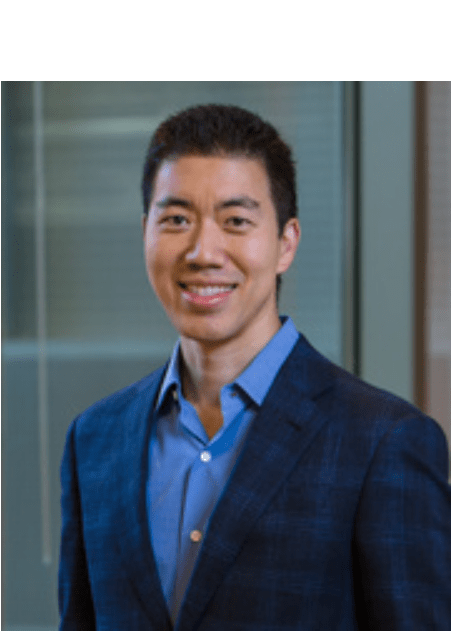
Harvard University의 David R. Liu 교수는 Biotech 분야의 발전에 지금까지 수많은 업적을 남겼습니다. 중요한 업적을 든다면 아래와 같습니다. 이 분야는 모두 신약개발에 너무나 큰 공로를 갖고 있는 연구업적들이기 때문에 시간이 문제일 뿐 Liu 교수가 노벨상을 받는 날이 언젠가 올 것으로 생각합니다.

  • DNA-Encoded Library
  • Base Editing
  • Prime Editing

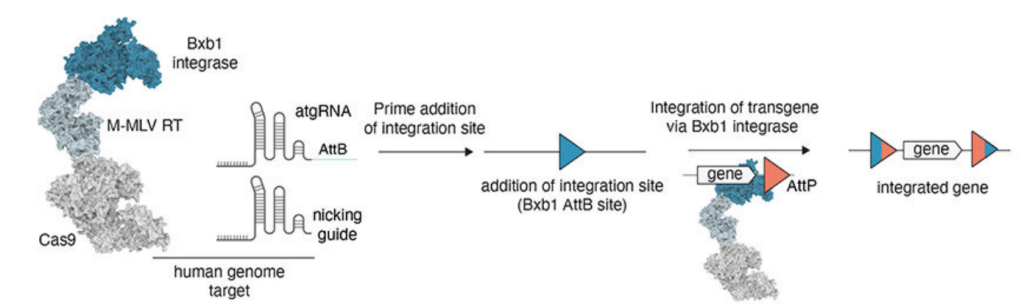
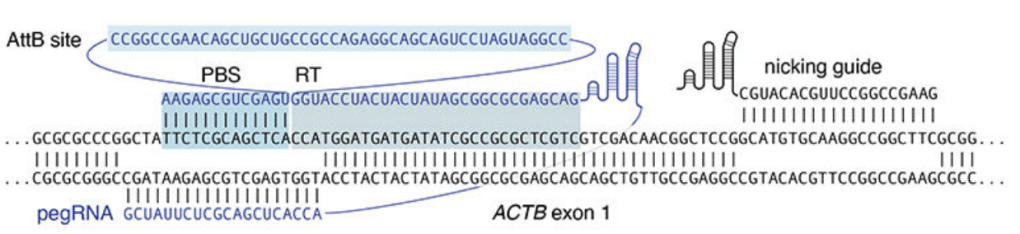
Prime Medicine은 Prime Editing을 세계 최초로 보고한 2019년 Nature 논문 결과를 바탕으로 만들어진 회사입니다.
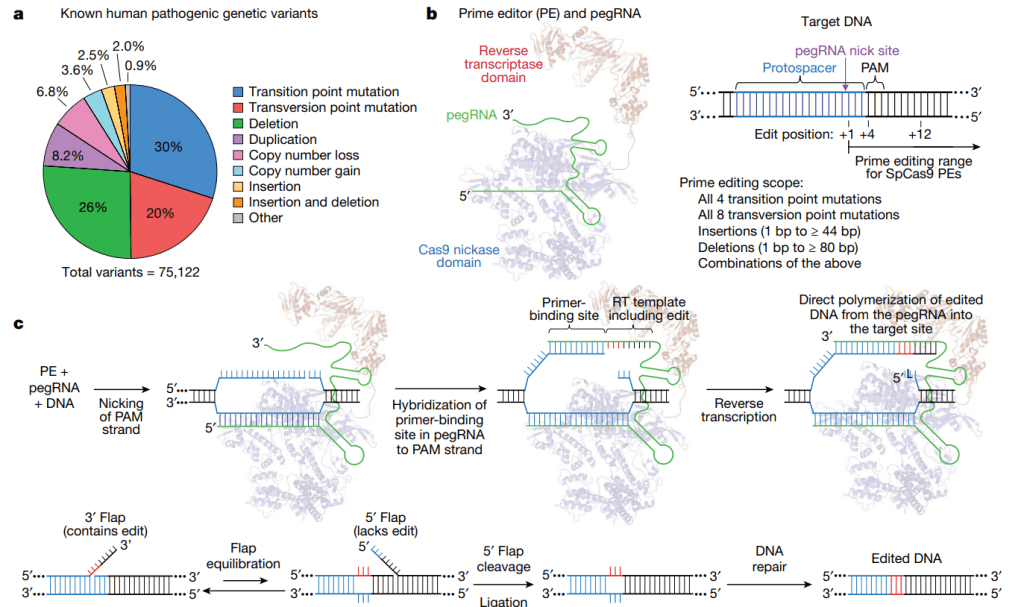
Search-and-replace genome editing without double-strand breaks or donor DNA. Nature 2019, 576, 149-157, David R. Liu et al.

2020년에 창업한 Prime Medicine은 2021년 7월에 $315 Million Series A & Series B를 하면서 알려지게 됩니다.

Prime Medicine uncloaks with $315M to push ‘search and replace’ gene-editing treatments. – Fierce Biotech 7/13/2021

After a year in the shadows, Prime Medicine is breaking cover with $315 million to develop a new kind of gene editing. It was developed by David Liu, Ph.D., and Andrew Anzalone, M.D., Ph.D., at the Broad Institute. 

Here’s how it works: “We make a prime editor that has a protein part and what’s called a guide RNA part,” Gottesdiener said. The editor carries a template for a genetic sequence that will replace the targeted mutation. Once the prime editor gets into a cell, it scans the cell’s DNA for the disease-causing sequence that needs to be edited.  

The team is about 50 strong today, and Prime hopes to grow to more than 100 employees by the end of the year. And it won’t be forging its path alone. Prime has a partnership with Beam Therapeutics, the base-editing biotech also founded by David Liu. Under the deal, Prime licensed out the rights for Beam to use prime editing in certain areas such as sickle cell disease. In return, Beam gave Prime certain rights to technology, intellectual property and so on. 

3개월 후 IPO를 하였습니다. 전광석화같은 Nasdaq 상장이었죠.

IPO Raises $175M for Prime, Developer of “Search and Replace” Gene Editing Platform – GEN Edge 10/21/2022

Gross proceeds for Prime could reach $201.25 million—just over the $200 million estimate offered earlier this month by Renaissance Capital, which tracks the IPO market. Prime is among the year’s three largest initial public offerings for a biotech company, following vision care drug/device developer Bausch + Lomb ($630 million gross proceeds) and vaccine developer HilleVax (also $200 million).

Prime projected using approximately $65 million of net proceeds for Investigational New Drug (IND)-enabling studies and potential initiation of clinical studies for some of its current therapeutic programs; and another approximately $65 million for continued advancement of its Prime Editing platform and discovery-stage research for other potential programs.

The company also projected using approximately $50 million in net proceeds to develop its early-stage manufacturing processes and build out a dedicated facility for its medicinal chemistry, process development, and analytical chemistry groups. The facility would include a non-GMP piloting lab for making guide RNA, mRNA, and synthesizing lipids.

Prime Medicine은 창업 후 4년이 지난 지금까지 아직 임상시험에 진입한 프로그램이 없습니다. 금년 상반기에 PM359의 임상진입을 기대하고 있고 FDA와의 pre-IND meeting 결과도 좋았다고 합니다.

두가지 Legal battle이 예상되는데 PASTE platform의 Tome Biosciences와의 IP infringement issue가 있습니다. Tome Biosciences에 대해서는 블로그를 쓴 바가 있습니다.

BIOTECH (97) Tome Biosciences: Programmable Genomic Integration (PGI) Platform

Prime Medicine이 Clinical-Stage로 되면 IP infringement issue가 표면화될 것으로 예상합니다. 또하나 Legal issue였던 Myeloid Therapeutics와의 공동연구계약 종료와 관련한 소송은 최근에 중재가 된 것으로 알려졌습니다.

Prime Medicine and Myeloid Therapeutics Announce Settlement of Pending Disputes – PR Newswire 1/5/2024

Prime Medicine, Inc. (Nasdaq: PRME) (“Prime Medicine”) and Myeloid Therapeutics, Inc. (“Myeloid”), today announced resolution of all of their outstanding disputes, signaling an end to the pending arbitrations and a positive outcome for both parties.

JPM: Prime Medicine Eyes 2024 IND for First Prime Editing Therapy – GEN Edge 1/9/2024

Prime Medicine is on track to file the first IND/CTA application for human trials of a prime editing therapy to the FDA during the first half of this year, with the first clinical data expected as soon as 2025, president and CEO Keith Gottesdiener, MD, told attendees at the 42nd Annual J.P. Morgan Healthcare Conference.

Prime Medicine’s first candidate poised to enter the clinic is PM359, a blood-targeting candidate for chronic granulomatous disease (CGD) now in the IND-enabling phase. PM359 consists of autologous hematopoietic stem cells modified ex vivo using prime editing.

During 2023, Prime Medicine held pre-IND and INTERACT meetings about PM359 and its prime editing platform with the FDA, whose recommendations the company has aligned with regarding preclinical data, toxicology, CMC [chemistry, manufacturing, and controls], off-target edits, and clinical development plans.

To support its IND/CTA filing, Gottesdiener said, Prime Medicine has generated data showing:

  • No off-target editing detected in healthy human donor CD34+ cells, according to a targeted in vitro analysis of 550 potential off-target sites of off-target editing.
  • No large deletions or translocations in bone marrow engrafted Prime-Edited LT-HSCs, according to data from an in vivo analysis from mouse bone marrow harvested 16 weeks after engraftment was complete
  • Translocation positive control: Cas9 nuclease-edited cells, generated by transfecting HEK293T cells with single guide RNA (sgRNA) targeting NCF1 and Streptococcus pyogenes Cas9 (SpCas9) mRNA

The other three pillars are:

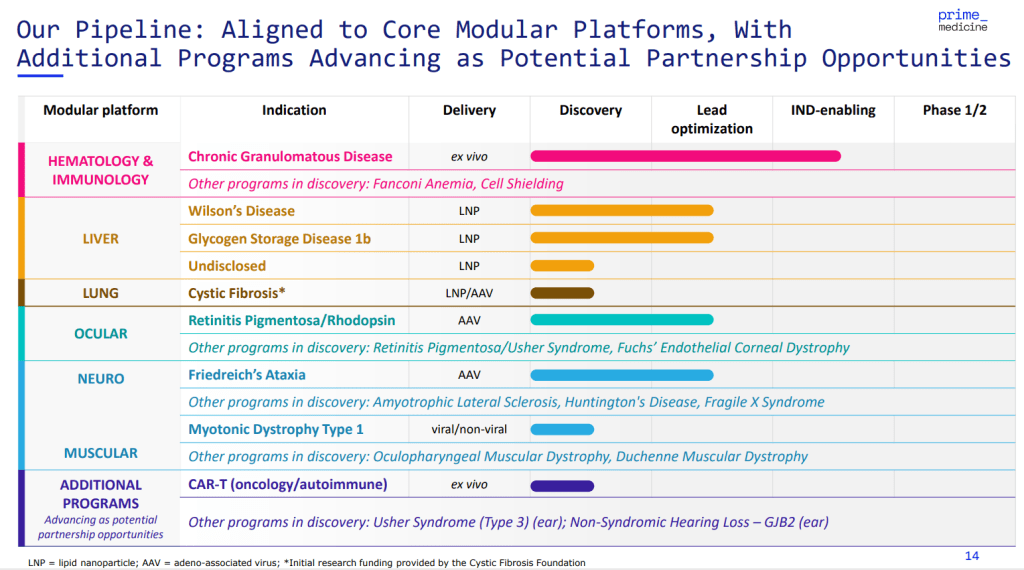
  • Liver—Programs to treat Wilson’s disease and glycogen storage disease 1b are in lead optimization phases, while a program with an undisclosed liver indication is in discovery phase. All three apply lipid nanoparticle (LNP) delivery. Other discovery programs are proceeding in Fanconi anemia and cell shielding.
  • Ocular—A retinitis pigmentosa/rhodopsin candidate targeting eye tissue and using adeno-associated virus (AAV) vector delivery, is also in lead optimization phase. Other discovery programs are proceeding in retinitis pigmentosa/Usher syndrome, and Fuchs’ endothelial corneal dystrophy.
  • Neuro and muscular—A candidate for Friedreich’s ataxia also delivered via AAV, also in lead optimization phase; a myotonic dystrophy type 1 program using viral and nonviral delivery is in discovery phase. Other discovery programs are proceeding in amyotrophic lateral sclerosis, Huntington’s disease, Fragile X syndrome, oculopharyngeal muscular dystrophy, and Duchenne muscular dystrophy.

He asserted that Prime Medicine has pursued an aggressive filing strategy for technological advances, and holds broad, enabling, foundational IP for all prime editing technologies—three issued and one allowed patents. “Our position is, for those that truly look like, act like, seem like prime editing, they probably are prime editing, and we’re confident that we have the foundational IP for these technologies,” Gottesdiener said.

Prime Medicine terminated the collaboration in September 2023, prompting Myeloid to file an arbitration claim seeking $17.5 million after Prime failed to pay a milestone payment in that amount. Prime countered that Myeloid breached their agreement, and filed its own arbitration claim in October seeking $43.5 million from Myeloid, according to Prime’s Form 10-Q quarterly report for the third quarter of 2023.

Prime Medicine이 올해 PM359의 IND Filing을 준비하면서 $161 Million 의 유상증자를 성공적으로 했습니다. 지금과 같은 시장상황에서 다행이라고 생각합니다. $6.25/share의 유상증자였는데 현재는 &8.74/share 로 약 40% 정도 주가가 올라온 상황입니다.

PRME – Prime Medicine Announces Closing of Upsized Public Offering and Full Exercise of the Underwriters’ Option to Purchase Additional Shares – Market Wire News 2/20/2024

The gross proceeds to Prime Medicine from the offering, before deducting underwriting discounts and commissions and offering expenses, were approximately $161.0 million.

올해 2월에 발표한 Corporate Presentation에 나타난 파이프라인은 아래와 같습니다. ex-Vivo program으로 먼저 Biology Risk를 낮추고 이후에 mRNA-LNP조합으로 간질환 rare disease와 AAV 안과 rare disease 및 Neurology rare disease 프로그램이 Lead optimization 단계에 있습니다.
PM359의 Preclinical data를 보면 아래와 같습니다.

  • Prime editing을 한 LT-HSC cell은 in vivo에서 완전한 engraftment를 보여주었고
  • NCF1 correction이 20% threshold를 훨씬 넘긴 85% 이상을 유지하고 있었고
  • Human neutrophill을 보았을 때, ex vivo에서 NADPH oxidase activity가 >80% 교정된 것을 알 수 있었습니다.

이러한 결과는 PM359가 임상에 진입할 수 있슴을 보여주고 있습니다.

BIOTECH (102) Elicio Therapeutics: Albumin-Hitchhiking Vaccine Amphiphile (AMP) Platform

안녕하세요 보스턴 임박사입니다.

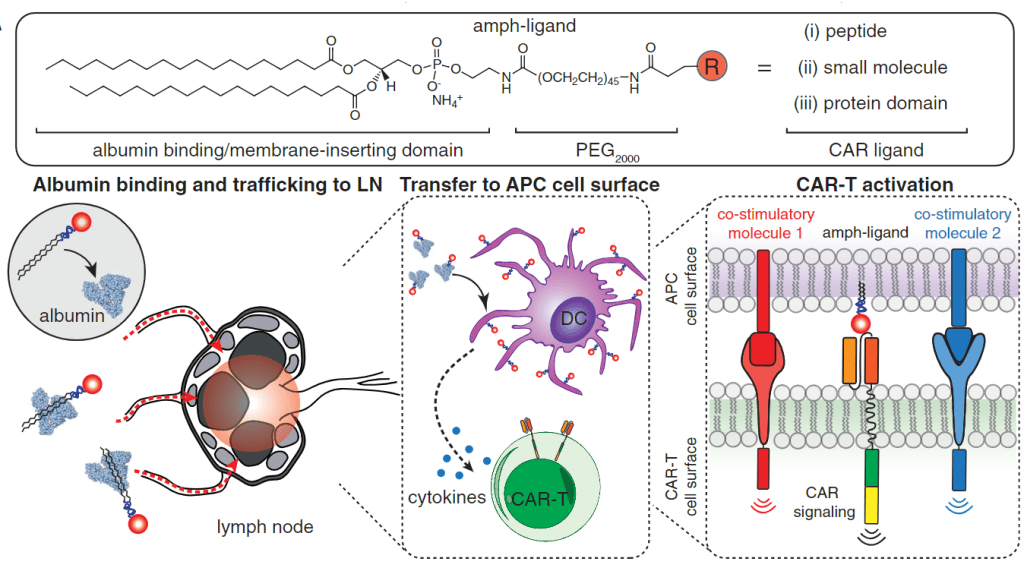
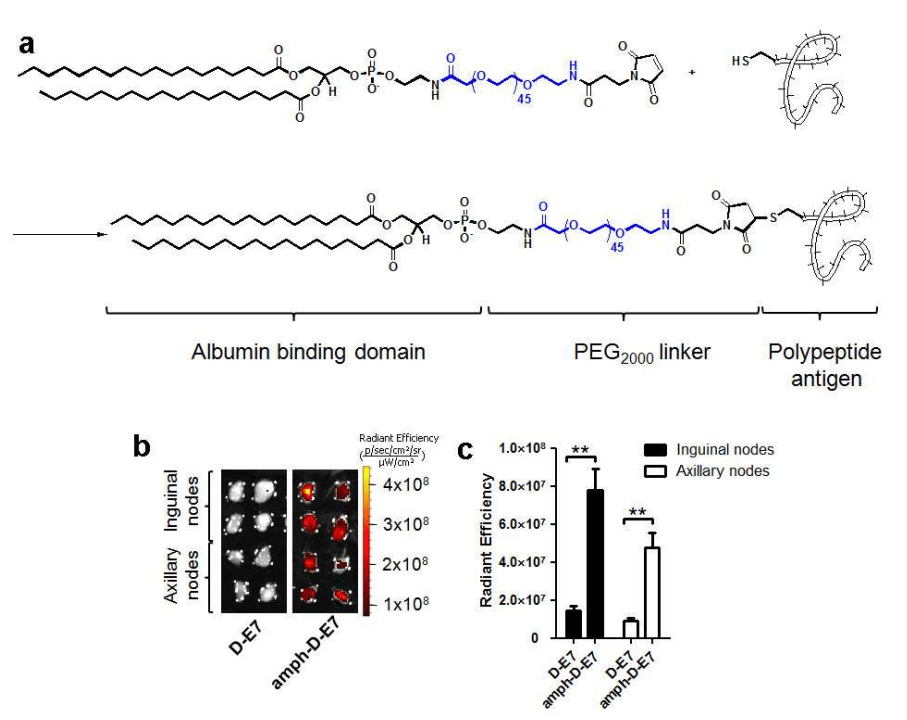
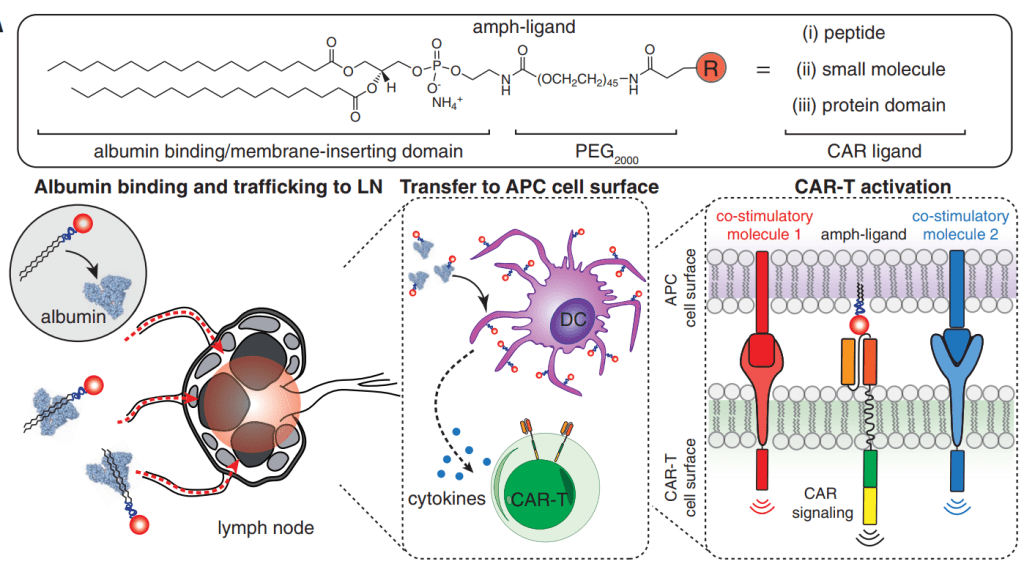
Elicio Therapeutics는 MIT의 Darrell Irvine 교수 연구실에서 2014년에 Nature에 발표한 “Amphiphile (AMP)” Platform을 기반으로 설립된 바이오텍 회사입니다.

Hitchhiking vaccines boost immunity – MIT News 2/16/2014

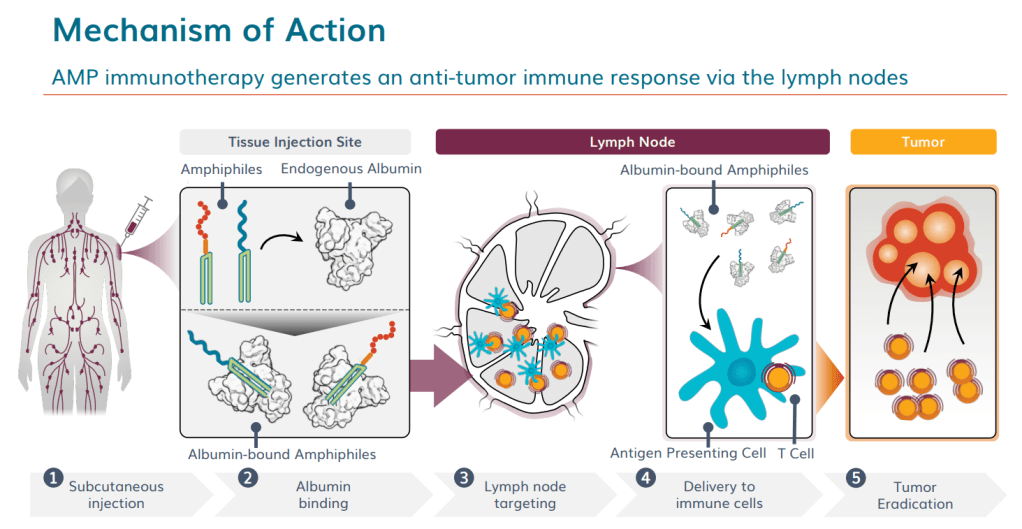
Now a team of engineers at MIT has developed a new way to deliver such vaccines directly to the lymph nodes, where huge populations of immune cells reside: These vaccines hitch a ride to the lymph nodes by latching on to the protein albumin, found in the bloodstream. In tests with mice, such vaccines produced very strong immune responses, the researchers report in the Feb. 16 online edition of Nature.

This approach could be especially useful for delivering HIV vaccines and for stimulating the body’s immune system to attack tumors, says Irvine, who is also a member of MIT’s Koch Institute for Integrative Cancer Research.

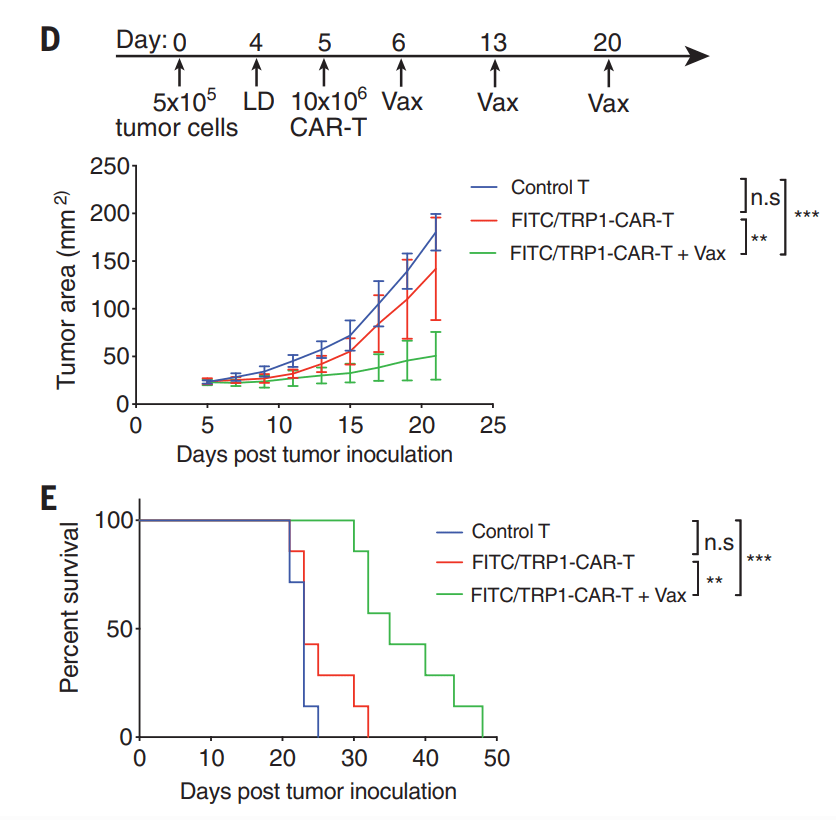
2019년에는 AMP platform을 이용해서 CAR-T cell therapy에 이용할 수 있슴을 보고하였습니다.

2021년에 $73 Million Series B를 하고 mKRAS cancer 대상한 ELI-002의 임상시험을 위해 노력하였습니다.

Elicio Therapeutics Secures a Total of $73 Million in Series B Financing – Business Wire 2/17/2021

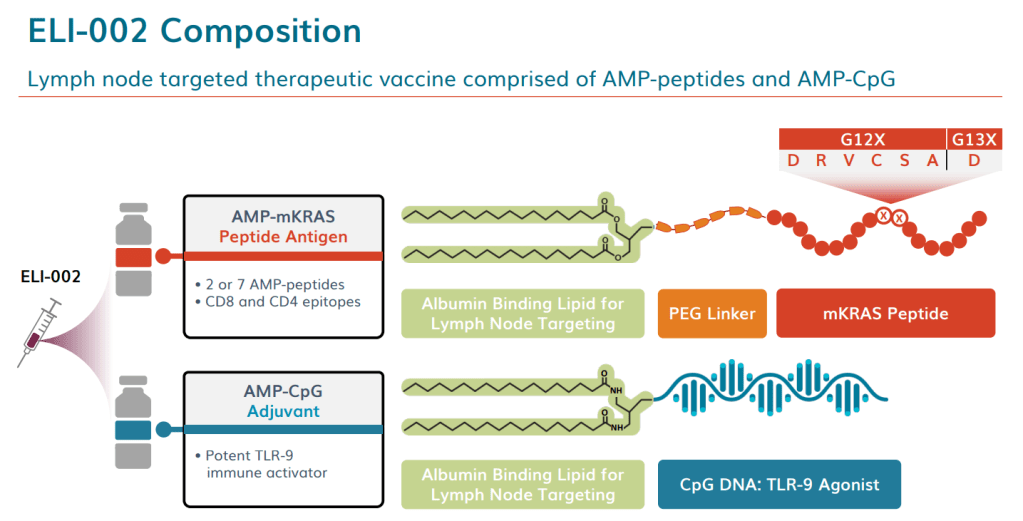
Proceeds will advance Elicio’s lead program ELI-002 into clinical trials in early 2021 for mutated KRAS (mKRAS) driven cancers, estimated to be 25% of all human solid tumors. ELI-002 contains two powerful components: The company’s proprietary immune stimulating Amphiphile (AMP)-CpG, an adjuvant, and AMP mKRAS peptides which target a broad spectrum of KRAS mutations that drive 97% of all KRAS-driven cancers.

1년반 후 IPO를 하기로 하려던 계획을 취소하고 대신 $40 Million Series C를 했습니다. 이 당시 ELI-002의 phase 1가 진행 중이었습니다.

Scoop: Calling off an IPO, a cancer and Covid-19 vaccine maker raises a Series C – Endpoints News 11/4/2022

Elicio Therapeutics has secured $37 million of its planned $40 million Series C, the company confirmed in an email to Endpoints. The Boston biotech had sought to list on Nasdaq as ELTX, with a draft registration statement filed in April 2021 and subsequent SEC filings showing ambitions to price between $12 to $14 apiece. The offering would’ve brought in about the same amount of capital as Elicio now seeks in its private round.

IPO 대신 6개월 후에 Angion Biomedica와 Reverse Merger에 의해 Nasdaq에 상장합니다.

Elicio Therapeutics Announces Completion of Merger with Angion Biomedica – Globe News Wire 6/1/2023

Elicio Therapeutics (Nasdaq: ELTX), a clinical-stage biotechnology company developing a pipeline of novel immunotherapies for the treatment of cancer, today announced the closing of its previously announced merger with Angion Biomedica Corp. The combined company will operate under the name Elicio Therapeutics, and its shares will commence trading on a 1-10 reverse split adjusted basis on June 2, 2023, on the Nasdaq Global Market under the ticker symbol “ELTX”.

Hitchhiking cancer vaccine makes progress in the clinic – MIT News 2/15/2024

By 2016, Irvine was ready to begin translating the vaccine from lab bench experiments to a patient-ready treatment, spinning out a new company, Elicio

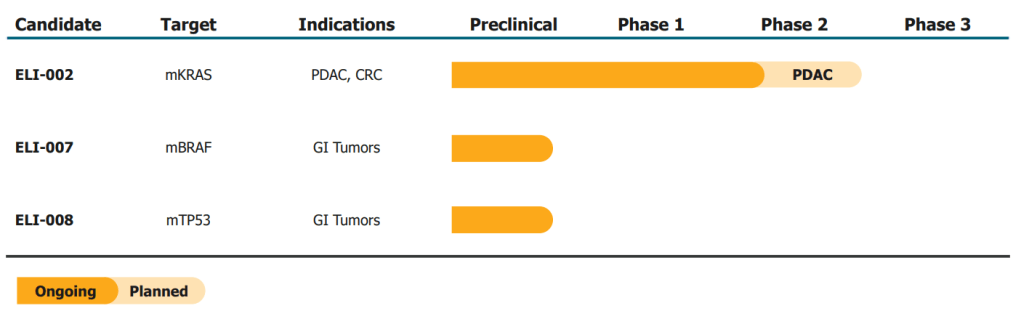
At Elicio, Irvine’s vaccine has evolved into a platform combining lipid-linked peptides with an immune adjuvant—no CAR T cells required. In 2021, the company began a clinical trial, AMPLIFY-201, of a vaccine named ELI-002, targeting cancers with mutations in the KRAS gene, with a focus on pancreatic ductal adenocarcinoma (PDAC). The company has initially tested a version that targets two, and Phase 1 and 2 studies of the version targeting all seven KRAS mutants are ongoing. 

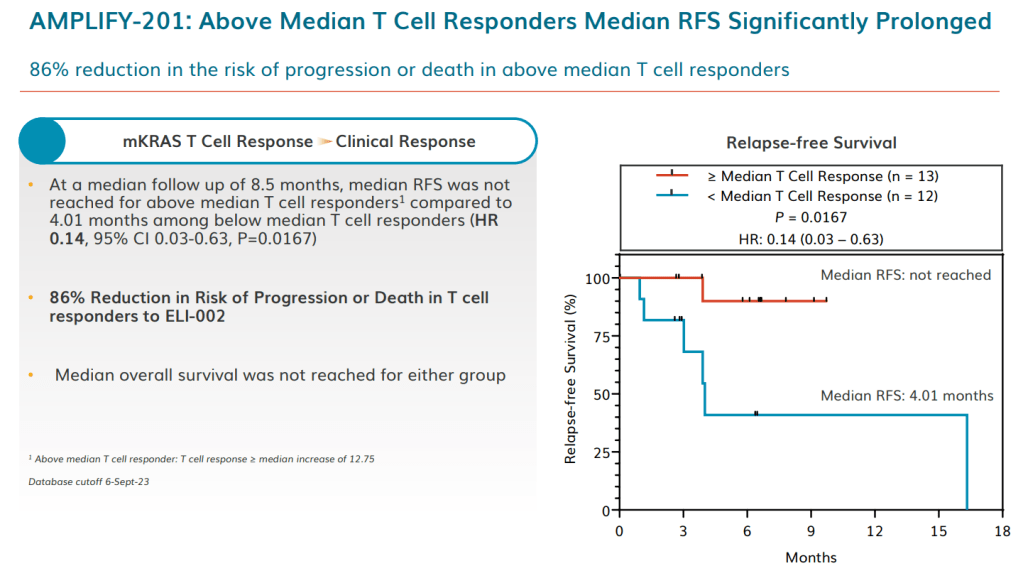
Data published last month in Nature Medicine from the Phase 1 clinical trial suggests that an effective therapeutic cancer vaccine could be on the horizon. The robust responses seen in the Irvine Lab’s mouse models have so far translated to the 25 patients (20 pancreatic, 5 colorectal) in the trial: 84% of patients showed an average 56-fold increase in the number of antitumor T cells, with complete elimination of blood biomarkers of residual tumor in 24%. Patients who had a strong immune response saw an 86% reduction in the risk of cancer progression or death. The vaccine was tolerated well by patients, with no serious side effects.

2024년에 발표한 Elicio Therapeutics의 Corporate Presentation은 아래와 같습니다.

BIOTECH (101) Krystal Biotech: Redosable HSV-1 vector gene therapy – Vijuvek (beremagene geperpavec)

Picture from https://www.lifescienceleader.com/doc/krystal-biotech-s-side-business-gene-based-aesthetics-0001

안녕하세요 보스턴 임박사입니다.

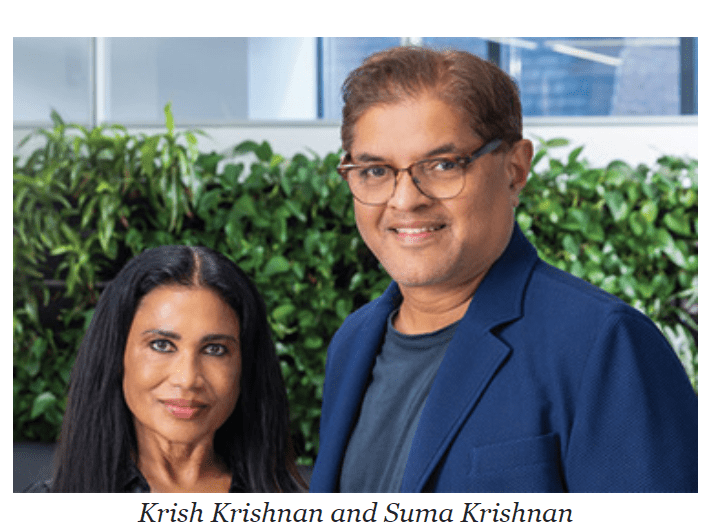
Krystal Biotech은 저에게 Biotech에 대한 Out-of-box concept을 일깨워주는 회사입니다. 사진에 보여드리는 것과 같이 이 회사는 부부가 창업하고 펀딩해서 Nasdaq IPO를 하고 결국 FDA 승인까지 단기간에 일구기까지 신기하기도 하고 배워볼 마음에 이 글을 씁니다.

How Krystal Biotech Went From Founding To IPO In 18 Months – Smart Business Dealmakers 8/28/2019

The Pittsburgh-based company, which Krishnan co-founded with his wife and COO Suma Krishnan, is working to develop to develop treatments for rare, orphan skin diseases caused by the absence of, or a mutation in, a single gene.

“We were humming along,” he says. “We weren’t really seriously thinking of going public in 2017. We thought maybe it would be a 2018, 2019 type thing. But we had some good interest from investors on Wall Street, ones that had been in biotech and tend to be patient and long term and let the story play out.”

Krishnan was bitten by the biotech bug early in his career, when his company got a drug approved and he heard stories from friends about their children being able to take the drug and feel better.

The real goal is not as much to go IPO, it’s to get a good treatment for a disease approved,” he says.

The Krishnans self-funded the business in April 2016. They took on two rounds of corporate venture capital, raising more than $18 million, before going public in September 2017. As a public company, Krystal has done two additional rounds of financing, a private placement in 2018 and an additional public offering in June of this year, raising another $200 million in total.

The VC market provides value in terms of guidance and experience, but in exchange they take a lot of equity, Krishnan says. That means many times, entrepreneurs, after a couple of rounds of financing, realize they’re not the bosses anymore.

The ownership shifts from the entrepreneur to the venture capitalists pretty quickly, and then the direction and a lot of decisions do not solely exist in the hands of the entrepreneur,” he says.

“In our case, given my prior record, it was a conscious decision to stay away and try and keep as much of the ownership in the company as possible,” he says.

Obviously, the downside is it’s a lot of work to keep up with the required procedures and processes. That’s why he recommends figuring out your business strategy first as a private company. Then, when you go public, it’s more about execution of a clear marching order.

Krystal was fortunate that its two funding rounds as a public company were able to be done on the back of good data.

Krystal Biotech Announces Closing of Initial Public Offering and Full Exercise of Underwriters’ Option to Purchase Additional Shares – Globe News Wire 9/22/2017

Krystal Biotech nets $42.4mm in oversubscribed IPO – Citeline 9/22/2017

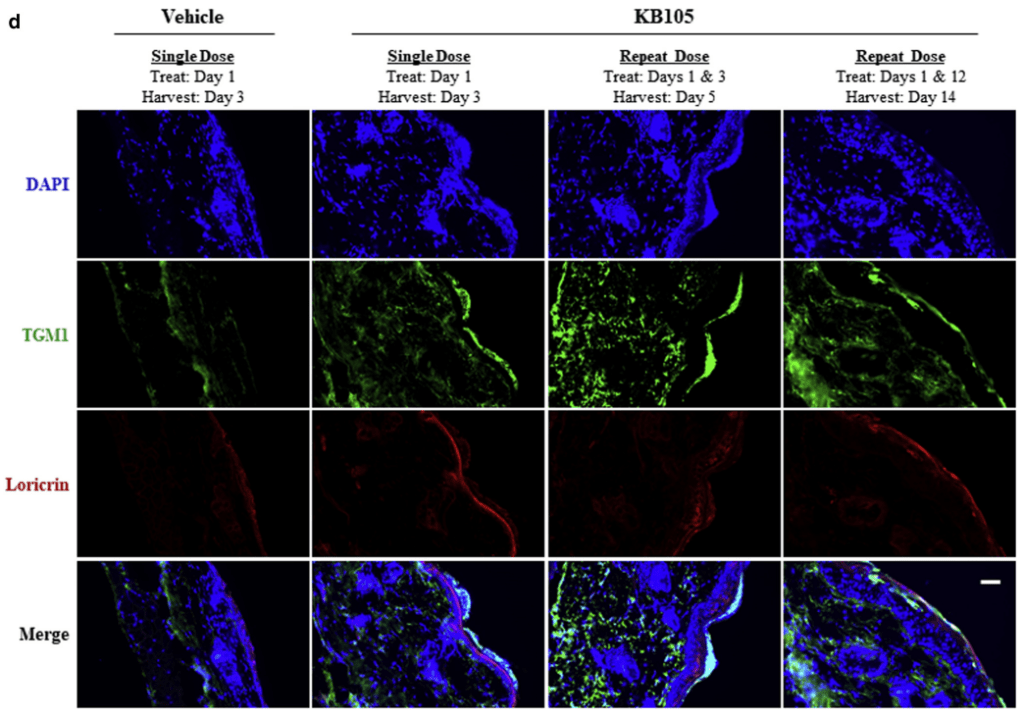
전임상 결과는 아래 논문에 보고를 했습니다.

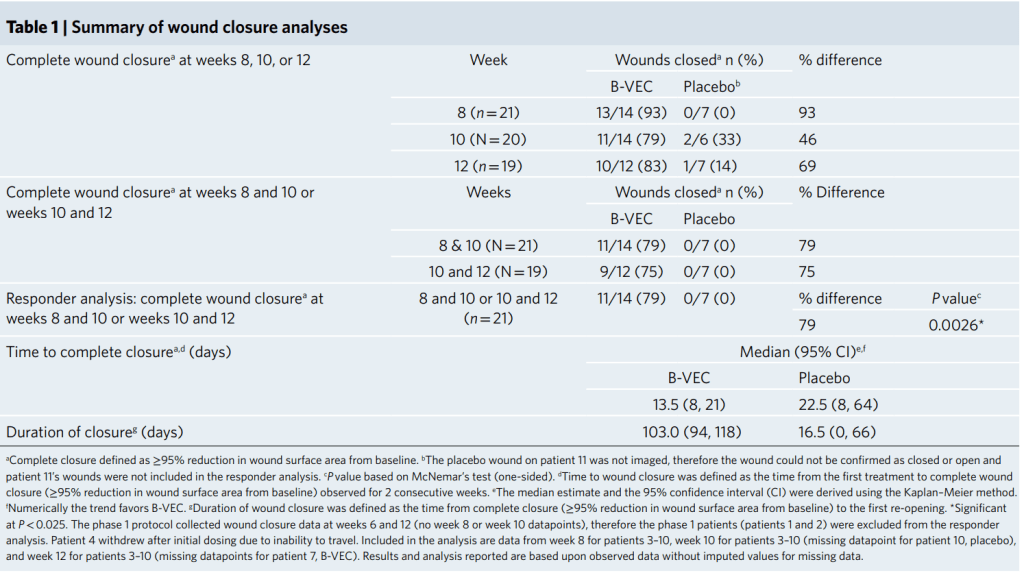
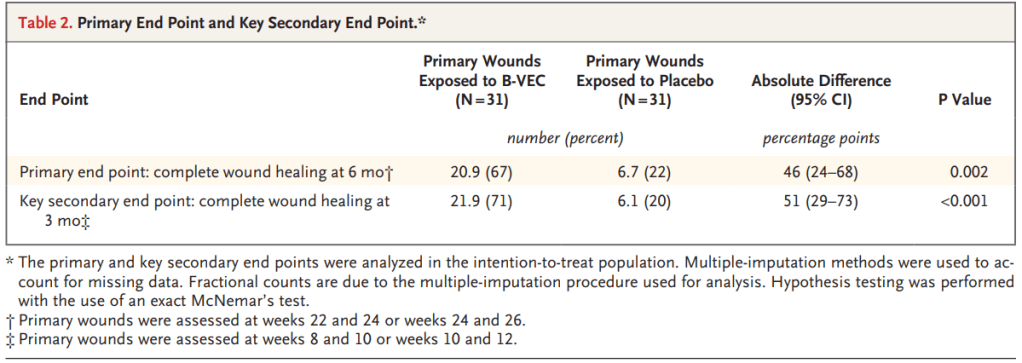
Krystal Biotech의 Vijuvek (beremagene geperpavec)의 임상 1상과 2상 결과는 Nature Medicine에 보고하고 임상3상 결과는 New England Journal of Medicine에 발표했습니다.

Krystal Biotech Announces Publication of Phase 1 and 2 Clinical Trial (GEM 1/2 Study) of Beremagene Geperpavec (B-VEC) Data in Nature Medicine – Biospace 5/28/2022

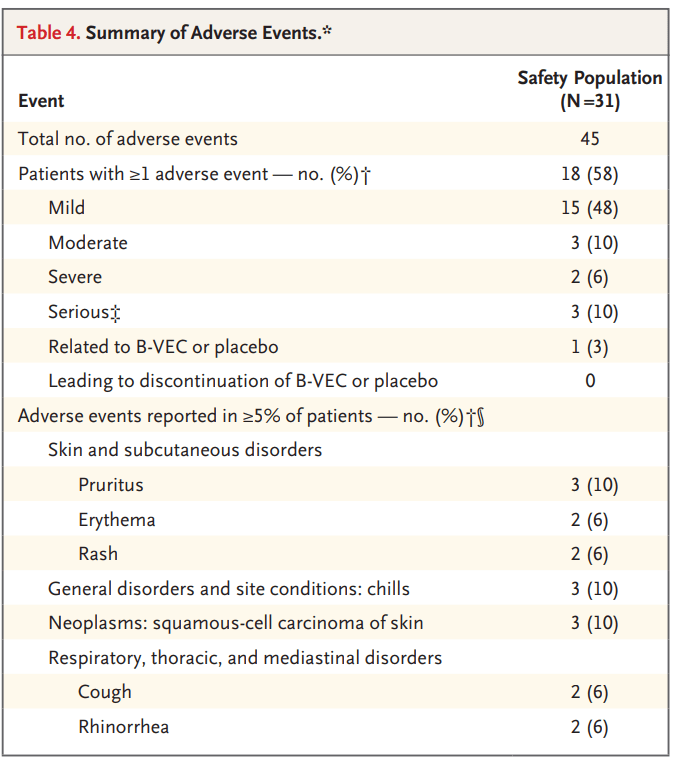
In the Phase 1 and 2 study, matched wounds were evaluated in nine RDEB patients receiving topical B-VEC or placebo repeatedly over 12 weeks. Primary and secondary mechanistic and clinical endpoints were met. No Grade 2 or above B-VEC-related adverse events, vector shedding, or systemic drug exposure were noted.

Krystal Biotech (KRYS) Announces New England Journal of Medicine Publishes Phase 3 Data on B-VEC in Patients with Dystrophic Epidermolysis Bullosa – Street Insider 12/14/2022

In this GEM-3 trial of 31 patients, complete wound healing at 6 months occurred in 67.4% of B-VEC wounds compared to 21.6% for placebo (difference, 45.8 percentage points; 95% confidence interval [CI], 23.6 to 68.0; p=0.002). Complete wound healing at 3 months occurred in 70.6% of the wounds exposed to B-VEC as compared with 19.7% of those exposed to placebo (difference, 51.0 percentage points; 95% CI, 29.3 to 72.6; p=0.0005).

The Company received US Food and Drug Administration (FDA) filing acceptance of its Biologics License Application (BLA) for B-VEC. The BLA was granted Priority Review designation and the Prescription Drug User Fee Act action date is February 17, 2023. The Company has filed the Marketing Authorization (MA) application with the European Medical Agency (EMA) and is currently working closely with the EMA through the MA validation process.

In vivo topical gene therapy for recessive dystrophic epidermolysis bullosa: a phase 1 and 2 trial. Nat. Med. 2022, 28, 780-788. Suma M. Krishnan, M. Peter Marinkovich et al.

Trial of Beremagene Geperpavec (B-VEC) for Dystrophic Epidermolysis Bullosa. N. Engl. J. Med. 2022, 387, 2211-2219. Suma Krishnan, M. Peter Marinkovich et al.

FDA Approves First-Ever Redosable Gene Therapy for the Treatment of Dystrophic Epidermolysis Bullosa – Global Genes 5/22/2023

he FDA approval of Vyjuvek is based on two clinical studies. The GEM-1/2 trial was an intra-patient, open label, single center, randomized, placebo-controlled study showing that repeat topical applications of Vyjuvek were associated with durable wound closure, full-length cutaneous COL7 expression, and anchoring fibril assembly with minimal reported adverse events. The GEM-3 trial was an intra-patient, double-blinded, multi-center, randomized, placebo-controlled study that met both its primary endpoint of complete wound healing at six months and its key secondary endpoint of complete wound healing at three months. Vyjuvek was well tolerated with no drug-related serious adverse events or discontinuations due to treatment-related events.

“Data from our GEM-1/2 trial and our GEM-3 trial, published in Nature Medicine and the New England Journal of Medicine, respectively, demonstrated the strength of both studies showing that Vyjuvek safely and effectively improved wound healing,” said Suma Krishnan, president, Research & Development, Krystal Biotech.

이외에도 Krystal Biotech은 Jeune Aesthetics라는 subsidiary를 만들어서 KB301이라는 intradermal aesthetic injection을 개발하는 회사를 만들었습니다.

Krystal Biotech’s Side Business: Gene-Based Aesthetics – Life Science Leader 11/1/2023

In 2019, Krystal launched a subsidiary called Jeune Aesthetics to develop new applications of its STAR-D platform for the aesthetics market. Its first development candidate, called KB301, uses Krystal’s HSV vector and mechanism of action to deliver a COL31a transgene via intradermal injection, with the goal of boosting the skin’s ability to produce collogen, thereby improving the appearance of aging skin, such as the lines known as “crow’s feet.”

BIOTECH (100) PureHealth Tech: Glyph – Lymphatic Delivery Platform

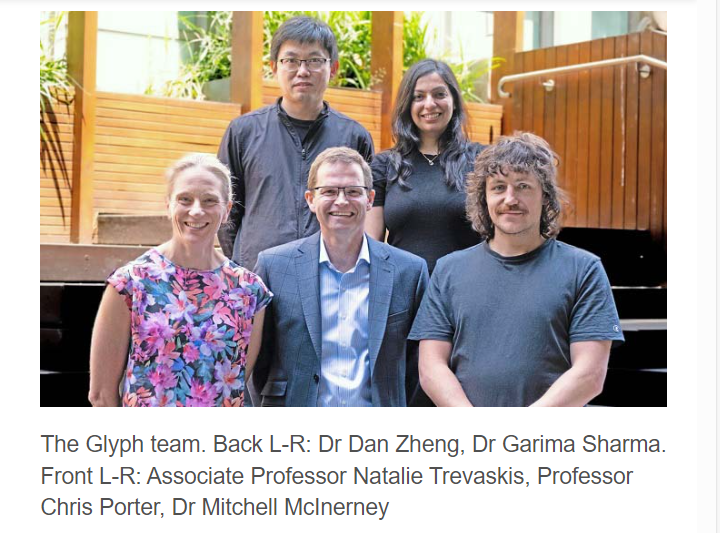
Picture source from Monash University

안녕하세요 보스턴 임박사입니다.

PureTech Health는 영국계 바이오텍으로서 흥미롭게도 회사 내에서 New Platform Startups Incubating을 하고 투자도 할 뿐만 아니라 기술을 사거나 팔기도 합니다. 이 회사의 CEO인 Daphne Zohar와 MIT의 Bob Langer교수가 2005년에 co-founder인 회사입니다. CEO Daphne Zohar의 창업스토리가 재미있습니다.

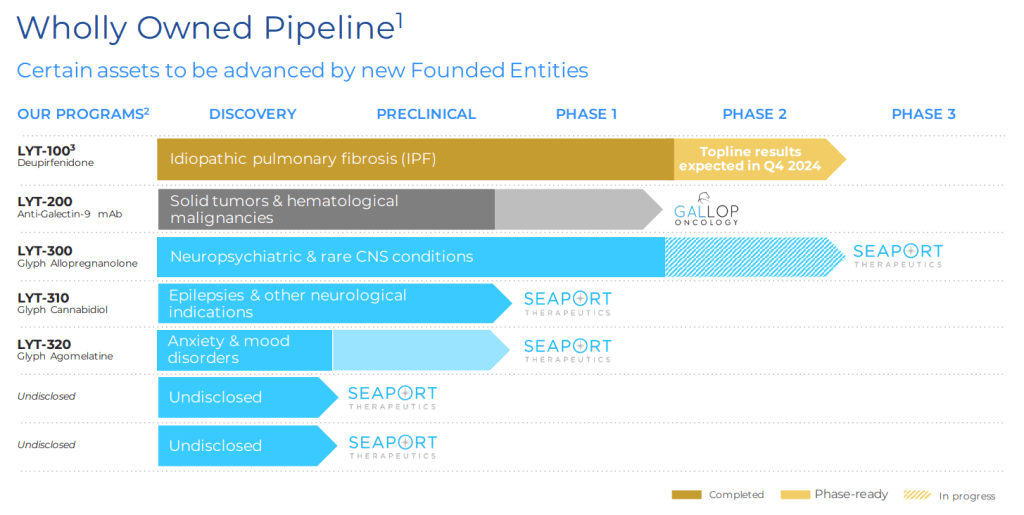
PureTech Health의 2024년 Corporate Presentation은 아래에 있습니다.

현재 5개의 파이프라인이 있는데 이 중 3개가 Glyph라는 Platform으로 이루어져 있습니다.

Glyph platform 기술은 2016년에 Angewandte Chemie IEE에 최초로 보고하게 됩니다.

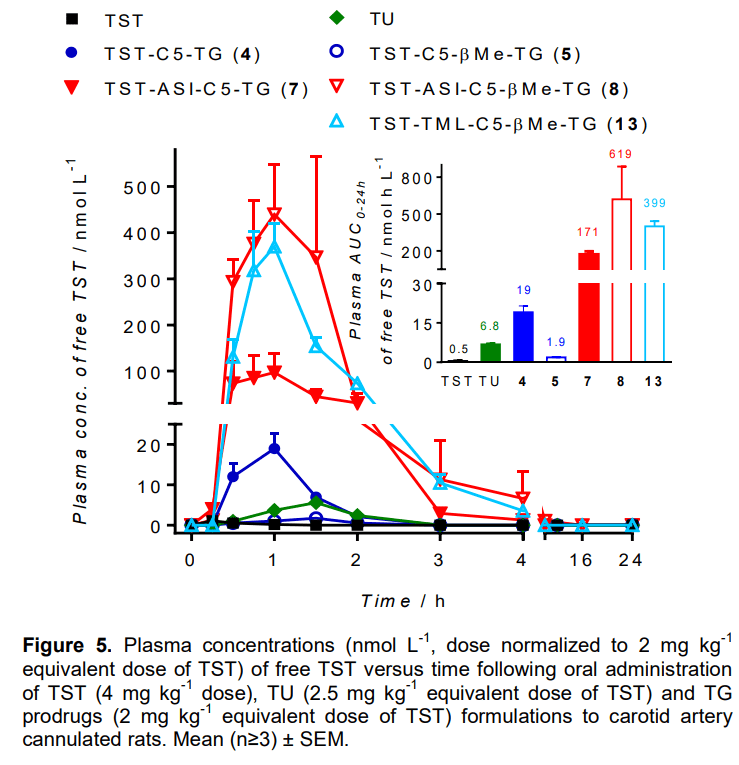
Glyceride-Mimetic Prodrugs Incorporating Self-Immolative Spacers Promote Lymphatic Transport, Avoid First-Pass Metabolism, and Enhance Oral Bioavailability. Angew. Chem. IEE 2016, 55, 13700-13705. Christopher J. H. Porter et al.

2017년에 PureTech Health는 Australia의 Monash University Chris Porter교수로 부터 Lymphatic delivery prodrug system을 사게 됩니다.

PureTech Health Exclusively Licenses Glyph Technology from Monash University to Harness Lymphatic Biology – Controlled Release Society 8/29/2017

PureTech Health plc (“PureTech Health” or the “company”, LSE: PRTC), an advanced, clinical-stage biopharmaceutical company, today announced an exclusive licensing agreement with Monash University for a lymphatic targeting platform (the Glyph technology) based on the pioneering research of Christopher Porter, Ph.D., director of the Monash Institute of Pharmaceutical Sciences (MIPS) at Monash University in Australia. The Glyph technology is aimed at harnessing the biology of the lymphatic system to develop novel therapeutics, including those that selectively target certain lymph nodes. This program further builds on PureTech’s leadership in identifying novel approaches to address dysfunctions of the brain, immune, and GI systems.

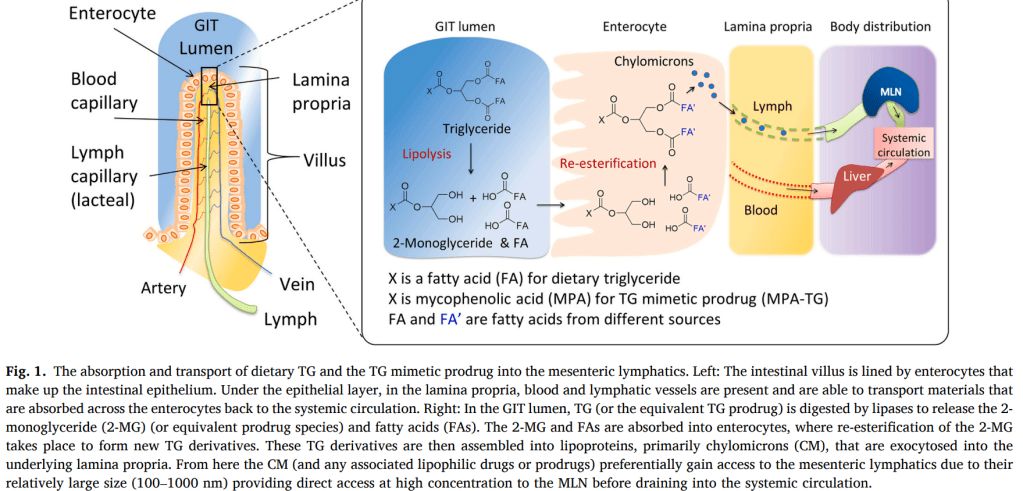
The Glyph technology is designed to harness the biology of the lymphatic system and the endogenous trafficking of compounds through this network to develop novel drugs that bypass first-pass metabolism, improve oral bioavailability, and significantly lower the risk of liver toxicity. In particular, the mesenteric lymph nodes, proximal to the gut, are exposed to a host of microbiome-related species and serve an integral role in immune education and control. Targeting the lymphatic pathway potentially enables rational design of therapeutics to modulate the immune system, representing an innovative approach to treating a broad range of serious immunological disorders, such as cancer and autoimmune diseases. The Glyph technology will be developed by PureTech Health through its subsidiary, Glyph Biosciences, in collaboration with Dr. Porter’s laboratory.

“Through our work at Monash University, we have designed chemistries that potentially enable drugs to be preferentially and effectively transported through the endogenous pathways of lipid transport via the intestinal lymphatics in a controlled manner,” said Dr. Porter. “Our technology has been shown in preclinical experiments to achieve significant oral bioavailability of compounds through the avoidance of first-pass metabolism, and has the potential to significantly mitigate liver toxicity and to alter systemic drug disposition. I am excited to be working with PureTech Health to rapidly advance this potentially disruptive technology platform toward the development of novel therapeutics.”

“This new program builds on PureTech’s unique expertise and approach to utilize novel biology, such as the lymphatic distribution network, to treat serious diseases,” said David Steinberg, chief innovation officer and a cofounder of PureTech Health. “We look forward to a great partnership with Dr. Porter and building on his work at Monash University to drive advancements in immunomodulation.”

2년 후에 Glyph Platform 기술은 Boehringer Ingelheim에 Sub-license 하게 됩니다.

PureTech Health Announces Collaboration with Boehringer Ingelheim to Advance Immuno-oncology Product Candidates using its Lymphatic Targeting Platform – 8/17/2019

Under terms of the agreement, PureTech Health will receive up to $26 million, including upfront payments, research support, and preclinical milestones, and is eligible to receive more than $200 million in development and sales milestones, in addition to royalties on product sales. The collaboration will initially focus on applying PureTech’s lymphatic targeting technology to an immuno-oncology product candidate designated by Boehringer Ingelheim.

More specifically, the therapeutic candidates are directed to the mesenteric lymph nodes, which program as many as 70 percent of circulating adaptive immune cells. PureTech’s lymphatic targeting approach, which is based on the research of Chris Porter, PhD, Director of the Monash Institute of Pharmaceutical Sciences (MIPS) at Monash University, can potentially be applied to therapeutic molecules across a range of physiochemical properties and holds promise for the development of novel therapeutics for gastrointestinal, central nervous system, and autoimmune diseases as well as cancer.

The research collaboration with Boehringer Ingelheim will focus first on using this approach to administer an immuno-oncology candidate for gastrointestinal (GI) cancers directly to the gut lymphatics.

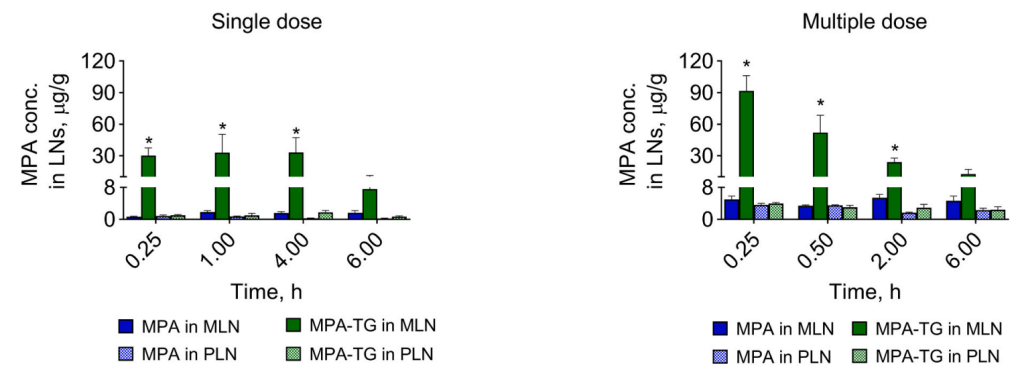
Targeted delivery of mycophenolic acid to the mesenteric lymph node using a triglyceride mimetic prodrug approach enhances gut-specific immunomodulation in mice. J. Control. Release 2021, 332, 636-651. Christopher J. H. Porter et al.

PureTech Health는 LYT-300을 FXTAS라는 신규뇌질환 치료제 가능성을 위해 DoD grant $11.4 Million을 받기도 했습니다. 이것은 DoD로 부터 받는 4번째 Grant로서 PureTech Health는 그동안 wholly-owned program 개발을 위해서 grant를 받는 형태로 노력해 왔습니다.

PureTech Awarded up to $11.4 Million from U.S. Department of Defense to Advance LYT-300 (Oral Allopregnanolone) for Fragile X-associated Tremor/Ataxia Syndrome – Biospace 8/1/2023

The funds will support a Phase 2 trial of LYT-300 in collaboration with the University of California, Davis (UC Davis). An exploratory, open-label trial of six men with FXTAS, evaluated IV-administration of allopregnanolone across multiple neuropsychological and emotional tests. In addition to being well-tolerated, allopregnanolone showed signals of pharmacologic benefit across multiple neurological endpoints, including the Behavioral Dyscontrol Scale, which measures executive, cognitive and motor function, and demonstrated improvement compared to baseline (p=0.009). IV administration is not feasible in most indications, especially for a chronic therapy, and there remains a need for treatments that can address this debilitating condition. PureTech plans to evaluate LYT-300 in a placebo-controlled trial to demonstrate the safety, tolerability and efficacy of the drug in people with FXTAS.

PureTech’s capital efficient strategy includes the pursuit of non-dilutive funding in the form of grants. This is the fourth DoD grant that PureTech has secured on behalf of its Wholly Owned Programs in addition to five grants secured on behalf of its Founded Entities. 

2023년 11월에 발표한 LYT-300의 임상결과는 primary end point를 모두 충족했다는 좋은 뉴스였습니다.

PureTech’s acute anxiety treatment trial meets primary endpoint  – Clinical Trials Arena 11/15/2023

Puretech Health has reported that its Phase IIa clinical trial of LYT-300 (oral allopregnanolone) to potentially treat acute anxiety met the primary endpoint

The proof-of-concept, placebo-controlled, randomised trial analysed the salivary cortisol response induced by LYT-300 based on the Trier Social Stress Test (TSST), an established anxiety clinical model.

The trial enrolled 80 healthy subjects who were randomised into a 1:1 ratio to receive either LYT-300 or a placebo. 

According to the trial’s topline data, oral LYT-300 offered a statistically significant decline in stress hormone response, as evaluated by salivary cortisol, compared to a placebo, meeting the primary endpoint. 

Glyph platform과 LYT-300 임상 개발에 대한 스토리는 아래 Monash University에서 잘 다루었습니다.

Drug with potential in a range of neurological conditions a step closer to being delivered as a simple oral capsule – Monash University 12/20/2022

LYT-300 was generally well-tolerated across the study, and no treatment-related severe or serious adverse events were observed. The data suggest the potential to dramatically increase practicality and usability of allopregnanolone for those with PPD, along with a broad range of neurological and neuropsychiatric conditions. Additional data will be presented in a scientific forum, and a Phase 1b/2a clinical trial is expected to begin in the first half of 2023.

The LYT-300 trial is the first clinical validation of the Glyph technology in humans.

A second candidate from the Glyph platform, LYT-310 (oral cannabidiol [CBD]), has also been nominated as a clinical candidate and is designed to greatly expand the therapeutic application and potential of cannabidiol (CBD).

Applying the Glyph technology to CBD to form LYT-310 has been shown to increase oral exposure three to fourfold versus unmodified CBD in multiple preclinical models, including large animal and non-human primate. This has the potential to translate into improved safety and reduced side effects. Lymphatic transport has also been confirmed in preclinical models, with up to 30% of LYT-310 entering the lymphatics, compared to 5% for unmodified CBD. These data further support the novel Glyph mechanism of enhancing oral bioavailability. LYT-310 is expected to enter the clinic in Q4 of 2023.

BIOTECH (99) BlueRock Therapeutics: Bemdaneprocel (BRT-DA01, MSK-DA01) – Autologous Stem Cell Therapy for Parkinson’s Disease

안녕하세요 보스턴 임박사입니다.

BlueRock Therapeutics는 Memorial Sloan Kettering Cancer Center의 Lorence Studer 박사의 MSK-DA01 (Bemdaneprocel, BRT-DA01)의 임상시험 및 상용화를 위해 Versant Ventures와 Bayer가 공동으로 설립한 회사입니다. Bemdaneprocel story에 대해서는 CSO Stefan Irion 박사가 2023 Till & McCulloch Meetings에서 발표한 것을 정리한 아래의 블로그 글을 보면 알 수 있습니다. 정리하면 2000년대 초까지 Parkinson Disease Cell Therapy를 찾기 위한 exploratory clinical trials를 했는데 그 중 “Fetal Cell Approach”만이 효과가 있었고 Fetal Cell의 생산성에 대한 문제로 Pluripotent Stem Cell을 찾기 시작하고

  • 2011년에 Nature에 논문을 내고 2014년에는 G-Force PD라는 컨소시엄을 만들었다.
  • “Biphasic Wnt Signaling Activation” 방법으로 Clinical-grade doparminergic neuron을 만들어낼 수 있었다.
  • 2021년에 Cell Stem Cell에 Bemdaneprocel (BRT-DA01, MSK-DA01)의 preclinical 결과를 냈는데 (1) PCR로 검출가능한 여러 분화 마커를 찾았고 (2) Rat 실험에서 Functional Cure를 확인했다. – 이 결과 BlueRock Therapeutics가 만들어졌다.
  • 2021년에 임상1상을 시작해서 12명에 대해 수술적 방법으로 뇌에 구멍을 내어 Bemdaneprocel 을 이식하고 1년간 immunosuppressant를 복용했다. 1.8-5.4 milion cells를 주입한 경우 고용량에서 효과를 보았다.
  • PET를 통해서 뉴런세포가 1년간 생존할 뿐만 아니라 주위 뇌세포로 커가는 것을 볼 수 있었다.
  • 2024년 상반기에 임상2상을 할 계획이다.

A bench-to-bedside story of BlueRock’s investigational stem cell therapy for Parkinson’s disease – Signals 11/9/2023

BlueRock Therapeutics has generated considerable media buzz with their announcement of positive Phase I clinical trial data on bemdaneprocel (BRT-DA01), an investigational, stem cell-derived, dopaminergic therapy for Parkinson’s disease. The trial is the result of decades of research and investments that yielded this exciting step into clinical translation.

Founded in 2016 by Versant Ventures and Bayer LEAPS, with scientific founders Drs. Lorenz Studer (Sloan Kettering Institute) and Gordon Keller (University Health Network), the mission of BlueRock Therapeutics is to discover and develop novel stem cell-derived therapies to improve treatments for patients. With the recent clinical trial, bemdaneprocel is the company’s most advanced product. Providing insights on the bench-to-bedside journey of bemdaneprocel, Dr. Stefan Irion (Chief Scientific Officer, BlueRock Therapeutics) presented an insider’s view on the investigational cell therapy at the 2023 Till & McCulloch Meetings.

As recapped by Irion, cell therapies for Parkinson’s disease began to emerge in clinical trials in the late 1990s and early 2000s. In these early trials, several different dopamine-expressing cell types were explored, including retinal pigmented epithelial cells, autologous carotid body cells, adrenal medullary cells and fetal cells. With the exception of the latter, trials involving these various cell types were largely unsuccessful.

The fetal cell approach was marked by several limitations, including a limited supply of cells and substantial heterogeneity of the cell population that may have compromised efficacy. As such, research turned to pluripotent stem cells as a potential source of renewable cells that could provide a consistent, scalable, and more refined source for generating dopamine-expressing neurons. In parallel, a global consortium called G-Force PD was formed in 2014 by leaders in the field, including Studer, the eventual scientific cofounder of BlueRock Therapeutics. The purpose of the consortium was to gather consensus and inform the intelligent design of a next wave of clinical trials involving stem cell-derived neurons for Parkinson’s disease treatment.

 In 2011, the lab published a ground-breaking Nature paper detailing the controlled generation of midbrain dopaminergic neurons from human embryonic stem cells. This study provided an important foundation and led to millions in grant funding to develop the cell therapy for clinical trials. To do so, the team needed to adapt the protocol to make it more efficient and scalable, landing on a biphasic Wnt signaling pathway activation strategy for producing clinical-grade dopaminergic neurons that they reported a decade after the seminal Nature paper.

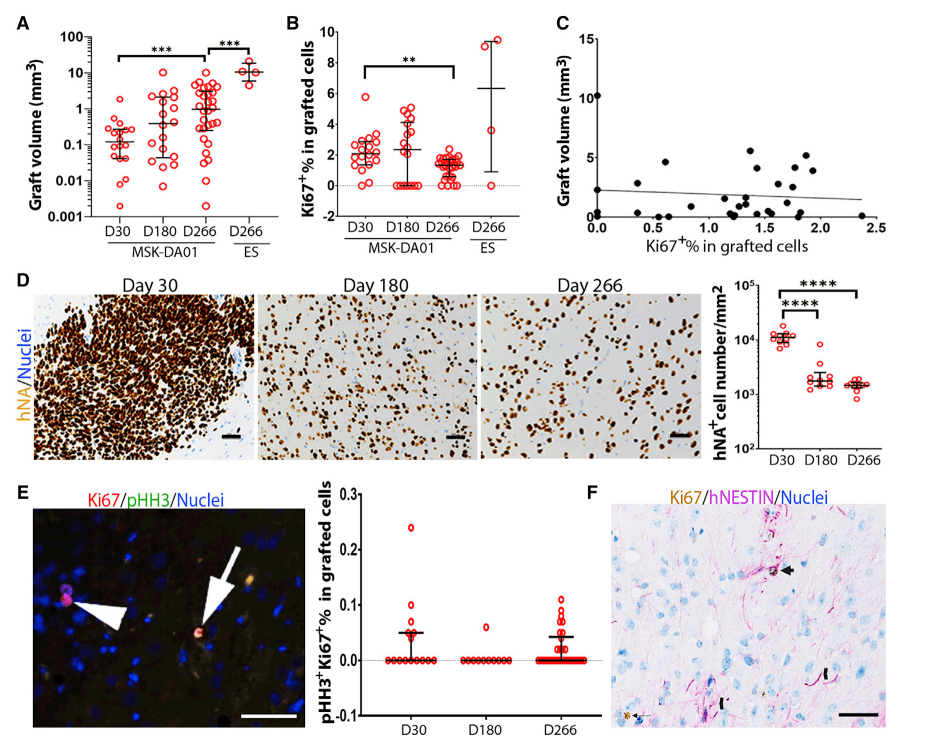
Using the new differentiation protocol, the Studer lab performed extensive preclinical testing of bemdaneprocel, publishing their findings in a Cell Stem Cell paper in 2021. These studies included the identification of a panel of differentiation markers measured by PCR that could be used to validate the phenotype of the cell product and ensure stability after cryopreservation and passing through a delivery device. Using a mouse model, the group performed biodistribution, toxicity, and tumourigenicity studies to demonstrate safety of the treatment.

Studer group showed that rats implanted with bemdaneprocel displayed correction of the rotational bias compared to control rats, providing important evidence for their functional recovery. With these promising preclinical safety and efficacy data, BlueRock Therapeutics initiated plans for clinical trials in humans. Drawing upon previous work in fetal cell clinical trials as well as the rodent studies, the investigators determined estimates for the dose of bemdaneprocel that would be needed for treating human patients with Parkinson’s disease.

Using the body of preclinical data, BlueRock Therapeutics received approvals from Health Canada and the U.S. Food and Drug Administration to conduct a phase I clinical trial. Beginning in 2021, the trial sites included Toronto Western Hospital, University of California Irvine, Weill Cornell Medical College, and Memorial Sloan Kettering Cancer Center. The open-label trial enrolled 12 patients, with the first five patients receiving a low dose of bemdaneprocel (1.8 million cells), and the subsequent patients treated with the high dose (5.4 million cells). A novel surgical technique and device were also developed to precisely implant the cells into the brain via a single burr hole through the skull. The patients will be followed for two years, and Irion presented the one-year interim results that have now been collected for the full cohort. They received immunosuppression for one year after treatment to allow time for the blood-brain barrier to heal from the initial surgery so that it could protect the implanted cells from immune recognition thereafter.

While efficacy data need to be interpreted with caution given that the study is a small open-label trial with risk of placebo effects, clinical scoring systems suggest that patients have improved, particularly those within the high-dose cohort. In addition, positron emission tomography (PET) imaging was performed in patients to measure uptake of a synthetic dopamine analogue and radiotracer to visualize regions of the brain containing dopaminergic neurons. These measurements revealed that the implanted cells survived and persisted at one year follow-up, with engraftment in the expected brain region. In light of this encouraging data, BlueRock Therapeutics has announced plans to begin enrolling patients for a Phase II clinical trial within the first half of 2024. The study will provide new insights on the efficacy of the bemdaneprocel for patients with Parkinson’s disease.

Bemdaneprocel (BRT-DA01, MSK-DA01)의 전임상 연구결과는 Cell Stem Cell 2021년에 보고했습니다.

Preclinical Efficacy and Safety of a Human Embryonic Stem Cell-Derived Midbrain Dopamine Progenitor Product, MSK-DA01. Cell Stem Cell 2021, 28, 217-229. Stefan Irion et al.

Bayer, Versant join forces on $225M Series A for stem cell upstart – Fierce Biotech 12/16/2016

The startup, which is being hailed by the pair as a “next-generation regenerative medicine company” plans to develop best-in-class induced pluripotent stem cell (iPSC) therapies. Its initial focus will be on CNS and CV disease areas.

On the R&D side, it will have ops in Toronto, New York and Boston, with its initial program focused on regenerating heart muscle in patients who have had a heart attack. The program is being worked on in a collab pact with the Toronto-based McEwen Centre for Regenerative Medicine and University Health Network with Dr. Gordon Keller, a leader in stem cell biology, and a scientific co-founder of BlueRock.

BlueRock, Bayer’s stem cell group, details glimpses of efficacy in Parkinson’s disease therapy – Endpoints News 8/28/2023

BlueRock disclosed that one patient temporarily developed seizures a day after the surgery, although the cells themselves did not cause any serious side effects. That 70-year-old man recovered after receiving medication and hasn’t had any seizures since, Ettenberg said.

One year after the surgery, the seven patients who got the high dose of the therapy had a 13-point reduction on a scale that doctors use to measure the motor symptoms of Parkinson’s, and the five patients who got a low dose had a 7.6-point reduction. A 5-point reduction has historically been considered clinically significant. Patients receiving the high dose also cut their time spent with uncontrollable movements — so-called “off time” — each day by about 2 hours.

“We saw an almost around 50% decrease in their off time, which means they’re gaining control of those movement disorders,” Ettenberg said. “If we were writing the script two years ago, this is what we would be hoping for. We’ve gotten everything we need to move this to Phase II.”

Rather than injecting stem cells directly into a patient, the company grows its stem cells into dopaminergic neuronal precursor cells in the lab before a surgeon implants them into each side of a patient’s skull. The goal is to help rebuild the network of dopamine-producing cells in a brain region called the putamen, which is vital for controlling movement but is damaged in Parkinson’s disease. The patients in the study were diagnosed with the condition nine years earlier, on average. And although they were still getting some benefit from levodopa — essentially a dopamine replacement that is the standard of care — all started to lose the full benefit of the treatment over time.

Most of the mild and moderate adverse events were related to immunosuppressant drugs that patients took for one year after the surgery, Ettenberg said. There were no serious adverse events related to the cell therapy, he added, and the seizures one man developed were “somewhat expected for us, and for the field, given that you’re passing a cannula into each side of the brain.”

Since no one got a placebo in the study and there was no control arm, Ettenberg was careful to note that this study was not a true test of the therapy’s effectiveness. “It’s not powered to speak to the clinical benefit here. But of course, we’re all interested in that. And the patients are interested in that. And we need to speak to it,” he said.

The randomized placebo-controlled Phase II trial will seek to more strongly answer questions about the treatment’s efficacy and durability. “We’re still in discussion with the FDA of exactly what that trial design would look like,” Ettenberg said.

These iPSCs partly resemble embryonic stem cells that can be turned into any other cell but with fewer ethical quandaries, and therapies made from iPSCs are only beginning to move from the lab bench and into the clinic. BlueRock’s treatment was made from a cell line that originally came from embryos — fertilized eggs that were never implanted in a patient.

Ettenberg said academic work on those cells started in 2009, three years after iPSCs were made in a petri dish for the first time. Using embryonic stem cells “was the fastest” way forward, he said, adding that there was no fetus involved in making the stem cells, and that the company can perpetually generate new cells from the ones they already have.

“All of the source for this material is already in the freezer. And we will never go back and create another source for that,” he said. “It’s what attracted me to this field in general. You’re making a reproducible, reliable, indefinite source of this material, which can become more drug-like in its characteristics.

The Parkinson’s treatment is BlueRock’s most advanced program, though the rest of the company’s earlier-stage work focuses on therapies made from iPSCs. BlueRock is getting ready for a Phase I clinical trial with Opsis Therapeutics, a subsidiary of Fujifilm, to make retinal cells for inherited vision diseases. Another program focused on making cardiomyocytes — heart muscle cells — is close behind.

Earlier this month, BlueRock laid off about 50 employees, and Ettenberg said the cuts were expected to help tighten the company’s focus on the next phase of its Parkinson’s program and upcoming retinal disease treatment.

Series A 한 지 3년 후에 Bayer는 $1 Billion Valuation으로 BlueRock Therapeutics를 인수하였습니다.

Bayer acquires BlueRock Therapeutics to build leading position in cell therapy – PR Newswire 8/8/2019

Following a 2016 joint venture with Versant Ventures to establish BlueRock Therapeutics, Bayer will acquire the remaining stake for approximately USD 240 million in cash to be paid upfront at closing and an additional USD 360 million payable upon achievement of pre-defined development milestones. With Bayer currently holding 40.8 percent stake, the investment corresponds to a total company value of BlueRock Therapeutics of approximately USD 1 billion. The closing of the transaction is expected during the third quarter of 2019.

2023년 중순에는 Bayer 실적 악화로 12%의 인력감축이 있었습니다.

Bayer-bought BlueRock cuts 12% of workforce across 3 sites as pipeline contracts – Fierce Biotech 8/17/2023

The Bayer-bought cell therapy biotech is taking a pipeline of nine assets and focusing on four, according to a statement from a BlueRock spokesperson. The priority is the company’s cell therapy to treat Parkinson’s that’s gearing up for a phase 2 trial set to begin in the first half of 2024. Ophthalmology asset OpCT-001 will soon join it in human trials, with a formal ask to regulators expected sometime in the next year. BlueRock will also continue work on a second Parkinson’s cell therapy and a stem-cell-derived treatment for heart failure.

The 12% reduction represents layoffs to about 50 employees, the spokesperson added. The cuts will be across sites in Cambridge, New York and Toronto. 

Bayer opens California plant to make cell therapies – Biopharmadive 10/10/2023

Bayer has been investing hundreds of millions of dollars into its Berkeley location, recently launching a Cell Culture Technology Center and cell therapy labs.

지금의 속도로 간다면 임상2상을 마치는 시점에서 FDA Accelerated Approval을 시도할 것 같습니다. 최초의 Parkinson Disease iPSC-derived neurologic Stem Cell Therapy가 되어 환자들에게 희망을 줄지 기대됩니다.

BIOTECH (98) Basking Biosciences: Bruce Sullenger’s Reversable RNA Aptamer Platform

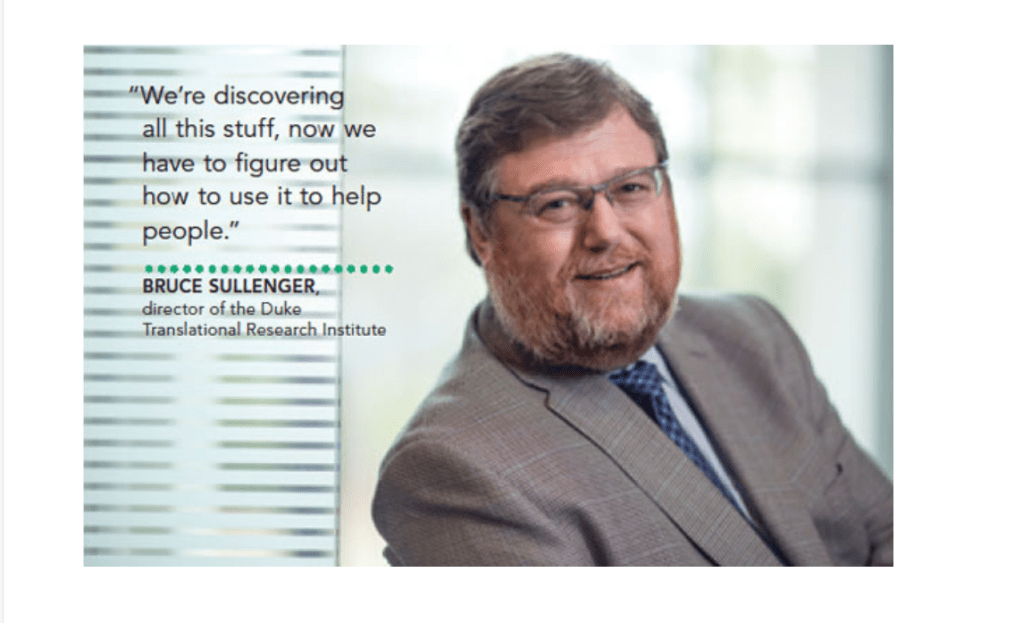
(Picture from Duke Today)

안녕하세요 보스턴 임박사입니다.

RNA Therapeutics 중에서 가장 오래된 기술 중의 하나이면서도 발전이 Antisense, siRNA, mRNA 등에 비해서 상대적으로 임상적인 적용이 더디게 진행된 분야가 RNA Aptamer 분야가 아닌가 하고 생각합니다.

이것은 1998년에 FDA에서 승인된 Macugen (Pegaptanib sodium injection)의 상업적 실패와 연관이 있고 Archemix, SomaLogic과 같은 Aptamer 회사들이 문을 닫거나 Research 회사로 Business model이 변화되는 계기가 되었습니다.

다행히도 최근 Iveric Bio/Astellas Pharma의 Izervay (avacincaptad pegol)이 Geographic atrophy 치료제로 FDA 승인이 되면서 RNA Aptamer의 새로운 중흥기가 올 수 있을지 주목되고 있습니다.
Iveric drug approved for type of vision loss as rival’s safety draws scrutiny – Biopharmadive 8/5/2023

The monthly eye injection, which will be sold as Izervay, is meant to slow progression of the condition, which Iveric and its new owner, Japanese drugmaker Astellas Pharma, estimate affects 1.5 million people in the U.S.

Iveric Bio (former Ophthotech Corporation)의 스토리는 Retina Today 2021년에 잘 소개가 되었습니다.

The Open Secret Behind Iveric Bio’s Continued Success – Retina Today 9/1/2021

Baskings Biosciences에 대해 소개를 하려고 합니다.

Bruce Sullivan 박사는 25년 이상 RNA Aptamer 분야에서 일한 베테랑 교수인데 2007년에 Oligonucleotides 논문에 von Willebrand Factor를 표적으로 하는 Aptamer 연구결과를 발표한 이후에 이 약물의 성질 변형을 위해 오랜 기간 노력을 해 왔습니다.

Antidote-Controlled Platelet Inhibition Targeting von Willebrand Factor with Aptamers. Oligonucleotides 2007, 17, 265-274. Bruce A. Sullivan et al.

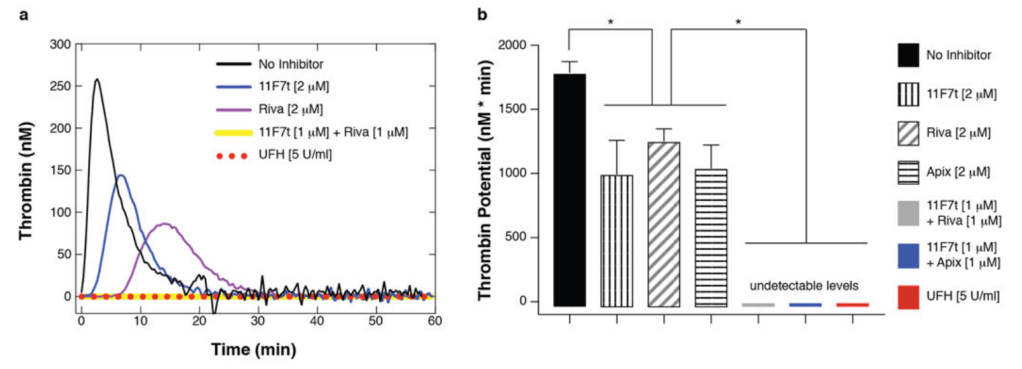
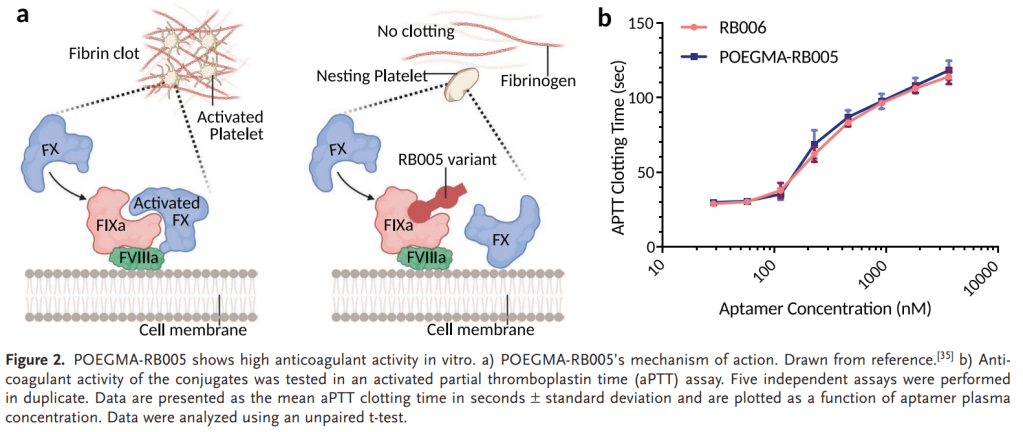
10여년의 연구 끝에 2018년에 Bruce Sullivan 교수는 Nature Biotechnology에 Aptamer와 Oligonucleotide reversal agent combination으로 심장호흡기계의 혈액응고를 방지할 수 있다는 결과를 발표했습니다. RNA Aptamer (11F7t)와 small-molecule FXa inhibitor (apixaban) combination으로 anticoagulation이 잘 되는 것을 발표한 것입니다.

Combination of aptamer and drug for reversible anticoagulation in cardiopulmonary bypass. Nat. Biotechnol. 2018, 36, 606–613. Bruce A. Sullivan et al.

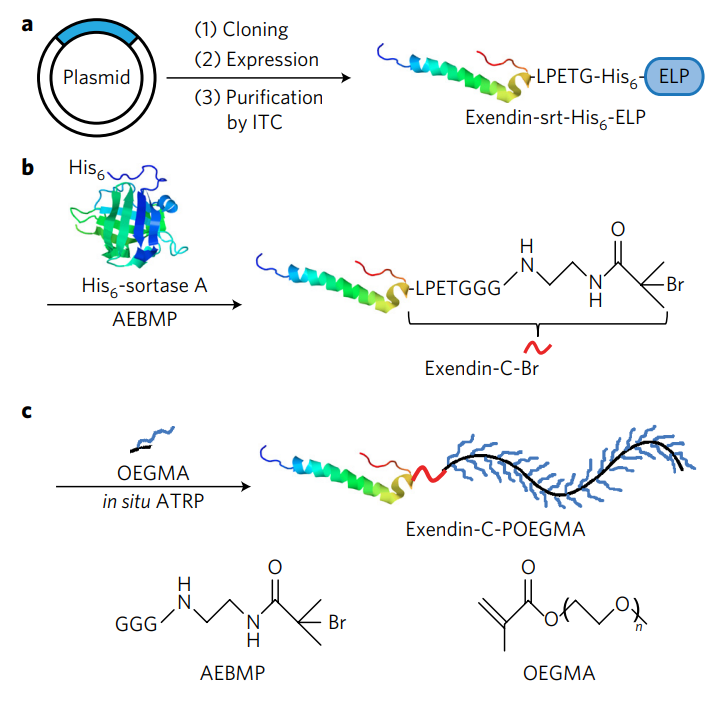
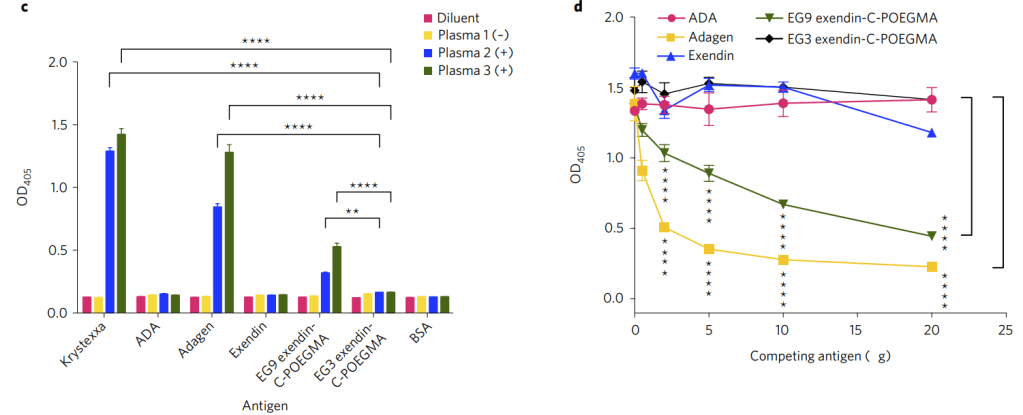
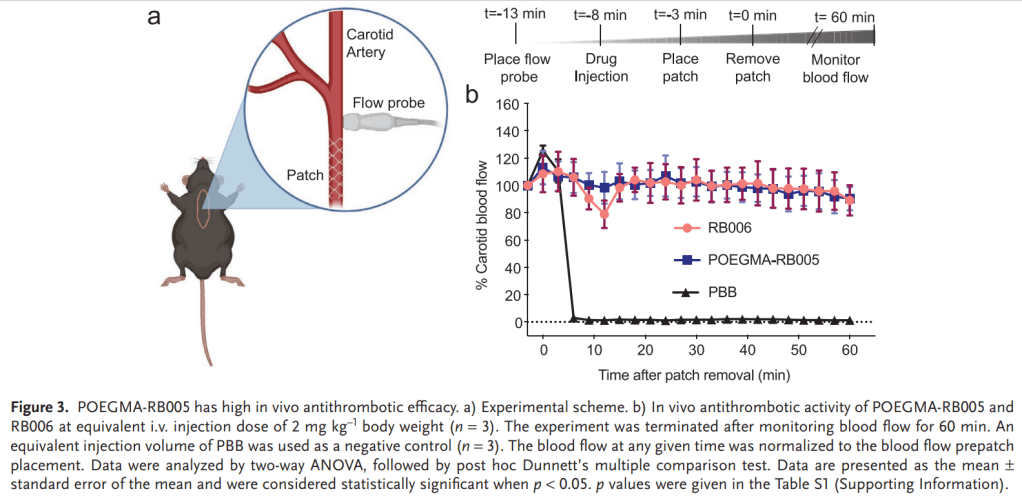
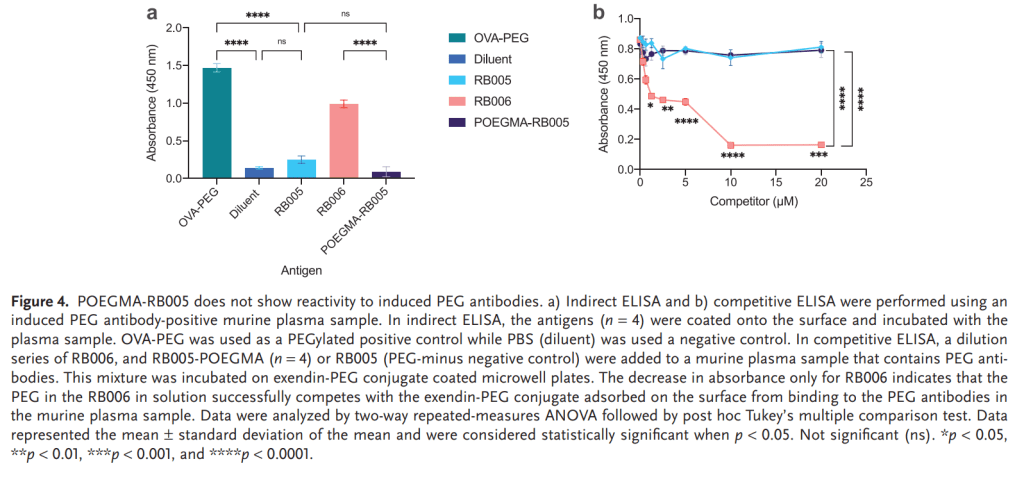
RNA Aptamer의 Renal clearance 문제를 해결하기 위해 주로 PEG conjuagation을 하는데 anti-PEG antibody로 인한 문제가 있었습니다. 그런데 우연인지 거의 같은 시기에 Duke University의 Ashutosh Chilkoti 교수 연구실에서 POEGMA라는 새로운 polymer를 발표합니다.

A brush-polymer/exendin-4 conjugate reduces blood glucose levels for up to five days and eliminates poly(ethylene glycol) antigenicity. Nat. Biomed. Eng. 2016, 1, 0002. Ashutosh Chilkoti et al.

Bruce Sullivan 교수와 Ashutosh Chilkoti 교수는 공동연구를 통해서 POEGMA를 Bruce 교수의 RNA Aptamer에 결합시킨 Aptamer-POEGMA conjuagate의 결과를 발표합니다.

PEG-Like Brush Polymer Conjugate of RNA Aptamer That Shows Reversible Anticoagulant Activity and Minimal Immune Response. Adv. Mater. 2022, 34, 2107852. Bruce A. Sullivan, Ashutosh Chilkoti et al.

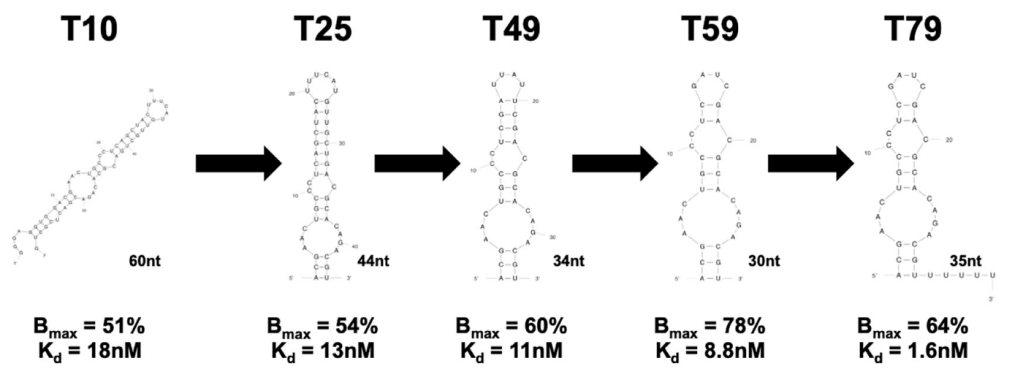
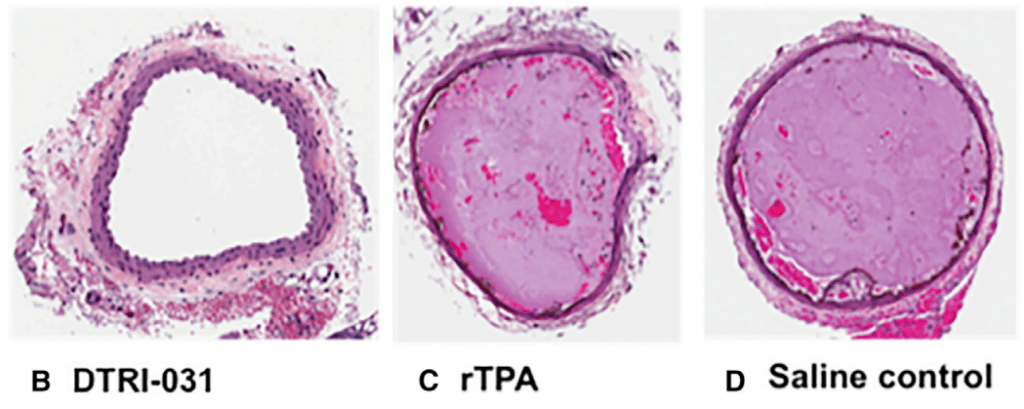
Preclinical Development of a vWF Aptamer to Limit Thrombosis and Engender Arterial Recanalization of Occluded Vessels. Mol. Ther. 2019, 27, 1228-1241. Shahid M. Nimjee, Bruce A. Sullivan et al.

T10으로 부터 T59까지 Truncation optimization을 한 이후에 Antidote를 위해 5개의 Uridine을 넣어서 35-nt Aptamer를 만들었습니다. 이렇게 얻어진 BB-031 (DTRI-031) preclinical development result를 얻었습니다.

이러한 연구결과를 바탕으로 Bruce A. Sullivan교수와 Shahid M. Nimjee교수는 2019년에 Baskings Biosciences를 창업하였고 1년후에 3개 VC로 부터 $5.4 Million Seed Financing을 받아서 BB-031 (DTRI-031) IND-enabling studies와 phase 1을 지원하게 됩니다.

Basking Biosciences, Inc. Completes $5.4M Seed Financing – Smart Business Dealmakers 12/7/2020

Basking Biosciences, Inc., a privately-held biopharmaceutical company developing a next generation treatment for acute ischemic stroke (AIS), announced an initial closing of a $5.4M Seed Series financing. The investor syndicate includes Rev1 Ventures, Broadview Ventures and Viva BioInnovator. Concurrent with the financing, Ryan Helon of Rev1, Thomas Needham of Broadview and Dr. Dan Meyers have joined Basking’s Board of Directors.

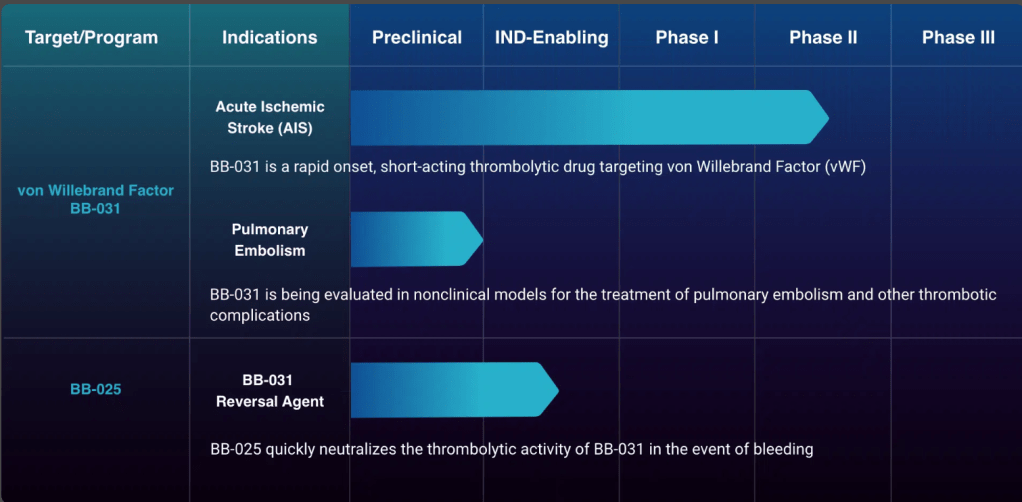
Basking is developing the first reversible thrombolytic therapy for acute ischemic stroke (AIS). The Company’s development candidate, DTRI-031, is an RNA aptamer that inhibits von Willebrand Factor (vWF). Basking is co-developing a matched oligonucleotide reversal agent, DTRI-025, for as-needed, rapid reversal of DTRI-031. Basking’s paired therapy has the potential to significantly expand the population of patients that receives acute thrombolytic therapy by extending the treatment window to 24 hours post stroke onset and aligns well with the urgent need in medicine for precision-based therapeutics in cardiovascular disease. The program is expected to enter into human clinical trials in Q2 2021.

BB-031의 임상 1상 결과는 긍정적으로 나왔습니다. 0.1 mg/kg – 4 mg/kg 용량을 IV 주사제에 대한 28-day SAD 시험 중에서 최대용량까지 큰 부작용이 없었고 18분-61분의 약물 반감기를 보여주었습니다.

Basking Biosciences reveals positive data from trial of thrombolytic agent – Clinical Trials Arena 2/10/2023

Healthy volunteers in the Phase I trial were given BB-031 or a placebo in a 6:2 ratio by intravenous bolus at single ascending doses ranging from 0.1mg/kg to 4mg/kg. It was found that the agent was well tolerated and safe throughout the study period of 28 days, and no significant or treatment-emergent adverse events were reported. Additionally, BB-031 demonstrated an apparent mean terminal half-life ranging from 18 minutes at 0.1 mg/kg to 61 minutes at 4mg/kg.

이러한 고무적인 결과를 바탕으로 최근 Arch Venture Partners 주도 하에 $55 Million Series A를 함으로써 임상2상으로 진입할 수 있게 되었습니다. Arch의 Steven Gillis 박사가 Chair of BOD를 맡고 BB-031의 임상2상 PoC와 reveral oligonucleotide BB-025의 임상1상을 위해 노력하게 됩니다.

Triangle-based Basking Biosciences raises $27.5 million – Business North Carolina 11/15/2023

Basking Biosciences Announces Close of $55 Million Financing to Accelerate Clinical Development for First Reversible Thrombolytic for Ischemic Stroke – Duke Today 1/30/2024

Basking will initiate a Phase 2 proof-of-concept trial, the RAISE trial, in patients with acute ischemic stroke (AIS) in 2024. In addition to the RAISE trial, Basking will use the funds to advance BB-025, a complementary rapid-acting reversal oligonucleotide capable of quickly neutralizing the pharmacological activity of BB-031, through a Phase 1 clinical program.  

BB-031의 임상2상 결과가 어떻게 나올지 궁금합니다. BB-025 Oligonucleotide의 임상진행도 순조롭게 되기를 기대해 봅니다. 현재 Basking Biosciences의 Pipeline은 아래와 같습니다

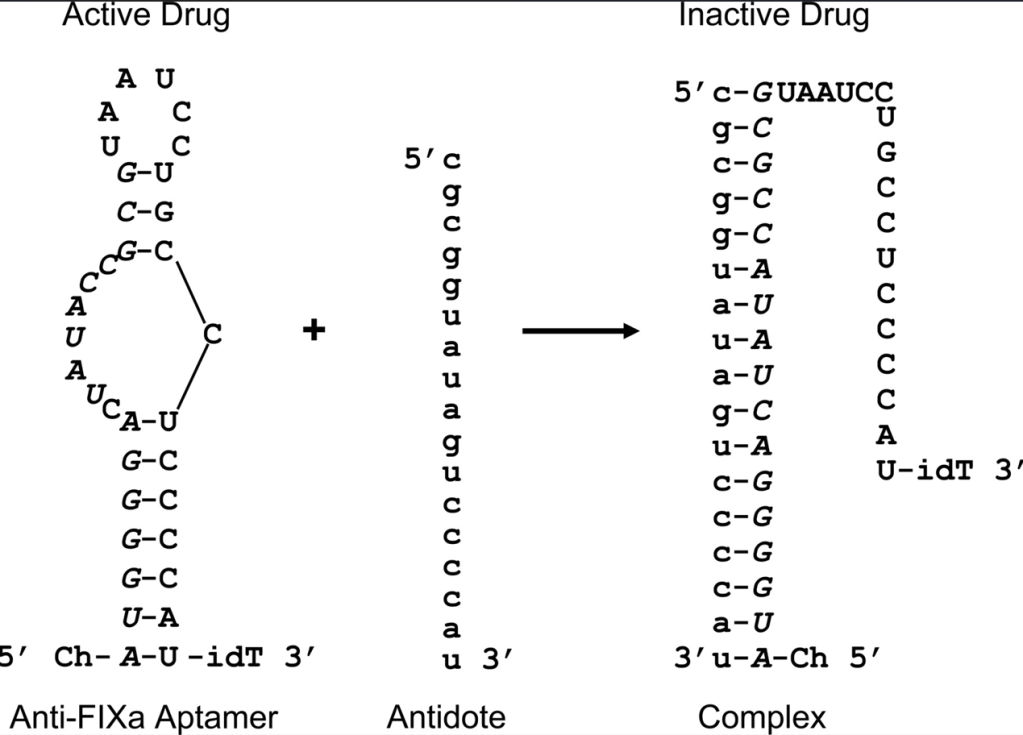
Antidote BB-025에 대한 디자인은 2002년에 Nature에 보고한 바가 있습니다.
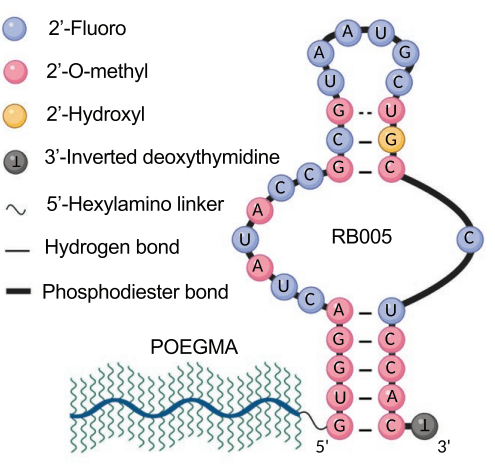
RNA aptamers as reversible antagonists of coagulation factor IXa. Nature  2002, 419, 90–94. Bruce A. Sullivan et al.

BIOTECH (97) Tome Biosciences: Programmable Genomic Integration (PGI) Platform

출처: StatNews

안녕하세요 보스턴 임박사입니다.

Tome Biosciences는 보스턴 MIT의 Omar Abudayyeh 교수와 Jonathan Gootenberg 교수 연구실의 PGI

(Programmable Genomic Integration) 기술 플랫폼을 바탕으로 설립되었습니다.

Drag-and-drop genome insertion of large sequences without double-strand DNA cleavage using CRISPR-directed integrases. Omar O. Abudayyeh, Jonathan S. Gootenberg et al. Nat. Biotech. 2023, 41, 500-512.

PASTE는 Programmable Addition via Site-specific Targeting Elements의 초성을 딴 이름으로 PASTE Platform을 이용해서 Liver Rare Disease와 Autoimmune Disease의 세포치료제 개발에 사용할 계획입니다.

PASTE Expands CRISPR Toolbox by Inserting Large Pieces of DNA – GEN Edge 11/28/2022

Now, a team from MIT describes a new tool called PASTE (programmable addition via site-specific targeting elements) which delivered genes as long as 36,000 DNA base pairs to several types of human cells (as well as to liver cells in mice). PASTE uses a CRISPR–Cas9 nickase fused to two enzymes—a reverse transcriptase and a serine integrase—for targeted genomic recruitment and integration of DNA.

In this study, the researchers showed that they could use PASTE to insert genes into several types of human cells, including liver cells, T cells, and lymphoblasts. They tested the delivery system with 13 different payload genes, including some that could be therapeutically useful, and were able to insert them into nine different locations in the genome.

The researchers are now further exploring the possibility of using this tool as a possible way to replace the defective cystic fibrosis gene. This technique could also be useful for treating blood diseases caused by faulty genes, such as hemophilia and G6PD deficiency, or Huntington’s disease, a neurological disorder caused by a defective gene that has too many gene repeats.

1년여의 Stealth mode 기간을 거쳐서 2023년 12월에 $213 Million Series A/B를 했습니다.

Tome Biosciences Raises $213M to Commercialize MIT Developed Genome Editing Tech – GEN Edge 12/14/2023

Earlier this week, Tome raised $213 million in Series A and B funding from investors including Andreessen Horowitz (a16z) Bio + Health, ARCH Venture Partners, GV, Longwood Fund, Polaris Partners, Bruker Corporation, FUJIFILM Corporation, and Alexandria Venture Investments. The funds will support Tome’s efforts to develop and commercialize programmable genomic integration (PGI) technology that was in-licensed from the Massachusetts Institute of Technology (MIT).

Tome’s portfolio includes integrase-mediated PGI (I-PGI), which utilizes proprietary integrases to precisely insert large sequences into the genome. I-PGI tech is based on the programmable addition via site-specific targeting elements (PASTE) approach to genome editing, first discovered at MIT by Tome’s co-founders Omar Abudayyeh, PhD, and Jonathan Gootenberg, PhD. 

펀딩을 한지 1달도 채 되지 않아서 Shakked Halperin 박사의 Replace Therapeutics를 인수했습니다. Tome Biosciences는 DNA Writing을 하는데 Reverse Transcriptase를 쓰는 반면 Replace는 DNA Ligase를 사용하기 때문에 두 기술을 접목함으로써 PASTE platform 기술의 영역을 확장할 수 있는 장점이 있습니다.
Exclusive: Weeks after $213M launch, Tome acquires a Berkeley gene editing startup for DNA ligase technology – Endpoints News 1/2/2024

Less than a month after launching with $213 million in funding, gene editing company Tome Biosciences has acquired a tiny Californian startup called Replace Therapeutics to expand its repertoire of DNA-altering tools. Tome will pay Replace $65 million in upfront and near-term milestone payments and up to $185 million total in stock and cash, the company told Endpoints News.

Replace was founded by Shakked Halperin, a former scientist at the Innovative Genomics Institute at UC Berkeley. Halperin’s first startup, Rewrite Therapeutics, was acquired for $45 million upfront by the CRISPR company Intellia Therapeutics in 2022 for its so-called DNA writing technologies, which use Cas enzymes to direct polymerases to make corrections, deletions and insertions to the genome.

At his newer startup, Replace, Halperin made a tool that uses Cas9 to make a nick in the genome’s double helix and uses an enzyme called a DNA ligase to stitch in a new piece of code tens to hundreds of letters long.

Kakkar said it’s too early for Tome to have established a drug program around the ligase technology, but he cited Huntington’s disease and a liver disorder called hemochromatosis as examples of conditions that could be potentially addressed with the approach.

He also thinks the tool could improve Tome’s original goal of inserting larger pieces of DNA with integrases. Tome currently relies on a reverse transcriptase to write a genetic landing pad, telling the integrase where to insert the therapeutic gene. The ligase approach provides an “alternative method of placing a beacon,” Kakkar said.

이제 막 시작하는 Tome Biosciences의 PASTE platform 기술은 아직 Animal PoC 정도밖에 되어 있지 않은 것으로 보이는데 NHP study를 지나서 Human clinical trials을 할 수 있을지 기대가 됩니다.

BIOTECH (96) – Janux Therapeutics: Tumor Activated Masked T-Cell Engager (TRACTr) Platform

안녕하세요 보스턴 임박사입니다.

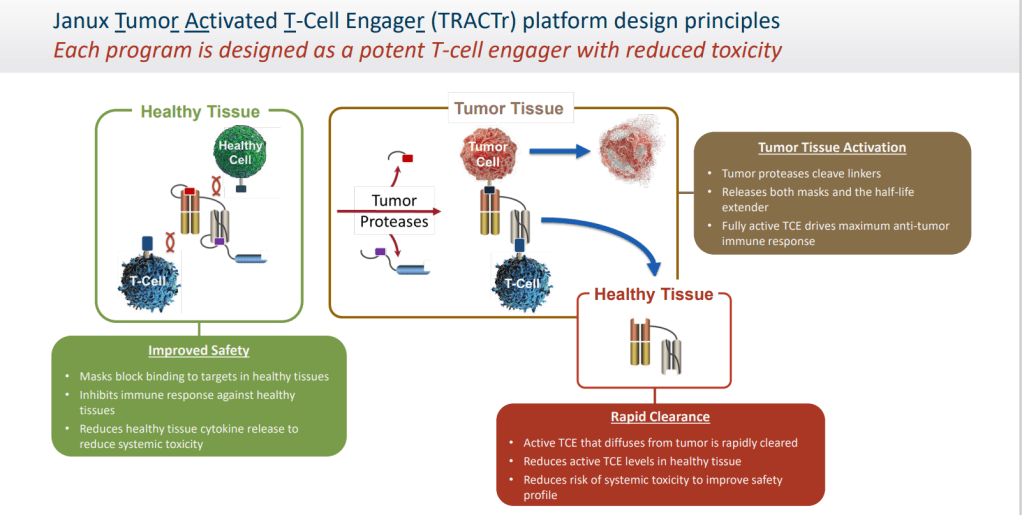
Janux Therapeutics는 Tumor Activated T-Cell Engager (TRACTr) platform을 기반으로 Precision Oncology회사입니다.

Janux Therapeutics는 2017년에 CEO David Campbell 박사가 Founder로서 San Diego에 있는 Early-stage VC Avalon BioVentures의 Incubator인 “COI Pharmaceuticals” 안에서 설립되었습니다. 2018년 5월에 CSO Tommy DiRaimondo 박사가 조인한 후 18개월동안 Stealth-mode로 Tumor Activated T-Cell Engager (TRACTr) platform을 Build-up 한 이후에 Merck와 $1 Billion 규모의 딜을 성사시켰습니다.
Janux pairs up with Merck for $1B-plus T-cell engager deal – Fierce Biotech 12/18/2020

In early preclinical work, its candidates have shown “comparable anti-tumor efficacy relative to standard T cell engagers but lack the associated liabilities related to cytokine release, healthy tissue toxicities, or systemic immune activation.” The proof, however, will need to be shown in clinical trials.

그리고 3개월이 지난 후 $56 Million Series A를 해서 TROP2-TRACTr, PSMA-TRACTr 프로그램 중 하나를 2022년 상반기에 임상시험으로 진입시킨다는 계획이었습니다.
Janux Therapeutics Announces $56 Million Series A to Advance Novel Cancer Drug Candidates Using T Cell Engager (TRACTr) Technology – Business Wire 3/3/2021

Janux’s proprietary Tumor Activated T Cell Engager (TRACTr) technology is designed to overcome specific limitations of current T cell immuno-oncology therapies. The financing will be used to advance Janux’s preclinical pipeline, including a TROP2-TRACTr and PSMA-TRACTr, with expected advancement of the Company’s first candidate into the clinic in the first half of next year.
Series A $56M 한지 한달후에 $125 Million Series B를 바로 했습니다. 1달만에 EGFR-TRACTr 파이프라인이 새로 들어갔습니다.

Janux Therapeutics Closes $125 Million Series B Financing to Advance Next Generation T Cell Engager Immunotherapies into Clinical Trials – Business Wire 4/20/2021

The proceeds of the financing will help support the advancement of Janux’s pipeline of next generation T cell engager immunotherapies, including a PSMA-TRACTr, EGFR-TRACTr, and TROP2-TRACTr, into initial proof of concept clinical trials.

Series B를 한지 한달 후에 Nasdaq IPO $100 Million를 발표하고 6월에 계획의 거의 두배인 $194 Million IPO를 했습니다.

Cancer Biotech Janux Therapeutics Files for $100 Million IPO – Biospace 5/21/2021

Janux plans to use the funds raised from the IPO to submit four Investigational New Drug (IND) applications to the U.S. Food and Drug Administration (FDA) in the first half of 2022.  The lead program is PSMA-TRACTr for metastatic Castration-Resistant Prostate Cancer (mCRPC). The next two are EGFR-TRACTr for colorectal cancer and head and neck cancer and TROP2-TRACTR for triple-negative breast cancer, urothelial cancer and non-small cell lung cancer. The least advanced program is Costim bispecific, targeting PC-L1xCD28 in solid tumors.

IPO 이후 2023년 중순까지의 스토리는 아래 기사에 잘 정리가 되어 있습니다. PSMA-CD3 TRACTr인 JANX007과 EGFR-CD3 TRACTr인 JANX008의 임상1상이 진행 중이었고 그 결과를 2024년초에 발표할 계획이었습니다.

Janux Therapeutics Aiming to Develop Safer T-Cell Engagers With Enduring Efficacy – Precision Medicine Online 7/27/2023

Janux is building two lines of products using this technology.

The tumor-activated T-cell engager (TRACTr) platform produces T-cell engagers with a tumor antigen-binding domain and a CD3 T-cell binding domain.

In contrast, the tumor-activated immunomodulator (TRACIr) platform produces bispecifics with a tumor antigen-binding domain and a costimulatory CD28 binding domain.

Based on these preclinical insights, the company is conducting a Phase Ia trial in which metastatic castration-resistant prostate cancer (mCRPC) patients will receive JANX007 by intravenous infusion once a week in 21-day cycles. Investigators will increase the dose until a maximum-tolerated dose is identified, and then in the expansion stage, patients will receive doses at previously identified tolerable levels. Investigators are monitoring prostate-specific antigen (PSA) levels and PSMA expression in relation to patient response.

Janux’s second clinical stage program is an EGFR/CD3-directed T-cell engager, JANX008. Based on this, the firm began a Phase I trial of the drug in April in patients with advanced or metastatic solid tumors, focusing on colorectal cancer, squamous cell carcinoma of the head and neck, non-small cell lung cancer, and renal cell carcinoma. Campbell said the company chose those four tumor types because EGFR is overexpressed in anywhere from 50 percent to 95 percent of patients.

그리고 최근 발표한 임상1상 결과는 매우 고무적이어서 하루만에 주가가 3배로 뛰었습니다.

Janux shares triple on early cancer immunotherapy data – Biopharmadive 2/27/2024

Yet Janux’s results, while early and from only a small number of people, suggest its drug could have fewer serious safety risks. None of the 23 treated participants with metastatic castration-resistant prostate cancer experienced severe cases of an immune side effect known as cytokine release syndrome, or CRS, for instance.

Efficacy results, meanwhile, showed treatment led to substantial decreases in a prostate cancer marker that’s indicative of benefit. At higher doses Janux tested, all six treated participants had a 30% or higher decrease in this marker, known as prostate-specific antigen. Five had a 50% or higher decline, and one had a greater than 90% decline.

임상1상 자료는 아래의 회사 Presentation에 잘 나와 있습니다.

JANX007, JANX008의 임상시험이 소규모이고 초기단계이지만 Therapeutic Window를 크게 넓힐 수 있다는 점에서 많은 기대가 됩니다.

BIOTECH (95) – Ikena Oncology – Rebranding and Restructuring from Discovery to Clinical Focus

안녕하세요 보스턴 임박사입니다.

보스턴에 있는 Atlas Ventures는 약 2년 정도의 Stealth-mode incubating을 통해 회사를 만드는 Early-Stage Venture Capital Firm입니다. 회사를 만드는 시점의 Business Model과 시간이 지남에 따라 Business Model이 변하는 경우가 많이 있는데요 Atlas Ventures는 이런 변화를 통해서 회사를 성장시키는 강점을 가지고 있다고 생각합니다.

Ikena Oncology는 본래 2017년에 University of Texas 교수인 George Georgiou의 “Kynase Program을 포함한 3개의 프로그램을 바탕으로 “Kyn Therapeutics”라는 이름으로 설립된 회사입니다.

AskAt Inc. Announces Global Immuno-Oncology Licensing Agreement with Arrys Therapeutics Inc. – AskAt Press Release 12/14/2017

일본 AskAt Inc로 부터 $1.2 Billion 규모의 딜을 통해 Atlas Ventures 와 OrbiMed가 세운 Arrys Therapeutics가 Prostaglandin E2 receptor 4 (EP4) antagonists인 AAT-007과 AAT-008을 인수했고요. 이 중 AAT-007을 ARY-007로 명명해서 이 약물은 Kyn Therapeutics에서 개발하기로 합니다.

Kyn Therapeutics Banks $49M to Advance Cancer Immunometabolism Therapies – Biospace 12/14/2017

Atlas-backed I-O specialist Kyn comes out of stealth mode – Fierce Biotech 12/14/2017

Kyn Therapeutics가 Series A $49 Million을 할 때 3개의 프로그램이 있었습니다.

  • ARY-007: Prostaglandin E2 receptor4 antagonist
  • Kynase or Kynurenine degradating enzyme program
  • AHR (Aryl Hydrocarbon Receptor) inhibitor

2019년 초에 Celgene과 Kynase, AHR program에 대해 $80 Million upfront와 $15 Million 지분투자를 하게 됩니다.

BMS Buyout Not Stopping Celgene from Launching Cancer Collaborations with Kyn, Obsidian – 1/18/2019

그리고 같은 해에 회사의 프로그램이 Kynurenine보다 더 확장되어서 Ikena Oncology로 회사명을 변경하게 됩니다. 이에 대한 얘기는 Ikena Oncology CEO인 Mark Manfredi의 블로그 글이 있습니다.

Kyn to Ikena: The Art and Science of Rebranding – LifeSci VC 12/17/2019

그리고 2년후에 Series B $120 Million을 하게 됩니다.

Ikena bags $120M to advance growing pipeline of cancer drugs – Fierce Biotech 1/5/2021

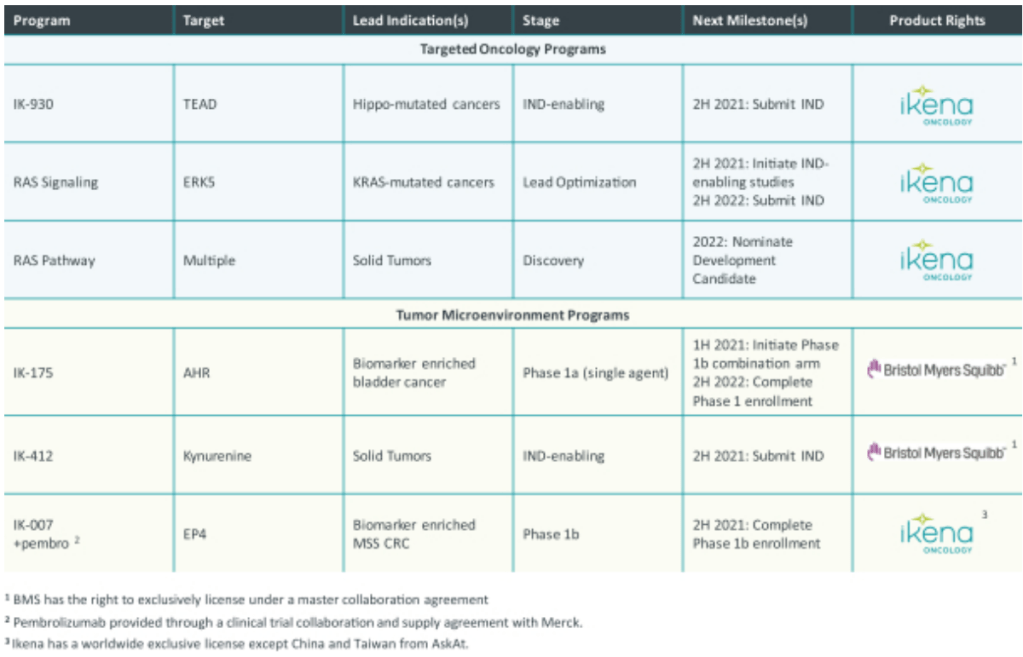
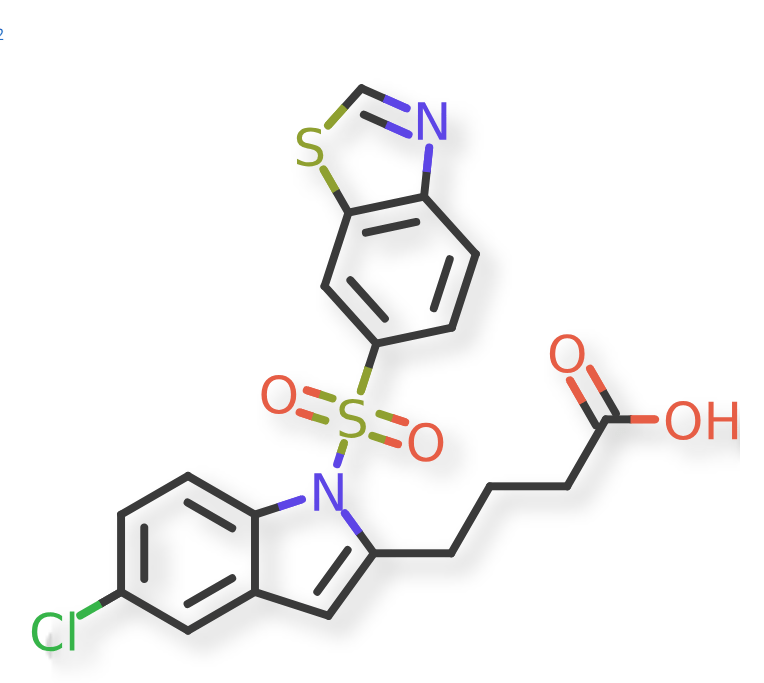
IK-175 (AHR) and IK-412 (Kynurenine) 두 프로그램이 BMS/Celgene과의 계약된 프로그램이었고요. IK-175 개발 스토리는 아래 논문에 실렸습니다.

TEAD inhibitor IK-930이 IND -enabling study를 하는 상황이었죠.

KRAS program은 Lead Optimization하는 상황이었습니다.

2021년에 IPO $143.8 Million을 했는데 아래는 당시의 파이프라인 리스트입니다.

Ikena Oncology Announces Closing Of $143.8 Million Initial Public Offering And Exercise In Full Of The Underwriters’ Option To Purchase Additional Shares – Goodwin 4/5/2021

Ikena Oncology to lay off 35% of staff – Biopharmadive 1/19/2024

Jilted by Bristol Myers, Ikena cuts headcount by 35% in retreat from drug discovery – Fierce Biotech 1/19/2024

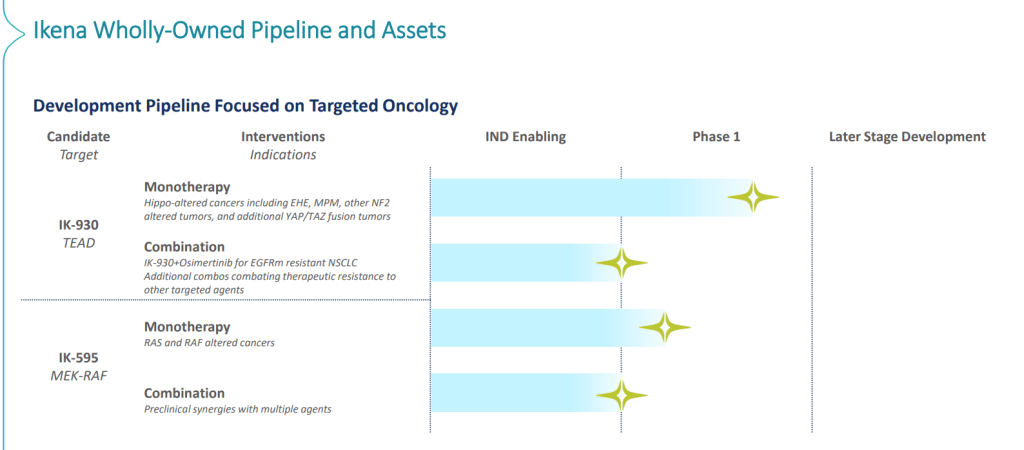
BMS의 딜이 종료되면서 올해 초에 35% 인력감축을 하게 되었고 모든 Discovery Program은 중단하고 IK-930 (TEAD)와 IK-595 (MEK-RAF) 두개의 임상에만 치중하기로 방침을 정한 상태입니다.

향후 IK-930의 임상 성공 여부가 상당히 중요해 질 것 같습니다

BIOTECH (94) – Inventiva Pharma: Lanifibranor, a pan-PPAR agonist MASH 치료제 NATIV Phase 3

안녕하세요 보스턴 임박사입니다.

MASH (Metabolic-Associated SteatoHepatitis) 질환은 NASH (Non-Alcoholic SteatoHepatitis)라고 불리던 병의 새로운 이름인데 수십조원대의 시장규모가 예상되는 질환입니다. 다만 Biology에 대한 이해가 여전히 진행 중이기 때문에 여러가지 다른 Mode of Actions에 대한 치료제들이 개발되고 있는 상황입니다. Madrigal의 Resmetirom과 Cymabay의 Seladelpar에 대해서는 글을 의견을 남긴 적이 있습니다.

BIOTECH (10) – Madrigal Pharmaceuticals의 NASH 치료제 MGL-3196 (Resmetirom) 임상 3상 결과

BIOTECH (89) Cymabay Therapeutics: Seladelpar, an oral, selective peroxisome proliferator-activated receptor delta (PPARδ) agonist

Inventiva Pharma는 2011년에 Abbott Laboratories의 Spin off 회사로 설립이 되었습니다. 이 연구소는 2009년에 Abbott Laboratories가 Solvay Pharma로 부터 인수했는데 인수한지 2년 후 문을 닫기로 결정하게 됩니다. 이에 당시 General Manager였던 Frédéric Cren과 Research Director였던 Pierre Broqua박사가 Abbott과 협상을 통해서 70여명의 직원과 20만개 이상의 파이프라인, 그리고 연구소와 연구팀을 인수하고 Inventiva Pharma를 설립하기로 하게 됩니다. Abbott은 Inventiva를 재정적으로 지원하면서 2개의 프로그램 공동계약을 맺게 됩니다.

Frédéric Cren는 Inventiva의 Cofounder이자 CEO이고 Pierre Broqua 박사는 Cofounder이자 CSO로 창업초기부터 지금까지 이어지고 있습니다.

Abbott Completes Acquisition of Solvay Pharmaceuticals – PR Newswire 2/16/2010

Abbott (NYSE: ABT) today announced that it has completed its EUR 4.5 billion ($6.2 billion) acquisition of Belgium-based Solvay Pharmaceuticals, providing Abbott with a large and complementary portfolio of pharmaceutical products and expanding Abbott’s presence in key global emerging markets.

Launch of Inventiva, a New French Biotech Company Specializing in Research Partnerships in Therapeutic Innovation 30 August 2012 – Biospace 8/30/2012

Co-founded by Frédéric Cren, formerly General Manager of Research at Laboratoires Fournier, and Dr Pierre Broqua, formerly Research Director at Laboratoires Fournier at Daix, Inventiva has a staff of more than 70 experienced people, including around 20 researchers and more than 40 specialized technicians.

In order to achieve its objectives, Inventiva has at its disposal a library of around 200,000 compounds, a 12,000m2 laboratory, state-of-the-art facilities and drug discovery teams grouped into three departments – biology and pharmacology, chemistry and ADME/PK – as well as cross-disciplinary research capabilities (compound management, pre-formulation, toxicology, etc).

In order to promote the start-up and sustainability of Inventiva, Abbott is providing the new company significant financial support. Inventiva is already working on two research programs for Abbott in the field of auto-immune diseases and the treatment of diabetic nephropathy.

Frédéric Cren, Co-Founder and CEO of Inventiva, said: “The launch of Inventiva is the culmination of an ambitious project to create a French leader among biotech firms by drawing on the recognized research capabilities of the Daix site. Inventiva will capitalize on the rapidly growing outsourced pharmaceutical research market to implement significant partnerships with large pharmaceutical groups in its areas of specialization: Parkinson’s disease, oncology, auto-immune diseases and fibrosis. With experienced research teams, already identified research programs and significant development potential, Inventiva has all the necessary assets to become a leading regional and national player in pharmaceutical research.”

Inventiva Pharma는 2017년에 Paris Euronext에 IPO를 합니다.

Inventiva raises 48 mln euros in IPO on Euronext Paris – Euronext – Reuters 2/15/2017

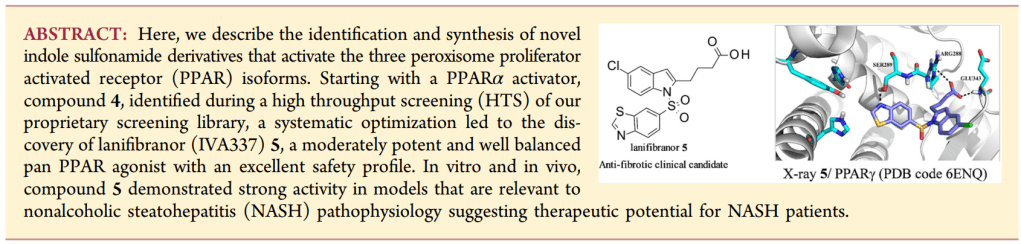
Lanifibranor (IVA337)의 임상2b상 결과를 바탕으로 임상3상을 준비하고 MPS VI or Maroteaux-Lamy syndrome 치료제인 Odiparcil (IVA336) 임상시험을 위해 Nasdaq 상장을 하게 됩니다. 2018년 JMC Paper에 Lanifibranor (IVA337) 개발 스토리를 게재했는데 이 약물이 20만개 이상의 Compound library의 HTS (HIgh-Throughput Screening)결과로 얻어진 Lead compound를 Optimization한 것으로 그 과정을 소개했습니다.

Inventiva aims for $90M Nasdaq IPO after positive phase 2 – Fierce Biotech 6/22/2020

Riding the wave of a phase 2 win, Inventiva is gearing up for its U.S. IPO. The French biotech filed to raise up to $90 million in its Nasdaq debut, which will push its lead program into a phase 3 NASH study and advance a treatment for a rare lysosomal storage disorder.

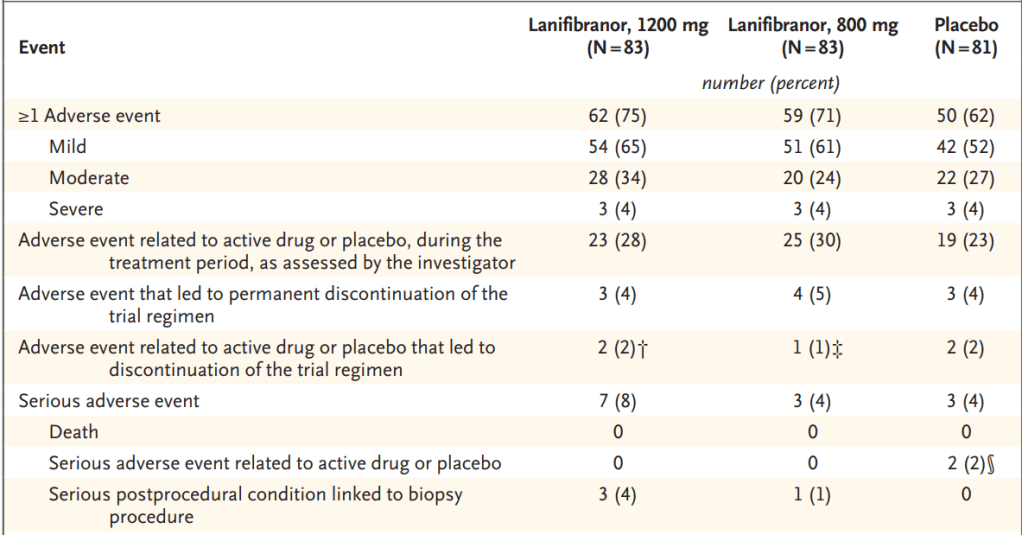
2021년에 Lanifibranor의 임상2b 결과는 NEJM에 발표되었습니다. 800mg과 1200mg에 대해 임상2b를 진행했는데 Primary end point와 Secondary end point는 모두 충족하는 결과로 나왔습니다.

그리고 안전성의 경우에도 800mg의 환자 cohort에서는 Placebo와 유사한 데 1200mg cohort에서는 조금 독성이 있는 것으로 보였습니다.

그런데 임상3상 중에 환자 한명이 Aminotransferase라는 liver enzyme의 레벨이 상승함에 따라 임상이 일시 중단되었다고 발표했습니다.

Inventiva pauses phase 3 MASH study over patient’s raised liver enzymes – Fierce Biotech 2/16/2024

The event marks the first serious adverse reaction reported in any clinical trial of lanifibranor to date, Inventiva pointed out. The trial’s data monitoring committee has reviewed the adverse reaction report “in conjunction with other milder cases of elevation of aminotransferases among trial participants,” the company said.

하지만 Clinical Hold는 아닙니다. DMC는 임상 환자들이 6주마다 간수치 검사를 받고 신규 환자가 autoimmune liver or thyroid disease가 없어야 한다는 조항을 들어 임상진행을 계속할 수 있다고 했기 때문입니다.

The committee recommended that the study can continue if patients receive liver monitoring every six weeks and if new patients diagnosed with or with a predisposition to autoimmune liver or thyroid disease are excluded from the trial. As a result, the biotech has moved to temporarily suspend screening and randomizing any new patients into the study while the criteria are put in place.

CEO인 Frédéric Cren은 임상시험이 1달 반 정도 지나면 다시 시작할 수 있다고 말했습니다.

“All our teams are working diligently, and we are confident that recruitment will resume in around four to six weeks’ time,” CEO Frédéric Cren said in the release. Inventiva had been on schedule to complete patient screening in the trial by the end of March but said the pause means the first visit of the final patient enrolled may occur later in the first half of the year.

2023년 1월에 FDA 권고에 따라 NATIV 임상3상 프로토콜의 수정을 한 상태인데 이 수정을 통해서 임상3상의 시간이 크게 단축될 수 있게 되었습니다.

Inventiva announces changes to the clinical development of lanifibranor, including plans for a new Phase III trial in patients with NASH and compensated cirrhosis – Press Release 1/4/2023

“following a consultation with the U.S. Food and Drug Administration (“FDA”), Inventiva has decided to modify the clinical development plan of lanifibranor for the treatment of NASH. Inventiva’s request for a consultation with the FDA followed a public communication by the FDA suggesting that an alternative approach to seek full approval in patients with NASH could be considered upon submission of positive results of a Phase III trial using a histology surrogate endpoint in patients with NASH and a Phase III clinical outcome trial in patients with NASH and compensated cirrhosis. The Company’s proposed changes to the NATiV3 trial are designed to align with the alternative regulatory approach and are expected to be beneficial to the overall lanifibranor clinical program by

1) reducing the number of biopsies a patient undergoes during the trial from three to two,

2) reducing the trial duration a patient has to consent to from 7 years to 72 weeks,

3) offering all patients in the trial access to a lanifibranor treatment for at least 48 weeks by allowing them to enter into a new active treatment extension study, and

4) potentially expanding the addressable patient population to include patients with NASH and compensated cirrhosis.”

현재 Inventiva Pharma의 ipeline은 아래와 같습니다. 현재 2개의 약물이 임상시험 중이고 Lanifibranor (IVA337)이 임상3상으로 가장 앞선 상태이고, Odiparcil (IVA336)은 임상2상이 진행 중입니다.

곧 Lanifibranor (IVA337)의 임상3상이 재개되고 승인까지 되어서 MASH 환자들에게 좋은 치료제가 제공되면 좋겠다는 생각입니다.