Bicycle Therapeutics, a next generation biotherapeutics company developing first-in-class bicyclic peptides, today announced that it had secured an equity financing of £20 ($32M) million for the clinical development of therapeutic bicycle drug candidates in oncology. The existing investor syndicate, Atlas Venture, Novartis Venture Fund, SR One, SV Life Sciences and Astellas Venture Management participated in the round.
Bicycle has used its proprietary bicyclic peptide technology that enables it to discover a new class of drug candidates, which have similar selectivity and potency to antibodies but are 100-fold smaller and are manufactured using simple, economic chemical synthesis. This financing will support the clinical development of bicycle-drug conjugates (BDCs) that are highly selective to tumour-specific targets, with sub-nanomolar affinities. Preclinical models show that these BDCs extravasate and penetrate tissues much more rapidly and efficiently than antibodies, effecting rapid cell killing through the tumour mass and fast clearance. This results in effective tumour lysis with minimal systemic exposure.
Bicycle technology has broad applicability in oncology, respiratory, inflammatory and ophthalmology disease, as agonists, antagonists or for delivering payloads. The company’s projects in BDCs for oncology will be leveraged by pharma partnerships addressing targets nominated by partners, where the rapidity of lead discovery and optimisation enables drug candidate selection in months. The first partnership, with ThromboGenics, is developing bicyclic peptide drug candidates to a specific ophthalmology target, for the treatment of diseases such as diabetic macular edema.
Andrew Sandham, Chairman of Bicycle, said, “This second round financing enables us to advance our BDC candidates to clinical development in cancer indications. We also have the capacity to work collaboratively with pharma partners on other targets and indications in many diseases.”
Rolf Günther, CEO, added, “Bicycle technology was invented by our founders, Sir Gregory Winter and Professor Christian Heinis. We have developed the platform for rapid discovery and optimisation of drug candidates, and are delighted that we are now able to demonstrate clinical utility of this exciting new class of molecules.”
2017년에 $52 Million Series B를 했습니다. 이 당시에는 BT1718의 임상을 시작한다는 발표를 했습니다.
Bicycle Therapeutics, a biotechnology company pioneering a new class of therapeutics based on its proprietary bicyclic peptide (Bicycle®) product platform, today announced the successful completion of a £40million Series B financing round. Proceeds will be used to further the development of multiple drug candidates, including Bicycle’s lead molecule, BT1718, a first-in-class drug for cancers of high unmet need.
New investor Vertex Ventures HC led the financing round with participation by additional new investors Cambridge Innovation Capital (CIC) and Longwood Fund. Bicycle’s existing investors – Novartis Venture Fund, SROne, SVLS and Atlas Venture also participated. As part of this financing, the company also announced the addition of Dr. Christopher Shen, M.D., Managing Director at Vertex Ventures HC, and Dr. Michael Anstey, D.Phil., Investment Director at CIC, to its Board of Directors.
“Bicycle Therapeutics has a highly innovative platform with the potential to transform the course of treatment for patients suffering from a range of diseases, including difficult-to-treat cancers,” said Dr. Christopher Shen from Vertex Ventures HC. “We are delighted to lead this financing and to support Bicycle’s seasoned management team to realize the promise of this new class of therapies.”
Bicycle Therapeutics is developing novel first-in-class medicines based on its Bicycle®product platform. Bicycles®can combine properties of several therapeutic entities in a single modality: exhibiting the affinity and selective pharmacology associated with antibodies; the distribution kinetics of small molecules, allowing rapid tumour penetration; and the “tuneable” pharmacokinetic half-life and renal clearance of peptides.
Bicycle’s lead molecule, BT1718, is the first example of its Bicycle Drug Conjugate® (BDC) technology, in which toxic chemical payloads are targeted specifically to malignant tumours, minimising systemic toxin exposure through renal clearance. BT1718 targets Membrane Type 1 Matrix Metalloproteinase (MT1-MTP), which is highly expressed in many solid tumours, including triple negative breast cancer and non-small cell lung cancer. It is expected to enter the clinic in 2017 in partnership with Cancer Research UK (CRUK). The Series B will also fund additional pipeline programs through early clinical development, the first of which will be selected in the second half of 2017.
“This financing represents an important validation of our approach, while providing Bicycle with the resources to continue to advance our pipeline and translate our bicyclic peptide technology into important new treatment options for patients,” said Dr. Kevin Lee, Ph.D., Chief Executive Officer of Bicycle Therapeutics. “We are grateful for the continued strong support from our investors as we move BT1718 rapidly toward the clinic and continue to advance our preclinical programs, including toxin drug conjugates and immune modulators to treat cancer and other debilitating diseases.”
2019년에는 $60 Million Nasdaq IPO를 했습니다. BT1718은 phase 1/2a를 진행 중이었습니다.
Bicycle Therapeutics announced the pricing of its initial public offering (IPO), offering 4,333,333 shares at an IPO price of $14 per share. The company expects to raise about $60.6 million. It is trading on the Nasdaq under the BCYC ticker symbol.
The company focuses on developing a novel class of drugs called Bicycles. Bicycles are fully synthetic short peptides constrained to form two loops—hence “bi” cycles—that stabilize their structural geometry.
The company was founded in 2009 based on science coming out of the laboratory of Sir Greg Winter, winner of the Nobel Prize in Chemistry in 2018 for his work in phage display. Phages are viruses that infect bacteria. The company is co-headquartered in Lexington, Mass. and Cambridge, UK.
On May 7, Bicycle announced a collaboration with the Dementia Discovery Fund (DDF) to use Bicycle technology to develop novel drugs for neurodegenerative diseases. DDF is a specialized venture capital fund focused on discovering and developing therapies for dementia.
“This is a landmark collaboration for Bicycle,” stated Kevin Lee, chief executive officer of Bicycle Therapeutics. “Fifty million people worldwide live with dementia, yet there is no cure for these terrible diseases. Despite the huge burden of these illnesses on individuals, families and society, conventional approaches have so far provided limited benefit. We believe our Bicycles bring a fresh approach to this area, and we are thrilled to work with DDF to apply our proprietary technology to the potential treatment of dementia.”
Under the collaboration, Bicycle will identify Bicycles that bind to clinically-validated dementia targets. If any good compounds are identified, Bicycle will own the resulting intellectual property. Bicycle and DDF will have the option to found a new company together to develop those compounds.
The company’s phage display screening platform is used to identify Bicycles efficiently. Its internal programs focus on cancer. Its lead product candidate is BT1718, a Bicycle Toxin Conjugate in a Phase I/IIa clinical trial funded by the Centre for Drug Development of Cancer Research UK.
BT1718 is being studied for tumors that express membrane Type 1 matrix metalloprotease. The bicycle attaches to the cancer cells and the toxin cleaves from the bicycle and kills the tumor cells. Preliminary data from the trial is expected in the second half of this year.
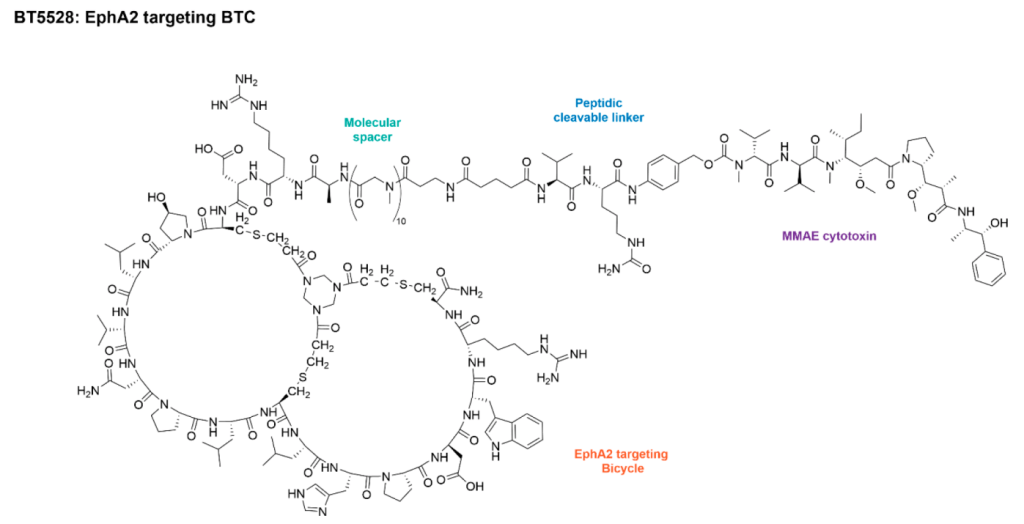
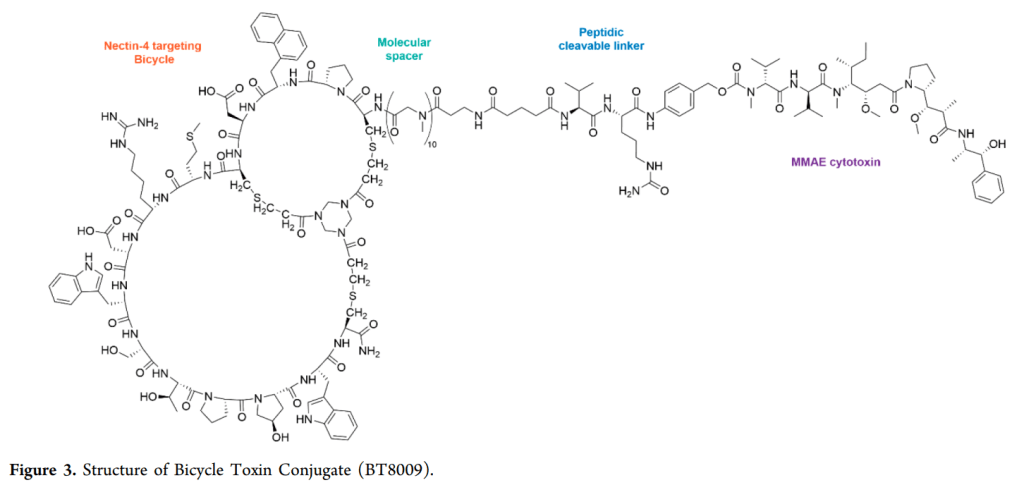
The company’s other pipeline candidates are BT5528 and BT8009, also for oncology indications.
At the end of 2018, Bicycle reported collaboration revenues of $7.14 million. The net loss was $16.3 million for the year, not unusual as operating expenses grew as the company moved its compounds into the clinic.
The company plans to use between $35 million and $40 million of the funds raised for Phase II and Phase III trials of BT1718. It also will use funds to advance its preclinical compounds into the clinic.
Prior to the IPO, the company had raised about $116 million. In addition to the DDF collaboration, Bicycle Therapeutics has cut deals with AstraZeneca to focus on respiratory, cardiovascular and metabolic diseases, with Bioverativ on hemophilia drugs, and with Oxurion on ophthalmology therapeutics.
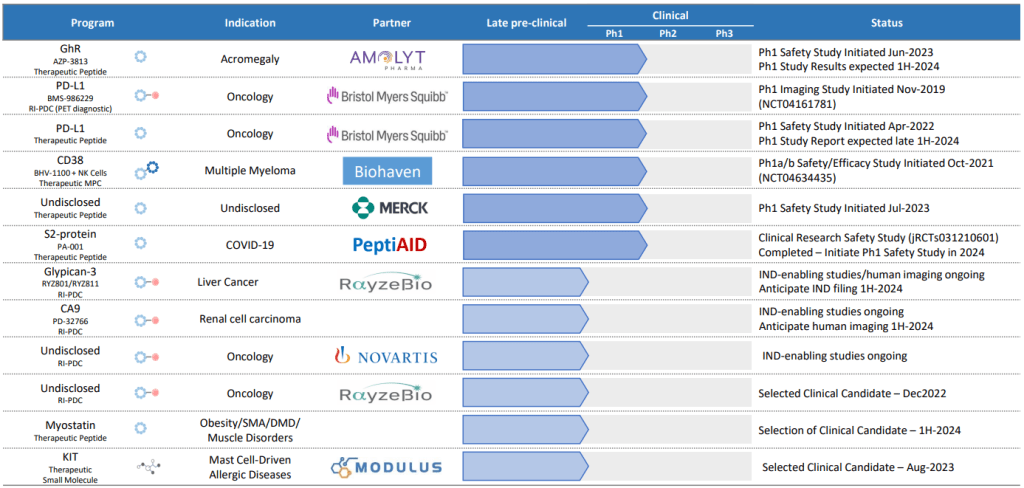
2024년 2월 현재 파이프라인은 아래와 같습니다. BT8009가 현재 임상3상에 진입해서 pivotal clinical study를 진행하고 있습니다.
Daylight Savings를 시작해서 잠이 잘 오지 않는군요. 잠도 오지 않는 새벽에 그래도 남기고 싶은 글이 있어서 이 글만은 쓰고 잠이 들려고 합니다.
막내딸은 한국식으로는 고3 이고 미국에서는 12학년 Senior입니다. 한참 대학입시 결과를 받고 있는 중이죠. 한국도 그렇지만 미국 대학 입시도 쉽지 않은 여정이고 도무지 어떤 사람이 붙고 어떤 사람이 떨어지는지 모를 지경입니다. 미칠 노릇이죠.
오늘 저녁에 막내딸과 이런 저런 얘기를 할 시간을 가졌는데 한가지 새로운 사실을 알게 되었고 큰 희망을 봤습니다. 그것은 우리 딸이 이 모든 과정을 하나님께 맡기고 있다는 것을 알게 된 것입니다.
그러더라구요.
“만약 잘 안되더라도 잘 안되게 하시는 뜻이 있을 것이고 난 그 뜻을 믿고 열심히 공부할거야”
라고 말이죠. 정말 깜-짝 놀랐습니다. 요즘 들어서 친구와 교회 모임에 꼭 나가려고 하는 것은 알았지만 우리 딸이 하나님을 인격적으로 만나고 있다는 것을 알고 얼마나 기뻤는지 모릅니다. 사실 대학을 어디 가는 것이 뭐 중요하겠습니까? 하나님의 인도를 믿고 따른다면 그 자체만으로도 우리 딸은 성공한 것입니다.
오늘 얘기를 들으면서 너무나 감사함을 느꼈습니다. 전 하나님을 대학원을 졸업하고 취직한 첫해 겨울에 만났거든요. 그 만남이 반갑고 좋았지만,
“더 일찍 고등학생 때 만났으면 어땠을까?”
이런 생각이 들어서 하나님께 이렇게 기도했거든요.
“하나님, 우리 딸들은 저처럼 나중에 하나님을 만나지 않고 고등학생일 때 만나게 해 주세요!:
아~! 그런데 그 기도가 이루어진 것을 오늘에야 알게 되었습니다.
한인 교회에 다니다가 담임목사와의 갈등으로 친구들과 잘 지내던 막내 딸을 반강제로 미국교회로 데려와서 항상 마음 한 가운데에 미안한 마음과 막내딸이 신앙을 잃지 않을까? 걱정을 하고 있었는데 하나님은 살아계셔서 저의 기도를 잊지 않으시고 이렇게 신실하게 들어주시고 계시다는 것을 깨닫게 되니 너무나 한량없는 감사와 기쁨이 넘칩니다.
우리 딸이 어쩌면 저와 같은 길을 갈지도 알 수 없고 아니면 다른 길을 갈지도 알 수 없지만 그래도 한가지 분명한 것은…
김경록 박사님의 생애자산관리 두 퍼즐에 대한 글을 나눕니다. 생애자산관리는 축적과 인출로 나뉘는데요. 축적시기에 주식에 투자하지 않는 것에 대한 퍼즐이 주식시장 참여 퍼즐 (Stock Market Participation Puzzle) 과 인출시에는 연금으로 받는 것이 좋지만 대부분 목돈으로 인출하는 연금퍼즐 (Annuity Puzzle) 이 있습니다. 미국의 경우에는 401(k)나 IRA를 투자할 때, ETF나 Mutual Fund도 있고 Target Date Fund (TDF)가 있어서 주식시장에 머물 수 있는 옵션이 있고 인출할 때에는 QLAC (Qualified Longevity Annuity Contract)라는 상품이 있어서 401(k)나 IRA에서 $200,000까지 85세 이후부터 죽을 때까지 연금을 받는 장수보험에 가입할 수 있습니다. 소셜연금을 받는 나이인 67-70세에 85세 이후에 받는 QLAC을 가입해야 겠군요.
호랑이는 늙어서 사냥할 수 없으면 죽는다. 반면에 사람은 생산 능력이 없어져도 오래 산다. 돈이라는 수단이 있기 때문이다. 만일 호랑이가 돈이 있다면 젊을 때 멧돼지를 많이 잡아서 남은 걸 돈으로 바꾸었다가, 늙어 사냥이 어려울 때 그 돈으로 젊은 호랑이가 잡은 멧돼지와 바꾸면 오래 살 수 있다. 호랑이도 생애자산관리가 있으면 평안한 노후를 보낼 수 있는 것이다.
생애자산관리는 크게 축적과 인출로 이루어진다. 그런데, 이 둘은 반대되는 특징을 갖고 있다. 축적은 소득을 수단으로 자산축적이라는 목표를 달성해야 하고 인출은 축적된 자산을 수단으로 안정적인 소득을 얻는 걸 목표로 해야 한다. 또한, 축적은 자산을 증식시키는 것이 중요한 반면 인출은 죽을 때까지 안정적인 소득이 이어지게 해야 한다. 이러한 축적과 인출의 과정을 성공적으로 이루어내기 위해서는 다음의 두 퍼즐을 극복해야 한다.
첫번째는, 축적 과정에서 나타나는 주식시장참여 퍼즐(stock market participation puzzle)이다. 축적은 자산을 증식시키는 과정으로 여기에는 주식이 가장 적합하다. 특히, 젊을 때는 채권의 성격을 띤 인적자본이 풍부하므로 충분히 주식을 보유해야 한다. 하지만, 이론과 달리 현실에서는 주식 보유 비중이 높지 않은데, 이를 주식시장참여 퍼즐이라 부른다.
미국은 이를 극복하기 위해 2006년에 디폴트 옵션 제도를 도입했고 이후 퇴직연금에서 주식 비중이 60%를 넘게 됐다. 미국 이외에 영국·호주 등 선진국들 역시 주식시장참여 퍼즐이 많이 해소됐다.
반면에, 우리나라는 여전히 주식시장참여 퍼즐이 극명하게 나타나고 있다. 퇴직연금에서 DC (확정기여형)와 IRP (개인형 퇴직연금)의 경우 보유 주식 비중이 2021년 현재 10% 정도 된다. 주식 비중이 낮다 보니 장기적으로 수익률도 낮을 수밖에 없어, 지난 5년간 퇴직연금 DC의 연 수익률이 2% 수준에 머물렀다.
두번째는 인출 과정에서의 연금 퍼즐(annuity puzzle)이다. 퇴직을 하면 축적한 자산에서 인출을 통해 소득을 만들어야 한다. 주식 시장 침체가 올지, 얼마나 오래 살지 불확실할 때는 약속한 연금액을 평생 지급하는 종신연금을 사는 게 좋다. 이를 연금화한다고 하는데 이론적으로 노후에는 연금화 비중을 충분히 높이는 게 좋다. 그런데, 사람들은 의외로 연금화를 하지 않는다. 합리적으로 행동하지 않으니 퍼즐이다. 여러 이유가 있지만 빨리 죽으면 손해를 본다는 생각과 목돈을 주고 푼돈을 받으니 심리적으로 손해라는 생각도 있다.
그래서, 퇴직부터 받는 종신연금이 아니라 대략 평균 수명 이후부터 받는 장수연금을 활용하는 차선책이 제시되기도 한다. 예를 들면, 85세부터 죽을 때까지 연금을 받는 식이다. 미국은 2014년에 퇴직연금에 적격장수연금을 도입하고 2019년 SECURE 법을 제정하여 퇴직연금 계좌에서 종신연금을 편입하는 걸림돌을 제거하여 연금화를 유도하고 있다. 이외에도 민간에서는 수익성과 안정성이 결합된 구조화된 연금 상품을 많이 내놓고 있다.
우리는 퇴직 후 연금화 비율이 3.3%로 연금화가 거의 이루어지지 않고 있다. 이것도 종신연금이 아닌 단순 인출이어서 자칫하면 노후 파산이 될 위험도 있다. 연금화를 도와줄 장수연금이나 구조화된 연금 상품도 부족하기 짝이 없다. 설상가상으로 연금화도 하기 전에 중간에서 많이 인출된다. 2020년 한 해에 DC에서 중도인출한 것과 IRP에서 해지한 금액을 합하면 16조 6천억원이다.
이처럼, 생애자산관리의 축적과 인출 과정을 비효율적으로 만드는 두 퍼즐이 우리 연금시장에서는 너무나 극명하게 나타난다. 겉만 생애자산관리인 셈이다. 장기 자산배분 관점에서 주식시장참여 비중을 높이고 장수연금이나 구조화된 연금 상품을 개발해야 한다. 무엇보다, 단순 인출 시스템이 아닌 투자 상품에 걸맞은 체계적인 인출 시스템이 필요하다.
올 들어 주가가 하락하고 예금 금리가 많이 올랐다. 이런 시점에서 개인은 단기적인 시장 상황에 휘둘리지 말고 생애에 걸친 장기 자산배분을 유지해야 한다. 금융회사는 매출 극대화가 아닌 가입자의 자산 가치 극대화 관점에서 자산을 배분하는 수탁자 책임(fiduciary duty)을 꼭 가져야 한다.
“There is a lot in SECURE 2.0 that can benefit higher net worth savers,” said Joel Dickson, principal and head of enterprise advice methodology at Vanguard, “but the provisions also create planning opportunities for those who are charitably inclined, face a higher retirement tax bracket, want to leave a legacy, or want to take advantage of tax-diverse planning.”
Savers rejoice: SECURE 2.0 creates opportunities to boost tax-advantaged savings—and to hold on to them for longer. There’s a lot to dig into within this new law, including start dates that span the next few years. Here we break down the provisions that may be most meaningful for higher net worth savers, including the year when each takes effect.
New rules for required minimum distributions (RMDs)
A delayed start:Provisions in SECURE 2.0 delay the RMD start to age 73, rising to age 75 by 2033. This change may be a big boost for seniors who don’t need access to retirement funds. They can now keep that money sheltered in tax-advantaged 401(k), traditional IRA, and other qualified retirement plan accounts for longer. (Effective immediately, with an additional change in 2033.)
Reduced penalties:The penalty is steep for those who fail to take their RMD but the new law reduces that hit from a 50% excise tax on distribution shortfalls to a more palatable 25%. Even more, that penalty drops to 10% for those who take the necessary RMD and submit a tax return reflecting the paid excise tax within a specified correction window. (Effective immediately.)
Waived for Roth 401(k) accounts:Bringing them in line with Roth IRA distribution rules, Roth 401(k) accounts will no longer be subject to RMD rules during the account holder’s lifetime. (Effective 2024.)
Expanded use for qualifying longevity annuity contracts (QLACs): SECURE 2.0 repeals the 25% limit on retirement plan balances for the tax-free transfer of assets on the purchase of a QLAC. (A QLAC is a deferred income annuity, which is a pension-like annuity; QLACs are not subject to RMDs until age 85.) It also bumps the maximum dollar amount to $200,000 (adjusted for inflation each year), increasing the level of funds that may be shielded from RMDs for a longer period of time. (Effective immediately.)
Broader qualified charitable donation (QCD) rules:People aged 70½ or older may use a QCD to donate up to $100,000 to a qualified charity, directly from an IRA; a QCD can be counted toward annual RMD requirements, if certain rules are met. SECURE 2.0 adds a provision to index that annual $100,000 cap to inflation. Also, to note: The new law also includes a one-time election for a QCD to a split-interest trust, a move that allows people to pursue philanthropic goals while maintaining a lifetime interest in the income generated by the donated funds. (Effective immediately.)
Supersized catch-ups and expanded Roth contribution options
A supersized catch-up contribution:Defined contribution participants between the ages of 60 and 63 will be able to sock away up to $10,000 ($5,000 for SIMPLE plans) in catch-up contributions or 50% more than the standard catch-up amount, whichever is greater. (The catch-up limit for people aged 50 and older in 2023 is $7,500 and $3,500 for SIMPLE plans.) (Effective 2025.)
To know: Starting in 2026, employees earning more than $145,000 in the prior calendar year must make catch-up contributions in an after-tax Roth account.1
More Roth savings opportunities and requirements:SECURE 2.0 requires all catch-up contributions be made in an after-tax Roth account for employees earning more than $145,000 (indexed for inflation). Starting in 2023, small business owners may now create Roth options for their SIMPLE and SEP IRAs*; larger employers can match contributions in 401k and 403b accounts with Roth dollars. (Effective 2024.)
Also notable: The legislation doesn’t include any provisions that restrict or eliminate the existing non-deductible traditional to Roth IRA conversion (backdoor Roth IRA) strategy.
529 to Roth IRA conversions for beneficiaries
Starting in 2024, the new rules allow up to $35,000 of unused 529 plan assets to be moved to a Roth IRA, so long as certain conditions are met. The 529 plan must have been in existence for 15 years, funds must be in the 529 for five years before they (and associated earnings) can be moved, and they must be transferred to an IRA for the same beneficiary as the 529. The 529 to Roth IRA conversion limit is equal to the annual Roth IRA contribution limit ($6,500 in 2023), with a lifetime cap of $35,000 per beneficiary. (Note: The $6,500 annual Roth IRA contribution limit still applies. A $6,500 529 to Roth IRA conversion can be made in place of an annual Roth IRA contribution but not in addition to it.)
“With a series of well-planned-out annual transfers, a 529 to Roth IRA conversion may offer an effective opportunity for wealth transfer between generations,” said Dickson. “The $35,000 lifetime limit, if reached earlier in the beneficiary’s life, could compound into a substantial nest egg by the time retirement age is reached or even provide a strong foundation for meeting other savings goals.”
Savers beware: A tax bomb may lie in wait
While these changes are largely good news for those with a high net worth, there is a caveat. The combination of these provisions—a longer savings horizon and increased contribution limits among them—may leave some super savers under threat of a ticking tax bomb.
Here’s how it works: Some savers are so good at socking away tax-deferred cash that they wind up with RMDs that, combined with other income, pay more than their previous annual salaries. The problem? A larger income could push a retiree into a higher tax bracket, which can crimp cash flow—but that’s not all. It can also trigger Medicare surcharges, increase taxes on Social Security payments, and create a tax burden on heirs.
In short, the SECURE Act of 2022 (SECURE 2.0) offers expanded options for estate, legacy, and tax planning, as well as one potential boon for those with an eye on tax-advantaged intergenerational wealth transfer. Even so, it also creates a number of planning opportunities and potential outcomes to be aware of—including challenging tax situations. A financial or tax advisor can help individual investors understand how the SECURE 2.0 changes may apply to individual situations.
‘자격있는 장수 어누이티 계약’(qualified longevity annuity contracts·QLACs)라는 고령에 대비한 은퇴 저축 플랜에 대해 아는 한인들이 많지 않다. 3년전 버락 오바마 행정부가 장수시대를 맞아 은퇴 자금이 말년에 모두 고갈 되는 것을 막기 위한 새로운 연금상품 방식으로 출범했다. 주요 골자는 이렇다. 401(k), 403(b)와 같은 직장 은퇴저축플랜과 전통 IRA와 같은 개인 은퇴저축플랜을 가진 경우 돈의 일부를 ‘롱지비티 어누이티’(장수시대 대비 은퇴연금보험)에 투자한 후 일정 기간이 지나면 죽을 때가 매달 고정금액을 받는 것이다. 이들 은퇴저축플랜은 세금을 내기전 수입에서 적립하므로 감세 효과는 물론이고 말년에 보장된 수입을 올릴 수 있는 저축 상품으로 환영을 받아왔다.
많은 보험회사들이 뛰어 들어 QLAC 상품을 선보이고 있지만 적지 않은 사람들이 구입할지를 놓고 고심하고 있다. 사실 완벽한 은퇴 저축플랜은 없다. QLAC 역시 새로운 상품이기 때문에 아직 장단점이 완전히 파악되지는 않았다.
65세 여성의 예를 들어 설명해 보자. 이 여성은 IRA에 50만 달러를 가지고 있다. 4%규칙에 따라 65세부터 매년 4%씩 찾는다고 가정하면 한달 수입이 1,666달러이고 그 금액은 매년 줄어들어 30년 후에는 모든 저축금이 고갈된다.
이 여성이 어누이티(은퇴연금보험) 옵션을 사용한다면 이야기는 달라진다. IRA에서 최대 12만5,000달러까지 인출해 QLAC에 투자한다. 85세까지는 찾아 않아도 된다. 이후 매달 3,300달러, 또는 연간 4만 달러를 받는다. 이 금액은 여성이 120까지 산다고 해도 죽기 전까지 계속 동일한 금액으로 받을 수 있다.
이 여성은 IRA에 남은 37만5,000달러를 여유 있고 공격적으로 투자해 돈을 더 불려나갈 수 도 있고 또 여유 있게 돈을 지출할 수 있다. QLAC에 투자한 돈으로 85세 이후 은퇴 수입을 보장받기 때문이다.
▲QLAC
QLAC는 401(k), 403(b) 또는 전통 IRA와 같은 세금 유예 은퇴저축플랜에서 구입할 수 있는 은퇴연금보험 계약이다. 상품의 목적은 말년까지 은퇴 수입을 만들 수 있도록 하자는데 있다. 물론 세금은 찾아 쓸 때까지 유예된다.
은퇴 유예저축플랜은 59½세부터 벌금 없이 찾아 쓸 수 있지만(세금은 내야 함) 70½세까지는 한푼도 찾지 않아도 된다. 하지만 70½세가 지나면 의무적으로 정부가 정한 계산법에 따라 최소한의 돈을 찾아 써야 한다. 이를 최소분배금(Required Minimum Distribution) 또는 RMD라고 부른다.
그런데 QLAC에 적립되는 돈은 RMD 계산 때 적용되는 은퇴 플랜 총액에서 제외된다. 이에따라 RMD가 줄어들 것이고 소득세도 그만큼 줄어들게 된다. 그러나 QLAC 적립금에도 한계가 있다. QLAC 적립금은 은퇴저축플랜에 있는 총액의 최고 25%까지 또는 12만5,000달러중 적은 쪽을 택해야 한다.
▲QLAC 혜택
세금 혜택 외에의 장점은 QLAC는 일반적으로 즉시 지불 은퇴연금보험 상품(single premium annuity product)보다 비싸지 않다는 점이다.
70세의 나이에 8만 달러를 투자했다면 80세에 찾을 경우 남성은 매년 1만2,850달러, 여성은 매년 1만1,500 달러를 받을 수 있다. 반대로 보험료를 일시불로 다 낸 후부터 즉시 매년 돈을 받는 즉시 은퇴연금보험(immediate annuity)에 같은 금액을 투자했다면 남성은 연간 6,150달러, 여성은 5,750달러를 찾아 쓸 수 있다. 거의 절반 수준이다.
은퇴 자금이 거의 동날 시점인 만년에 적당한 은퇴 수입을 지속적으로 받을 수 있는 매우 유익한 상품이다. QLAC는 또 일반적으로 직접 투자 관리를 하지 않아도 된다. 투자가 필요 없어 연례 관리비를 내지 않아도 된다.
▲부부 공동 가능
QLAC은 부부 또는 누군가와 공동으로 오픈할 수 있다.
다시말해 평생 보장된 수입을 죽을 때까지 부부 또는 공동으로 어카운트를 오픈하는 사람과 받을 수 있다는 의미다. 물론 매달 받는 수입은 혼자 받을 때 보다 줄어든다. 만약 공동 어카운트가 부부가 아닌 경우에는 별도의 제약이 따른다.
부부가 별도의 QLAC를 구입해도 된다. 이 경우 각각 IRA등 은퇴 저축플랜이 있어야 한다. 이런 경우 배우자 사망했을 때 생존한 배우자는 자신이 받는 돈을 그대로 유지할 수 있다.
▲유산 가능
가입자가 QLAC 페이먼트를 받기 전에 죽거나 돈을 받는 도중에 죽었고 구좌에 원래 지불했던 보험금이 남아 있다면 이 돈은 유산으로 물려 줄 수 있다.
페이먼트가 시작되기 전에 죽었다면 처음 냈던 보험금 100%를 일시불로 상속자에게 물려 줄수 있다. 페이먼트를 받는 동안에 죽었다면 남은 금액을 물려 줄 수 있다는 말이다.
얼핏 듣기에는 보험금을 모두 돌려 받을 수 있어 좋은 것으로 들리지만 사실은 그렇지 않다. 돈이 묶여 있는 동안에 불어난 수입은 찾지 못하고 원금만 돌려 받는다. 다른 투자상품들과 다른점이다.
▲QLAC 단점
장점도 많지만 그만큼 단점도 많은 상품이다.
우선 QLAC의 가장 큰 단점은 은퇴 자산의 일부를 한 투자처에 묶어 놓는다는 점이다. 앞서 말한대로 QLAC는 말년의 평생 수입을 보장해 주지만 일찍 죽을 경우 투자에 따른 수익은 지불이 되지 않는다. 원금은 보장되지만 수익까지 돌려받지는 못한다.
인플레이션 역시 우려할 문제다. 일부 어누이티 상품은 지불이 시작될 때 인플레이션에 따라 조절하는 조건을 붙인다. 하지만 일반적인 QLAC는 인플레이션으로부터 보호받지 못한다. 현금 가치가 줄어들 수 있다.
요즘같이 저금리 시대에서 과연 QLAC가 그만큼 이익을 내 줄 수 있는지에 대해 의문을 갖는 사람들도 많다. 그 돈을 다른 곳에 투자 했을 때 얻는 수익이 QLAC 투자수익보다 더 많다는 것이다. 따라서 이 상품을 구입할 때는 자신의 건강상태 등을 종합해 구입 여부를 판단하는 것이 좋다.
장수연금보험(QLAC) 요약
▲세금 감면 IRA 또는 401(k) 세금유예 은퇴구좌 적립금의 25% 또는 12만5,000달러까지(둘 중 작은 금액) QLAC 구좌에 이채할 수 있다. 이 돈은 최소분배금(RMD) 계산 때 제외된다. RMD 금액이 줄어들기 때문에 RMD 이상을 찾을 때 내야 하는 소득세 금액이 줄어든다.
▲RMD 금액 줄어RMD 금액이 많으면 소득세를 그만큼 많이 내야 한다. 예를들어 IRA 세금유예 은퇴 구좌에 50만달러가 있다면 최고 12만5,000달러까지 QLAC에 돈을 옮겨 놓을 수 있다. 이에따라 70½세 이후에 찾아야 하는 연 RMD는 50만달러가 아닌 37만5,000달러로 계산한다.
▲미래의 수입 계획QLAC는 입금 후 최대 15년 또는 85세까지 불려 나갈 수 있고 죽기 전까지 평생 수입을 보장해 준다.
▲배우자 또는 비배우자 혜택 모든 돈은 배우자 등 상속자에게 물려준다. 어누이티 보험회사가 갖는 것이 아니다.
▲원금 보장 QLAC는 장수은퇴연금 구조다. 고정금을 평생 받는다. 원금이 100% 보장된다.
▲COLA 추가보험사에 따라 생계비 조정(COLA)을 붙일 수 있고 도시 생활자 기준 소비자 물가지수(CPI-U)를 붙일 수 있다.
▲연 수수료 없음 QLAC는 고정을 돈을 지급하는 어누이티이며 연 수수료가 없다. 에이전트가 받는 커미션은 상품 판매 때 지불되며 변동 또는 인덱스 어누이티와 비교해 매우 낮다.
▲인덱스 또는 변동 투자 불허 변동 및 인덱스 어누이티는 QLAC로 사용할 수 없다. 오직 장수 어누이티 구조만이 QLAC로 인정된다.
▲인플레이션 적용 QLAC 규정에 따라 보험료를 인플레이션 수준에 맞출수 있다. 일시불 금액은 1만 달러이고 매 3~4년에 한번씩 올릴 수 있다.
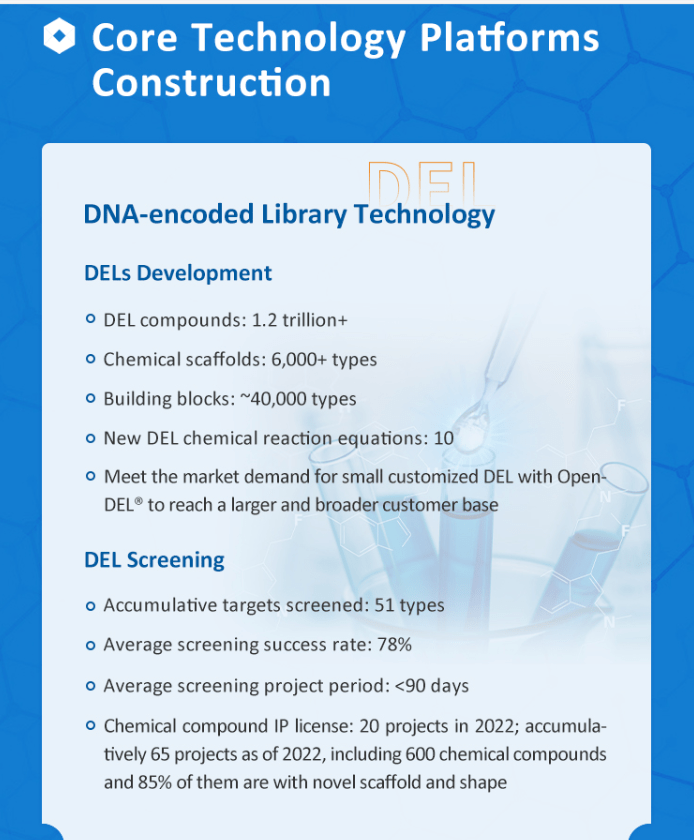
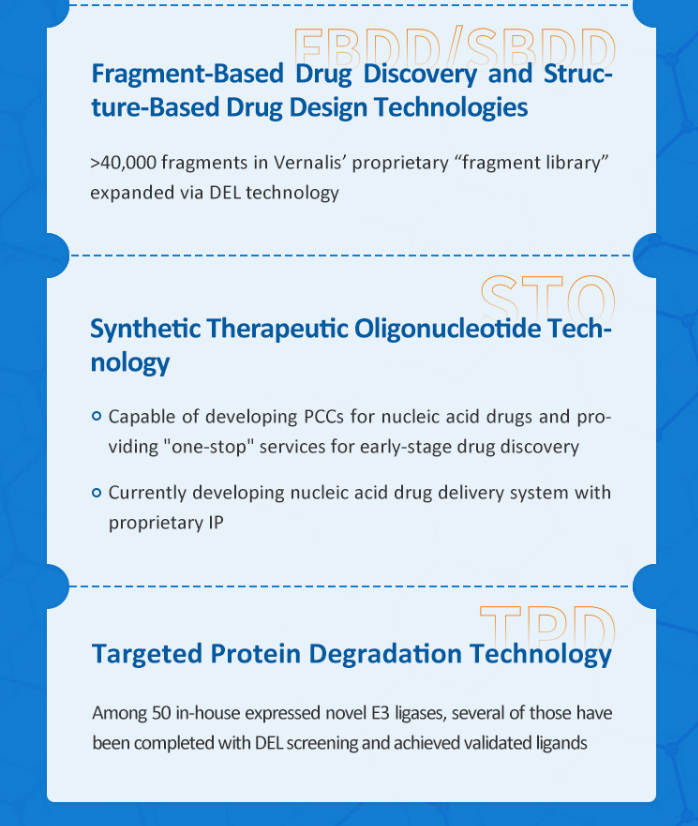
HitGen은 Astrazeneca의 연구원이었던 Jin Li박사에 의해 2012년에 설립되었습니다. Jin Li 박사는 당시로서는 새로운 분야였던 DNA-Encoded Library (DEL) Platform Technology를 성숙시키기 위해 회사를 시작했고 창업 후 3년만에 10억개 화합물 라이브러리를 만들었고 2023년 현재 1.2 Trillion (1조 2천억개) 이상의 화합물 라이브러리를 만들었습니다.
HitGen은 3개의 부문으로 나뉘어져 있는데
Discovery Chemistry Unit: DEL Synthesis
Lead Generation Unit: Screening against Multiple Biological Targets
Discovery Project Unit: Lead Validation for producing IND packages
Targeted Protein Degraders (TPDs), RNA-Binding Small Molecules, Macrocyclic Peptides DELs, Frangment-DELs 등 속도가 빠르고 Precision Medicine의 영역으로 확장하고 있습니다.
Dr Li, could you start by introducing your motivation for establishing HitGen back in 2012?
HitGen was established in 2012 in the city of Chengdu in Sichuan province, China. Since our inception, we have focused on the development and application of an important drug discovery technology platform: DNA-encoded chemical library (DEL) design, synthesis and selection (a technology for using DNA barcodes to organize large libraries of chemical compounds). This technology’s main purpose is to significantly increase the molecular diversity for the screening of new chemical leads or hits to interact with new drug targets.
Traditionally, once the biological target for a certain disease has been determined, pharma companies try to find a chemical or biological molecule that can modulate the biological function of that target in order to achieve some kind of therapeutic effect. Now, traditional small-molecule screening libraries involve a few million molecules, which has already been a tremendous resource for the industry over the past 30 to 40 years. Conventionally, high-throughput screening (HTS) has been the main drug discovery technology platform used to identify potential leads but it can only screen a few million molecules at a time. It was – and still is – difficult to find small molecules to modulate the functions of many important biological targets, such as protein-protein interactions (PPIs).
DELs can screen up to hundreds of millions or even billions of molecules. This dramatic increase in molecular diversity has the potential to increase the success of early drug discovery tremendously.
This technology had been invented by Nobel laureate Sydney Brenner and Richard Lerner of the Scripps Research Institute in the 1990s but its industrialization and broader application took many more years, with the technology really only adopted in the 2000s, when a few pharma companies in the US and Europe started to use it. At that time, I had been working with AstraZeneca in the UK in the lead generation space for many years, so when I noticed this promising technology, I decided to seize the opportunity to build a company specializing in the development and applications of this technology in China.
Back then, very few companies were using this as a core platform for lead generation, and they were all in the US and Europe. In the 2010s, China was starting to develop an innovative biopharma industry. I knew that in order for Chinese companies to develop novel drugs and New Chemical Entities (NCEs), this technology platform would be a critically important resource and I had the personal experience and capabilities in the early drug discovery space to bring it to China. That was what incentivized me to establish HitGen in 2012.
Of course, it was not easy to introduce such a novel technology in China. I had to secure initial funding from private investors, VCs and government grants. DEL technology was essentially unknown within the Chinese market and many people were skeptical about the claim that DELs could screen up to a billion molecules because the standard compound screening collections were only in the range of a few million. I had to educate the market and investors to foster an understanding of the technology as well as the trends and developments in the US and European markets.
How has HitGen continued to innovate and develop your DEL platform technology?
We have been constantly evolving since 2012. At that point, we set the goal of building a DEL of one billion molecules within three years. By now, we have a platform of over 500 billion small molecules, and in terms of published numbers, we probably have the largest DEL collections in the world. By the end of this year, we hope to have built a DEL of over one trillion small molecules!
In addition to DELs’ core competitive advantage of increased molecular diversity, as I highlighted previously, we have also improved on other aspects such as molecular type, molecular properties and other pharmaceutical considerations. This is part of our library design, synthesis and selection process.
The DELs themselves are one aspect but we have also built all the necessary corresponding research capabilities for screening, data analysis, hits confirmation and downstream evaluation so that we can offer our platforms to our collaboration partners and the general industry to support their drug discovery efforts.
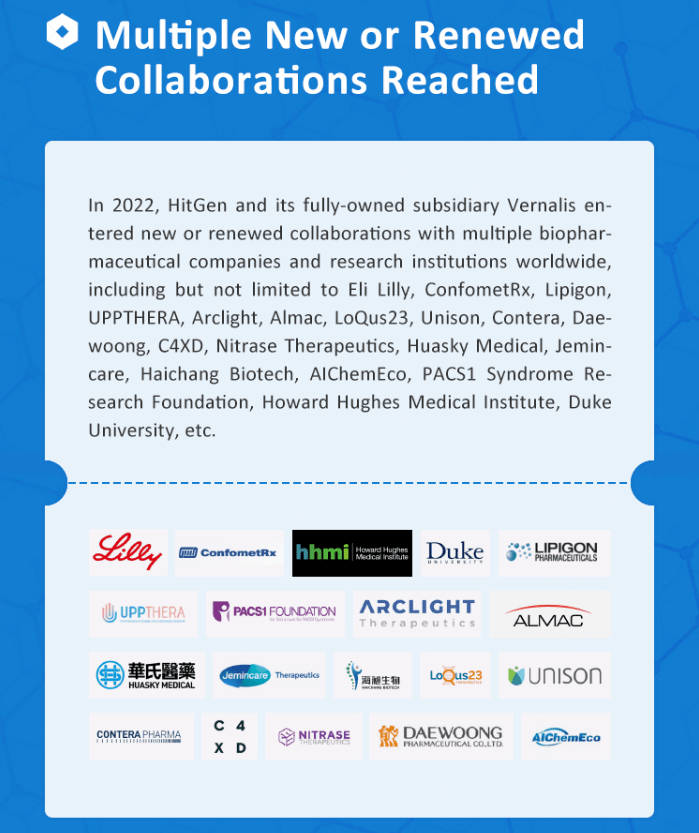
Over the past few years, we have formed partnerships with most of the Top 20 global Big Pharma companies as well as over 100 biotechs and research foundations to help advance their drug discovery projects on an exclusive basis. This has been a significant revenue stream for us both in the present as well as in the future as our partners’ programs progress into clinical trials and meet various milestones. This works very well for us because DELs are a tremendously efficient resource that can last for a long time.
You are also working on your own portfolio of assets. Could you share more about how your pipeline is progressing?
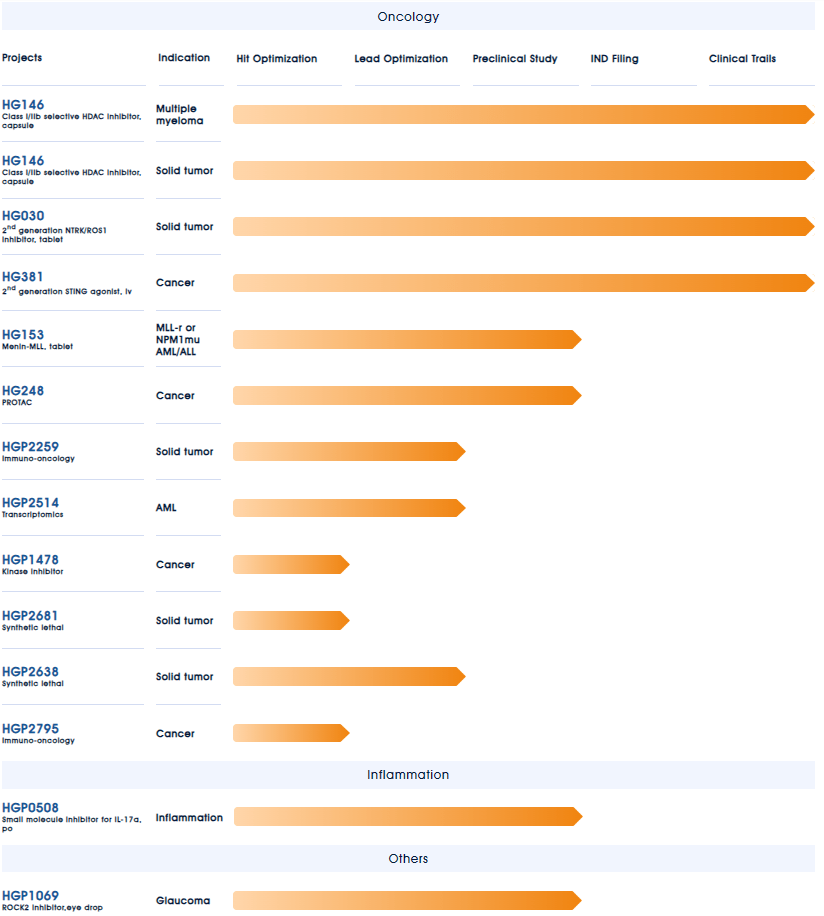
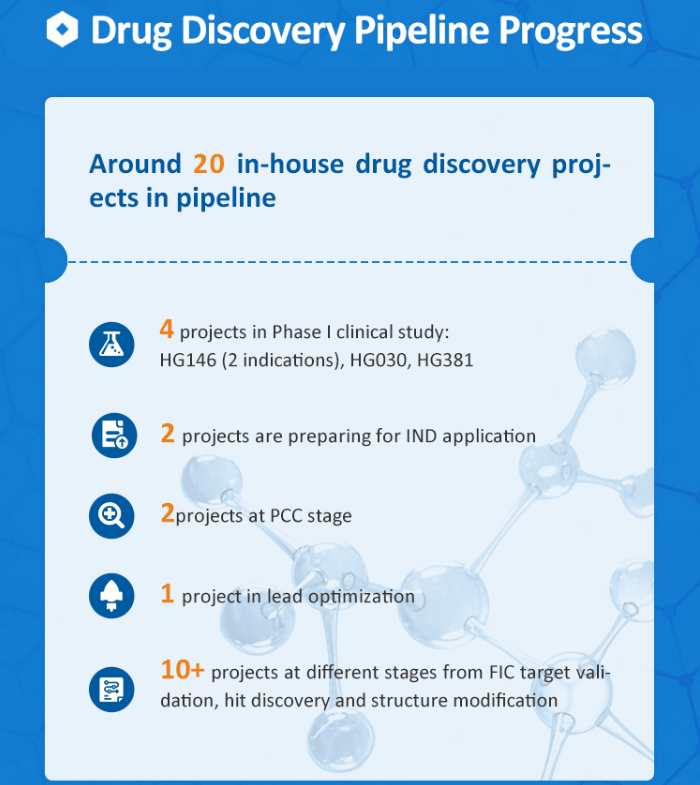
We currently have two Phase I assets in China. The first, HG146, is a Class I/IIb-selective HDAC inhibitor for multiple myeloma and selected solid tumor indications. The second, HG030 is a second-generation TRK inhibitor, which is the first second-generation TRK inhibitor to receive IND approval and is entering the clinic in China, also for solid tumor indications.
We have a third asset, HG381, for which we hope to submit for IND approval by end-2020. This is an IV injectable STING agonist that leverages innate immunity to fight cancer. Hopefully we can be the first to bring such an asset to the Chinese market as well.
We also have a number of exciting pre-clinical programs. Most of our programs target novel mechanisms in cancer, such as epigenetics, immuno-oncology, cell cycle control, etc. In addition to oncology, we also work in inflammation/immunology, with for instance, one of our programs in auto-immune diseases targeting IL-17(A). Most of the assets in the clinic or on the market for this target are antibodies but we are using an orally bioavailable small molecule, which has already shown encouraging signs of possessing similar activity to antibodies in our in vivo model. We are still doing further optimization to improve the properties of this molecule but we hope that it will become a clinical candidate in the not too distant future, either in our own portfolio or as a potential asset to be out-licensed.
With such different business activities, how is HitGen organized in terms of resources and business operations?
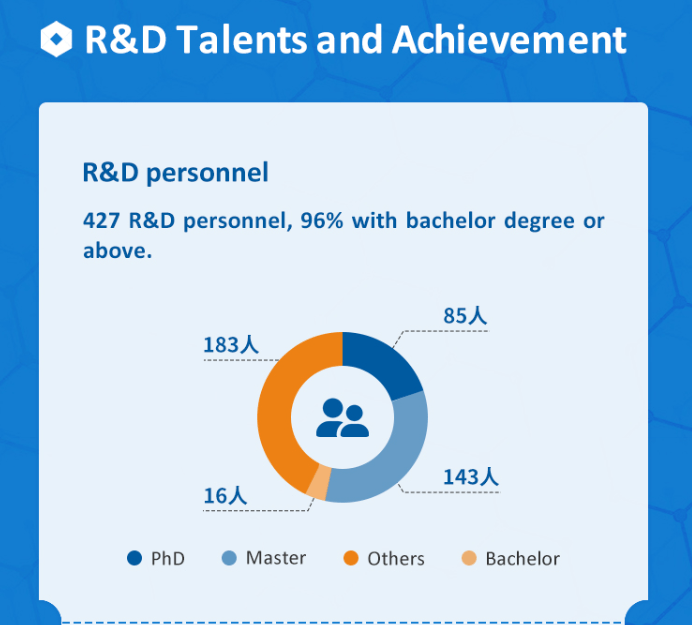
We now have over 400 employees but the company has always retained a strong research focus so we are organized a little differently from traditional R&D biotechs or other pharma companies. We want each business unit to focus on a particular research area in the drug discovery process while being linked to the relevant commercial and market needs. We currently have three research/business units.
The first is our Discovery Chemistry Unit, which focuses on the design and synthesis of DELs, for both internal and external use. For instance, we work on library design and synthesis based on our partners’ commercial needs. This Unit is also responsible for the construction of our internal DELs for downstream application screening. This is our largest unit because the work is both instrument- and manpower-intensive as we need to produce hundreds of billions of molecules.
The second is our Lead Generation Unit. Once we have a biological target, we screen our existing DELs or our customers’ own libraries against that target to generate validated leads, either for our partners or to advance our own programs. This is our second-largest unit.
The third is our Discovery Project Unit, which takes the validated leads and advance them through the pre-clinical stage to produce IND packages for submission and/or out-licensing.
The first two Units are already profitable and I hope the third will become profitable soon.
With your focus on such a niche technology platform like DEL, what are the challenges you face with recruitment, especially given China’s competitive talent environment?
We do work in a very niche technological area but like any new technology in the industry, it is based on foundational science: medicinal chemistry, automation, molecular biology, biochemistry and biophysics, computational biology, computational chemistry, bioinformatics and so on. From there, it is about bringing these different areas together and setting the team a clear goal to achieve. DELs are a multidisciplinary technology operating platform so we have to integrate many different disciplines and specialties together.
What is beneficial is that HitGen has a lot of expertise. Our CSO, Dr Barry Morgan, is one of the pioneers in the DEL space; he was previously SVP for Chemistry and Discovery Sciences with Praecis Pharmaceuticals and became VP of Molecular Discovery at GSK in Boston when GSK acquired Praecis in 2007. Many of our other colleagues similarly joined me in 2012 so within the company, we have probably the most experienced DEL team in China. We have been innovating far beyond the original technology platform so we have that early-start advantage as well as the leadership position. In addition, we also have probably some of the largest DELs available globally and we have gained a lot of experience in the screening many different targets and molecules. That helps us immensely in training the next generation of talents, which is important so that we can continue to push the boundaries of this innovative technology platform.
With so many biopharmaceutical advances including the increasing prevalence of biologics, cell and gene therapies and so on, what role do you think small molecules will continue to play in terms of driving innovation within the industry?
I think there are two sides to this. On one hand, it is true that small molecules are a more mature field. The characteristics of small molecule therapeutics are well-known and well-established. It can target any part of the body, it is either orally available or injectable, and the industry knows how to manage small molecules fairly well. Not much will probably change here.
However, on another hand, there are many exciting developments within this space. There is a lot of potential to use small molecules to target the new biological mechanisms uncovered over the past couple of decades – in fact, the speed of discovery is actually accelerating. Even with traditional targets like proteins, we are still only targeting a small percentage of them. We used to focus predominantly on small molecules as inhibitors or activators of proteins important for disease onset and progression. Today, we are exploring many different therapeutic mechanisms for small molecules. For instance, we have small molecules that could cause protein degradation, multifunctional small molecules that recruit protein partners to affect other disease-causing proteins, as well as small molecules targeting RNA or RNA-modifying enzymes, and many others. Small molecules could do a great job targeting RNA. Another important advantage is that small molecules can enter cells or penetrate the blood-brain barrier. So far, we can see that neurological diseases have been a difficult area for biologics to tackle.
That being said, all modalities are important but we are a strong advocate for the innovative potential of small molecule therapeutics, which we believe will continue to have a major role in the industry’s development.
Moving forward, could you articulate your strategy for HitGen’s continued growth?
It has given our investors even more confidence in us, and increased HitGen’s visibility as well as funding for the next stage of our development. We have a clear vision for the next three to five years.
The top priority is to continue to innovate. We want to strengthen our leadership position in the DEL area. We also believe that this technology has a lot more to offer for drug discovery. The chemical space is so vast, there is almost endless potential to explore, and we are not even close to finishing the job. At the same time, we know that biology is now driving many drug discovery opportunities so we want to see how we can use our technology to explore targets and mechanisms of action in this space. For instance, AstraZeneca’s Tagrisso®, has been a huge success in non-small-cell lung cancer (NSCLC), showing that it is possible to develop covalent small-molecule kinase inhibitors. We have created a library of a vast number of small molecules with covalently attached moieties using DEL technology to explore the potential here.
We are also continuing to push the boundaries of science by producing fragment-based DELs. Traditional fragment-based lead discovery (FBLD) coupled with structural biology has proven to be really effective but not very efficient, using huge amounts of resources to explore only a few thousand fragments. With our DELs, we could screen hundreds of thousands of fragments in a very short period of time. Generally speaking, we believe that there are still many more areas we can explore and innovate in order to generate greater impact and value.
The second priority is to continue to build our downstream capabilities for exploiting the output from DEL screening and turn leads into clinical candidates.
Thirdly, we want to advance our own pipeline in a steady fashion so that we can gradually explore different commercial outcomes. For instance, we might out-license some assets, some for global markets and some for ex-China markets. Now that China has implemented a Marketing Authorization Holdership (MAH) system, we might also consider launching products on the China market ourselves, since we would be able to partner with other companies for the manufacturing and distribution.
Finally, we want to strengthen our innovation foundation. Our operations are fairly concentrated in Chengdu at the moment, though we have a few colleagues in Boston and Europe. We aim to build a presence, probably in the form of small research centers, in the UK and the US, which would enable us to join the research and innovation community in the US and Europe while bringing us close to our partners in those regions.
Finally, China’s biopharma industry has advanced so rapidly in the past two decades. What are you looking forward to the most for the next few years?
Ultimately, I hope we can maintain the momentum within the industry. The pharma industry requires long-term, sustained investment. We cannot stop the efforts after a few years or even a few decades. It is critical that the financial markets continue to see this industry as an important and profitable segment to invest in. I also believe that continued effort, investment and innovation in the biopharmaceutical industry will bring more innovative and life-changing therapeutics to the patients who need them.
현재 한국의 암환자들이 CAR-T치료제 치료를 받으려면 해외로 시료가 나가고 Autologous CAR-T 치료제가 만들어져서 QA/QC를 모두 통과하고 국내로 돌아와 환자가 다시 맞는데까지 너무 많은 시간이 소요됩니다. 이번에 한국 바이오텍이 자체개발한 CAR-T치료제로 한국의 환자들을 직접 치료할 수 있는 좋은 결과가 나온 것으로 생각해서 이에 대해 글을 남기려고 합니다.
큐로셀 (Curocell)은 2016년 당시 차바이오텍에 근무하던 김건수 대표가 KAIST 생명과학과 김찬혁 교수 (현재 서울대학교 교) 와 이화여대 심현보 교수와 함께 CAR-T, CAR-NK 세포치료제 개발을 위해 12월에 공동창업하게 됩니다. 본래 이 세사람은 서로 모르는 사이였는데 오름테라퓨틱스 이승주 대표의 소개로 의기투합하게 되었다고 합니다.
2017년에 인터베스트와 미래에셋캐피털로 부터 20억원의 시리즈A를 하고 2019년에 150억원의 시리즈B를 하게 됩니다. 스틱벤처스가 새롭게 참여했습니다. 이 자금으로 2020년 3월에 삼성서울병원 미래의학관 내에 GMP공장을 완공했고 2021년 2월에 식품의약품안전처로 부터 IND를 승인받아 임상1/2상을 시작했습니다. 2022년 1월에는 St. Jude Hospital로 부터 Lentivirus vector 기술도입을 했고 2023년 4월에는 신규 사옥(연구소, 본사) 및 상업용 GMP 공장을 완공(과학벨트 둔곡신동 거점지구)했습니다. 2023년 11월에 기술특례상장으로 코스닥 상장을 했고 최근 anti-CD19 CAR-T 치료제 안발셀 (Anbal-cel, Anbalcabtagene autoleucel)의 긍정적인 임상2상 데이타를 발표했고 식약처의 승인을 신청한 상태입니다.
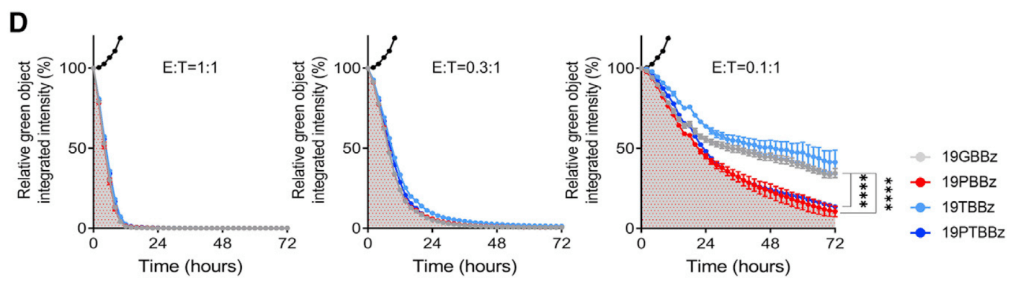
PD-1과 TIGIT을 동시에 downregulation했을 때 CD19 CAR-T의 효능이 증대됨을 아래에서 보여주고 있습니다.
19PBBz (PD-1 downregulation) 19TBBz (TIGIT downregulation)에 비해 19PTBBz (PD-1/TIGIT Dual downregulation)이 CAR-T 치료의 지속성이 높은 것을 보여줍니다.
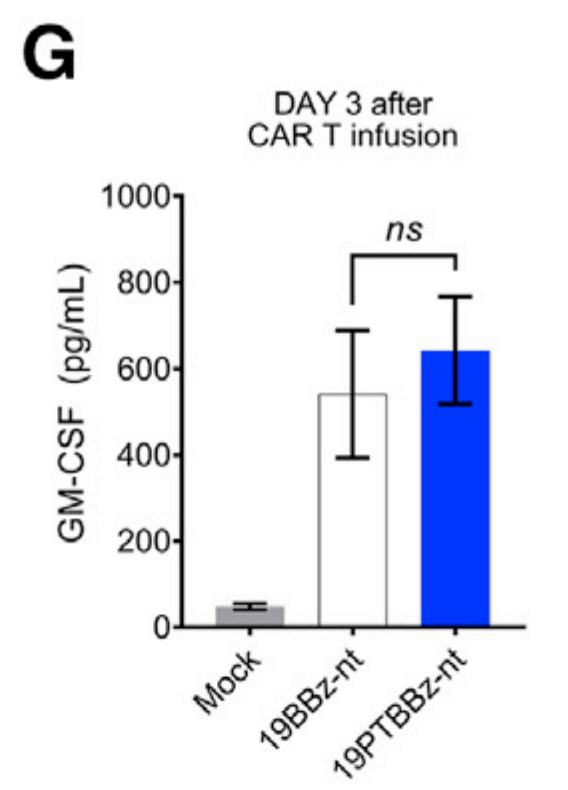
19BBz-nt에 비해 19PTBBz-nt (PD-1/TIGIT Dual downregulation)에서도 백혈구의 GM-CSF level이 높게 나온 것으로 볼 때 CAR-T치료제의 독성인 CRS (Cytokine Release Syndrome)과 ICANS (Immune effector Cell-Associated Neurotoxicity Syndrome)이 적을 것으로 기대할 수 있었습니다. (G)
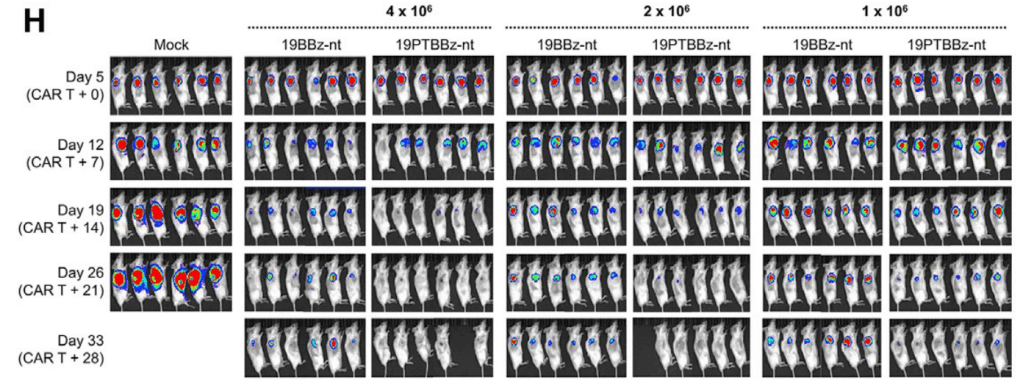
Subcutaneous Raji-PD-L1 Lymphoma in vivo model에서 19PTBBz-nt (PD-1/TIGIT Dual downregulation)와 19BBz-nt의 in vivo efficacy를 보았을 때, 19PTBBz-nt (PD-1/TIGIT Dual downregulation)가 19BBz-nt 보다 모든 dose level에서 개선된 항암효과를 보였습니다.
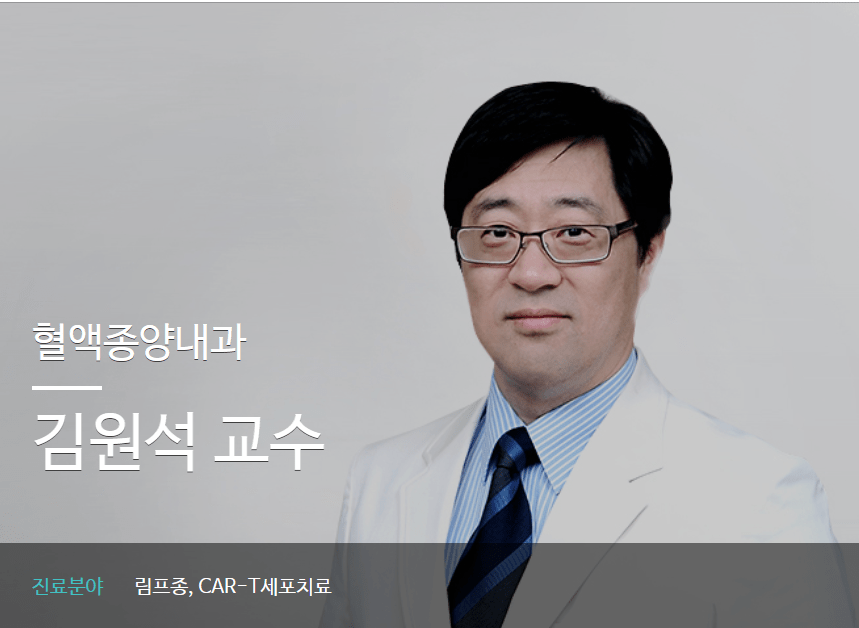
삼성의료원 김원석 교수팀은 2022년에 Anbal-cel의 r/r large B-cell lymphoma (r/r LBCL)에서의 임상1/2 상 결과를 발표했습니다.
CAR-T 치료 전 3일간 Lymphodepletion with cyclophosphamide (500mg/m2) and fludarabine (30mg/m2) 을 수행했습니다. 그리고 세가지 Dose에서 한차례씩 IV 주사를 실시했습니다. 총 9명의 환자에게 시행했고 이 중 한분은 중환자실에 입원 (Grade 3), 5명 (56%) 은 CRS (Cytokine Release Syndrome) 독성을 보였습니다. 이 정도 독성은 CAR-T치료제에서 일반적인 것입니다.
9명 중 7명 (78%)이 CR (완전관해)를 보였는데 가장 낮은 용량이 3명, 중간과 최고 용량이 각각 2명이었습니다. 이 결과를 바탕으로 2022년 3월에 임상2상을 시작한다고 발표했습니다.
Background:Anbal-cel is a novel 2nd generation autologous CD19 CAR-T cell therapy which has been knock-downed for PD-1 and TIGIT using OVIS platform. Anbal-cel demonstrated the eradication of CD19 positive tumor cells in vitro and in vivo better than conventional CD19 CAR-T cells. The knock-down of PD-1 and TIGIT at CD19 CAR-T cells exerts the superior T-cell functionality by delaying the exhaustion of CAR-T cells.
Methods: This phase 1 dose escalation part (NCT04836507) was evaluated the safety and preliminary efficacy in patients with r/r LBCL. Anbal-cel was manufactured at GMP facility with fresh leukapheresis product. Patient was administered as a single intravenous dose at dose level 1 (DL1) (2×10⁵ cells/kg), DL2 (7×10⁵ cells/kg) or DL3 (2×10⁶ cells/kg). Lymphodepletion with cyclophosphamide (500mg/m2) and fludarabine (30mg/m2) was performed for 3 days prior to Anbal-cel infusion.
Results: As of Jan 17 2022, 9 patients with r/r DLBCL were infused with Anbal-cel; 4pts at DL1, 3pts at DL2 and 2pts at DL2. Median age was 54 (range 26-71); all patients received 2 or more prior lines of therapy and 44% (4/9) received ≥4 prior line of treatment before the study. 78% (7/9) patients were refractory to their last treatment. 67% (6/9) of patients were at IPI 3-4 and 44% (4/9) of patients had bulky disease. No patient experienced DLT during the study. Of the 9 patients, 5 (56%) experienced CRS; 4 (44%) were grade 1 or 2 and one patient experienced grade 3 CRS. Median time to onset of CRS was 7 days (range, 1-16) with median duration of 4 days (range, 0-18). One patient dosed at DL3 experienced grade 2 ICANS, time to onset of ICANS was 7 days and lasted for 13 days. This patient had prior CNS involvement history before the study. Most commonly reported grade 3/4 AEs were neutrophil count decrease (6/9, 67%), anemia (5/9, 56%), thrombocytopenia (2/9, 22%), platelet count decrease (2/9, 22%) and no infection was reported. Complete response rate (CRR) was 78% and complete responses were observed at the lowest dose level and from patients expressing less than 10% CD19 at IHC; 3 complete responses (CR) at DL1, 2 CRs at DL2 & DL3 respectively. Dose-dependent CRC01 expansion was observed; median Tmax was 15.4, 15.8, 11.0 days at DL1, DL2 & DL3 each; median Cmax was 18,003, 30,103, 53,688 copies/ug gDNA at DL1, DL2 & DL3 each; median AUC0-28day was 679,125, 1,110,108, 2,852,235 copies/ug gDNA at DL1, DL2 & DL3 respectively.
Conclusions:Anbal-cel demonstrated promising efficacy and tolerable safety profile in this dose escalation study. Based on this phase 1 study, phase 2 patient enrollment will be commenced in Mar 2022 to evaluate the response rate, duration of response of CRC01 as well as safety. In addition, various biomarker studies are planned to investigate the differential mode of action of Anbal-cel during phase 2 study. Clinical trial information: NCT04836507.
삼성의료원 김석원 교수팀은 2023년에 임상2상 중간결과를 발표했습니다. 임상1상에서 최고용량이었던 2×10⁶ cells/kg으로 r/r LBCL환자들에 대해 Biomarker analysis를 한 것입니다. 완전관해를 받지 못한 환자들의 경우에는 PD-1, TIGIT 등의 관문유전자 레벨이 상승한 것을 관찰해서 완전관해와 메카니즘 적으로 PD-1과 TIGIT 레벨이 중요한 영향을 끼침을 발표했습니다.
Background: Anbalcabtagene autoleucel is a novel anti-CD-19 CAR-T therapy that has shown promising clinical results, with a complete response (CR) rate of 73.7% in relapsed or refractory LBCL patients at interim analysis. This biomarker analysis aims to understand the mechanism associated with the treatment outcome. Methods: Patients with relapsed or refractory LBCL were enrolled to receive Anbal-cel at a dose of 2×10⁶ cells/kg. Tumor biopsies were performed at baseline to assess the expression levels of CD19, PD-L1, and CD112/CD155. Peripheral blood mononuclear cell (PBMC) samples for immune phenotyping and serum sampled for ctDNA analysis were collected at day 0, 14, 28, and 3-month intervals thereafter until progression. Results: PD-1 and TIGIT were highly expressed on baseline PBMC. PD-1 was expressed more on CD8+ CAR+ T-cells whereas TIGIT on CD4+ CAR+ T-cells. PD-1, LAG-3 and TIM-3 expressions were significantly increased from D14 at non-CR group. TIGIT expression was significantly increased at D28 at non-CR group. The non-CR group demonstrated the significantly increased level of IL-4+/ IL-5+ Th2 type CAR+ T-cells whereas GATA+Th2/Tc2 type CAR+ T-cells were significantly lower in non-CR group. Additionally, CD57+CD27-CAR+ T-cells, a marker of terminal differentiation/ functional senescence, were significantly increased in the non-CR group from D14. CD226+ CAR+ T-cells were also significantly lower in the non-CR group. CD45RA+ CAR+ TEFF/EMRA cells postinfusion were significantly lower in the non-CR group and CD38+HLA-DR+ CAR+ T-cells, a marker of susceptibility of cell death, were significantly higher in the non-CR group. The activation of CAR+ T-cells measured by ICOS, 4-1BB, CD226 and CD94 was not different between the two groups. The most frequently detected mutations were related to cell cycling, epigenetic regulation, immune escape, apoptosis etc. Changes in ctDNA concentration were reversely correlated with treatment outcome.
Conclusions: Anbal-cel’s unique immunologic and genetic changes demonstrated potential to correlate with treatment outcomes and warrant to confirm with more data. Clinical trial identification: CRC01-01 (NCT04836507). Legal entity responsible for the study: Curocell Inc. Funding: Curocell Inc. Disclosure: Y. Koh: Financial Interests, Institutional, Advisory Board: Curocell. J.R. Kim: Financial Interests, Personal, Member: Curocell. All other authors have declared no conflicts of interest.
그리고 최근 73명의 임상시험 결과 CRR (완전관해율)은 67%였고 ORR (객관적 반응률)은 75%였다고 발표했습니다. 이 결과가 맞다면 아주 좋은 결과입니다. 물론 미국이나 유럽 임상에 비해 인원수가 적은 문제는 있지만 국내 r/r LBCL 환자수를 보았을 때는 식약처에 승인요청을 할만한 결과를 얻은 것으로 볼 수 있을 것 같습니다. 금년 하반기에 식약처에 승인요청을 할 예정이라고 공시했습니다.
■ 거대B세포림프종(LBCL) 환자 대상 임상 2상시험에서 완전관해 67.1% 확인 ■ 차세대 기술이 적용된 최초의 국내 개발 CAR-T 치료제로 연내 신약허가 신청 예정
큐로셀(대표이사 김건수)이 재발성, 불응성 거대B세포림프종(LBCL) 환자를 위한 차세대 CAR-T 치료제 ‘안발셀(Anbal-cel)’의 임상 2상시험 톱라인 데이터를 수령했다고 6일 공시했다.
임상2상 최종 데이터 분석 결과 임상시험 유효성 분석 대상자 73명 중 안발셀 투여 후 암세포가 모두 사라진 완전관해에 도달한 비율(CRR)은 67.1%였다. 이는 글로벌 시장에 출시된 CAR-T 치료제들의 기존 임상시험 결과와 비교해 가장 우수한 완전관해율이다. 또한 일차 평가변수인 객관적반응률(ORR, 전체 환자에서 약물의 객관적 반응이 나타난 환자 비율)은 75.3%이었다. 최종 결과는 임상시험 설계 당시 가정했던 통계적 유의성을 확보했다.
이번 결과는 2개 차수 이상의 치료에 재발 또는 불응하는 거대B세포림프종(LBCL) 환자를 대상으로 안발셀을 단회 투여한 후 안전성 및 유효성을 평가하는 공개, 다기관, 단일군 임상시험을 통해 얻어진 것이다. 해당 임상은 2022년 3월부터 2023년 10월까지 만 22세~85세 성인남녀 79명을 대상으로 삼성서울병원 등 6개 기관에서 수행한 임상 2상으로 국내 최초의 CAR-T 치료제 임상시험이다.
큐로셀은 이번 임상 결과를 토대로 올해 하반기 국내 신약허가를 신청할 예정이다. 안발셀의 신약허가 획득 시, 우리나라는 미국, 중국, 인도에 이어 자체적으로 CAR-T 치료제를 개발한 네 번째 국가가 될 전망이다.
큐로셀은 국내 최대 규모(1만 636m2)이자 글로벌 수준의 CAR-T 치료제 전용 상업용 GMP를 보유한만큼 신약허가 획득 후 국내 제조를 통한 공급을 진행할 계획이다.
큐로셀 김건수 대표는 “지난 3년간 매진했던 임상시험을 성공적으로 마무리해서 매우 기쁘고 관련한 모든 분들께 감사 인사를 드리고 싶다. 이번 최종 결과에서 안발셀의 높은 경쟁력을 확인한 만큼 향후 신약허가와 출시가 빠르게 진행되도록 최선을 다할 것”이라고 밝혔다.
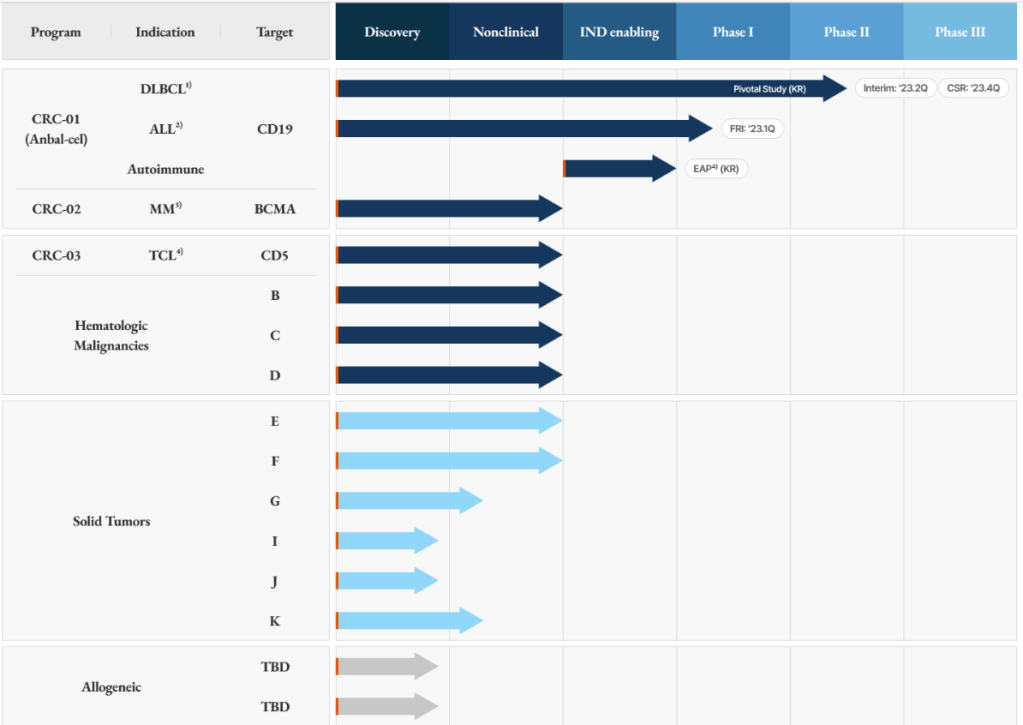
회사의 홈페이지에 개재한 파이프라인은 다음과 같습니다. Anbal-cel은 현재 ALL (급성림프구성백혈병) 환자에 대해 임상1상을 진행 중에 있습니다.
큐로셀이 시리즈B로 150억원 규모의 투자자금을 유치했다고 23일 밝혔다. 기존 투자기관으로 인터베스트, 미래에셋캐피털이 후속 투자를 했고, 타임폴리오자산운용, 스틱벤처스가 새롭게 참여했다. 큐로셀은 2년전에 시리즈 A로 20억원을 투자받은 것을 포함해 총 170억원을 확보하게 됐다. 이번 자금유치를 통해 큐로셀은 임상 진입을 위한 연구개발 가속화하고 임상의약품 제조용 GMP시설 구축에 집중할 계획이다. 큐로셀은 제약업계에 다년간의 경험을 가진 김건수 대표와 T세포 치료제 전문가 KAIST 김찬혁 교수와 항체 전문가 이화여대 심현보 교수가 함께 창업한 국내 최초의 CAR-T 치료제 전문회사다. 큐로셀은 기존 CAR-T치료제의 한계를 극복하는 차세대 CAR-T 기술 개발에 포커스한다. 핵심 기술로 암세포를 인식할 수 있도록 CAR발현과 동시에 면역관문수용체를 통한 면역억제현삼을 극복할 수 있는 CAR-T 기술을 이용해 혈액암, 나아가 고형암 치료에 도전하고 있다. 최근 큐로셀은 2020년 차세대 CD19 CAR-T의 임상1상 진입과 신규 프로젝트 발굴을 위하여 삼성서울병원과 업무협업계약을 체결했다. 회사는 기초연구, 임상연구 및 임상의약품생산 등 면역항암세포치로제 개발 관련 전분야에 걸쳐 협업체계를 구축했다. 김건수 대표는 “큐로셀의 가치를 믿어 주신 투자자 분들께 감사드리며 삼성서울병원과의 업무협약에 이어 시리즈B 투자유치로 세계적으로 뒤처져 있는 국내 CAR-T 분야에서 빠른 임상 데이타 확보를 통해 기술력을 증명해 보이겠다”라고 밝혔다.
국내 최초 CAR-T 치료제 개발 전문기업인 큐로셀 (Curocell)이 440억원 규모의 시리즈C 투자유치에 성공했다. 큐로셀은 이에 앞서 지난해 1월 시리즈B 150억원 투자유치를 했으며, 이로써 지금까지 총 누적금액은 615억원이다. 큐로셀은 내년 상장을 계획하고 있다. 이번 시리즈는기존투자기관인 스틱벤처스, 에이티넘인베스트먼트가 후속투자를 진행하였고 DS자산운용, 서울투자파트너스, IMM인베스트먼트, 아주IB투자, 얼머스인베스트먼트, LB인베스트먼트, 유경PSG자산운용, 이앤벤처파트너스, JX파트너스, 컴퍼니케이파트너스, K2인베스트먼트파트너스, 쿼드자산운용, 하나벤처스 등 신규 투자기관이 대거 참여했다. 이번 투자금은 차세대 CD-19 CAR-T 치료제인 ‘CR101’의 연내 임상 개시와 후속 파이프라인 개발을 가속화하는데 투입된다. CR101은 기존의 킴리아, 예스카타 등 CD19 CAR-T 약물의 디자인에서 T세포 항암 활성을 억제할 수 있는 면역관문분자 TIGIT과 PD-1 발현을 낮춘 약물이다.
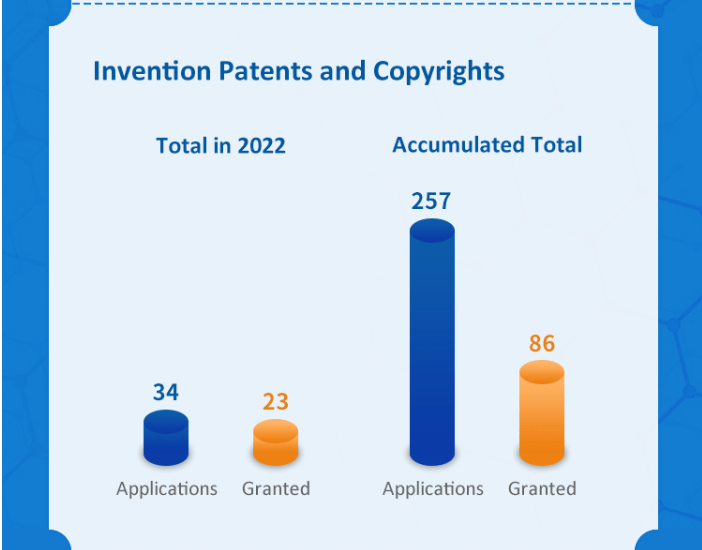
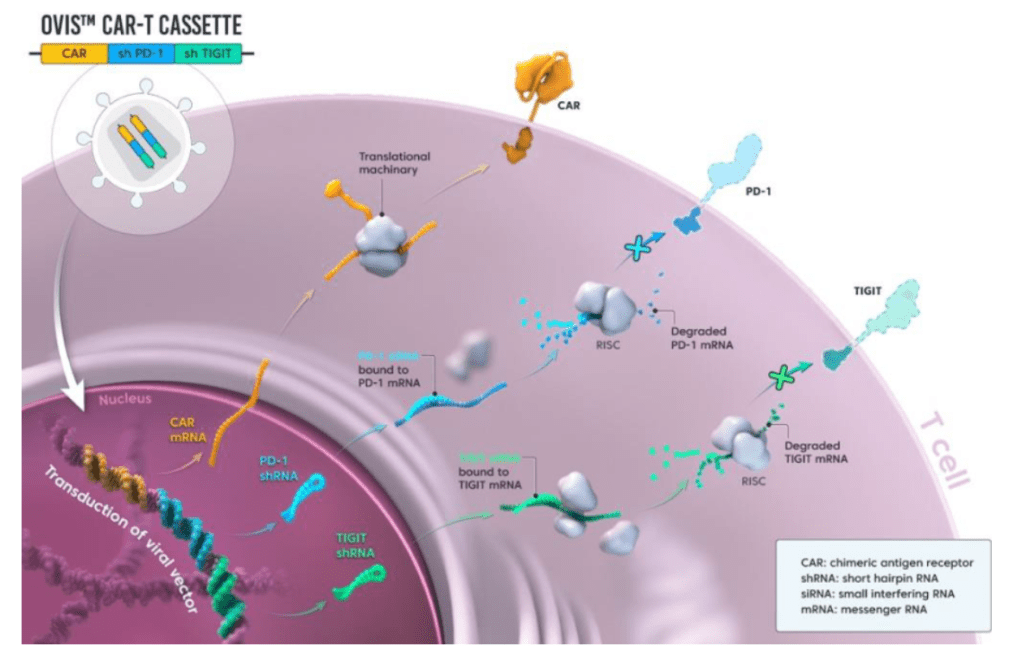
CAR-T 전문기업 큐로셀 (Curocell)이 공모가를 확정하고 내달 9일 상장할 예정이다. 큐로셀은 수요예측 결과를 반영한 최종 공모가로 희망 공모가밴드 (2만9800 ~ 3만3500원) 아래인 2만원으로 확정했다고 30일 공시했다. 이에 따라 총 공모규모는 320억원으로 줄어들었다. 확정공모가액 기준 시가총액은 약 2723억원이다. 큐로셀은 이번에 조달한 공모자금으로 현재 진행중인 차세대 CD19 CAR-T치료제 안발셀 (Anbal-cel, 성분명 안발캅타진 오토류셀)의 상업화와 함께 다발성골수증, T세포림프종, 고형암 등 새로운 파이프라인 개발에 투자할 계획이다. 김건수 큐로셀 대표는 “최근 주식시장의 분위기가 좋지 않았다. 특히 바이오기업들이 유독 더 어려움을 겪고 있는 상황에서 신규 상장 바이오 기업으로서는 올해 가장 큰 규모의 공모를 마무리하게 됐다”며 “어려운 시장 분위기에서도 큐로셀에 대한 믿음을 갖고 공모에 참여해 주신 투자자분들께 감사드린다”고 말했다. 이어 김대표는 “국내 최초로 CAR-T 치료제 개발을 시작하여 새로운 시장을 개척하고 있는 규로셀만의 기술력과 노하우를 기반으로 상장 후 글로벌 경쟁력을 갖춘 혁신적인 항암면역세포 치료제 전문 기업으로 도약하겠다”고 밝혔다. 큐로셀의 총 공모 주식 수는 160만주로 오는 31일부터 11월 1일까지 양일간 일반 투자자 청약을 진행한 뒤, 11월 9일 코스닥 시장에 상장할 예정이다. CAR-T치료제는 환자의 혈액에서 분리한 면역세포인 T세포를 유전적으로 조작해 암세포를 효과적으로 제거할 수 있도록 한 세포유전자치료제다. 림프종 등 혈액암 치료제에서 높은 반응률과 완전관해를 (CR rate)를 뵈며 전세계에서 주목받고 있다. 큐로셀은 국내 최초로 설립된 CAR-T 개발 전문기업으로 최근 안발셀의 거대비만성B세포림프종 (DLBCL) 대상 임상2상을 완료하고 내년 9월 신약허가 신청을 계획하고 있다. 큐로셀은 CAR-T 세포의 기능 저하 원인인 억제성 면역관문분자 PD-1, TIGIT 의 발현을 낮추는 OVIS 기술을 개발해 CAR-T의 기능을 강화하며 치료 효과를 높이겠다는 목표이다. 큐로셀은 국내를 비롯한 해외 25개국에 OVIS의 특허를 출원 중이며 현재 한국과 미국, 유럽, 일본 등에서 특허 등록이 완료됐다.
36명 벤처가 없던 길을 만들고 있다. 국내에선 누구도 가보지 않은 길이다. ‘기적의 항암제’라 불리는 CAR-T세포 치료제만을 개발하기 위해 설립된 바이오벤처 ‘큐로셀’ 얘기다. CAR-T세포 치료제는 말기 혈액암 환자 치료에서 80%까지 차도를 보이면서 2017년 미국 식품의약국(FDA)도 허가한 면역항암제다. 그러나 국내에선 아직 기술 축적이 이뤄지지 않아 개발되지 못하고 있다.
국내에서 누구도 엄두를 내지 못하는 가운데, 대덕 바이오벤처 큐로셀은 글로벌 제약사를 뛰어넘는 기술력을 입증하며 업계를 뒤흔들고 있다. 큐로셀은 T세포에 키메릭 항원 수용체(CAR)를 붙이는 유전자 조작을 넘어 면역관문 수용체 2종(PD1, TIGIT)을 제거하는 독보적 기술로 도전장을 던졌다. 글로벌 바이오 기업 대다수가 면역관문 수용체 하나(PD1)만을 제거한다. T세포 표면에는 면역관문 수용체가 여러 개 있는데, 여기에 암세포가 악수를 하듯 들러붙으면 T세포가 기능을 상실한다.
김건수 대표는 “유전자 조작을 통해 T세포에 CAR를 붙이는 건 어느 기업이나 할 수 있는 기술”이라면서 “대다수 기업들이 PD1 면역관문 수용체 하나만을 제거하지만, 내부에서 여러 조합을 테스트해본 결과 PD1과 TIGIT을 없앴을 때 CAR-T 치료 효능이 극대화된다”고 했다.
큐로셀의 독보적인 기술력을 알아본 건 국내 투자사들과 삼성서울병원이다. 큐로셀은 현재까지 총 615억원을 투자받았다. 삼성서울병원은 큐로셀이 개발하고 있는 CAR-T세포 치료제를 원내에서 생산할 수 있도록 내부 공간 495m2(150평)까지 내줬다. 그곳에 올해 초 CAR-T세포 치료제를 생산할 수 있는 GMP 시설이 완공됐다. 시운전과 자체 생산 테스트까지 끝난 상황으로 정부(식품의약품안전처) 임상 허가를 기다리고 있다.
◆ 개척 정신
김 대표는 어린 시절부터 틀에 박힌 일보단 하고 싶은 일을 찾아 나섰다고 한다. 새로운 일에 두려움 없이 나아가는 아버지 영향이 컸다. 그는 연세대 생명공학과에서 학·석사를 마치고 당시 한화석유화학중앙연구소, LG생명과학, 차바이오텍 등을 거치면서 CAR-NK세포에 관심을 두기 시작했다. 2015년 CAR-NK세포 치료제를 시작으로 CAR-T세포 치료제를 독학하던 시기 아버지가 암으로 세상을 떠났다. 이듬해 그는 운명처럼 면역항암제만을 전문으로 하는 바이오벤처를 설립해 이전에 없던 길을 나아가고 있다.
김 대표는 “암 환자에게 CAR-T세포 치료제는 마지막까지 해볼 수 있는 가능성 높은 치료”라면서 “암 환자에게 효능이 있다고 증명된 만큼 국내에도 반드시 있어야 하는 치료제라고 생각했다”고 말했다.
김 대표는 어려움을 묻는 질문에 “연구개발을 하고 결과를 기다리는 입장에서 미래에 대한 불확실성은 늘 있는 것이고 그걸 난관이라고 할 수는 없다”면서도 “국내에서 CAR-T는 모든 게 처음이기 때문에 물건을 사거나 원료를 주문 생산해야 하는 상황 하나하나가 난관이지만 극복해나가고 있다”고 했다.
◆ “목마른 사람이 우물 판다”
김 대표는 연구원 생활을 본격 시작한 2000년부터 창업 전까지 커리어 15년을 연구자와 기획자로 절반을 살았다. 그는 이 시기 연구에 대한 전문성도 키웠지만, 기획자로서 커뮤니케이션 내공을 쌓았다고 한다. 그는 “기획 일을 하면서 얻은 건 사람들 간 이해관계 조정이나 연구 분야에 대한 존중이 필요하다는 점”이라고 설명했다.
그는 이런 내공을 통해 큐로셀을 CAR-T 최고 전문가들로 채웠다. 이승주 오름테라퓨틱 대표를 통해 김찬혁 KAIST 생명과학과 교수를 소개 받아 사업을 고도화시켰고, 항체 전문가인 심현보 이화여대 교수도 영입했다. LG화학에서 바이오시밀러 개발을 책임지던 김형철 현 큐로셀 상무를 데리고 오기도 했다. 기획 일을 하면서 커뮤니케이션 내공, 사람 만나는 일에 거리낌 없는 김 대표의 능력이 진가를 발휘한 것이다.
김 대표는 “혹자는 아무것도 없는 상황에서 어떻게 창업할 수 있느냐고 묻지만, 어느 기업보다 창업 멤버들이 훌륭하고 아이템도 세계적으로 유망하기 때문에 여러 면에서 불안할 요소가 없는 비즈니스”라고 자신감을 드러냈다.
삼성서울병원 GMP 시설을 구축하는 과정에도 김 대표는 서울대병원과 삼성서울병원 등을 직접 찾아 나섰다. 당시 CAR-T세포 치료제에 대한 회의적인 시각도 있었지만, 좌절하지 않고 그간 쌓아 온 내공과 기술력으로 삼성서울병원 내부에 GMP 시설을 구축했다.
김 대표는 “목마른 사람이 우물을 파는 것”이라며 “사람 안 만나고 일할 수 없고, 일을 하려면 무엇이든 부딪쳐봐야 한다”고 했다. 이어 “움직이지 않으면 누군가 대신해줄 수도 없다”며 “그렇기 때문에 핵심 인력을 모으고 국내에서 처음으로 하는 CAR-T세포 치료제 생산을 위해 GMP 시설 구축이 필요했던 것”이라고 설명했다.
그는 “이 기반 위에서 림프종 임상 시작이 목표이고 백혈병, 다발성골수종까지 범위를 넓혀가겠다”며 “혈액암뿐만 아니라 고형암에서도 CAR-T를 쓸 수 있도록 기술을 개발하고 새로운 길을 나아가는 것이 목표”라고 강조했다.
◆ CAR-T 기술과 큐로셀 차별성
환자 혈액 채취→ 백혈구에서 T세포(면역세포) 분리 → 유전자 조작을 통해 T세포에 특정 암을 인식하는 유전자(CAR)를 삽입 → *T세포에 있는 면역 관문 수용체(PD1, TIGIT) 2종 제거 → T세포 배양 → 환자에게 투약.
*큐로셀은 면역세포(T세포)에 있는 면역 관문 수용체 2종(PD1, TIGIT)을 제거해 CAR-T세포를 만드는 기술이 독보적이다. 암세포는 T세포 표면 면역관문 수용체에 달라 붙어 T세포 면역 기능을 무력화 시킨다. 대다수 바이오 기업은 PD1이라는 면역 관문 수용체를 제거하는 것과 달리 큐로셀은 PD1과 TIGIT을 제거해 CAR-T 효능을 극대화하고 있다.
◆ 용어 설명
☞ 림프구(Lymphocyte)
림프구는 면역계를 구성하는 중심 세포다. 우리 몸 속에는 감염원으로부터 신체를 보호하는 면역계 세포 ‘백혈구’가 있다. 전체 백혈구 중 약 25% 정도를 차지하는 세포를 림프구라 일컫는다. 림프구는 적응 면역과 항원 특이성, 수용체의 다양성, 기억, 자기 비자기 구분이라는 특징을 지닌다. 림프구는 조혈모세포에서 만들어지며 성숙된 림프구는 기능에 따라 B세포와 T세포로 나눌 수 있다.
☞ T세포(T cell)
면역 반응에 관여하는 림프구는 B세포와 T세포가 있다. B세포는 체내에 침입한 세균·바이러스에 대항하는 항체를 만든다. T세포는 몸속에서 여러 기능을 하는데, 그중 면역에서 기억능력을 지녀 B세포에 정보를 제공해 항체 생성을 돕는다. 특히 T세포는 병원체에 감염된 세포를 직접 사멸시키는 능력을 지닌다. 이 뿐만 아니라 면역 활동을 적절히 조절하는 기능도 지닌다.
☞ CAR-T세포 치료제(Chimeric Antigen Receptor T cell Therapy)
환자 혈액에서 얻은 T세포와 암을 잘 인지하는 키메릭 항원 수용체(CAR)를 유전자 조작해 만든 세포 치료제다. 환자의 혈액에서 T세포를 추출한 뒤 바이러스 등을 이용해 암세포에 반응하는 수용체 DNA를 T세포에 주입하고 증식 시켜 몸속에 넣어주는 방식이다. 암세포와 수용체가 ‘열쇠와 자물쇠’처럼 결합하면 T세포는 암세포를 공격하는 원리다. CAR-T 세포 치료제는 정상 세포 손상을 줄이면서 효과적으로 암세포를 사멸할 수 있는 차세대 항암제다.
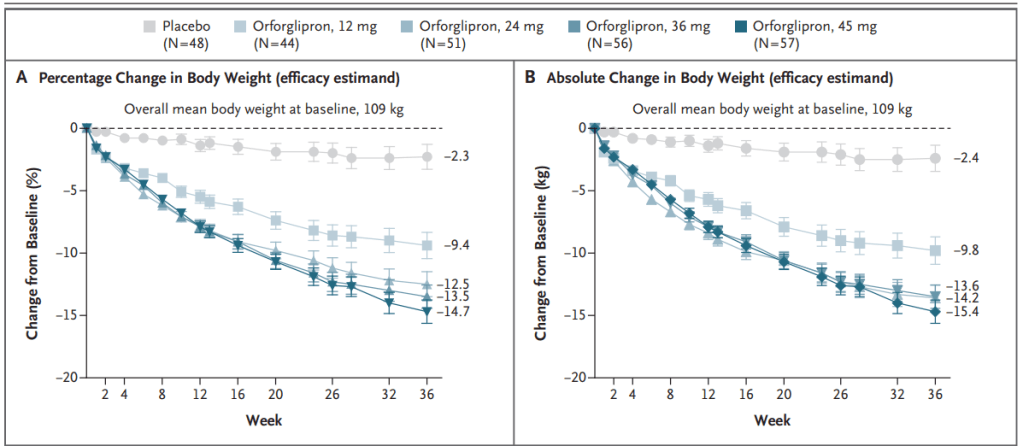
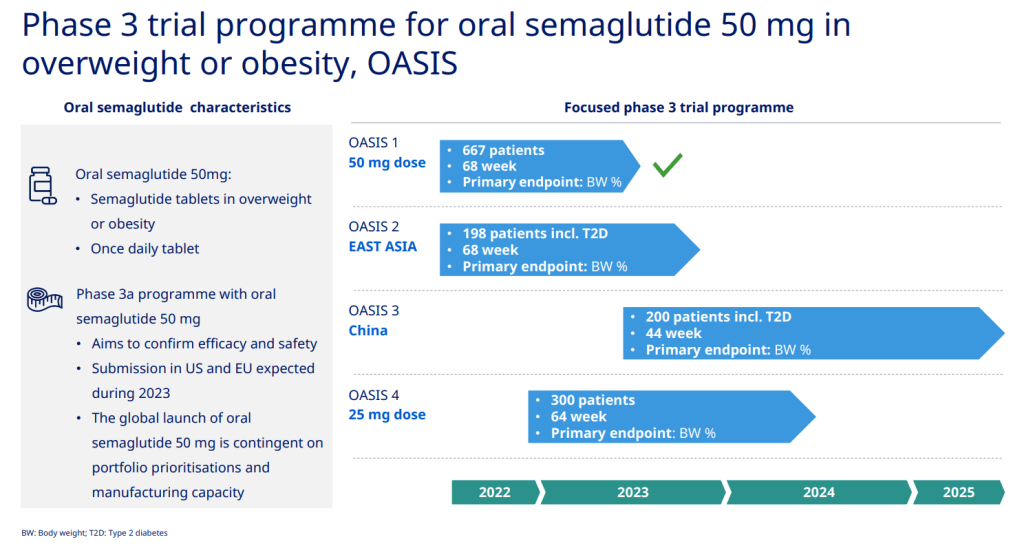
Eli Lilly와 Novo Nordisk의 Oral GLP-1R Agonist를 Type 2 Diabetes 치료제와 비만치료제로서 개발하는 경쟁이 매우 뜨겁습니다. 작년 6월에 열렸던 ADA (미국당뇨학회)에서 Novo Nordisk의 Oral Semaglutide는 15%(68주) 의 체중 감량을 보였고 Eli Lilly의 Orforlipron도 15% (36주)까지의 체중감량을 발표했습니다. 사실상 거의 동일한 결과라고 볼 수 있습니다. 실로 강대강 대결 양상입니다.
The potential advantages of a daily-pill version of popular GLP-1 drugs for Type 2 diabetes and obesity are obvious compared to the weekly injection routine most patients taking these drugs undergo. Last weekend at the American Diabetes Association (ADA) Scientific Sessions in San Diego, market leaders Novo Nordisk and Eli Lilly presented data that showed their investigative oral GLP-1 treatments are making progress.
A phase 3 study of Novo Nordisk’s high-dose oral semaglutide, OASIS 1, shows that obese patients averaged a weight loss of 15% after 68 weeks of treatment, with 34% seeing a 20% drop in their weight. The results are comparable to the weight reductions seen with Novo’s injected GLP-1 drugs.
Also at the ADA conference, Lilly presented results from a phase 2 trial of its weight-loss pill orforlipron, which produced average weight losses of between 9% and 15% depending on the dose provided over a 36-week period. Doses tested were 12 mg, 24 mg, 36 mg and 45 mg. Results were published Friday in The New England Journal of Medicine.
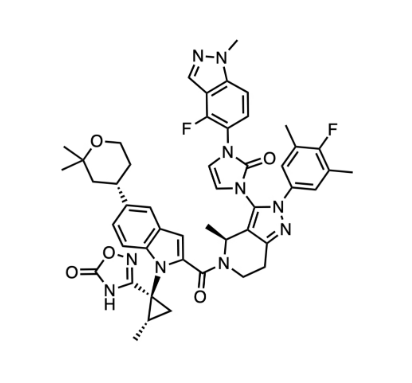
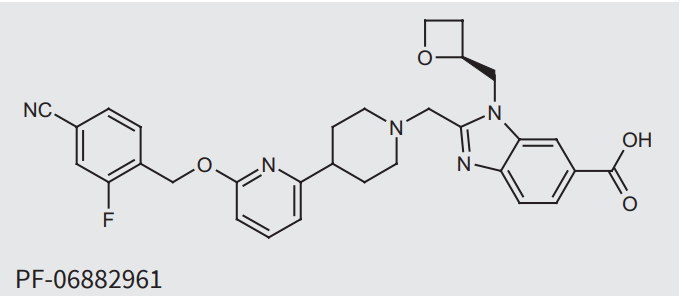
Eli Lilly가 임상2상을 진행 중인 Orforlipron (OWL833/LY350297)는 Roche의 일본 자회사인Chugai Pharmaceutical이 개발한 약물입니다.
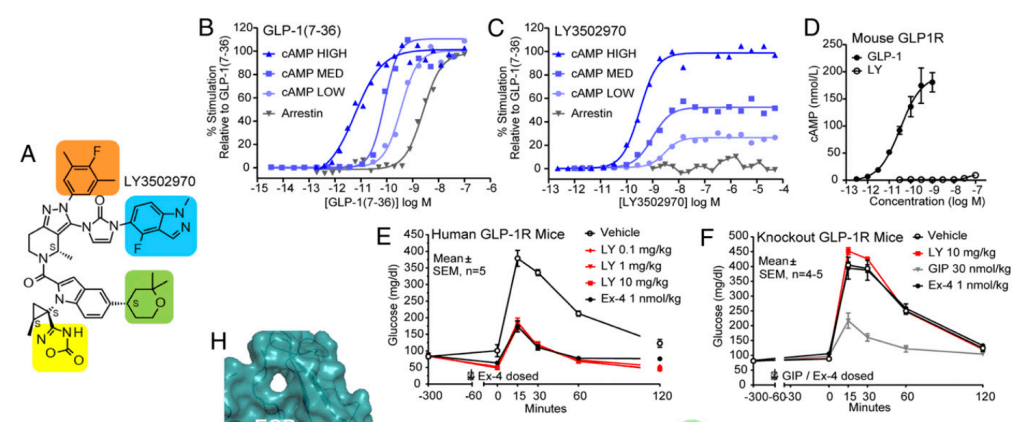
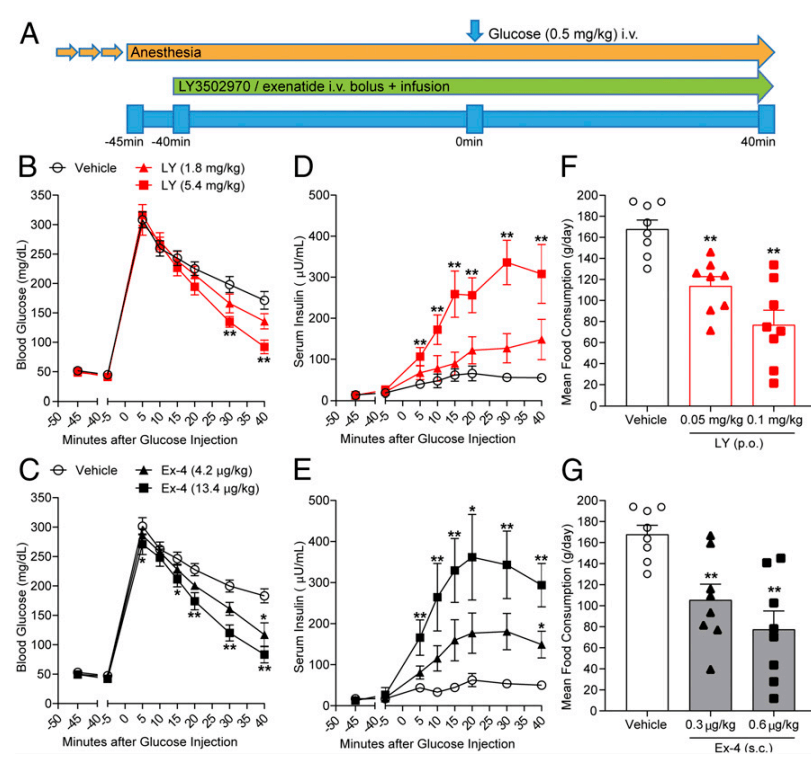
Chugai 제약과 Eli Lilly 연구원은 2020년 PNAS 논문에 Orforlipron (OWL833/LY350297)의 개발에 대해 발표했습니다.
Cyno Molgus를 이용한 NHP Study 결과는 다음과 같습니다. Exenatide i.v. 주사제와 비교한 실험에서 대등한 결과를 보여주어서 Orforlipron (OWL833/LY350297) 경구투여제의 임상시험을 지지했습니다.
Eli Lilly & Co. is looking to pad out its diabetes portfolio by licensing an oral, non-peptidic GLP-1 receptor agonist from Chugai Pharmaceutical that the company describes as a “phase 1 ready” asset for the treatment of Type 2 disease.
In return for $50 million upfront, Lilly will receive worldwide development and commercialization rights to OWL833, with Chugai, a Tokyo-based member of the Roche Group, eligible for future milestone payments and royalties.
“We believe OWL833 can be a best-in-class oral non-peptide GLP-1 receptor agonist and that its value will be further enhanced through Lilly’s clinical development to contribute to people around the world who live with diabetes,” Yasushi Ito, M.D., Ph.D., Chugai’s executive VP and co-head of its Project & Lifecycle Management Unit, said in a statement.
Both companies said there would be no changes to their financial forecasts or guidances for 2018 as a result of the deal, and that OWL833 will “soon” enter phase 1 clinical development.
Lilly has been working to grow and broaden the technologies in its diabetes pipeline, as well as extend its returns with stronger forays into devices and real-world evidence generation.
In April, the company paid $63 million for Type 1 diabetes cell therapies from Sigilon Therapeutics, and signed on for an additional $410 million in possible milestone payments.
The Cambridge, Massachusetts-based Sigilon aims to induce pluripotent stem cells become insulin-producing beta cells, encapsulated using its Afibromer islet cell technology to protect the implanted cells from the immune system.
A few months prior, Lilly unveiled a device-driven strategy to weather pricing pressures, following its partnership with Dexcom to develop continuous glucose monitoring systems. Lilly has also been working on an automated, wearable insulin delivery device and smart pen injector at a small lab it launched in 2015.
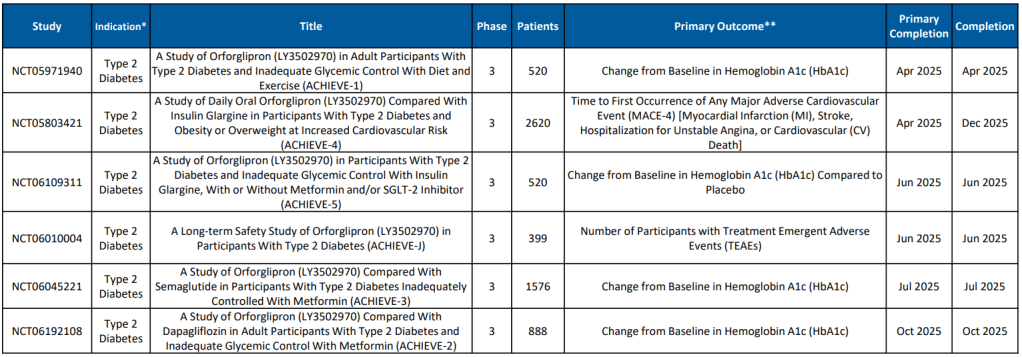
2023년 New England Journal of Medicine에 Orforglipron의 임상2상 결과를 발표했습니다.
Non-peptide GLP-1R Agonist로 Pfizer의 Danuglipron이 twice-a-day oral GLP-1R Agonist 약물로 개발 중이었지만 최근에 독성문제로 인해 임상이 중단되었습니다. 대신에 once-a-day oral formualtion의 PK data를 통해 새로운 임상이 시작될 수 있슴을 얘기했습니다. Pfizer는 oral GLP-1 pill의 시장규모를 $30 Billion으로 예상하고 있습니다.
Pfizer’s drug, known as danuglipron, is a GLP-1 agonist like in-demand obesity treatments from Novo Nordisk and Eli Lilly. But unlike those drugs, which are injections, danuglipron is taken orally, an advantage in convenience that Pfizer hopes will help it break into the fast-growing market.
Pfizer didn’t break out adverse event rates by danuglipron dose tested, but said up to 73% of participants experienced nausea, up to 47% vomiting and up to 25% diarrhea. The side effects were generally mild, the company said.
“We believe an improved once-daily formulation of danuglipron could play an important role in the obesity treatment paradigm, and we will focus our efforts on gathering the data to understand its potential profile,” said Mikael Dolsten, Pfizer’s top scientist and head of R&D, in the company’s statement.
Results from the ongoing pharmacokinetic trial of the once-daily version will “inform a potential path forward,” Dolsten added.
Another setback could put Pfizer in the uncomfortable position of falling further behind in a fiercely competitive development race. Lilly, which recently won U.S. approval of its GLP-1 weight loss drug Zepbound, is also developing an oral obesity medicine called oforglipron that showed promise in a mid-stage trial earlier this year.
Pfizer’s CEO Albert Bourla has said he expects the market for GLP-1 drugs, which are also used to treat Type 2 diabetes, to eventually reach $90 billion in sales. He estimated oral versions could claim about one-third of that figure.
일본의 제약회사 중 하나인 Chugai Pharmaceutical Co. Ltd. (中外製薬株式会社)는 2002년부터 Roche의 계열사로 되어 있는 회사로 신약개발을 하는 회사입니다. Chugai가 최근 mRNA Display Platform을 통해서 Macrocyclic Peptides 를 통한 신약개발을 중점적으로 하고 있는데 그에 대해 얘기를 하려고 합니다.
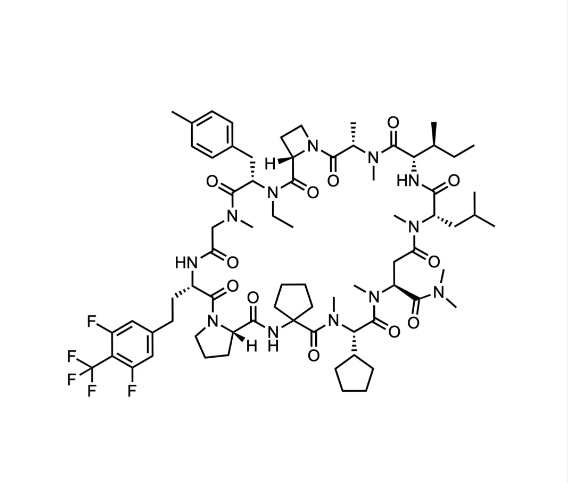
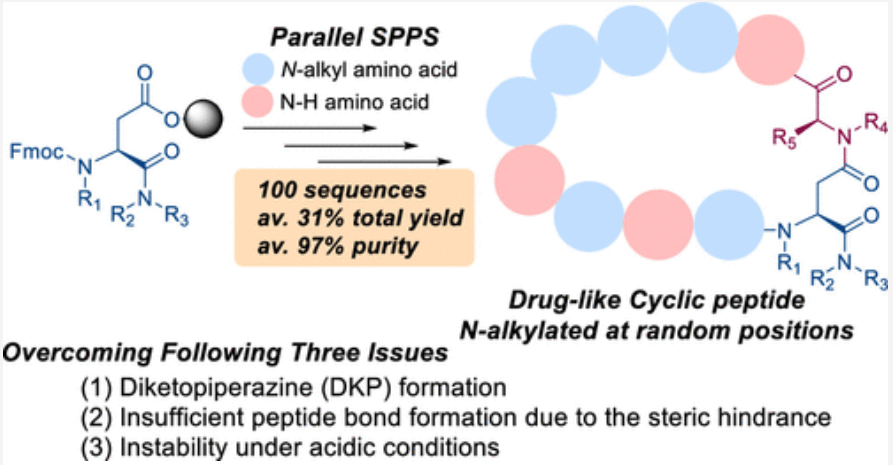
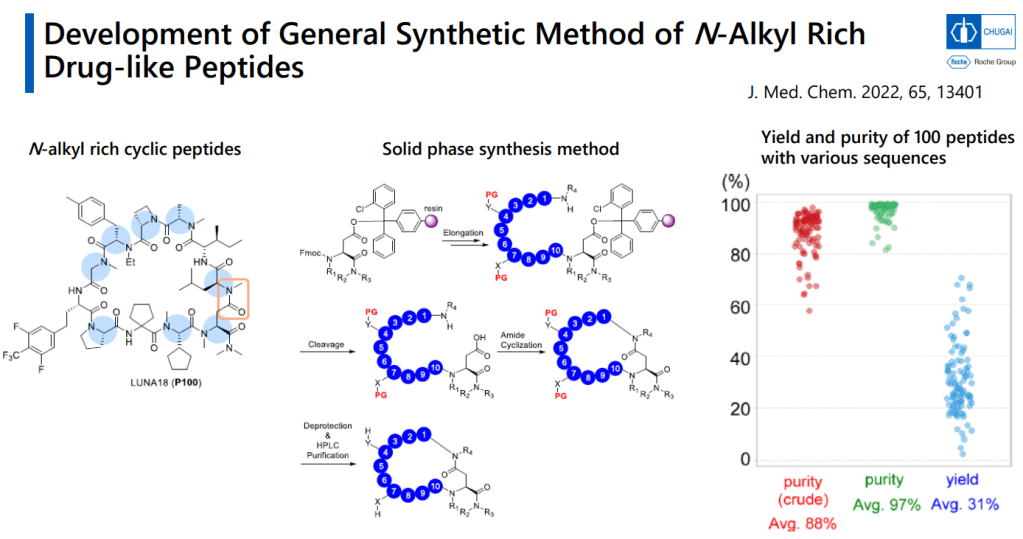
We report a versatile and durable method for synthesizing highly N-alkylated drug-like cyclic peptides. This is the first reported method for synthesizing such peptides in parallel with a high success rate and acceptable purity that does not require optimizations for a particular sequence. We set up each reaction condition by overcoming the following issues: (1) diketopiperazine (DKP) formation, (2) insufficient peptide bond formation due to the steric hindrance of the N-alkylated amino acid, and (3) instability of highly N-alkylated peptides under acidic conditions. Using this newly established method, we successfully synthesized thousands of cyclic peptides to explore the scope of this modality in drug discovery. We here demonstrate the syntheses of a hundred representative examples, including our first clinical N-alkyl-rich cyclic peptide (LUNA18) that inhibits an intracellular tough target (RAS), in 31% total yield and 97% purity on average after 23 or 24 reaction steps.
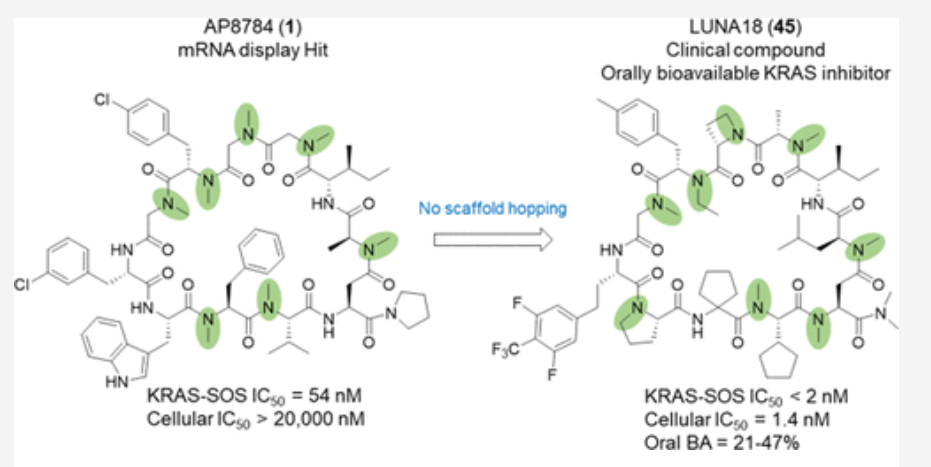
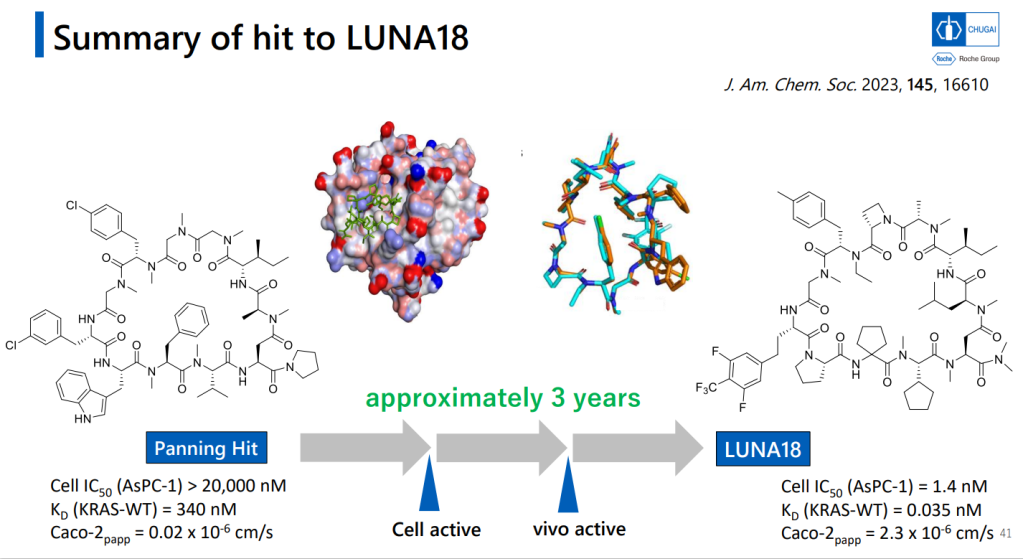
최근에 Journal of American Chemical Society에 LUNA18의 신약개발에 대한 논문을 게재했습니다.
Cyclic peptides as a therapeutic modality are attracting a lot of attention due to their potential for oral absorption and accessibility to intracellular tough targets. Here, starting with a drug-like hit discovered using an mRNA display library, we describe a chemical optimization that led to the orally available clinical compound known as LUNA18, an 11-mer cyclic peptide inhibitor for the intracellular tough target RAS. The key findings are as follows: (i) two peptide side chains were identified that each increase RAS affinity over 10-fold; (ii) physico-chemical properties (PCP) including Clog P can be adjusted by side-chain modification to increase membrane permeability; (iii) restriction of cyclic peptide conformation works effectively to adjust PCP and improve bio-activity; (iv) cellular efficacy was observed in peptides with a permeability of around 0.4 × 10⁻⁶ cm/s or more in a Caco-2 permeability assay; and (v) while keeping the cyclic peptide’s main-chain conformation, we found one example where the RAS protein structure was changed dramatically through induced-fit to our peptide side chain. This study demonstrates how the chemical optimization of bio-active peptides can be achieved without scaffold hopping, much like the processes for small molecule drug discovery that are guided by Lipinski’s rule of five. Our approach provides a versatile new strategy for generating peptide drugs starting from drug-like hits.
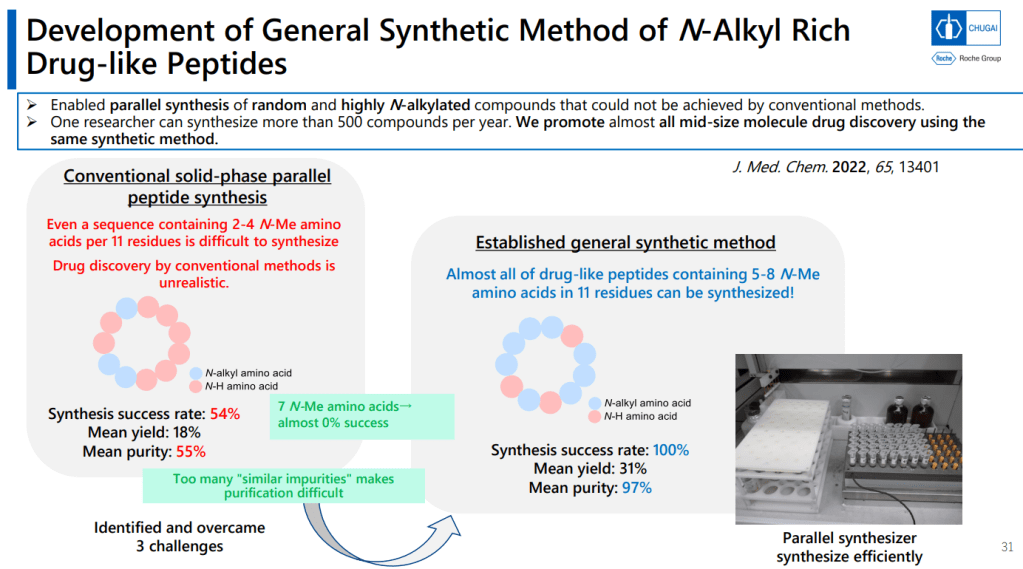
Journal of Medicinal Chemistry 2022년 논문에서 N-alkyl Rich Drug-like peptide synthesis를 개발해서 한 연구원 당 1년에 500개의 Peptides를 만들 수 있도록 했습니다.
Solid-phase synthesizer로 만드는 방법입니다. Cyclization을 먼저 한 이후에 Protecting group deprotection을 합니다.
최근에 Chugai R&D Day에서 발표한 자료에도 LUNA18에 대한 내용이 있습니다.
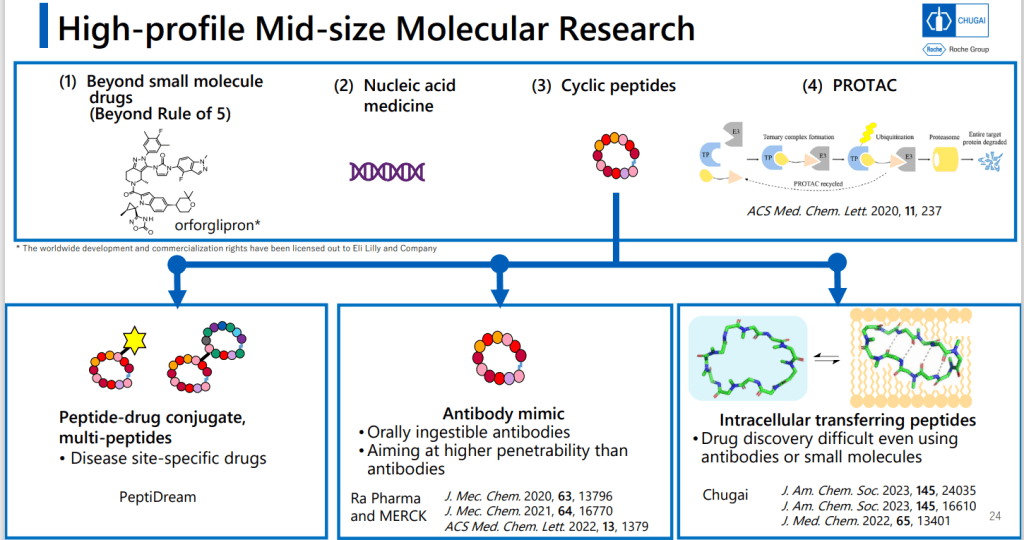
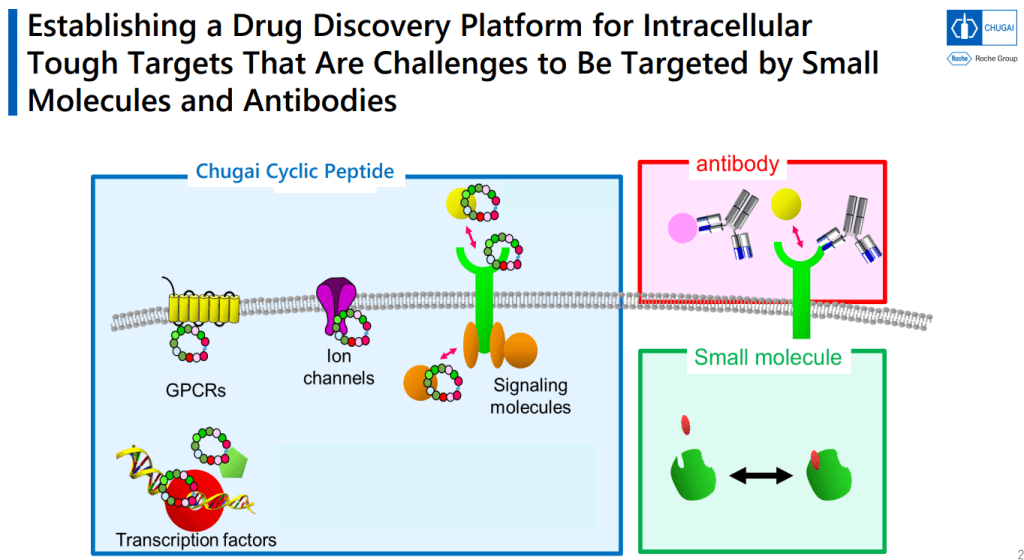
Chugai 제약은 Small molecule과 Antibody 신약개발은 오랜 기간 내공이 있는데 최근에 “intracellular Transferring Peptides” 분야에 Positioning을 한다는 전략을 수행하는 중에 있습니다.
개념도를 보면 Antibody는 Membrane Receptor에 결합하는 방법이고 Small molecule의 특성을 가지면서 Antibody와 같은 선택성을 갖는 Mid-size molecule을 발견하는 것이 목표라는 것입니다.
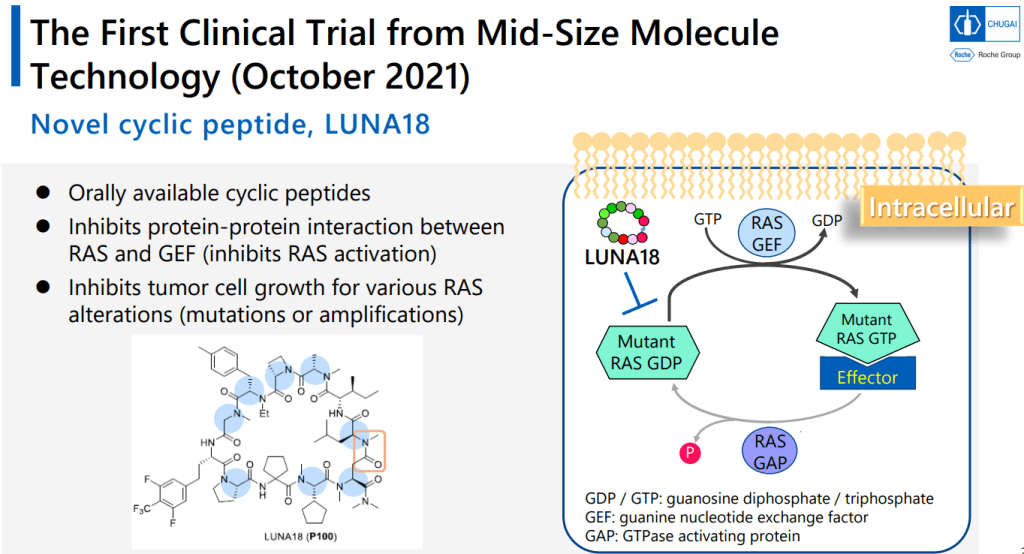
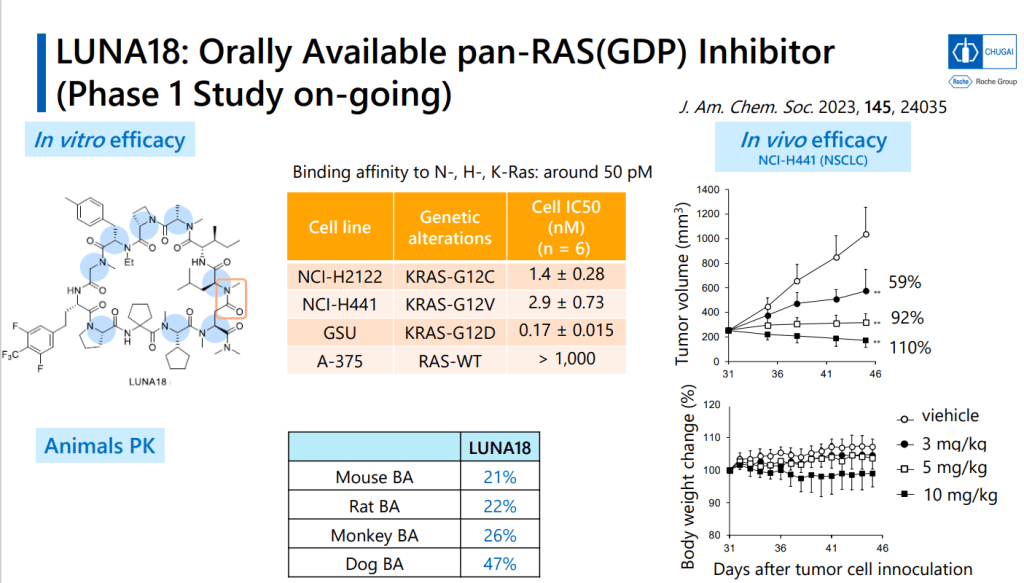
Mid-Size Molecule 중 처음으로 임상에 진입한 물질이 LUNA18입니다. pan-mutant RAS Inhibitor로 개발을 한 것입니다.
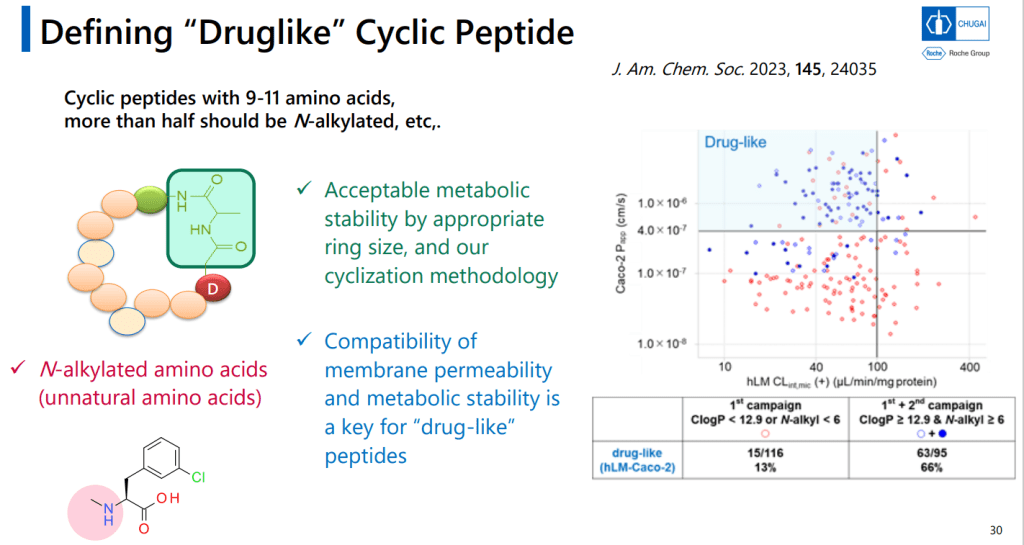
9-11-mer Macrocyclic Peptides가 Druglike한 Metabolical Stability를 위해서는 반 이상이 N-alkylated 되어야 한다는 것이 중요한 핵심 중 하나입니다.
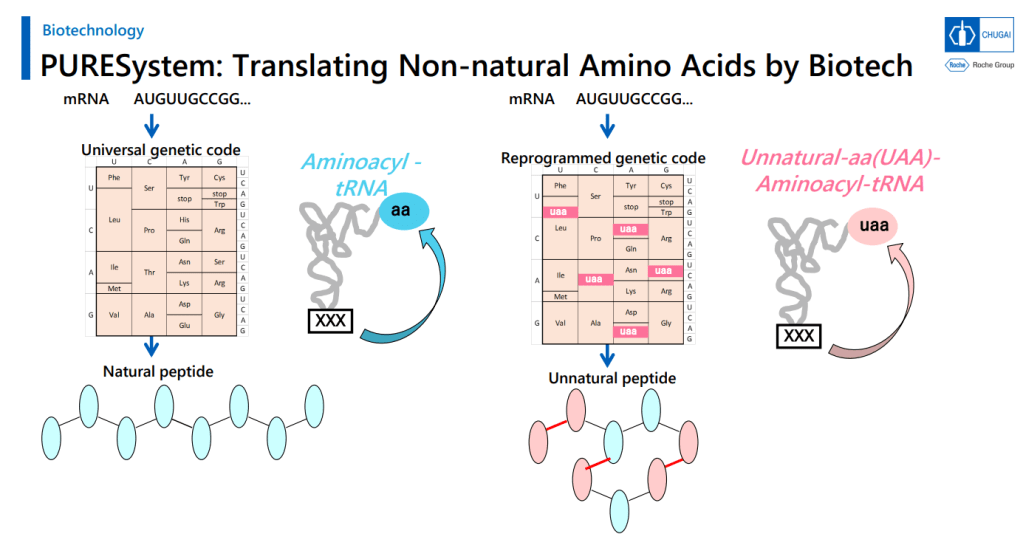
PURESystem으로 Unnatural Macrocyclic Peptides를 만들 수 있는 mRNA Display Platform을 이룰 수 있었다고 발표했습니다.
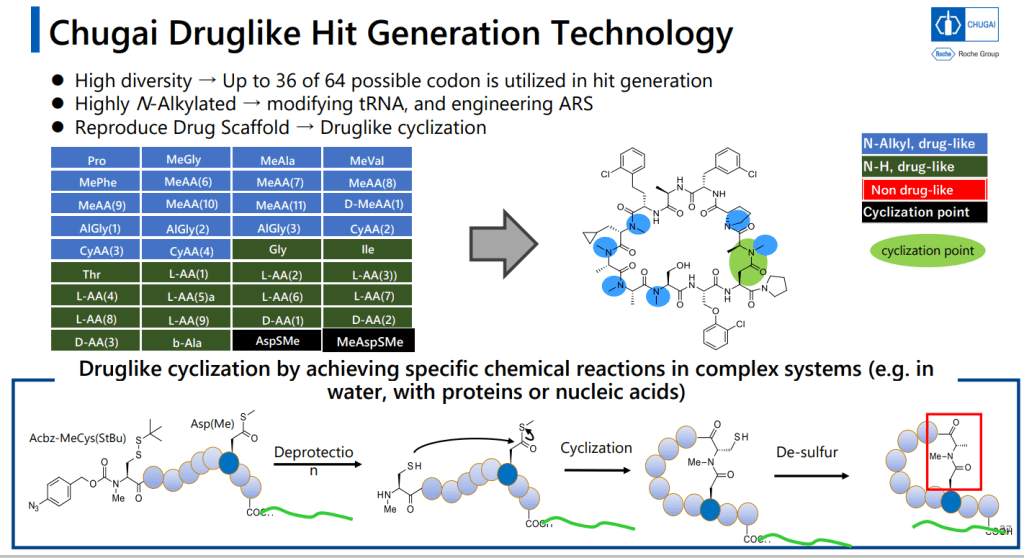
PURESystem에서 Cyclization Method가 Key Reaction이고 Cyclization 이후에 Desulfurization을 합니다.
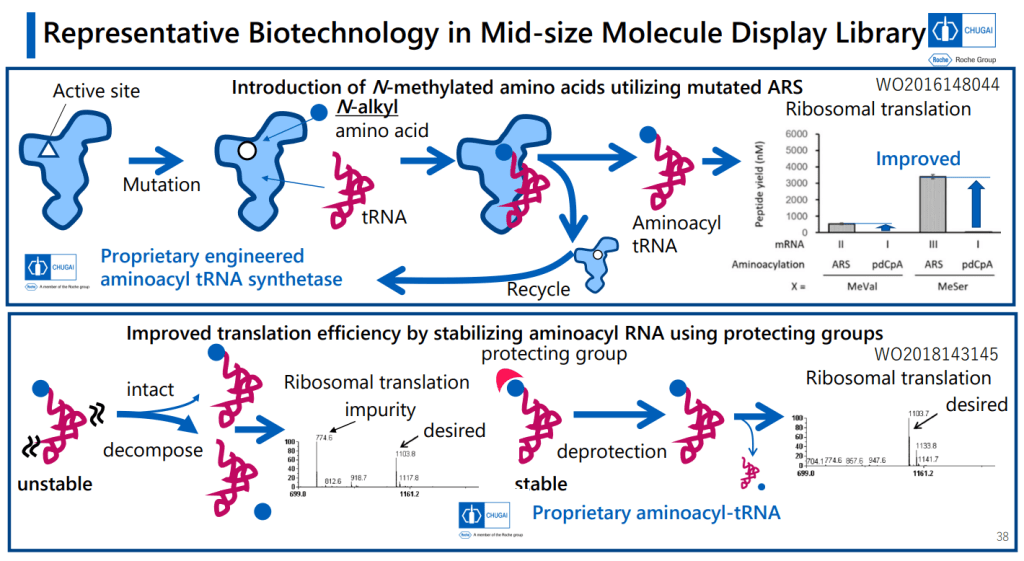
그리고 PeptiDream의 FIT (Flexizyme-mediated Flexible In Vitro Translation)이 N-alkyl amino acid를 받아들일 수 있도록 하기 위해 변형을 주었습니다.
이렇게 다양한 Platform Technology를 이용했을 경우에 Hit Identification부터 Lead Optimization까지 약 3년의 시간이 걸렸습니다. 역시 Lead Optimization이 시간이 많이 걸립니다. Cell-based system에서 active molecule을 찾은 후 DMPK를 위한 Lead optimization을 나누고 있습니다.
이러한 노력의 결과로 얻어진 LUNA18은 KRAS-G12C, KRAS-G12D, KRAS-G12V mutants에 모두 active하지만 KRAS-WT에서는 전혀 효과가 없기 때문에 정상세포에는 독성이 적고 Oncology KRAS mutants에만 듣는 Precision Oncology Medicine으로 될 가능성이 높은 약물입니다. In vivo efficacy도 dose에 따라 암세포가 줄어드는 것을 확인했고 체중은 대신 일정하게 유지가 되었습니다.
2023년 12월에 발표한 Chugai R&D Meeting Presentation은 아래에 링크합니다.
Novartis의 신약개발 Director이면서 Science에서 “In the Pipeline”이라는 블로그를 쓰는 Derek Lowe가 최근에 Chugai가 개발한 LUNA18 (pan-KRAS Inhibitor)에 대해 글을 쓴 것이 있습니다. Derek의 관점은 Chugai 연구팀이 N-alkyl amino acid를 이미 mRNA Display와 Solid-phase synthesizer에 도입을 해서 5번만의 In vitro selection만으로 180 nM active molecule을 찾았다는 점을 아주 높이 평가하고 있습니다. (Big Pharma Library Screening으로도 이런 것은 얻을 수 없다는 것을 강조하면서).
Chugai Pharmaceutical 연구팀이 Cell-Permeable Orally Active Macrocyclic Peptides를 위한 Druglike Platform을 한층 Upgrade한 것은 확실한 것 같습니다. 이 논문을 본 다른 연구팀들이 또한번 업그레이드 시키겠죠. 이 분야의 발전이 큰 기대가 됩니다.
I’ve been meaning to blog about this paper from a large team at Chugai, looking at ways to make rather large cyclic peptide structures that can also still be drugs. The whole “peptides as drugs” topic has been a perennial here on the blog, and by that I mean “going back to 2002“, with updates along the way. Here’s a recent review on the subject (and there are plenty more out there!)
The reasons it’s such a focus in drug discovery come from both ends of the topic. On the one hand, an awful lot of protein functions in the cell are mediated by, well, other proteins, or peptide pieces thereof. Protein-protein interactions (PPIs) are so ubiquitous, and the proteome that we have have is so tuned up for them, that a great many of our small-molecule drugs are actually fitting into binding sites that are normally part of some protein-binding event. (There are of course binding sites that are evolved for small molecules, such as with the amine GPCRs, and drug discovery efforts have naturally pounded away at those over the years, fear not).
But at the same time that there are a lot of protein-protein sites to exploit, actually getting down to expoiting them is difficult if you try to do it with an actual peptide, as opposed to some small molecule that ends up acting as a peptidomimetic instead. That’s because proteins of all sorts are constantly being recycled and remodeled in living cells. There are all varieties of saw blades spinning constantly in the biochemical environment, protease and peptidase enzymes that are ready to start slicing proteins up into smaller pieces. Our endogenous proteins are adapted to this, generally by being compartmentalized away from things that would chew them up and by not displaying easily-cleaved sequences to the enzymes they’re most likely to encounter. Instead, these protein-processing events are managed in a vast and intricate landscape, with a good example being the coagulation cascade.
Even getting to the stage where all these enzymes can take a whack at your peptide drug is not so easy, thanks to the way the digestive system is set up. We do not schlork up proteins as whole species when we eat them – instead, everything gets broken down thoroughly by digestive enzyme into individual amino acids, dipeptides, and tripeptides. Those are the species that are actually absorbed, and our innards are very good at ripping a huge variety of proteins into such sawdust. Which is what will happen to your drug candidate unless you take great care to avoid it.
There are more strategies than I can count for trying to fix these problems, and they have been refined and extended for decades now in drug discovery. N-methylation, reverse-chirality residues, beta-amino acids, “retro-inverso” chains, cyclic peptides of many kinds from simple rings to complex knots. . .those are some of the classics, and that’s just the start of the topic. The Chugai paper linked above is a contribution to this field, and a key step they’re taking is to start with the right sort of screening library – one that’s already most of the way to drug-likeness.
That means (they say) cyclic peptides, in roughly the 11-amino-acid size range, with more lipophilic side chains than usual, and a prominent amount of N-alkylation already built in. They’re taking their cues from cyclosporine, which is a notably effective compound with far better membrane penetration and pharmacokinetic behavior than one might have predicted. (Medicinal chemists have been mining the behaviors of such naturally-occurring macrocycles for a long time now!) The hope is that good hits from such a collection can be optimized without doing too much violence to the overall conformation of the ring and its physiochemical properties. Indeed, checking a library of 8-to-12-amino-acid membered ring cyclic peptide compounds showed that the 11-AA-membered ones had notably better stability to metabolic enzymes, and this is surely No Accident, evolutionarily. Similarly, it looks like you would want at least 6 alkylated residues (cyclosporine has 7) and a cLogP of at least 12.9 (cyclosporine’s is 14.4). Note: that is indeed quite greasy. And you’d like to have no more than 3 hydroxyl groups and a maximum of one ionizable group hanging off the structures as well (and probably none at all). Dosing a range of such compounds in mice confirmed that they were on the right track.
That’s a good amount of work already, but the group went on to work up an expression system to turn out large numbers of variants in this area for a screening library. That’s a challenge, because you’re asking the cellular protein synthesis machinery to do a number of things it normally doesn’t: you need it to handle plenty of N-alkylated amino acids, and what’s worse, you need to have some of these show up one after the other in the chains. You need to make macrocycles without relying on labile groups like disulfides or thioesters. And you need to strip out all the amino acids with ionizable side chains. That involves lot of engineering at the aminoacyl tRNA stage, but they managed to get an mRNA display system working with these modifications (using the PURE system, which is done outside of living cells and is thus more amenable to all the necessary changes).
mRNA display can give you a tremendous number of possible products, and indeed, the team ran an experiment that was capable of generating different peptides in the ten-to-the-tenth (tens of billions) range, and deploying this in a search for a KRAS ligand. That’s just the sort of audacious target this sort of technology should be applied to! Recent years have seen progress in targeting mutant forms of that cancer protein, but wild-type KRAS is a major challenge for anyone. After five rounds of enrichment, panning away all the less-potent candidates, they narrowed down on a particular cyclic peptide that had 180 nM activity in blocking the interaction of KRAS and its partner SOS1. You can screen the entire collections of big pharma companies and not find a compound like that (they have!)
The authors present an X-ray structure of the complex, which generally ends all arguments, and go on to show optimization of the compound into an even better drug candidate. As they’d hoped, this was achieved without any major alterations to the core structure, but rather relying on changing some side-chain properties. No polar (hydrogen-bonding) groups were used in that process – as they say, “it was not necessary to use polar functional groups to optimize the structure of a hit that does not rely on polar functional groups for binding to its target protein.”
These extra hydrophobic groups actually improved the properties of the new compound, which had sub-nanomolar activity for the KRAS-SOS1 interaction. It has good PK properties (47% oral bioavailability in dogs, for example), and is now in Phase I human trials. Which is pretty damned impressive (here’s another detailed look at the compound’s development). Chugai’s dedication to getting this macrocyclic-peptide-screening platform off the ground is impressive as well, and I very much look forward to seeing what else that can make out of it. And what the rest of the industry can make of the ideas behind it!
Medical researchers have leveraged technology to create major breakthroughs in the past few decades, accelerating the understanding of diseases, and their causes and treatment. Our accumulating knowledge also has accelerated the ability to translate science into practical therapies, but there are still many challenges: while researchers seek the right drug compounds that can target and deliver treatment for specific diseases, traditional drug innovation models can be slow and come with high costs.
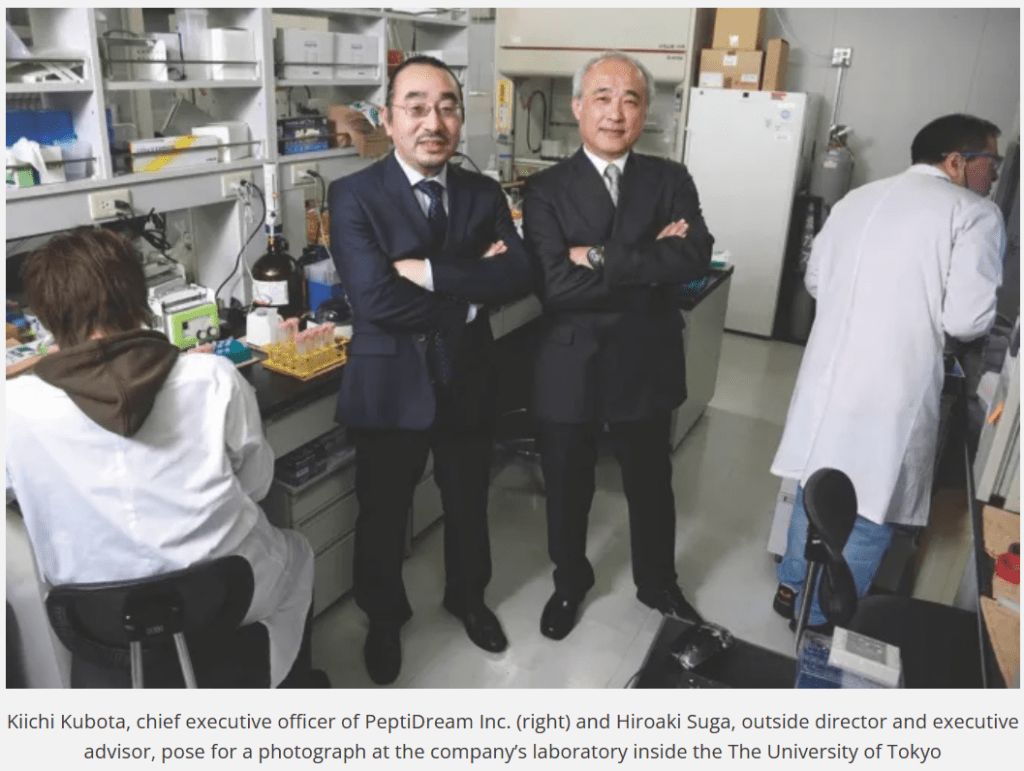
Japan’s rising biotech company, PeptiDream, is tackling these issues, deploying a unique proprietary drug development technology and an innovative business model that will further research on and development and manufacture of peptides to deliver new medical therapies. “We really want to be a drug discovery engine,” says CEO Patrick Reid. Until recently, most advances in drug delivery have focused on small-molecule and large-molecule drugs, also known as antibodies. But now macrocyclic peptides are emerging as an important new avenue.
How are peptides different? Both small- and large- molecule drugs come with advantages – and limitations. The small molecule drugs are chemically synthesized in a lab and taken as a pill or capsule, so the active ingredient is easily absorbed into the bloodstream. Because they are small, molecules can penetrate cell membranes, making these drugs highly effective. But they can be unstable and they break down in the body, creating unwanted side effects. Formulating these drugs to take on specific new targets also can be slow and expensive.
Protein-based therapeutics (large-molecule drugs) are made by using living cells. They typically are not pills, but instead must be injected or infused. These large- molecule therapies, unlike the smaller-molecule drugs, cannot penetrate cells. But these drugs are easier to design for specific targets — typically a cell-surface receptor on the outside of the cell. However, these therapies cannot reach all required targets, and they can stay in the body too long causing side effects.
Enter peptides, compounds that consist of amino acids linked together and can be synthesized in the lab. Pioneering research by Suga Hiroaki, PeptiDream co-founder and professor at the University of Tokyo, established a way to ensure that a new kind of peptide compound can remain stable in the body and find a range of therapeutic targets with high specificity. They can also be broken down by and cleared from the body with greater specificity, making them an important new development in pharmaceuticals.
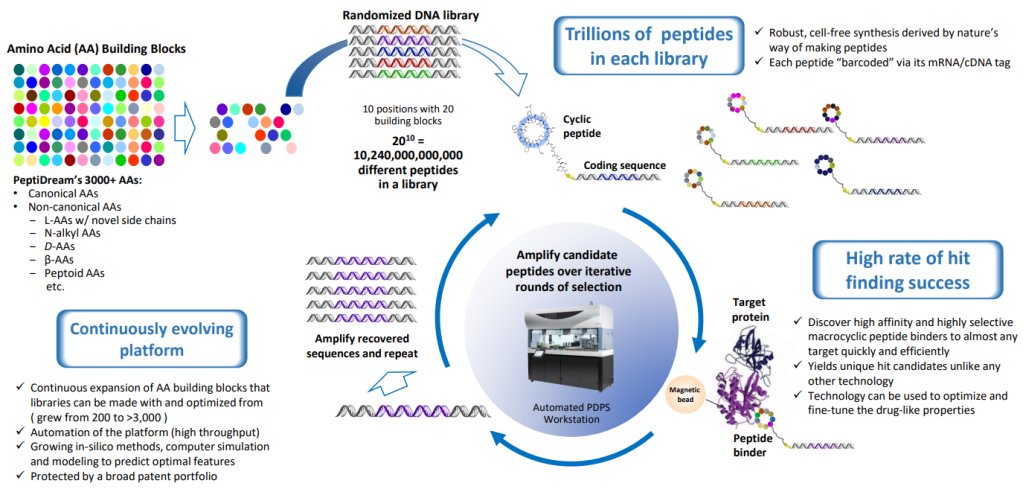
And these macrocyclic peptides can be combined, using a much larger set of amino acids than occur in nature – giving researchers the ability to experiment with many more combinations. PeptiDream’s Peptide Discovery Platform System (PDPS) is a proprietary technology that allows drug researchers to make trillions of peptide libraries. Reid describes PeptiDream as “platform company” that enables his researchers and others to make the process of discovering “hits” — the starting point for developing drugs — more efficient.
PeptiDream의 PDPS (Peptide Discovery Platform Systems)은 아래와 같습니다. 3천개 이상의 Amino acid로 다양한 Macrocyclic Peptides를 만들고 mRNA Display로 cDNAs를 만듭니다. 이 과정에서 1조개 이상의 Peptide library를 만들고 이 Library를 가지고 Target Protein과 가장 높은 Binding Affinity를 가지면서 높은 Selectivity를 갖는 Macrocyclic Peptides를 발굴합니다. 이 과정을 반복하면서 계속 Optimization한다는 개념입니다.
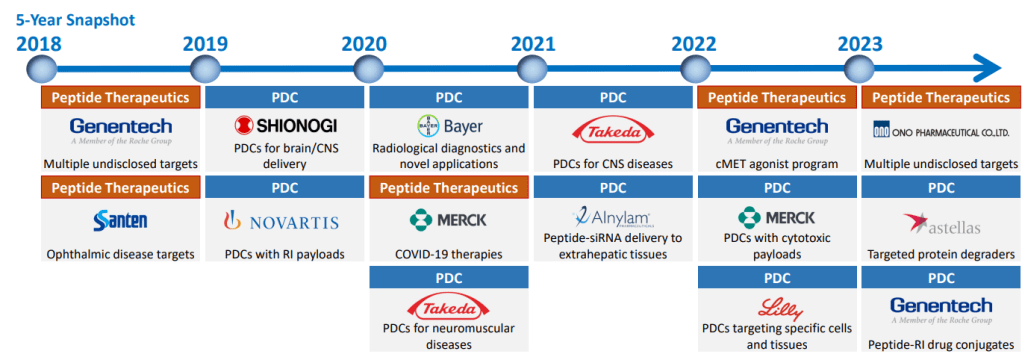
“We are not simply developing a single drug and trying to bring that all the way to approval; we are championing and developing an entirely new class of molecules,” Reid says. The platform has created an unusual set of collaborations for PeptiDream, whose drug discovery partnerships have included Merck, Bayer, Genentech and Novartis. This collaborative network has accelerated peptides development, Reid says, creating a large wave of compounds that should move into the clinic in the next few years.
“Our network of partners has allowed PeptiDream to function as company ten to twenty times its actual size,” he says. “With more than 100 discovery programs in parallel across a wide range of diseases, targets and administration routes, we are expanding the knowledge, understanding and appreciation of these molecules in therapeutics and diagnostics and more.”
It also was crucial that PeptiDream, as a startup, was able to focus on developing the platform for peptide drug discovery, something large pharmaceuticals had not done because of the cost and the long, uncertain time horizon. Japan embraced PeptiDream, initially as a largely bootstrapped company, and then when it went public in 2013, Reid says. “In the U.S. and Europe, we probably would have been pressured to borrow funds in order to grow faster,” he says. “Many companies in the U.S. with internal pipelines fail due to time and pressure constraints. They burn a lot of money very quickly.”
PeptiDream is now a $7 billion company and is also a founding investor in a contract manufacturing company, PeptiStar. Collaboration with other companies is crucial, says PeptiStar CEO Kameyama Yutaka, as new ecosystems for research, manufacturing and supply of peptide drugs are developed. In fact, PeptiDream, together with other co-founding investors Shionogi and Sekisui Chemical, has attracted additional ten investors as active R&D collaborators.
In order to accelerate the practical application and market creation of peptide therapeutics as next-generation drugs beyond biopharmaceuticals, the Japanese government also supports PeptiStar, providing 9 billion-yen (about $83 million) grant as part of the government’s program Cyclic Innovation for Clinical Empowerment, under the National Healthcare Policy. The money will allow PeptiStar, established in 2017, to become a leader in both scientific and business process innovation, says Kameyama.
“The current capacity of peptide manufacturing is limited, and it could be a big bottleneck of peptide medicine developments,” he says. “This quick fundraising will accelerate the development and commercialization of our ability to prepare the peptide compounds. And the support they have given us will also encourage many other partners in the important development of peptides.”
“Peptides have not been around very long, and as with any new technology, there is room for improvement, including costs,” Kameyama says. “We want to make production cheaper and higher quality, and collaboration is a competitive advantage. If a company established its own manufacturing facility, it would take time and money. But with a joint venture like ours, the cost and the sharing of technology and knowledge are very different.”
Both Reid and Kameyama credit the Japanese research and business ecosystem with their success. Professor Suga’s breakthrough work is just one spinoff of innovation coming from Japanese universities, where a pool of highly skilled research workers has developed. Japan’s challenge to create peptide drug market continues.
Peptidream이 2006년 7월에 UTEC과 설립한 이후에 2년간은 Stealth-mode로 회사의 PDPS (Peptide Discovery Platform Systems)을 만들고 IP를 확보하기 위해 노력을 했고 2008년에 펀딩을 받았고 2013년에 $52 Million로 동경 Mothers 상장을 했습니다.
PeptiDream Inc. (Tokyo, Japan) raised Y5.3 billion ($52.4 million) through the sale of 2.1 million shares at Y2,500 in an IPO on the Tokyo Stock Exchange’s market of the high-growth and emerging stocks (Mothers). The share figure includes the sale of 405,000 shares in an overallotment. The company’s founders are selling an additional 1 million shares in the IPO. The Y2,500 price, which is the upper end of PeptiDream’s proposed Y1,920-Y2,500 range, values the company at Y33.1 billion ($329.7 million). Mizuho is lead underwriter. The shares are slated to start trading June 11. …
“People thought I was crazy, because it’s a very difficult thing to do,” Suga said. “I spent 10 years on this. I had many failures, but then I had two successes but they weren’t really useful, so that means failure for me. And then finally I came up with this flexizyme prototype, and I thought ‘this is it.’” Enter Kiichi Kubota, the business brain and co-founder who runs PeptiDream today. Together, they nailed down patents on the technology and worked on ways to make the process of discovering “hits” – the starting point for developing drugs – more efficient. By reducing the number of steps, the company cut the average time needed to discover them from about three days to four hours, according to Patrick Reid, PeptiDream’s chief science officer. That also lowered the potential for human error, he said. The Peptide Discovery Platform System has had strong interest from big pharma. Already, 16 of the most established names in the industry have signed agreements to work with PeptiDream to find hits for various diseases. The system can help discover drugs for pretty much anything, from cancer to neurological disease. Three firms, Bristol-Myers Squibb Co., Eli Lilly & Co. and Novartis AG, have gone a step further by licensing the technology to use in-house. PeptiDream’s revenue rose to 2.5 billion yen ($24 million) in the fiscal year ended June 2015. “These guys are different,” said Brian Heywood, chief executive officer of Taiyo Pacific Partners LP, which holds a 5 percent stake in PeptiDream despite being generally suspicious of biotech shares. Heywood says that PeptiDream doesn’t burn funds like some of its peers and is cash-flow positive. “This is one of those weird things where someone has something special that nobody can imitate. And it’s patented.” Not only that, PeptiDream kept part of its discovery for itself. Its system can create three types of drugs – peptide therapeutics, small-molecule medicines and what’s called peptide drug conjugates (PDCs). The first is mostly used for extracellular medicines, while the second, which are smaller, can permeate the cell. PeptiDream’s partnerships cover only those two. The third, PDCs as they’re called, are envisaged as a kind of smart drug. The peptide part will be used, for example, to home in on a cancer cell, which the conjoined drug will then attack. This contrasts with conventional treatments such as chemotherapy that kill other cells as well as the cancerous ones, resulting in hair loss, nausea and other symptoms. Reid and his team are focusing on this area within the company. “We carved that out,” Reid said. “The market is growing very rapidly. It’s one of the most rapidly growing areas of therapeutics.” Analysts, who are predominantly bullish on the stock, say one risk for PeptiDream is if big pharma starts to lose interest. They point to Pfizer Inc. canceling an agreement in 2013, and how shares tumbled on the news. “They have several partners, but we don’t know if the contracts will be extended indefinitely,” said Kiyokazu Yamazaki, an equity analyst at Ichiyoshi Research Institute Inc. who rates the shares a buy. “What people evaluate highly isn’t their creation of drugs in-house. It’s their contract revenue.” Shares surged 175 percent from November to a peak at the start of this month, capped by a 14 percent jump on June 3 after PeptiDream raised its annual profit forecast by 84 percent and said it got a second licensing payment from Novartis. The stock has tumbled more recently but even after the decline, it trades at 166 times earnings and 37 times book value. PeptiDream posted profit of 1 billion yen in the 12 months ended June 2015. The company moves to a new building near Tokyo Bay next year. Professor Suga remains an independent director and adviser, while his lab has moved on to other pursuits. His 8.6 percent stake is worth about $278 million, and he says he’s bought a house and filled it with guitars. Kubota, the president, now spends half his time talking to investors, and says he hopes Suga will win a Nobel Prize for his discovery one day. Meanwhile, across the corridor, Reid’s at work testing the boundaries of the new world of peptide drug conjugates. “We’ve developed a once-in-a-generation hit-finding platform,” Reid said. “It’s like sitting in a stack of gold every day.” Tom Redmond, Nao Sano, Bloomberg
Macau Daily Times라는 신문에서 PeptiDream의 스토리를 잘 소개한 것이 있어서 공유를 하는데 Suga Hiroaki (菅裕明) 교수는 본래 기타리스트를 꿈꿨지만 현실적인 이유로 신약개발을 하는 교수의 길을 가게 되었습니다. 미국에서 14년간 살다가 2003년에 동경대학 교수로 오게 되어서 Flexizyme을 발견한 후에 IP를 확보하고 동경대학에 있는 VC인 UTEC과 의논을 하면서 결국 PeptiDream을 창업하게 됩니다. PeptiDream은 일본 바이오텍의 몇개 안되는 유니콘 기업으로 $7 Billion Market Capitalization까지 올랐습니다.
Suga교수의 Flexizyme Project에 대해 사람들이 불가능하다고 얘기했지만 10여년의 기간 동안 수많은 실패를 딛고 결국 Flexizyme Prototype을 성공시키게 되었고 동경대학 교수가 되면서 Flexizyme을 완성하게 됩니다. 당시 동경대학 부교수였던 Patrick Reid교수가 CSO로 함께 참여를 했고 RaPID system을 3일 걸리던 것을 4시간만에 끝낼 수 있도록 발전시켰습니다. 16개의 글로벌 제약 바이오기업과 공동연구계약을 맺었고 BMS, Eli Lilly, Novartis는 연구계약을 넘어 기술을 라이센싱해서 자체적으로 할 수 있도록 시스템을 만들었습니다. 투자자들은 PeptiDream이 Cash-burn 없이 창업 2년차부터 수익을 얻는 비지니스 모델을 가진데 대해 특별한 투자기업이라고 얘기합니다. 공동창업자인 Kubota Kiichi(窪⽥規⼀)는 Suga Hiroaki (菅裕明)교수가 언젠가는 노벨상을 받을 것이라고 확신하고 있습니다. 저도 그렇게 생각합니다.
When he realized he wasn’t going to make it as a guitarist, Hiroaki Suga set out to find the origin of life, and ended up creating a new way to develop medicines. Many years spent fiddling with the building blocks of the universe – combining molecules to form compounds – led to Suga developing an enzyme that opened the door to a faster method of discovering drugs. PeptiDream Inc., the company he co-founded, has inked deals with many of the world’s biggest pharma firms, and shares have surged more than nine fold since listing in 2013. “Everybody comes to PeptiDream,” Suga, 53, said in an interview from his office deep in the main campus of the University of Tokyo. An electric guitar hangs from his wall. “Everybody probably accepts now that the technology we developed is very, very smart, very efficient,” he said. “I might go back to looking for the origin of life after I retire.” PeptiDream is part of a handful of Japanese biotech ventures that have grown into billion-dollar companies, which also includes Sosei Group Corp., the drug maker that now accounts for about 14 percent of the Mothers Index of smaller shares, and Euglena Co., which is trying to make jet fuel from algae. Like Euglena, it originated within Japan’s equivalent of Harvard, where Suga is a professor. In fact, PeptiDream is still based there today. The path to becoming a USD3.2 billion company started when Suga’s lab developed an artificial ribozyme, which he named flexizyme for its “promiscuous” ability to help amino acids couple to form peptides. Libraries of peptides – proteins made from a small number of amino acids – had been used by health-care companies for years to facilitate drug discovery, but they hadn’t been effective because they were unstable. Armed with flexizyme, the self-described research heretic Suga turned conventional wisdom on its head by making new libraries of a different type of peptides, often shaped more like a hula hoop than the spaghetti-type ones employed in the past. The steadier structure made them better at blocking the interactions between proteins that cause many diseases, according to Suga.
UTEC에서 PeptiDream의 창업부터 IPO까지 함께 한 VC인 Katadae Maiko(片田江 舞子) 박사가 PeptiDream President & CEO인 Kubota Kiichi(窪⽥規⼀)를 인터뷰한 것이 있습니다. 동경대학 (東京⼤学) Suga Hiroaki (菅裕明) 교수가 Katadae Maiko(片田江 舞子) 박사와 얘기하면서 회사 창업 가능성을 생각하게 되었고 Katadae Maiko(片田江 舞子) 박사가 Kubota Kiichi(窪⽥規⼀)를 CEO로 천거했다고 합니다. Kubota는 IP Strategy를 잘 설계해서 Flexizyme에 대한 특허와 FIT system에 대한 특허를 획득한 후 향후 2년간 RaPID 특허기술을 완성하는데 전력하게 됩니다. 이렇게 특허를 확보한 후 PeptiDream이 세계적으로 다른 회사들이 갖지 못한 독보적인 기술 플랫폼을 확보했다는 확신했다고 합니다. Suga 교수의 논문을 읽은 제약회사들이 PeptiDream에 공동개발을 청해왔을 뿐 특별히 PeptiDream이 제약회사들을 접촉하려고 한 적이 없다는 점이 좀 특이하고 의아하게 생각했습니다. 기술의 수준과 독보적인 IP가 중요하다는 것을 다시 한번 깨달았습니다. 창업 당시 Business Plan에 의하면 창업 6-7년차부터 손익분기점을 맞겠다는 계획이었지만 실제로는 창업한지 2년차부터 손익분기점을 넘어섰고 빠르게 성장해서 놀랐다는 얘기를 서로 하며 웃었군요. VC인 Katadae가 창업 초기부터 다른 VC들 처럼 하지 않고 파트너로 함께 했다고 Kubota 사장은 얘기했습니다.
In the natural world, there are creatures which are capable of producing substances unique to those species. In many instances in human history, such naturally occurring substances have been used as “miracle medicines” to save human lives. One class of such substances are “special peptides” produced by synthesizing “special amino acids” that do not occur naturally in the human body. PeptiDream was the first in the world to succeed in artificially synthesizing special peptides and linking it to drug discovery. PeptiDream has received a great deal of attention from the scientific and pharmaceutical industries and now, we are continuing our quest for medicines to cure incurable diseases around the world. The company was listed on the TSE Mothers in June 2013. How was PeptiDream able to commercialize a completely new drug discovery platform? We talk with the founder, President and CEO, Mr. Kiichi Kubota, and his companion from the founding period, UTEC partner, Dr. Maiko Katadae.
Kubota: There are 20 types of amino acids we possess in our body that have the l configuration. All proteins and peptides we synthesize in our bodies are made from these l-amino acids, its like we are playing LEGO.
On the other hand, in nature there are fungi, mosses, animals and plants which can produce special peptides from their own individual amino-acids. Often times the ‘miracle medicines’ that are discovered from rare species from the amazon or Tibet are these special peptides. The inception of our technology was an idea to make these special peptides available in test tubes rather than take a trip to the depths of the amazon forest or the Tibetan mountains.
Let’s review our science text books. Our bodies are made from several trillion cells. Each cell has 20 types of amino acids which it uses to synthesize its proteins and peptides. This synthesis occurs in the ribosome “the protein synthesis factory” from information obtained by copying the building instruction from the cell’s nucleus. If we can control the functioning of this ribosome, we can make proteins and peptides from selected amino acids and construct a practical drug discovery platform.
Kubota :The process through which the cell synthesizes its proteins or peptides have been long thought to be the “god’s work” or something that humans could not intervene with. However, if we use the “flexizyme technology” which our company’s co-founder Professor Suga invented, we can use the functioning of the ribosome to combine amino acids selectively. Even if the amino acid is specialized, we can handle the amino acids just like we would a normal one.
The flexizyme technology is a technology which “fools” the ribosome into combining amino acids and making proteins as we would intend it to. In addition, Peptidream has been able to not only synthesize specialized peptides but also to unlock the infinite opportunity of peptide drug discovery.
Kubota: Even if we are able to synthesize specialized peptides, the technology wouldn’t be so great if we could only create one or two. For drug discovery, we would need to be able to make various peptides at large volumes (a peptide library) and to screen for those peptides that would be appropriate to act as drugs. We were able to develop the ‘FIT system” which enables such library of specialized peptides, to the point where one test tube would contain a trillion peptides. Furthermore, we developed the ‘RAPID Display’ technology which allows for a fast and accurate screening of these billions and trillions of peptides. Combining these two technologies we established a drug discovery platform system ‘PDPS”. We now have alliances with global pharmaceutical companies and are at the forefront of drug discovery.
How will this special peptide platform make better our everyday lives? What will be made possible?Kubota: All diseases without cure are the addressable markets for the drugs discovered using our platform. Example of these include diseases which consistently rank high on the causes of deaths in developed countries such as cancer, diabetes mellitus, high blood pressure, other lifestyle diseases and their complications. Our dream is to stand up against these diseases through drug discovery. Fortunately, global pharmaceutical companies are also looking to cure diseases which have no cure. We are lucky that their needs and our intentions are aligned.
UTEC’s Dr. Maiko Katadae has seen Peptidream from its birth to the drug discovery technology of dreams that it is today. Peptidream sprouted from the day Dr. Katadae met Professor Suga’s flexizyme technology. Through the advice from the Technology Licensing Office of Tokyo University that this technology may be suited for development by a venture, Dr. Katadae decided to support the incorporation of Peptidream and the commercialization of its technology.
Katadae: When I first saw Professor Suga’s invention I was astonished to say the least. At that point, there was no candidate drug being produced by the flexizyme technology yet but I had firm belief that this technology would enable drug discovery that had never been seen before and decided to pursue the incorporation of the company with professor Suga and the Tokyo University TLO. I met Mr.Kubota in the autumn of 2005 and felt his personality and his business philosophy was a great fit to the company and introduced him to Professor Suga as a CEO candidate for the new company.
And so Peptidream was incorporated in 2006 with Mr. Kubota as CEO. Peptidream’s strength of course lied in its flexizyme technology. Mr.Kubota came up with an impressive IP strategy fully utilizing the uniqueness of the flexizyme technology. Peptidream hence became a unique existence that no other company could imitate. Currently, Peptidream possesses library building technology, FIT system, RAPID display screening system but these were all created through Mr.Kubota’s IP strategy.
Kubota: At first our IP was only the flexizyme technology. After that, we were granted the patent for the FIT system. However for the screening technology to screen which peptides would be useful as a drug I realized we had to in-license external IP. If a company tries to make up for a technology deficit through the in-licensing of another companies technology, the value of the existing technology IP falls to below half its original value. It was a hard pill to swallow but we decided to focus on the development of our own display technology. It took two years to produce our unique RAPID display technology. Peptidream was now able to be established as a drug discovery platform through the combination of the three patented technologies. We made sure that no one else could do the same drug discovery without the combination of these three uniquely patented technologies. We created a situation that if anyone wanted to perform special peptide discovery, they would have to sign a contract with us. Till this day, there are no other company anywhere in the world which has a platform that can perform from drug discovery to drug screening.
Peptidream currently has contracts with domestic partners Daiichi Sankyo, Teijin Pharma and international pharmaceutical companies as an alliance partners. A venture that came from a “zero start” and growing through partnership with large corporations, is the ideal form of a biotech venture. We think this was only possible due to IP strategy and in-house technological development.
Kubota: The reason we were able to pursue joint development schemes and form alliances with domestic and international pharmaceutical companies from the very early days of our companies is because we had our unique technological development of course, but also because we solidified our patent strategy and established a “winning pattern” for ourselves.
We incorporated the company in 2006. Back then, the center of the pharmaceutical industry was antibody drugs. However, many international pharmaceutical companies had been looking for candidates for the next drug development as they foresaw high competition. With this background, pharmaceutical companies who saw our publication on specialized peptide drug discovery started reaching out to us. We only responded to these offers. We did not proactively approach the pharmaceutical companies. When signing contracts with them, we would submit our standard fee table for each joint development, our strategy was to always maintain a bullish attitude.
These strategies eventually turned to fruit and peptidream was able to be a profitable business from its second year onwards. We currently have contracts as alliance partners with 13 global pharmaceutical companies.
Kubota: The first impression I had of Dr. Katadae was that she was a technology enthusiast rather than someone at a venture capital firm.
Dr. Maiko Katadae, now a partner at UTEC had been with Peptidream since its very inception. The first task Dr. Katadae and Mr. Kubota did together was not to invest but to make an office at the University of Tokyo, cleaning it and bringing chairs and basic office supplies together. The investment into Peptidream happened in 2008.
Katadae: When I first saw the felxizyme technology I thought that “this technology will be a success or rather I want to make it a success!”. That’s why we invested in Peptidream but do you remember the business plan we first made together? We were planning about $10M USD sales in the company’s 6th or 7th year.
Kubota: hmm, the documents are still there but I don’t remember the numbers (laughs).
Katadae: We were at a stage where we did not even know if the business model would work. “We probably said one project should bring about this much revenue, and thought how many of those we needed to achieve our goal”. When we looked back, those numbers were so far off. Peptidream’s business model is one which presumes that pharmaceutical companies would be willing to reveal information about their drug targets. In simpler terms, it is assumed that pharmaceutical companies would reveal information usually kept very secret. We received a lot of comments in the line of “there is no way that is possible”. I remember being very frustrated at this but now I think of it as “We were able to prove a business model which people thought impossible” which I find very meaningful.
Kubota: Dr. Katadae has always been with us, from when we were setting up our first office until our IPO. The perspective to see a venture capitalist as not someone who would just offer money but as someone who chases dreams with you is a very important perspective in making a successful business.
Katadae: At the start, venture capitalists and entrepreneurs sit at opposite sides of the table. However, in the process of investing, I place an emphasis on how close we can sit with the entrepreneurs on the same side of the table. Venture capitalists until they invest are simply looking to buy shares at a cheap rate and then sell at a high price, hence our incentives are the opposite of an entrepreneurs’. The important thig is that trust and closeness are built in the process of having many discussions with the entrepreneurs that when we realize, we have ended up on the same side.
Kubota: Well, in our case you were literally sitting next to me from the very start.
Peptidream went public on the Tokyo Mothers Exchange in June of 2013. Peptidream’s share was valued at 7900 yen, 2500 yen over the public price. It’s market capitalization has surpassed ~$6 billion USD. Mr. Kubota dreams of having the first drug go commercial with the initials “PD”
Kubota: I do have a wish to make a drug that has the “PD” initials. However, at the base of this wish is my motivation to work that alleviates the suffering of patients.
Provide novel drugs for patient without cures, that is always our mission.
Suga Hiroaki 교수는 Flexizyme이라는 새로운 효소를 개발하였습니다. 이에 대한 리뷰는 2011년에 Accounts of Chemical Research에 실린 바 있습니다. Flexizyme은 In Vitro Selection으로 Artificial Amino Acids를 tRNA에 결합시키는 Artificial Ribozyme을 의미합니다.
FIT (Flexible In Vitro Translation) System은 Flexizyme이라는 Novel Ribozyme을 이용해서 tRNA에 Unnatural amino acids를 결합시킨 후 In-Vitro Translation을 통해서 “Reprogrammed Translation을 통해서 “Thioether-closed Macrocyclic Peptides (tcMPs)를 만들고 이것을 mRNA Display로 만드는 것입니다.
RaPID (Random nonstandard Peptides Integrated Discovery)는 결국 FIT와 mRNA Display를 결합시킨 시스템을 말하는 것입니다.
최근 5년간의 공동연구계약 상황을 보면 Macrocyclic Peptides와 Peptide-Drug Conjugate (PDC) 분야로 나뉘어져서 비교적 골고루 공동연구계약이 이루어지고 있는 것을 볼 수 있습니다. Genentech의 경우에는 Macrocyclic Peptides와 PDC 분야 모두에 공동계약을 하고 있습니다.
2023년 11월 현재 Peptidream의 Pipeline은 아래와 같습니다. 아직까지는 임상1상이 가장 앞선 단계인 Early-stage입니다. Hit Identification까지는 비교적 빠르게 진행할 수 있지만 역시 Drug Candidates를 얻는데까지 Lead Optimization은 시간이 상당히 걸리는 것 같습니다. 창업한지 18년차가 되었습니다. 지속적인 성장을 통해 언젠가 PeptiDream도 자체적인 개발 프로그램을 갖게 되기를 기대합니다.
2025년 11월 17일 (월요일)
펩티드림에 대해서 글을 쓴 지 1년여가 지났군요. 작년에 글을 쓸 때에는 긍정적인 부분을 많이 쓰고자 노력을 했는데 이번에는 수가 히로아키 교수가 펩티드림에 대한 소회를 인터뷰한 것이 있어서 좀 남기려고 합니다.
University and government venture funds play a much larger role in Japan than they do in Western countries. Yet we see fewer biotechnology startups here compared with, say, the United States, which is home to eight of the top 10 highest-funded ventures. Why?
“If you have $10 million, you will just burn through it,” Suga said, adding that less capital will keep you focused and get results that can lead to bigger things...With limited funds, “You need to really develop technology that will allow you to collaborate with big pharmaceutical companies,” Suga explained.
This unusual approach has worked well for PeptiDream, so why don’t we see more biotech startups succeeding this way in Japan?
Suga said there are several reasons.
“The first is that venture capitalists are not investing in risky companies, and biopharmaceutical companies are high risk,” he explained. “If you are developing business software, after six months, you know if it isn’t working.
“The second reason is that Japanese society prefers to go with what’s known,” he continued. In this case, it means that talent heads for the largest pharmaceutical companies, which are seen as stronger and a safe harbor. “For example, all my students go to big pharma. They don’t go to PeptiDream.”…Large Japanese companies tend to have little interest in helping smaller ones.
The third obstacle that Suga cited is the fact that many startups in Japan are research units that have been spun off from large companies that chose to leave Japan. “They had a very good team here, so they decided to spin off. They already have a background from big pharma and continue doing [what they were doing],” he explained. “That means that they aren’t hugely different from the big companies.”
Suga 교수님은 일본의 문화적 습성에 때문에 대학으로 부터 스타트업이 생길 수 없다고 말씀하십니다. 즉,
VC가 biotech에 투자하는 것을 꺼리고
일본 사회가 큰 회사를 선호하는 경향이 있으며
일본의 스타트업 대부분은 일본 대기업에서 분사한 회사로서 일본을 떠나려는 회사들이기 때문이다.
Novo Nordisk는 덴마크에서 Insulin을 생산하는 회사로 1923년에 창업해서 이제 100년이 넘는 역사를 가진 제약회사입니다. 2023년 현재 전세계 Top15 거대제약회사 중의 하나이고 당뇨병 치료제로만 이런 성적을 거두고 있습니다. Novo Nordisk가 최근에 주력하는 약물은 Semaglutide라는 Glucagon-Like Peptide 1 (GLP-1) Receptor에 작용하는 펩타이드 약물로서 주사제인 Wegovy, Ozempic이 있고 경구용 약물인 Rybelsus 이렇게 세가지 품목을 판매하고 있습니다.
그리고 현재 Weight loss 약으로 50mg oral Semaglutide의 OASIS 임상3상이 진행 중입니다.
Glucagon-Like Peptide-1 (GLP-1)은 31개 아미노산으로 연결된 펩타이드인데 이것의 발견이 있기 전에 Mount Sinai 병원의 John Eng 박사가 한 1990년대 초반의 연구부터 시작을 합니다. John Eng 박사는 남아메리카에 서식하는 도마뱀인 Gila monster의 타액에서 Exetadin-4라는 펩타이드를 발견하게 되는데 이 펩타이드가 혈당을 낮추는 효과가 있다는 것을 발견하게 되고 이 펩타이드와 유사한 인간 펩타이드 GLP-1을 발견하여 세상에 이 사실을 알리게 됩니다.
아래의 논문은 John Eng박사가 1997년에 GLP-1에 대한 연구결과를 Journal of Biological Chemistry에 발표한 논문입니다.
John Eng박사는 이 연구결과를 신약개발에 활용할 수 있다는 확신을 가지고 정부기관, 제약회사 등을 찾아다니며 설득을 했지만 결국 큰 소득을 얻지 못하게 되고 작은 바이오텍인 Amylin Pharmaceuticals에 이 기술을 팔았는데 2005년에 Eli Lilly-Amylin Pharmaceuticals가 BYETTA(TM) (Exenatide) Injection의 FDA 승인을 얻습니다.
Exenatide는 39개의 아미노산으로 구성된 펩타이드인데 주사제로 개발이 되었고요 새로운 당뇨병 치료제의 개발이 필요했습니다. 또한 GLP-1이 당뇨 뿐만 아니라 체중감소에도 효과가 있는 기전인 것이 밝혀지며 Novo Nordisk는 새로운 GLP-1 R Agonist 개발에 뛰어들게 되고 Semaglutide라는 약물을 얻게 됩니다.
John Eng박사의 연구와 Semaglutide의 개발 승인까지의 이야기는 Hilary Brueck이 Business Insider India에서 잘 다뤄주고 있습니다.
What does the Gila monster have that we don’t have? The key to more effortless weight-loss, apparently.
It turns out the venom of a small, Southwestern lizard — the only venomous lizard in America — played a critical role in developing a whole new class of blockbuster anti-obesity drugs, called GLP-1s.
One of the newest GLP-1s is called semaglutide. It’s sold under the brand names Ozempic and Wegovy — and it is taking Hollywood by storm. Rising demand for these types of drugs, which mimic key hormones that tell us to feel full, have led to severe shortages of GLP-1s in recent months.
But before semaglutide became the darling shot of Hollywood, scientists discovered that compounds in the venom of Gila monsters could help drug developers make better diabetes medications than they’d ever had before.
Gila monster hormones can regulate blood sugar very well
It all started back in the early 1990s, when government researcher Dr. John Eng discovered that Gila monsters have a special hormone in their venom. The hormone is quite similar to a hunger-regulating hormone humans harbor in the small intestine, which helps control blood sugar levels.
In people, it’s called glucagon-like peptide-1. In Gila monsters, Eng named it exendin-4.
Exendin-4 degrades more slowly than the human form of GLP-1, lasting for hours instead of minutes. That means it’s a much better model for drug development, since it wouldn’t be practical to take a drug dozens of times a day.
At first, Eng tried to point this remarkable feature of Gila monster spit out to pharmaceutical makers and the government. He shopped his idea around at the Department of Veterans Affairs, where he worked at the time, as well as several different pharmaceutical companies, but didn’t have much success. In the end, he patented the molecule in 1995, and licensed the discovery to a now-defunct biotech startup called Amylin.
Amylin used Eng’s Gila monster research to create a synthetic hormone, called extenatide. Extenatide was approved by the Food and Drug Administration (FDA) in 2005 to treat type 2 diabetes. It’s still used by hundreds of thousands of children and adults with diabetes today.
A safe obesity treatment that slows digestion and curbs cravings
Extenatide was the very first GLP-1-mimicking drug. It ushered in a whole new class of diabetes medications that are arguably safer, and more effective, than previous treatments were. More recently, GLP-1s have been designed to target obesity, too.
Today’s GLP-1s work to help people lose weight because they mimic a hormone our small intestine makes naturally, which regulates hunger in several different key ways.
When a patient’s blood sugar levels are high, GLP-1 drugs send signals to their pancreas to secrete more insulin — but the hormone-mimicking doesn’t stop there. GLP-1s also send signals to a person’s brain, telling their body to feel fuller with less food. Finally, GLP-1s slow down digestion, changing the way a person’s body turns food into energy.
Originally, patients had to take extenatide twice a day. But, over time, newer, more advanced GLP-1s have come to market, with even longer release times (no offense, Gila monsters).
We need animals to create medical breakthroughs like Ozempic, scientist says
Today, most GLP-1s are injected once a day, or just once a week. But they arguably wouldn’t be here if it wasn’t for Eng’s work — which created the very first GLP-1 drug.
In a statement to Insider, Novo Nordisk, the company that makes Wegovy and Ozempic, said that Gila monsters and the discovery of exendin-4 “did not have anything to do with our decision to develop long-acting GLP-1 receptor agonists” for obesity, because “that was based on GLP-1 biology in humans.”
Semaglutide의 개발에 대한 결과는 2015년 Journal of Medicinal Chemistry에 보고를 했습니다. 논문 링크는 아래에 보냅니다. Liraglutide라는 Lead compound로 부터 지속성을 늘리기 위한 다양한 Lead Optimization을 통해 결국 Semaglutide라는 약물을 얻게 되었습니다.
Liraglutide와 Semaglutide의 구조는 아래에서 보이듯이 상당한 Modification이 되었습니다. 세번째 아미노산인 Alanine이 DDP-4에 쉽게 분해되는 것을 막기 위해 Dimethylglycine으로 치환하고 다양한 Lipophilic linker를 집어넣어서 Stability를 크게 늘이는 노력을 기울인 것을 알 수 있습니다.
Liraglutide와 Semaglutide의 개발에 대한 스토리는 Novo Nordisk 연구진이 2019년 Frontiers in Endocrinology논문에 비교적 상세히 실었습니다.
경구용 Semaglutide는 SNAC (Sodium N-(8-[2-Hydroxylbenzoyl] Amino) Caprylate)라는 Absorption Enhancer를 함께 넣어준 새로운 Formulation Drug입니다. SNAC formulation은 본래 Emisphere Technologies가 보유한 기술로서 2007년부터 Novo Nordisk와 공동으로 Oral Semaglutide (Rybelsus) 개발에 사용을 하던 것을 소유권을 얻기 위해 Emisphere를 총 $1.8 Billion에 인수하게 됩니다.
Novo Nordisk A/S today announced that the company has entered into a definitive agreement to acquire Emisphere Technologies Inc. (Emisphere), a drug delivery company with proprietary technologies, such as the Eligen® SNAC technology, that enable oral formulations of therapeutics.
Novo Nordisk and Emisphere have collaborated since 2007 and Emisphere’s proprietary drug delivery technology Eligen® SNAC is used by Novo Nordisk under an existing licence agreement in the oral formulation of Novo Nordisk’s GLP-1 receptor agonist semaglutide, which is marketed and sold under the brand name Rybelsus®.
Under the terms of the agreement, Novo Nordisk will acquire all outstanding shares of Emisphere for USD 1.350 billion. As part of the transaction, Novo Nordisk will also acquire related Eligen® SNAC royalty stream obligations owed to MHR Fund Management LLC (MHR), the largest shareholder of Emisphere, for USD 450 million. Consequently, the total acquisition price is USD 1.8 billion.
With these acquisitions, Novo Nordisk eliminates its future royalty obligations to Emisphere and MHR and obtains full access to the Eligen® SNAC technology platform thereby enabling Novo Nordisk to expand the portfolio of oral biologic pipeline assets across therapy areas.
The transaction will be debt financed and will not impact Novo Nordisk’s previously communicated operating profit outlook for 2020 or the ongoing share buyback programme. The acquisition is expected to have a net negative impact on operating profit of less than one percent in 2021 and broadly neutral to positive impact in the following years.
The acquisition of Emisphere provides Novo Nordisk full ownership of the Eligen® SNAC technology, which has been successfully used under a licence agreement to develop the first oral biologic, Rybelsus®” said Mads Krogsgaard Thomsen, executive vice president and chief scientific officer of Novo Nordisk. “We intend to apply and further develop the technology and use it on current and future pipeline assets with the aim of making more biologic medicines orally available for patients”.
The transaction is subject to customary closing conditions, including approval by Emisphere shareholders and the expiration or termination of the waiting period under the Hart-Scott-Rodino Antitrust Improvements Act of 1976. MHR and certain other shareholders of Emisphere, collectively owning a majority of the Emisphere shares, have agreed to vote their shares in favour of the transaction.
Novo Nordisk is represented by Davis Polk & Wardwell LLP as legal advisor and Evercore as financial advisor.
About Eligen® SNAC Carrier Technology Eligen® SNAC technology enables drug therapies to be provided in a tablet formulation with an absorption-enhancing excipient. Emisphere created Eligen® SNAC technology, its proprietary oral drug delivery platform, to facilitate the absorption of small and large molecules without altering their chemical form, biological integrity or pharmacological properties. Notably, the technology enables the transport of therapeutic molecules including large peptides and proteins across biological membranes such as those of the gastrointestinal tract.
About Emisphere Emisphere is a drug delivery company that utilises its proprietary technologies to develop new oral formulations of therapeutic agents. For more information, please visit Emisphere’s website at www.emisphere.com.
SNAC oral delivery fomulation 에 대한 좋은 리뷰가 있어서 두개를 올립니다. 첫번째는 영국 University of Wales 논문입니다.
Novo Nordisk today announced that the U.S. Food and Drug Administration (FDA) has approved Rybelsus® (semaglutide) tablets 7 mg or 14 mg for adults with type 2 diabetes that along with diet and exercise may improve blood sugar (glucose).1 Rybelsus® is the first and only glucagon-like peptide-1 (GLP-1) analog in a pill and a new option for adults with type 2 diabetes who are not achieving their A1C goal with current antidiabetic treatment.
Type 2 diabetes is a global public health issue that impacts more than 28 million people in the U.S. alone.2 Despite existing treatment options, many adults with type 2 diabetes have poorly managed blood sugar that can increase the risk of developing serious diabetes-related complications.2-3
“GLP-1 receptor agonists are effective medications for people with type 2 diabetes but have been underutilized in part because they have, until now, only been available as an injectable treatment,” said Vanita R. Aroda, MD, Director of Diabetes Clinical Research, Brigham and Women’s Hospital, Boston, MA and a PIONEER clinical trial investigator. “The availability of an oral GLP-1 receptor agonist represents a significant development and primary care providers, specialists and patients alike may now be more receptive to the use of a GLP-1 therapy to help them achieve their blood sugar goals.”
The approval of Rybelsus® is based on results from 10 PIONEER clinical trials, which enrolled 9,543 participants and included head-to-head studies of Rybelsus® vs. sitagliptin, empagliflozin and liraglutide 1.8 mg.4 In the trials, Rybelsus® reduced A1C and, as a secondary endpoint, showed reductions in body weight. The most common adverse reactions in the PIONEER trials, reported in ≥5% of patients, were nausea, abdominal pain, diarrhea, decreased appetite, vomiting and constipation. The types and frequency of the adverse reactions were similar across trials.1,5-7
“People living with type 2 diabetes deserve more innovation, research and support to help them achieve their individual A1C goals,” said Todd Hobbs, vice president and U.S. chief medical officer of Novo Nordisk. “With Rybelsus®, we have the opportunity to expand use of effective GLP-1 receptor agonist therapy by providing adults with type 2 diabetes an oral medication which was previously only available as an injection to help with managing their blood sugar.”
Rybelsus® is approved for once-daily use in two therapeutic doses, 7 mg and 14 mg, and will be available in the U.S. beginning in Q4 2019. Initial supply of Rybelsus® will come from manufacturing facilities in Denmark; however, future supply for Rybelsus® will come from manufacturing facilities in the U.S. In 2015, Novo Nordisk made a strategic investment to build a new manufacturing facility in Clayton, NC to prepare for the future demand for Rybelsus®. Additionally, earlier this year Novo Nordisk acquired a tableting and packaging facility in Durham, NC to meet anticipated supply needs for Rybelsus®.
Novo Nordisk is working with health insurance providers with a goal of ensuring broad insurance coverage and patient access to the product. A savings card program will be available at the time of launch for eligible commercially-insured patients to keep out of pocket costs down to as little as $10 a month.
The U.S. FDA is still reviewing Novo Nordisk’s new drug application (NDA) for Rybelsus® seeking an additional indication to reduce the risk of major adverse cardiovascular events (MACE) such as heart attack, stroke, or cardiovascular death in adults with type 2 diabetes and established cardiovascular disease (CVD). A decision is expected in Q1 2020.
Rybelsus® is currently under review by several regulatory agencies around the world, including the European Medicines Agency and the Japanese Pharmaceuticals and Medical Devices Agency.
What is Rybelsus®?
Rybelsus® (semaglutide) tablets 7 mg or 14 mg is a prescription medicine for adults with type 2 diabetes that along with diet and exercise may improve blood sugar (glucose).
Rybelsus® is not recommended as the first choice of medicine for treating diabetes
It is not known if Rybelsus® can be used in people who have had pancreatitis
Rybelsus® is not for use in people with type 1 diabetes and people with diabetic ketoacidosis
It is not known if Rybelsus® is safe and effective for use in children under 18 years of age
그리고 Rybelsus는 first-line type 2 diabetes option으로 FDA label update가 되어 이제 많은 당뇨환자들에게 쓰일 수 있게 되었습니다.
The U.S. Food and Drug Administration (FDA) has approved a label update for Rybelsus® (semaglutide) tablets 7 mg or 14 mg, allowing use as a first-line treatment option for adults with type 2 diabetes who have not previously taken a diabetes treatment. This update removes a previous limitation of use that stated the medication should not be used as the initial therapy for treating patients with type 2 diabetes. Initially approved by the FDA in 2019, Rybelsus® is the first and only GLP-1 analog in pill form and is indicated, along with diet and exercise, to improve glycemic control for adults with type 2 diabetes.1,2
“The removal of the limitation of use is an important step forward for people living with type 2 diabetes and provides the option for Rybelsus® to be taken earlier,” said Dr. Aaron King, Family Medicine and Diabetes Specialist. “By taking Rybelsus® first, people with type 2 diabetes, in conjunction with their care teams, are now able to utilize this medicine early in their diabetes treatment journeys.”
Rybelsus® works differently than other diabetes pills to lower blood sugar in three ways: by increasing the release of insulin from the pancreas when blood sugar is high, decreasing the release of sugar from the liver, and slowing the process of food leaving the stomach after eating.1,2 Rybelsus® comprises a unique co-formulation of semaglutide and an absorption enhancer called SNAC (sodium N-(8-[2-hydroxybenzoyl] amino) caprylate), which facilitates absorption of semaglutide in the stomach, making it possible to provide semaglutide as a pill.4
“In the U.S., hundreds of thousands of people with type 2 diabetes have been prescribed this medicine as part of their type 2 diabetes treatment regimen to help lower their A1C,” said Doug Langa, executive vice president, North America operations and president of Novo Nordisk. “As Novo Nordisk marks 100 years of commitment and innovation in diabetes care, Rybelsus® remains a pivotal part of our portfolio, making history as the first oral GLP-1 receptor agonist and helping to fuel our mission to improve the lives and health of people living with diabetes.”
Novo Nordisk works with health insurance providers to ensure broad insurance coverage and patient access to Rybelsus®. Eligible, commercially insured patients may pay as little as $10 for a one- to three-month prescription of this medicine.
For more information about Rybelsus®, visit Rybelsus.com. For health care professionals, please visit RybelsusPro.com.
What is RYBELSUS®?
RYBELSUS® (semaglutide) tablets 7 mg or 14 mg is a prescription medicine used along with diet and exercise to improve blood sugar (glucose) in adults with type 2 diabetes.
It is not known if RYBELSUS® can be used in people who have had pancreatitis
RYBELSUS® is not for use in people with type 1 diabetes
It is not known if RYBELSUS® is safe and effective for use in children under 18 years of age
2023년 6월에 Novo Nordisk가 ADA (American Diabetes Association)에서 발표한 자료가 아래에 링크했습니다. Semaglutide 이외의 Novo Nordisk 약물에 대한 내용도 함께 있습니다.
현재 Oral Semaglutide SNAC formulation 50mg에 대한 OASIS 임상3상이 진행 중인데 이에 대한 결과는 The Lancet 2003년에 발표했고 아마도 곧 승인되어 Wegovy의 weight loss 주사제로 부터 새로운 경구용 체중감소제의 시장이 곧 열릴 것 같습니다.
보통 은퇴전문가들이 은퇴에 필요한 자산을 얘기할 때 “20억원이 필요하다”, “30억원이 필요하다” 이런 말들을 해서 은퇴를 앞둔 사람들을 불안에 떨게하는 공포마케팅을 하는데 그 정도 돈이 있으면 이미 자산가입니다. KB금융지주 한국부자 보고서에 의하면 10억 이상 금융자산을 가진 사람이 “자산가”로서 부자입니다.
전체 자산이 30억원 미만인 사람을 보면 33% 정도 그러니까 10억원이 금융자산이고 30억 이상이 되어도 금융자산이 50%가 안되니 결국 30억원 금융자산이 있으려면 자산이 근 70억원은 있어야한다는 실현이 거의 불가능한 비현실적인 답에 접근하게 됩니다.
그럼 투자에 대한 부자들의 실력은 어떨까?
먼저 금융상품 투자를 보면 만기환급형 보험이 가장 수익이 난 것을 알수 있고 그 다음이 주식 > 펀드 > 채권 순이었습니다. 그러니까 부자라 하더라도 금융투자실력은 그리 높지 않은 것으로 나타났습니다.
부동산 투자실력은 어느 정도일까요?
투자용 부동산보다는 거주용 부동산에서 수익이 좀더 나았고 투자형 부동산도 주로 아파트 투자가 그나마 가장 안전한 투자인 것으로 보입니다.
그러니까 부자라 하더라도 투자할 자금이 넉넉한 것이 아니고 투자실력도 아주 훌륭한 것이 아니니 모두 일을 해야한다는 것이 결론입니다.
17일 KB금융지주 경영연구소가 발간한 ‘2023 한국 부자 보고서’에 따르면 이 부자들은 총 2747조원의 금융자산과 2543조원의 부동산자산을 보유했다.
자산 규모별로는 부자의 91.2%(41만6000명)가 10억~100억원 미만의 금융자산을 보유한 ‘자산가’로 분류됐다. 보유 금융자산이 100억~300억원 미만인 ‘고자산가’는 6.9%(3만2000명), 300억원 이상의 금융자산을 가진 ‘초고자산가’는 1.9%(9000명)를 차지했다. 초고자산가는 전체 우리나라 인구의 0.02%를 차지했다.
다음으로 보려는 보고서는 우리금융그룹이 내놓은 2023년 서울 부자 보고서입니다. 우리금융의 보고서는 서울에 사는 부자에 대해서 조사한 것이라 흥미롭습니다.
서울부자의 순자산은 60억 정도이고 이 중 40억이 부동산, 20억이 금융자산이군요. 여기에서도 현금을 만들 수 있는 금융자산은 20억 정도로 은퇴전문가들이 말하는 은퇴금융자산의 최저액을 서울 부자라 해도 도달하기 쉽지 않다는 것입니다.
서울 부자들은 거의 모두 돈을 벌고 있습니다. 사업소득이 근로소득보다 높은 것으로 나타나서 자신의 사업체를 운영하고 있다고 할 수 있겠죠. 직업구성 중에서 은퇴한 비율은 10% 이하이고 거의 80%가 자신의 사업을 하고 있군요.
서울부자들의 3년뒤 자산목표는 현재에 비해 아주 크지 않고 그 자산을 마련하는 수단으로는 사업소득이 가장 높았고 (68.3%), 투자의 경우는 사업소득 (42.2%) > 부동산투자 (41.4%) 순으로 대부분 자신의 사업을 통한 소득 창출을 하거나 부동산 투자로 자산을 조금씩 늘려가는 것으로 나타납니다. 그러니까 부자들은 큰 이익을 향해 투자한다기 보다는 상당히 안전한 투자 성향을 가진다는 것을 볼 수 있죠.
KB금융의 한국 부자 보고서는 전국을 대상으로 하는데 총자산이 대략 30억 정도에 10억 정도 금융자산을 가진 것으로 나타났고 우리금융의 서울 부자 보고서는 순자산이 대략 60억 정도에 20억 정도 금융자산을 가진 것으로 나타났습니다.
이런 금융자산은 소위 은퇴전문가들이 은퇴를 위해 필요하다고 하는 최소액에 해당합니다. 서울 부자들은 자신의 사업소득이나 부동산 투자소득으로 3년에 10% 정도 자산이 증식되는 목표를 가지고 사는 것으로 나타났습니다.
이 보고서들을 기준으로 보았을 때, 부자라고 해서 은퇴하고 놀면서 살고 있지 않고 투자를 해서 대박을 노리기 보다는 스스로 일을 해서 돈을 벌거나 부동산을 통한 일정한 자산 증식에 목표를 두는 것으로 나타났습니다. 바람직하죠.
일을 하지 않는 방법은 별로 없다는 것이 이 자료들을 읽은 후의 저의 생각입니다. 다들 열심히 일합시다!