2009년부터 2013년까지 4년간 KBS2에서 방영되었던 ‘남자의 자격’ 이라는 예능 프로그램이 있었습니다. 이 방송에서는 6명의 남자 연예인들을 중심으로 남자라면 일생동안 할 만한 활동 들을 하는 프로그램이었습니다.
남자의 자격 프로그램 중에 가장 재미있고 의미있다고 생각했던 것은 청춘 합창단이라는 혼성 합창단이었습니다. 어떻게 보면 남자의 자격과 크게 관계가 없다고 볼 수도 있는 ‘혼성 합창’이라는 것이 과연 남자의 자격일까? 어떻게 생각하시나요?
오늘 생각해 보고 싶은 것은 아빠의 자격에 대한 것입니다. 아빠란 어떠한 사람일까요?
첫째로는 가족에게 필요한 것을 재정을 조달하는 사람 (Provider) 입니다.
아빠가 된다는 것은 아내와 자녀들이 편안하게 생활할 수 있도록 필요한 재정을 월급이나 사업소득, 자산소득 등의 형태로 조달해서 필요한 교육, 의료, 주거, 의복, 문화생활 등 다양한 필요를 채우는 사람이라고 생각합니다. 저는 어려서 어렵게 자랐습니다. 결핍이 몸에 베었던 탓에 아빠의 필수조건은 우선 현금흐름을 꾸준히 창출해 내는 사람이라는 생각을 하게 되었고 그래서 사업을 하는 것 보다는 월급을 꾸준히 받아오는 샐러리맨의 삶을 택했습니다. 그리고 이 선택에 대해 후회하지 않습니다.
둘째로는 가정을 지키는 사람 (Family Keeper)입니다.
엄마는 집안에서 가정을 지킨다면 아빠는 집 밖으로 부터의 위협으로 부터 가정을 지키는 사람입니다. 가족에게 위협을 준다는 말이 이상하게 들릴 수 있을지 모르지만 생각보다 많은 위협이 도사리고 있습니다. 그런 위협을 느끼지 못하고 살 수 있도록 가족들의 안전망이 되어 줄 수 있다면 그것으로도 아빠의 역할을 하고 있다고 볼 수 있습니다.
셋째로는 자녀들의 훈육과 가정을 만들어 독립하기 까지 후원하는 후원자입니다.
가끔 TV 등에서 어린 자녀를 키우는 젊은 부부들의 모습을 봅니다. 손이 많이 가지만 사랑을 가지고 자녀를 키우는 젊은 부부들의 모습을 보면서 저의 과거의 모습이 생각이 났고 사춘기를 거쳐 장성한 자녀들을 키우고 난 지금에서야 비로서 아빠가 된다는 것은 자녀들의 교육 및 훈육도 시켜야 하고 결국에는 새로운 가정을 스스로 꾸릴 수 있게 되기까지 후원하는 것이 아빠의 역할이 아닐까? 하고 생각합니다.
넷째로는 아빠는 항상 지는 사람입니다.
사회생활 속에서 아빠는 항상 이기는 사람이어야 한다고 생각합니다. 물론 매일 이길 수는 없지만 타율 상 지는 경우보다는 이기는 경우가 많아야 앞에 얘기한 역할들을 제대로 할 수 있습니다. 사회에서는 이기는 사람이어야 하지만 반면 가정에서는 항상 지는 사람이어야 하는 것 같습니다. 아내나 자녀들 만큼 가정에서 많은 시간을 보낼 수 있는 아빠는 어떤 의미에서 이방인일 수 있습니다. 그리고 오해하는 것이 많이 생길 가능성이 높은 것 같습니다. 그렇기 때문에 의견 충돌이 있거나 할 때는 항상 지는 사람이 되는 것이 맞는 것 같습니다.
다섯째로는 아빠는 가정을 밝게 만들어 주는 사람입니다.
어렸을 때 아빠가 집에 계시면 어려웠습니다. 저는 그런 아빠가 되고 싶지 않았습니다. 왜? 아빠가 있으면 집안 분위기가 무거워져야 하나요? 그것은 아빠가 웃지 않고 듣지 않기 때문이라고 생각합니다. 아빠는 가능하면 웃고 상대방의 이야기를 들으면서 이해하려고 노력해야 합니다. 자녀들은 아빠에게 다가오지 않습니다. 먼저 아빠가 다가가야 그만큼 자녀들이 다가오고 아내도 다가옵니다.
이상이 제가 생각하는 아빠의 자격입니다. 이 글을 쓰면서 ‘아빠의 자격’이라고 구글링을 해보니 서진석님이 쓰신 ‘좋은 아빠의 자격’이라는 책이 나오더군요.
이 책을 읽어보지는 못했지만 좋은 아빠가 되고 싶은 어떤 아빠의 책이라는 생각에 저와 같은 궤를 한다는 생각이 듭니다. 좋은 아빠가 되는 것은 쉽지 않겠지만 그래도 되고 싶은 생각이 듭니다.
The 20th and 21st century oil paintings are presenting a range of challenging conservation problems that can be distinctly different from those noted in paintings from previous centuries. These include the formation of vulnerable surface “skins” of medium and exudates on paint surfaces, efflorescence, unpredictable water and solvent sensitivity, and incidence of paint dripping which can occur within a few years after the paintings were completed.
Physicochemical studies of modern oil paints and paintings in recent years have identified a range of possible causal factors for the noted sensitivity of painting surfaces to water and protic solvents, including the formation of water-soluble inorganic salts and/or the accumulation of diacids at the paint surface, which are oxidation products of the oil binder. Other studies have investigated the relationship between water sensitivity and the degree of hydrolysis of the binder, the proportions of free fatty and dicarboxylic acids formed, as well as the relative content of free metal soaps. Thus far, data indicate that the qualitative and quantitative composition of the nonpolymerized fractions of the oil binder cannot be solely or directly related to the solvent sensitivity of the paint film. Conclusions therefore indicate that the polymeric network, formed upon the curing of the oil, plays a fundamental role, suggesting that water sensitivity, at least in some cases, may be related to the poor development and/or polar nature of the formed polymeric network rather than the composition of the nonpolymerized fractions.
Poorly developed polymeric networks, in combination with the migration of polar fractions, i.e., dicarboxylic and hydroxylated fatty acids toward the paint surface, can be related to other degradation phenomena, including the separation and migration of the paint binder which can lead to the presence of observable skins of medium as well as the more alarming phenomenon of liquefying or dripping oil paints. It is thus crucial to understand the molecular composition of these paints and their physicochemical behavior to aid the further development of appropriate conservation and preservation strategies, as the risks currently associated with surface cleaning treatments and other conservation procedures can be unacceptably high.
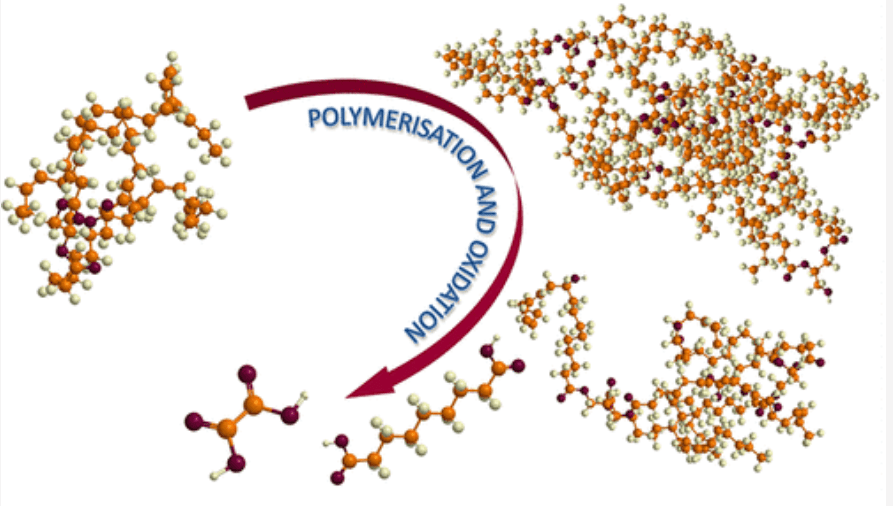
This Account reviews the relationships between the degradation phenomena associated with modern oil paintings and the chemical composition of the oil binder and proposes a molecular model for the development of water sensitivity and other noted degradation phenomena. It is suggested that water sensitivity (and possibly other degradation phenomena) is a consequence of processes that take place upon curing, and in particular to the rate of formation and decomposition of alkoxyl and peroxyl radicals. These reactions are strongly dependent on the type of oil present, the ambient environmental conditions, and the chemical and physical nature of the pigments and additives present in the paint formulation. When the curing environment is oxidizing, the chemistry of peroxyl radicals dominates the reaction pathways, and oxidative decomposition of the paint film overwhelms cross-linking reactions.
일본의 제약회사 중 하나인 Chugai Pharmaceutical Co. Ltd. (中外製薬株式会社)는 2002년부터 Roche의 계열사로 되어 있는 회사로 신약개발을 하는 회사입니다. Chugai가 최근 mRNA Display Platform을 통해서 Macrocyclic Peptides 를 통한 신약개발을 중점적으로 하고 있는데 그에 대해 얘기를 하려고 합니다.
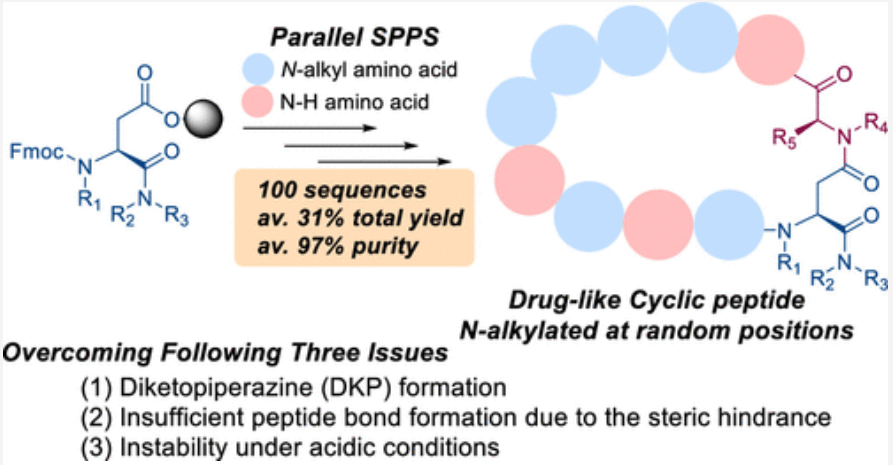
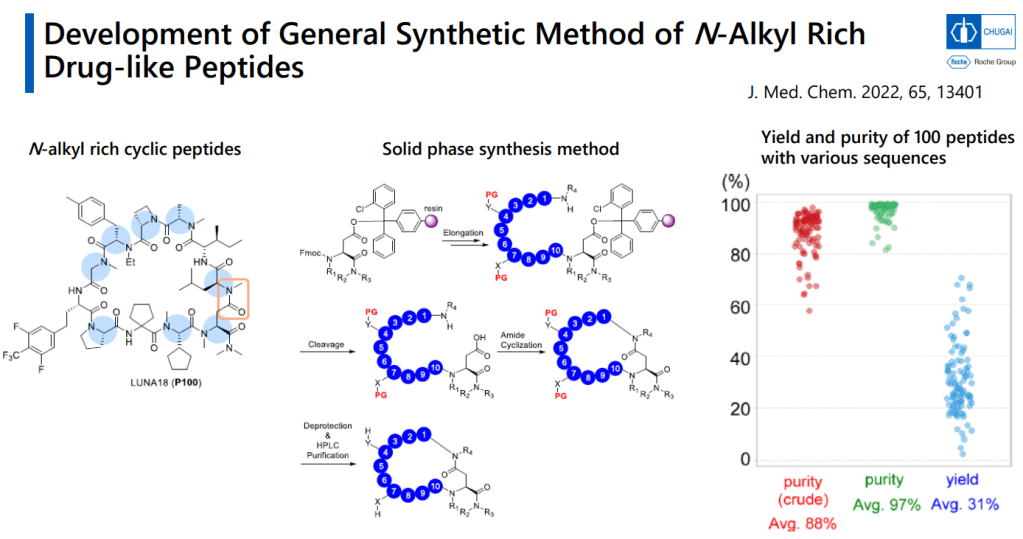
We report a versatile and durable method for synthesizing highly N-alkylated drug-like cyclic peptides. This is the first reported method for synthesizing such peptides in parallel with a high success rate and acceptable purity that does not require optimizations for a particular sequence. We set up each reaction condition by overcoming the following issues: (1) diketopiperazine (DKP) formation, (2) insufficient peptide bond formation due to the steric hindrance of the N-alkylated amino acid, and (3) instability of highly N-alkylated peptides under acidic conditions. Using this newly established method, we successfully synthesized thousands of cyclic peptides to explore the scope of this modality in drug discovery. We here demonstrate the syntheses of a hundred representative examples, including our first clinical N-alkyl-rich cyclic peptide (LUNA18) that inhibits an intracellular tough target (RAS), in 31% total yield and 97% purity on average after 23 or 24 reaction steps.
최근에 Journal of American Chemical Society에 LUNA18의 신약개발에 대한 논문을 게재했습니다.
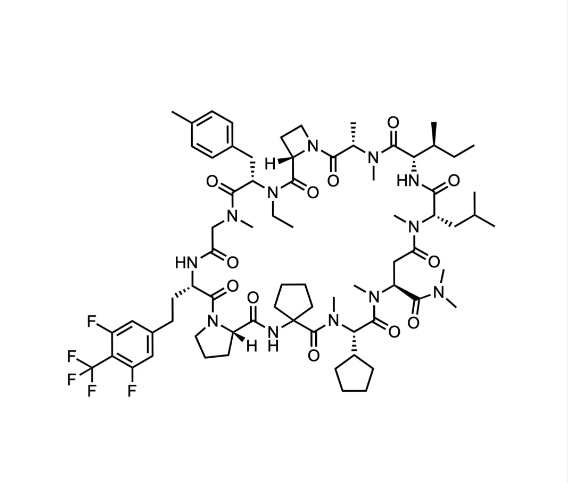
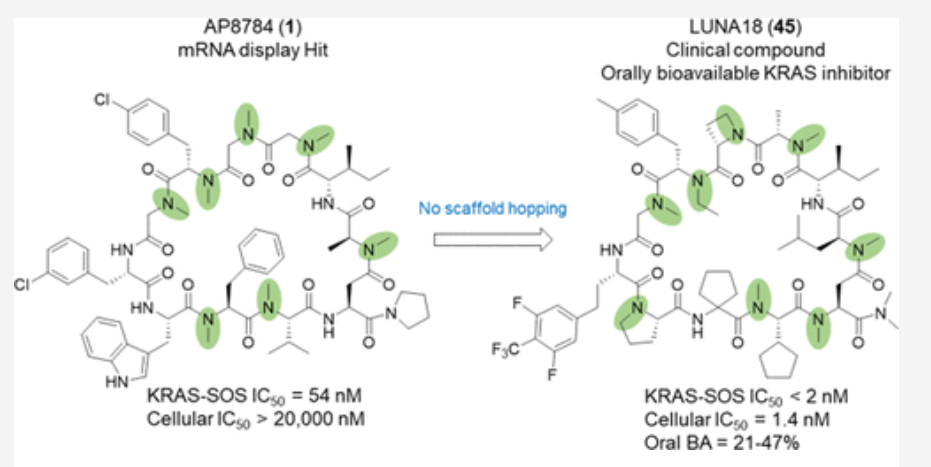
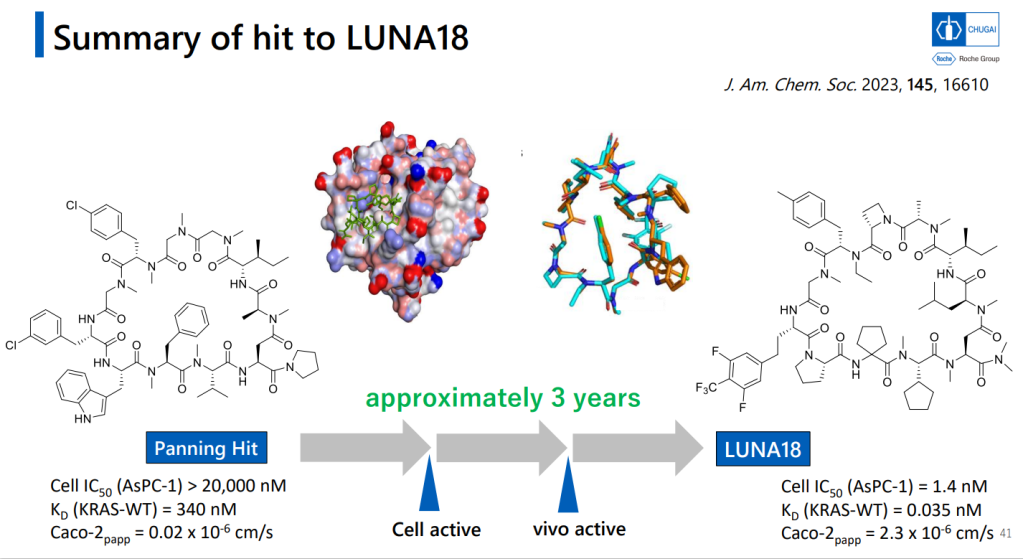
Cyclic peptides as a therapeutic modality are attracting a lot of attention due to their potential for oral absorption and accessibility to intracellular tough targets. Here, starting with a drug-like hit discovered using an mRNA display library, we describe a chemical optimization that led to the orally available clinical compound known as LUNA18, an 11-mer cyclic peptide inhibitor for the intracellular tough target RAS. The key findings are as follows: (i) two peptide side chains were identified that each increase RAS affinity over 10-fold; (ii) physico-chemical properties (PCP) including Clog P can be adjusted by side-chain modification to increase membrane permeability; (iii) restriction of cyclic peptide conformation works effectively to adjust PCP and improve bio-activity; (iv) cellular efficacy was observed in peptides with a permeability of around 0.4 × 10⁻⁶ cm/s or more in a Caco-2 permeability assay; and (v) while keeping the cyclic peptide’s main-chain conformation, we found one example where the RAS protein structure was changed dramatically through induced-fit to our peptide side chain. This study demonstrates how the chemical optimization of bio-active peptides can be achieved without scaffold hopping, much like the processes for small molecule drug discovery that are guided by Lipinski’s rule of five. Our approach provides a versatile new strategy for generating peptide drugs starting from drug-like hits.
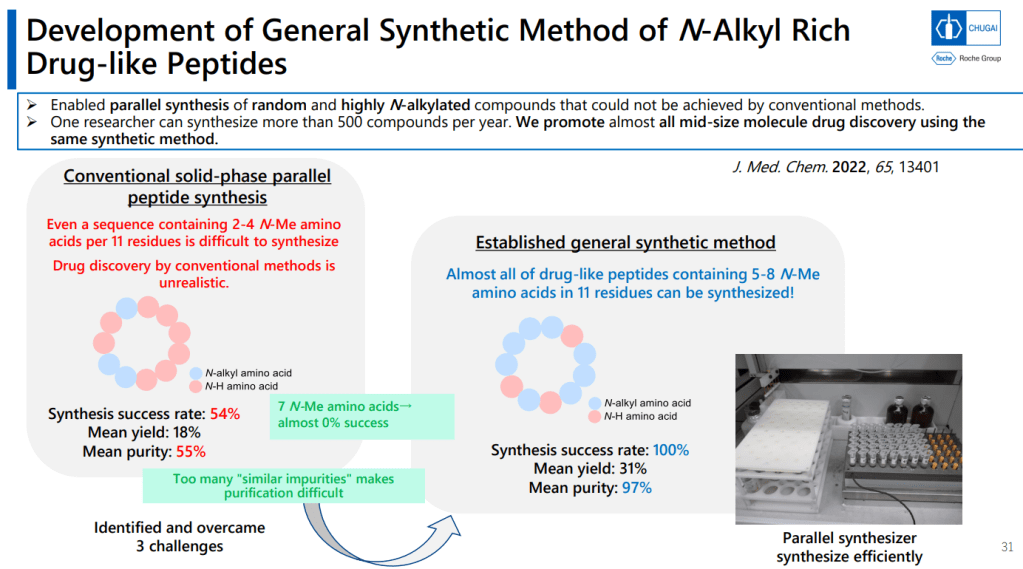
Journal of Medicinal Chemistry 2022년 논문에서 N-alkyl Rich Drug-like peptide synthesis를 개발해서 한 연구원 당 1년에 500개의 Peptides를 만들 수 있도록 했습니다.
Solid-phase synthesizer로 만드는 방법입니다. Cyclization을 먼저 한 이후에 Protecting group deprotection을 합니다.
최근에 Chugai R&D Day에서 발표한 자료에도 LUNA18에 대한 내용이 있습니다.
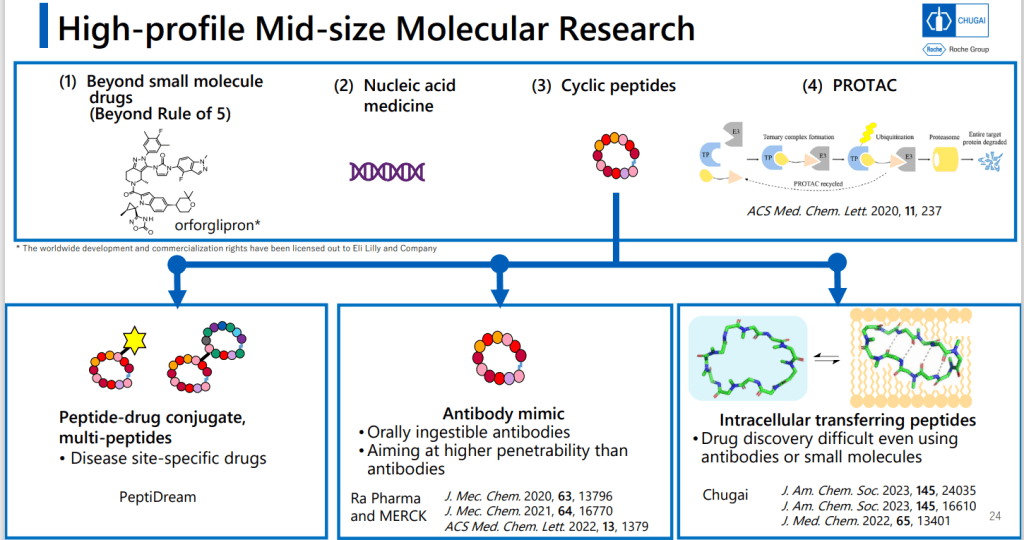
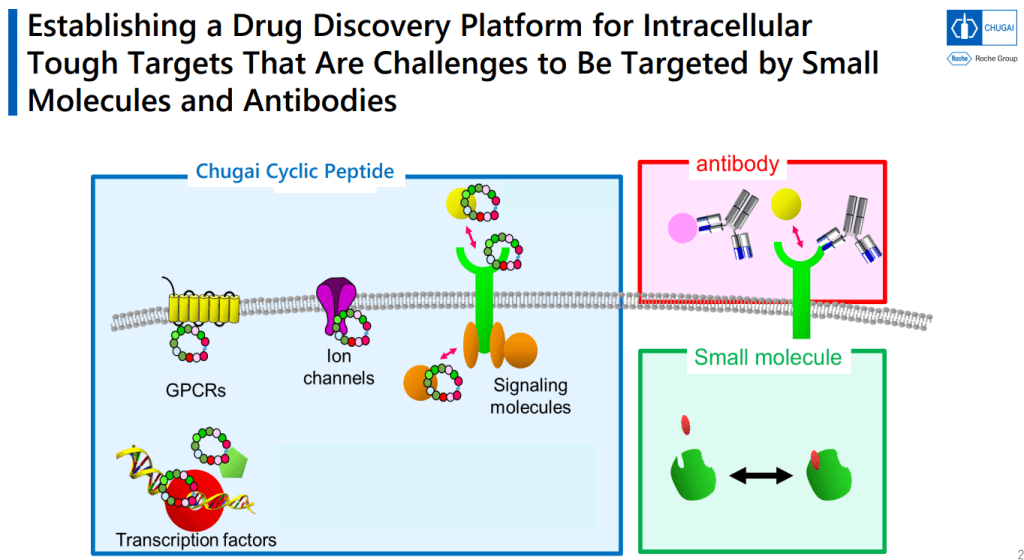
Chugai 제약은 Small molecule과 Antibody 신약개발은 오랜 기간 내공이 있는데 최근에 “intracellular Transferring Peptides” 분야에 Positioning을 한다는 전략을 수행하는 중에 있습니다.
개념도를 보면 Antibody는 Membrane Receptor에 결합하는 방법이고 Small molecule의 특성을 가지면서 Antibody와 같은 선택성을 갖는 Mid-size molecule을 발견하는 것이 목표라는 것입니다.
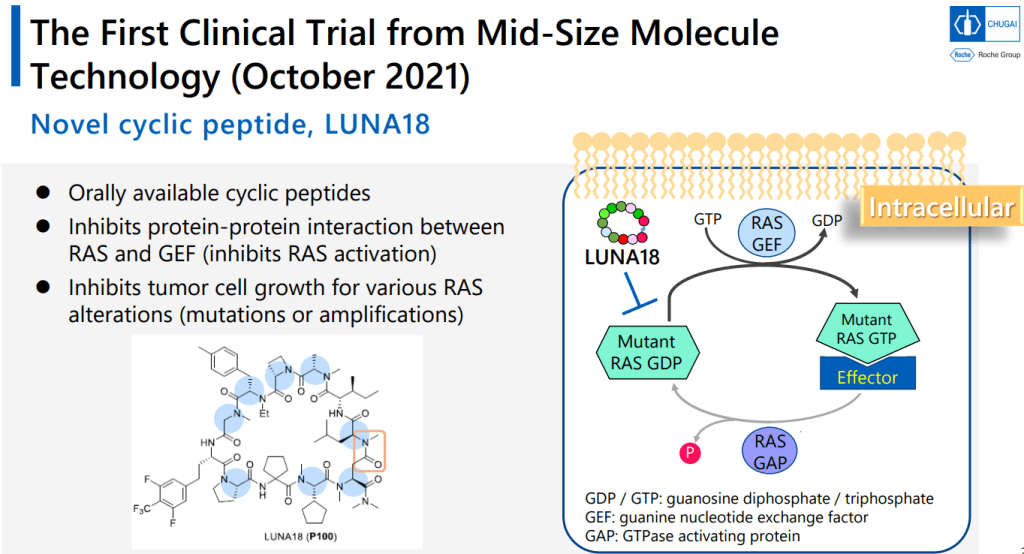
Mid-Size Molecule 중 처음으로 임상에 진입한 물질이 LUNA18입니다. pan-mutant RAS Inhibitor로 개발을 한 것입니다.
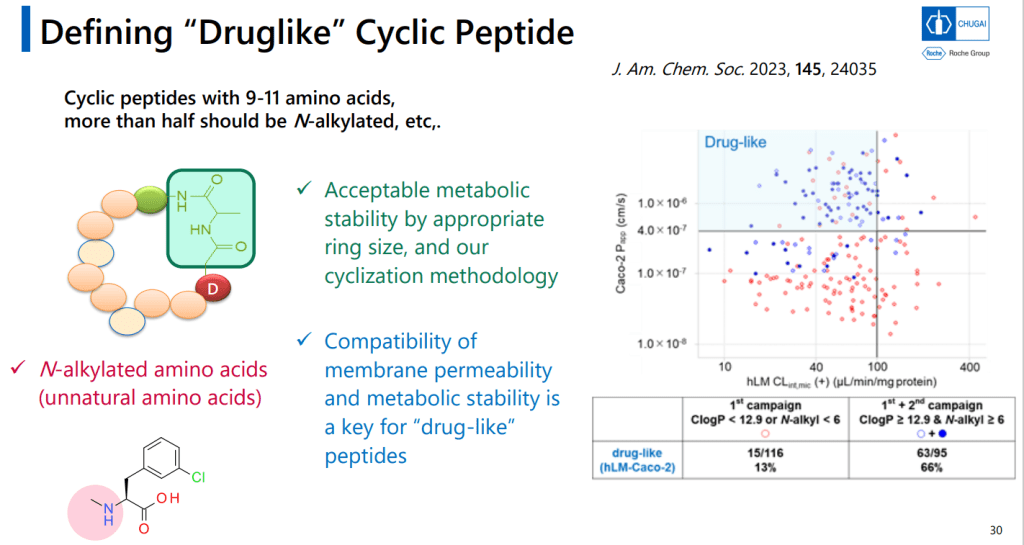
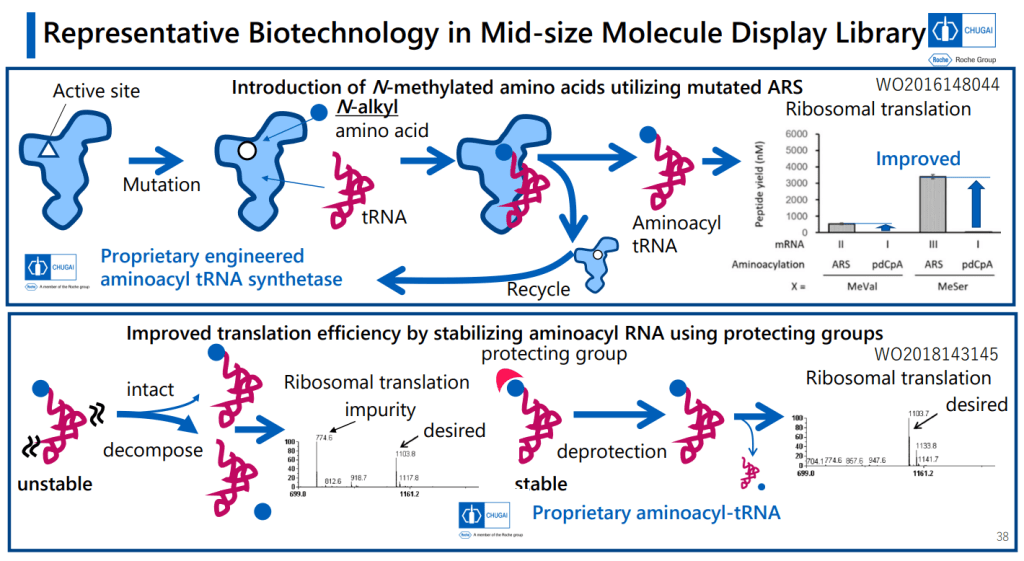
9-11-mer Macrocyclic Peptides가 Druglike한 Metabolical Stability를 위해서는 반 이상이 N-alkylated 되어야 한다는 것이 중요한 핵심 중 하나입니다.
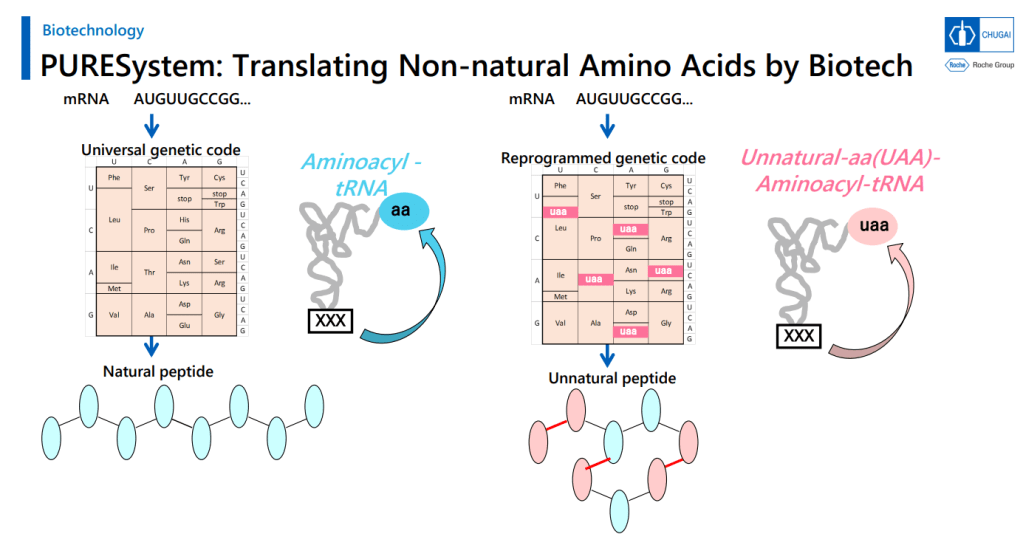
PURESystem으로 Unnatural Macrocyclic Peptides를 만들 수 있는 mRNA Display Platform을 이룰 수 있었다고 발표했습니다.
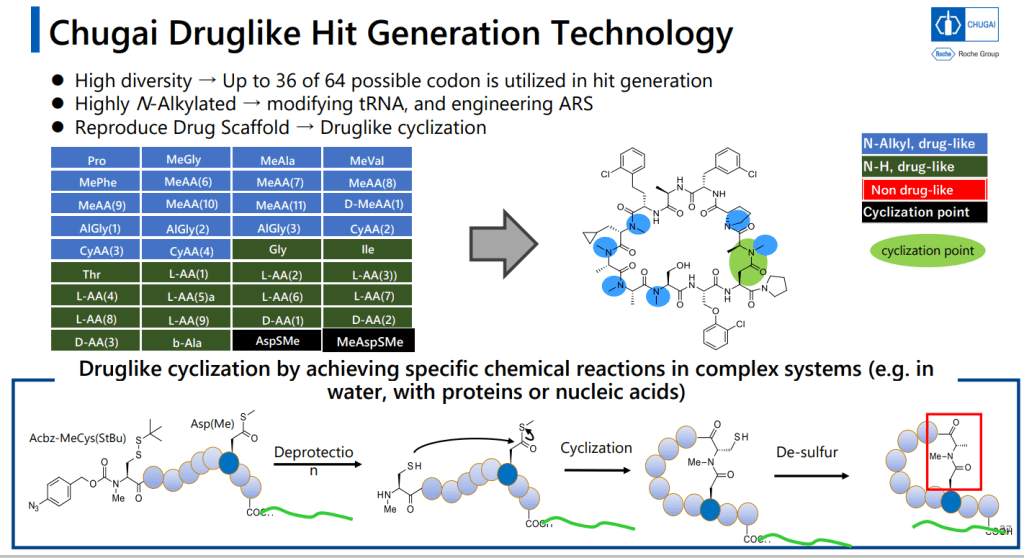
PURESystem에서 Cyclization Method가 Key Reaction이고 Cyclization 이후에 Desulfurization을 합니다.
그리고 PeptiDream의 FIT (Flexizyme-mediated Flexible In Vitro Translation)이 N-alkyl amino acid를 받아들일 수 있도록 하기 위해 변형을 주었습니다.
이렇게 다양한 Platform Technology를 이용했을 경우에 Hit Identification부터 Lead Optimization까지 약 3년의 시간이 걸렸습니다. 역시 Lead Optimization이 시간이 많이 걸립니다. Cell-based system에서 active molecule을 찾은 후 DMPK를 위한 Lead optimization을 나누고 있습니다.
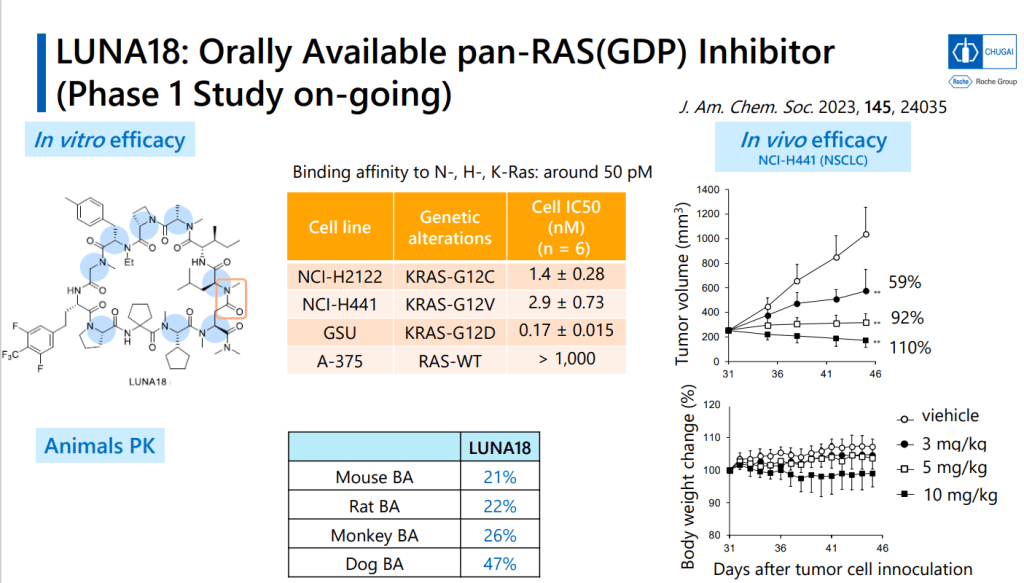
이러한 노력의 결과로 얻어진 LUNA18은 KRAS-G12C, KRAS-G12D, KRAS-G12V mutants에 모두 active하지만 KRAS-WT에서는 전혀 효과가 없기 때문에 정상세포에는 독성이 적고 Oncology KRAS mutants에만 듣는 Precision Oncology Medicine으로 될 가능성이 높은 약물입니다. In vivo efficacy도 dose에 따라 암세포가 줄어드는 것을 확인했고 체중은 대신 일정하게 유지가 되었습니다.
2023년 12월에 발표한 Chugai R&D Meeting Presentation은 아래에 링크합니다.
Novartis의 신약개발 Director이면서 Science에서 “In the Pipeline”이라는 블로그를 쓰는 Derek Lowe가 최근에 Chugai가 개발한 LUNA18 (pan-KRAS Inhibitor)에 대해 글을 쓴 것이 있습니다. Derek의 관점은 Chugai 연구팀이 N-alkyl amino acid를 이미 mRNA Display와 Solid-phase synthesizer에 도입을 해서 5번만의 In vitro selection만으로 180 nM active molecule을 찾았다는 점을 아주 높이 평가하고 있습니다. (Big Pharma Library Screening으로도 이런 것은 얻을 수 없다는 것을 강조하면서).
Chugai Pharmaceutical 연구팀이 Cell-Permeable Orally Active Macrocyclic Peptides를 위한 Druglike Platform을 한층 Upgrade한 것은 확실한 것 같습니다. 이 논문을 본 다른 연구팀들이 또한번 업그레이드 시키겠죠. 이 분야의 발전이 큰 기대가 됩니다.
I’ve been meaning to blog about this paper from a large team at Chugai, looking at ways to make rather large cyclic peptide structures that can also still be drugs. The whole “peptides as drugs” topic has been a perennial here on the blog, and by that I mean “going back to 2002“, with updates along the way. Here’s a recent review on the subject (and there are plenty more out there!)
The reasons it’s such a focus in drug discovery come from both ends of the topic. On the one hand, an awful lot of protein functions in the cell are mediated by, well, other proteins, or peptide pieces thereof. Protein-protein interactions (PPIs) are so ubiquitous, and the proteome that we have have is so tuned up for them, that a great many of our small-molecule drugs are actually fitting into binding sites that are normally part of some protein-binding event. (There are of course binding sites that are evolved for small molecules, such as with the amine GPCRs, and drug discovery efforts have naturally pounded away at those over the years, fear not).
But at the same time that there are a lot of protein-protein sites to exploit, actually getting down to expoiting them is difficult if you try to do it with an actual peptide, as opposed to some small molecule that ends up acting as a peptidomimetic instead. That’s because proteins of all sorts are constantly being recycled and remodeled in living cells. There are all varieties of saw blades spinning constantly in the biochemical environment, protease and peptidase enzymes that are ready to start slicing proteins up into smaller pieces. Our endogenous proteins are adapted to this, generally by being compartmentalized away from things that would chew them up and by not displaying easily-cleaved sequences to the enzymes they’re most likely to encounter. Instead, these protein-processing events are managed in a vast and intricate landscape, with a good example being the coagulation cascade.
Even getting to the stage where all these enzymes can take a whack at your peptide drug is not so easy, thanks to the way the digestive system is set up. We do not schlork up proteins as whole species when we eat them – instead, everything gets broken down thoroughly by digestive enzyme into individual amino acids, dipeptides, and tripeptides. Those are the species that are actually absorbed, and our innards are very good at ripping a huge variety of proteins into such sawdust. Which is what will happen to your drug candidate unless you take great care to avoid it.
There are more strategies than I can count for trying to fix these problems, and they have been refined and extended for decades now in drug discovery. N-methylation, reverse-chirality residues, beta-amino acids, “retro-inverso” chains, cyclic peptides of many kinds from simple rings to complex knots. . .those are some of the classics, and that’s just the start of the topic. The Chugai paper linked above is a contribution to this field, and a key step they’re taking is to start with the right sort of screening library – one that’s already most of the way to drug-likeness.
That means (they say) cyclic peptides, in roughly the 11-amino-acid size range, with more lipophilic side chains than usual, and a prominent amount of N-alkylation already built in. They’re taking their cues from cyclosporine, which is a notably effective compound with far better membrane penetration and pharmacokinetic behavior than one might have predicted. (Medicinal chemists have been mining the behaviors of such naturally-occurring macrocycles for a long time now!) The hope is that good hits from such a collection can be optimized without doing too much violence to the overall conformation of the ring and its physiochemical properties. Indeed, checking a library of 8-to-12-amino-acid membered ring cyclic peptide compounds showed that the 11-AA-membered ones had notably better stability to metabolic enzymes, and this is surely No Accident, evolutionarily. Similarly, it looks like you would want at least 6 alkylated residues (cyclosporine has 7) and a cLogP of at least 12.9 (cyclosporine’s is 14.4). Note: that is indeed quite greasy. And you’d like to have no more than 3 hydroxyl groups and a maximum of one ionizable group hanging off the structures as well (and probably none at all). Dosing a range of such compounds in mice confirmed that they were on the right track.
That’s a good amount of work already, but the group went on to work up an expression system to turn out large numbers of variants in this area for a screening library. That’s a challenge, because you’re asking the cellular protein synthesis machinery to do a number of things it normally doesn’t: you need it to handle plenty of N-alkylated amino acids, and what’s worse, you need to have some of these show up one after the other in the chains. You need to make macrocycles without relying on labile groups like disulfides or thioesters. And you need to strip out all the amino acids with ionizable side chains. That involves lot of engineering at the aminoacyl tRNA stage, but they managed to get an mRNA display system working with these modifications (using the PURE system, which is done outside of living cells and is thus more amenable to all the necessary changes).
mRNA display can give you a tremendous number of possible products, and indeed, the team ran an experiment that was capable of generating different peptides in the ten-to-the-tenth (tens of billions) range, and deploying this in a search for a KRAS ligand. That’s just the sort of audacious target this sort of technology should be applied to! Recent years have seen progress in targeting mutant forms of that cancer protein, but wild-type KRAS is a major challenge for anyone. After five rounds of enrichment, panning away all the less-potent candidates, they narrowed down on a particular cyclic peptide that had 180 nM activity in blocking the interaction of KRAS and its partner SOS1. You can screen the entire collections of big pharma companies and not find a compound like that (they have!)
The authors present an X-ray structure of the complex, which generally ends all arguments, and go on to show optimization of the compound into an even better drug candidate. As they’d hoped, this was achieved without any major alterations to the core structure, but rather relying on changing some side-chain properties. No polar (hydrogen-bonding) groups were used in that process – as they say, “it was not necessary to use polar functional groups to optimize the structure of a hit that does not rely on polar functional groups for binding to its target protein.”
These extra hydrophobic groups actually improved the properties of the new compound, which had sub-nanomolar activity for the KRAS-SOS1 interaction. It has good PK properties (47% oral bioavailability in dogs, for example), and is now in Phase I human trials. Which is pretty damned impressive (here’s another detailed look at the compound’s development). Chugai’s dedication to getting this macrocyclic-peptide-screening platform off the ground is impressive as well, and I very much look forward to seeing what else that can make out of it. And what the rest of the industry can make of the ideas behind it!
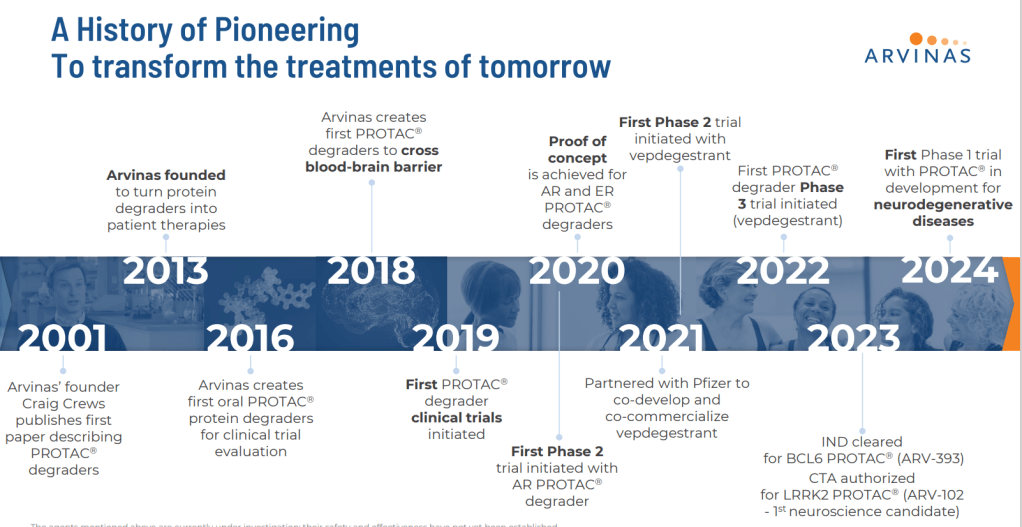
Arvinas는 Yale University Craig M. Crews 교수 연구실에서 개발한 PROTAC을 상용화 하기 위해 2013년에 New Haven, Connecticut에서 설립한 회사로 지금까지 10년간 Merck, Roche/Genentech, Pfizer, Bayer 등과 공동연구계약 및 VC/Crossover Funding을 통해서 성장한 회사이다.
PROTAC은 2001년에 PNAS 논문에 처음으로 보고한 이래 2024년 현재 Small molecule 분야 중에서 가장 핫한 분야 중 하나이고 Arvinas가 가장 앞선 회사로 평가한다.
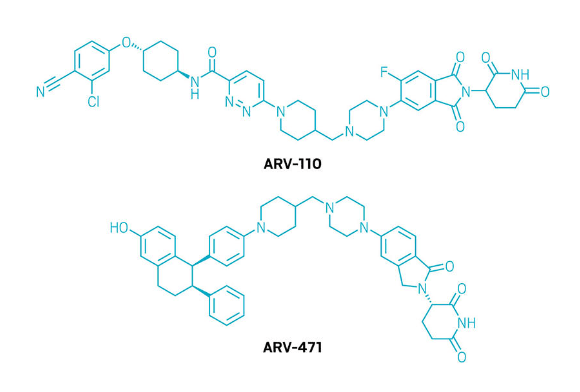
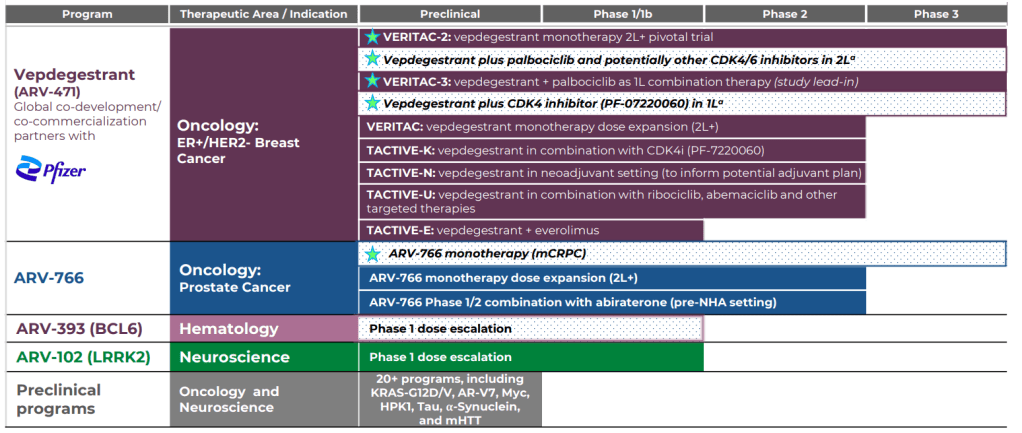
Pfizer와 공동개발 중인 Vepdegestrant (ARV-471)가 현재 ER+/HER2- Breast cancer 치료제로서 임상3상이 진행 중이다.
Arvinas는 2013년에 창업한 이래 PROTAC 분야의 역사를 쓰고 있는 중이다. Arvinas의 신약개발이 잘 순항해서 Oncology 분야 뿐 아니라 Neurology 분야 등에서도 환자들의 치료에 쓰일 수 있기를 기대한다.
Arvinas Inc., a biotechnology company creating a new class of drugs based on protein degradation, today announced it has raised $15 million in Series A funds and $4.25 million in financial support, $1 million of which is in the form of equity, from the Connecticut Department of Economic and Community Development and Connecticut Innovations. Investors in the Series A round include co-leads Canaan Partners and 5AMVentures along with Connecticut Innovations and Elm Street Ventures. The funds will support the development of the company’s technology which has primary application in multiple oncology indications and potential in inflammatory, autoimmune and rare diseases.
Arvinas is built on the research of Craig Crews, PhD, Lewis B. Cullman Professor of Molecular, Cellular and Developmental Biology and professor of Chemistry and Pharmacology at Yale University. The new drugs being developed by Arvinas would induce a cell’s own protein-degradation capabilities to bind to a particular protein and “label” it for degradation, thus removing a protein from the system entirely. This contrasts to a more traditional drug development approach that inhibits proteins. However, only 25 percent of the body’s 20,000 proteins can be inhibited. Proteins that cannot be inhibited can potentially be degraded using Arvinas’ approach, radically expanding the number of disease-causing proteins that can become the targets of new drugs.
“Degrading proteins as opposed to inhibiting them has potential to open up areas of drug development that were previously closed because of the technical limitations of protein inhibition,” said Tim Shannon, MD, CEO of Arvinas and Venture Partner at Canaan Partners. “The Arvinas technology platform represents an entirely new class of drugs bringing an innovative approach to treating disease.“
“In addition to the fact that a very large portion of proteins cannot be blocked, inhibition is not permanent, so a disease-causing protein can eventually become active again after treatment with a drug,” said Dr. Crews. “To effectively stop cancer, a drug-binding site must be inhibited 95 percent of the time, which is currently difficult to achieve. If a protein is removed entirely, that should overcome this problem.”
Arvinas also announced the formation of a Scientific Advisory Board (SAB), which will help guide the development of its novel approach. Members of the SAB include Daniel D. Von Hoff, MD, Chief, distinguished professor and director of clinical translational research division at the Translational Genomics Research Institute and Chief Scientific Officer for US Oncology; Mark Murcko, PhD, former Chief Technology Officer at Vertex Pharmaceuticals; Thomas J. Lynch, Jr., MD, Director of the Yale Cancer Center and Physician-in-chief at Smilow Cancer Hospital at Yale-New Haven; Richard Ulevitch, Venture Partner 5AM and Professor and Chairman Emeritus of the Department of Immunology at The Scripps Research Institute, La Jolla, California; and Peter Farina, PhD, executive in residence at Canaan Partners and former Senior Vice-President of Development at Boehringer Ingelheim.
Arvinas worked with the Yale Office of Cooperative Research (OCR) to secure intellectual property protection for the technology.
“The Arvinas team has lined up an impressive slate of supporters of the unique technology that comes out of Yale University,” noted John Soderstrom, PhD, Managing Director of the Office of Cooperative Research at Yale and a member of Arvinas’ Board of Directors. “Degrading proteins that are driving disease has the potential to bring about drastic changes in drug development, and we anticipate significant interest from pharmaceutical companies.”
Joining Dr. Shannon and Dr. Soderstrom on the Arvinas Board of Directors will be Kush Parmar, MD PhD and a Principal at 5AM Ventures and Brad Margus, the CEO of Genome Bridge and former CEO of Envoy Therapeutics.
Under the deal, Merck will hand the New Haven, CT, biotech an up-front payment and research funding, promising more cash tied to development milestones and setting Arvinas’ maximum haul at $434 million if everything works out over the multiyear agreement. In exchange, Merck will get a chance to use the company’s proteolysis-targeting chimera, or PROTAC, technology, which creates small-molecule treatments that mark proteins for degradation.
Based on work out of Craig Crews’ Yale University labs, PROTAC treatments are designed to get rid of unwanted proteins by triggering a cell’s natural clean-up system, marking targets for removal and letting the body’s degradation mechanisms do the rest. Arvinas, launched in 2013, has largely focused its internal efforts on oncology, but the Merck deal spans multiple disease targets in an undisclosed array of therapeutic areas, the company said.
The majority of protein-targeting therapeutics in the market or in development work by either inhibiting or boosting their targets, whether via antibodies or small-molecule chemicals. But only about a quarter of the body’s roughly 20,000 proteins can be effectively drugged that way, Arvinas CEO Manny Litchman said. By attacking proteins from within their home cells, however, Arvinas’ technology can potentially open up new avenues of therapeutic development, he said, exposing some long-untouchable targets to guided degradation.
That potential was a major selling point for Merck, Litchman said, and now it’s on Arvinas to demonstrate that its technology can come through in the proof-of-concept stage, rolling into what the CEO expects to be “a true collaboration.” Merck has the option to expand the deal to include more disease targets, triggering an undisclosed payment, and Litchman believes the agreement could create a model for Arvinas’ future partnerships.
The company has held onto a host of internal programs also based on PROTAC, including a lead oncology asset Arvinas expects to get into the clinic in the middle of next year. The biotech will likely look to ink one or two more deals along the way, Litchman said, at once cautious not to spread itself too thin and optimistic that Merck’s big co-sign will help it bring would-be partners to the table.
“I think when a company like Merck has done deep due diligence, surveyed the competitive landscape and selected Arvinas as the best platform out there for protein degradation, that’s a signal for others we’ve talked to that perhaps a deeper dive may be warranted,” Litchman said.
Arvinas got rolling with a $15 million A round from Canaan Partners and 5AM Ventures, licensing Crews’ technology and assembling a team of investigators to push it forward. The biotech quickly moved to establish preclinical proof of concept for PROTAC, recruiting Litchman, an 18-year Novartis ($NVS) veteran, in time to start showing off the platform at January’s JP Morgan Healthcare conference.
Fresh on the heels of its inclusion in this year’s Fierce 15, New Haven, CT-based Arvinas has pulled the wraps off a new partnership with Genentech that comes with a $300 million package of milestones.
Genentech, a marquee player in the cancer drug R&D arena, is turning to Arvinas for protein degradation platform tech that was originally developed by Yale’s Craig Crews. Arvinas was launched in 2013 and later signed a development pact with Merck.
The biotech has been focused on moving beyond protein inhibition–a big field in biotech–and into protein degradation, targeting particular proteins for destruction in search of a more permanent solution to a wide array of disease triggers.
“There’s huge interest in this area,” company Chairman Tim Shannon told FierceBiotech earlier in the week. “We’ve had a lot of outreach and we expect more.”
There’s no news on exactly what Genentech is targeting initially, but the biotech arm of Roche has rights to expand the collaboration to include more targets. The upfront in the deal was not disclosed.
“Genentech is very interested in protein degradation as a therapeutic approach to address difficult disease targets,” noted Genentech’s chief deal maker, James Sabry. “Arvinas’s PROTAC technology offers an exciting opportunity to harness the body’s own system to degrade pathogenic proteins.“
The company has been funded by Canaan Partners, 5AM Ventures, Connecticut Innovations and Elm Street Ventures.
Arvinas LLC (“Arvinas”), a private biotechnology company creating a new class of drugs based on targeted protein degradation, today announced that it has closed a Series B financing round of $41.6 million.
All of the initial Series A investors, including the two lead Series A investors, Canaan Partners and 5AM Ventures, participated in this new round. Three additional leading private venture investment firms joined the round: RA Capital Management, OrbiMed, and New Leaf Venture Partners.
“We were impressed by the scientific accomplishments of Arvinas in their first two years and enthusiastic about the robust pipeline entering clinical trials in 2016,” said Andrew Levin, M.D., Ph.D., of RA Capital Management, which led the Series B financing. “Arvinas has a truly unique platform degrading targets of interest, within and outside of oncology, and they are using this powerful platform to rapidly build a portfolio of bifunctional small molecules. We are pleased to join them in this endeavor.”
Arvinas is harnessing the body’s own natural degradation and removal system to target and degrade pathogenic proteins by using bifunctional small molecules, Proteolysis-Targeting Chimeras (PROTACs). PROTACs recruit an E3 ubiquitin ligase to a specific targeted protein, labeling that protein for elimination by the ubiquitin/proteasome system.
In addition to financial resources, this round of investment brings impressive experience and intellectual resources to Arvinas in the form of three new members of the Board of Directors:
Andrew Levin, M.D., Ph.D., Managing Director, RA Capital Management
Stephen Squinto, Ph.D., Venture Partner, OrbiMed
Liam Ratcliffe, M.D., Ph.D., Managing Director, New Leaf Venture Partners
Manuel Litchman, M.D., President and Chief Executive Officer of Arvinas commented: “We are gratified by the continued support of our Series A investors and thrilled with our new investment partners. Andrew, Steve, and Liam bring remarkable track records of accomplishment and knowledge to our Board; they, along with the resources of their firms, will help us succeed as we move forward. The Series B gives us the capital we need to advance an aggressive pipeline of targeted degraders into the clinic and to continue to strengthen our unique platform.”
“This has been a great month for Arvinas, announcing a collaboration with Genentech, being named a ‘Fierce 15’ biotech, and now completing an investment round with several marquee firms,” said Tim Shannon, M.D., Chairman of the Board of Arvinas and General Partner, Canaan Partners.
Two months after expanding a licensing deal with Genentech, privately-held Arvinas LLC struck another lucrative deal with a major pharmaceutical company. Connecticut-based Arvinas inked a deal with Pfizer worth up to $830 million to develop small molecules that can degrade proteins.
Pfizer will use Arvinas’ proprietary PROTAC (PROteolysis TArgeting Chimeras) Platform to create small molecule therapeutics aimed at degrading disease-causing cellular proteins. The two companies provided some brief outlines of the deal but much of the meat was left undisclosed. For example, the companies did not disclose what targets the therapy would take aim at, nor did they disclose how many targets are included in the deal. What is known is that Arvinas will drive discovery efforts and Pfizer will be accountable for the therapy when it reaches the clinical stage and any potential commercialization.
John Ludwig, head of medicinal sciences at Pfizer, said the company has “considerable interest” in protein degradation. He did say the global pharma company would determine the applicability of Arvinas’ PROTAC Platform across multiple therapeutic areas, but did not name them.
Unlike inhibitors, Arvinas’ PROTAC Platform is designed to remove target proteins. The company believes this offers several advantages over traditional small cell inhibitors. By removing target proteins directly rather than simply inhibiting them, PROTACs can provide multiple advantages over small molecule inhibitors which can require high systemic exposure to achieve sufficient inhibition, often resulting in toxic side effects and eventual drug resistance, according to Arvinas data. With multiple protein targets, Arvinas’ PROTAC platform has demonstrated that a transient binding event at a range of binding sites and affinities can translate into very potent degradation of the target protein, the company said. The platform was developed in the Yale University laboratory of Craig Crews, who is the company’s founder and chief scientific advisor.
“As a global industry leader, Pfizer is uniquely positioned to partner with us as we exploit the potential of PROTACs in multiple disease areas,” Arvinas Chief Executive Officer John Houston said in a statement.
Under terms of the deal, Arvinas could receive up to $830 million when all payments, including upfront monies and milestones are factored into the equation. However how those payments will be broken down were not disclosed. If any of the therapies make it to commercialization, Arvinas may be entitled to receive tiered royalties based off any sales.
“This marks another key milestone as we continue to expand the use of our targeted protein degradation platform and advance Arvinas’ first candidates into the clinic.”
Like Pfizer, Genentech has also been tight-lipped about its collaboration with Arvinas. The Bay Area company has not disclosed disease targets it is working on with Arvinas.
In its own pipeline development, Arvinas is focused on targeting both prostate and breast cancer with a focus on androgen and estrogen receptor degradation. In November, the company named its first clinical candidate ARV-110, designed to target and induce degradation of the androgen receptor protein. In December, the company announced its second candidate for clinical development, ARV-378. The candidate is an orally bioavailable small molecule PROTAC designed to target and induce the degradation of the estrogen receptor (ER) protein, which plays a prominent role in the development of ER positive breast cancer.
Former Fierce 15 winner Arvinas, which has caught the attention of Pfizer and Roche over the last year, has got off a strong $55 million series C as it looks to bring its cancer candidates into the clinic.
The New Haven, Conn.-based biotech is, like a number of startups, working on protein degradation, with early-stage efforts focused on oral programs in castration-resistant prostate cancer and the estrogen receptor for ER-positive positive breast cancer.
Both are preclinical, but with this cash boost the biotech is plotting clinical studies in the fourth quarter.
The $55 million round was led by new investor Nextech Invest, with help from Deerfield Management, Hillhouse Capital and Sirona Capital, as well as original investors Canaan Partners, 5AM Ventures, RA Capital Management, OrbiMed and New Leaf Venture Partners.
The cash will also be used to “advance the company’s early-stage oncology pipeline, CNS pipeline and efforts on undruggable targets,” according to a statement.
This comes after a good 12 months for the biotech: In January, ahead of the J.P. Morgan biotech event, Arvinas penned a deal potentially worth $830 million, and more besides, with Big Pharma Pfizer in a pact that centers on the discovery and development of PROTACs (proteolysis targeting chimeras) across multiple disease areas.
And a few months before, in November last year, it inked a deal with Genentech, which saw Roche’s biologics arm double the size of its original alliance with Arvinas, moving the potential value of the pact up above $650 million.
The expansion of the deal allows Genentech to use Arvinas’ protein degradation technology against additional disease targets, also using PROTACs.
This comes as protein degradation is becoming a bigger deal among several smaller biotechs. Fellow Fierce 15 company C4 Therapeutics is tackling protein degradation using small-molecule binders, dubbed degronimids, that can target, destroy and clear proteins through the ubiquitin/proteasome system.
“This past year has been exciting for us with two clinical candidate nominations, the expansion of our collaboration with Genentech and the announcement of a new collaboration with Pfizer,” said John Houston, Ph.D., president and CEO of Arvinas, in the announcement.
“With this additional financial support from existing and new investors who believe in our innovative protein degradation platform, we will continue executing on our strategy of progressing our lead programs to the clinic, expanding the use of the platform outside of oncology, and tackling undruggable targets,” Houston said.
Arvinas has been on a roll this year, starting with a Pfizer R&D deal worth potentially $830 million and bagging a $55 million series C in April to push its cancer drugs into the clinic. Now, the Yale spinout has filed to raise up to $100 million in its IPO, which will get its lead assets through the IND stage and into phase 1.
The New Haven, Connecticut-based biotech is working on an androgen receptor program, ARV-110, in castration-resistant prostate cancer, and an estrogen receptor program, ARV-471, in metastatic ER-positive breast cancer. The bulk of the IPO funds is earmarked to carry these assets into the clinic; what’s left will go toward expanding its protein degradation platform and conducting preclinical work for its earlier-stage programs, Arvinas said in its S-1, filed Thursday.
Arvinas drew its series C round from the likes of Deerfield, Sirona Capital, Canaan Partners and OrbiMed, saying at the time that it aimed to start clinical studies in the fourth quarter.
Arvinas’ drugs are based on its PROTACs (proteolysis targeting chimeras) platform, which grew out of the work of Craig Crews’ lab at Yale University. PROTACs work by activating the body’s protein disposal system. They recruit an enzyme to tag target proteins for ubiquitination and degradation.
Ubiquitination is a process whereby a damaged or unneeded protein is tagged with the protein ubiquitin and then sent to a protein complex called a proteasome, where it is degraded. The hope is that by degrading proteins instead of just blocking them, Arvinas’ drugs will surmount challenges that come with small-molecule protein inhibitors.
The company’s pipeline focuses on cancer, but its multiyear deal with Pfizer centers on developing PROTACs for multiple disease areas. The pair didn’t disclose which indications they would be chasing, but protein degradation could have applications in central nervous system disorders and rare diseases.
Arvinas isn’t alone in the growing protein degradation field. Its Fierce 15 peer, C4 Therapeutics, is using small-molecule binders called degronimids that can target, destroy and clear proteins through the ubiquitin/proteasome system. And Cedilla Therapeutics, which launched in April, is studying protein stability in search of points in the protein degradation process it can intervene.
“Where we are looking is in pivotal events upstream of this machinery that govern the transition [of proteins] between an operational state to a susceptible state,” said Cedilla’s Chief Scientific Officer Brian Jones at the company’s launch.
Bayer and Arvinas, Inc. (Nasdaq: ARVN), a biopharmaceutical company creating a new class of therapies to degrade disease-causing proteins, today announced an agreement to leverage Arvinas’ novel PROTAC® protein degrader technology to develop new human therapeutics for patients with cardiovascular, oncological, and gynecological diseases. In addition, Bayer and Arvinas will jointly launch a new company to leverage Arvinas’ PROTAC® technology for agricultural applications. The overall series of arrangements includes over $110 million in upfront cash and committed funding for the human disease collaboration, the agricultural joint venture, and a direct equity investment by Bayer in Arvinas.
The multi-faceted deal will extend the application of targeted protein degradation to new therapeutic areas and outside human biology. It leverages Arvinas’ expertise in targeted protein degradation, a field the company has led since its founding in 2013, and Bayer’s decades of experience in developing both human therapies and innovative, sustainable agricultural technologies.
“As the first company founded around targeted protein degradation, we’ve been excited about the potential to improve the lives of patients since our inception,” said John Houston, Ph.D., President and Chief Executive Officer of Arvinas. “However, we’ve known that the potential of this technology could be broader than drug development. Through these transactions, not only do we plan to expand our reach into new therapeutic areas, but we and Bayer expect to be the first to apply this approach to agriculture, working to safely and efficiently feed the world’s growing population. It’s a natural next step in our commitment to improving human health.”
“With our unique position as a leading company in both Crop Science and Pharmaceuticals, we see a great opportunity to partner with the pioneer of the PROTAC® technology, to advance this technology as quickly as possible to deliver future solutions for sustainable agriculture and innovative medicines for patients,” said Kemal Malik, Bayer Board member for Innovation.
Pharmaceutical Collaboration and Equity Investment Bayer and Arvinas will collaborate to seek to develop a series of novel product candidates for diseases with serious unmet need. Arvinas will receive an upfront payment and committed R&D funding, as well as a direct equity investment in Arvinas. Combined, these committed funds exceed $60 million. Bayer will own the rights to novel lead structures generated in the collaboration. As programs progress through research, development, and commercialization, Arvinas is also eligible to receive development milestones of over $685 million and commercial royalties ranging from the mid-single digits to the low double-digits.
Agricultural Joint Venture In launching a joint venture (JV), Bayer and Arvinas are investing in one of the greatest challenges facing the world: feeding the growing global population. PROTAC® targeted protein degraders have the potential to address resistance mechanisms in plants to existing agricultural solutions, with solutions to control weeds, insects, and disease by leveraging the selectivity and other features of PROTAC® protein degraders. The JV will be committed to leveraging Arvinas’ PROTAC® protein degrader technology to create innovative, safe, and sustainable agricultural products. The JV will be supported by intellectual property and over $55 million in committed funding from Bayer, and by technology and intellectual property from Arvinas. Bayer and Arvinas will equally share governance and equity ownership of the JV.
Arvinas, Inc. (Nasdaq: ARVN), a biotechnology company creating a new class of drugs based on targeted protein degradation, today announced the pricing of an underwritten public offering of 4,545,455 shares of its common stock at a price of $22.00 per share, before underwriting discounts and commissions. In addition, Arvinas has granted the underwriters an option for a period of 30 days to purchase up to an additional 681,818 shares of common stock at the public offering price, less the underwriting discounts and commissions. All of the shares are being offered by Arvinas.
New immuno-oncology startup Arcus Biosciences has scored an impressive $120 million funding in two financing rounds all while in stealth mode.
FierceBiotech reported that Arcus will use its funding to push two of its immuno-oncology treatments into early clinical testing over the next year. The company, which has remained in stealth mode, is initially developing drug therapies for small molecules along the ATP-adenosine pathway; CD73, CD39 and the A2A receptor, FierceBiotech reported. Its lead candidate is expected to be from the CD73 program, with the A2A program slated to be the second candidate in the clinic.
Rosen told FierceBiotech that he is building Arcus as a long-term company and not something that will generate interest only to be snapped up by a larger company. “This is the last field in which I will probably ever work,” he said, according to FierceBiotech.
Investors supporting the company include Novartis , Celgene, The Column Group and Foresite Capital, according to the company’s website. Since its founding, Arcus has been on a bit of a hiring spree. The company initially planned to have 38 employees on staff by year’s end, but that has since been scaled up to about 60 employees, FierceBiotech reported.
Taiho is paying $35 million over three years for access to Arcus’ portfolio of cancer immunotherapy candidates, which the company said is poised to deliver four clinical projects before the end of 2018. Another $275 million is on offer for each drug program that Taiho chooses to license over the five years of the option agreement, which covers Japan and some other Asian markets but excludes China.
Taiho is a major seller of cancer drugs with chemotherapy products like Abraxane, Yondelis and Zolinza, and is already an investor in Arcus via its venture capital unit, which took part in the Californian biotech’s $70 million series B round last year.
Immuno-oncology startup Arcus Bioscience has got off another impressive round of funding, just over a year after emerging from stealth with $120 million. This latest round, worth a major $107 million, was led by Google’s venture arm, with a host of new backers getting into the action, including Wellington Management Company LLP, EcoR1 Capital, BVF Partners L.P., Decheng Capital, Hillhouse, Aisling Capital and entities affiliated with Leerink Partners, as well as existing investors The Column Group, Foresite Capital, Invus Opportunities, DROIA, Celgene and Taiho Ventures.
They’re all buying into Arcus’ science in small molecule and antibody immuno-oncology approaches, with the aim of building its own internal combinations, rather than using the “throw and see what sticks” approach that many marketed I-O drugs are doing with nearly every cancer drug in the pipeline available.
This cash boost, bringing its total since its founding in 2015 to nearly a quarter of a billion, will help toward a series of clinical programs for AB928, a first-in-class dual adenosine receptor antagonist, and AB122, a PD-1 antibody.
Earlier this month, Arcus says it kick-started a phase 1 of AB928, with a midstage test, in combo with AB122 in cancer patients, slated for the first half of next year; it also started an early-stage trial of AB122 in cancer patients in Australia, with data set to be posted in 2018. The biotech added that it “plans to evaluate AB122 in combination with its other product candidates, in addition to AB928, in the future.”
The $107 million also allows it to push on with “at least two” additional experimental meds into clinical development, including AB680, a first-in-class small molecule CD73 inhibitor, as well as AB154, a TIGIT antibody. This also comes a few months after Arcus bulked up its cancer immunotherapy pipeline with a $816 million deal—including $18.5 million upfront—to license an anti-PD-1 antibody developed at China’s Gloria Pharma and WuXi Biologics.
Under the terms of agreement, Gilead is paying Arcus $375 million on closing, with $175 of it upfront and $200 million in equity. Arcus is eligible for up to $1.225 billion in opt-in and milestone payments based on its current clinical product candidates. In addition, Gilead gets access to the company’s current and future investigational immuno-oncology products. That includes rights to zimberelimab and the right to opt-in to all other current Arcus clinical candidates, including AB154, AB928 and AB680. The opt-in fees range from $200 million to $275 million per program.
If Gilead chooses to opt-in to the AB154 program, Arcus is eligible for up to $500 million in possible future U.S. regulatory approval milestones. The $200 million equity investment comes to $33.54 per share. Gilead will gain the option to acquire additional shares of Arcus up to a maximum of 35% of outstanding voting stock over the course of the next five years, at a 20% premium at the time of the option, or, if greater, at the initial purchase price per share.
The deal with Arcus would greatly expand the company’s presence in oncology and immuno-oncology. Arcus recently began Phase II clinical trials of AB154 in non-small cell lung cancer, with the idea that the anti-TIGIT therapy would improve the efficacy of anti-PD-1 checkpoint inhibitors, in this case, Arcus’s zimberelimab. TIGIT is another immune checkpoint.
Arcus has a clinical-stage pipeline of four immuno-oncology programs. Its oncology discovery pipeline has six preclinical compounds. The company currently is running 10 clinical trials, including the Phase III NSCLC trial.
In addition to the upfront, equity and milestone payments, Arcus is eligible for tiered royalties ranging from high-teens to low twenties on any eventual commercial products. Gilead picked up exclusive rights to commercialize any optioned programs outside of the U.S., although they will be subject to rights of any of Arcus’s existing partners. Gilead is also providing up to $400 million in ongoing research and development support over the length of the collaboration. In addition, Gilead has the right to appoint two people to Arcus’s board of directors. Before rumors of the deal in April, Arcus had a market cap of $716 million. As news leaked, shares climbed as much as 54%.
One of the key aspects of that deal was magrolimab, a monoclonal antibody in clinical development for several cancers, including myelodysplastic syndrome (MDS), acute myeloid leukemia (AML) and diffuse large B-cell lymphoma (DLBCL).
Terry Rosen, chief executive officer of Arcus, stated, “We believe Gilead is an ideal partner for Arcus with its focus on thoughtful and purposeful science, vision to provide transformational therapies in the oncology setting and deeply experienced scientific leadership. At the same time, this partnership structure facilitates Arcus’s path to becoming an independent, fully integrated biopharmaceutical company.”
Gilead deal에 의한 $200 Million 지분투자를 포함해서 총 $302.5 Million 유상증자를 했습니다.
Arcus Biosciences, Inc. (NYSE:RCUS), an oncology-focused biopharmaceutical company working to create best-in-class cancer therapies, today announced that Gilead Sciences is increasing its ownership in Arcus to 19.5%, from approximately 13%, by purchasing 5,650,000 additional shares of Arcus’s common stock at a per share purchase price of $39.00. Proceeds of $220 million to support and accelerate Arcus’s comprehensive clinical development plans.
Gilead-Arcus 공동연구는 2020년에 시작한 이래 매우 성공적으로 진행되어 오고 있습니다. 이에 따라 Gilead는 $320 Million 추가 투자를 통해서 지분을 33%로 늘렸습니다. 이사회에 들어가는 Gilead member도 2명에서 3명으로 늘려서 Arcus Biosciences에 대한 경영권을 늘려 나가고 있습니다.
Gilead Sciences and Arcus Biosciences have amended their collaboration agreement, the companies announced Monday, with Gilead making an additional equity investment of $320 million and raising its ownership stake in Arcus to 33%.
Gilead’s separate equity investment of $320 million will be in Arcus common stock at $21 per share. The deal will also see Gilead Chief Commercial Officer Johanna Mercier join Arcus’ board, marking a third Gilead member. According to Monday’s announcement, the amendment to the companies’ partnership will include “governance enhancements” to help make “streamlined decision-making” as well.
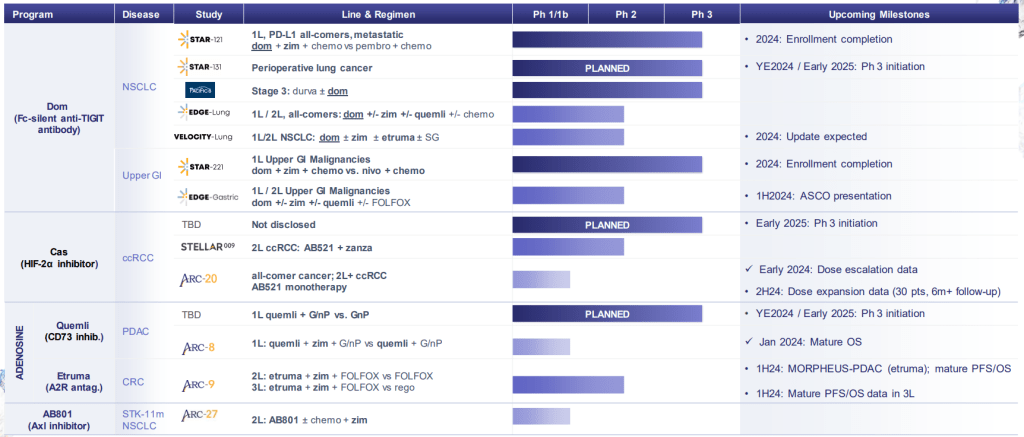
Under the agreement, Gilead and Arcus have reprioritized their joint domvanalimab development program, an anti-TIGIT antibody. They will focus on advancing and possibly accelerating Phase III studies of STAR-121, which investigates lung cancer treatment, and STAR-221 for gastrointestinal cancer.
Gilead and Arcus expect these programs to be fully enrolled by the end of 2024. Their prioritization focuses on domvanalimab-contaning regimen research, where they contend it may have a “significant impact” in combination with chemo treatment and where there is a high unmet need. The companies also plan to start the STAR-131 trial, a Phase III lung cancer study that combines domvanalimab and Arcus’ zimberelimab.
However, the updates include halting the Phase III ARC-10 study investigating domvanalimab and zimberelimab compared to a Keytruda monotherapy in PD-L1-high non-small cell lung cancer. The reason for the stop is to prioritize STAR-121 and STAR-221.
Arcus CEO Terry Rosen said the Gilead investment will give the biotech enough cash to last into 2027 and enable it to fund the Phase III study of the CD73 inhibitor quemliclustat in pancreatic cancer and the asset AB521 in kidney cancer. The quemliclustat trial will be run by Arcus independently as part of the new arrangement.
“Since the inception of our partnership with Gilead in 2020, the companies have moved increasingly closer in all aspects of our research and development efforts. This investment and prioritization enable both companies to leverage their respective strengths and focus on efficiently advancing novel combinations that can potentially change the landscape of cancer treatment,” Rosen said in a statement.
In November 2023, Arcus and Gilead reported positive results for the combination of domvanalimab, zimberelimab, and chemotherapy in treating upper gastrointestinal cancers, showing an overall response rate of 80% in patients with PD-L1-high tumors.
현재 Pipleline은 아래와 같습니다. 2024년 2월에 발표한 Corporate Presentation도 첨부합니다. Arcus Biosciences가 Clinical-Stage에서 Commercial-Stage Company로 성장하는 것은 시간 문제이지 않을까 싶습니다. 역시 경험많은 Terry Rosen과 Juan Jaen의 수십년간의 우정과 파트너쉽이 아름다운 결실로 맺어지길 바랍니다.
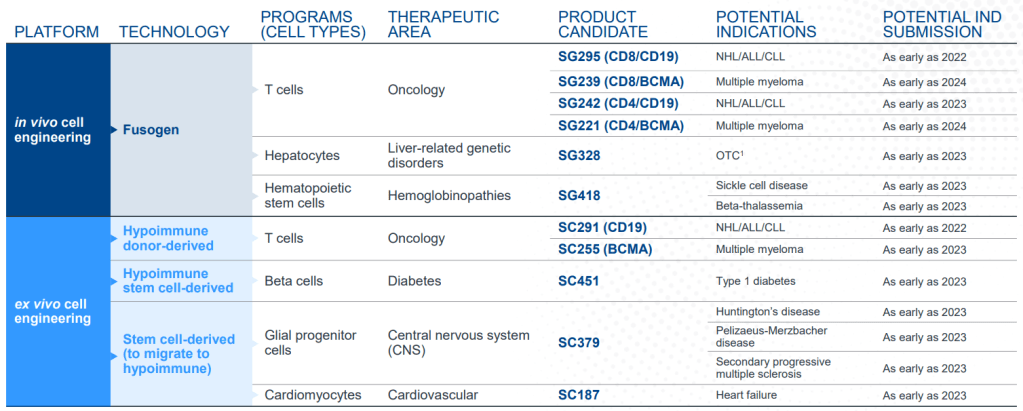
Sana Biotechnology가 2021년 2월에 Nasdaq IPO를 할 때 계획은 2022년에 Fusogen In Vivo Program인 SG295 (CD8/CD19)과 Ex Vivo Program인 SC291 (CD19)이 임상시험에 진입하는 것이었습니다. 하지만 계획과 달리 2022년말까지 한개도 임상시험에 진입하지 못하면서 결국 15% 구조조정을 하게 됩니다. 이 당시에 포기하는 프로그램은 Cardiomyocytes Ex Vivo Program인 SC187만 중단하는 것이었습니다.
Sana Biotechnology will cut its workforce by 15% and reprioritize its drug research in a company restructuring announced Wednesday. The Seattle-based biotechnology company, which is developing engineered cell therapies, is taking steps to extend its cash runway, including stopping further investment in a program using cardiac muscle cells to treat heart failure. The workforce reduction will trim its staff by about 75 employees, based on its Sept. 30 headcount of 494 full-time staff. With the layoffs, Sana joins a growing list of biotechs that have been forced to cut payroll this year.
Sana’s lead program, dubbed SC291, is a modified off-the-shelf cell therapy aimed at B cell cancers. The company expects to ask the Food and Drug Administration for permission to start clinical testing this year, with initial data expected in 2023. Sana is also planning to advance two other programs into trials next year, and another two in 2024.
With the restructuring, the company anticipates it will have enough cash to fund operations into 2025. Sana held $511 million in cash at the end of the third quarter. While that amount would be a comfortable sum for some companies, Sana spends heavily on research and development. R&D expenses totaled $76 million in the third quarter, and $222 million across the first nine months of the year.
구조조정 후 1년이 지난 이후에도 임상진입을 하지 못한 채 Preclinical-Stage에 머물게 되었고 유상증자를 할 수 있는 상황도 되지 못한 나머지 결국 Fusogen In Vivo Program 전체를 중단하면서 29% 인력구조조정을 단행하게 됩니다.
Plans to get in vivo and ex vivo therapies into humans as early as 2022 slipped, and Sana narrowed its focus and laid off 15% of its staff late last year.
Eleven months later, and weeks after confirming cuts “within a single area of research,” the biotech has revealed it is reducing its head count by 29%. Sana ended June with 424 full-time employees, suggesting the layoffs will affect more than 100 people.
The cuts come as the biotech narrows its focus again. Last year, Sana dropped a heart failure program but kept investing in ex vivo candidates targeting CD19, CD22 and BCMA, an in vivo CD19-targeted CAR-T and a stem-cell-derived pancreatic islet cell therapy for patients with Type 1 diabetes. Now, the biotech has abandoned plans to take its in vivo CAR-T candidate into the clinic.
Pulling back from in vivo delivery represents a major pivot from Sana’s early ambition. When the biotech went public, in vivo programs made up the top half of its pipeline and were scheduled to enter human testing around the same time as the ex vivo assets. Sana pitched in vivo delivery as a way to avoid the cost and complexity of ex vivo CAR-T production and eliminate the need for conditioning regimens.
Around 30 months later, Sana has abandoned plans to study its in vivo candidate in humans and has a pipeline led by an ex vivo, allogeneic CAR-T that requires patients to receive conditioning chemotherapy.
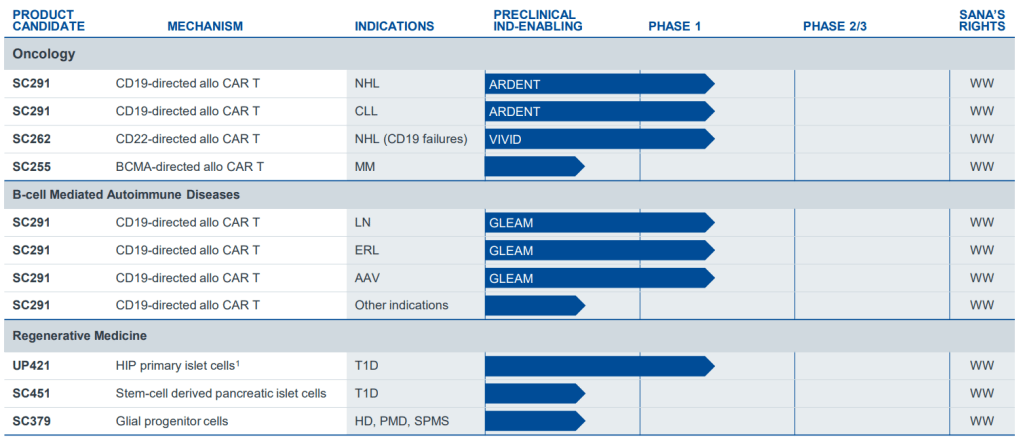
The biotech will continue “focused research” on its in vivo platform, but the priority is now getting a set of ex vivo assets to clinical data drops. Sana began a phase 1 trial of the CD19-directed CAR-T SC291 in B-cell malignancies in May and aims to start delivering data this year. Submissions to study SC291 in autoimmune disorders, islet cells in diabetes and a CD22 CAR-T in leukemias are planned for this year.
Sana’s submission schedule positions it to deliver clinical data on three candidates in multiple settings next year. The latest restructuring extended the biotech’s cash runway “further into 2025,” suggesting it has time to deliver data that could renew investor enthusiasm for its assets—or report underwhelming results that send it deeper into the mire.
Sana Biotechnology가 2021년 2월에 Nasdaq IPO할 당시에 제시한 파이프라인에서 Fusogen In Vivo Platform은 전체 파이프라인의 절반에 해당했을 뿐만 아니라 ex vivo program보다 앞에 내세워질 만큼 경영진의 피치에서 중요한 부분이었습니다.
하지만 2번째 구조조정을 마친 2024년 2월에 발표한 Corporate Presentation에서 Fusogen은 완전히 사라졌습니다.
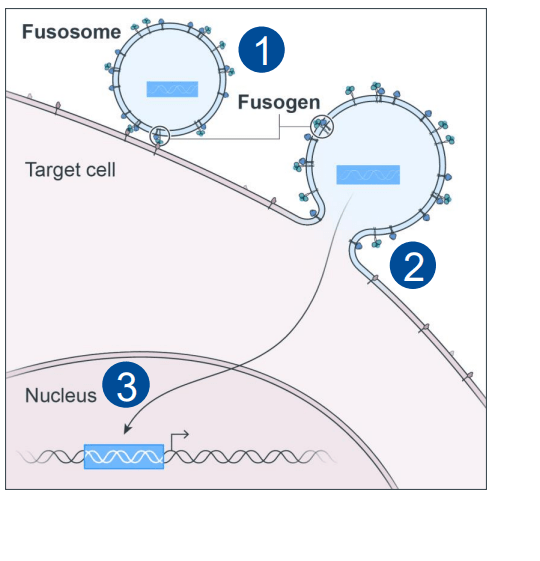
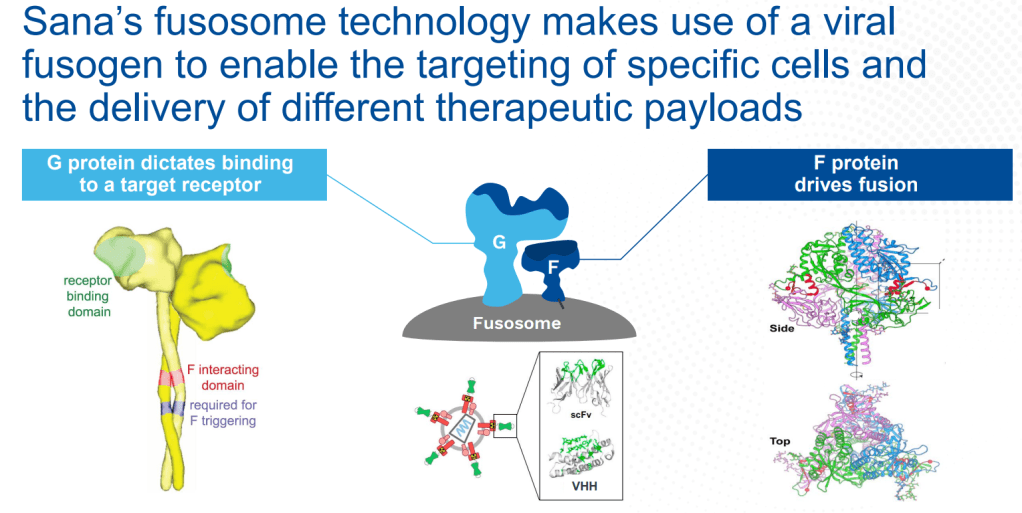
Fusogen Program이 중단된 배경이 Fusogen 자체의 Biology Risk나 Technology Risk 때문인지 여부는 아직 알려진 바가 없습니다. Fusogen에 대해 가장 최근에 발표한 자료는 2023년 12월에 있었던 ASH 학회에서 발표한 것입니다. Fusogen Technology는 G Protein과 F Protein을 통해서 Cell-Cell Fusion을 일으키는 메카니즘입니다.
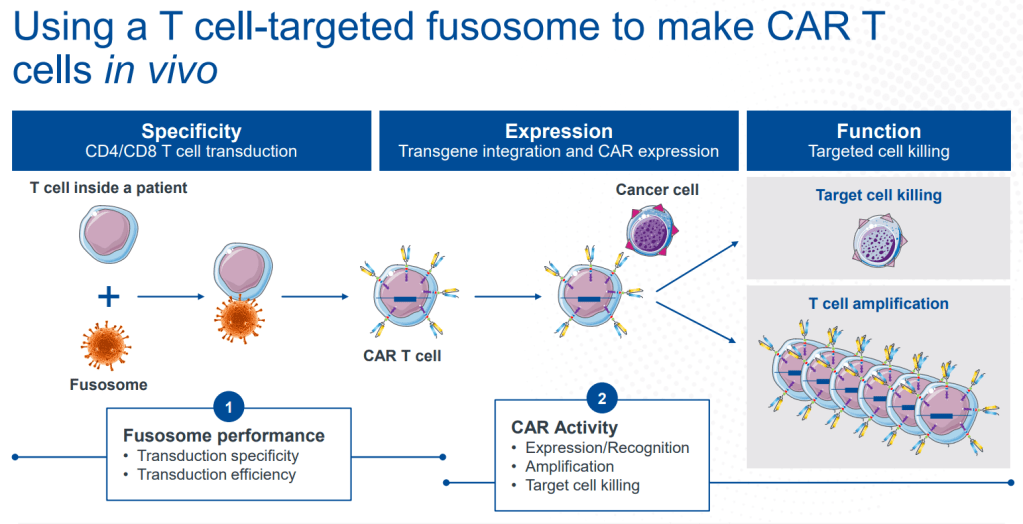
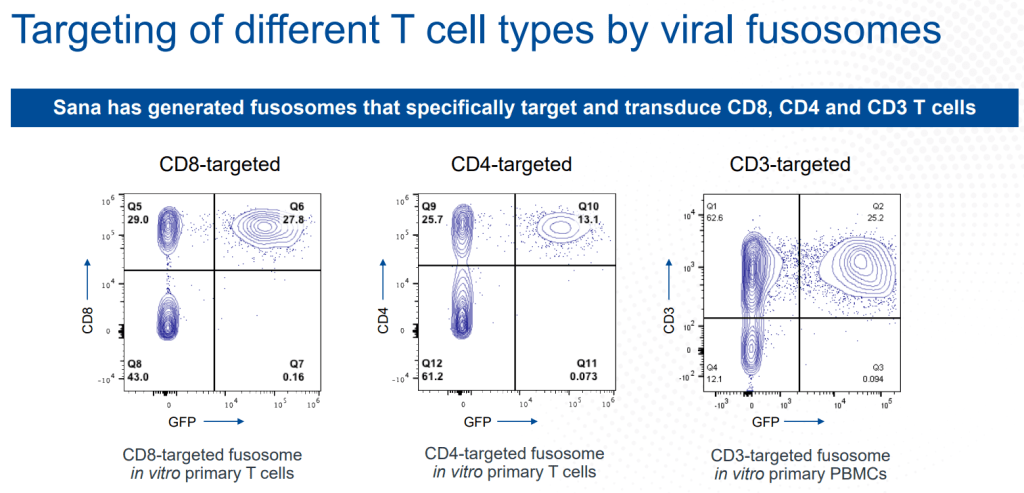
CD8, CD4, CD3 와 같은 T Cell Types에 Fusogen이 선택적으로 발현하는 것을 In Vitro primary T Cells에서 보고한 바 있습니다.
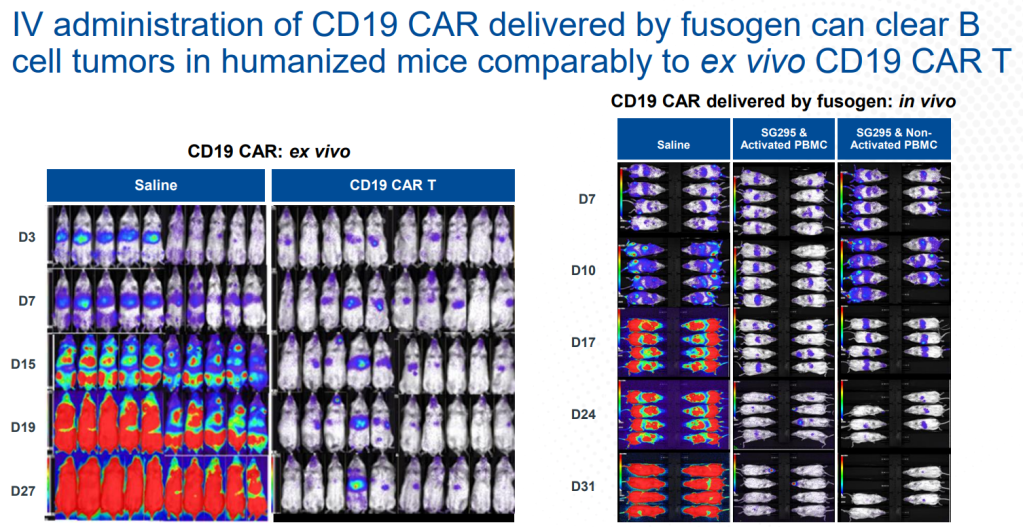
그리고 Humanized mouse model에서 ex Vivo CD19 CAR-T와 비교했을 때 Fusogen CD19 CAR-T가 B cell tumor를 사라지게 한 것이 확인된 바 있습니다. 이것이 Mouse PoC data였습니다.
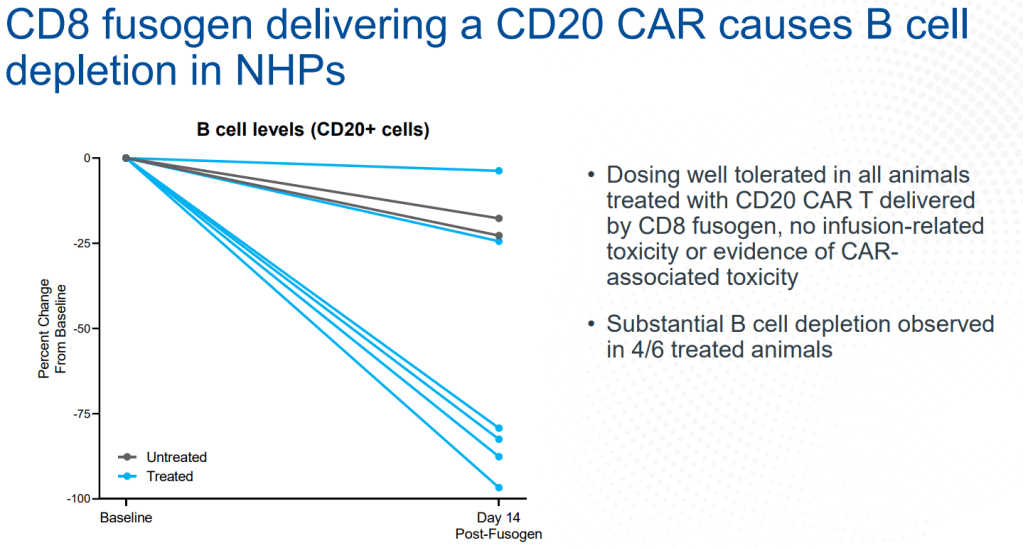
CD8/CD20 CAR-T를 Fusogen In Vivo Delivery 한 NHP 시험에서도 B cell depletion을 볼 수 있었습니다.
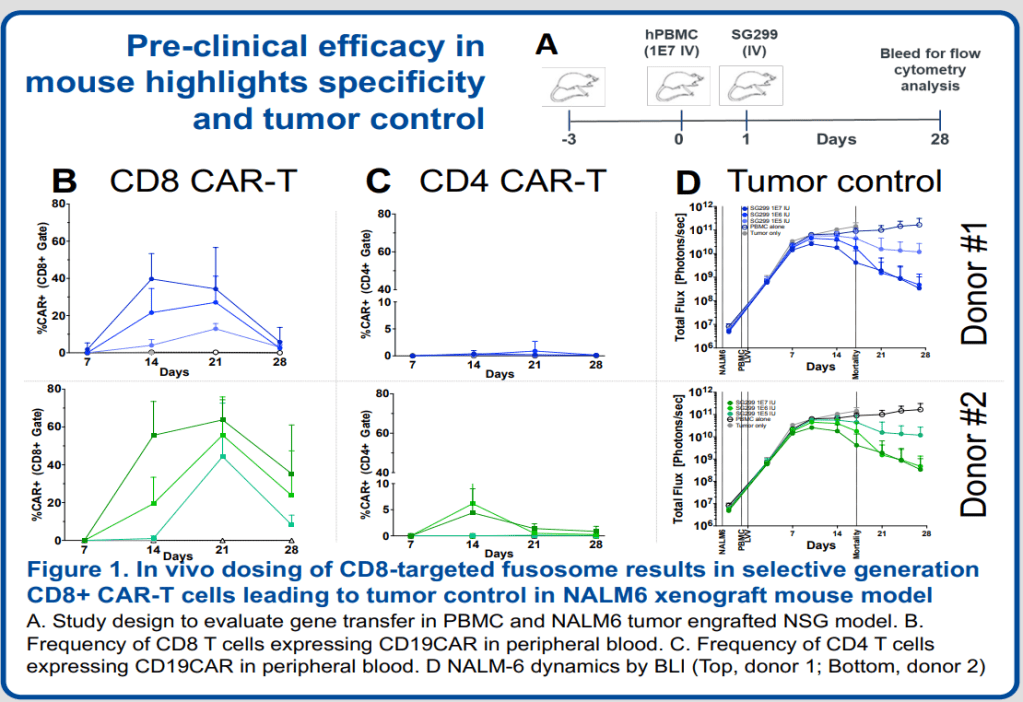
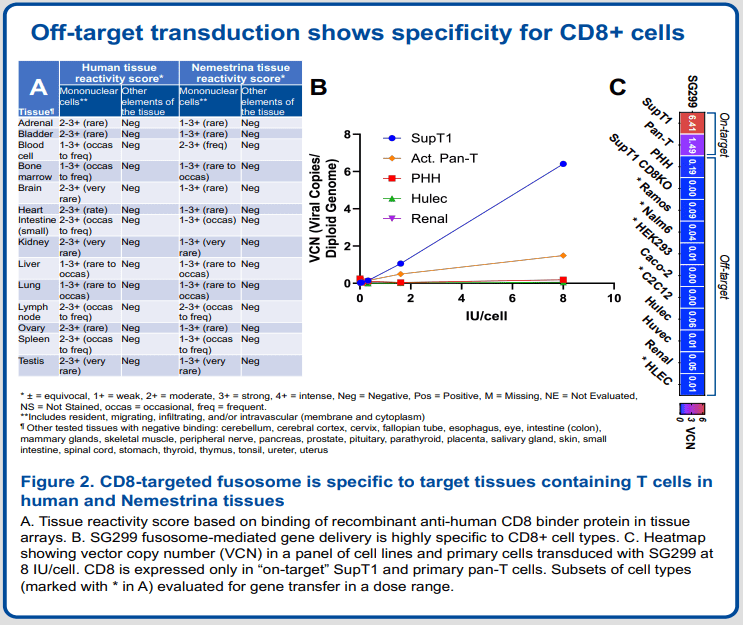
ASH 학회에서 발표한 자료에서는 먼저 NALM6 xenograft mouse model을 통해서 CD8 CAR-T와 CD4 CAR-T를 비교했을 때 CD8만 선택적으로 항암작용이 있는 것을 볼 수 있었고요.
Fusogen이 T Cell에 거의 선택적으로 전달되는 것을 볼 수 있었습니다.
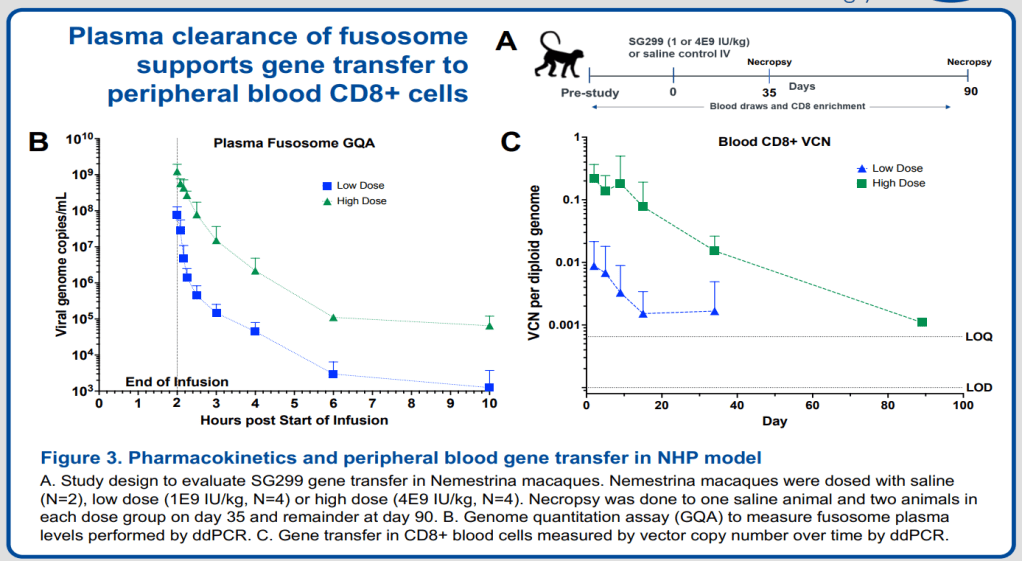
NHP PK를 봤을 때 plasma에서는 High dose의 경우 Fusogen이 10시간 이상 잔류하였고 CD8+는 100일 (3개월)까지도 유지되었습니다.
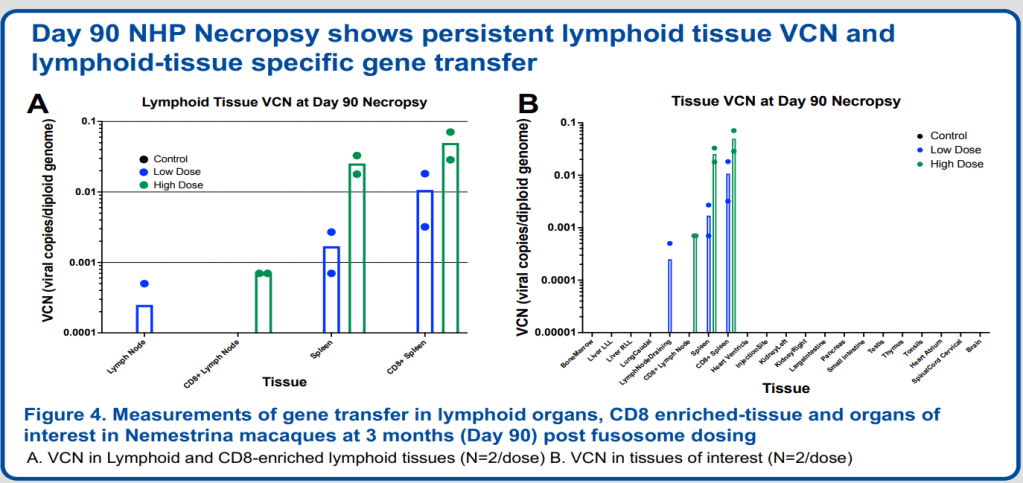
90일 이후에 NHP Necropsy를 했을 때 Gene Transfer가 Lymphoid-tissue specific하게 이루어졌슴을 알 수 있습니다.
약효나 PK 측면에서는 발표한 데이타를 참고해서 보았을 때 특이한 문제는 발견이 되지 않았는데요. 대신 독성에 대한 데이타는 발표한 것이 없어서 혹시 세포독성의 문제가 있지 않은지 의심해 볼 수는 있는 것 같습니다.
같은해 상반기에 있었던 AACR에서는 Fusogen Pipeline에 대해 4개의 Poster를 발표했었습니다.
Preclinical data demonstrate that CD19 CAR T cells generated in vivo by transduction of T cells with CD8-targeted fusosomes have anti-tumor efficacy comparable to ex vivo generated CAR T cells.
Improvements in fusosome manufacturing increased SG299 potency at least 50x in preclinical models.
IND for SG299 for Phase 1 study in hematologic malignancies expected in 2023.
Fusogen은 AAV와 LNP의 장점을 결합한 개념의 Next-Gen Gene Delivery System으로 주목을 받았고 Sana Biotechnology의 Stealth-mode 회사였던 Cobalt에서도 오랜 기간 연구를 했는데요 많이 아쉽게 되었습니다. Entos Pharmaceuticals도 다른 바이러스 G, F를 이용하지만 Fusogen을 Delivery System으로 쓰고 있어서 이 결과도 함께 보면 좋을 것 같습니다.
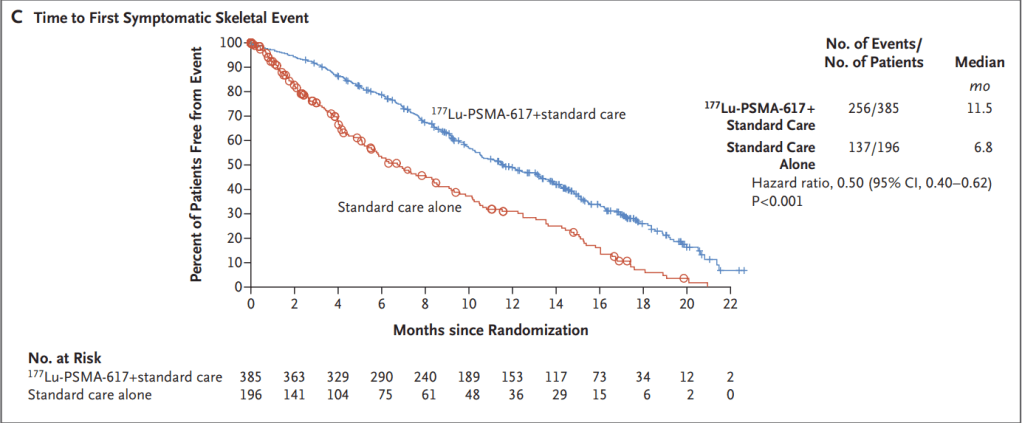
방사선치료는 항암치료의 중요한 부분이지만 비선택적인 문제로 독성 부분이 문제가 되어왔습니다 하지만 최근에 개발된 Radiopharmaceuticals는 특정 암세포 표면항원에 표적함으로써 Precision Radiopharmaceuticals이라는 새로운 분야가 열리고 있습니다. 이를 선도하는 치료제로서 Novartis가 FDA 승인을 받은 Pluvicto (177Lu-PSMA-617) 의 개발 스토리에 대해 글을 적어보려고 합니다.
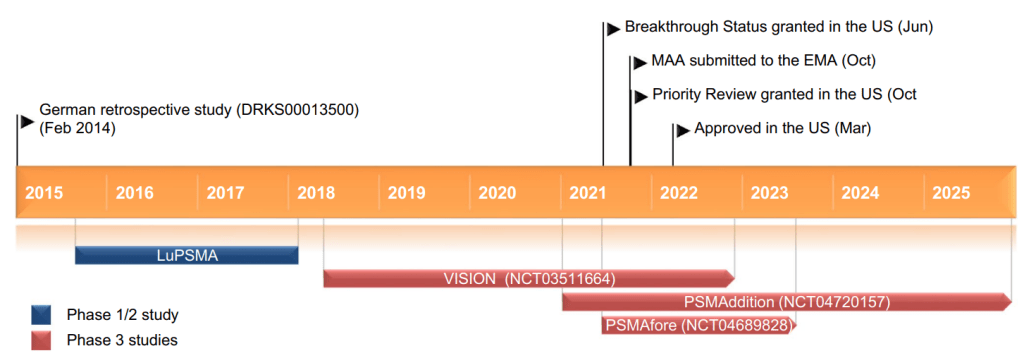
Pluvicto는 2016년에 독일 University of Heidelberg 의 Clemens Kratochwil 교수팀에 의해 Journal of Nuclear Medicine에 처음으로 보고했습니다. (Picture: Clemens Kratochwil at University of Heidelberg)
Endocyte, Inc. (NASDAQ Global Market:ECYT), a biopharmaceutical company developing targeted therapeutics for personalized cancer treatment, today announced the completion of an exclusive worldwide license of PSMA-617 from ABX GmbH. Endocyte intends to move quickly into Phase 3 development of 177Lu-PSMA-617, a radioligand therapeutic (RLT) that targets the prostate-specific membrane antigen (PSMA), present in approximately 80% of patients with metastatic castration-resistant prostate cancer (mCRPC).
PSMA-617 was developed at DKFZ (German Cancer Research Center) and University Hospital Heidelberg and exclusively licensed to ABX GmbH in Germany for early clinical development.
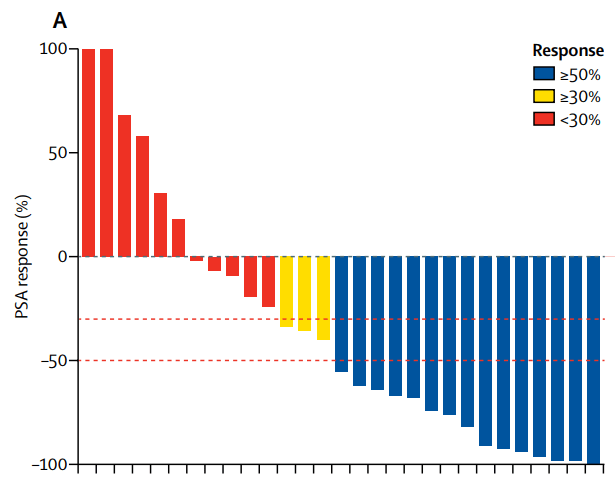
Pluvicto의 임상2상 결과는 2018년 The Lancet Oncology에 발표되었습니다.
Novartis has agreed to acquire Endocyte for $2.1 billion, the companies said today, in a deal that expands the buyer’s radioligand therapy (RLT) pipeline of targeted oncology treatments with a Phase III candidate and several early-stage candidates.
Endocyte’s lead candidate is 177Lu-PSMA-617, a potential first-in-class RLT candidate designed to treat metastatic castration-resistant prostate cancer (mCRPC).
Also in Endocyte’s pipeline are additional RLT candidates that include 225Ac-PSMA-617, now in preclinical studies for the treatment of mCRPC. The company has also applied its SMDC platform to develop chimeric antigen receptor T-cell (CAR-T) adaptor molecules, or CAMs, that are each constructed with one FITC molecule combined with a ligand capable of binding to cancer cells.
Endocyte’s planned acquisition comes a year after it agreed to license the RLT candidate from ABX for up to $172 million-plus, and refocus its development efforts around the prostate cancer treatment.
Four months earlier in June 2017, Sherman oversaw a restructuring in which Endocyteeliminated approximately 40% of its workforce, approximately 30 jobs, leaving it with 47 employees. Endocyte further shrunk its workforce last year, ending 2017 with 44 full-time employees, 33 of whom were engaged in R&D activities, according to the company’s Form 10-K annual report, filed February 27.
Endocyte의 Purdue University spin off로 창업부터 Novartis M&A까지 성공스토리는 Purdue University에서 자세히 다루었습니다. Endocyte는 Purdue University Philip Low 교수의 연구결과를 상용화하기 위한 목적으로 설립되었고 오랜기간 공동연구를 해 왔습니다. Philip Low 교수는 Umoja Biopharma의 Co-founder이기도 합니다.
Founded in the Purdue Research Park, the biopharmaceutical company licensed its first technology through the Purdue Office of Technology Commercialization. Endocyte now has licensed several technologies developed at Purdue, most based on research led by Philip Low, the Purdue University Presidential Scholar in Drug Discovery and the Ralph C. Corley Distinguished Professor of Chemistry.
A turning point for Endocyte came in the fall of 2017 when the company obtained exclusive worldwide rights from a Germany company to develop and commercialize Lu-PSMA-617, an injectable liquid that targets diseased cells with a beta-emitting radioactive isotope, while bypassing healthy cells. A video about Endocyte’s Lu-PSMA-617 can be viewed here.
“We’re working with Dr. Mike Jensen of the Seattle Children’s Research Institute to advance this CAR-T cell therapy into the clinic for the treatment of osteosarcoma, which is typically a pediatric bone cancer,” Low said. “The CAR-T cell program, like our radioligand therapy program is tumor targeted, and so we believe it could be useful for other types of cancers.”
2018년 8월에 발표한 Endocyte Inc의 Corporate Presentation은 아래에 올립니다. 인수당시 파이프라인은 아래와 같습니다.
Novartis has won Food and Drug Administration approval to sell a radiopharmaceutical designed to treat a form of advanced prostate cancer in a key step forward for an area of research the Swiss drugmaker has prioritized in recent years. The FDA cleared the infusion, known as Pluvicto, based on study results showing it could cut the risk of death and slow tumor growth in some of the sickest patients. U.S. regulators also approved Novartis’s diagnostic imaging agent, Locametz, which is designed to help doctors find patients eligible for treatment with Pluvicto, Novartis said in a statement. Locametz is used in a PET scan to identify men whose cancer expresses a certain biomarker.
Novartis is delaying a regulatory submission for its radiopharmaceutical drug Pluvicto in early prostate cancer following mixed results from a late-stage trial, the company said Tuesday as it reported its third quarter earnings. The Swiss drugmaker now plans in 2024 to ask for Food and Drug Administration approval, rather than by the end of this year.
Data released Monday at a medical meeting suggested trial enrollees who were assigned to take Pluvicto at the beginning of the trial might not be living longer than those who received hormone therapy. But the results were affected by patients in the hormone therapy arm who “crossed over” to receive treatment with Pluvicto when their disease progressed.
Novartis recorded $256 million in Pluvicto sales in the third quarter and $707 million for the first nine months of the year, making it the company’s fastest-growing drug. That growth has been aided by “unconstrained” supply after the FDA’s clearance of manufacturing at a factory in Milburn, New Jersey, which could soon be joined by an Indianapolis site now under FDA review.
Pluvicto는 Supply Chain Issue를 해결하기 위한 많은 노력이 있습니다.
Novartis has been compensating for a temporary shortage of Pluvicto with aggressive expansion of manufacturing capacity. The new plant, located in Indianapolis, has won FDA approval to churn out commercial doses of Pluvicto,
Novartis’ radiotherapy production network also includes a Millburn, New Jersey, plant that the FDA cleared to produce Pluvicto for commercial use in April 2023. A site in Ivrea, Italy, has also been supplying the prostate cancer treatment to patients inside and outside the U.S., while a facility in Spain handles ex-U.S. demand.
Further expansions are on the way. Novartis recently unveiled an $85 million plan to build a new radiotherapy facility in China to potentially supply doses for the country starting in 2026. In November, Novartis’ Japan unit said it will invest $100 million in a factory in Sasayama to support radioligand therapy production.
First approved by the FDA in March 2022, Pluvicto quickly became a much-needed option for heavily pretreated patients with PSMA-positive metastatic castration-resistant prostate cancer. Demand exceeded Novartis’ expectations, leading to months of shortages and a halt of new patient starts in early 2023.
Novartis has figured Pluvicto could eventually reach more than $3 billion in peak sales if its late-stage development pans out.
Pluvicto의 Approval Story는 2022년에 Susan Keam에 의해 정리된 적이 있습니다.


















 BOSTON DR LIM