Peter Drucker, SOAR, and Maximizing the Second Half of Life – Bruce Rosenstein Blog 2/22/2024
“For the first time in human history, individuals can expect to outlive organizations. This creates a totally new challenge: What to do with the second half of one’s life?” – Peter Drucker, “Managing Oneself,” Harvard Business Review, March-April 1999 and Management Challenges for the 21st Century (HarperBusiness, 1999)
Exactly 25 years ago, Peter Drucker first published these prescient words, six years before his death at 95. His message has only grown in importance.
How to navigate the second half of life, with all the uncertainties about when this half starts, and how long it lasts, is now being approached in a serious way by the Drucker School of Management, part of Claremont Graduate University, in Claremont, California. It has created a new certificate program, SOAR, which stands for Seek, Observe, Act, and Renew. Applications are still open, and it is set to begin this spring, with additional cohorts later this year and in 2025.
I’ve been a member of the SOAR advisory committee for the past year, and have found it to be a fascinating experience. The committee is led by Steve Tarr, a Fellow of the Drucker School, who was interviewed about the program in January by Richard Eisenberg for the MarketWatch article “Retirement-reinvention programs can cost a fortune. These options slash the cost 90%.”
SOAR will have face-to-face components in Claremont plus some related digital activities. It is partially built around the interdisciplinary (or what CGU calls transdisciplinary) values that were so much a part of Drucker’s life and career: self-exploration and exploration with others about meaning and purpose in life, and where that fits into what Drucker called “a functioning society,” drawing on lessons from the visual arts, literature, and the art of conversation.
In its explanatory material, the school outlines that SOAR has been heavily influenced by Drucker’s own roots in how he found new beginnings in Claremont in his early sixties, having moved there in 1971 after 20 years teaching at New York University.
Though he was already well known worldwide at that point, the transition was the beginning of a prolific 34 years, during which he wrote many groundbreaking books and articles. It also marked the transformation of CGU’s management school into the Drucker School of Management in 1987, as well as his pioneering efforts for the school’s Executive MBA program.
Drucker was his own best advertisement for midlife renewal and productive longevity, themes I explore in my recent article for Leader to Leader, “Frances Hesselbein And Peter Drucker: Masterclasses In Productive Longevity.” It appears in the Fall 2023 special commemorative issue for Frances Hesselbein, Drucker’s longtime collaborator, who passed away in December 2022 at the age of 107.
In keeping with the interdisciplinary/transdisciplinary nature of SOAR, the faculty represents a variety of academic specializations and disciplines:
Drucker School of Management
David Sprott Henry Y. Hwang Dean, and Professor of Marketing
Katharina Pick Clinical Associate Professor
Jeremy Hunter Associate Professor of Practice, and Founding Director of the Executive Mind Leadership Institute
Kristine Kawamura Clinical Professor of Management
Hideki Yamawaki Ito Chair of International Business and Professor of Management
School of Arts & Humanities
Lori Anne Ferrell Dean, and Director of the Early Modern Studies Program and the Kingsley & Kate Tufts Poetry Awards
Patricia Easton Professor of Humanities; and Executive Vice President and Provost, Claremont Graduate University
Joshua Goode Associate Professor of Cultural Studies
Quality of Life Research Center
Jeanne Nakamura Associate Professor, Co-director (and longtime collaborator with the late CGU professor Mihaly Csikszentmihalyi)
Anyone interested in these topics, and the possibility of pursuing them within SOAR or other programs, would do well to refer to questions Drucker recommended to college and graduate students in his May 1966 Harper’s Magazine essay, “The Romantic Generation,” later included in the 1971 collection Men, Ideas & Politics (now titled Peter F. Drucker on Business and Society). He wondered how, in a “society of big organizations,” an individual could “maintain his integrity and privacy.”
He proposed three questions, which he maintained were old inquiries that perhaps needed to be examined in different ways: “Who Am I?;” “What am I?;” and “What should I be?”
He wrote about a variation on this theme, for a wider audience of readers, in the 1969 book The Age of Discontinuity. The questions individuals must ask of themselves in this version also start with “Who Am I?” However, the next two are: “What do I want to be?” and “What do I want to put into life and what do I want to get out of it?” These are timeless questions, and indeed some of the people who may be interested in SOAR were not yet born when Drucker first wrote them. The search for answers may lead to a fulfilling second half of life.

There’s not much in the way of a guide to figuring out what comes next after retiring from a full-time job. There are, however, terrific reinvention programs from institutions like Harvard, Stanford, Notre Dame, the University of Chicago and the University of Texas — if you can afford their price tags of $60,000 or more.
Many people can’t.
That’s why I was intrigued to hear about SOAR, a new four-month, virtual and in-person hybrid program from Claremont Graduate University. It starts in April 2024 and costs $3,995, plus housing. That’s still hardly chump change, I realize, but after speaking with Steve Tarr, a fellow at CGU’s Drucker School of Management who runs SOAR, I thought the details were worth sharing.
What’s different?
“Some of the other midlife programs have what you might call a capstone project, and you put together a business plan or figure out what a nonprofit you’re going to start is going to look like. That’s not us,” Tarr said. “If you come up with one of those ideas at SOAR, that’s great, but really it’s more about finding out who you are.”
SOAR stands for Seek, Observe, Act and Renew. The website says the program — run by CGU and the Drucker School of Management — is designed to empower the 25 to 30 SOAR fellows to “make creative decisions about the next steps in their lives.”
Read: Planning to retire in 2024? Do this one thing now.
CGU is looking for participants who are curious, driven to cultivate their sense of purpose and eager to consider new pathways and opportunities.
The program starts in mid-March with an online introductory session, where the fellows are given homework and reading assignments.
A month later, the participants will spend three days on the CGU campus, situated 35 miles east of Los Angeles. “The immersive experience with your cohort in Claremont is what’s going to build this,” Tarr said.
In May and again in June, the fellows will meet up online to talk with professors and discuss ways of integrating the lessons into their daily lives.
This isn’t how SOAR was first envisioned, though. Originally, it was going to be a longer and costlier on-campus program.
But since the program is partly run by the management school named for Peter Drucker — the late Claremont professor and founder of modern management — its development has itself been a market-research project.
Focus groups considered three alternative SOAR formats: a nine-month residential program, a four-month program with multiple three-day weekends on campus, and the hybrid model that was ultimately chosen.
They favored the latter due to “accessibility and their own time management,” Tarr said.
Read: ‘Get out of your own head’: How to reinvent yourself in retirement
The five elements of SOAR
The SOAR curriculum, aimed at meeting the needs of “successful leaders transitioning in their careers,” has five parts.
Museum of Me looks at how museums tell stories in order to help fellows to tell their own stories.
Transitions deals with the emotions and challenges of change, teaching the tools and mindsets to navigate transitions effectively and move into the next phase of life.
Great Conversations assigns books and poems to help answer essential questions like: What is joy? What is a life well lived?
Purpose and Impact, taking a cue from Drucker’s priorities, helps fellows find the intersection between what they care about, what they’re good at and what the world needs so they can better define their next contribution. I’d call it finding your ikigai, the Japanese concept I’ve written about for MarketWatch.
Design Your Life uses design-thinking tools to generate ideas for your next chapter.
CGU plans to offer a second hybrid session of SOAR in fall 2024 and then, in early 2025, a third session that might feature an international trip or include immersive time at a Hollywood studio. CGU intends to run each session every year.
There will be a separate charge for each of the three sessions (the cost for sessions 2 and 3 has not yet been determined). Participants in Session 1 will get a discount on the subsequent sessions.
Read: What will retirement really be like? Most people have no idea what’s coming.
Other midlife reinvention programs
SOAR has similarities to a few other relatively inexpensive midlife programs from the Nexel Collaborative, a global alliance of colleges offering such programs.
- The University of Colorado, Denver, offers the four-month, hybrid Change Makers program ($3,400 in fall 2024).
- Union Theological Seminary runs the small, virtual, four-month Encore Transition Program twice a year ($2,500 in 2023).
- The Encore Connecticut program for people who want to transition into nonprofit work is held over a series of Fridays and Saturdays on the Hartford campus of the University of Connecticut ($2,950 in 2023).
- The Kokomo Experience and You Academy at Indiana University-Kokomo is typically four to six in-person sessions over a month or two (the February 2024 series on preparing for the April 2024 solar eclipse costs $140).
What’s coming
The University of Minnesota Advanced Careers Initiative, which paused in fall 2020, is expected to relaunch in late 2024 as a streamlined intergenerational version. It will likely have two options: fully online or a hybrid program like SOAR’s. The cost has not been determined.
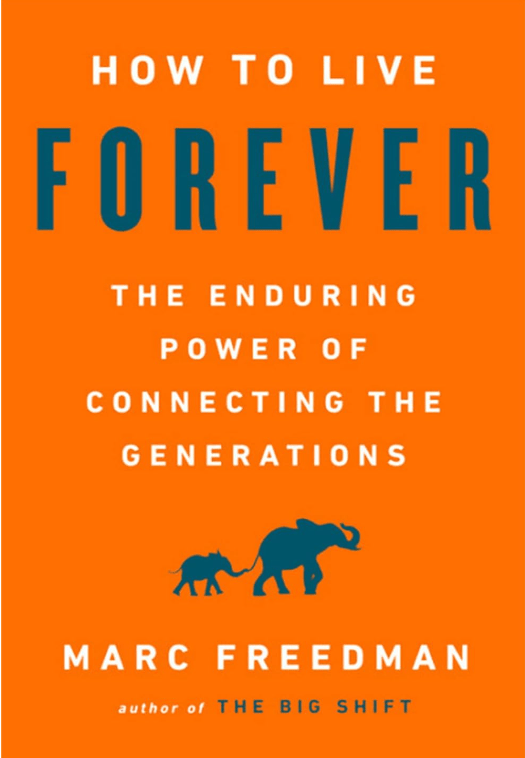
Yale’s School of Management is working on an intergenerational encore program that’s expected to take place on campus and online; Marc Freedman, co-CEO of CoGenerate, formerly known as Encore.org, is the program’s co-designer and co-faculty director. Details, including the cost, curriculum and dates, will be announced in 2024.
The CGU folks are hopeful that SOAR will soar but note that the program may well change in future sessions, depending on what the 2024 fellows have to say about it.
“If the market says adapt, we will adapt,” Tarr said.