
안녕하세요 보스턴 임박사입니다.
Sana Biotechnology에 대해서는 이전에 두차례 정도 글을 쓴 적이 있습니다. 창업스토리에 대해서 올린 적이 있고요
BIOTECH (48) – Sana Biotechnology Story
그리고 최근에 보고된 Hypoimmune Islet Cells에 대한 NHP Study 논문에 대해 글을 남긴 적이 있습니다.
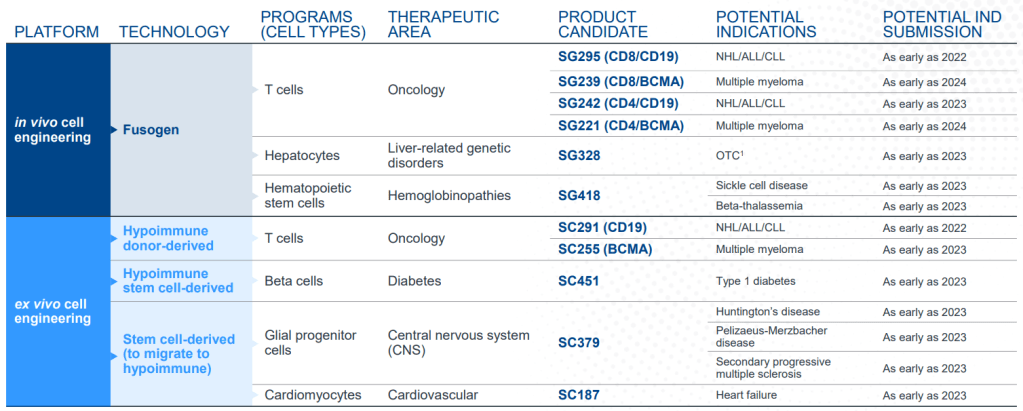
Sana Biotechnology가 2021년 2월에 Nasdaq IPO를 할 때 계획은 2022년에 Fusogen In Vivo Program인 SG295 (CD8/CD19)과 Ex Vivo Program인 SC291 (CD19)이 임상시험에 진입하는 것이었습니다. 하지만 계획과 달리 2022년말까지 한개도 임상시험에 진입하지 못하면서 결국 15% 구조조정을 하게 됩니다. 이 당시에 포기하는 프로그램은 Cardiomyocytes Ex Vivo Program인 SC187만 중단하는 것이었습니다.
Sana reshuffles drug pipeline, becoming latest biotech to cut staff – Biopharmadive 11/30/2022
Sana Biotechnology will cut its workforce by 15% and reprioritize its drug research in a company restructuring announced Wednesday. The Seattle-based biotechnology company, which is developing engineered cell therapies, is taking steps to extend its cash runway, including stopping further investment in a program using cardiac muscle cells to treat heart failure. The workforce reduction will trim its staff by about 75 employees, based on its Sept. 30 headcount of 494 full-time staff. With the layoffs, Sana joins a growing list of biotechs that have been forced to cut payroll this year.
Sana’s lead program, dubbed SC291, is a modified off-the-shelf cell therapy aimed at B cell cancers. The company expects to ask the Food and Drug Administration for permission to start clinical testing this year, with initial data expected in 2023. Sana is also planning to advance two other programs into trials next year, and another two in 2024.
With the restructuring, the company anticipates it will have enough cash to fund operations into 2025. Sana held $511 million in cash at the end of the third quarter. While that amount would be a comfortable sum for some companies, Sana spends heavily on research and development. R&D expenses totaled $76 million in the third quarter, and $222 million across the first nine months of the year.
구조조정 후 1년이 지난 이후에도 임상진입을 하지 못한 채 Preclinical-Stage에 머물게 되었고 유상증자를 할 수 있는 상황도 되지 못한 나머지 결국 Fusogen In Vivo Program 전체를 중단하면서 29% 인력구조조정을 단행하게 됩니다.
Plans to get in vivo and ex vivo therapies into humans as early as 2022 slipped, and Sana narrowed its focus and laid off 15% of its staff late last year.
Eleven months later, and weeks after confirming cuts “within a single area of research,” the biotech has revealed it is reducing its head count by 29%. Sana ended June with 424 full-time employees, suggesting the layoffs will affect more than 100 people.
The cuts come as the biotech narrows its focus again. Last year, Sana dropped a heart failure program but kept investing in ex vivo candidates targeting CD19, CD22 and BCMA, an in vivo CD19-targeted CAR-T and a stem-cell-derived pancreatic islet cell therapy for patients with Type 1 diabetes. Now, the biotech has abandoned plans to take its in vivo CAR-T candidate into the clinic.
Pulling back from in vivo delivery represents a major pivot from Sana’s early ambition. When the biotech went public, in vivo programs made up the top half of its pipeline and were scheduled to enter human testing around the same time as the ex vivo assets. Sana pitched in vivo delivery as a way to avoid the cost and complexity of ex vivo CAR-T production and eliminate the need for conditioning regimens.
Around 30 months later, Sana has abandoned plans to study its in vivo candidate in humans and has a pipeline led by an ex vivo, allogeneic CAR-T that requires patients to receive conditioning chemotherapy.
The biotech will continue “focused research” on its in vivo platform, but the priority is now getting a set of ex vivo assets to clinical data drops. Sana began a phase 1 trial of the CD19-directed CAR-T SC291 in B-cell malignancies in May and aims to start delivering data this year. Submissions to study SC291 in autoimmune disorders, islet cells in diabetes and a CD22 CAR-T in leukemias are planned for this year.
Sana’s submission schedule positions it to deliver clinical data on three candidates in multiple settings next year. The latest restructuring extended the biotech’s cash runway “further into 2025,” suggesting it has time to deliver data that could renew investor enthusiasm for its assets—or report underwhelming results that send it deeper into the mire.
Sana Biotechnology가 2021년 2월에 Nasdaq IPO할 당시에 제시한 파이프라인에서 Fusogen In Vivo Platform은 전체 파이프라인의 절반에 해당했을 뿐만 아니라 ex vivo program보다 앞에 내세워질 만큼 경영진의 피치에서 중요한 부분이었습니다.
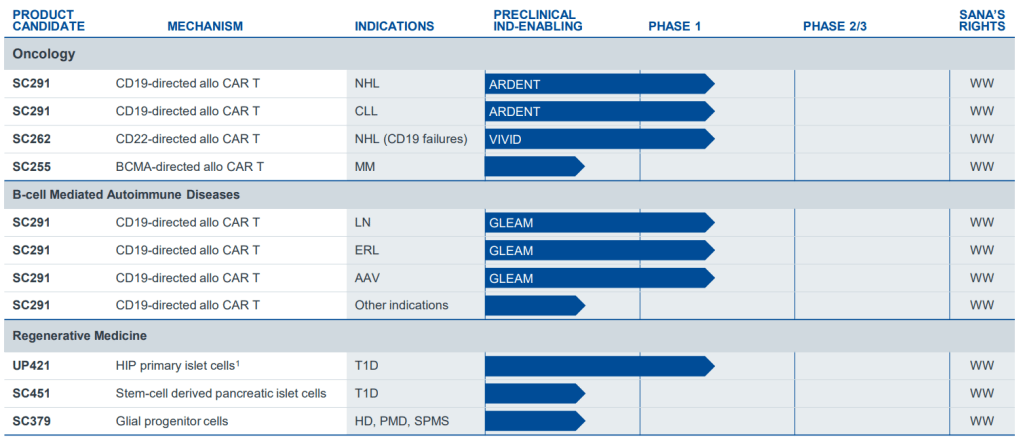
하지만 2번째 구조조정을 마친 2024년 2월에 발표한 Corporate Presentation에서 Fusogen은 완전히 사라졌습니다.
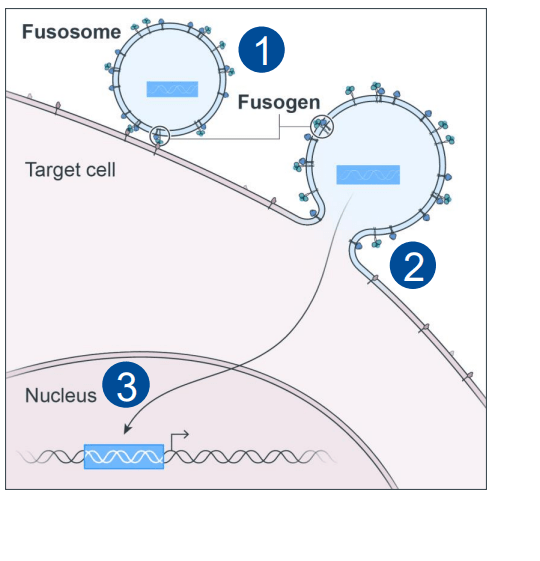
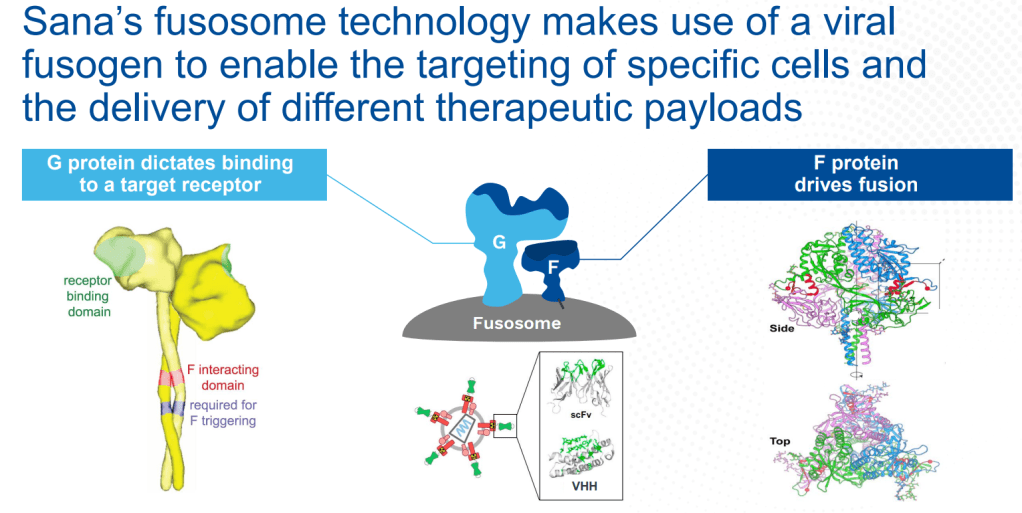
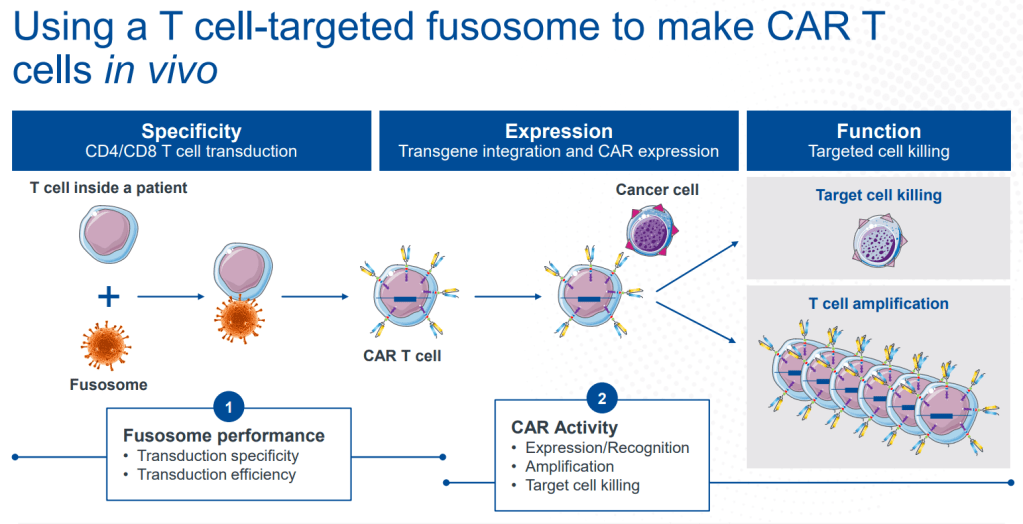
Fusogen Program이 중단된 배경이 Fusogen 자체의 Biology Risk나 Technology Risk 때문인지 여부는 아직 알려진 바가 없습니다. Fusogen에 대해 가장 최근에 발표한 자료는 2023년 12월에 있었던 ASH 학회에서 발표한 것입니다. Fusogen Technology는 G Protein과 F Protein을 통해서 Cell-Cell Fusion을 일으키는 메카니즘입니다.
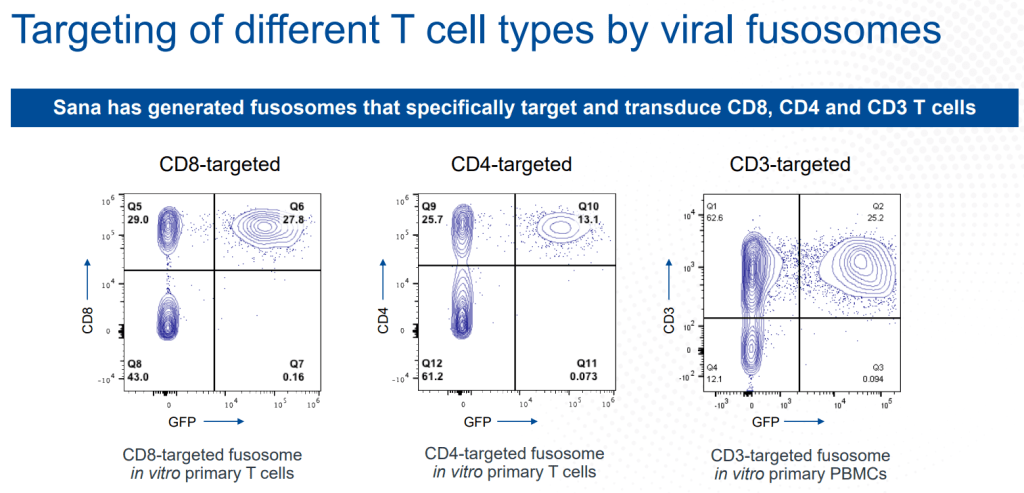
CD8, CD4, CD3 와 같은 T Cell Types에 Fusogen이 선택적으로 발현하는 것을 In Vitro primary T Cells에서 보고한 바 있습니다.
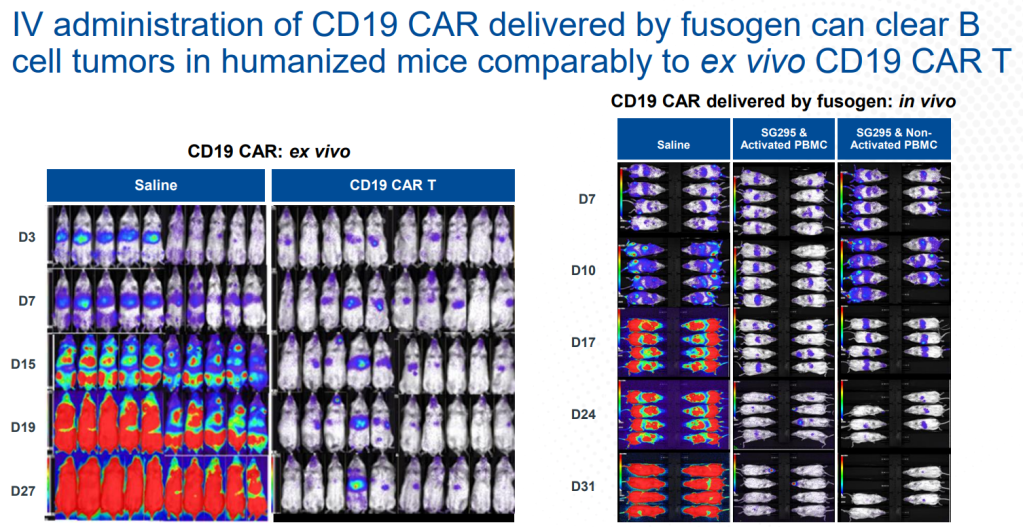
그리고 Humanized mouse model에서 ex Vivo CD19 CAR-T와 비교했을 때 Fusogen CD19 CAR-T가 B cell tumor를 사라지게 한 것이 확인된 바 있습니다. 이것이 Mouse PoC data였습니다.
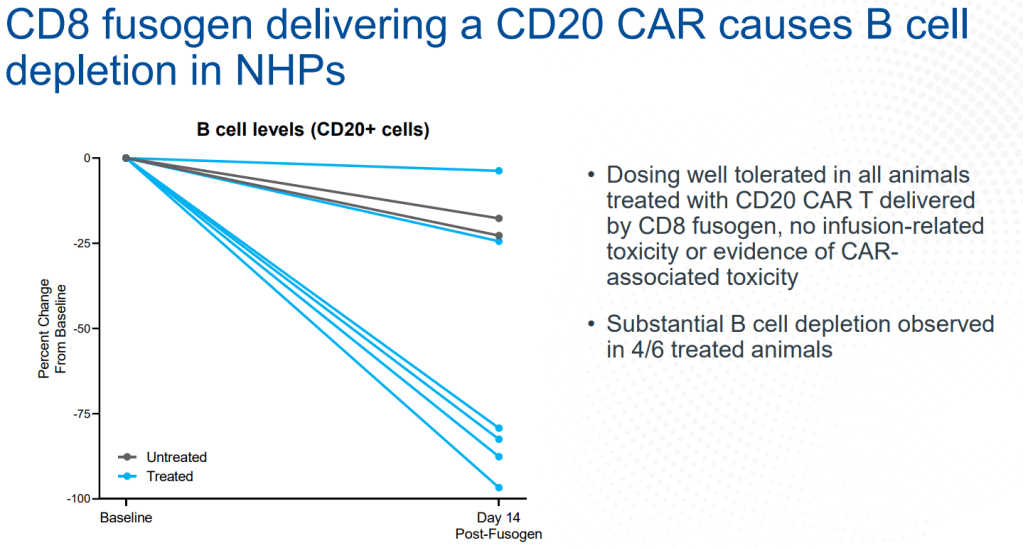
CD8/CD20 CAR-T를 Fusogen In Vivo Delivery 한 NHP 시험에서도 B cell depletion을 볼 수 있었습니다.
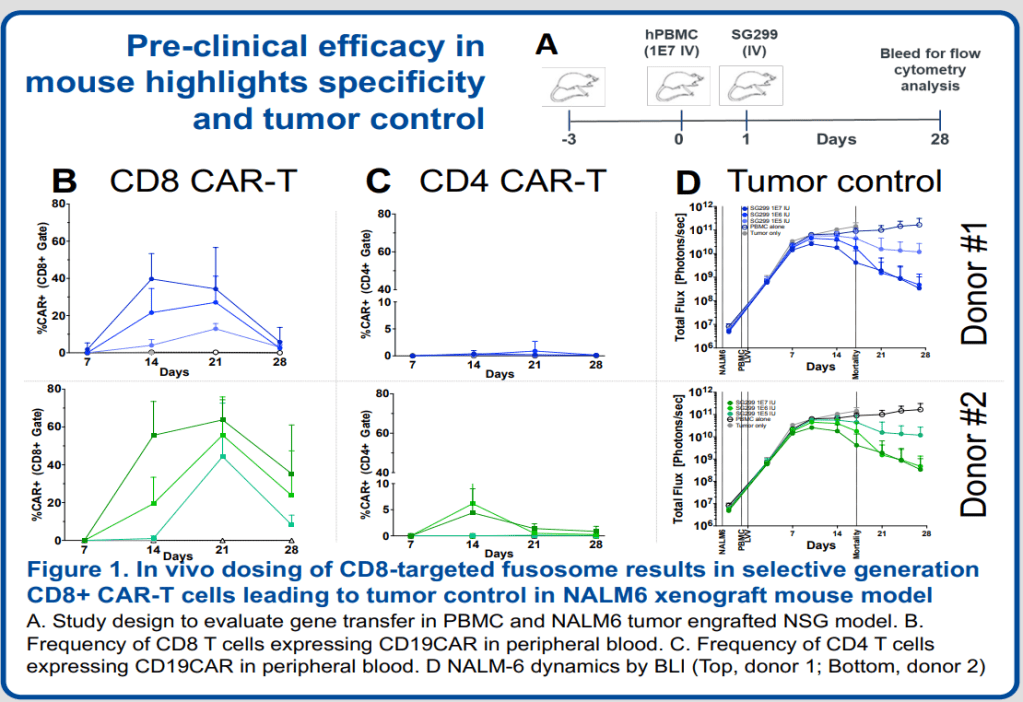
ASH 학회에서 발표한 자료에서는 먼저 NALM6 xenograft mouse model을 통해서 CD8 CAR-T와 CD4 CAR-T를 비교했을 때 CD8만 선택적으로 항암작용이 있는 것을 볼 수 있었고요.
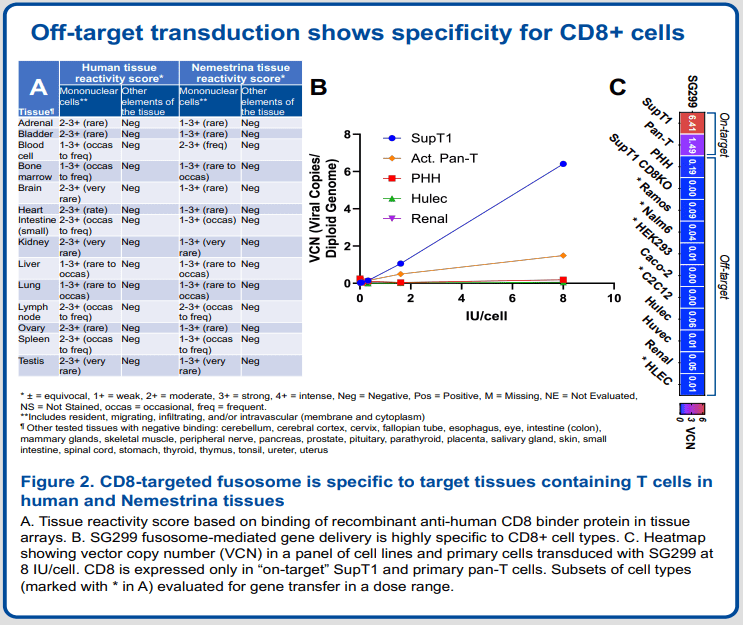
Fusogen이 T Cell에 거의 선택적으로 전달되는 것을 볼 수 있었습니다.
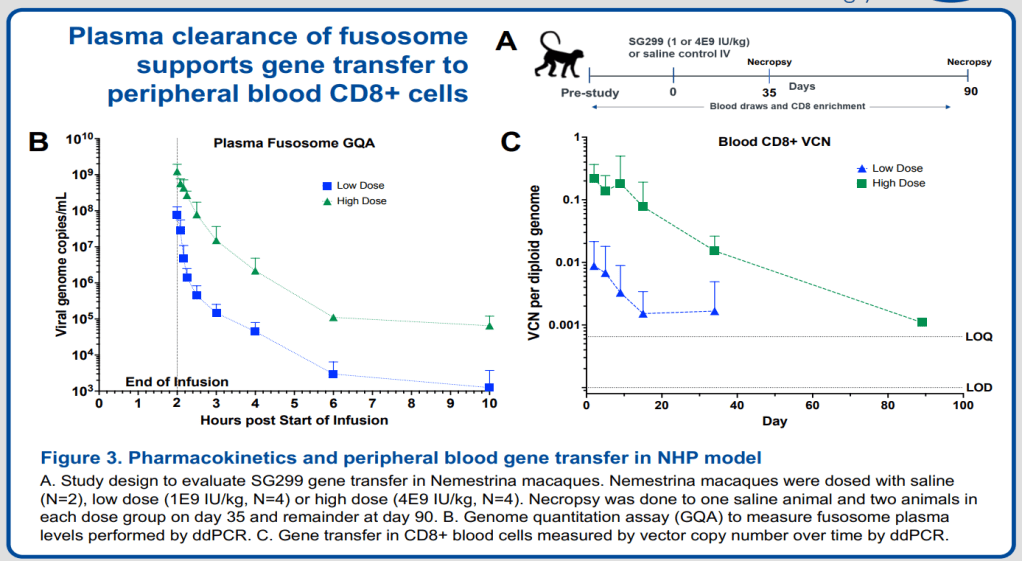
NHP PK를 봤을 때 plasma에서는 High dose의 경우 Fusogen이 10시간 이상 잔류하였고 CD8+는 100일 (3개월)까지도 유지되었습니다.
90일 이후에 NHP Necropsy를 했을 때 Gene Transfer가 Lymphoid-tissue specific하게 이루어졌슴을 알 수 있습니다.
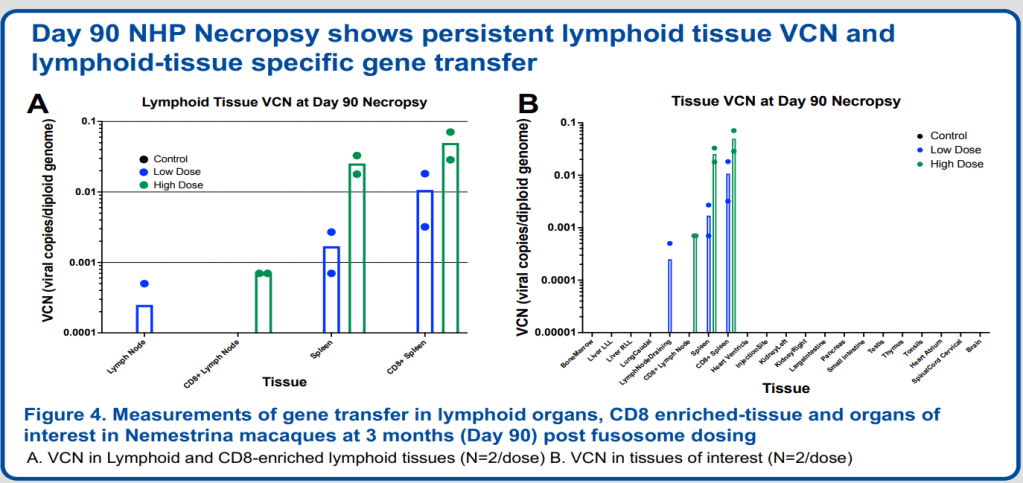
약효나 PK 측면에서는 발표한 데이타를 참고해서 보았을 때 특이한 문제는 발견이 되지 않았는데요. 대신 독성에 대한 데이타는 발표한 것이 없어서 혹시 세포독성의 문제가 있지 않은지 의심해 볼 수는 있는 것 같습니다.
같은해 상반기에 있었던 AACR에서는 Fusogen Pipeline에 대해 4개의 Poster를 발표했었습니다.
- Preclinical data demonstrate that CD19 CAR T cells generated in vivo by transduction of T cells with CD8-targeted fusosomes have anti-tumor efficacy comparable to ex vivo generated CAR T cells.
- Improvements in fusosome manufacturing increased SG299 potency at least 50x in preclinical models.
- IND for SG299 for Phase 1 study in hematologic malignancies expected in 2023.
Fusogen은 AAV와 LNP의 장점을 결합한 개념의 Next-Gen Gene Delivery System으로 주목을 받았고 Sana Biotechnology의 Stealth-mode 회사였던 Cobalt에서도 오랜 기간 연구를 했는데요 많이 아쉽게 되었습니다. Entos Pharmaceuticals도 다른 바이러스 G, F를 이용하지만 Fusogen을 Delivery System으로 쓰고 있어서 이 결과도 함께 보면 좋을 것 같습니다.
BIOTECH (105) Entos Pharmaceuticals: Fusogenix Proteolipid Vehicle (PLV) Platform
 BOSTON DR LIM