BIOTECH (153) Fusion Pharmaceuticals: Targeted Alpha Particle Radiotherapeutics

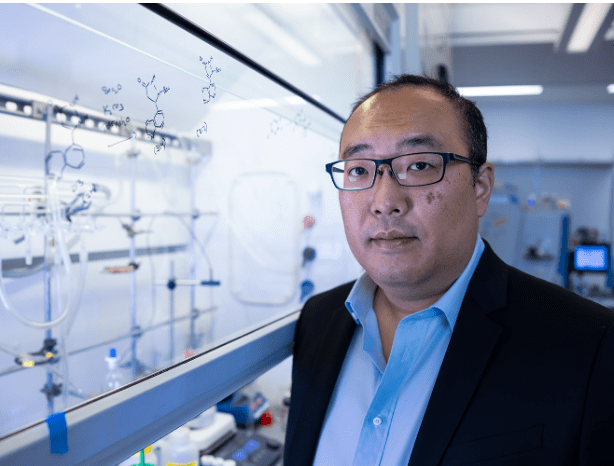
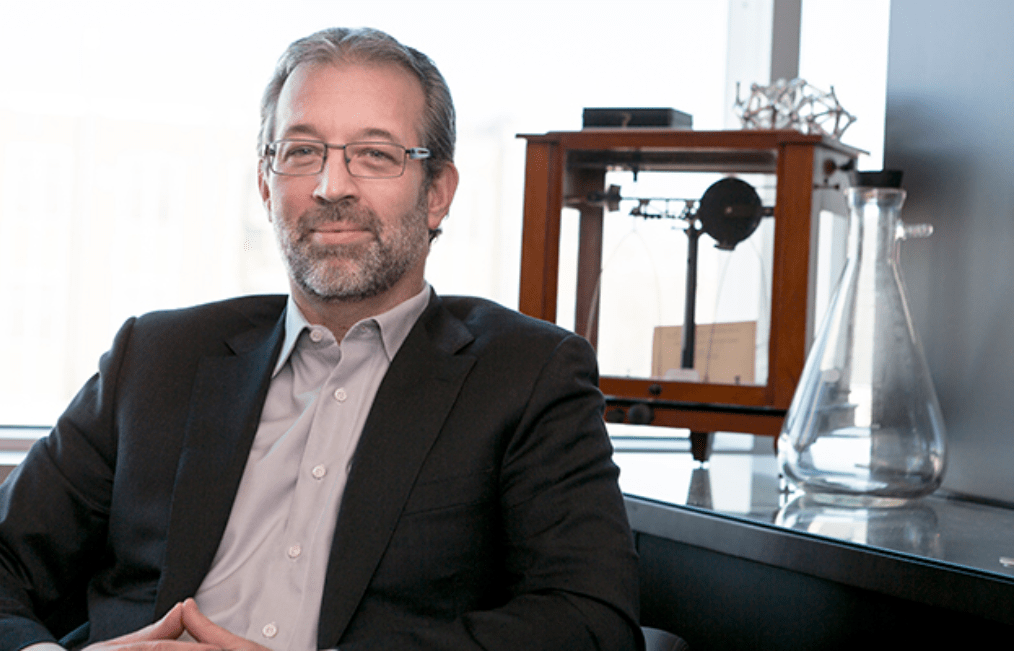
(Picture: John Valliant, McMaster University, Founder & CEO of Fusion Pharmaceuticals)

안녕하세요 보스턴 임박사입니다.

요즈음 Targeted Radiotherapeutics가 정말 굉장합니다. 현재 $7 Billion 시장규모인데 2032년이면 $39 Billion까지 커진다고 합니다. 이렇다보니 빅파마들이 Radiotherapeutics 회사들을 인수하는 일이 많이 있습니다. 종전에 Novartis의 Pluvicto와 Point Biopharma 등에 대해 나눈 적이 있습니다.

BIOTECH (104) Novartis: Pluvicto (177Lu-PSMA-617) – the First Precision Radiopharmaceuticals

BIOTECH (106) Point Biopharma: Precision Radioligand Therapy (RLT)

이들 회사들은 177Lu라는 beta-emitter를 사용하는데요 Fusion Pharmaceuticals는 225Ac라는 alpha-emitter를 사용하는 회사로 가장 앞서가는 회사라고 할 수 있습니다.

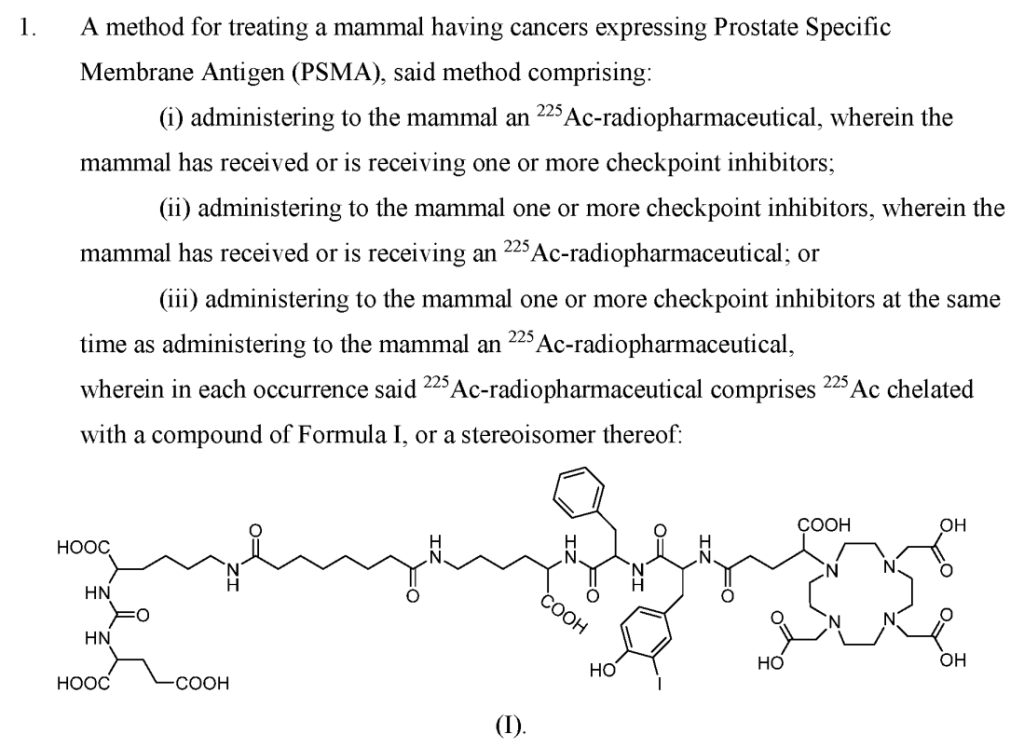
캐나다에 있는 McMaster 대학의 화학과 교수인 John Valliant가 2014년에 창업한 회사입니다. 2015년에 PCT 에 출원한 특허에 의하면 Linker Library 에 대한 특허입니다.
FUSION PHARMACEUTICALS TO BE ACQUIRED BY ASTRAZENECA FOR MORE THAN $2 BILLION USD – Betakit 3/20/2024

Hamilton-based biopharmaceutical precision oncology firm Fusion Pharmaceuticals has entered an agreement that will see it acquired by pharmaceutical giant AstraZeneca for up to $2.4 billion USD. 

Fusion Pharmaceuticals was founded out of McMaster University in 2014 with the goal to cure cancer by developing targeted alpha therapeutics, a method that employs radioactive substances that undergo radioactive decay to treat diseased tissue at close proximity. 

Fusion has been doing just that, developing radioconjugates (RCs), which combine the precise targeting of antibodies, small molecules, or peptides with medical radioisotopes that aim to deliver radiation directly to cancer cells. Fusion, which has been working with AstraZeneca on developing certain RCs, says the treatment provides a more precise mechanism to kill cancer cells compared to traditional radiation therapy. 

Fusion CEO John Valliant said in a statement that the acquisition will bring together Fusion’s expertise in RCs, including its research, development, manufacturing, and supply chain, with AstraZeneca’s work in small molecules and biologics engineering to develop new RCs. 

“Expanding on our existing collaboration with AstraZeneca where we have advanced [a] targeted [RC] into Phase I clinical trials gives us a unique opportunity to accelerate the development of next-generation [RC] with the aim of transforming patient outcomes,” Valliant said. 

AstraZeneca said the acquisition will strengthen its presence in Canada. 

Following the acquisition, which is expected to close in the second quarter of 2024, Fusion will become a wholly owned subsidiary of AstraZeneca and continue its operations in Canada and the United States (US). 

The transaction’s upfront value is approximately $2 billion USD and will see Fusion’s shareholders receive $21.00 per share, a 97 percent premium on its March 18 closing price of $10.64. However, it has the potential to be valued as high as $2.4 billion upon filing a new drug application with the US Food and Drug Administration by 2029, according to The Globe and Mail. The bonus will be paid out as $3.00 per share in a cash payable, non-transferable contingent value right. 

Following Fusion’s spinout from McMaster, the company raised a $25-million USD Series A round in 2017 led by its founding venture investor, Johnson & Johnson Innovation. The company later picked up investors like OrbiMed in its $105 million USD Series B round in 2019 and the Canada Pension Plan Investment Board (CPPIB) in a $26-million raise ten months later. 

Fusion debuted on the NASDAQ in June 2020 at a share price of $17.00, but has fallen as low as $2.31 per share in the past year. Following the announcement of the deal, its stock price sits at $21.15 as of 2:00 pm EST Wednesday. 

As part of the transaction, AstraZeneca said it will acquire the cash, cash equivalents and short-term investments on Fusion’s balance sheet, which totalled $234 million as of December 31, 2023.

Why Fusion Pharma Is The Latest Billion Dollar Big Pharma Buy In Radiopharmaceuticals – Life Science Leader 3/22/2024

AstraZeneca’s $2.4 billion acquisition of Fusion Pharmaceuticals is the third billion-plus dollar Big Pharma radiopharmaceuticals purchase announced in the last six months; Lilly completed its $1.4 billion acquisition of POINT Biopharma last December, and BMS completed its $4.1 billion acquisition of RayzeBio in February.

As I wrote in January, the field of radiopharmaceuticals is having a moment, due to new product science and isotope sources, improvements on the supply chain and manufacturing side, as well as growing clinical evidence (and growing sales figures for marketed drugs, such as Novartis’s Pluvicto) for a widening number of indications.

That growth has led to a radiopharmaceuticals expertise and capacity crunch, however, which can make outsourcing a challenge, as ARTBIO’s Conrad Wüller, director, strategy and operations, explained in a recent panel discussion.

It’s a problem that was cited by John Valliant, founder and CEO at Fusion Pharma, when I spoke with him in late January. People with the right science backgrounds, and the required nuclear safety qualifications, are in “tremendously short supply,” a fact exacerbated by current and predicted growth in the radiopharmaceutical sector. In 2022, the radiopharmaceuticals market (which includes both radiodiagnostics/imaging and radiotherapeutics/drugs) was worth over $7 billion, a 15% increase over 2021, according to MEDraysintell Nuclear Medicine Report & Directory Edition 2023. By 2032, the market is expected to reach $39 billion, according to the MEDraysintell forecast.

When I asked Valliant in January whether he was receiving (and answering) calls from Big Pharma about a potential acquisition, given the amount of deal activity in the space, he deftly deflected, noting that his “vision for the company has never changed; we have a platform, we have manufacturing [capable of producing 100,000 doses a year], and we want to be vertically integrated. We want to take multiple products all the way through to approval in different indications.”

He did, however, reference Fusion’s partnership with AstraZeneca, which began in 2020. “They are leaders in the antibody-drug conjugate space, so they’re really good at putting the actinium on, using our linker technology. And we co-own the drugs that come out of that,” he said. “For me, that’s the best of both companies coming together.”  

What’s Unique About Fusion Pharma

The emergence of targeted alpha therapies (TAT) is a key driver in the radiotherapeutics development space, and it served as the impetus for founding Fusion Pharma. As a chemistry professor at McMaster University in the early aughts, Valliant was conducting research focused on connecting medically useful isotopes to molecules, when “the potential of the field became clear,” he says. “There wasn’t the ability to move it out of academic labs and into industry … to have the manufacturing, the quality, and the ability to attract the investment needed to do big picture drug development and full-scale manufacturing.”

In 2008, Valliant founded and launched the Centre of Excellence for Commercialization and Research — now called the Centre for Probe Development and Commercialization — which specializes in radiopharmaceutical R&D and manufacturing. He ran that organization for over a decade, and realized that “to be commercially viable, you want to have an isotope with a long half-life, so that you can centrally manufacture products and ship them to the [patient delivery] sites.”

That insight led Valliant to focus on actinium-225, an alpha particle-emitting isotope with a 10-day half-life, which causes double-strand DNA breaks, a potent cancer cell killer. “The majority of currently approved [radio]therapies are based on beta particle emitters,” said Valliant. Beta particles cause single-strand DNA damage, but to really kill a tumor, “you need multiple single-strand breaks, which requires a lot of beta to cause the damage.” An Alpha particle is much larger in size by comparison, and it “destroys everything in its path,” says Valliant. “But it only travels a distance of one to three cells.” To kill cancer cells, it takes a lot less alpha than beta, or “one thousand times less radiation injected into a patient to cause that massive trauma to cancer cells.” In comparing the same delivery molecule, which directs the radioactive payload to the cancer cell, alpha particles drastically outperformed beta particles in terms of potency against solid tumors, said Valliant. “So we decided to create a company around that.”

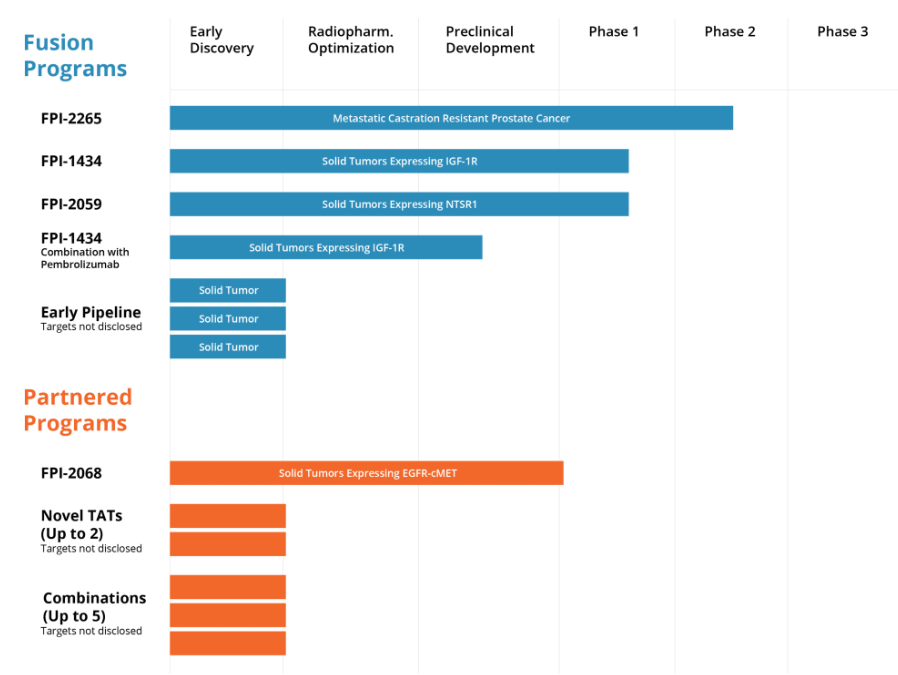
Most radiopharmaceutical companies developing new therapies are shifting toward alpha emitters from beta, noted Valliant. Rayzebio, for example, is currently in Phase 3 clinical trials with a drug that also uses actinium-225 and is targeting gastroenteropancreatic neuroendocrine tumors. Fusion’s lead candidate (FPI-2265), which is moving into a Phase 2/3 registration trial, targets the same indication as Novartis’s Pluvicto: prostate-specific membrane antigen (PSMA)-positive metastatic castration-resistant prostate cancer. However, Fusion is pursuing an indication for patients that fail on Pluvicto. “There are a significant number of patients who need another therapy [after Pluvicto], and we think that will be our first approval,” he says. “The nice part about that is, it will likely be [administered at] the same site, in the same position, and using the same process, making it super easy for a patient to get that therapy once it’s approved.”

Other Fusion pipeline products will explore different cancer types, an expansion on the prostate and neuroendocrine cancer indications that previously defined the field. “There is no reason why this technology shouldn’t have comparable impacts on breast cancer, colorectal cancer, pancreatic cancer … you’re putting a bomb inside a cell,” says Valliant. “We have three additional clinical programs taking this technology to other cancers. For me, it’s a huge whitespace, and we’re just scratching the surface of this field.”

Fusion Pharmaceuticals Launches With A $25M USD Series A Financing To Develop Targeted Radiotherapeutics As Cancer Treatments – Press Release 2/23/2017

Fusion Pharmaceuticals, a newly formed biopharmaceutical company developing targeted alpha-particle radiotherapeutics for treating cancer, today announced the closing of a $25 million Series A financing led by founding venture investor, Johnson & Johnson Innovation – JJDC, Inc., with investments by HealthCap, TPG Biotech, Genesys Capital and FACIT (Fight Against Cancer Innovation Trust). Targeted alpha-particle emitting radiotherapeutics combine the precision of molecular targeting agents, such as antibodies with the potency of alpha-particle emitting radioisotopes to specifically attack and eradicate cancer cells.
The syndicate is strengthened by HealthCap’s specialized expertise in pioneering a new wave of successful radiotherapeutic companies, such as Algeta and Nordic Nanovector.
Fusion Pharmaceuticals is a spinout from the Centre for Probe Development and Commercialization (CPDC), an organization that Dr. John Valliant, Ph.D., founded in 2008 and is a Centre of Excellence for Commercialization and Research (CECR) located at McMaster University in Hamilton, Ontario, Canada. The CPDC, which was created with the support of multiple stakeholders, including the Networks of Centres of Excellence (NCE) and the Ontario Institute for Cancer Research (OICR), has rapidly become a world leader in the development, translation and manufacturing of radiopharmaceuticals.
In addition to Dr. Valliant, founder and chief executive officer, the company’s board of directors consists of Asish Xavier, Ph.D. (Johnson & Johnson Innovation – JJDC, Inc.), Robert Sutherland, Ph.D., Centre for Probe Development and Commercialization (CPDC), Eran Nadav, Ph.D. (TPG Biotech), Johan Christenson, M.D. (HealthCap) and Damian Lamb (Genesys), who will assume the role of chairman of the board.
“Targeted delivery of medical isotopes that emit alpha particles can be used to kill tumor cells with remarkable precision and unprecedented potency, and it has the added potential of having complementary effects with treatments which activate the immune system,” said Dr. John Valliant, CEO. “Fusion is focused on combining our expertise in radiopharmaceutical development and production with the appropriate targeting molecules to create a new generation of therapeutics that can address the need for better cancer treatments. Fusion is proud to join a wave of new Canadian biotech companies that are being launched with innovative technologies emerging from research institutions like McMaster University.
Fusion Pharmaceuticals will use the financing proceeds to advance its lead program, FPX-01, into human clinical trials. FPX-01 is an antibody-targeted radiotherapy, which seeks out a specific biomarker of resistance that is present on nearly all types of treatment refractory cancers. The technology is designed to selectively deliver actinium-225 to tumor cells so that in conjunction with internalization, the alpha particles emitted will eradicate diseased tissue. In parallel, Fusion Pharmaceuticals gained access to a centyrin-based targeting molecule in preclinical development that has the potential to deliver isotopes to several cancer types and access to the centyrin protein targeting platform in two licensing agreements with Janssen Biotech, Inc. in transactions facilitated by Johnson & Johnson Innovation.
Centyrins are protein targeting agents, proprietary to Janssen Biotech, characterized by high selectivity and specificity, combined with tunable pharmaceutical properties and efficient manufacturing. Fusion Pharmaceuticals is building its pipeline through access to the centyrin platform in combination with proprietary labeling technologies, which can be applied to a wide range of targeting molecules.

FUSION PHARMACEUTICALS – A PRODUCT OF A NATIONAL CENTRE OF EXCELLENCE WITH COMPREHENSIVE SECTOR EXPERTISE

Fusion Pharmaceuticals is a spin out from the Centre for Probe Development and Commercialization (CPDC), which is a Centre of Excellence for Commercialization and Research (CECR) located at McMaster University. The CPDC was created to take promising new technologies developed at Universities and use the arising knowledge advantages to realize economic and health benefits for Canadians. The CPDC, which employs over 80 people and has locations and major partnerships in Hamilton, Toronto, Ottawa and Boston, is supported by a range of stakeholders including the Networks of Centres of Excellence, the Ontario Institute for Cancer Research, McMaster University and several industry partners. See www.imagingprobes.ca for additional details.

INNOVATION DRIVEN AND EXPERIENCED MANAGEMENT TEAM

Fusion Pharmaceuticals was founded by Dr. John Valliant, who was also the founder and CEO of CPDC. Under Dr. Valliant’s direction, the CPDC supplied radiopharmaceuticals for over 40 clinical trials, facilitated the creation of three new companies, including building a rapidly expanding manufacturing business. Dr. Valliant, a Canada Research Chair in Medical Isotopes and Molecular Imaging Probes, is a Professor of Chemistry and Chemical Biology at McMaster University. He has won numerous awards including being selected as one of Canada’s top 40 under 40 in 2010.
Fusion’s discovery and development programs are led by the chief scientific officer, Dr. Eric Burak, Ph.D. Eric previously held positions at CPDC, Theracos, Rib-X Pharmaceuticals and Guilford Pharmaceuticals. Eric oversees a world-class team of chemists and biologists who have extensive experience and unique skills in the alpha therapy field.

ALPHA THERAPIES

Certain medical isotopes emit alpha particles, which are highly energetic ions that deposit their energy over very short distances traveling approximately the width of a single cell. When alpha emitting medical isotopes are delivered to cancer cells, they can kill tumor cells through multiple mechanisms including double stranded DNA breaks, which makes repair and hence resistance unlikely. Targeted alpha therapeutics use significantly smaller amounts of material than typical antibody-drug conjugates making it possible to exploit a wider array of drug targets and they do not require complex linkers to release the warhead. One of the additional benefits of Fusion’s alpha therapeutic approach will be creation of a companion diagnostic with each candidate.

ABOUT FUSION PHARMACEUTICALS, INC.

Fusion Pharmaceuticals is a new pharmaceutical company located in Hamilton, Ontario, Canada focused on becoming the leader in the targeted alpha therapy field. Fusion will exploit its unique expertise in linking medical isotopes to targeting molecules to create highly effective therapeutics. In addition to its lead program, FPX-01, Fusion is building a pipeline of products through a protein discovery platform, that allows for the rapid screening of new targeting molecules to promote biomarker localization of alpha emitting medical isotopes. Fusion’s technology development team also has proprietary methods for introducing alpha emitters into targeting molecules.

Fusion Pharmaceuticals Completes Oversubscribed Series A Financing Totaling $46 Million USD To Develop Targeted Alpha Therapeutics – Press Release 9/25/2017

Fusion Pharmaceuticals, a clinical-stage biopharmaceutical company developing targeted alpha-particle radiotherapeutics for treating cancer, today announced it has completed a second closing of its Series A financing, securing an additional $21 million USD in capital and bringing the total capital raised to $46 million USD. New investors in the second closing include Adams Street Partners, Seroba Life Sciences, and Varian Medical Systems Inc., who join the existing group of international investors, FACIT, Genesys Capital, HealthCap, Johnson & Johnson Innovation – JJDC, Inc., and TPG Biotech.

Fusion Pharmaceuticals also announced that Terry Gould of Adams Street Partners and Alan O’Connell of Seroba Life Sciences have joined the company’s board of directors.

Targeted alpha-particle emitting radiotherapeutics combine the precision of molecular targeting agents, such as antibodies, with the potency of alpha-particle emitting radioisotopes to specifically attack and eradicate cancer cells. Fusion uses its radiochemistry expertise to convert established and novel targeting molecules into potent alpha therapies.

“We are delighted by the significant interest in Fusion Pharmaceuticals, which is driven by the excitement for our pipeline as well as the precision and potency that can be achieved through targeted delivery of medical isotopes that emit alpha particles,” said John Valliant, Ph.D., Fusion’s Chief Executive Officer. “Fusion will use the additional funds to accelerate the clinical development of our lead program FPX-01, expand our pipeline through in-licensing targeting molecules and form new strategic partnerships.”

FPX-01 is an antibody-targeted radiotherapy, which seeks out a specific biomarker of resistance that is present on nearly all types of treatment refractory cancers. The technology is designed to selectively deliver actinium-225 to tumor cells so that in conjunction with internalization, the alpha particles emitted will eradicate diseased tissue.

Fusion Pharmaceuticals is a spinout from the Centre for Probe Development and Commercialization (CPDC), which is a  Centre of Excellence for Commercialization and Research (CECR) located at McMaster University in Hamilton, Ontario, Canada. The CPDC, which was created with the support of multiple stakeholders, including the Networks of Centres of Excellence (NCE) and the Ontario Institute for Cancer Research (OICR), has rapidly become a world leader in the development, translation and manufacturing of radiopharmaceuticals.

Fusion Pharmaceuticals is also developing centyrin-based alpha therapies against a series of cancer markers. Centyrins are small proteins that are characterized by high selectivity and specificity, combined with tunable pharmaceutical properties and efficient manufacturing. Fusion obtained the candidates through two licensing agreements with Janssen Biotech, Inc. in transactions facilitated by Johnson & Johnson Innovation.

OrbiMed, Varian lead $105M round for targeted radiotherapy outfit Fusion Pharma – Fierce Biotech 4/2/2019

Two years after Fusion Pharmaceuticals raised a modest $25 million series A, the targeted radiotherapy player has reeled in $105 million in new capital to push a clinical-stage program and build a pipeline of new treatments and combination therapies. 

Fusion’s founding venture investor, Johnson & Johnson Innovation, joined OrbiMed and Varian in the financing with Perceptive Advisors, Pivotal bioVenture Partners, Rock Springs Capital and other existing backers also pitching in. 

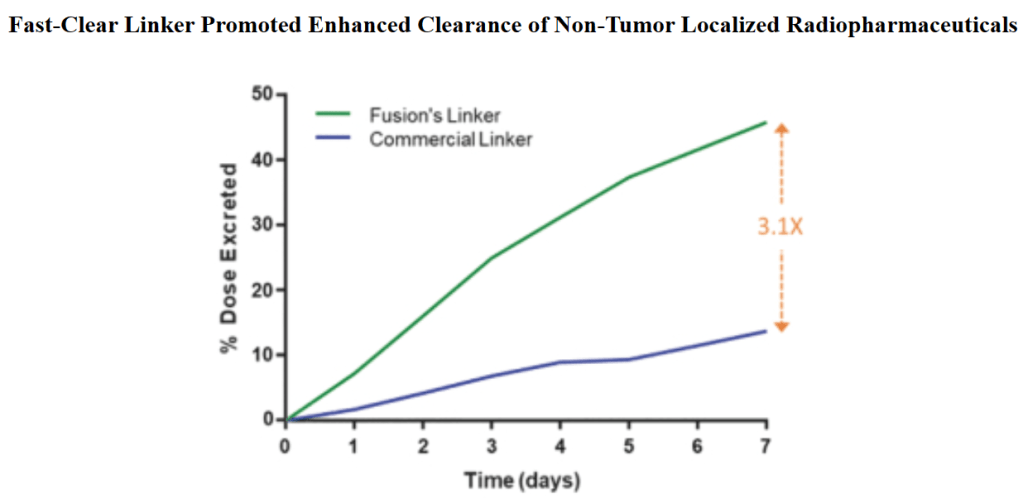
Fusion’s targeted approach combines alpha particle-emitting radiotherapeutics with molecules that deliver them to tumors. Using a molecule such as an antibody to avoid delivering radiation indiscriminately and harming healthy cells is not a new idea. But the company believes that its linker technology—which connects a molecule to a radioactive compound—can clear radiotherapeutics more quickly than commercially available linkers, thereby extending their therapeutic window. 

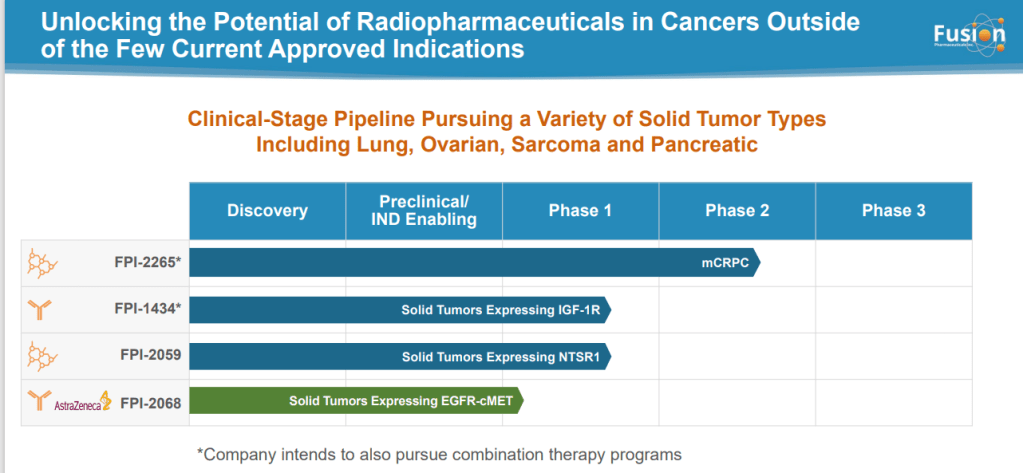
The company’s lead asset, known as FPI-1434, is currently being tested in advanced solid tumors in a 30-patient phase 1 study. It combines an antibody targeting the cancer biomarker IGF-1R and a radioactive isotope of actinium that has shown promise in treating prostate cancer. Though this treatment uses an antibody, the linker technology can be applied to other targeting compounds, such as small molecules. 

Fusion has a handful of preclinical programs behind FPI-1434 and plans to build its pipeline through internal discovery, in-licensing targeting molecules and striking up new partnerships, the company said in a statement. 

“The investment positions us to implement our clinical and partnering strategies around [225Ac]-FPI-1434, expand our team and fully exploit the unique advantages of our linker technology,” said Fusion CEO John Valliant, Ph.D., in the statement. 

Though targeted radiotherapy has been around for decades without stirring up the excitement surrounding other classes of cancer drugs, the field may just be heating up. Novartis at least seems to think so; in the span of one year, the Big Pharma inked two acquisitions totaling $6 billion to get its hands on radiotherapies from Advanced Accelerator Applications and Endocyte that use small molecules to zero in on cancer cells.

Fusion Pharmaceuticals Announces Pricing of Initial Public Offering – PR Newswire 6/25/2020

Fusion Pharmaceuticals Inc. (NASDAQ: FUSN), a clinical-stage oncology company focused on developing next-generation radiopharmaceuticals as precision medicines, today announced the pricing of its initial public offering of 12,500,000 common shares at a public offering price of $17.00 per share. All of the shares are being offered by Fusion. The gross proceeds of the offering, before deducting underwriting discounts and commissions and other offering expenses payable by Fusion, are expected to be $212.5 million. In addition, Fusion has granted the underwriters a 30-day option to purchase up to an additional 1,875,000 common shares at the initial public offering price.

The shares are expected to begin trading on the Nasdaq Global Market on June 26, 2020 under the ticker symbol “FUSN.” The offering is expected to close on June 30, 2020, subject to the satisfaction of customary closing conditions.

Morgan Stanley, Jefferies, and Cowen, are acting as joint book-running managers for the offering. Wedbush PacGrow is acting as lead manager for the offering.

AstraZeneca and Fusion team up on oncology radiopharmaceuticals – Pharmaceutical Technology 11/16/2020

US-Canadian Fusion Pharmaceuticals is collaborating with Anglo-Swedish pharma giant AstraZeneca to develop next-generation radiopharmaceuticals, known as targeted alpha therapies (TATs), to treat cancer.

For this partnership, “Fusion will bring the radioisotope and linker technology, as well as expertise in radiopharmaceutical development, manufacturing and supply chain,” explains the company’s CEO John Valliant. Fusion’s Fast-Clear linker technology allows for isotopes to be delivered to tumour cells and also be rapidly cleared from the body.

Valliant adds: “AstraZeneca will bring…their industry-leading antibody portfolio and oncology expertise.

AstraZeneca Oncology research and development senior vice-president and head of research and early development Susan Galbraith noted in a release: “With this collaboration, we will seek to identify synergies between our pipelines to unlock the full potential of our medicines, and also to develop novel targeted radiopharmaceuticals.

“We believe that the Fusion team’s expertise in next-generation radiopharmaceuticals complements AstraZeneca’s extensive research and development portfolio.”

According to the terms of the agreement, Fusion and AstraZeneca will jointly discover, develop and have the option to co-commercialise the novel TATs in the US. Fusion will receive an upfront payment from AstraZeneca and will also be eligible for future development milestone and other payments.

TRIUMF Enters Collaboration with Fusion Pharmaceuticals to Boost Production of Actinium-225, a Cancer-Fighting Medical Isotope – Globe Newswire 12/16/2020

TRIUMF, Canada’s particle accelerator centre, today announced it has entered into a collaboration agreement with Fusion Pharmaceuticals Inc. (Nasdaq: FUSN), a clinical-stage oncology company focused on developing next-generation radiopharmaceuticals as precision medicines. Under the agreement, Fusion will provide a financial investment enabling TRIUMF to upgrade its actinium-225 production infrastructure, and in return will receive preferred access to actinium-225, a rare medical isotope that shows great promise in new, cutting-edge cancer therapies.

An alpha-emitting isotope with a short half-life, actinium-225 can be combined with a molecular agent that specifically targets cancer cells, seeking out and destroying the cancer while leaving the surrounding tissue unharmed. The new collaboration will enable TRIUMF to significantly increase its production and delivery of actinium-225.

“Today’s announcement marks an important step in positioning Canada to play a leading role in the development and deployment of next-generation radiotherapies, and in ensuring that researchers and patients around the world have a stable supply of life-saving medical isotopes,” said Dr. Jonathan Bagger, Director of TRIUMF. “Enabled by decades of public investment in TRIUMF’s infrastructure and research programs, this collaboration recognizes the laboratory’s capacity to drive innovation, moving this promising treatment closer to market.”

“Given Fusion’s opportunity to expand our pipeline of actinium-based Targeted Alpha Therapies (TATs), and the importance of isotope production in the supply chain of radiopharmaceuticals, we will continue to proactively address and prioritize actinium supply in our strategic plans,” said Dr. John Valliant, Chief Executive Officer of Fusion. “We are excited to collaborate with TRIUMF, a leader in isotope production, as part of these plans.”

“With its Targeted Alpha Therapy platform technology, Fusion has an opportunity to impact the cancer treatment landscape,” said Kathryn Hayashi, Chief Executive Officer of TRIUMF Innovations. “Through this collaboration agreement, we are partnering with a premier developer of innovative radiotherapies to deepen TRIUMF’s leadership position in isotope production to help save the lives of patients in Canada and around the world”. Read more about the announcement here.

About TRIUMF
TRIUMF is Canada’s particle accelerator centre. The lab is a hub for discovery and innovation, inspired by a half-century of ingenuity in answering some of nature’s most challenging questions. From the hunt for the smallest particles in the universe to the development of new technologies, TRIUMF is pushing frontiers in research, while training the next generation of leaders in science, medicine, and business. Learn more about TRIUMF’s work to produce more actinium-225 here. Discover more at www.triumf.ca and connect on Facebook, Twitter, and Instagram: @TRIUMFLab.

Fusion Pharmaceuticals, Merck to Study Targeted Radiation, Keytruda Combo in Certain Solid Cancers – Precision Medicine Online 5/6/2021

Fusion Pharmaceuticals said on Thursday that it has partnered with Merck on a clinical trial evaluating the combination of Fusion’s targeted radiotherapy, FPI-1434, and pembrolizumab (Merck’s Keytruda) for patients with solid tumors expressing insulin-like growth factor 1 receptor (IGF-1R).

The companies will partner on a Phase I/II clinical trial to evaluate the safety, tolerability and pharmacokinetics of FPI-1434 plus the PD-1 inhibitor pembrolizumab. FPI-1434 is a radio-immunoconjugate therapy designed to deliver alpha-emitting isotopes to tumor cells expressing IGF-1R. Fusion describes this as “targeted alpha therapy,” or “TAT,” which combines an alpha particle-emitting isotope with antibodies and other targeted molecules and is designed to deliver the therapeutic payloads to specific tumor cells expressing the target.

According to Fusion, the trial of the combination regimen will begin about six-to-nine months after a recommended Phase II dose is established in a trial investigating FPI-1434 monotherapy. Under the terms of the partnership, Fusion will sponsor the trial and Merck will supply pembrolizumab.

“With our strong preclinical data demonstrating promising activity with FPI-1434 and immuno-oncology agents, we believe we have an opportunity to improve efficacy in tumor indications where Keytruda is approved, and to potentially expand into new tumor indications,” Fusion CEO John Valliant said in a statement. “This collaboration with Merck builds off our research on the mechanism of action of alpha radiation and aligns with our goal to expand the utility of radiopharmaceutical therapies, including advancing into earlier lines of cancer therapy.”

2021년에는 BD를 강화하기 위해서 CBO & President로 Mohit Rawat과 SVP of BD로 Eric S. Hoffman 박사를 영입했습니다. 에릭은 제가 이전 회사에서 Merck와 M&A 딜을 할 때 큰 역할을 했던 사람입니다. 또한번 큰 사고를 쳤군요.

2022년에는 두개의 펩타이드 딜이 있었습니다. 48Hour Discovery와 Pepscan과의 공동연구계약 발표가 있었습니다.

Fusion Pharmaceuticals Announces Research Collaboration With 48Hour Discovery To Develop Peptide-Based Radiopharmaceuticals – Press Release 1/11/2022

Founded in 2017, 48Hour Discovery Inc. (48HD) is a Canadian biotechnology company focusing on the development of peptide based drugs. 48HD is headquartered in Edmonton, Alberta with satellite sites in San Diego, California and Seoul, South Korea. The 48HD genetically-encoded platform technology and cloud-based discovery management enables rapid identification of pharmaceutical leads in the billion-scale macrocycle therapeutic space. The company has a number of internal discovery projects underway, as well as contracts with five major pharmaceutical companies. For additional information please visit: https://48hourdiscovery.com

Fusion Pharmaceuticals Announces Research Collaboration With Pepscan To Develop Peptide-Based Radiopharmaceuticals – Press Release 1/11/2022

Pepscan is an all-in-one partner in peptides, building on 25 years of experience in advancing and applying peptide expertise to facilitate customers in the development and production of peptides. At its end-to-end facility in Lelystad, the Netherlands, Pepscan offers a range of patented technologies, phage display capabilities, a lead-optimization array platform, and production facilities for R&D- to GMP-grade peptides, including libraries and neoantigen vaccines. Among its patents is the CLIPS™ technology, which locks peptides into active conformations.

Pepscan has a proven track record in the field of radiopharmaceuticals and synthesized precursors for radiolabeled peptides suitable for a wider range of applications. Its unique CLIPS™ phage display platform screens libraries with billions of different peptides and enables the discovery of highly constrained de novo peptides with enhanced affinities, selectivities and proteolytic stabilities. Next to the peptides emerging from the discovery platform, Pepscan has successfully produced radiopharmaceutical peptides at GMP grade as developed by customers themselves.

Fusion Pharmaceuticals And Niowave Announce Actinium-225 Collaboration And Supply Agreement – Press Release 6/10/2022

Fusion Pharmaceuticals Inc. (Nasdaq: FUSN), a clinical-stage oncology company focused on developing next-generation radio pharmaceuticals as precision medicines, and Niowave, Inc., a manufacturer of medical radioisotopes from radium and uranium, today announced that the companies have entered into a collaboration and supply agreement for the development, production, and supply of actinium-225. Under the agreement, Fusion will invest up to $5 million in Niowave to further develop their technology to increase current production capacity of actinium-225, and in return Fusion will have guaranteed access to a pre-determined percentage of Niowave’s capacity of the resulting actinium-225, as well as preferred access to any excess supply produced. As part of the agreement, Fusion will also have an option to invest in future production of actinium-225 to scale with Fusion’s needs.

“As excitement for the tumor-killing potential of alpha-emitting radio pharmaceuticals increases, we intend to stay at the forefront of actinium development and supply to support our growing pipeline of targeted alpha therapies,” said Fusion Chief Executive Officer John Valliant, Ph.D. “We continue to prioritize manufacturing and access to actinium as a critical component of Fusion’s platform, and our partnership with Niowave further strengthens and diversifies our supply chain as we advance multiple actinium-based radio pharmaceuticals in the clinic.”

“The Niowave team has worked hard to scale up our actinium-225 production to the millicurie level and this has allowed us to start working with oncology community partners,” said Niowave Chief Executive Officer/Senior Scientist Terry Grimm, Ph.D. “We have been watching Fusion’s progress in the development of their pipeline of targeted alpha therapies and we are very excited to partner with them on this journey.”

Fusion is developing actinium-based TATs leveraging the potency and precision offered by alpha particles. Actinium-225 decay gives off four alpha emissions in relatively rapid succession, maximizing the damage to the DNA of tumor cells, with a 10-day half life that allows for central manufacturing and distribution of products to clinical sites in a ready-to-use form. Fusion currently has existing actinium supply arrangements with TRIUMF and the U.S. Department of Energy (DOE).

Fusion Pharmaceuticals And BWXT Medical Announce Actinium-225 Partnership To Scale Supply For Developing Targeted Alpha Therapies – Press Release 1/5/2023

Fusion Pharmaceuticals Inc. (Nasdaq: FUSN), and BWXT Medical Ltd., a subsidiary of BWX Technologies, Inc. (NYSE: BWXT), today announced that the companies have entered into a preferred partner agreement for the supply of actinium-225. Under the agreement, BWXT Medical will provide predetermined amounts of Fusion’s actinium supply needs at volume-based pricing.

Actinium-225 is an alpha-emitting isotope used in targeted alpha therapies (TATs) that combine the isotope with specific tumor-seeking targeting vectors to kill cancer cells while minimizing the impact to healthy tissues. There is growing demand for the isotope but a limited number of suppliers who are currently able to produce meaningful quantities of high purity actinium.

Fusion Chief Executive Officer John Valliant, Ph.D., said, “Fusion’s portfolio of clinical-stage targeted alpha therapies is expanding, with three proprietary programs in clinical trials and additional programs advancing under our collaboration with AstraZeneca. Based on emerging clinical data in the literature which show the power of alpha particles over conventional beta emitters, we continue to proactively prioritize access to actinium as a critical component of Fusion’s development plans and we are excited to partner with BWXT Medical. As an established global leader in medical isotope manufacturing and supply with proven ability to produce high purity actinium, BWXT Medical has the necessary infrastructure and shipping logistics capabilities to support both clinical and commercial scale manufacturing and distribution of medical isotopes. This agreement increases our existing actinium supply for both current programs as well as future business development opportunities and partnered programs, diversifies our supply chain, and establishes a relationship to collaborate on longer-term commercial production needs.” 

BWXT Medical President and Chief Executive Officer Jonathan Cirtain, Ph. D., said, “Excitement for the potential of targeted alpha therapies to treat cancer is growing, and we have made the necessary investments in infrastructure and intellectual property to help meet the increasing global demand for actinium. BWXT Medical is now producing high-purity non-carrier added actinium-225. Fusion is a leading developer of targeted alpha therapies, and we are pleased to work with them as their clinical programs continue to advance.”

Fusion Pharmaceuticals To Acquire Phase 2 Program For 225Ac-PSMA I&T, A Radiopharmaceutical Targeting Metastatic Castrate Resistant Prostate Cancer – Press Release 2/13/2023

Fusion Pharmaceuticals Inc. (Nasdaq: FUSN) (“Fusion”), a clinical-stage oncology company focused on developing next-generation targeted alpha therapies (“TATs”) as precision medicines, today announced the acquisition from RadioMedix, Inc. (“RadioMedix“) of the investigational new drug application (“IND”) for an ongoing Phase 2 clinical trial (the “TATCIST” trial) evaluating 225Ac-PSMA I&T, a small molecule targeting prostate specific membrane antigen (“PSMA”) expressed on prostate cancers. Following the closing, the alpha-emitting radiopharmaceutical being evaluated in the TATCIST trial will be known as FPI-2265. 

“We are pleased to announce this acquisition, which adds an ongoing Phase 2 program for a validated cancer target to our pipeline of innovative TATs,” commented Fusion Chief Executive Officer John Valliant, Ph.D. “From our inception, Fusion has recognized the potential opportunity for actinium-based therapies to address unmet needs in cancer given the power and potency of alpha radiation. We believe that with Fusion’s TAT development expertise, and early investments that provide us with our actinium supply advantage, we are uniquely positioned to be first-to-market with an actinium-based PSMA agent.”

“A growing body of clinical data demonstrates the power of targeted alpha therapies in prostate cancer, including for patients who progress on or after lutetium-based PSMA therapies,” said Oliver Sartor, M.D, Laborde Professor for Cancer Research and Medical Director at Tulane Cancer Center. “With more than 250 patients treated with actinium-based radiopharmaceuticals targeting PSMA in investigator sponsored studies, this class of therapy has both the efficacy data and safety profile that supports continued development. I believe 225Ac-PSMA I&T will have the potential to target a growing patient population with significant unmet need. In addition, it has the potential to move into earlier lines of therapy as monotherapy as well as in combination with other agents.”

The TATCIST trial is designed to evaluate patients with metastatic castration-resistant prostate cancer (“mCRPC”) with progressive disease, including patients who are naïve to PSMA targeted radiopharmaceuticals and those who have been pre-treated with 177Lu-based PSMA radiopharmaceuticals such as PLUVICTO™. The trial is expected to evaluate approximately 100 patients with four treatment cycles per patient occurring every eight weeks. Patients are initially dosed at 100 kBq/kg with dose de-escalation possible based on biochemical response. Efficacy will be assessed using change in PSA levels and radiographic response.

Fusion plans to expand the Phase 2 program to additional sites and expects to report data on 20 to 30 patients in the first quarter of 2024.

“Having treated mCRPC patients for many years, I initiated the TATCIST trial to address the unmet needs for the many patients who are not adequately addressed with currently available therapies,” said Ebrahim Delpassand, M.D., Chairman and CEO of RadioMedix and Medical Director of Excel Diagnostics & Nuclear Oncology Center. “Given Fusion’s radiopharmaceutical development capabilities, leadership in Actinium supply and established infrastructure, we look forward to this preeminent partnership to  advance FPI-2265 through the Phase 2 program for the benefit of our patients.”

Dr. Valliant continued, “With one Phase 2 program, three ongoing Phase 1 programs, and an IND submission through our collaboration with AstraZeneca expected in the first quarter of 2023, Fusion continues to extend its leadership in targeted alpha therapy development. Following the encouraging data we reported from the cold antibody sub-study of the FPI-1434 trial in June, we continue to dose escalate and we look forward to reporting the preliminary Phase 1 data in the second quarter of this year. The FPI-1434 data will be the first in what we expect will be multiple clinical updates generated from our pipeline over the next 24 months.”  

Private Placement Financing

In connection with the closing of the acquisition of the TATCIST trial and related assets, Fusion has agreed to sell an aggregate of approximately 17.6 million common shares to certain accredited institutional investors in a private placement in public equity financing (the “Offering”). The Offering is expected to result in gross proceeds to Fusion of approximately $60.0 million, before deducting placement agent fees and other offering expenses payable by Fusion.

Pursuant to the terms of the securities purchase agreement, at the closing of the Offering, Fusion will issue approximately 17.6 million of its common shares at a price of $3.40 per share, equal to the closing price of Fusion’s common shares, as reported by Nasdaq on February 10, 2023. The closing of the Offering is subject to customary closing conditions and is expected to occur on or about February 16, 2023.

Morgan Stanley and Jefferies served as co-placement agents for the Offering. New and existing investors in the Offering include Avidity Partners, Federated Hermes Kaufmann Funds, a fund affiliated with Deerfield Management Company, L.P., Invus, Perceptive Advisors, and Woodline Master Fund LP.

Upon the closing of the Offering, Fusion anticipates having $248.0 million in cash and cash equivalents, which it believes will be sufficient to fund its planned operating expenses and capital expenditure requirements into the first quarter of 2025.

The offer and sale of the foregoing shares are being made in a transaction not involving a public offering and have not been registered under the Securities Act of 1933, as amended (the “Securities Act”). The shares being issued in the private placement may not be offered or sold in the United States or Canada absent registration or pursuant to an exemption from the registration requirements of the Securities Act and applicable state securities laws or pursuant to an exemption from the prospectus requirements of Canadian securities laws, as applicable. Fusion has agreed to file a registration statement with the Securities and Exchange Commission covering the resale of the shares acquired by the investors in the private placement.

This press release does not constitute an offer to sell or the solicitation of an offer to buy the securities, nor shall there be any sale of the securities in any state in which such offer or sale would be unlawful prior to the registration or qualification under the securities laws of such state. Any offering of the shares under the resale registration statement will only be by means of a prospectus.

Fusion Conference Call Information

Fusion will host a live conference call and webcast today beginning at 4:45 p.m. ET to discuss the acquisition. To access the live call, please dial 1-877-870-4263 (U.S.), 1-855-669-9657 (Canada) or 1-412-317-0790 (international) and reference Fusion Pharmaceuticals. A webcast of the conference call will be available under “Events and Presentations” in the Investors & Media section of Fusion’s website at https://ir.fusionpharma.com/overview. The archived webcast will be available on Fusion’s website shortly after the conclusion and will be available for 90 days following the event.

About RadioMedix

RadioMedix, Inc. is a clinical-stage biotechnology company, focused on innovative radiopharmaceuticals for diagnosis, monitoring, and Targeted Alpha Therapy (“TAT”) of cancer. The company has also established facilities including a drug discovery center for the early probe development, a pre-clinical core facility for in vitro and in vivo evaluation of radiopharmaceuticals, and 27,500 SQF cGMP manufacturing and analytical suite for Phase I-III clinical trials, and the large-scale post-approval commercial manufacturing, also known as the Spica Center. To learn more, visit www.radiomedix.com

Fusion Pharmaceuticals Enters Into Exclusive Worldwide License Agreement With Heidelberg University And Euratom For Actinium-Based PSMA Targeted Radiotherapy – Press Release 2/16/2024

Fusion Pharmaceuticals Inc. (Nasdaq: FUSN), a clinical-stage oncology company focused on developing next-generation radiopharmaceuticals as precision medicines, today announced that it has entered into an exclusive worldwide license agreement with Heidelberg University and Euratom represented by the European Commission, Joint Research Centre (together, the “Licensors”). The license agreement grants Fusion exclusive worldwide rights to utilize, develop, manufacture and commercialize compounds covered by the patent, which includes 225Ac-PSMA I&T (“FPI-2265”) for the treatment of prostate specific membrane antigen (PSMA)-expressing cancers. In addition, Fusion and the Licensors have signed an agreement to settle the parties’ dispute related to an inter partes review (“IPR”) of a U.S. patent owned by the Licensors which was instituted in August 2023 by the United States Patent and Trademark Board.

Fusion President and Chief Business Officer Mohit Rawat said, “We are pleased to enter into this exclusive license agreement with Heidelberg University and Euratom for their existing patent as we progress FPI-2265, the most advanced actinium-based PSMA targeted radiotherapy currently in development. With Fusion’s expertise in the development and manufacturing of alpha-emitting radiopharmaceuticals, an operational radiopharmaceutical manufacturing facility, and our advantageous actinium supply, we are well positioned to execute this program. We look forward to providing updates as we reach anticipated upcoming milestones in 2024, including data from the TATCIST study in April and the initiation of our Phase 2/3 registrational study in the second quarter.”

As announced in January 2024, Fusion and the U.S. Food and Drug Administration reached alignment on Fusion’s Phase 2/3 protocol for FPI-2265 in patients with mCRPC who have progressed following treatment with lutetium-based radiopharmaceuticals. The updated development plan includes a Phase 2 dose optimization lead-in, expected to complete enrollment by the end of 2024, and a Phase 3 registrational trial expected to begin in 2025.

Under the terms of the license agreement, Fusion will pay the Licensors an aggregate upfront fee of €1.0 million, in addition to certain regulatory milestones upon potential approval and low single-digit royalties on future net sales of applicable products.
AstraZeneca melds with Fusion in $2B radiopharma buyout – Fierce Biotech 3/19/2024

AstraZeneca is adding to the explosion of interest in radiopharmaceuticals, inking a $2 billion buyout to meld Fusion Pharmaceuticals with its cancer unit.  

Fusion’s pipeline is led by a PSMA-directed radiotherapy, FPI-2265, that is in phase 2 development as a treatment for metastatic castration-resistant prostate cancer (mCRPC). FPI-2265 delivers actinium-225, an alpha radiopharmaceutical that emits more energy than beta therapies such as Novartis’ Pluvicto. By getting the payload to cells that express PSMA, Fusion believes it can improve outcomes in mCRPC.

AstraZeneca formed a collaboration with Fusion in 2020, securing the chance to work on targeted alpha therapies and drug combinations. But, with interest in radiopharmaceuticals intensifying, it has opted to buy Fusion outright rather than rely on the partnership for programs. 

The takeover is worth $2 billion upfront, a 97% premium to Fusion’s closing price Monday. AstraZeneca could pay Fusion shareholders a further $400 million if the biotech meets a certain regulatory milestone

Fusion has focused development of FPI-2265 on post-Pluvicto patients. The biotech expects to see a 30% to 50% reduction in PSA, a prostate cancer biomarker, in the phase 2 trial. If everything goes to plan, the drug candidate could become the first actinium-PSMA-targeted radiotherapy approved for post-Pluvicto use in mCRPC.

Novartis, which helped kick-start the radiopharmaceutical boom, has a rival candidate in development as it seeks to build on the leadership position it established with the approval of Pluvicto in 2022. A recent paper in The Lancet Oncology suggested such therapies are effective in mCRPC.

FPI-2265 gives AstraZeneca an early opportunity to generate a return on its investment, but the full value of the acquisition may take longer to realize. Fusion has other molecules in development, some of which AstraZeneca knows well from its collaboration. As importantly, the biotech has invested in the supply of actinium, insulating it from a bottleneck that could throttle the availability of alpha emitters.

Fusion is producing clinical, GMP doses at its own facility and works with a network of service providers. Radioisotopes have short half-lives and are made at relatively few production sites globally. The facilities require specialized capabilities distinct from those needed to produce other drug modalities. All those factors create barriers to entry that could limit competition.

Buying Fusion will allow AstraZeneca to vault some of those barriers. The Anglo-Swedish drugmaker is the latest in a series of Big Pharma companies to identify M&A as the way to participate in the rush to realize the potential of radiopharmaceuticals.  

Eli Lilly added alpha and beta assets and supply capabilities by acquiring Point Biopharma Global for $1.4 billion. Bristol Myers Squibb joined the party by offering $4.1 billion for alpha specialist RayzeBio. The recent flurry of activity was preceded by Novartis’ $3.9 billion takeover of Advanced Accelerator Applications in 2017.
노잼투자 (13) CFA Institute Book – Lifetime Financial Advice: Human Capital, Asset Allocation and Insurance

(Picture: Roger G. Ibbotson, PhD, Yale University)
안녕하세요 보스턴 임박사입니다.

생애주기 자산관리 (Lifetime Asset Management) 에 대해서 요즘 공부를 하고 있는 중입니다. 제가 언젠가 CFP가 되기 위한 것이기도 하지만 제 스스로가 현직에 있을 때 준비를 미리하는 것이 중요하다는 인식에서 비롯되기도 했습니다.

Bucket List (18) – CFP/CKA 되기

시니어 재정관리에 대한 여러가지 SNS에 돌아다니는 다양한 이야기나 정보들이 있지만 결국 원본을 찾아보면 미국 CFA Institute (재정전문가 연구소, Certified Financial Analyst Institute)의 자료들이 아닐까하고 생각합니다. Yale University의 Roger G. Ibbotson 교수는 Lifetime Asset Management에 대해 오랜기간 연구를 해 오신 분으로 Ibbotson Associates라는 회사를 만들어서 운영하시다가 2005년에 $80 Million에 인수되어 현재는 Morningstar의 사업부로 있습니다. 그는 Zebra Capital Management LLC이라는 Hedge Fund의 Founding Partner이기도 합니다.

History of Ibbotson Associates – American Business History Center 7/25/2019 Written by Laurence Seagel

Ibbotson Associates, an investment research and data firm that is now part of the financial data giant Morningstar, Inc. (NASDAQ: MORN; mid-2019 market cap $6 billion), was founded in 1977 by Roger Ibbotson, then a young University of Chicago professor. I was its first employee, in 1979. Ibbotson gave me some “office space” on his floor. He’s an early riser and I’m a night owl, so when he left in the early afternoon, I took over his desk. Eventually, we rented some office space in downtown Chicago.

Ibbotson, with his co-author Rex Sinquefield, had recently completed one of the oddest projects I had ever heard of: collecting data on capital market returns going back to 1926, so that the authors could compare the historical returns on stocks, bonds, “bills” (cash-like, short-term U.S. Treasury obligations), and inflation (that is, a hypothetical asset returning the rate of increase of the Consumer Price Index) – SBBI for short. The research had made the two authors famous at a young age, but it was not clear how to commercialize the information. Among other things, my job was to help Roger update, enhance, and promote the SBBI database and the ideas that accompanied it.

Why was this information useful? For one thing, while investors had been investing in these assets, or assets resembling them, for centuries, nobody knew what rate of return to expect from them. They didn’t even know what rate of return had been earned on them in the past! Ibbotson and Sinquefield’ Stocks, Bonds, Bills, and Inflation answered this latter question, at least over the roughly 50-year period for which we were able to collect data.

Turning historical information into forecasts

And, by inference (and a little simple math), Ibbotson and Sinquefield were able to transform the historical returns into forecasts by assuming that the relationships between the assets’ returns, what they called risk premiums, would be the same in the future – on average – than they were in the past. Only the base rate – the interest rate earned on U.S. Treasury bonds – needed to be adjusted for current market conditions.

At least, that was the hypothesis on which Ibbotson and Sinquefield relied at the time. More recent developments have suggested that risk premiums may be time-varying, for example low when the market is high (because you’re paying a high price for future earnings and dividends, causing future returns to be lower) and high when the market is low.

Bringing risk into the equation

This insight opened up an avenue for forecasting that had not existed before. Ibbotson and Sinquefield not only measured the average return on each asset class, and on the risk premiums – they also documented all of the monthly and annual returns. Doing so made it possible to measure the variability of returns, that is, the amount of risk for which investors were being rewarded, not just the size of the reward.

By “pricing” risk in this way, Ibbotson and Sinquefield not only estimated the mean or expected return on each asset class; they also forecast the whole distribution of potential future returns. They called these extrapolations probabilistic forecasts.

We were already used to probabilistic forecasts of the weather, but in investment finance this was something really new and different. Under Ibbotson and Sinquefield’s influence, probabilistic forecasts have become standard practice in financial planning. “You have an x% chance of earning at least y%,” a phrase that would have baffled most planners before Ibbotson and Sinquefield did their pioneering work, is now heard everywhere.

The emphasis on risk, on deviation from the expectation, is the most important benefit of this approach. And it is important to focus on downside risk – how much can you lose, and how does that compare to what you can afford to lose? – as well as how much you might gain from whatever amount of risk you’re taking.

Ibbotson Associates becomes a business

While the business was initially little more than a professor’s hobby, which made him a little money (and me a lot less), Ibbotson’s goal was to build a profitable going concern and perhaps even sell the business someday to a large financial data provider. We struggled at first to find a business focus; most of the revenue was from one-off, custom consulting jobs, the kind that professors often are asked to do.

But, one day, a young employee suggested printing the famous Ibbotson-Sinquefield historical return graph on a poster. (A sample poster is reproduced below.) The image later appeared on coffee cups, T-shirts, and in every high school economics classroom and every broker’s and financial planner’s office. More importantly, the underlying monthly return data were for sale on digital media, and the number of indexes (representing different asset classes and sub-classes around the world) grew from the original four to thousands. These are now available through Morningstar Direct, a service of Morningstar, Inc., the company that bought Ibbotson Associates in 2005 for about $80 million.

Source: Morningstar Inc. Used by permission.

In addition, Ibbotson Associates provided 401(k) advice, one of the most marketable and valuable financial services. Such advice is used by employers to help their employees allocate among the various investment choices that are made available to them in their retirement savings plans. Ibbotson also developed optimizers (software for making portfolio choices); cost of capital estimators for appraisers, investment bankers, and regulated industries; and many other products that help professionals with investment decision-making. Ibbotson was “fintech” before fintech was a word!

Ibbotson Associates today

Roger Ibbotson, the founder, is now 76 years old, a professor in the practice of finance at the Yale School of Management, and the founding partner of a hedge fund called Zebra Capital. He is also on the board of Morningstar, where his “baby” is a strategic business unit with its own corporate identity. Ibbotson Associates has come a long way from my office on his floor.

Roger Ibbotson 교수님의 강의자료를 올립니다.

함께 나눌 연구자료는 책으로도 출간이 된 것인데 제목은 “Lifetime Financial Advice: Humqn Capital, Asset Allocation and Insurance” (2007)입니다.

먼저 이 책에서 얘기하는 중요한 내용을 정리하고자 합니다.

2장: 인적자본 (Human Capital) 과 금융자본 (Financial Capital)의 합이 총자본 (Total Wealth)가 되는데 25세를 시작점으로 (미국에서는 25세에 첫직장에 취직하기 때문) 25세에는 인적자본이 가장 최고치이고 금융자본은 가장 최저치에서 시작합니다. 나이가 들어감에 따라 인적자본은 점점 줄어들어서 (즉, 연봉의 시장성) 65세경이 되면 거의 최저가 되고 반대로 금융자본은 최고가 됩니다. 그리고 전체적으로는 총자본은 계속 상승한다는 원리입니다. 그러니까 젊을 때에는 인적자본을 극대화해서 돈을 열심히 벌고 일부를 저축 (투자) 해서 계속 금융자본을 축적하고 인적자본이 최저점에 이르렀을 때부터 금융자본으로 살 수 있도록 해야 한다는 것입니다.

3장: 인적자본을 활용해야 하는 젊은 나이에 가장 큰 리스크는 일찍 죽을 수 있다는 리스크가 있습니다. 이것을 Term Life Insurance (생명보험) 으로 헤징할 수 있다는 것을 얘기합니다. 생명보험의 가치는 사실상 40세를 넘어서면서 급격히 낮아집니다. 왜냐하면 인적자본의 가치가 상당히 줄어들기 때문입니다. (즉, 일할 수 있는 나이가 얼마 남지 않았다는 뜻).

4장: 인적자본이 소멸된 65세부터는 금융자본을 인출하면서 살아가기 때문에 금융자본이 점차 줄어들게 되고 50만불의 금융자본을 가지고 있다고 가정하고 매년 $5만불씩 인출을 한다고 하면 95세가 넘은 시점에서 거의 바닥이 나게 됩니다.

그런데 금융자본을 은퇴로 인해 인출할 때 세가지 리스크에 노출될 수밖에 없게 됩니다.

  • 첫째, 금융시장 리스크 (Financial Market Risk): 은퇴시 금융시장이 크게 떨어지면 어떻게 하나?
  • 둘째, 장수 리스크 (Longevity Risk): 내가 만약 너무 오래 살게 되어 말년에 돈이 부족하면 어떻게 하나?
  • 셋째, 소비 불확실성 리스크 (Risk of Spending Uncertainty): 내가 과연 충분한 은퇴자금을 모았는지 어떻게 확신할 수 있는가?

이 세가지 리스크를 관리해야 하는데 아래와 같이 관리할 수 있습니다.

  • 첫째, 금융시장 리스크: 서로 상관관계가 적은 자산군으로 포트폴리오를 만들어 금융시장 리스크를 헤징합니다.
  • 둘째, 장수리스크: 소셜연금과 장수연금으로 헤징할 수 있습니다.
  • 셋째, 소비 불확실성 리스크:
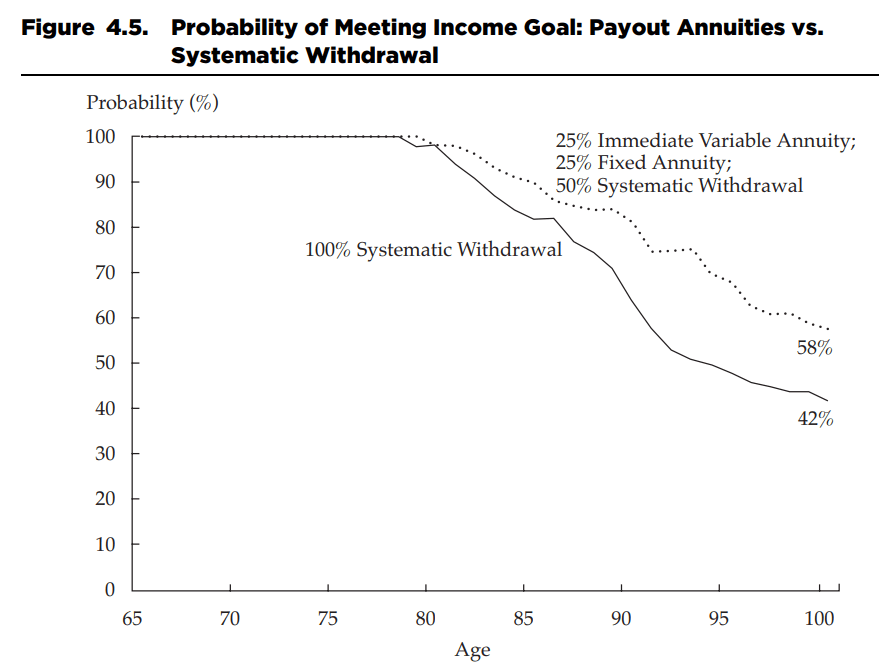
  • 100%를 스스로 관리하며 인출하는 것보다 즉시연금, 고정비 연금과 스스로 인출하는 것을 적절히 병용함으로써 소비 불확실성 리스크를 헤징할 수 있습니다.

여기까지가 4장까지 요약입니다. 다음에는 5장부터 마지막장인 7장까지에 대해 정리하겠습니다.

BIOTECH (152) Frontier Medicines: Covalent Molecular Glue Degraders by Chemoproteomics & AI/ML

(Picture: Daniel K. Nomura, University of California at Berkeley & Co-Founder of Frontier Medicines)

안녕하세요 보스턴 임박사입니다.

UC Berkeley의 Daniel K. Nomura교수팀은 Chemoproteomics Platforms을 이용하여 Covalent Drug Discovery 를 할 수 있다는 연구결과를 발표했고 이를 기반으로 Frontier Medicines가 설립되었습니다.

Frontier Medicines Closes $67 Million Series A, Will Focus on Chemoproteomics – Biospace 6/25/2019

Frontier Medicines closed on a Series A financing round worth $67 million. The round was led by Deerfield Management, DROIA Oncology Ventures and MPM Capital, with participation from DCVC Bio, RA Capital Management and other investors.

The company will focus on chemoproteomics, which it calls a way of interrogating proteins in living systems. This allows them to identify potential new binding targets on proteins, which will allow the development of small-molecule drugs. The company’s technology platform integrates advanced computation and machine learning.

“Our platform currently includes a database of hotspots that cover a majority of human proteins, including those that were previously considered ‘undruggable;’ an expanding library of diverse, covalent compounds being driven by machine learning; and a novel approach to protein degradation,” stated Daniel K. Nomura, co-founder of Frontier. “This platform enables us to go after almost any protein target of interest for therapeutic intervention.”

The company was founded by Nomura, an associate professor of Molecular and Cell Biology, Chemistry, Nutritional Science and Toxicology at UC Berkeley and Chris Varma, who will act as chief executive officer and president. Varma is a well-known entrepreneur who co-founded and was the former chief executive officer of Blueprint Medicines. And finally, the third co-founder is Roberto Zoncu, assistant professor of Molecular and Cell Biology at UC Berkeley.

“Our therapeutic programs are focused on several of the most important and difficult targets in cancer,” stated Varma. “With our platform, we have the ability to address previously inaccessible disease-causing proteins. While we are taking on a considerable challenge, we believe this approach will have a tremendous impact on transforming patients’ lives for the better, which is our ultimate goal.”

The company’s board of directors will include Varma, who is joined by Luke Evnin of MPM Capital, Othman Laraki, an independent board member, Janwillem Naesens of DROIA Oncology Ventures, and Cameron Wheeler of Deerfield Management.

Johannes Hermann is Frontier’s chief technology officer. He was previously the global Head for Data Science at Johnson & Johnson Medical Devices Technology. Before that, he was the head of the Machine Learning and Advanced Analytics department at Janssen Pharmaceuticals, a J&J company.

Frontier Medicines에는 Carmot Therapeutics에서 Amgen의 KRAS G12C Covalent Inhibitor인 Lumakras를 개발한 Daniel Erlanson 박사가 Chief Innovation Officer로 연구를 주도하고 있습니다. Erlanson 박사는 Chemotype Evolution이라는 Fragment-based drug discovery (FBDD) 분야의 리더입니다.

(Picture: Daniel Erlanson, PhD, CIO at Frontier Medicines)

2020년에 Abbvie와 공동연구계약을 체결했고 $55 Million upfront와 $45 Million Milestones 를 포함 총 규모 $1 Billion 계약입니다. E3 Ligase Small molecule을 개발하는 목적을 가지고 있습니다.

AbbVie pays Frontier $55M to pursue hard-to-drug targets – Fierce Biotech12/3/2020

AbbVie has teamed up with Frontier Medicines to develop molecules against hard-to-drug targets. The collaborators will use Frontier’s technology for uncovering hidden binding pockets to develop protein degraders and small molecules against oncology and immunology targets. 

Frontier, a 2019 Fierce 15 company, is built on a platform designed to spot temporary binding sites that open up when proteins move. The platform could reveal ways to drug targets that have long been recognized as therapeutically important but have remained inaccessible to researchers due to their lack of obvious binding sites. 

AbbVie has bought into the idea. The Big Pharma is paying $55 million to enter into a multiyear R&D collaboration with Frontier. AbbVie is also on the hook for up to $45 million in milestones over the next 12 months, plus R&D costs and a package of success-based payments that could top $1 billion.   

The commitments have landed AbbVie the chance to work with Frontier in several areas relevant to its target-discovery technology. AbbVie has tasked Frontier with discovering small molecules directed to E3 ligases, the enzymes that drive the ubiquitination and degradation of proteins. That concept is at the heart of the work of biotechs including Arvinas and Kymera Therapeutics.

AbbVie moved into the protein degradation space in 2019 through a pact with Mission Therapeutics in Alzheimer’s and Parkinson’s diseases. The Frontier collaboration opens another front in AbbVie’s work on protein degradation while also giving it a chance to go after oncology and immunology targets.

In disclosing the collaboration, AbbVie said it has selected certain targets that “are considered well validated but to date, inaccessible.” Frontier’s technology could render the targets accessible and, in doing so, position AbbVie to act on validated biology for the first time. 

AbbVie and Frontier will collaborate on the research and preclinical aspects of the programs. Once a project passes “defined stages of preclinical development,” AbbVie will take over and handle global development and commercialization. The deal gives Frontier the option to share the costs and work for some oncology programs up to the end of phase 2. AbbVie has an option on additional targets. 

The relationship provides external validation to Frontier’s approach. Frontier broke cover last year with a $67 million series A led by Deerfield Management, Droia Oncology Ventures and MPM Capital. Helmed by former Blueprint Medicines CEO Chris Varma and armed with technology developed at the lab of the University of California, Berkeley’s Daniel Nomura, Frontier immediately established itself as a notable name in the expanding pool of biotechs going after “undruggable” targets but lacked a Big Pharma partner. 

Frontier Medicines Raises $88.5 Million to Advance Chemoproteomics Program – Biospace 7/19/2021

Frontier Medicines launched in 2019 with $67 million in financing and a focus on chemoproteomics, which the company described as a method of interrogating proteins in a living system. This is expected to target new spots on cancer cell proteins the company calls hotspots. 

A significant amount of protein surface cannot be targeted by small molecules due to the lack of binding sites. However, the idea of chemoproteomics follows the reasoning that as proteins move within the cells, they created temporary hotspots that new drugs can target. So far, Bar Area-based Frontier Medicines has identified more than 150,000 hotspots on proteins of interest that have the potential to expand the company’s pipeline. 

Last year the company partnered with AbbVie to develop small-molecule therapeutics against high-interest protein targets, including the approximately 600 E3 ligases.

“Between the substantial protein degradation partnership with AbbVie announced at the end of last year and this financing round, we have significantly strengthened our resources to deliver on our vision of developing breakthrough medicines for patients,” Chris Varma, chairman, chief executive officer, and co-founder of Frontier Medicines said in a statement. 

The addition of the $88.5 million from the Series B round will be used to advance this focus. Frontier’s lead inhibitor is aimed at both activated and inactivated forms if KRASG12C, which has been linked to different cancer types, including non-small cell lung cancer, colorectal carcinoma, and pancreatic ductal adenocarcinoma.

Frank McCormick, a professor at the UCSF Helen Diller Family Comprehensive Cancer Center specializing in KRAS biology and a member of Frontier Medicines Scientific Advisory Board, said the ability to target both the active and inactive states of KRASG12C with a small molecule therapeutic is a “long-awaited scientific breakthrough.” A medication with this dual form of inhibition is likely to be more efficacious than a drug that targets the inactive form of the protein only. McCormick said a dual inhibitor could address the “large majority of patients who are non-responders to first generation single-form KRASG12C inhibitors, as well as those patients whose tumors become resistant to the first-generation molecules.”

The Series B financing round was co-led by Woodline Partners LP and RA Capital Management. Deerfield Management Company had equal participation in the round. New investors in the Series B included Deep Track Capital, ArrowMark Partners, Driehaus Capital Management, and Sphera Healthcare. Existing investors DCVC, Droia Ventures and MPM Capital also participated in the Series B financing round.

In addition to the continued development of its pipeline, Frontier Medicines will use some of the Series B funds to expand into the Boston market. The company will open what it called a “state-of-the-art facility” focused on research and development and discovery, pre-clinical development, translational medicine, and early clinical development. 

The Bay State facility will be integrated with Frontier’s Bay Area headquarters. In its announcement, Frontier Medicines did not provide information on how many people will be working out of its planned Boston site. 

Frontier Medicines also formed a Scientific Advisory Board to help guide its research. The board includes Joan S. Brugge, director of the Harvard Ludwig Cancer Center; Giulo Draetta, the chief scientific officer at the University of Texas MD Anderson Cancer Center; Steven Gygi, a professor of Cell Biology at Harvard Medical School; William C. Hahn, the William Rosenberg Professor of Medicine and chief operating officer of Dana-Farber Cancer Institute; Kevin Koch, the former CSO of Array BioPharma and a venture partner with OrbiMed; Frank McCormick, a professor at the UCSF Helen Diller Family Comprehensive Cancer Center and an expert in KRAS biology; Daniel K. Nomura, co-founder of Frontier Medicines and leading expert in chemoproteomics; and Roberto Zoncu, a co-founder of Frontier Medicines and an expert in cancer biology, small GTPase signaling, and autophagy.

Frontier Medicines Raises $80M in Series C, Targets Amgen and BMS in KRAS – Biospace 2/23/2024

Frontier Medicines on Thursday closed its oversubscribed $80 million Series C funding round,  which it will use to advance its potentially first-in-class next-generation KRAS blocker FMC-376.

The financing brings Frontier’s total capital raised to $235.5 million since its founding, according to the announcement. The funding round was co-led by Deerfield Management Company and Droia Ventures. Galapagos NV, a Belgium-based pharmaceutical company, participated as a strategic investor, along with contributions from MPM Capital, RA Capital Management and DCVC Bio.

Frontier also announced on Thursday that it had dosed the first patient in the Phase I/II PROSPER trial, testing FMC-376 in patients with G12C-mutated KRAS cancers.

CEO Chris Varma in a statement called the development a major milestone for the company. “Frontier Medicines has amassed a robust data set that shows FMC-376 is expected to overcome the resistance seen with prior generating single-acting inhibitors, and we are excited to demonstrate this potential in the clinical setting.”

FMC-376 distinguishes itself from other KRAS inhibitors by directly engaging both the inactive and active forms of the G12C-mutated KRAS. This differentiated dual direct mechanism of action could help FMC-376 to potentially overcome the treatment resistance and suboptimal response observed in single-acting KRAS inhibitors.

In lab studies, FMC-376 showed activity against a wide range of KRAS G12C mutant cancer models, including non-small cell lung cancer (NSCLC), pancreatic cancer and colorectal cancer.

Frontier presented preclinical data for the candidate in April 2023 at the annual meeting of the American Association for Cancer Research, demonstrating that FMC-376 is more than 1,000-fold more effective at blocking the interactions of key effector proteins compared with prior-generation inhibitors. This blocking mechanism results in a “rapid and durable” inhibition of KRAS G12C signaling, according to the company.

With FMC-376, Frontier is looking to challenge Amgen and the recently BMS-acquired Mirati in the KRAS arena.

Amgen’s Lumakras (sotorasib) won the FDA’s accelerated approval in May 2021 for the treatment of NSCLC patients carrying the KRAS G12C mutation. To keep it on the market, Amgen ran the Phase III CodeBreaK 200 study as a confirmatory trial to verify Lumakras’ clinical benefit.

However, in October 2023, the FDA’s Oncologic Drugs Advisory Committee found that progression-free survival data from the study could not be reliably interpreted and voted 10–2 against Amgen. The FDA agreed with the advisory committee two months later, denying full approval for Lumakras and requesting an additional confirmatory trial due no later than February 2028.

Mirati’s Krazati (adagrasib) was granted accelerated approval in December 2022 for the same indication. The KRAS blocker then secured a positive opinion from the European Medicine Agency’s Committee for Medicinal Products for Human Use in November 2023. BMS bought Mirati for $4.8 billion in October 2023, with Krazati as one of the acquisition’s prized assets.

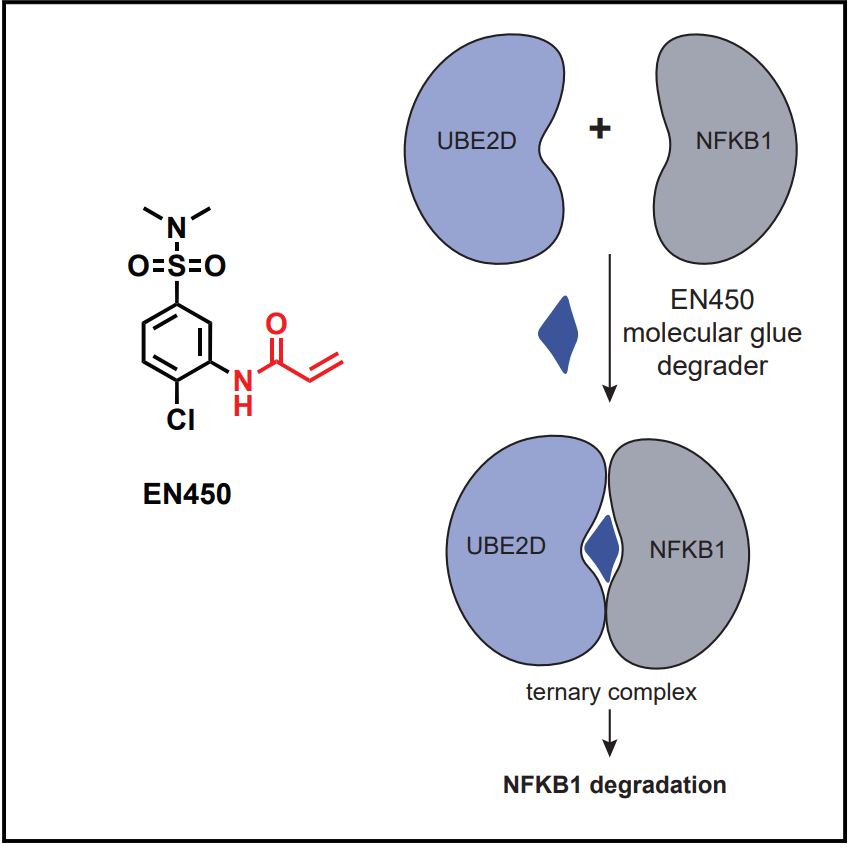
Frontier의 공동창업자인 Daniel Nomura 교수팀은 2023년 Cell Chemical Biology에 Covalent Molecular Glue Degrader 발견에 대해 보고했습니다. 현재 KRAS G12C 약물은 Amgen의 Lumakras와 함께 BMS/Mirati의 Krazati (Adagrasib)이 FDA 승인을 받은 바 있습니다.

BIOTECH (6) – Mirati Therapeutics

Lumakras 개발자가 CIO로 참여하고 있고 Krazati 개발 CSO가 Board of Directors로 참여하고 있는데 과연 FMC-376이 이 두 약물을 넘어설 수 있을지 기대가 되는군요.

BIOTECH (151) Nkarta Therapeutics – CAR-NK의 미래 (2부)

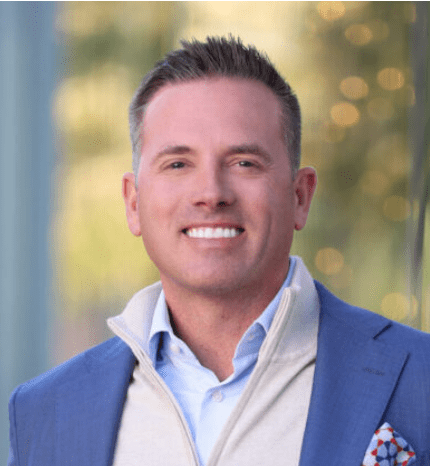
(Picture: Paul Hastings, CEO & President of Nkarta Therapeutics)

안녕하세요 보스턴 임박사입니다.

지난번에 CAR-NK Cell Therapy 회사인 NKarta Therapeutics에 대해 얘기를 하다가 2019년까지의 경과까지 마쳤습니다.

BIOTECH (56) – Nkarta Therapeutics: CAR-NK의 미래 (1부)

2020년에 NKarta Therapeutics는 IPO를 하게 됩니다. $252 Million 규모의 굉장히 큰 IPO였습니다.

Nkarta Announces Pricing of Initial Public Offering – Globe Newswire 7/10/2020

Nkarta, Inc. (Nasdaq: NKTX), a clinical-stage biopharmaceutical company developing engineered natural killer (NK) cell therapies to treat cancer, today announced the pricing of its initial public offering of 14,000,000 shares of common stock at a public offering price of $18.00 per share. Nkarta anticipates total gross proceeds of approximately $252.0 million, before deducting underwriting discounts and commissions and other offering expenses. The shares are expected to begin trading on The Nasdaq Global Select Market on July 10, 2020 under the ticker symbol “NKTX.” All shares of common stock are being offered by Nkarta. The offering is expected to close on or about July 14, 2020, subject to customary closing conditions. In addition, Nkarta has granted the underwriters a 30-day option to purchase up to an additional 2,100,000 shares of common stock at the initial public offering price.

Cowen, Evercore ISI, Stifel and Mizuho Securities are acting as joint book-running managers for the offering.

2021년에 NKarta Therapeutics는 CRISPR Therapeutics와 전략적 제휴를 하게 됩니다.

CRISPR therapeutics, Nkarta pen new cutting-edge cancer tech research pact – Fierce Biotech 5/7/2021

Two next-gen biotech pioneers in natural killer cell therapies and gene editing are coming together to battle cancer.

Under the new deal, financials of which were not disclosed, gene-editing specialist CRISPR Therapeutics and NK cell therapy startup Nkarta will work together to seek out CRISPR/Cas9 gene-edited cell therapies for cancer.

Under the agreement, the companies will both develop and sell two CAR NK cell candidates, one targeting the CD70 tumor antigen and the “other target to be determined,” according to a joint statement.

Nkarta also nabs a license to CRISPR gene editing tech, specifically to edit five gene targets in an “unlimited number” of its own NK cell therapy products. Both biotechs will equally share all R&D costs and profits under the collab products.

Specifics on costs, upfronts, biobucks or targets were not shared by the two companies.

This builds on deals CRISPR has already penned over the years, including most recently an updated pact with Vertex as the biotech continues, alongside its many rivals, to find a way to make the latent promise of gene editing work in the clinic and look ahead to potential first approvals in the future.

“By bringing together CRISPR Therapeutics’ and Nkarta’s highly complementary expertise and proprietary platforms we plan to accelerate the development of potentially groundbreaking genome engineered NK cell therapies,” said Samarth Kulkarni, Ph.D., CEO at CRISPR Tx. “This collaboration broadens the scope of our efforts in oncology cell therapy, and expands our efforts to discover and develop novel cancer therapies for patients.”

Nkarta has had a good run in recent months; last year, it got off a $252 million IPO, one of the biggest life science initial public offerings of 2020, coming off a hefty $114 million B round the year before.

Last year, the company dosed its first patient in the phase 1 trial of its leading asset, NKX101, a first-in-class investigational NK cell cancer immunotherapy engineered to express a chimeric antigen receptor (CAR) targeting NKG2D ligand in certain blood cancers. Nkarta believes using NK cells could clear the hurdles that have limited the success of CAR-T therapies in blood cancers.

“Uniting the best-in-class gene editing solution and allogeneic T cell therapy expertise of CRISPR with Nkarta’s best-in-class CAR NK cell therapy platform will be a major advantage to advancing the next wave of transformative cancer cell therapies,” added Paul Hastings, president and chief at Nkarta.

“With this partnership, Nkarta can systematically apply world-class gene editing across our entire pre-clinical pipeline going forward. CRISPR’s deep understanding of CD70 biology and experience in allogeneic T cell clinical development can accelerate the development of early-stage Nkarta programs, to deliver innovative treatments to patients that much faster.”

Nkarta Announces Proposed Public Offering of Common Stock – Biospace Apr 25, 2022

 Nkarta, Inc. (Nasdaq: NKTX), a biopharmaceutical company developing engineered natural killer cell therapies to treat cancer, today announced that it has commenced a proposed underwritten public offering to issue and sell $150 million of shares of its common stock. The Company also intends to grant the underwriters a 30-day option to purchase up to an additional $22.5 million of shares of its common stock on the same terms and conditions. The offering is subject to market and other conditions, and there can be no assurance as to whether or when the offering may be completed or as to the actual size or terms of the offering. All shares in the offering are to be issued and sold by Nkarta.

Nkarta intends to use the net proceeds from the offering to fund the continued clinical development of NKX101 and NKX019, preclinical studies for research stage programs and the continued buildout of internal manufacturing capabilities, and for working capital and for general corporate purposes.

Cowen, SVB Securities and Evercore ISI are acting as joint book-running managers for the offering.

2022년 12월에 Nkarta는 Clinical Update를 보고했습니다. NKX019는 최고용량인 1.5 Billion cells (3 Doses) 일 때, 4명 중 3명에서 CR과 ORR을 얻어서 초기지만 결과는 나쁘지 않았습니다.

그리고 6개월 후에 다시 Clinical Update를 했습니다.

Fate Therapeutics의 NK Cell Therapy가 실패하면서 Nkarta의 CAR-NK oncology program에 위기가 감지되기 시작합니다. Class action인 것으로 보이죠. 2023년 10월에 Lupus로 NKX019의 임상시험을 할 수 있게 되면서 주가가 100% 이상 급등하였지만 임직원 구조조정이 뒤따랐습니다.

Nkarta stock soars 112% after FDA clears cell therapy to go beyond cancer into lupus – Fierce Biotech 10/18/2023

Nkarta wants cell therapy to go beyond cancer and has been given the FDA green light to move forward with a CAR NK candidate in human trials for lupus—news that sent the company’s stock soaring 112%.

“Autoimmune patients have limited options these days, and those options that they have are often toxic, or hard to take—hard to live with,” Nkarta President and CEO Paul Hastings told Fierce Biotech in an interview. “What we’re hoping to do is to move that patient population into an easier to take, patient-friendly therapy.”

After Nkarta said Oct. 17 that the FDA is allowing a human test of NKX019 in lupus nephritis, the company’s stock rose from $1.47 per share at market open to $3.14 by the end of the day. The allogeneic, CD19-directed CAR NK cell therapy candidate is already being tested out in a phase 1 trial for patients with B-cell malignancies, with top-line data expected next year.

In the shadows of Nkarta’s big announcement lies a workforce reduction, with the company set to lay off 18 employees, according to Securities and Exchange Commission documents filed Oct. 16.

The cuts—which will take place “across the board,” according to Hastings—align with the company’s mission to focus on its later-stage programs, including NKX019.

The layoffs are an attempt to save cash and support operations through 2024, when Nkarta anticipates multiple clinical data readouts. Alongside other cost-cutting measures, the layoffs are expected to extend the company’s cash runway by a year into 2026. 

As of Sept. 30, the biotech had $278.4 million on hand.

Lupus nephritis impacts the kidneys specifically and is one of the most severe forms of systemic lupus erythematosus (SLE), an autoimmune disease in which the immune system attacks its own tissues, causing widespread inflammation and tissue damage.

We’re actively looking at other autoimmune diseases,” Nkarta Chief Medical Officer David Shook, M.D., told Fierce. “There’s lots of diseases that are caused by autoantibodies, not just lupus. And we think that targeting B cells could be helpful in those as well.”

Their theory is supported by a German study among five patients with SLE who received CAR-T cells, Shook said. The study, published last year in Nature Medicine, found all five patients were in remission after three months and that remission was maintained even after the reappearance of B cells beyond three months. 

Anti-CD19 CAR T cell therapy for refractory systemic lupus erythematosus. Nat. Med. 2022,  28, 2124–2132. Georg Schett et al. at Friedrich Alexander University Erlangen-Nuremberg.

Nkarta’s new trial will be a multicenter, open-label, dose-escalation study in patients with refractory lupus nephritis. Patients will receive a three-dose cycle of NKX019 on three separate occasions, each a week apart, after lymphodepletion with cyclophosphamide, an immunosuppressive drug with an established safety profile in lupus that is also used as chemotherapy. The trial is expected to include up to 12 patients, with the first patient set to enroll in the first half of 2024.

Nkarta is also partnering with Lupus Therapeutics, a clinical research affiliate of the Lupus Research Alliance, to help speed up NKX019’s development.

Current lupus treatments include GSK’s SLE drug Benlysta, a biologic therapy approved by the FDA in 2011 that brought in more than $1 billion last year, and AstraZeneca’s Saphnelo, an IV infusion that snagged approval for patients with SLE in 2021.   

“Right now, what’s on the market are largely ineffective and require, more or less, lifetime treatment,” Shook said. 

Bringing cell therapy outside of cancer may be seen as somewhat inaccessible right now, Shook said, adding that there’s “lots of legwork.” However, if NKX019 were to reach the market, Nkarta expects its off-the-shelf availability to reduce patient burden and eliminate the need for costly infrastructure and treatment delays currently associated with autologous cell therapies. The asset is active immediately, is self-sustaining and doesn’t require large cytokine surges from preparative chemotherapy.

Nkarta’s blood cancer CAR stalls again, with falling response rate forcing it out of the race – Fierce Biotech 3/22/2024

Nkarta’s CAR NK blood cancer candidate has again stalled after making a speedy start. The response rate fell away sharply in the latest update, mirroring what happened in an earlier cohort and driving the cell therapy developer to mothball the program.

The off-the-shelf candidate, NKX101, consists of CAR NK cells engineered to express a NKG2D receptor. Through the engineering, Nkarta tried to boost the longevity, potency and activity of NK cells and create a cell therapy that is effective in a range of blood cancers and solid tumors. The drug candidate has failed to live up to those ambitions, despite twice showing promise in small numbers of patients. 

Nkarta reported four complete responses in six acute myeloid leukemia (AML) last year, encouraging it to push ahead. Yet, the next 14 patients only included one complete response. The crumbling response rate, which fell from 67% to 25%, has prompted Nkarta to deprioritize NKX101.

The biotech is yet to completely give up on the asset, with CEO Paul Hastings saying in a statement that the team will “evaluate options for optimizing future study design, dosing schedule and manufacturing.” But Nkarta sees its autoimmune candidate as a better use of the $250.9 million it had at the end of last year. The biotech still expects its cash to last into 2026, a runway made possible by layoffs last year.

William Blair analysts said they view the pipeline reprioritization “positively” in a research note, telling inventors that they believe the shift “accurately reflects increased investor enthusiasm for the potential of allogeneic cell therapies for autoimmune diseases and waning interest in NKX101, particularly in light of the disappointing efficacy in AML.”

The falling response rate echoes what happened in an earlier cohort. In 2022, Nkarta said that three of the first five AML patients to receive the highest doses of NKX101 had complete responses and raised $230 million on the back of the news. However, the biotech only saw one more complete response in the next 13 high-dose patients. 

Nkarta responded to the first collapse of its response rate by switching its focus to a cohort that received a different conditioning regimen. We now know the 67% response rate seen in that cohort was another mirage, not a sign that Nkarta had cracked the CAR NK puzzle by giving cytarabine, a chemotherapy drug, before the cell therapy.

The failure to find a path forward for the cancer candidate leaves Nkarta’s hopes resting on NKX019, the CD19-directed CAR NK prospect that the FDA cleared for testing in lupus nephritis last year. Developers of CD19 cell therapies have surged into lupus over the past 18 months, attracted by data that suggest the treatments may cure the autoimmune disease.

2024년 2월에 발표한 Corporate Presentation에 보면 NKX019의 Lupus Nephritis (SLE)가 가장 앞에 나와 있습니다. Nkarta의 원천 기술이었던 NKG2D를 통한 NKX101은 임상결과가 실망스러웠기 때문에 특별히 진행할 이유가 없어졌고 과연 NKX019의 r/r NHL 결과가 어떻게 나올지도 중요한 관전 포인트가 됩니다. 결국 CAR-T와의 경쟁이지만 CAR-NK는 Allogeneic (Off-the-shelf) 이라는 장점이 있기 때문에 아직 실망하기에는 이르다고 생각합니다. 임상시험을 시작한지 얼마되지 않기 때문에 아직 데이타를 얻는데에는 시간이 좀더 걸릴 것 같습니다. 좋은 임상 결과를 얻어야 다음 펀딩도 가능하지 않을까 싶습니다.

BIOTECH (150) BioNTech SE의 Oncology Pipeline Review

(Picture: Ugur Sahin, PhD, Co-Founder & CEO and Özlem Türeci, PhD, Co-Founder & CMO, BioNTech SE)

BioNTech Acquires Neon Therapeutics to Bolster Immuno-Oncology Pipeline – Biospace 1/17/2020

Mainz, Germany-based BioNTech announced it was acquiring Cambridge, Massachusetts-based Neon Therapeutics in an all-stock deal valued at about $67 million.

Neon’s focus is on neoantigen therapies that have the potential to be both vaccines and T-cell therapeutics. Neoantigens are immune targets generated by mutations inherent in tumors. Its most advanced program is NEO-PTC-01, a personalized neoantigen-targeted T-cell therapy. It is derived of multiple T-cell populations that target the most relevant neoantigens from each patient’s cancer. The company is also working on a precision T-cell therapy program that targets shared neoantigens in specific, genetically defined patient populations. The lead program from that endeavor is NEO-STC-01, which targets shared RAS neoantigens.

Neon Therapeutics was founded in 2015 by Third Rock Ventures. The company was one of BioSpace’s NextGen Class of 2017 biotech startups to watch.

“This acquisition fits with our strategy to expand our capabilities and build our presence in the U.S. and further strengthens our immunotherapy pipeline,” said Ugur Sahin, co-founder and chief executive officer of BioNTech. “I am particularly excited about the adoptive T-cell and neoantigen TCR therapies being developed by Neon, which are complementary to our pipeline and our focus on solid tumors.”

Under the terms of the deal, after the acquisition Neon will merge with Endor Lights, a wholly-owned subsidiary of BioNTech incorporated in Delaware. It will then become a wholly-owned subsidiary of BioNTech. At the close of the deal, BioNTech will issue 0.063 American Depositary Shares (ADS) to Neon shareholders in exchange for each of their Neon shares. This exchange ratio implies a deal value of $67 million, or $2.19 per Neon share, based on BioNTech’s ADS closing price of $34.55 on Wednesday, January 15, 2020.

The deal has been approved by both companies’ boards of directors. It is expected to close in the second quarter of 2020.

BioNTech was founded in 2008 and focuses on personalized cancer treatments. Earlier this month the company announced publication in the journal Science data from preclinical research on its first-in-kind CAR-T cell therapeutic approach to solid tumors. The therapeutic, BNT211, is an autologous CAR-T cell therapy that targets the oncofetal antigen Claudin 6 (CLDN6). It is suggested that the company’s CARVac is a broadly applicable RNA vaccine.

CAR-T has been shown to be effective in blood cancers, but much more limited in solid tumors. BioNTech is focused on developing CAR-T therapies in multiple solid tumors in combination with an RNA vaccine.

In the published data, the therapy was studied in mice with human ovarian cancer transplants. In the research, CLDN6-CAR-T showed complete tumor regression of transplanted large human tumors within two weeks after treatment initiation. The combination with CARVac improved engraftment, proliferation and CAR-T cell expansion, all of which is promising for human studies, which the company plans to launch this year, with ovarian, testicular, uterine and lung cancer.

Of the merger with BioNTech, Hugh O’Dowd, chief executive officer of Neon, said, “We are very proud of all we have accomplished since we founded Neon and look forward to joining forces with BioNTech to continue to build a business that provides life-changing immunotherapy products to patients battling a variety of cancers.”

BioNTech Buys Kite TCR Cell Therapy Plant to Boost US Trials – Biospace 7/19/2021

Germany’s BioNTech announced it is acquiring Kite’s solid tumor neoantigen T-cell receptor (TCR) research-and-development platform and its clinical manufacturing plant in Gaithersburg, Maryland. Kite is a Gilead company.

The company is best known for its mRNA COVID-19 vaccine it developed with Pfizer. However, much of BioNTech’s pipeline is focused on using mRNA for cancer applications. 

BioNTech indicates the acquisition will add production capacity in support of U.S. clinical trials. It already has a cell therapy manufacturing site in Idar-Oberstein, Germany. 

The company’s pipeline includes cancer product candidates built on its CAR-T cell amplifying mRNA vaccine (CARVac) and NEOSTIM platforms in addition to the newly acquired individualized neoantigen TCR program.

“The development of individualized cancer therapies is at the core of our work at BioNTech,” said BioNTech CEO and co-founder Ugur Sahin. “It also strengthens our presence in the U.S., building on our successful integration of adoptive T-cell and neoantigen TCR therapies as part of our acquisition of Neon Therapeutics last year.”

BioNTech picked up Neon Therapeutics in an all-stock deal worth $67 million in January 2020. Neon’s focus is on neoantigen therapies for both vaccines and T-cell therapies. 

Neoantigens are immune targets created by mutations inherent in tumors. Neon’s most advanced program was NEO-PTC-01, a personalized neoantigen-targeted T-cell therapy.

BioNTech’s pipeline includes BNT111 for advanced melanoma, currently in Phase II studies; BBNT112 in Phase I/II for metastatic Castration Resistant Prostate Cancer (mCRPC); and BNT113, also in Phase I studies for HPV16+ head and neck cancer, and approximately 11 others in clinical trials and more in preclinical development. 

On June 18, BioNTech treated the first patient in its BNT111 Phase II trial. It is testing BNT111 in combination with Libtayo (cemiplimab) in anti-PD1-refractory/relapsed unresectable Stage III or IV melanoma. It is being run in collaboration with Regeneron Pharmaceuticals. BNT111 is an intravenous cancer vaccine that uses mRNA to encode four cancer-specific antigens. Libtayo is Regeneron and Sanofi’s anti-PD-1 checkpoint inhibitor.

“Our vision is to harness the power of the immune system against cancer and infectious diseases,” said Özelm Türeci, co-founder and chief medical officer of BioNTech at the time. “We were able to demonstrate the potential of mRNA vaccines in addressing COVID-19. We must not forget that cancer is also a global health threat, even worse than the current pandemic.”

“BNT111 has already shown a favorable safety profile and encouraging preliminary results in early clinical evaluation. With the start of patient treatment in our Phase II trial, we are encouraged to continue on our initial path to realize the potential of mRNA vaccines for cancer patients,” she continued.  

Any Kite staffers working at the Gaithersburg facility will be offered employment with BioNTech. The company also indicates it plans to invest more in the location, including hiring more people. Kite has a new manufacturing site in Frederick, Maryland, to manufacture CAR T-cell therapies that are not part of this deal.

“In order to serve more patients that need cell therapy today, Kite is rapidly growing both through global expansion and seeking new indications for our existing approved CAR T-cell therapies,” said Christi Shaw, chief executive officer of Kite. “This transaction will enable us to focus our energies and investment on accelerating the reach of our current CAR-T-cell therapies and midterm pipeline.”

JPM 2022: BioNTech builds to a Crescendo with $750M biobucks pact for immunotherapies – Fierce Biotech 1/10/2022

After signing yet another deal with COVID-19 vaccine partner Pfizer last week, BioNTech is not stopping anytime soon on the deal front. This time, the vaccine maker is partnering with Crescendo Biologics for a $40 million upfront deal to work on immunotherapies.

BioNTech will provide the upfront fee to the Cambridge, U.K.-based biotech and a potential $750 million in biobucks for immunotherapies against cancer and other undisclosed diseases. The biotech, emboldened and lined with cash from its pandemic vaccine, will choose the targets for the mRNA-based antibodies and engineered cell therapies, the company said on the first day of the annual J.P. Morgan Healthcare Conference.

The German biotech will also provide research funding and handle development in exchange for exclusive worldwide rights on any products that come out of the discovery collaboration, which has an initial timeline of three years.

The deal gives BioNTech access to Crescendo’s “Humabody” platform, which is being used to generate multi-specific therapies. The company has developed CB213, which is not part of the deal, using the platform to target T cells expressing both PD-1 and LAG-3. Humabodies retain the binding and specificity of traditional antibodies but have a smaller size with better tumor penetration and stability, BioNTech said.

The platform is aimed at retaining the binding and specificity of traditional antibodies but utilizing a smaller size with better tumor penetration and stability, BioNTech said.

“Crescendo’s platform provides excellent properties for exploiting novel targets and target combinations which we believe has great potential for the development of multi-specific mRNA and engineered cell-based therapies in a variety of disease areas,” said BioNTech CEO Ugur Sahin, M.D., in a statement.

BioNTech will join Amgen in the multi-specific game, which is a type of medicine that attacks cancer in several different ways. Several bi-specifics have been approved and are in waiting at the FDA or in clinical trials. 

This is the second deal for BioNTech in five days. The company linked arms again with its Cominarty partner Pfizer last week to work on an mRNA-based shingles vaccine. Pfizer dished out $225 million upfront and will pay up to $200 million in biobucks. 

BioNTech jumps into PRAME game, paying Medigene $29M for preclinical T-cell therapy program – Fierce Biotech 2/22/2022

BioNTech, flush with COVID-19 cash, has struck another deal. The latest agreement will see the German biotech pay 26 million euros ($29 million) for a preclinical T-cell receptor (TCR) program from its compatriot Medigene.

Through the deal, BioNTech will take control of a preclinical program targeting PRAME, an antigen that is highly expressed in several solid tumors but largely limited to the testis in healthy tissues. The expression profile of PRAME led Medigene to genetically modify T cells to express both a TCR against the antigen and a PD1-41BB switch receptor designed to prevent inhibition in the tumor microenvironment.

BioNTech is acquiring the program as part of a deal that also gives it exclusive options on other TCRs. The partners will collaborate on the development of TCRs, with Medigene applying its discovery platform to multiple solid tumor targets selected by BioNTech under the terms of a three-year partnership.

In return, BioNTech is paying 26 million euros upfront, plus research funding for the collaboration, and committing to milestones that could top 100 million euros per program. The outlay also gives BioNTech licenses to Medigene’s PD1-41BB switch receptor and precision pairing library for use across its cell therapy programs.

Those cell therapies have played second fiddle as BioNTech’s mRNA capabilities have put it on the map, but they are a key area of focus for the biotech. Last year, BioNTech struck a deal to buy a solid tumor neoantigen TCR R&D platform and clinical manufacturing facility from Gilead’s Kite Pharma to add to its existing capabilities in Germany. The Medigene deal fits into the same strategy. 

BioNTech has also used its cash reserves, which came in at 2.4 billion euros and climbing at the end of the third quarter, to enter into a collaboration with Crescendo Biologics to develop engineered cell therapies as well as mRNA-based antibodies. The string of cell therapy deals was only broken up by the takeover of antibacterial biotech PhagoMed Biopharma for 50 million euros upfront in October.

The addition of Medigene to BioNTech’s list of cell therapy deals sent investors into overdrive. Shares in Medigene soared more than 90% to around 4 euros in early trading. While Medigene’s stock has hovered around the 4-euro mark for much of the past year, it fell to below 2 euros earlier this month. The BioNTech deal marks a rare moment in the spotlight for a biotech now perhaps better known for spawning Adaptimmune and Immunocore than it is for its internal achievements. 

BioNTech sets sights on oral mRNA vaccines with deal to access Matinas delivery technology – Fierce Biotech 4/12/2022

BioNTech has struck a deal to explore oral delivery of mRNA vaccines. Working with Matinas BioPharma, the German mRNA specialist will study the potential for a lipid nanocrystal (LNC) platform to enable new vaccine formulations.

The pandemic catapulted BioNTech into the biotech big leagues as the vaccine it discovered and then developed with Pfizer became a cornerstone of vaccination COVID-19 campaigns around the world. From that position of strength, BioNTech has identified Matinas as a company that can help it build a business beyond the Comirnaty windfall.

BioNTech is paying $2.75 million for exclusive access to Matinas’ LNC platform in the delivery of mRNA vaccines, and will fund some of its new partner’s research expenses related to the collaboration. Talks about a potential licensing agreement are underway.

The deal gives BioNTech a chance to take a closer look at the value the platform could bring to its mRNA vaccines. Matinas, which also has a LNC partnership with Genentech, licensed the platform from Rutgers University to enable the targeted intracellular delivery of a range of molecules, including mRNA.

In the context of mRNA vaccines, the stability of LNC structures has potentially significant implications. According to Matinas, the highly stable structure “allows for the avoidance of extreme cold chain storage temperatures required for maintaining the integrity of [lipid nanoparticles],” such as those used in the administration of Comirnaty. The Pfizer-BioNTech COVID-19 vaccine is stored at -90°C to -60°C.

If the LNC platform can enable mRNA vaccines to be stored at higher temperatures, it would be easier to get the products to people in the developing world, although the pandemic has already increased access to ultracold chain freezers. 

The stability of the LNC structure also opens the door to oral administration. Matinas is already using the platform to enable oral administration of its own molecules and BioNTech wants to assess whether it can open up a new route of delivery of mRNA vaccines. 

BioNTech adds STING to oncology portfolio in €40M small molecule licensing deal with Ryvu – Fierce Biotech 11/30/2022

It may have become a household name during the pandemic, but the drumbeat of announcements from BioNTech this year are a reminder that the German company has far more varied ambitions. With infectious disease and cancer vaccines in various stages of development, the biotech has now licensed a variety of small-molecule programs from Poland’s Ryvu Therapeutics.

Under the multi-target agreement, BioNtech will pay Ryvu 20 million euros ($20.7 million) upfront along with an equity investment of the same amount. Split into two parts, one side of the deal will see BioNTech secure an exclusive global license to develop and commercialize Ryvu’s STING agonist portfolio as standalone small molecules, including as monotherapies and in combination with other therapies.

The stimulator of interferon genes (STING) pathway is an immunity pathway that plays a key role both in responding to infections and autoimmune diseases as well as providing antitumor immunity. Preclinical studies have shown that Ryvu’s STING agonists were able to activate proinflammatory cytokine production and long-lasting immune responses, BioNTech said in a release.

The second part of the agreement will see the two companies jointly undertake drug discovery and research projects to develop multiple small-molecule programs for targets selected by BioNTech. The primary focus of these targets will be immune modulation for oncology, but the biotech has the option to push into other disease areas. Once candidates have been singled out for development, BioNTech will have the option to license them.

BioNTech will fund all discovery, research and development activities, with Ryvu also in line for undisclosed milestone payments and low single-digit royalties.

“Small molecules targeting novel immune signaling pathways have a great potential to increase the efficacy of cancer immunotherapies,” said BioNTech CEO Ugur Sahin, M.D., in a Nov. 30 release. “The collaboration with Ryvu provides us with the opportunity to complement our immunotherapy pipeline with a portfolio of potent immunomodulatory molecules.”

BioNTech’s oncology pipeline is already well underway. The company has 19 candidates across a total of 24 clinical trials, including CAR-T cell therapy candidate BNT211. The furthest developed are phase 2 trials of melanoma vaccine BNT111 and BNT113 for HPV16-positive cancers—which both use the biotech’s FixVac platform—plus a pancreatic cancer hopeful called autogene cevumeran and the bispecific antibody immune checkpoint modulator BNT311.

A number of drug developers have been stung in their attempts to chase the STING pathway. In 2019, Novartis ended work on an intratumoral STING pathway activator candidate developed by Aduro Biotech, while Nimbus Therapeutics also pivoted away from the pathway the following year.

BioNTech isn’t the only one who still sees potential, however. AstraZenecasnagged the global rights to research, develop and bring to market STING inhibitor compounds for $12 million upfront from F-star Therapeutics last year.

BioNTech’s cancer push continues, coughing up $200M for OncoC4’s CTLA-4 antibody – Fierce Biotech 3/20/2023

While BioNTech is still keeping one foot in the COVID-19 arena that made its name, the German company has made a concerted push toward treating cancer in recent months.

That effort took another leap forward Monday as the biotech announced a licensing deal with OncoC4, taking on the latter’s mid-stage CTLA-4-targeting monoclonal antibody, ONC-392, for $200 million in upfront cash. The exclusive licensing and collaboration agreement also includes an undisclosed amount of commercial and clinical milestones.

The deal is evidence of BioNTech’s fervor to keep its foot on the clinical gas pedal, particularly in cancer. ONC-392 is currently being assessed in a phase 1/2 trial in patients with solid tumors as both a monotherapy and combination treatment alongside Merck & Co.’s blockbuster Keytruda. Another phase 2 trial is looking at the same combo treatment in patients with platinum-resistant ovarian cancer. 

The data accrued from the ongoing phase 1/2 trial supports the launch of a phase 3 trial testing ONC-392 as a monotherapy in patients with PD-L1-resistant non-small cell lung cancer, BioNTech said in the release. 

The company believes the newly-acquired antibody has a “differentiated safety profile,” CEO Ugur Sahin, M.D., said. “Despite being a prime target for more than a decade, we believe that targeting CTLA-4 has not reached its full potential in cancer immunotherapy.”

The knock on the target in the past has been a significant level of immune-related adverse events. One systemic review from 2015 concluded that the tradeoff of anti-CTLA4 antibodies was “atypical immune toxicity.” 

ONC-392 slots into an ever-growing cancer pipeline for BioNTech, which includes nearly two dozen clinical-stage assets, five of which are antibodies. Four of the antibodies are part of a collaboration with Genmab, including phase 2 BNT311 currently targeting patients with metastatic non-small cell lung cancer. 

Much of the star power still rests with BioNTech’s cancer vaccine research, particularly after the U.K. government partnered with the company to deliver 10,000 personalized therapies by 2030. As part of the agreement, BioNTech will build a new R&D hub in the country, expanding its European footprint. 

BioNTech moves into ADCs with Duality deal – Biopharmadive 4/3/2023

Dive Insight:

Armed with cash earned from sales of the COVID-19 vaccine it developed with Pfizer, BioNTech has been investing in cancer drug research and development — its primary focus prior to the pandemic.

While BioNTech specializes in messenger RNA, it also has built a pipeline of antibody drugs, too. Most recently, it spent $200 million for rights to a cancer immunotherapy from the biotechnology company OncoC4.

The deal with Duality adds ADCs to BioNTech’s pipeline, taking the company into a fast-growing field. ADCs pair a cell-killing toxin with a targeting compound designed to home in on tumors while sparing healthy tissue. The complex drugs have a long history, but pharmaceutical companies’ interest in them has grown over the past several years, buoyed by clinical trial successes.

The Food and Drug Administration has approved eight ADCs since 2019, including AstraZeneca and Daiichi Sankyo’s breast cancer drug Enhertu. Dramatic study results for that treatment led the agency to expand its approval last summer to include people whose tumors have low levels of a protein called HER2.

Still, while ADCs have shown promise, they can cause severe side effects as well.

Duality’s lead candidate, dubbed DB-1303, also targets the HER2 protein, which is overexpressed in breast cancer and a number of other tumors. The drug is currently in a Phase 2 clinical trial for advanced solid tumors that are positive for HER2.

The other candidate BioNTech gains, DB13-11, is in preclinical development for “multiple cancer types.”

BioNTech isn’t the first Western drugmaker to turn to China-based biotechs for ADC technology. In 2021, Seagen — a pioneer in the field — struck a similarly sized deal with the Yantai, China-based biotech RemeGen to gain access to a HER2-targeting ADC.

BioNTech swiftly axes oral mRNA vaccine project after tech flunks early test – Fierce Biotech 5/11/2023

BioNTech has swiftly rejected an oral mRNA delivery technology. Barely one year after signing up to work with Matinas BioPharma, BioNTech found an initial mouse study failed to show preclinical activity—leading it to join Gilead Sciences on the list of companies to dump the biotech in recent months.

In April 2022, Matinas revealed BioNTech had paid $2.75 million for exclusive use of a lipid nanocrystal (LNC) platform in the delivery of mRNA vaccines. BioNTech agreed to fund Matinas’ research related to the collaboration, which covered formulation, optimization and in vitro testing, and entered into talks about a potential licensing agreement. 

The collaboration made it as far as a study in mice. Thursday, Matinas revealed that the study of the oral mRNA candidate failed to show activity. With the single study now over, BioNTech and Matinas have ended their collaboration.

Matinas’ summary of the collaboration offers insights into the challenges of delivering mRNA orally. The April 2022 statement about the deal said the collaboration would “evaluate the combination of mRNA formats and Matinas’ proprietary LNC platform technology.” However, the mouse study tested a non-LNC formulation of a BioNTech-supplied reporter mRNA.

As Matinas explained, it developed a “nano-formulation, distinct from traditional LNCs” to cope with the “physical complexity and biological fragility of mRNA.” The formulation worked in vitro, Matinas said, “and because of the timelines required under the BioNTech collaboration was brought forward for oral in vivo evaluation.”

While BioNTech is walking away, Matinas made the case that its approach may work, stating that internal in vivo studies of similar non-LNC mRNA formulations “showed activity when administered systemically.” The formulations are stable for at least 17 weeks at 4 degrees Celsius, suggesting they may be easier to ship and store than existing mRNA vaccines based on lipid nanoparticles.

The conclusion of the BioNTech deal comes five months after Gilead pulled out of a deal with Matinas to develop an oral COVID-19 antiviral to focus on its internal candidate. Roche’s Genentech unit recently extended its alliance with Matinas for another year, although, with the biotech completing its obligations related to a third and final molecule in the first quarter, the longer-term prospects remain uncertain.

BioNTech acquires tech company InstaDeep for $549m – Pharmaceutical Technology 8/1/2023

BioNTech has acquired all the remaining shares of technology company InstaDeep in a deal valued at €500m ($549m) in cash. The total deal value excludes the shares BioNTech already owns.

In January 2023, the parties signed an agreement for the acquisition.

UK-based InstaDeep is a technology provider in the fields of artificial intelligence (AI) and machine learning (ML). The takeover follows a collaboration between the two parties since 2019 and an equity investment by BioNTech in InstaDeep through a Series B funding round held in January 2022.

BioNTech expects that the deal will help it establish robust expertise in AI-powered drug discovery and the development of advanced vaccines and immunotherapies for conditions with high unmet medical needs.

BioNTech pays Autolus $250M for manufacturing, CAR-T expertise in wide-ranging collab – Fierce Biotech 2/8/2024

BioNTech has already been tinkering with its manufacturing processes in the run up to CAR-T BNT211 entering pivotal trials. Now, the German biotech has brought British company Autolus Therapeutics on board in an intriguing $250 million upfront collaboration.

The deal means BioNTech can use Autolus’ manufacturing and clinical site network across the U.K. to help efficiently develop BNT211 for pivotal trials in CLDN6+ tumors, the companies said in a Feb. 8 release.

In addition, BioNTech gains an exclusive license to use certain target binders identified by U.K.-based Autolus as well as the option to license additional binders or cell programming technologies to support the German biotech’s own in vivo cell therapy and antibody-drug conjugate (ADC) candidates. Autolus will be eligible to receive milestone payments from any resulting drugs.

In return, BioNTech will support the launch and expansion of Autolus’ lead autologous CD19 CAR-T, dubbed obe-cel, which is awaiting an FDA decision for patients with B-cell acute lymphoblastic leukemia.

BioNTech will also gain co-commercialization options for Autolus’ AUTO1/22 program, which has undergone a phase 1 study for relapse in patients who have received a CAR T-cell therapy for B-cell acute lymphoblastic leukemia, as well as AUTO6NG, which was expected to enter the clinic late last year for children with neuroblastoma.

BioNTech described the agreement as a “strategic collaboration aimed at advancing both companies’ autologous CAR-T programs towards commercialization, pending regulatory authorizations.”

While it appears that both biotechs will benefit from the collaboration, Autolus’ bank balance definitely wins out. BioNTech is not only handing over $50 million cash but will also buy $200 million of Autolus’ American depositary shares (ADSs) in a private placement. In return, BioNTech gets the right to appoint a director to Autolus’ board and is eligible for up to mid-single digit royalties on obe-cel sales.

To coincide with the BioNTech announcement this morning, Autolus said it was making a public offering of a further 58.3 million ADSs, which are expected to bring in gross proceeds of $350 million.

Autolus CEO Christian Itin said the deal with BioNTech was “a remarkable opportunity to leverage our core capabilities, accelerate pipeline programs, realize cost-efficiencies and expand opportunities beyond autologous cell therapies.”

Back in August, BioNTech executives attributed part of the success of the CLDN6 CAR-T program BNT211 in a solid tumor clinical trial to the company’s new manufacturing process. In today’s release, the biotech said it plans to have “10 or more ongoing potentially registrational clinical trials in the pipeline by the end of 2024,” which include BNT211 in relapsed or refractory germ cell tumors.

“The collaboration with Autolus enables us to expand our BNT211 program into trials for multiple cancer indications in a cost-efficient way,” BioNTech’s CEO Ugur Sahin, M.D., said in today’s release. “Autolus’ state-of-the-art manufacturing facilities’ set-up for clinical and commercial supply will enhance our own capacities in addition to our existing U.S. supply network and the ongoing expansion of our site in Gaithersburg, Maryland.”

BIOTECH (149) Mirador Therapeutics: Prometheus Biosciences Reunion after Merck’s $11B M&A

(Picture: Mark C. McKenna, Founder & CEO of Mirador Therapeutics)

안녕하세요 보스턴 임박사입니다.

작년 6월에 Merck는 Prometheus Biosciences를 $10.8 Billion에 All-cash deal로 인수합니다. Merck의 Presentation을 보면 Prometheus의 Pipeline 중 PRA023 (MK-7240, Potential Best-In-Class & First-in-Class TL1A Antibody)에만 관심이 있습니다.

Prometheus에는 PRA023 말고도 PRA052 (CD30 ligand mAb)를 비롯한 다양한 Early-Stage Programs이 있었습니다. Merck는 이들 프로그램에는 관심이 없는 것 같습니다.

Merck Finalizes $10.8B Prometheus Buy – Biospace 6/19/2023

Merck finalized its acquisition of immune-focused Prometheus Biosciences for approximately $10.8 billion, scoring five clinical and pre-clinical candidates for inflammatory bowel and immune-mediated diseases on Friday.

Merck announced that Prometheus would now function as a fully-owned subsidiary. The leading candidate under Prometheus, originally designated for the treatment of ulcerative colitis and Crohn’s disease, has now been rebranded as MK-7240. This therapy serves as a catalyst, moving Merck further into the immunology space, an area in which the company has previously had limited involvement.

Original story published April 17:

Merck Acquires Prometheus Biosciences for Nearly $11 Billion

As per the terms of the all-cash agreement, Merck will buy all of Prometheus’ outstanding shares for $200 a piece, representing a 75% premium to Prometheus’ Friday closing price of $114. The companies expect to close the deal in the third quarter of 2023.

At the center of the transaction is Prometheus’ investigational monoclonal antibody, PRA023, which is set to enter late-stage studies later this year for ulcerative colitis (UC) and Crohn’s disease (CD). The drug targets and inhibits the action of tumor necrosis factor (TNF)-like ligand 1A (TL1A), a key immune factor that plays a role in both inflammation and fibrosis in intestinal immune-mediated disease.

In December, Prometheus announced results from Phase II and IIa studies that showed promising efficacy and safety in both inflammatory bowel diseases.

In the Phase II ARTEMS-UC study, 26.5% of patients with moderately-to-severely active UC reached clinical remission 12 weeks after receiving PRA023, as opposed to 1.5% of placebo comparators. Prometheus’ candidate also demonstrated superior endoscopic improvement and met all of the trial’s secondary endpoints.

PRA023 also performed well in the Phase IIa APOLLO-CD study, eliciting a 49.1% clinical remission rate in patients with moderately-to-severely active disease, compared with a 16% historical placebo rate. The candidate also led to higher endoscopic response and improved several markers of fibrosis and inflammation.

Both trials enrolled patients who had failed prior lines of therapy.

Prometheus is also evaluating PRA023 in systemic sclerosis-associated interstitial lung disease in Phase II assessments. In March 2022, the company kicked off the Phase II ATHENA-SSc-ILD study in this indication, with topline results expected in the first half of 2024.

Aside from PRA023, Prometheus is advancing four other candidates for immune-mediated indications, all of which will join Merck’s fold after the buyout.

Prometheus’ stock soared 70% in pre-market trading Monday, while Merck’s fell 1%.

Merck의 Prometheus Biosciences 인수가 마무리되고 나서 Mark C. McKenna를 비롯한 ex-Prometheus Biosciences Team은 다시 Mirador Therapeutics를 설립합니다. Arch Ventures, Orbimed와 같은 좋은 투자자들이 든든히 뒤를 받쳐준 덥분에 $100 Million Series A를 하려던 계획은 실제로 4배 규모의 시리즈 A로 마무리짓게 됩니다.

On the Lookout: Prometheus Veterans Launch Mirador Therapeutics With $400 Million – GEN Edge 3/21/2024

After being bought out by Merck in June 2023 for nearly $11 billion, some of the ex-brass from Prometheus Biosciences headed to a spear-shaped peninsula in Mexico surrounded on three sides by white sand beaches, Pacific Ocean waters, and lush tropical flora for some rest and relaxation. But playing golf and taking in the sea breeze in the coveted hideaway of Punta Minta wasn’t enough to keep Mark C. McKenna, the former chairman, president, and CEO of Prometheus Biosciences, from getting back into the game of making medicines. 

“The transaction with Merck was bittersweet,” McKenna told GEN Edge. “They were the right buyers, and it was the right time to do it… But there was a lot of unfinished business at Prometheus. There was a realization that we could all go work for different companies, or we could come back together and finish the mission. The field of data science is evolving so rapidly, so we were only scratching the surface.” 

About three-quarters of a year after the buy-out, McKenna, with some Prometheus veterans and new additions, unveiled Mirador Therapeutics with the vision to bring “end-to-end” precision medicine into immunology and inflammation. Behind a $400 million Series A and their proprietary platform, Mirador360, Mirador plans to leverage open-source human genetics data and cutting-edge data science, which, according to McKenna, will enable the company to file for investigational new drugs (INDs) by 2025. 

“We believe that based on our experience in this category, we have a unique vantage point,” said McKenna, alluding to the company’s name, which directly translates to viewpoint in Spanish. 

Prometheus veterans Olivier Laurent, PhD, Allison Luo, MD, Tim Andrews, Vika Brough, Nori Ebersole, and Jordan Zwick will join McKenna at Mirador Therapeutics in San Diego, CA. As for new faces, Mirador has brought on William J. Sandborn, MD, who previously served as a professor of medicine and chief of the division of gastroenterology at the University of California, San Diego, for ten years and co-founded Santarus and Shoreline Biosciences. 

작년 3월에 발표된 Prometheus Biosciencs 팀 Executive Team 8 명 중 4명이 Mirador에 조인을 합니다.

그리고 UCSD의 William J. Sanborn 박사가 조인을 하기로 되어 있습니다. 그는 IBD 등 Gastroenterology MD 입니다.

“It’s what you do with the data.” 

For Prometheus, that surface consisted of a clinical database and associated biobank exclusively licensed from Cedars-Sinai Medical Center. It included more than 200,000 samples linked to extensive clinical data from 20,000+ patients collected over 20 years. According to McKenna, the problem with that is that technology changes.  

Prometheus360이라고 불리던 지난 20년간 모은 2만개 이상의 환자 시료를 포함한 20만개 이상의 샘플이 있습니다.

이것들을 이용한 Data Science와 Genetics를 통해 새로운 표적을 발굴하는 것이 Prometheus Biosciences의 Platform Engine이었습니다. Patients Samples로 Inflammatory Diseases의 Genetics를 해독하고 새로운 표적을 발굴했는데 이런 과정에서 발굴된 것 중 하나가 PRA023 (MK-7240) 이었습니다. 검증된 플랫폼인 것이죠. McKenna는 소화기 (Gastrointestinal), 폐 및 피부 질환에 관심이 많다고 말했습니다. 이를 위해 학계와 파트너쉽도 하고 좋은 Asset이 있으면 Licensing-In 하려는 계획도 밝혔습니다.

McKenna said, “One of the things that big pharma, whether Regeneron or others, is realizing is that sequencing techniques and data science are evolving so quickly, and we need them to continue to invest in democratizing data and sequencing patients. Thank you, George [Yancopoulos] from Regeneron, for all you do at the UK Biobank and other places because that allows for innovation. I don’t believe the data itself is what’s proprietary. I think that what you do with the data is. The technologies allowing these data sets to be interwoven and translated more rapidly than ever weren’t available months ago.” 

Mirador’s scope of indications will go much broader than just inflammatory bowel disease. McKenna said Mirador is building a data cohort that straddles the disease areas they’re interested in—gastrointestinal tract, lung, and skin diseases—from a combination of open-source data and proprietary academic partnerships. 

End-to-end precision medicine 

According to McKenna, end-to-end means Mirador will discover and validate genetic associations with immuno-fibrotic diseases, identify novel therapeutic targets and optimal target-target pairs for potential combination therapies, develop diagnostics, and stratify heterogeneous patient populations for precise clinical development. 

“No one’s been able to do this before,” said McKenna. “We can put this on steroids and move the field further. It’s not the beginning but certainly not the end either.” 

In the last twenty years, McKenna said that he’s learned several lessons, none more important than properly managing and stratifying risk. This is particularly applicable to committing to using a single therapeutic modality. McKenna said that Mirador will not be afraid to try novel approaches from a modality perspective, but it will not be at the core of what they do.  

“If you think about the evolution here… [In the early days, you started] with an entrepreneur or scientist with one idea and a biased binary outcome,” said McKenna. “Then we shifted to this platform-focused idea: create all this data and then ask, is there actually a product? In version 3.0, it is more like a pipeline and a drug. We are focused on and have expertise in biologics. But we’re agnostic to what it is once it’s in the clinic, and we will have approaches with biologics working on targets that we find interesting and can be best-in-class. You have got to think about this for stratification very carefully.” 

Momentum-gaining investments 

The massive $400 million round of funding began through discussions with six investors, some of whom had previously worked with Prometheus; some were new relationships. 

“I wanted to work with people who had a big vision for doing transformational stuff and had a track record doing so, and I’m not sure you could have found better leads than ARCH [Venture Partners], OrbiMed, and Fairmount [Partners],” said McKenna. “Each of them brings different things to the table. At ARCH, [co-founder and managing director] Bob Nelson has big visionary ideas. [Managing director] Kristina Burrow understands how companies operate. You have OrbiMed’s public-market understanding. You have Fairmount and their ability to build companies. Then you have these different investors, like Fidelity—when was the last time Fidelity entered a Series A? So, we hand-selected these investors.”  

McKenna said the $400 million will go to multiple programs, INDs, and clinical data. It will allow Mirador to in-license external innovation that would benefit from our platform.

“We never went out and said, We want to raise $400 million,” said McKenna. “We said we will raise [$100 million], which started as a snowball. This is more dilution than necessary in the early days. We want to have a war chest to go in, create value, and build a pursuing medicine engine that people just haven’t been able to do.”

McKenna also said that Mirador will engage in external innovation, finding programs and companies that benefit from its platform, expertise, and know-how to accelerate the company’s pace.  

“Time is the new currency, particularly in biotech, and you see a lot of companies spending years and years to figure it out and burning a lot of cash to get there,” said McKenna. “One of the most remarkable things about the journey from Prometheus was that, in three and a half years, we created value, and the goal was never to build something to sell—the goal was to build a great company. If we build a great company and focus on inputs, the output will come. That’s exactly what we’re doing here [at Mirador]. This team is fired up, and it’s not about the money; it’s about what kind of impact we can actually have.” 

Merck와의 딜로 인수는 되었지만 Merck가 관심이 없는 임상1상 중인 약물 PRA052 (CD30 ligand mAb)이 있습니다. 최근 발표 자료에 의하면 만성 IBD 질환에 드는 약물입니다. 이 약물을 Merck로 부터 인수할지 여부도 궁금하고 향후 Mirador가 어떤 행보를 할지 궁금합니다.

부러우면 지는거다 (37) John C. Bogle, Sr – Vanguard Group Founder & Index Fund Creator

(Picture: John “Jack” C. Bogle, Sr – Founder of Vanguard Group)

안녕하세요 보스턴 임박사입니다.

저와 같은 주알못도 주식투자로 돈을 벌 수 있도록 길을 열어준 故John Cliffton Bogle, Sr를 부러우면 지는거다에 초대합니다. 인덱스펀드는 주식시장 전체의 인덱스에 연동하도록 만든 뮤추얼펀드로서 거의 비용이 들지 않는 0.03%의 Management Fee 만을 붙이는 펀드입니다. 이것이 얼마나 적은 돈이냐 하면 소위 CFA/CFP라고 하는 사람들은 0.5 ~ 2%의 Management Fee를 붙이기 때문입니다.

그가 한 유명한 말이 있습니다.

When a door closes, if you look long enough and hard enough, if you’re strong enough, you’ll find a window that opens.- John Cliffton Bogle, Sr” (기회의 문이 닫혔을 때 그 문을 오랜동안 아주 열심히 보다보면 새로운 창문이 열리고 있다는 사실을 볼 수 있을 것이다)

그는 그런 사람이었습니다. 미국 프린스턴 대학교를 졸업하고 1965년Wellington Fund에 입사한 Jack Bogle은 자신이 맡긴 펀드매니저들의 터무니없는 펀드 관리로 인해 1974년 해고를 통보받습니다. 그러나 그는 굴하지 않고 끝까지 남겠다는 주장을 관철시켜서 당시 맡고 있던 뮤추얼펀드의 대표직을 계속할 수 있다는 결정을 끌어냅니다. 그는 자신이 프린스턴 대학교에서 연구했던 논문과 노벨경제학상 수상자인 Paul Samuelson의 글을 읽고 인덱스 펀드를 만들기로 결정합니다. 처음에는 반대가 많았지만 관리비가 들지 않는다는 말에 결국 결정은 받아들여지게 됩니다. 그리고 이 펀드의 커미션을 모두 없애 버립니다.

제가 2000년대 중반부터 401(k)에 투자를 시작했는데 처음에는 뮤추얼펀드를 어떻게 고를지 몰라서 그냥 수익률이 좋은 펀드에 투자를 하는 식으로 했지만 수익률이 좋지 않았습니다. 그러다가 인덱스펀드가 가장 수수료가 싸고 좋은 투자라는 것을 알게 되어 2010년대부터 인덱스펀드에 100%로 투자하고 있는데 그 이후에 이 펀드가 가장 수익률이 좋았습니다. 지금도 저의 최애 펀드는 VOO 라는 Vanguard Group이 운영하는 Standard & Poors 500 Index Fund입니다.

직장에 다니면서 주식투자를 전문가처럼 하기는 불가능합니다. 이기는 것도 불가능하지만 그렇다고 투자를 하지 않을 수도 없습니다. 그래도 다행히 저에게 뱅가드의 인덱스 펀드가 있으니 얼마나 다행인지 모릅니다. 요즘은 피델리티도 뱅가드와 같이 최저가 관리비 (expense ratio)로 운영하는 인덱스펀드가 많이 생겨서 얼마나 즐거운 고민을 하고 있는지 모릅니다.

2019년에 89세의 일기로 작고하셨지만 Jack Bogle의 Legacy는 지금도 Bogleheads.org 라는 잭 보글을 따르는 커뮤니티에 영원히 살아계십니다.

The Worth Of A Man: A Tribute To John C. Bogle – Forbes 1/16/2019

You cannot measure the quality of a man by the size of his bank account, but in John Bogle’s case, you can measure it by the size of your bank account. No one on this planet has done more to increase the lot of individual investors in the last 50 years than John C. Bogle, founder and former chairman of the Vanguard Group and creator of the world’s first index mutual fund.

Throughout his legendary career, Jack Bogle, as he is fondly known to everyone who has had the pleasure to meet his confident smile and piercing blue eyes, has helped millions of investors build wealth the right way. His repetitive lessons of low fees, broad diversification, and Stay the Course! are engrained in the minds of “Bogleheads” near and far and have made their way into every personal finance book published in the past two decades.

I was fortunate to get an hour of John Bogle’s time last September to record an interview for “The Bogleheads on Investing” podcast. If you haven’t heard of the Bogleheads, they’re a group of like-minded individual investors who meet on Boglehead.org to discuss the general investment and business beliefs of Jack Bogle. It is a conflict-free community where individual investors reach out and provide education, assistance and relevant information to other investors of all experience levels at no cost.

Sensible investing isn’t all that Jack was about. Until his last day, he led a tireless campaign to restore common sense to the investment industry and instill words like honor and duty. Bogle championed restoring integrity in industry practices and believed that a trustworthy business and financial complex is essential to America’s continuing leadership in the world and to social and economic progress at home.

It is an uphill battle to bring integrity to the financial system. In my last conversation with Jack, he expressed frustration with our leaders in Washington who struggle with the concept of imposing a fiduciary duty on all financial advisers who guide individual investors. The so-called fiduciary rule is something he truly believed in and championed for. In Jack’s honor, I propose we rename this effort “The Bogle Rule“.

One of my favorite books Jack Bogle wrote was titled “Enough, True Measures of Money, Business, and Life”. It reveals Jack’s unparalleled insights on money and what we should consider as the true treasures in our lives. He details the values we should emulate in our business and professional callings and provides thought-provoking life lessons regarding our individual roles in society. Jack examined what it truly means to have “enough” in a world increasingly focused on status and score-keeping.

Most people choose a career in the investment business to make money; Jack Bogle chose to use that career to make a difference. Rest in peace, Jack. You’ve done enough.

Jack Bogle died peacefully at his home on Wednesday afternoon, January 16, 2019. He was 89 years old.

Bogle was never shy about expressing his views or talking about his life. He did so again in an essay for Forbes‘ 2017 centennial issue, which is republished here.

Jack Bogle Dies At 89—Here Is His Timeless Advice – Forbes 1/16/2019 by Abram Brown

Jack Bogle, the founder of the Vanguard Group who pioneered the idea of low-cost investing and index funds, has died. He was 89. His ideas have grown into the cornerstone of investing advice for average Americans, and Bogle was never shy about expressing his views or talking about his life. He did so again in an essay for Forbes‘ 2017 centennial issue, which is republished below.

Reinvention”

By Jack Bogle

In 1965, my mentor, Walter L. Morgan, the founder of Wellington Management Co., called me into his office. It was the go-go era, and we only had a conventional, balanced mutual fund. “I want you to do whatever it takes to fix the company. You’re in charge now.” I was 35. So I merged with a very aggressive equity fund out of Boston with managers younger than I was. It seemed like an act of genius, until it wasn’t. The go-go era fell apart, and they turned out to be terrible money managers. In January 1974, the board of Wellington Management, controlled by that Boston group, fired me.

Except that the mutual funds themselves had a separate board controlled by independent directors, and I persuaded that board not to fire me. So there was a big fight, and it was resolved with a terrible deal: I would continue as chairman and CEO of the funds, which would be responsible for their own legal, compliance, administration and record keeping. (And I had to come up with a new name —that was the start of Vanguard Group.) My rivals, the people who fired me, would continue to oversee distribution, marketing and investment management. The scheme was totally irrational.

I had to find a way for Vanguard to take on the investment management and distribution of our funds. I had done some work on index funds in my senior thesis at Princeton in 1951. I had experienced the failure of active management firsthand. And I had just read an article by Nobel Laureate Paul Samuelson, saying, in essence, “Somebody, somewhere, please start an index fund.” I took the idea to the board and they said “You can’t get into investment management,” and I said, “This fund has no investment management.” They bought it, and there’s where the index revolution began. Then I decided we couldn’t allow Wellington and its sales force to continue to distribute the funds so we eliminated all sales commissions and went no-load overnight. The directors said “You’re not allowed to take over distribution,” and I said “We’re not taking it over; we’re eliminating it.” They bought it, again.

When a door closes, if you look long enough and hard enough, if you’re strong enough, you’ll find a window that opens.

노잼투자 (12) Vanguard Target Retirement Funds

안녕하세요 보스턴 임박사입니다.

인덱스 펀드의 창시자 고 Jack Bogle (John C. Bogle) 이 만든 Vanguard에서는 주알못을 위한 Target Retirement Funds를 2003년부터 판매하고 있습니다.

The Worth Of A Man: A Tribute To John C. Bogle – Forbes 1/16/2019

일반적으로 Target Retirement Funds의 구조는 아래와 같은 개념을 바탕으로 만들어져 있습니다.

20대에는 90% 주식 : 10% 채권으로 구성을 합니다.

40대까지도 이 비율은 거의 유지가 됩니다. 주식 90% : 채권 10% 입니다.

은퇴 준비 연령인 60세가 되면 주식 60% : 채권 40% 로 채권비율이 높아지도록 비율을 조정합니다.

Medicare를 받는 나이이면서 은퇴연령인 65세가 되면 주식 50% : 채권 50% 로 채권의 비율이 더 늘어납니다.

401(k), IRA의 RMD 나이인 72세가 되면 주식 30% : 채권 70% 로 채권의 비율이 월등하게 높아지게 됩니다.

Expense ratio는 0.08%로 Low-Cost Mutual Fund입니다.

1963-1967년생들에게 맞는 펀드는 “VTHRX – Retirement 2030 Fund”가 해당하는 펀드입니다.

  • 미국 주식 (VSMPX, 0.03% expense ratio, 1.35% dividend yield): 37.8%
  • 해외주식 (VGTSX, 0.08% expense ratio, 3.12% dividend yield): 24.9%
  • 미국채권 (VTBIX, 0.02% expense ratio, 3.22% dividend yield): 24.1%
  • 해외채권 (VTILX, 0.07% expense ratio, 4.22% dividend yield): 11.2%

포트폴리오 구성은 주식 61.9% : 채권 36.1% 입니다.

2006년에 창설된 이래 연평균 복리수익률이 6.63%이고 배당수익률은 2.54% 입니다.

1968-1972년생들에게 맞는 펀드는 “VTTHX – Retirement 2035 Fund”가 해당하는 펀드입니다.

  • 미국주식 (VSMPX, 0.03% expense ratio, 1.35% dividend yield): 43.0%
  • 해외주식 (VGTSX, 0.08% expense ratio, 3.12% dividend yield): 20.8%
  • 미국채권 (VTBIX, 0.02% expense ratio, 3.22% dividend yield): 27.3%
  • 해외채권 (VTILX, 0.07% expense ratio, 4.22% dividend yield): 8.9%

포트폴리오 구성은 주식 70.3% : 채권 29.7% 로 되어 있습니다.

2003년에 펀드가 창설된 이래 연평균 7.4% 복리수익률로 수익률이 좋습니다. 배당률도 현재 2.41%입니다. 2030 펀드에 비해 주식비중이 높다보니 배당률은 0.14% 정도 낮게 되어 있지만 그래도 나쁘지 않은 수익률입니다.

BIOTECH (148) Clasp Therapeutics: MANAFEST (Mutation Associated Neoantigen Functional Expansion of Specific T cells) & Modular T Cell Engager Platform

(Picture: Bert Vogelstein, MD, Professor of Johns Hopkins University)

(Picture: Drew M. Pardoll, MD, PhD, Professor of Johns Hopkins University)

안녕하세요 보스턴 임박사입니다.

면역항암제에 대한 환자들의 반응은 좀 극단적인 경향을 띄어서 반응을 하는 환자들은 완치가능성이 높아지는 반면 반응하지 않는 환자들의 경우는 독성만 높아서 환자들이 고통을 받기 일쑤입니다. Johns Hopkins University의 Drew M. Pardoll교수와 Bert Vogelstein교수는 이것을 찾기 위해 MANAFEST (Mutation-Associated Neoantigen Functional Expansion of Specific T Cells) Assay를 개발하고 2018년 Cancer Immunology Research에 발표를 합니다.

2021년에는 MANAFEST를 이용해서 anti-PD-1 면역항암제 치료를 받은 폐암환자들 중 반응을 하는 환자들 (Responders)와 반응하지 않는 환자들 (Nonresponders)를 조사해서 MANA (Mutation-Associated Neoantigen)을 발견하고 Transcriptional programming을 통해 반응하지 않는 환자들이 반응할 수 있도록 했다고 2021년에 Nature지에 발표를 했습니다. MANAFEST Assay를 이용한 이러한 효과를 바탕으로 2020년말에 ManaT Bio라는 회사를 창업했습니다.

Right Program Could Turn Immune Cells into Cancer Killers – Johns Hopkins University Newsroom 9/9/2021

Cancer-fighting immune cells in patients with lung cancer whose tumors do not respond to immunotherapies appear to be running on a different “program” that makes them less effective than immune cells in patients whose cancers respond to these immune treatments, suggests a new study led by researchers at the Johns Hopkins Kimmel Cancer Center Bloomberg~Kimmel Institute for Cancer Immunotherapy.

The findings, published in the August 5 issue of Nature, could lead to new ways to overcome tumor resistance to these treatments.

“Cancer immunotherapies have tremendous promise, but this promise only comes to fruition for a fraction of patients who receive them,” says study leader Kellie N. Smith, Ph.D., assistant professor of oncology and Johns Hopkins Bloomberg~Kimmel Institute of Immunotherapy investigator. “Understanding why patients do or don’t respond could help us raise these numbers.”

Cancer immunotherapies have gained traction in recent years as a way to harness the immune system’s inherent drive to rid the body of malignant cells, Smith explains. One prominent type of immunotherapy, known as checkpoint inhibitors, breaks down molecular defenses that allow cancer cells to masquerade as healthy cells, enabling immune cells known as CD8 T cells to attack the cancer cells. Different populations of these immune cells recognize specific aberrant proteins, which prompt them to kill malignant cells as well as cells infected by various viruses.

Although checkpoint inhibitors have shown tremendous success in some cancer types — even sometimes eradicating all evidence of disease — the portion of patients with these dramatic responses is relatively low. For example, only about a quarter of patients with non-small cell lung cancer (NSCLC) have significant responses to these treatments.

Searching for differences between responders and nonresponders, Smith and her colleagues turned to results of a previous immunotherapy study. They gathered blood, tumor and healthy tissue samples taken from 20 early-stage NSCLC patients who took part in the previous study, which tested the effects of administering immune checkpoint inhibitors before surgery to remove tumors. Nine of the patients had a dramatic response to checkpoint inhibitors, with 10% or less of their original tumors remaining at the time of surgery. The other 11 patients were nonresponders and had either significantly lower responses or no response at all.

After isolating CD8 T cells from each of these samples, the researchers used a technology developed at Johns Hopkins called MANAFEST (Mutation Associated NeoAntigen Functional Expansion of Specific T cells) to search specifically for those cells that recognize proteins produced by cancerous mutations (known as mutation-associated neoantigens, or MANA), influenza or Epstein-Barr, the virus that causes infectious mononucleosis. They then analyzed these cells using a commercially available technique called single cell transcriptomics to see which genes were actively producing proteins in individual cells — the “program” that these cells run on.

The researchers found that responders and nonresponders alike had similarly sized armies of CD8 T cells in their tumors, with similar numbers of cells in both populations that respond to MANA, influenza and Epstein-Barr. However, when they compared the transcriptional programs between responders and nonresponders, they found marked differences. MANA-oriented CD8 T cells from responders showed fewer markers of exhaustion than those in nonresponders, Smith explains. Responders’ CD8 cells were ready to fight when exposed to tumor proteins and produced fewer proteins that inhibit their activity, she says. In one patient who showed a complete response to checkpoint inhibitors — no evidence of active cancer by the time of surgery — the MANA-oriented CD8 T cells had been completely reprogrammed to serve as effective cancer killers. In contrast, nonresponders’ MANA-oriented CD8 T cells were sluggish, with significantly more inhibitory proteins produced.

Both responders and nonresponders’ MANA-, influenza- or Epstein-Barr-oriented CD8 T cells had significant differences in their programming as well. The MANA-oriented cells tended to be incompletely activated compared with the other CD8 T cell types. The MANA-oriented cells were also significantly less responsive to interleukin-7, a molecule that readies immune cells to fight, compared with influenza-oriented cells.

Together, Smith says, these findings suggest numerous differences in MANA-oriented cells between checkpoint inhibitor responders and nonresponders that could eventually serve as drug targets to make nonresponders’ CD8 T cells act more like responders’ — both for NSCLC and a broad array of other cancer types.

“By learning how to reprogram these immune cells, we could someday facilitate disease-free survival for more people with cancer,” says Smith. She adds that “an important and interesting finding was that nonresponders had cells that recognized the tumor. So there is ‘hope’ for developing treatments for patients who don’t respond to single agent immunotherapy. We just need to figure out the right target to activate these cells to help them do what they were made to do.”

Other Johns Hopkins researchers who contributed to this study include Justina X. Caushi, Jiajia Zhang, Zhicheng Ji, Ajay Vaghasia, Boyang Zhang, Emily Han-Chung Hsiue, Brian J. Mog, Wenpin Hou, Richard Blosser, Ada Tam, Valsamo Anagnostou, Tricia R. Cottrell, Haidan Guo, Hok Yee Chan, Dipika Singh, Sampriti Thapa, Arbor G. Dykema, Poromendro Burman, Begum Choudhury, Luis Aparicio, Laurene S. Cheung, Mara Lanis, Zineb Belcaid, Margueritta El Asmar, Peter B. Illei, Rulin Wang, Jennifer Meyers, Kornel Schuebel, Anuj Gupta, Alyza Skaist, Sarah Wheelan, Jarushka Naidoo, Kristen A. Marrone, Malcolm Brock, Jinny Ha, Errol L. Bush, Matthew Bott, David R. Jones, Joshua E. Reuss, Victor E. Velculescu, Kenneth W. Kinzler, Shibin Zhou, Bert Vogelstein, Janis M. Taube, Julie R. Brahmer, Patrick M. Forde, Srinivasan Yegnasubramanian, Hongkai Ji, Drew M. Pardoll.

This work was funded by grants from the Lung Cancer Foundation of America, the Mark Foundation for Cancer Research, the SU2C/Mark Foundation Lung Cancer Dream Team Convergence Award, the SU2C INTIME and SU2C-LUNGevity-American Lung Association Lung Cancer Interception Dream Team, Bristol-Myers Squibb, the SU2C DCS International Translational Cancer Research Dream Team, The IASLC Foundation, Swim Across America, The LUNGevity Foundation, the Commonwealth Foundation, the Banks Family Foundation, Subsidies for Current Expenditures to Private Institutions of Higher Education from the PMAC, through a subaward from Juntendo University, the Dr. Miriam and Sheldon G. Adelson Medical Research Foundation, the Virginia and D.K. Ludwig Fund for Cancer Research, the Ludwig Center for Cancer Immunotherapy at Memorial Sloan Kettering, Cancer Research Institute, the Parker Institute for Cancer Immunotherapy, the Lustgarten Foundation for Pancreatic Cancer Research, the Conquer Cancer Foundation of ASCO, Bloomberg Philanthropies, the Maryland Cigarette Restitution Fund, the V Foundation, the Allegheny Health Network–Johns Hopkins Research Fund, the Damon Runyon Cancer Research Foundation, U.S. National Institutes of Health grants (R37CA251447, R01HG010889, R01HG009518, R01CA121113, R01CA217169, R01CA240472, CA62924, T32 CA193145, T32 CA009110, and T32 GM136577), and National Institutes of Health Cancer Center Support Grants (P30 CA008748 and P30 CA006973).

Anagnostou receives research funding from Bristol-Myers Squibb and AstraZeneca. Taube receives research funding from Bristol-Myers Squibb and serves a consulting/advisory role for Bristol-Myers Squibb, Merck, and AstraZeneca. Illei receives research funding from Bristol-Myers Squibb and Erbe Elektromedizin GmbH and serves a consulting/advisory role for AstraZeneca and Veran Medical Technologies. Naidoo receives research funding from AstraZeneca, Bristol-Myers Squibb, and Merck, and serves a consulting/advisory role for AstraZeneca, Daiichi Sankyo, Bristol-Myers Squibb, Merck, and Roche/Genentech. Marrone is a consultant for Amgen and AstraZeneca. Jones is a consultant for More Health and AstraZeneca and a steering committee member for Merck. Park is a consultant for AstraZeneca and Regeneron and has received honoraria from Intuitive Surgical. Chaft is a consultant for AstraZeneca, Genentech, Merck, Flame Bioscience and Novartis. Velculescu is a founder of Delfi Diagnostics and Personal Genome Diagnostics, serves on the board of directors and as a consultant for both organizations, and owns Delfi Diagnostics and Personal Genome Diagnostics stock, which are subject to certain restrictions under university policy.

Additionally, The Johns Hopkins University owns equity in Delfi Diagnostics and Personal Genome Diagnostics. Velculescu is also an adviser to Bristol-Myers Squibb, Genentech, Merck, Takeda Pharmaceuticals, Daiichi Sankyo, Janssen Diagnostics and Ignyta. Hellman receives research support from Bristol-Myers Squibb; has been a compensated consultant for Merck, Bristol-Myers Squibb, AstraZeneca, Genentech/Roche, Nektar, Syndax, Mirati, Shattuck Labs, Immunai, Blueprint Medicines, Achilles, Arcus, and Natera; and has received travel support/honoraria from AstraZeneca, Eli Lilly and Bristol-Myers Squibb. He also has options from Shattuck Labs, Immunai and Arcus and has a patent filed by his institution related to the use of tumor mutation burden to predict response to immunotherapy (PCT/US2015/062208), which has received licensing fees from PGDx. The Johns Hopkins University is in the process of filing patent applications related to technologies described in this paper on which Hsiue, Vogelstein, Kinzler and Zhou are listed as inventors. Vogelstein and Kinzler are founders of Thrive Earlier Detection. Kinzler is a consultant to and was on the board of directors of Thrive Earlier Detection. Vogelstein, Kinzler and Zhou own equity in Exact Sciences; are founders of, hold or may hold equity in, and serve or may serve as consultants to manaT Bio, manaT Holdings, Personal Genome Diagnostics and NeoPhore. Zhou has a research agreement with BioMed Valley Discoveries. Kinzler and Vogelstein are consultants to Sysmex, Eisai and CAGE Pharma and hold equity in CAGE Pharma. Vogelstein is a consultant to and holds equity in Catalio. The companies named above, as well as other companies, have licensed previously described technologies related to the work from this lab at The Johns Hopkins University. Licenses to these technologies are or will be associated with equity or royalty payments to the inventors as well as to The Johns Hopkins University. Merghoub is a co-founder and holds equity in IMVAQ Therapeutics; is a consultant for Immunos Therapeutics, ImmunoGenesis and Pfizer; receives research funding from Bristol-Myers Squibb, Surface Oncology, Kyn Therapeutics, Infinity Pharmaceuticals, Inc., Peregrine Pharmaceuticals, Inc., Adaptive Biotechnologies, Leap Therapeutics, Inc. and Aprea; and holds patents on applications related to work on oncolytic viral therapy, alpha virus-based vaccines, neoantigen modeling, CD40, GITR, OX40, PD-1 and CTLA-4. Brahmer serves an advisory/consulting role for Amgen, AstraZeneca, Bristol-Myers Squibb, Genentech/Roche, Eli Lilly, GlaxoSmithKline, Merck, Sanofi and Regeneron; receives research funding from AstraZeneca, Bristol-Myers Squibb, Genentech/Roche, Merck, RAPT Therapeutics, Inc. and Revolution Medicines; and is on the data and safety monitoring board of GlaxoSmithKline, Janssen and Sanofi. P.M.F. receives research support from AstraZeneca, Bristol-Myers Squibb, Novartis, and Kyowa; has been a consultant for AstraZeneca, Amgen, Bristol-Myers Squibb, Daichii Sankyo, and Janssen; and serves on a data safety and monitoring board for Polaris. Yegnasubramanian receives research funding from Bristol-Myers Squibb/Celgene, Janssen and Cepheid, has served as a consultant for Cepheid, and owns founder’s equity in Astra Therapeutics and Digital Harmonic. Smith, Pardoll, Vogelstein and Kinzler have filed for patent protection on the MANAFEST technology described herein (serial no. 16/341,862). K.N.S., D.M.P., J.E.C., B.V., E.H.-C.H. D.M.P., K.W.K. and S.Z. have filed for patent protection on the p53 R248L mutation-specific TCR described herein (serial No. 63/168,878). Pardoll is a consultant for Compugen, Shattuck Labs, WindMIL, Tempest, Immunai, Bristol-Myers Squibb, Amgen, Janssen, Astellas, Rockspring Capital, Immunomic and Dracen, and owns founder’s equity in manaT Holdings, LLC, WindMIL, Trex, Jounce, Anara, Tizona, Tieza and RAPT, and receives research funding from Compugen, Bristol-Myers Squibb and Anara. Smith has received travel support/honoraria from Illumina, Inc., receives research funding from Bristol-Myers Squibb, Anara and Astra Zeneca, and owns founder’s equity in manaT Holdings, LLC. The terms of all these arrangements are being managed by the respective institutions in accordance with their conflict of interest policies.

그리고 2023년부터 $153 Million 규모의 Series A를 시작합니다. 당시에는 KRAS, BRAF, p53와 같은 유전자의 Mutated Neoantigen에 대한 치료제를 계획하고 있었습니다.

ManaT Bio, a KRAS biotech from Bert Vogelstein and Catalio, targets $153M with Third Rock partner as CEO – Endpoints News 10/26/2023

A new immunotherapy biotech from famed Johns Hopkins oncology researchers Bert Vogelstein and Drew Pardoll is in the works, with a sizable $153 million financing round underway.

Vogelstein, who has founded cancer detection companies like Thrive and Haystack Oncology, has been working on a “multi-year collaboration” with Pardoll to find mutation-associated neoantigens (hence MANAs) that show up on the cell surface, according to the company’s incubator, Catalio Capital Management.

Vogelstein is a venture partner at Catalio, the life sciences investment firm that his son, Jacob Vogelstein, co-founded with George Petrocheilos. Private equity firm KKR recently bought a minority stake in Catalio, the firms said last week.

An SEC filing from this week indicates Baltimore-based ManaT has reeled in about $72 million of an anticipated $153 million funding round.

Cary Pfeffer
The company is currently led by Cary Pfeffer, a Third Rock Ventures partner who’s been at the biotech investment firm since it was founded in 2007 and has helped launch other portfolio startups like Faze Medicines and Tango Therapeutics. He’s CEO and president of ManaT, per the SEC paperwork.

Pfeffer declined to comment Thursday morning.

ManaT’s goal is to create biologics or cell therapies that target mutations in KRAS, BRAF and p53, among other genes commonly found in cancers, per Catalio’s website, and the startup’s website notes it’s developing off-the-shelf therapies based on insights into genetics.

KRAS, one of the most frequently mutated cancer drivers, has drawn more attention in recent years thanks to the race between approved KRAS drugmakers Amgen and Mirati Therapeutics, which is being bought by Bristol Myers Squibb for $4.8 billion.

Alongside Pfeffer on the board are fellow Third Rock partner Andrea van Elsas, Vivo Capital managing partner Jack Nielsen and Raymond Camahort, a partner in Novo Holdings’ venture investments group.

ManaT was formed in late 2020 and initially led by co-founder Eileen McCullough, who then went on to lead AI-driven protein synthesizer Amide Technologies, per her LinkedIn profile.

그리고 금년 3월에 총 $150 Million Series A를 받았다고 발표를 했습니다. 개발 중인 파이프라인은 MANA (Mutation-Associated NeoAntigen)을 통한 Modular T Cell Engagers (TCEs)입니다.

Third Rock, Novo Holdings-backed Clasp Tx hooks $150M series A for next-gen cancer treatments – Fierce Biotech 3/20/2024

A new immuno-oncology biotech has emerged, clasping $150 million that will go toward developing next-generation T cell engagers (TCEs) targeting a range of hard-to-treat tumors.

Clasp Therapeutics unveiled March 20, touting a series A co-led by Catalio Capital Management, Third Rock Ventures and Novo Holdings, the latter of which manages the Novo Nordisk Foundation’s assets.

The newly launched biotech is built on advances made by scientific founders Bert Vogelstein, M.D., and Drew Pardoll, M.D., Ph.D., both of whom are professors at Johns Hopkins University. The company’s platform is designed to help develop modular TCEs that are tailored to each patient’s oncogenic driver mutations. 

Clasp’s TCEs are bispecific-antibody-like molecules that can bind to both a T cell and a tumor-specific mutant peptide at the same time. The approach aims to ensure immune activation against the tumor while sparing normal tissue, which lacks the tumor-specific mutated peptide.

The resulting treatment should be a highly specific, off-the-shelf medicine that ditches toxicities commonly associated with on-target, off-tumor binding, CEO Robert Ross, M.D., said in the March 20 release.

“We have the ability to redirect T cells to kill cancer cells while sparing healthy cells throughout the body,” Andrea Van Elsas, Ph.D., chief scientific officer at Clasp and partner at Third Rock Ventures, said in the release.

Clasp’s proprietary technology enables immune targeting of intracellular oncogenic driver mutations to achieve durable tumor killing, even with low levels of surface presentation,” Elsas added. “Furthermore, the modularity of Clasp’s TCE platform gives it potential to address unmet need across a broad range of hard-to-treat tumor types.

회사 홈페이지에 나온 것을 보면 전형적인 TCE를 개발한다는 그림이 있는데 이 중 특정 HLA molecule T cell receptor peptide를 표적합니다.

따라서 Clasp의 TCE는 MANA와 HLA type을 결합해서 Allogeneic TCEs를 개발하겠다는 것으로 보입니다. 임상에 진입을 할 것 같은데 임상 PoC가 어떻게 나올지 기대가 됩니다.

BIOTECH (147) Capstan Therapeutics: In Vivo CAR-T of targeted LNP-mRNA Platform

(Picture: Steven M. Albelda, MD, PhD, Professor of University of Pennsylvania School of Medicine)

(Picture: Jonathan A. Epstein, MD, Professor of University of Pennsylvania School of Medicine)

안녕하세요 보스턴 임박사입니다.

In vivo CAR-T 치료제를 개발하는 회사 중에 Umoja Biopharma에 대해 블로그를 적은 적이 있습니다.

BIOTECH (60) – Umoja Biopharma’s in vivo CAR-T Platform

Penn Medicine의 Steven M. Albelda교수와 Jonathan A. Epstein 교수팀에서는 2019년 Nature에 CD8+ T cell을 이용해서 Cardiac Fibrosis를 치료할 수 있다는 가능성에 대해 논문을 발표했습니다.

그리고 2022년에는 Science에 노벨상 수상자인 Drew Weissman교수와 함께 CD5-targeted LNP-mRNA를 이용한 In Vivo CAR-T에 의해서 Cardiac Fibrosis를 치료할 수 있다는 것을 Mouse Proof of Concept Data로 발표했습니다.

(Picture: Drew Weissman, MD, PhD, Professor of University of Pennsylvania School of Medicine)

이러한 연구결과를 바탕으로 Novartis Venture Fund와 OrbiMed에 의해 2021년에 Capstan Therapeutics가 시작되었고 2022년에 Pfizer, BMS, Bayer, Eli Lilly 등이 함께 참여하여 총 $165 Million Series A를 했습니다.

Capstan Therapeutics의 특징은 Immune-targeted LNP를 Delivery System으로 사용한다는 것입니다.

Science 논문에서는 CD5-targeted LNP를 사용한 연구결과를 발표했고 2023년에 SITC 학회에서 발표를 했습니다.

Capstan Therapeutics Launches with $165M for Precise in Vivo Cell Engineering – Biospace 9/14/2022

Backed by industry giants, Capstan Therapeutics launched Wednesday with $165 million to combine the potency of cell therapy with the precision of genetic medicines against various difficult-to-treat diseases.

Capstan’s core technology is in vivo cell engineering. By injecting lipid nanoparticles targeted to immune cells, the biotech is looking to deliver a piece of mRNA that can induce the transformation of T lymphocytes into transient therapeutic CAR T cells inside the body. This approach can be applied to many therapeutic areas, such as cancer, blood disorders and autoimmune diseases.

The scientific basis for Capstan’s platform was first characterized in a study published in Science in January. The study tested the technology in mice with cardiac fibrosis–the scarring of heart tissue.

The research team, which included several Capstan founders, encased engineered mRNA in lipid nanoparticles designed to seek out the CD5 surface protein of T cells.

When injected in mice models, they found that these complexes could reprogram T lymphocytes into CAR T cells targeting the FAP protein, a fibrosis-related target. Cardiac function was eventually restored in the treated mice.

Capstan plans to use the proceeds from Wednesday’s launch to further develop this platform and its three modules: the targeted lipid nanoparticles, the targeting molecules to ensure specificity and the disease-related mRNA payload. 

The company’s goal is to maximize the clinical promise of cell therapies by accomplishing the precise and in vivo engineering of cells.

Capstan is prioritizing diseases ripe for transforming the standard of care in terms of therapeutic targets. Initially, the company will leverage its already-demonstrated approach of producing therapeutic CAR T cells in vivo. Its goal is to make such treatments administrable in the outpatient setting. 

Monogenic blood disorders are also in the company’s sights.

“We are conducting research across oncology, autoimmune disorders, fibrosis, as well as monogenic blood disorders and optimizing the components of our platform with the goal of nominating lead candidates and progressing towards IND-enabling activities,” Laura Shawver, president and CEO of Capstan, told BioSpace.

Backed by Industry and Scientific Heavy-Hitters

The promise of Capstan’s platform has earned it the support of several industry giants. The young company’s initial funding includes $102 million from a recently closed Series A financing round led by Pfizer Ventures. Leaps by Bayer, Eli Lilly and Company and Bristol Myers Squibb, among other investors, also participated.

The remaining $63 million came from Capstan’s seed funding, led by Novartis Venture Fund and Orbi Med.

Aside from industry backers, Capstan is also built on a solid scientific foundation. Among the company’s founders are Jonathan Epstein, M.D. and Haig Aghajanian, Ph.D., both experts in preclinical translation, as well as Carl June M.D. and Bruce Levine, Ph.D., leading figures in cell engineering.

Lending Capstan with their mRNA and lipid nanoparticle expertise are Drew Weissman, M.D., Ph.D. and Hamideh Parhiz, Pharm.D., Ph.D., while Ellen Puré, Ph.D. and Steven Albelda, M.D. provided insight on immunology and fibrosis. Helming the company is Laura Shawver, Ph.D., who will serve as its president and chief executive officer. Shawver has more than 20 years of executive leadership experience.

시리즈 A를 한지 채 2년이 되지 않아 $175 Million Series B를 했습니다. 이번 증자에는 Johnson & Johnson이 참여를 했습니다. CPTX2309라는 CD19-CAR-T를 Autoimmune Disease 치료제로 임상에 적용하려는 것이 이번 펀딩의 목적입니다.

Capstan heats up ‘in vivo’ cell therapy chase with $175M fundraise – Biopharmadive 3/20/2024

Capstan Therapeutics, a biotechnology startup developing medicines that reprogram cells inside the body, has raised another $175 million to bring its first prospect into clinical testing

The high-profile startup, formed by a group of pioneering cell therapy and messenger RNA researchers, secured the financing from a wide range of investors led by RA Capital and including five pharmaceutical companies, it said Wednesday. Johnson & Johnson is one of Capstan’s new backers, joining existing investors Pfizer, Bristol Myers Squibb, Eli Lilly and Bayer, among others. The startup has now raised $340 million since 2021.  

Capstan will use the funds to advance its work developing cell therapies designed to be administered through a single infusion, rather than via a laborious process that involves genetically manipulating cells in a lab. If successful, these “in vivo” cell therapies could help broaden the reach of so-called CAR-T therapy, and be more convenient and accessible to patients. 

The startup is one of a handful of young drugmakers to emerge in the last three years to pursue in vivo cell therapy research and attract funding. Multiple pharmaceutical companies have shown interest, investing in Capstan as well as others like Asgard Therapeutics and Ensoma. Another well-funded in vivo cell therapy startup, Umoja Biopharma, signed a collaboration deal with AbbVie in January. 

Capstan’s goal is to use messenger RNA technology to coax the body into making its own CAR-T cells. Early research published in Science and Nature showed the feasibility of the approach in animals, but it’s nonetheless a daunting task that’s never been attempted in humans. 

Our immune system is primed to attack anything that’s delivering RNA. So the main challenge is, how do you make it stealth and get it into cells without causing a lot of immune activation?” said CAR-T innovator and University of Pennsylvania scientist Carl June, one of Capstan’s co-founders, in an interview with BioPharma Dive in 2022

Since then, the company has progressed to the point that it now has a lead program. Called CPTX2309, it is being developed for autoimmune diseases and delivers an mRNA payload that redirects T cells to cells with the protein CD19. 

That particular protein is found on the antibody-making B cells that malfunction in a variety of autoimmune diseases. It’s also the target of a number of cell therapies in clinical testing for lupus and other inflammatory conditions, all of which aim to induce a “reset” of a patient’s disease. Many of those programs involve “ex vivo” approaches, however. 

Capstan said the funds will get its lead program to early proof-of-concept studies and help advance the rest of its pipeline. 

“We are grateful for the support of both new and existing investors as we enter a critical phase of execution, with the ultimate goal of bringing new therapeutic modalities to patients,” said CEO Laura Shawver, in a statement. 

2023년 SITC와 2024년 PNAS 논문에서는 CD5-targeted LNP-mRNA를 이용한 In Vivo CAR-T로 IL7이 T Cell에서 선택적으로 증가함을 보고했습니다. CD5-targeted LNP가 Spleen과 Lymph Node로 잘 전달되어서 T 세포에서 잘 발현된다는 결과입니다. 아직 초기단계이기는 하지만 빅파마들의 관심이 뜨겁군요. 펀딩이 벌써 $340 Million이나 되었습니다. 요즘 바이오텍 펀딩시장은 상당히 살아나는 것으로 보입니다. 임상에 진입해서 Human PoC Data가 동물실험의 결과와 유사하게 나올지 궁금합니다.