요즘은 뉴스에 레이오프 (Layoff) 기사가 많이 나오네요. 미국의 금리인상이 계속 되다보니 회사들도 긴축을 하게 되는 건 당연한 것일 수도 있지만 레이오프는 생각만 해도 마음이 아픕니다.
지금 회사는 오고 나서 계속 성장가도를 달렸기 때문에 아직 대규모 인원감축을 하는 레이오프가 없었는데요 이전 직장은 2008년 금융위기와 맞물려서 매년 레이오프를 했었어요. 레이오프를 여러번 하게 되면 그 방법도 계속 바꿉니다. 어떨 때에는 미팅을 열어서 통보를 하기도 하고요. 어떨 때에는 한명씩 한명씩 누가 와서 불러가요. 불려가는 사람은 레이오프되는 거에요. 이거 피 말립니다. 언제 끝날지 알 수 없으니까요.
저도 회사가 M&A가 되면서 결국 레이오프가 됐었는데요. 레이오프가 되면 회사에 있던 짐을 정리해서 나오기 때문에 위의 사진에 있는 것과 같은 상황이 연출됩니다.
저는 그게 싫어서 이제는 회사에 아무것도 놔두지 않고 컴퓨터 가방만 들고 다닙니다.
“아무 때나 잘리면 그냥 난 나간다.”
이런 마음으로 회사를 다니는거죠. 저는 지금 회사가 잘 되기를 바라고 잘 될 것으로 보지만 인생은 또 모르는 거니까요.
제 큰 애도 IT 회사에 다닌지 몇년되었는데요 동료들이 레이오프되는 걸 보고 충격이 컸던 것 같아요. 자기도 어떻게 될지 모른다는 두려움도 들고요. 그래도 그게 또 인생 사는 것이고 언제든 전화위복이 되는 과정이 또 레이오프가 아닌가 하고 생각해요.
그래서 꼭 좋은 일만 있는 것도 아니고요 나쁜 일만 있는 것도 아니죠. 모두들 이런 과정을 겪으면서 지금까지 살아온 것이고요 일을 새로 시작하시는 분들도 비켜가기는 어렵겠죠.
저는 나름대로 매일 제 나름의 성찰과 공부를 통해서 매일 성장하려고 하고 변화하려고 노력하는 중입니다.
그 중의 하나가 혼밥인데요. 사실 혼밥을 하게 된 것은 좀 오래 되었어요. 점심식사 시간에도 논문이나 바이오텍 뉴스기사를 찾아보는 것이 취미이다 보니 그 시간도 아깝다는 느낌이 들어서 제 자리에서 혼밥을 빨리 하고 읽고 싶은 논문이나 뉴스를 보았는데요 요 몇주간 이 혼밥 습관을 버리기로 마음을 정하는 일이 있었습니다.
그 이유는 저의 부하직원들과 식사를 하는 것에서 시작이 되었는데요. 저는 남과 함께 식사하는게 좀 껄끄러운 성격인지라 다른 사람도 그러려니 하고 생각하고 있었어요. 그런데 몇번 부하직원하고 한명씩 식사를 해 보니까 생각한 것보다 오히려 좋아하는 거에요. 아마 제가 자신들의 보스이기 때문에 더 많이 교감을 해야한다고 느끼는 면이 있나봐요.
그래서 자연스럽게 점심 약속을 잡기 시작했습니다. 물론 매일은 어려운게 어떤 날은 점심식사하면서 미팅하는 모임도 있거든요. 오늘이 그런 날이었는데요. 12시부터 1시반까지 줄곧 미팅을 했습니다. 이런 날은 한가하게 사람들과 식사를 할 수는 없죠.
어제는 한국인 동료 두분과 식사를 했고 내일은 저의 부하직원과 그 다음날은 다른 한국인 동료분과 식사를 같이 하기로 했어요. 다음주에는 다른 부하직원들하고도 각자 시간을 내서 점심을 먹기로 했고요. 미국인 부하직원들도 점심을 같이 먹는 것을 원한다는 것을 요즘에야 알게 되었습니다. 혹시 착각인지도 모르겠지만 일단은 현재 마음가는대로 해 보려고요.
저로서는 직원들이나 동료들과 이렇게 Interaction 하게 되면서 저의 시간이 상당히 줄어들었어요. 그래도 의미 있는 일이라고 생각해서 나름 노력중에 있습니다.
뭐 제가 언제까지 보스일리도 없고요. 갑자기 일을 그만두고 싶을지도 모르니까 할 수 있을 때 만날 수 있는 사람들과 잘 지내야 겠지요. 점심 약속을 점점 많이 잡아 보려고 해요.
오늘 우연히 저와 가장 친한 동료이고 오랜 친구가 승진했다는 것을 알게 되었습니다. 같은 팀으로 오랜 기간 함께 일했고 이 친구를 회사로 들어올 수 있게 한 것도 저라서 아주 기쁠줄 알았지만….
막상 제 자신이 이번에도 승진을 하지 못했다는 마음에 잠시 멍하는 순간이 있었습니다. 사실 따지고 보면 승진이라는 것이 그 순간만 잠시 기쁠 뿐이고 몇일 지나면 또 아무렇지 않은 것인데도 직장 생활을 하면서 누구는 되고 나는 안되고…가 반복되는 일상에서 마음을 다 잡기는 쉬운 일은 아니네요.
아내에게 저녁 먹으면서 이 얘기를 했다가 큰 다툼이 날뻔 했습니다. 다행히 제 아내가 용케 자리를 잘 피해주는군요. 속내는 부끄럽지만 오늘은 제 개인일기에 적는 대신 제 블로그에 남기기로 했습니다. 오늘 이 마음을 제가 커리어코칭을 할 때 기억하고 싶고 공유하고 싶은 마음이 들어서 입니다.
저의 이런 마음을 알았는지 유튜브를 켜니 이상하게 비슷한 내용을 찾게 되었네요.
커리어 액셀러레이터 김나이님의 말씀을 듣고 생각을 해 보았습니다.
나는 직장에서 무엇을 제일 중요시 하는가?
하나는 성장 – 개인적인 성장도 중요하지만 회사와 팀의 성장이 더욱 중요하다고 저는 늘 생각해 왔어요.
둘째는 의미 – 내가 하고 있는 일이 우리 회사의 성장에 어떤 의미가 있는가? 그리고 환자들을 치료하는데 얼마나 도움이 되는가?
이 둘을 생각해 보니 저는 퇴사하기 보다는 남는 것이 맞다는 결론에 도달했습니다.
지금 저희 회사와 팀은 놀라운 속도로 성장하고 있고요 제가 지금 하고 있는 프로젝트들도 회사의 성장과 환자들을 치료하는데 큰 도움을 주는 프로젝트들입니다. 의미가 있죠.
참….! 연봉도 많이 올랐습니다. 다만 승진만 못했네요.
아래의 자유여랑님의 유튜브 영상은 또 하나의 새로운 관점을 줍니다.
월급이나 승진에 너무 얽메이지 말고 자기 자산의 증가를 위해 노력을 하라는 것인데 이 분의 말씀도 의미가 있다고 생각합니다.
바로 제 친구에게 축하 메시지를 보냈습니다. 얼마 있다가 제가 있는 10층까지 숨을 헐떡이며 올라 왔더군요. 악수를 건네며 오랜기간 축하인사를 전했습니다.
“You deserve it.”
제가 승진했을 때 저의 동료들에게 축하를 받은 기억이 별로 없어요. 저는 그런 동료가 되지 않아야겠다고 생각했습니다.
요즈음 생명공학의 발전 속도는 놀라울 정도입니다. 계속해서 몇년째 새로운 유전자 치료제, 세포 치료제 기술이 계속해서 등장하고 있고요 점점 다양한 생물학적 발견이 치료제 개발 Platform으로 연결되어 새로운 회사들이 생겨나고요 치료제의 표적 정확성도 과거에 비하면 매우 높아졌습니다. 물론 아직도 갈 길이 멀긴 하지만요.
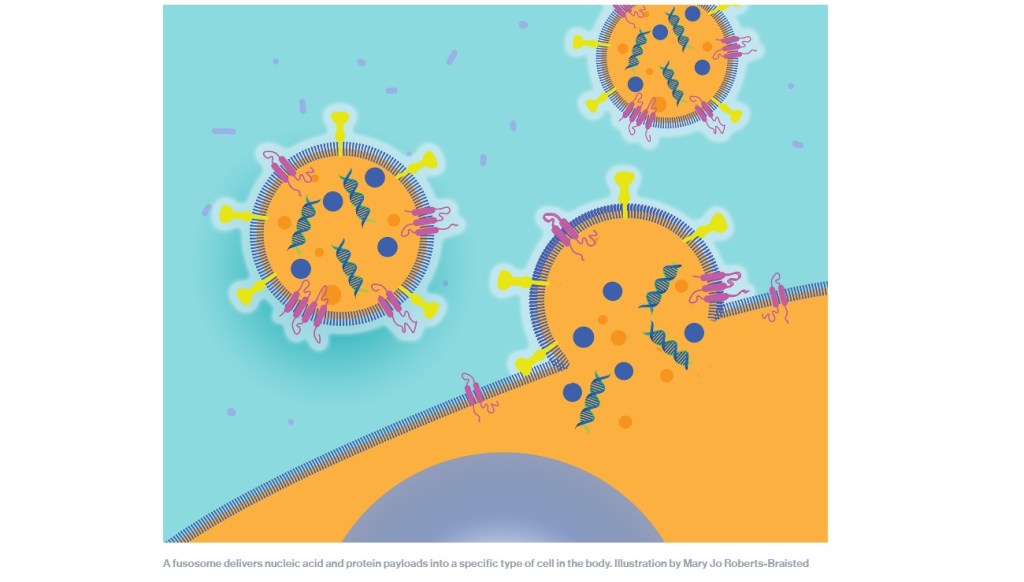
유전자 치료제, CAR-T, Gene Editing, mRNA, siRNA, Antisense, Base Editing, Prime Editing 등등 이제 전달할 물질 (Cargo)는 매우 많아졌어요. 문제는 전달체계 (Delivery System)의 발견인 것이죠. Sana Biotechnology는 새로운 전달체계를 개발하고 세포치료제를 개발하는 회사입니다. 이 회사의 창업 Story를 올립니다.
Almost every human disease originates within cells. Yet the only therapeutics with easy access to the cellular cytoplasm are small molecules. Small molecules were the foundation of the modern drug industry from its earliest days, but their relative simplicity means they cannot permanently cure or reverse most diseases. In contrast, proteins and nucleic acids are sophisticated molecules that offer dramatic therapeutic outcomes—as breakthroughs in the fields of gene editing, gene therapy, RNA interference, and mRNA therapy have demonstrated. But it’s hard for protein and nucleic acid therapies to reach their targets inside cells. In an ideal world, we would combine the therapeutic power of protein and nucleic acid drugs with the delivery breadth of small molecule drugs. To realize that goal, we need breakthroughs in intracellular delivery.
Focus
Intracellular delivery faces two fundamental challenges: first, finding the specific target cell type among all the cell types in the body; and second, efficiently overcoming the thermodynamic barrier of depositing hydrophilic payload molecules across the hydrophobic cell membrane. Intracellular delivery technology looks much the same today as it did in 2010. Most approaches are based on synthetic-chemistry-derived cationic and ionizable lipid nanoparticles. These nanoparticles transiently pop the cell’s endosome in order to release their cargo into the cell’s cytoplasm. Despite decades of investment, this approach has yet to achieve high cell specificity or efficient cytoplasmic delivery. This is because lipid nanoparticles are almost indiscriminately engulfed by a limited number of highly endocytic cell types (for instance, macrophages) and are capable of releasing only about 1% of their nucleic acid cargo.
But life wouldn’t be possible without the highly efficient flow of proteins and nucleic acids across membranes. Trillions of times every second, complex molecules travel from the nucleus to the organelles, between organelles, from organelles to the cell surface, and from one cell to another. Clearly, biology has evolved a solution to efficiently and specifically deliver molecules that synthetic chemistry has yet to discover.
Origins
In 2016, a founding team at Flagship Labs, led by General Partner Geoffrey von Malzahn, PhD, and Principal Jacob Rubens, PhD, began a series of experiments that explored whether biology’s solution to intracellular delivery could be applied to nucleic acid and protein drugs. The researchers were inspired by remarkable feats of cytoplasmic exchange between cells, including instances where cells appear to exchange proteins, nucleic acids, and even entire organelles such as mitochondria with one another.
The exchanges occur in a variety of ways: Cells secrete lipid bilayer membrane vesicles with complex payloads, including exosomes and microvesicles, which bind to their payload and deliver it to the cytoplasm of target cells. Cells also form tunneling nanotubes to directly connect their cytoplasm to their neighbors’, creating a cytoplasm-exchange superhighway. Cells even fuse to form complex syncytia, such as in skeletal muscle, where multiple cells come together to share their entire cytoplasm.
The precursor to Sana, a Flagship Protoco, (prototype company) named FL39, examined how this extraordinary biology works to discover whether it could be harnessed to deliver therapeutic payloads. Given how prevalent biomolecular transport is across membranes in our bodies, the founding team wondered, “What if we could deliver any biotherapeutic payload to any cell in the body?” It turns out that intracellular delivery is enabled by a unique category of membrane proteins called fusogens. These fusogens can be found on the surface of membrane vesicles and enveloped viruses that bind to and fuse to target cells, delivering their payload into the cell cytoplasm. Fusogens are essential to life: The 2013 Nobel Prize was awarded for seminal work uncovering the critical role that fusogens play in intracellular biology, where vesicles programmatically fuse with one another, allowing entire repertoires of biomolecules to specifically and efficiently enter another membrane-enclosed region of the cell.
Breakthrough
Fusogens function as remarkable mechanical enzymes that can overcome the repulsive forces of bringing two lipid membranes together and achieve close to 85% efficiency in membrane fusion, making them over 100 times more efficient than cationic lipids. In addition, fusogens can have exquisite cell specificity, fusing only to cells that display a target ligand, such as a surface receptor, lipid, or sugar. Enveloped viruses, like SARS-CoV-2, HIV, and measles, rely on fusogens to seek out and deliver their genome only to their target cells. The founding team, using a combination of bioinformatics and primary searching, built the first proprietary database of more 20,000 fusogens across all functions and branches of the tree of life, and they realized that fusogens could be modularly reprogrammed to potentially target any cell type in the human body. They hypothesized that by harnessing fusogens they might be able to solve the intracellular delivery challenge.
Later in 2016, FL39 was renamed Cobalt Biomedicine. Its mission was to develop Fusosome Therapeutics™: the first biomedicines to unlock the full potential of intracellular therapies. These consist of two parts: 1) a therapeutic effector in the vesicle lumen, such as a gene therapy, gene-editing protein, mRNA, or other specific biomolecules, and 2) an engineered fusogen on the vesicle surface that targets and catalyzes fusion with a specific cell type. Cobalt built a synthetic biology platform that directs specific molecular payloads to the Fusosome lumen and decorates the vesicle’s surface in any fusogen. In addition, Cobalt developed a plug-and-play technology to rationally target a fusogen to any cell-surface receptor. Remarkably, this approach allows nearly perfect tropism by making the activity of fusogens contingent upon their binding to specific receptors, with little to no activity following nonspecific engulfment by macrophages and other cell types. This new category of medicines is able to convey biotherapeutics directly into the cytoplasm, bypassing the challenge of endosome escape that significantly decreases the potency of lipid nanoparticles. And it can fuse to cells in a receptor-specific fashion, even bypassing the liver’s reticuloendothelial system that gobbles up other delivery technologies.
Advantage
By the middle of 2018, the Cobalt team had grown to more than 35 people. They discovered and engineered fusogens that deliver their payload to five cell types with specificity that is orders of magnitude greater than that of other technologies such as lipid nanoparticles. In addition, they showed that Fusosomes were capable of delivering many different types of intracellular payloads, including gene therapies, gene-editing proteins, RNA, and even entire organelles. With this evidence in hand, Cobalt was confident that it could build a Fusosome to enable specific and efficient delivery of diverse biotherapeutic payloads to any cell to treat a wide range of human diseases. The team began to search for executives sufficiently ambitious to realize this vision.
Von Maltzahn and Rubens knew they had found the entrepreneurial team that the development of Fusosome Therapeutics demanded when they began talks with Sana Biotechnology’s CEO Steve Harr, Chairman Hans Bishop, Executive Vice Chairman Richard Mulligan, and others at Sana. The Sana team was assembling a portfolio of stem-cell, immune-silencing, and manufacturing technologies that were complementary to Cobalt’s platform. Cobalt and Sana officially merged in early 2019, under the Sana name, with the goal of creating a first-in-category therapeutics company that has the integrated expertise to repair or replace any cell in the body, and with the research, development, and manufacturing capabilities to allow both in vivo and ex vivo engineering of cells.
Today, Sana employs more than 200 people at sites in Cambridge, Mass., Seattle, and San Francisco. The company possesses the scientific knowledge, creativity, rigor, and know-how to transform medicine by treating diseases at their origin: inside cells.
SANA Biotechnology의 2023년 Corporate Presentation 을 아래 Link합니다.
그리고 바로 어제 Nature Biotechnology에 Hypoimmune Pluripotent CAR-T와 당뇨 췌장세포이식 논문이 나왔군요. Sana의 기술 Platform이 얼마나 잘 연구되었는지를 보여줍니다. 좋은 논문들과 신약들이 많이 나올 것으로 기대합니다.
오늘 회사 한국인 동료분과 이야기하다가 “퇴사한 이형”을 들어보라는 조언을 들어서 한번 들어봤는데요 저에게 정말 도움이 되는 조언을 주시는군요. 이 분은 본래 이랜드 인사부문에서 일을 하셨고 현재 커리어 마스터라는 유튜버로 일을 하시네요. 아래에 있는 “회사를 선택할 때 체크할 두가지”
성장하는 회사인가? 성장하는 회사이면 내가 성장할 기회가 있지만 반대라면 기회가 적다.
상사가 성장하는 사람인가? 상사가 성장하는 사람이고 배울 것이 있다면 나도 성장할 가능성이 높다.
Moderna 의 현재까지의 Story를 엮고 있는데요. 많은 우여곡절이 있었고 그 노력과 애환의 결과 지금까지 왔습니다. 이에 대한 몇가지 Media의 기사들을 옮기려고 합니다.
2016년에 STAT에서는 Moderna에 대한 매우 신랄한 비판 기사를 씁니다. 아직도 STAT은 그리 우호적인 기사를 쓰지 않습니다. 아래는 2016년 9월에 나온 STAT의 기사입니다. 주로 Stephane Bancel 대표의 경영 스타일에 집중적으로 기사를 썼습니다.
직장인으로 살다보니 하루 중 대부분은 회사 내에서 보내게 됩니다. 처음에는 10층에 혼자 덩그러니 떨어져서 조용히 이것저것 생각할 수 있는 여유도 있고 마냥 자유롭게 일을 조절할 수 있는 자유를 누리고 있었는데 그러다 보니 점점
“너무 혼자 스스로 소외되는 것 아닌가?”
하는 생각이 들었습니다. 코로나 팬데믹 동안에 재택근무 (Work from Home)을 하면서 사람을 만나야되는 소중함을 알게 되었습니다. 사실 사람과 사람은 서로 눈인사만 하고 그냥 사소한 인사만 한두마디 해도 그것 만으로도 하지 않는 것보다 더 중요하다는 사실을 알게 된 것이 코로나가 가져다 준 “레슨”이 아닌가 하고 생각을 해 봅니다.
나름 열심히 달려왔는데 잠시 여유가 생긴 듯해서 주위를 돌아보니 아무도 없더라구요. 참 이런 게 인생인가?
하는 그런 마음이 들어서 당황하기도 하고 내심 뭔가 잘못되어도 한참 잘못된 것이 아닌가 하고 생각하게 되었어요. 저에게 보고하는 직원이 3명인데 그동안은 메신저로 얘기를 하다가 요즘은 일부러 실험실에 찾아가서 시간을 두고 얘기를 하다가 옵니다. 적어도 두번 정도씩은 가야겠다고 생각했어요.
생각보다 직원들이 저를 만나고 싶어한다는 사실을 알게 되었습니다. 물론 뭔가 보여주어야 한다는 부담감도 보이기는 하지만 그보다는 저와 대화를 해야 좀더 마음이 안정이 되는 듯한 느낌을 받았습니다.
그래서 가능하면 가서 서로 인사도 나누고 얘기를 주고 받으려고 하게 되었습니다. 저에게도 좋고 그 친구들에게도 좋겠지요. 요즘은 상사라는 생각보다는 코칭을 한다는 생각으로 다가갑니다. 저도 워낙 부족한 것이 많다보니 코칭도 쉽지는 않지만 그래도 대화를 풀어나가다 보면 무엇을 얘기하는게 좋을지 감을 잡을 수는 있더라구요.
한국인 동료들도 조금더 챙겨야 하겠다는 생각을 하게 되었습니다. 어떤 동료들은 잘 지내는 것 같기도 하고 또 다른 동료들은 조금 힘든게 보이기도 합니다. 특히 조직이 자꾸 개편을 하니까 그런 부분들에서 혼란이 있는 것 같고 그럴때는 저와 대화를 하는게 혹시 조금은 마음이 풀리는 것 같기도 합니다.
제가 직장생활을 시작한지 몇년 안된 동료들에게 회사에 오래 버티고 남아있으라고 조언을 한 적이 있었는데, 오늘 그러더라구요. 그게 쉽지 않을 것 같다고요.
회사에서 하는 일이 너무 같아서 발전을 느끼지 못하는 것도 있을 수 있고 승진을 하지 못하면 받게되는 스트레스 때문이라든가 회사에서 갑자기 나가야 하는 상황이 생길 수도 있으니까요.
하지만 가만히 얘기를 들어보면 요즘 회사 주가가 너무 빠져서 스톡옵션 행사를 못하게 된 동료들이 더 이런 아노미에 빠지는 것이 아닌가 하는 생각도 듭니다.
요즘 우리 회사는 글로벌 회사로 발돋움하기 위해 무지막지하게 투자를 하고 있습니다. 올해에만 투자하는 R&D 비용이 $4.5 Billion이고 공장이나 지사 신설도 계속되고 있으니까요.
상황이 이렇다보니 아마 좀 마음이 급해질 수도 있는 것 같습니다. 특히 기초연구에 있는 동료들이 많이 힘들어하는 듯 합니다. 제가 그동안은 말수를 줄이고 들으려고 노력을 많이 했습니다. 나대지 않으려고요.
그런데 그냥 말을 하지 않는 것보다는 어쩌면 조금이라도 상황을 객관적으로 인식할 수 있도록 조언을 아끼지 않아야 할 것 같은 마음도 드네요.
저는 몇년 있으면 굳이 회사를 다니지 않아도 되는 상황이지만 이제 막 직장생활을 시작한 동료들로서는 갈 길이 멀고 또 그런 막막함이 불안감으로 다가올 수도 있는 것 같습니다.
저도 한때 저를 엄청나게 갈아넣은 시기가 있었는데 막상 동료들이 그런 시간을 보내고 있는 것을 보고 있자니 마음이 좀 짠~ 합니다.
어제부터 Venture Capital 회사 Homepages에 나온 회사들을 만든 이유와 Start-Up Build-Up Story를 공부하면서 적고 있습니다. 제가 최근에 아주 관심있게 보고 있는 회사인 “Tessera Therapeutics”에 대해서 애기를 좀 해 보려고 합니다. 저의 동료 중에서 똑똑한 직원들이 이 회사로 몇명 이직을 했습니다. 그리고 회사가 많이 커지고 있어서 저는 이 회사의 기술이 어떤 것인지 주의깊게 지켜보고 있는 중입니다.
질문은 두가지입니다.
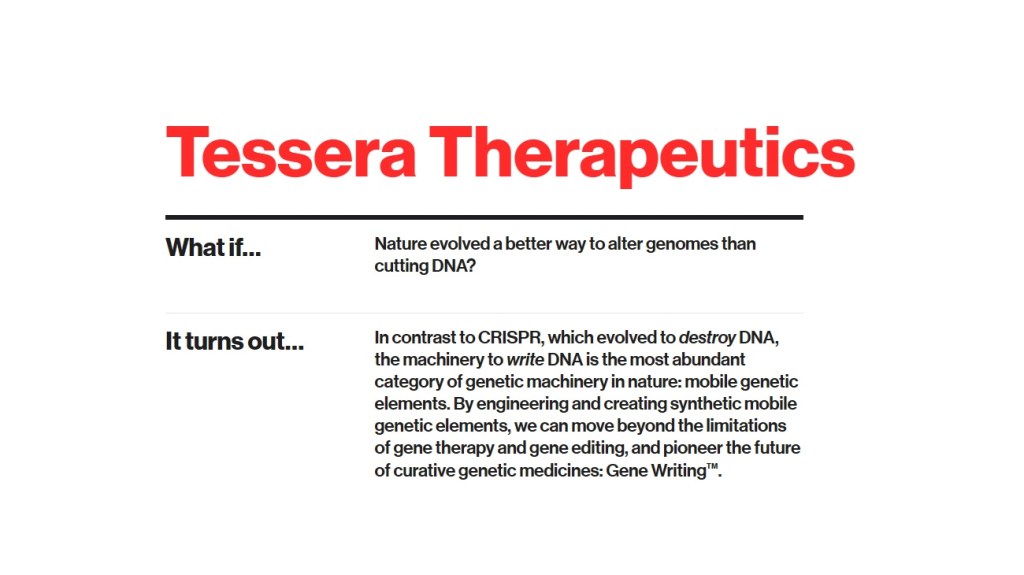
What If? 만일 자연계의 생명체가 유전자를 자르는 대신 수정할 수 있는 방향으로 진화된다면?
It Turns Out – DNA를 분해하는 CRISPR와 달리 자연계에는 DNA를 새롭게 쓰는 기작이 더 많이 존재한다. 천연 MGE (mobile genetic element)를 가공하거나 새로운 합성 MGE를 만듦으로써 유전자 치료제나 유전자 편집 기술의 단점을 개선하고 유전질환을 치료할 수 있는 “Gene Writer” 유전자 의약품을 혁신적으로 개발할 수 있다.
Our genome is a mosaic that has evolved over millennia. It is composed of base pairs, the nucleobases A, C, T, and G—the building blocks of DNA. These represent the code of life and give rise to the complex phenomena that define health and disease. Specific sequences of base pairs encode genes, which serve every function in our bodies. Development, homeostasis, and reproduction; aging, disease, and death—all are driven by the activity of genes.
Doctors know of about 4,000 genes that directly cause diseases. These include the cystic fibrosis transmembrane receptor, which when mutated causes cystic fibrosis, which can severely damage the lungs and other organs to the point of being life-threatening. About 60,000 other genetic sites are significantly associated with traits and diseases such as body mass, cardiovascular disease, neurological conditions, metabolic diseases, immune responses, and many cancers. Every year the number of human genomes that have been sequenced increases, as does our understanding of how genes provide the instructions to make us healthy or unhealthy human beings.
Recently, scientists and doctors have gained the power to add and subtract tiles from our genomic mosaic. This has opened the possibility of creating therapies that not only treat previously untreatable disease but might also cure patients for life with a single treatment. Today, this area, sometimes called genetic medicine, stands upon two technological pillars: gene therapy and gene editing. Both technologies are enormously promising, and in some cases they have already realized their promise and cured diseases. But gene therapy and gene editing have significant limitations in the modifications they can make to the genome, the cells they can affect, and how they are manufactured and delivered to cells, leaving today’s genetic medicine powerless against thousands of diseases.
Origins
In 2017, Flagship partner Geoffrey von Malzahn, principal Jacob Rubens, associate Rob Citorik, and others began an exploration inside Flagship Labs to address these limitations by asking, What if nature evolved a better way to alter genomes than cutting DNA? The result is Tessera Therapeutics. The company is pioneering a new category of genome engineering technology called Gene Writing and establishing a new field of genetic medicine. Gene Writing writes curative therapeutic messages into the genome. It can specifically and efficiently direct diverse alterations to the genome, in any type of cell, creating new possibilities for patients with genetic diseases.
Gene therapy, the more advanced of the two pillars of contemporary genetic medicine, uses engineered viruses to add DNA to cells in order to treat diseases caused by recessive mutations. Such mutations typically prevent the gene from functioning as it should.
Gene therapy can be divided into ex vivo and in vivo approaches. Retroviral vectors, like the lentiviral vectors derived from HIV, integrate DNA semi-randomly into the genome. They have been the workhorses for ex vivo gene therapy, including the use of engineered immune cells to treat cancer, known as CAR-T cell therapies. Building upon work from Luigi Naldini and others at the San Rafaele Telethon Institute for Gene Therapy, in Milan, GlaxoSmithKline used retroviral vectors to develop Strimvelis, the world’s first ex vivo curative gene therapy (later spun out into Orchard Therapeutics). It has been approved by the European Medical Association to treat a mutation that causes an immune disorder known as bubble boy disease.
For in vivo applications of gene therapy, adeno-associated viruses (AAVs) have emerged as the primary means of delivering DNA into cells. An AAV is a viral vector that delivers episomal DNA (DNA maintained separately from the rest of our genome) to cells. The first gene therapy to be approved in the United States was an AAV therapy developed by Spark Therapeutics (later acquired by Roche) that delivers a gene into the eye to treat a mutation causing impaired vision. More recently, Avexis (acquired by Novartis) developed an AAV gene therapy called Zolgensma, which has enabled children born with spinal muscular atrophy to survive what had been a lethal disease. More than 175 AAV gene therapies are in clinical development at pharma companies such as Pfizer and Roche, large biotechs like Sarepta and Uniqure, and startups like 4D Molecular Therapeutics and Homology Medicine. However, AAV gene therapy is unable to deliver long stretches of DNA and therefore cannot deliver all genes; and it can’t treat diseases that affect dividing cells, because the AAV’s episomal DNA is left behind when the cells replicate. What’s more, because the human immune system attacks and develops resistance to viruses, a gene therapy can only be administered once to any patient, so doctors are unable to adjust the treatment or readminister it if its effect fades.
Gene editing, the second pillar of existing genetic medicine, uses nucleases to cut the genome at a specific location and relies upon cellular DNA damage-response pathways to fix the genetic lesion. The gene editing technology CRISPR, developed by Jennifer Doudna at the University of California, Berkeley; Feng Zhang at the Broad Institute of MIT and Harvard; and others, is being further developed by companies including Editas, CRISPR, and Intellia. CRISPR is remarkably programmable and efficient, but it is only the latest nuclease technology, following upon zinc-finger nucleases, developed by Sangamo; TALENs, developed by Cellectis; meganucleases, developed by Precision Biosciences; and megaTALs, developed by Pregenen and now Bluebird.
These technologies have different features and bugs, but the one manipulation they all do well is cut the genome. That is what the versions that exist in nature evolved to do. CRISPR technology, for instance, is based on a natural defense system that bacteria use to destroy the DNA of invading viruses. By cutting the genome, gene editing can stimulate the process of integrating new DNA into the genome. But this process is inefficient in most cells, because it relies upon DNA damage-response pathways, which are unreliably expressed by the cell and typically repress large genetic alterations.
As a consequence, most gene editing drugs in development are intended to treat diseases that can be addressed by breaking genes without introducing new DNA. These diseases are typically caused by dominant negative mutations, such as the CEP290 mutation that causes Leber congenital amaurosis 10, for which it is better to break the mutated gene than to let it function. Notable exceptions are CAR-T cell therapies and cell therapies for sickle cell disease. The gene editing drugs in development target just 30 nucleotides out of the more than 3 billion nucleotides in our genome. (That’s 0.000001% of the genome!)
With more than 500 ongoing clinical trials, gene therapy and gene editing promise an era in which some of humanity’s most devastating genetic diseases will be cured. But gene therapy cannot complement recessive mutations in long genes or in dividing cells. And gene editing cannot fix dominant mutations in genes whose proper functioning is necessary for health. Further, the viral vectors necessary in gene therapy are inefficient to make, which amounts to a significant impediment to realizing the potential of these technologies.
Breakthrough
Tessera discovered a solution to these problems by harnessing evolution’s greatest genomic architect: mobile genetic elements. Canonically, evolution alters the prevalence of genomes in a population. However, we now recognize that evolution may also act at the level of genes. This theory was popularized by Richard Dawkins’s The Selfish Gene (Oxford University Press, 1976), which argued that our genomes are not only unitary evolutionary entities but are also like villages, composed of thousands of inhabitants called genes, each vying for its own survival. An important piece of evidence for this theory is that some genes evolved the ability to replicate independently of the rest of the genome. These genes are known as mobile genetic elements.
Mobile genetic elements (MGEs) code for the machinery sufficient to move or copy their own DNA into a new location in the genome, and they have been selected over billions of years for their ability to replicate. Barbara McClintock, born in 1902, was a pioneering 20th-century geneticist who unraveled the secrets of genetic recombination and regulation, and she won the 1983 Nobel Prize for her discovery of the first MGE and its mechanism of transposition. She studied the movement of MGEs in corn and demonstrated transposition in a series of classic experiments.
What may have initially seemed like an obscure property of maize’s genome turned out to be a unifying feature of all modern life forms: MGEs are the most abundant genes in the world. There is more DNA in nature that codes for MGEs in natural genomes than there is DNA that does anything else.
MGEs are found across the entire animal kingdom, and they also make up a large percentage of the genomes of archaea, bacteria, and plants. In fact, by most measures MGEs make up about 50% of our own DNA, meaning that 1.5 billion nucleotides of our genome code for mobile elements. To put that in perspective, the protein coding genes that we think of as the workhorses of life make up only 2–3% of our genome.
Advantage
Tessera’s founding team saw the opportunity to pioneer a new category of genome engineering technology based upon the rich molecular biology of MGEs. MGEs replicate through DNA and RNA intermediates. The intermediate can be linear or circular, double- or single-stranded; MGEs can transpose, retrotranspose, and recombine; copy and paste or cut and paste; and integrate specifically into certain DNA sequences, semi-randomly into genomic regions, or randomly into any location in the genome. Perhaps most interestingly, MGEs efficiently alter genomes with minimal reliance upon (indeed, often in spite of) other genes in the cell.
Focus
By harnessing and engineering this biology, Gene Writing can break the rules that have governed genetic medicine for two decades. Tessera has identified tens of thousands of MGEs from across the tree of life that are suitable for Gene Writing. Currently, we are developing both RNA-templated and DNA-templated Gene Writing technologies based on engineered and synthetic MGE. RNA Gene Writers can write into or rewrite the genome based upon an RNA template that coordinates base pair changes, small insertions and deletions, or the integration of entire genes. DNA Gene Writers use a DNA template to write large payloads into the genome. With these technologies, for the first time it may be possible to make diverse alterations to the genome, both small and large, without breaking the genome or relying on DNA repair pathways; to deliver RNA to cells in order to add new DNA into the genome without relying on viruses that cannot be administered more than once; and to scalably and affordably manufacture medicines so that cures can reach all the patients in need.
Tessera believes that Gene Writing will become a new field of genetic medicine by making treatments possible for the genetic defects at the root of thousands of diseases. DNA is the code of life—and thus the code that drives an enormous variety of human diseases. Tessera aims to cure rare genetic diseases that gene therapy and gene editing cannot address and to revolutionize medicine by transforming the standard of care for many diseases from treatments to cures. Like artists changing individual tiles—known as tessera—of a mosaic to alter the whole, Gene Writing scientists will change the fundamental unit of biology: genes.
오늘은 오랜만에 한국인 직원 몇분과 점심식사를 함께 했습니다. 직장 생활 시작한지 몇년 지난 분들이어서 가장 큰 관심사가 승진 (Promotion)에 대한 얘기였습니다. 사실 저도 처음 직장 생활할 당시에는 승진에 대해 굉장히 중요하게 생각했던 것 같습니다. 물론 지금도 승진을 하면 좋지만 과거에 비해서는 그 중요도가 그리 크지 않고 저의 경우에는 급여 인상 (Pay Raise)이 승진과 못지않게 오르고 있으면 그리 문제삼지 않습니다.
회사 마다 다르지만 회사가 스타트업인 경우에는 승진이 보다 더 쉬울 수 있지만 회사 규모가 대기업으로 되면 승진은 거의 어려워지고 10년 이상의 기간 동안에도 승진이 되지 않는 경우를 봤습니다. 미국 회사에서 외국인으로 사는 것이 나이와 연차가 쌓이면서 점점 어려움을 느끼게 되죠.
그러다가 한국의 대기업이나 제약회사에서 임원직 제의를 받으면 보통 그 제의를 수락하고 새 삶(?) 을 사는 것 같습니다.
승진을 하면 그 순간은 좋아요. 그런데 그 좋아하는 순간이 그리 오래가지 않습니다. 물론 승진을 못하면 “나가라!” 라는 사인일 수도 있습니다. 그러면 나가서 다른 잡을 찾아야 하겠죠.
저는 새로운 기술 플랫폼을 창조하고 회사를 빌드업하는 것에 관심이 많습니다. 아직 현재 직장을 계속 다닐 예정이지만 다른 회사를 알아볼 일이 생긴다면 아마 가능한 새로운 테크놀러지를 구현하고자 하는 스타트업에서 일하고 싶어질 것 같습니다.
때로는 2년마다 직장을 바꾸는 분들도 보았습니다. 직장을 옮겨가면 직급은 올라가게 됩니다. 그런데 이것도 너무 자주 하게 되면 새로 옮기는 회사에서 볼 때 오랜 기간 있지 않을 거라는 생각으로 좋은 회사로의 이직은 어려울 수 있습니다.