Image

BIOTECH (112) Arcus Biosciences: Adenosine Immuno-Oncology Platform Company from Flexus Biosciences’ Spin-off by Terry Rosen and Juan Jaen

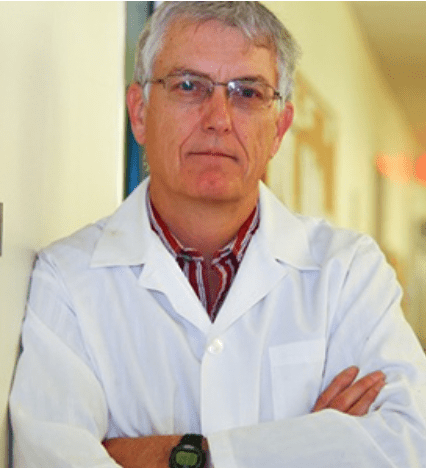
(Picture: Juan Jaen and Terry Rosen, source from Chem & Eng News)

안녕하세요 보스턴 임박사입니다.

Arcus Biosciences는 Flexus Biosciences가 2015년에 BMS에 매각된 후에 나머지 Asset을 가지고 Spin off한 회사입니다.

BIOTECH (111) Flexus Biosciences: Treg Small Molecule Inhibitors

Arcus Biosciences는 $120 Million Series A로 시작합니다. Flexus 때와는 펀딩 규모가 크게 달라집니다. 회사 초기부터 Terry Rosen은 Stand-Alone Biotech을 만들어 나가는 것을 목표로 합니다.

Bay Area Startup Arcus Biosciences Emerges With $120 Million. – Biospace 8/30/2016

New immuno-oncology startup Arcus Biosciences has scored an impressive $120 million funding in two financing rounds all while in stealth mode.

FierceBiotech reported that Arcus will use its funding to push two of its immuno-oncology treatments into early clinical testing over the next year. The company, which has remained in stealth mode, is initially developing drug therapies for small molecules along the ATP-adenosine pathway; CD73, CD39 and the A2A receptor, FierceBiotech reported. Its lead candidate is expected to be from the CD73 program, with the A2A program slated to be the second candidate in the clinic.

Rosen told FierceBiotech that he is building Arcus as a long-term company and not something that will generate interest only to be snapped up by a larger company. “This is the last field in which I will probably ever work,” he said, according to FierceBiotech.

Investors supporting the company include Novartis , Celgene, The Column Group and Foresite Capital, according to the company’s website. Since its founding, Arcus has been on a bit of a hiring spree. The company initially planned to have 38 employees on staff by year’s end, but that has since been scaled up to about 60 employees, FierceBiotech reported.

Arcus’ cancer portfolio attracts $35M option deal from Japan’s Taiho. – Fierce Biotech 9/20/2017

Taiho is paying $35 million over three years for access to Arcus’ portfolio of cancer immunotherapy candidates, which the company said is poised to deliver four clinical projects before the end of 2018. Another $275 million is on offer for each drug program that Taiho chooses to license over the five years of the option agreement, which covers Japan and some other Asian markets but excludes China.

Taiho is a major seller of cancer drugs with chemotherapy products like Abraxane, Yondelis and Zolinza, and is already an investor in Arcus via its venture capital unit, which took part in the Californian biotech’s $70 million series B round last year.

Arcus Biosciences gains meaty $107M with help from Google Ventures. – Fierce Biotech 11/13/2017

Immuno-oncology startup Arcus Bioscience has got off another impressive round of funding, just over a year after emerging from stealth with $120 million. This latest round, worth a major $107 million, was led by Google’s venture arm, with a host of new backers getting into the action, including Wellington Management Company LLP, EcoR1 Capital, BVF Partners L.P., Decheng Capital, Hillhouse, Aisling Capital and entities affiliated with Leerink Partners, as well as existing investors The Column Group, Foresite Capital, Invus Opportunities, DROIA, Celgene and Taiho Ventures.

They’re all buying into Arcus’ science in small molecule and antibody immuno-oncology approaches, with the aim of building its own internal combinations, rather than using the “throw and see what sticks” approach that many marketed I-O drugs are doing with nearly every cancer drug in the pipeline available.

This cash boost, bringing its total since its founding in 2015 to nearly a quarter of a billion, will help toward a series of clinical programs for AB928, a first-in-class dual adenosine receptor antagonist, and AB122, a PD-1 antibody.

Earlier this month, Arcus says it kick-started a phase 1 of AB928, with a midstage test, in combo with AB122 in cancer patients, slated for the first half of next year; it also started an early-stage trial of AB122 in cancer patients in Australia, with data set to be posted in 2018. The biotech added that it “plans to evaluate AB122 in combination with its other product candidates, in addition to AB928, in the future.”

The $107 million also allows it to push on with “at least two” additional experimental meds into clinical development, including AB680, a first-in-class small molecule CD73 inhibitor, as well as AB154, a TIGIT antibody. This also comes a few months after Arcus bulked up its cancer immunotherapy pipeline with a $816 million deal—including $18.5 million upfront—to license an anti-PD-1 antibody developed at China’s Gloria Pharma and WuXi Biologics.

2018년초에 $128 Million IPO를 해서 Nasdaq에 상장을 했습니다.

Arcus Biosciences eyes $100M IPO. – Fierce Biotech 2/21/2018

Gilead Doubles Down on Immuno-Oncology with 10-Year Pact with Arcus Biosciences. – Biospace 5/27/2020

Under the terms of agreement, Gilead is paying Arcus $375 million on closing, with $175 of it upfront and $200 million in equity. Arcus is eligible for up to $1.225 billion in opt-in and milestone payments based on its current clinical product candidates. In addition, Gilead gets access to the company’s current and future investigational immuno-oncology products. That includes rights to zimberelimab and the right to opt-in to all other current Arcus clinical candidates, including AB154, AB928 and AB680. The opt-in fees range from $200 million to $275 million per program.

If Gilead chooses to opt-in to the AB154 program, Arcus is eligible for up to $500 million in possible future U.S. regulatory approval milestones. The $200 million equity investment comes to $33.54 per share. Gilead will gain the option to acquire additional shares of Arcus up to a maximum of 35% of outstanding voting stock over the course of the next five years, at a 20% premium at the time of the option, or, if greater, at the initial purchase price per share.

The deal with Arcus would greatly expand the company’s presence in oncology and immuno-oncology. Arcus recently began Phase II clinical trials of AB154 in non-small cell lung cancer, with the idea that the anti-TIGIT therapy would improve the efficacy of anti-PD-1 checkpoint inhibitors, in this case, Arcus’s zimberelimab. TIGIT is another immune checkpoint.

Arcus has a clinical-stage pipeline of four immuno-oncology programs. Its oncology discovery pipeline has six preclinical compounds. The company currently is running 10 clinical trials, including the Phase III NSCLC trial.

In addition to the upfront, equity and milestone payments, Arcus is eligible for tiered royalties ranging from high-teens to low twenties on any eventual commercial products. Gilead picked up exclusive rights to commercialize any optioned programs outside of the U.S., although they will be subject to rights of any of Arcus’s existing partners. Gilead is also providing up to $400 million in ongoing research and development support over the length of the collaboration. In addition, Gilead has the right to appoint two people to Arcus’s board of directors. Before rumors of the deal in April, Arcus had a market cap of $716 million. As news leaked, shares climbed as much as 54%.

One of the key aspects of that deal was magrolimab, a monoclonal antibody in clinical development for several cancers, including myelodysplastic syndrome (MDS), acute myeloid leukemia (AML) and diffuse large B-cell lymphoma (DLBCL).

Terry Rosen, chief executive officer of Arcus, stated, “We believe Gilead is an ideal partner for Arcus with its focus on thoughtful and purposeful science, vision to provide transformational therapies in the oncology setting and deeply experienced scientific leadership. At the same time, this partnership structure facilitates Arcus’s path to becoming an independent, fully integrated biopharmaceutical company.”

Gilead deal에 의한 $200 Million 지분투자를 포함해서 총 $302.5 Million 유상증자를 했습니다.

Arcus Biosciences, Inc. Announces Pricing Of $302.5 Million Underwritten Public Offering Of Common Stock. – Reuters 5/29/2020

Gilead는 $220 Million을 투자해서 Arcus Biosciences의 지분을 13%에서 19.5%로 늘립니다.

Gilead Sciences to Increase Its Ownership In Arcus Biosciences. – Press Release 2/1/2021

Arcus Biosciences, Inc. (NYSE:RCUS), an oncology-focused biopharmaceutical company working to create best-in-class cancer therapies, today announced that Gilead Sciences is increasing its ownership in Arcus to 19.5%, from approximately 13%, by purchasing 5,650,000 additional shares of Arcus’s common stock at a per share purchase price of $39.00. Proceeds of $220 million to support and accelerate Arcus’s comprehensive clinical development plans.

Gilead-Arcus 공동연구는 2020년에 시작한 이래 매우 성공적으로 진행되어 오고 있습니다. 이에 따라 Gilead는 $320 Million 추가 투자를 통해서 지분을 33%로 늘렸습니다. 이사회에 들어가는 Gilead member도 2명에서 3명으로 늘려서 Arcus Biosciences에 대한 경영권을 늘려 나가고 있습니다.

Gilead Expands Arcus Collaboration with $320M Equity Investment. Biospace 1/30/2024

Gilead Sciences and Arcus Biosciences have amended their collaboration agreement, the companies announced Monday, with Gilead making an additional equity investment of $320 million and raising its ownership stake in Arcus to 33%.

Gilead’s separate equity investment of $320 million will be in Arcus common stock at $21 per share. The deal will also see Gilead Chief Commercial Officer Johanna Mercier join Arcus’ board, marking a third Gilead member. According to Monday’s announcement, the amendment to the companies’ partnership will include “governance enhancements” to help make “streamlined decision-making” as well.  

Under the agreement, Gilead and Arcus have reprioritized their joint domvanalimab development program, an anti-TIGIT antibody. They will focus on advancing and possibly accelerating Phase III studies of STAR-121, which investigates lung cancer treatment, and STAR-221 for gastrointestinal cancer.

Gilead and Arcus expect these programs to be fully enrolled by the end of 2024. Their prioritization focuses on domvanalimab-contaning regimen research, where they contend it may have a “significant impact” in combination with chemo treatment and where there is a high unmet need. The companies also plan to start the STAR-131 trial, a Phase III lung cancer study that combines domvanalimab and Arcus’ zimberelimab.

However, the updates include halting the Phase III ARC-10 study investigating domvanalimab and zimberelimab compared to a Keytruda monotherapy in PD-L1-high non-small cell lung cancer. The reason for the stop is to prioritize STAR-121 and STAR-221

Arcus CEO Terry Rosen said the Gilead investment will give the biotech enough cash to last into 2027 and enable it to fund the Phase III study of the CD73 inhibitor quemliclustat in pancreatic cancer and the asset AB521 in kidney cancer. The quemliclustat trial will be run by Arcus independently as part of the new arrangement. 

“Since the inception of our partnership with Gilead in 2020, the companies have moved increasingly closer in all aspects of our research and development efforts. This investment and prioritization enable both companies to leverage their respective strengths and focus on efficiently advancing novel combinations that can potentially change the landscape of cancer treatment,” Rosen said in a statement. 

In November 2023, Arcus and Gilead reported positive results for the combination of domvanalimab, zimberelimab, and chemotherapy in treating upper gastrointestinal cancers, showing an overall response rate of 80% in patients with PD-L1-high tumors.

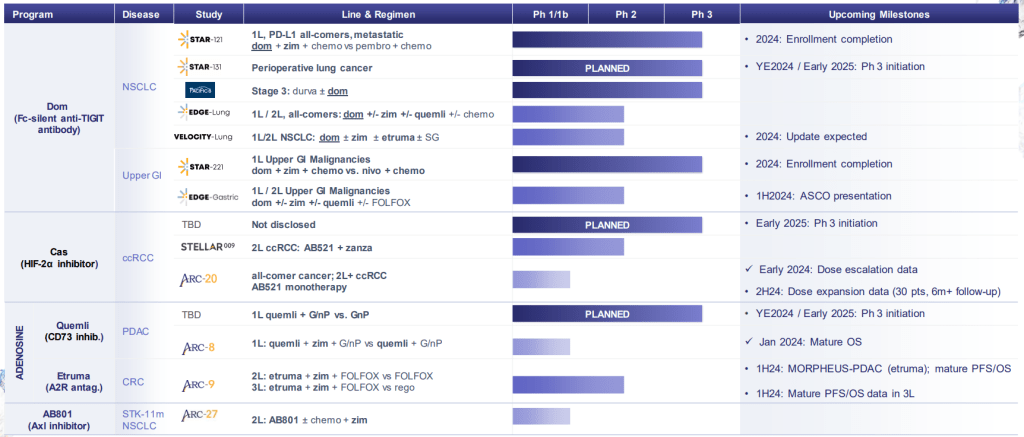
현재 Pipleline은 아래와 같습니다. 2024년 2월에 발표한 Corporate Presentation도 첨부합니다. Arcus Biosciences가 Clinical-Stage에서 Commercial-Stage Company로 성장하는 것은 시간 문제이지 않을까 싶습니다. 역시 경험많은 Terry Rosen과 Juan Jaen의 수십년간의 우정과 파트너쉽이 아름다운 결실로 맺어지길 바랍니다.
BIOTECH (111) Flexus Biosciences: Treg Small Molecule Inhibitors

(Picture: Juan Jaen and Terry Rosen, source from Chem & Eng News)

안녕하세요 보스턴 임박사입니다.

이번에는 두사람의 과학자의 우정이 낳은 수십년간의 여정에 대해서 좀 나누려고 합니다. 두사람의 이름은 Terry Rosen박사와 Jaun Jaen박사로서 이들의 우정은 학창시절 University of Michigan에서의 만남으로 시작됩니다. 이 두사람은 후에 ,Tularik에서 함께 일하는 기회가 있었습니다. Tularik은 2004년에 Amgen에 합병되었고 이 때 두사람은 잠시 헤어지게 됩니다.

Terry는 10년간 Amgen에 남아서 일을 했고 VP of therapeutic discovery and San Francisco site leader at Amgen이었습니다. 반면에 Juan은 Amgen에 몇년 머문 후 ChemoCentryx에서 CSO and SVP of drug discovery로 일하게 됩니다.

2013년에 Terry Rosen과 Juan Jaen은 다시 의기투합을 해서 Flexus Biosciences를 설립하기로 합니다. 몇가지 중요한 결정을 했는데요. 첫째는 당시 유행하던 Immuno-Oncology 분야보다는 아직 시작되지 않은 Regulatory T cell (Treg)를 modulation하는 small molecule drug discovery로 Business Model을 잡았고 투자자들을 만나기 시작했습니다. 특히 Kleiner Perkins의 VC인 Beth Seidenberg를 만났고 그녀는 Celgene에 이 회사를 소개함으로써 Series A를 완성하게 됩니다. 그리고 이 만남이 결국 BMS로 2년만에 Acquired 되는 결과가 됩니다. Series A & B를 합쳐서 $38 Million을 확보하고 Treg small molecule program을 시작합니다. IDO-1 program이 lead program이었습니다.

Amgen vet reveals stealth startup Flexus backed by $38M from Kleiner Perkins, Celgene. Fierce Biotech 12/17/2014

If Amgen ($AMGN) and Genentech had a love child that was being raised by Celgene ($CELG) and Kleiner Perkins Caufield & Byers, that would be Flexus Biosciences. Suddenly, after shunning public attention for more than a year, the cancer immunotherapy startup is ready for the limelight now that it is headed toward the clinic, has banked its first two venture rounds totaling $38 million and boasts impressive management, board and advisory rosters.

Flexus was co-founded by CEO Terry Rosen as well as President and head of R&D Juan Jaen. The pair had worked together for almost a decade at Tularik before it was acquired by Amgen for $1.3 billion in 2004, although they had met years earlier as students at the University of Michigan.

Rosen opted to remain with Amgen for nearly a decade, most recently as its VP of therapeutic discovery and San Francisco site leader. For his part, Jaen left Amgen after a few years to be the CSO and SVP of drug discovery at ChemoCentryx ($CCXI). The pair came back together to found Flexus in late 2013.

In early 2013, Rosen left Amgen after some initial conversations with VCs. He spent some time combing through research papers and having open, high-level conversations with leading academics. Rosen and Jaen settled on a strategy of discovering and developing small molecule cancer immunotherapies targeting regulatory T cells with encouragement from Beth Seidenberg of KPCB, who is now the chairperson of Flexus’s board.

She introduced the young company to Celgene. Not surprisingly, the big biotech, which is aggressive in pursuing investment in and partnership with early stage and innovative oncology startups, expressed an interest in investing.

By the time Flexus closed a roughly $13 million Series A in October 2013 from KPCB and Celgene as well as friends and family, the Flexus team, site and technology had already started to coalesce. Kristen Hege, VP of translational development of hematology and oncology at Celgene, is a board observer, and Rosen attributes her with being influential in the company’s evolution as it has moved from discovery toward the clinic.

Before he founded the company, Rosen had long been intrigued by the promise of cancer immunotherapy. He saw the data coming out for Yervoy from Bristol-Myers Squibb ($BMS) as a real proof of concept for the field of cancer immunotherapy. Rather than pursue an immunotherapy segment that was already well attended, such as immune checkpoint inhibitors, Flexus opted to target regulatory T (Treg) cells using small molecules.

He saw the science around Treg cells as thoroughly researched by academics with myriad breakthroughs over the decades, but that the work just hadn’t been translated by an industry that was, at the time, largely afraid of early, ambitious, science-driven startups in the wake of the bursting of overinflated genomics expectations that haunted the sector for years after the rapid 1999-2000 market crash.

Treg cells keep immune response to foreign antigens in check. In cancer, they prevent the immune system from working against the disease. The accumulation of Treg cells typically correlates with a poor prognosis for cancer patients, particularly those with melanoma, lung, ovarian and breast cancers. Flexus is working to modulate these Treg cells that inhibit the patient’s own immune system from attacking the cancer.

From an initial list of 10 to 15 potential targets, Flexus narrowed down its priorities to three initial targets that it could hit with small molecule candidates. It hopes to get into the clinic with a selective IDO-1 inhibitor candidate by the end of 2015, with the potential in the first quarter of 2016 for a combination study with another drug such as an immune checkpoint inhibitor or even a more traditional anticancer agent. In addition to the potential for in-licensing, Rosen said he expects the company to internally generate one IND filing annually.

Alexander Rudensky, the chairman of the Immunology Program and director of the Ludwig Center at Memorial Sloan Kettering Cancer Center, chairs the startup’s clinical and scientific advisory board. A National Academy of Sciences member, Rosen noted that Rudensky “is probably the biggest name in Treg biology in the context of oncology.”

On the mission of the company, Rosen summed up, “We are focused on altering the tumor microenvironment by interfering with the biology of immunosuppressive Treg cells. This will enable effector T and natural killer cells, the soldiers of the immune system, to attack and eradicate those tumors. Our goal is to turn cancer into a chronic disease that is managed with drugs that are safe and easy to administer.”

BMS acquires biotechnology firm Flexus Biosciences for $1.25bn. – Pharmaceutical Technology 4/9/2015

Bristol-Myers Squibb (BMS) has completed the acquisition of biotechnology firm Flexus Biosciences for around $1.25bn. Under the deal, Flexus has received an upfront payment of $800m, in addition to the development milestone payments that could total up to $450m.

As part of the deal, BMS received full rights to F001287, Flexus’s lead preclinical, small-molecule IDO1-inhibitor targeted for IND filing in the second half of this year.

The deal also includes the acquisition of Flexus’s IDO/TDO discovery programme that includes its IDO-selective, IDO/TDO dual and TDO-selective compound libraries.

All non-IDO/TDO assets of Flexus, from and after the closing, will be retained by the newly formed entity created by the current shareholders. The new entity also retains assets related to Flexus’s Phase I FLT3 and CDK4/6 inhibitor, its earlier stage small-molecule Treg cancer immunotherapy programmes and current personnel and facilities.

Flexus Biosciences Chemists Spin Off New Company After Bristol-Myers Squibb $1.25 Billion Buyout. – Biospace 4/8/2015

After San Carlos, Calif.-based Flexus Biosciences was bought by New York’s Bristol-Myers Squibb Company for $1.25 billion in February 2015, company execs Terry Rosen and Juan Jaen turned around and started a new company.

Less than two months later, two of the Flexus’s executives and founders, Terry Rosen, Flexus chief executive officer, and Juan Jaen, head of Flexus research and development, have joined to form a new company. They plan to crank out a new immuno-oncology drug candidate once a year.

The most likely candidate for the new company is FLX925, a dual inhibitor of FLT3 and CDK4/6, which were licensed from Thousand Oaks, Calif.-based Amgen in 2004.

“We’ve done some good initial work,” says Rosen in a statement, “and we feel good about it, but our goal is to build something that is long term and sustainable.”

Bristol-Myers Squibb drops phase 3 trials of $800M IDO drug. – Fierce Biotech 5/1/2018

Bristol-Myers Squibb has pulled two phase 3 clinical trials of the IDO1 inhibitor it acquired through an $800 million takeover of Flexus. The studies are the latest dominoes to fall following the failure of Incyte’s rival IDO drug to move the needle in a pivotal trial.

Enrollment in the phase 3 trials of Bristol-Myers’ IDO1 drug BMS-986205 and cornerstone checkpoint inhibitor Opdivo in patients with non-small cell lung cancer or head and neck cancer was just getting started when news of Incyte’s setback hit less than four weeks ago. The Incyte data triggered a rapid re-evaluation of the IDO field, causing first NewLink and now Bristol-Myers to reconsider their strategies. The rethink led Bristol-Myers to halt the trials after recruiting just one of the 1,750 subjects it initially planned to enroll across the two studies. Bristol-Myers listed “business objectives have changed” as the reason for canning the trials.

Bristol-Myers has also effectively killed a phase 3 trial of the IDO1-PD-1 combination as a first-line treatment of patients with metastatic or unresectable melanoma, the same indication targeted in the Incyte study. The trial is active but has stopped enrollment well short of its target. Bristol-Myers had planned to enroll 700 patients, but recruitment stopped with 72 subjects on board. 

The actions wipe out Bristol-Myers’ near-term chances of establishing BMS-986205 as an essential add-on to Opdivo in some critical indications for its immuno-oncology franchise. But they fall short of completely killing off the asset.

With that in mind, Bristol-Myers is still enrolling patients in seven phase 1 and 2 trials featuring BMS-986205, including a study of the IDO1 drug in combination with Opdivo—and, in some cases, Yervoy—in 907 patients with advanced tumors. Four other trials featuring BMS-986205 are enrolling 200 to 500 patients. These studies also feature LAG-3 candidate relatlimab and a clutch of Bristol-Myers’ established oncology products. 

BMS-986205는 Incyte Pharmaceuticals의 Epacadostat (INCB2436205)의 임상실패의 영향으로 BMS가 임상3상을 중단하는 결과를 맞게 됩니다. 비록 IDO1 inhibitors의 class action으로 임상이 중단되었지만 BMS-986205가 Phase 3까지 잘 진행되고 있었다는 것을 보았을 때 Flexus의 Drug Development는 잘 진행되었던 것을 알 수 있습니다.

INCB24360 (Epacadostat), a Highly Potent and Selective Indoleamine-2,3-dioxygenase 1 (IDO1) Inhibitor for Immuno-oncology. ACS Med. Chem. Lett. 2017, 8, 5, 486–491

Discovery and Preclinical Evaluation of BMS-986242, a Potent, Selective Inhibitor of Indoleamine-2,3-dioxygenase 1. ACS Medicinal Chemistry Letters 2021, 12 (2), 288-294.

BMS-986205의 HCC에 대한 Phase 1/2결과는 2024년 Investigational New Drug에 보고되었습니다.

Phase I/II trial of BMS-986,205 and nivolumab as first line therapy in hepatocellular carcinoma. Investigational New Drugs 2024, 42, 35-43.

IDO1 Inhibitors의 개발에 대한 좋은 리뷰를 남깁니다.

Flexus Biosciences가 BMS에 인수될 때, BMS는 IDO/TDO programs에만 관심이 있어서 나머지 프로그램을 가지고 Terry와 Juan은 새로운 회사인 Arcus Biosciences를 설립합니다. Arcus Biosciences에 대해서는 다음에 얘기하겠습니다.

BIOTECH (110) Gritstone Bio: self-amplifying RNA in chimpanzee adenovirus vector

안녕하세요 보스턴 임박사입니다.

Clovis Oncology의 Co-Founder였던 Andrew Allen은 NEJM 2014년 논문에서 CTLA-4 Immuno-Oncology에 대한 반응성이 Neoepitope에 좌우된다는 것을 읽고 Neoantigen에 대한 Cancer Vaccine을 개발하기 위해서 Gritstone Oncology를 설립하고 $102 Million Series A를 받습니다.

Clovis Oncology Execs Launch Gritstone Oncology with $102 Million Series A Round. Biospace 10/21/2015

Gritstone was co-founded by Andrew Allen, who will act as president and chief executive officer. Allen co-founded Boulder, Colo.-based Clovis Oncology . Patrick Mahaffy, chief executive officer of Clovis, will act as Gritstone’s chairman.

Allen founded the company after reading a 2014 paper in the New England Journal of Medicine that discussed why some patients don’t seem to respond to immune checkpoint inhibitors. But cancer cells are constantly mutating, creating so-called neoantigens.

Gritstone’s other co-founders are Tim Chan and Naiyer Rizvi, both physicians at Memorial Sloan-Kettering Cancer Center. Additional co-founders include Jean-Charles Soria of the Institut Gustave Roussy in Paris, Graham Lord of King’s College London, and Mark Cobbold of Massachusetts General Hospital.

Series A를 한 지 2년후에 $93 Million Series B를 받았습니다.

Cancer upstart Gritstone gains major $93M series B. – Fierce Biotech 9/7/2017

The company is slated to enter the clinic in the middle of next year with a focus on non-small cell lung cancer and gastric cancer, and will use much of its new cash toward building a “personalized immunotherapy manufacturing facility.”

This 43,000-square-foot industrialized manufacturing facility in Pleasanton, California, will, according to the company, “form the nucleus of Gritstone’s manufacturing program for personalized cancer therapeutics.”

“Since the formation of the company two years ago, Gritstone has made significant progress leveraging extensive human tumor molecular analysis and machine learning to develop and optimize the proprietary Gritstone EDGE tumor antigen identification platform. We have matched our breakthrough accuracy in tumor neoantigen identification with an antigen delivery system that builds on human immunity insights from infectious disease experts, culminating in an extremely potent neoantigen delivery platform expected to drive best-in-class cytotoxic T cell responses.”

The company has raised nearly $200 million over the last two years and has an experienced executive team, with Allen working alongside its CTO Roman Yelensky, Ph.D., former VP of Foundation Medicine, and a machine-learning team, as well as ex-Pfizer cancer immunotherapy chief Karin Jooss, Ph.D., as its CSO and Genentech vet Raphaël Rousseau, M.D., Ph.D., who became its CMO in May.

아직 전임상 단계에 있던 Personalized neoantigen therapy를 임상으로 진입시키기 위한 delivery system으로 Arbutus의 LNP를 사용하기로 계약을 하게 됩니다.

Gritstone taps Arbutus’ LNP tech for RNA-based therapies. – Biopharmadive 10/19/2017

One solution has been to enclose a therapeutic in a lipid nanoparticle to protect nucleic acid strands from degradation. Arbutus’ delivery platform does exactly that, and was convincingly validated by the Phase 3 success of Alnylam Therapeutics Inc.‘s patisiran, which incorporates Arbutus’ technology.

The recent phase III validation of Arbutus’ LNP platform makes them the natural partner for Gritstone as we drive our proprietary two-component immunotherapy program into the clinic in mid-2018,” Allen noted.

Gritstone’s pipeline is currently preclinical. But as the biotech looks to move into the clinic, securing a capable delivery platform is crucial for conducting human trials. The deal with Arbutus should help Gritstone optimize its immunotherapy and manufacture product candidates.

그리고 1년후에는 BMS Opdivo와 Yervoy를 Gritstone의 personalized neoantigen therapy와 combination하는 계약을 합니다.

Gritstone, Bristol-Myers Squibb to trial immunotherapy combos in solid tumors. – Fierce Biotech 7/19/2018

The duo will first evaluate GRANITE-001 in tandem with Opdivo in patients with common solid tumors, such as metastatic non-small cell lung cancer and gastroesophageal, bladder and colorectal cancers, the companies said in a statement. The two-part phase 1 dose escalation trial will also test GRANITE-001 with systemic Opdivo and localized injection of Yervoy.

GRANITE-001, Gritstone’s lead asset, is given in two parts—first a priming adenoviral vector, followed by monthly boosters of an RNA vector, each containing the same 20 patient-specific TSNAs.

그리고 bluebird bio가 Gritstone Oncology의 EDGE와 TSNA를 bluebird bio의 TCR-directed cell therapy에 사용할 수 있도록 하는 $30 Million 상당의 계약을 합니다.

bluebird bio, Gritstone Oncology Partner on TCR Cancer Cell Therapies. GEN Edge 8/23/2018

bluebird bio will use Gritstone Oncology’s artificial intelligence (AI) platform to research, develop, and commercialize T-cell receptor (TCR) directed cell therapies for cancer, under a collaboration that could generate more than $30 million for Gritstone, the companies said today.

Gritstone will use its EDGE™ (Epitope Discovery in cancer GEnomes) tumor-specific neoantigen (TSNA) identification platform to enable patient selection for clinical development of the cancer cell therapies. EDGE uses machine learning to enable users to analyze specific tumor types to identify tumor-specific targets—and natural TCRs directed to those targets—for use in bluebird bio’s established cell therapy platforms, the companies said.

Gritstone Oncology has agreed to provide bluebird with ten tumor-specific targets across several tumor types and, in some cases, TCRs directed to those targets to bluebird bio. In return, bluebird has agreed to pay Gritstone $20 million upfront, and make a $10 million Series C preferred equity investment in Gristone. Bluebird also agreed to pay Gritstone unspecified “significant” payments tied to achieving development, regulatory, and commercial milestones on any therapies; as well as tiered royalties on certain approved therapies.

그리고 곧바로 $100 Million Nasdaq IPO를 하고 이후 두번의 증자를 했습니다.

On the Heels of bluebird bio Collaboration, Gritstone Secures $100 Million in IPO. – Biospace 9/28/2018

Emeryville, Calif.-based Gritstone Oncology hits the ground running today on the Nasdaq Exchange after raising $100 million in an initial public offering. Gritstone, which will sell under the ticker symbol GRTS, sold 6.6 million shares of common stock at $15 per share, the company announced Thursday.

Gritstone Oncology prices $74.8M common stock offering. – S&P Global 4/25/2019

The company’s lead product candidate is GRANITE-001, which is in a phase 1/2 study to treat certain solid tumors.

Gritstone Raises $125M in Private Financings. – Precision Medicine Online 12/28/2020

Gritstone Bio Raises $55M in PIPE Financing. – Precision Medicine Online 9/17/2021

Gritstone Bio said on Thursday it raised $55 million in a private investment in public equity financing from the sale of 5 million shares of its common stock at $11 per share. The PIPE financing was led by Frazier Life Sciences Public Fund, with additional participation from Redmile Group and Gilead Sciences. Cowen served as the sole placement agent for the PIPE financing, which is expected to close Sept. 17.

Emeryville, California-based Gritstone has several candidates in oncology and infectious disease. Its cancer portfolio includes immunotherapies being studied in microsatellite stable colorectal cancer, gastroesophageal cancer, and KRAS-mutated non-small cell lung cancer. The company is also developing a second-generation vaccine against SARS-CoV-2 and an HIV therapeutic vaccine.

Gritstone bio Announces Private Placement of $45.0 Million. – Press Release 10/25/2022

Gritstone bio, Inc. (Nasdaq: GRTS), a clinical-stage biotechnology company that aims to develop the world’s most potent vaccines, today announced that it has executed a securities purchase agreement to sell, through a private investment in public equity (PIPE) financing, 6,637,165 shares of its common stock at a price of $2.26 per share of common stock and 13,274,923 pre-funded warrants to purchase up to 13,274,923 shares of common stock at a price of $2.2599 per pre-funded warrant for aggregate gross proceeds of approximately $45.0 million, before deducting placement agent fees and offering expenses. Each pre-funded warrant will have an exercise price of $0.0001 per share, will be exercisable immediately, and will be exercisable until exercised in full. 

GRT-R910: a self-amplifying mRNA SARS-CoV-2 vaccine boosts immunity for ≥6 months in previously-vaccinated older adults. Nat. Comm. 2023, 14, 3274.

Gritstone in line for $433M in BARDA funds to push mRNA COVID-19 shot into large-scale trial. – Fierce Biotech 9/28/2023

Gritstone bio is the latest drug developer to be tapped for the Biomedical Advanced Research and Development Authority’s (BARDA’s) Project NextGen, with the biotech in line for more than $400 million to conduct a 10,000-person phase 2 study of its COVID-19 vaccine.

BARDA has contracted the company to conduct a U.S.-based randomized phase 2b trial assessing Gritstone’s self-amplifying mRNA (samRNA) vaccine candidate against an approved vaccine. Preparations for the study, which will be fully funded by the government, are already underway, and the trial is due to kick off in the first quarter of 2024, the biotech said in the Sept. 27 release.

Gritstone’s candidate, which the company has dubbed the CORAL program, is designed to drive both B-cell and T-cell immunity against the virus that causes COVID-19 by using a combination of samRNA and immunogens containing both spike and additional viral targets.

“CORAL was designed to address these limitations by inducing durable neutralizing antibody and T cell-based immunity against current and future SARS-CoV-2 variants.”

Gritstone is best known for its work in cancer vaccines, with its lead program, dubbed GRANITE, in phase 2/3 trials for metastatic, microsatellite-stable colorectal cancer.

그런데 COVID-19 CORAL phase 2b 임상시험을 위한 GMP-grade raw material이 준비가 되지 않으면서 임상이 6개월 가량 뒤로 밀리게 됩니다.

Gritstone’s BARDA-funded COVID vaccine faces manufacturing-related trial delay. – Fierce Pharma 2/12/2024

The study was originally slated to kick off during this year’s first quarter, but it will now launch during the fall in order to “allow use of fully GMP-grade raw materials,” the company disclosed in a press release

그러나, Phase 2b 일정의 연기는 Gritstone Bio 임직원의 40%라는 메이저 정리해고를 낳게 되엇습니다.

Gritstone to lay off 40% of workforce after costly study delay. – Biopharmadive 3/1/2024

Gritstone Bio will lay off about 40% of its workforce after missing out on funding it expected to receive this quarter, the company said Thursday.

Gritstone, a maker of vaccines for cancer and infectious diseases, is developing a COVID-19 shot with the help of the U.S. government. In September, the Biomedical Advanced Research and Development Authority awarded the company a contract worth up to $433 million to run a large mid-stage trial testing its shot against an available vaccine. That contract is part of “Project NextGen,” a federal initiative that began last August to search for new and better COVID-19 drugs.

According to a regulatory filing, Gritstone expected to receive up to $10 million from the contract by the first quarter upon hitting certain goals related to the study’s preparation. The bulk of the cash would come afterwards, once the trial is up and running.

Earlier this month, though, a manufacturing-related delay caused Gritstone to push the trial’s start from the first three months of the year to next fall. At the time, Gritstone said the extra time would improve the trial’s “regulatory value” and “interpretability,” as well as enable it to test the shot against a newer coronavirus variant. But the setback also left Gritstone without the extra cash from BARDA. The company had just over $90 million in the bank at the end of September.

“The lack of near-term funding necessitated this difficult step to fortify our balance sheet and cash position, which unfortunately means an impact to our workforce,” said CEO Andrew Allen, in a Thursday statement announcing the restructuring. The company had 233 full-time employees at the end of 2022, according to its last annual report.

Gritstone noted Thursday its “core programs and anticipated milestones” haven’t changed. In the first quarter, it still expects to report preliminary data from the Phase 2 portion of a study evaluating a vaccine it’s developing for colorectal cancer.

2023년 10월에 발표한 Corporate Presentation은 아래와 같습니다.

이번 40%의 인력 구조조정은 Covid-19뿐만 아니라 Personalized Neoantigen Therapy에도 영향을 주지 않을까 염려가 됩니다. GMP-grade raw materials이 문제였는데요. 이것이 Arbutus의 LNP 에 들어가는 raw material 때문이었는지 아니면 samRNA의 raw materials 문제였는지 알 수 없지만 non-GMP에서 GMP로 갑자기 넘어가는 것은 간단한 문제는 아니라고 생각이 되어서 다소 우려되는 상황이라고 생각이 들고요. 2Q까지 어떻게 진행이 되는지 지켜봐야 할 것 같습니다. 속히 문제가 해결되면 좋겠습니다.

BIOTECH (109) MAIA Biotechnology: THIO – Telomere-Targeting Agent

(Picture: Sergei Gryaznov, Ph.D.)

안녕하세요 보스턴 임박사입니다.

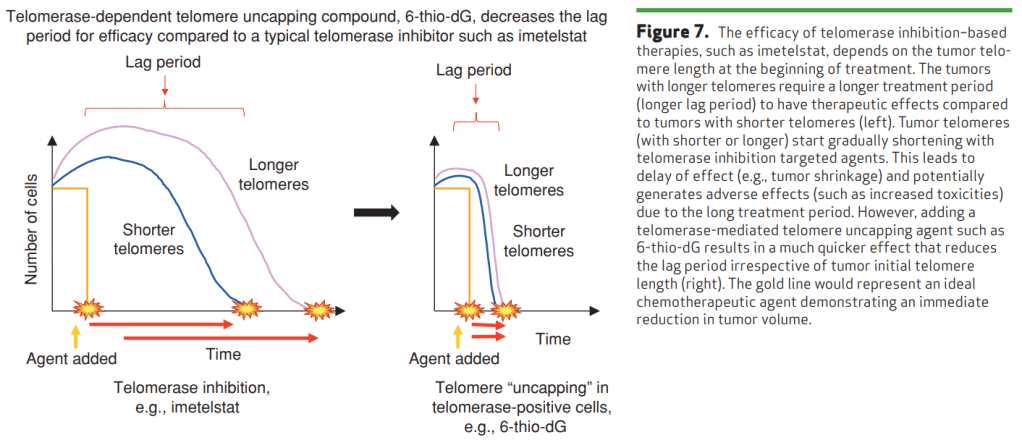
Sergei Gryaznov 박사는 Nucleoside Chemist로서 Geron의 Imeltelstat의 원개발자이고 Johnson & Johnson을 거쳐서 현재는 MAIA Biotechnology CSO로 THIO (6-thio-dG) 를 비롯한 Telomere-Targeting Oncology Drug Development를 리드하고 있습니다.

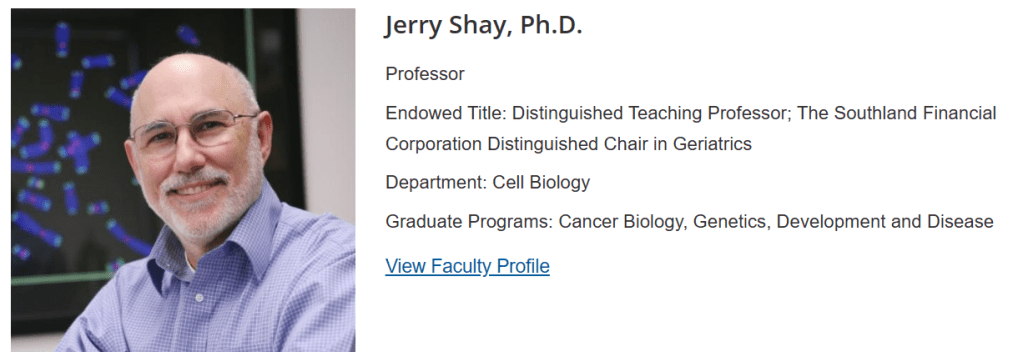
MAIA Biotechnology는 NYSE에 있는 Small-Cap Biotech 회사인데요 UT Southwestern Jerry W Shay 교수의 연구에 근거를 두고 THIO (6-thio-dG)의 Telomere-Targeting Immunomedics를 개발하고 있습니다.

Jerry Shay 교수의 연구주제는 Telomerase와 Telomere에 대한 것인데요 Geron에도 Imeltelstat 개발과정에서 조언을 했고 현재는 MAIA Biotechnology의 Scientific Advisor로 계십니다. MAIA Biotechnology의 Lead Compound인 THIO (6-thio-dG)는 Sergei Gryaznov박사와 Jerry Shay교수에 의해 2015년에 Cancer Discovery에 보고되었습니다.

Induction of Telomere Dysfunction Mediated by the Telomerase Substrate Precursor 6-Thio-2′-Deoxyguanosine. Cancer Discov2015, 5, 82–95. Sergei Z. Gryaznov, Jerry W. Shay et al.

Induction of Telomere Dysfunction Prolongs Disease Control of Therapy-Resistant Melanoma. Clin. Cancer Res. 2018, 24, 4771–4784. Jerry W. Shay et al.

A Modified Nucleoside 6-Thio-2′-Deoxyguanosine Exhibits Antitumor Activity in Gliomas. Clin. Cancer Res2021, 27, 6800–6814.

A telomere-targeting drug depletes cancer initiating cells and promotes anti-tumor immunity in small cell lung cancer. Nat. Comm. 2024, 15, 672. Jerry W. Shay et al.

2024년 1월에 발표한 Corporate Presentation 자료에는 임상1/2상의 2023년 11월말까지 경과를 보고하고 있습니다.

Safety Profile은 임상1/2상 진행 중인 현재까지 20명의 소규모 환자에서는 Cyramza+Docetaxel과 비교해서 비교적 안전한 것으로 보입니다. Grade 3의 경우 15%로 50%였던 Cyramza+Docetaxel보다 현저히 적고 Grade 4 이상의 독성은 나타나지 않았습니다.

아직 ORR은 얻지 못한 상태인데 DCR (Disease Control Rate)은 비소세포성폐암 (NSCLC)에서 Chemotherapy나 Cyramza+Docetaxel에 비해 높게 나타났습니다. 임상2상 결과에서도 이런 트렌드가 이어질지 기대가 됩니다.

작년말에 임상2상에 사용할 Dose로 180 mg을 선택했다고 발표했습니다.

MAIA Biotechnology selects dose in Phase II NSCLC trial. Clinical Trials Arena 12/20/2023

The selected dose of 180mg per cycle showed to have a better safety profile and efficacy in the trial.

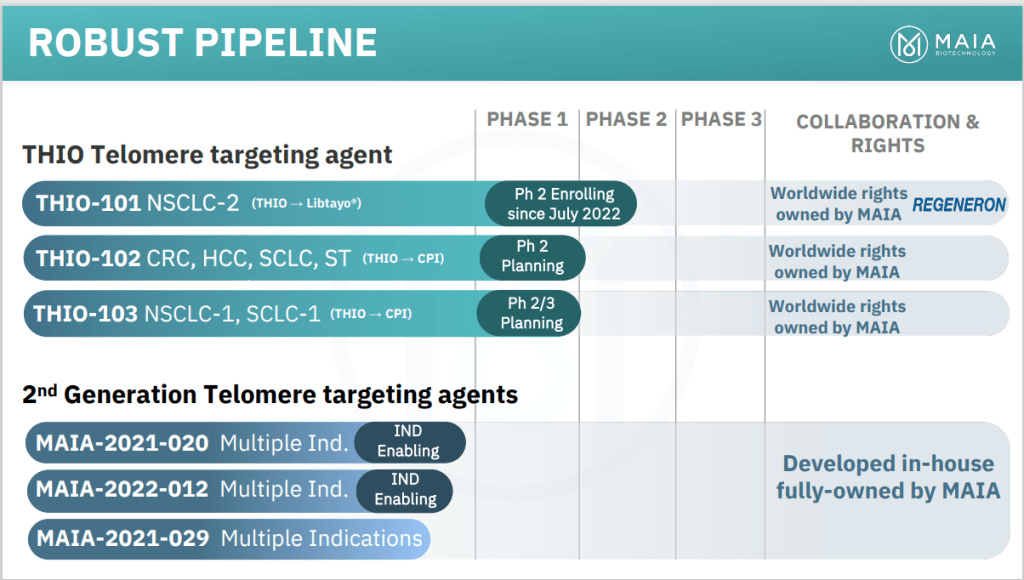
현재 Pipeline은 아래와 같습니다. 임상2상에 진입한 THIO의 Back-up으로 MAIA-2021-020과 MAIA-2022-012가 IND-enabling studies를 진행 중에 있습니다.

Back-up으로 MAIA-2021-020과 MAIA-2022-012는 2024년에 공개된 특허에 의하면 THIO의 Dinucleotide Prodrug입니다.

참고로 2000년에 Southern Research Institute (SRI)에서 Telomere-Targeting Nucleosides에 대한 preliminary research를 한 바가 있습니다. 아마도 THIO이외의 다양한 Drug Design이 가능할 것 같습니다.

BIOTECH (108) Stapled Peptides: From Aileron to Fog Pharma

안녕하세요 보스턴 임박사입니다.

Greg Verdine박사는 Harvard University교수이면서 VC이고 Serial Entrepreneur인 특이한 경력을 가지고 있는데요. 예를 들면 Wave Life Sciences에서 WaVe의 Ve는 Verdine의 Ve에서 따온 것입니다. 앞의 Wa는 Wada 교수의 Wa에서 따온 것이고요.

BIOTECH (8) – Wave Life Sciences의 RNA Editing 신약 가능성에 GSK가 투자하다.

Greg Verdine교수의 연구 중 가장 중요한 연구는Stapled Peptides라는 분야인데 이것은 Protein의 alpha Helix를 Chemical Bonding으로 Stapling하는 것입니다. Aileron Therapeutics라는 회사를 만들어서 RCM (Ring Closing Metathesis) 방법으로 만든 Stapled Peptides Platform을 임상에 진행시켰으나 그리 성공적이지 못했습니다.

Aileron Terminates Phase 1b Trial Evaluating ALRN-6924 in P53-mutant Breast Cancer – OncLive 2/22/2023

Despite treatment with the chemoprotective agent ALRN-6924, patients with p53-mutated breast cancer receiving neoadjuvant or adjuvant therapy with docetaxel, doxorubicin, and cyclophosphamide experienced grade 4 neutropenia and alopecia in a phase 1b trial (NCT05622058), failing to meet the trial’s primary and secondary end points of duration and incidence of severe neutropenia in cycle 1 and incidence of chemotherapy-induced alopecia, respectively.1 Based on these results, the company has decided to terminate the trial and further development of ALRN-6924, which was also under evaluation as a chemoprotective agent in p53-mutated small cell lung cancer and non–small cell lung cancer (NSCLC).

The company announced that it is exploring strategic alternatives in conjunction with Ladenburg Thalmann & Co., Inc., which may include an acquisition, a merger, a business combination, or a sale of assets or other transactions. Further statements from the company will not be released unless or until its Board of Directors has approved a definitive course of action or it is determined that other disclosure is appropriate.

현재는 Lung Disease로 Business Model을 완전히 바꾼 상태입니다.

Aileron Therapeutics (ALRN) Announces Acquisition of Lung Therapeutics – Street Insider 10/31/2023

Aileron Therapeutics의 Stapled Peptides 임상을 통해서 그래도 배운 것이 있을 것이라 생각합니다. Aileron을 설립한지 몇년 후에 다른 Stapled Peptides Platform 회사인 Fog Pharma를 2016년에 설립했는데요 Greg Verdine 교수연구실에서 박사학위를 받고 Postdoctoral Fellow로 있던 John McGee 박사가 하던 Cysteine Stapling을 상용화하기 위한 회사입니다.

Exceptionally high-affinity Ras binders that remodel its effector domain. J. Biol. Chem. 2018, 293, 3265-3280. John H. McGee, Gregory L. Verdine et al.

De Novo Mapping of α-helix Recognition Sites on Protein Surfaces Using Unbiased Libraries. PNAS 2022, 119 (52) e2210435119. John H. McGee, Gregory L. Verdine et al.

Cysteine Stapling은 아래와 같이 Internal Cysteines을 Alkylation으로 Stapling 하는 것입니다.

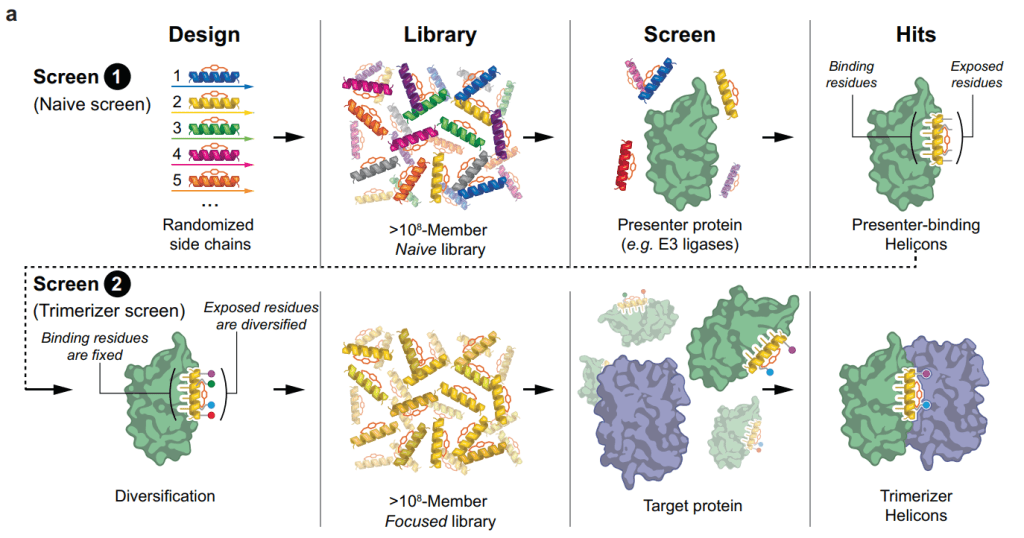
이 Stapled Peptides를 Ligand로 해서 Phage display로 High throughput screening을 합니다.

Recognition and reprogramming of E3 ubiquitin ligase surfaces by α-helical peptides. Nat. Comm. 2023, 14, 6992 John H. McGee, Gregory L. Verdine et al.

이 논문에서는 1차 agnostic naive screening을 한 다음에 hit을 가지고 2차 focused screening을 거쳐서 비교적 단기간에 Lead Candidates를 찾는 방법을 보고했습니다.

$66 Million Series B를 하고 Aileron과 달리 바로 임상에 진입할 Lead를 발표했습니다.

FogPharma Secures $66 Million Series B Financing. – PR Newswire 5/16/2019

FogPharma’s drug discovery engine has been configured to deliver multiple new medicines in rapid succession, with clinical entry for the first product, a first-in-class beta-catenin antagonist, by the end of 2019, followed by a steady stream of first-in-class clinical product candidates addressing other intractable targets.

그리고 2년 후에 $107 Million Series C를 했습니다. Pipeline도 늘어났습니다.

FogPharma® Announces $107 Million Series C Financing to Advance Direct β-Catenin Antagonist and Universal Druggability™ Platform. – Business Newswire 3/1/2021

FogPharma’s proprietary hyperstabilized α-helical peptides (Helicon™ peptides) are a new class of therapeutics that combine the targeting strength and specificity of antibodies with the broad tissue distribution, intracellular target engagement and oral dosing optionality of small molecules. The Company’s Helicon peptide drug discovery engine integrates directed evolution, proprietary helix hyperstabilization chemistry, highly multiplexed drug optimization technology, artificial intelligence including deep learning and machine learning, structure-based drug discovery, and multiscale manufacturing to rapidly discover Helicon peptide therapeutics against important, previously intractable targets with broad applicability to virtually all disease areas.

  • The Company’s first-and-only-in-class direct β-catenin inhibitor. Dysregulation of the Wnt/β-catenin signaling pathway has been shown to occur in at least 20% of all human cancers, with the true patient population likely being higher. FogPharma’s lead antagonist has been shown to surgically disrupt the interaction of β-catenin with its downstream transcription factor, TCF, and thereby disrupt signal transmission thorough the oncogenic arm of the Wnt pathway.
  • A first-in-class YAP/TAZ-blocker TEAD antagonist, which is the only molecule presently in development that binds the fully activated form of TEAD. The YAP/TAZ-TEAD interface is part of the hippo pathway, where dysregulation has also been shown to occur in many cancers.

다음해에 다시 $178 Million Series D를 했구요. FOG-001의 임상을 2023년 중순에 시작하겠다는 계획을 발표했습니다.

FogPharma Announces $178 Million Series D Financing to Advance Pipeline of First-in-Class Helicon Polypeptide Therapeutics Targeting Major Cancer Drivers. – Business Newswire 11/21/2022

FogPharma’s lead Helicon polypeptide development candidate, FOG-001, a first-and-only-in-class direct TCF-blocking β-catenin inhibitor with potential applicability to significant cancer patient populations, is expected to enter clinical development in mid-2023. In addition, FogPharma is advancing other first-in-class programs against important, biologically validated cancer targets that have remained elusive to other approaches including TEAD, NRAS, Pan-KRAS, ERG and Cyclin E1.

그리고 얼마전에 $145 Million Series E를 했구요. CEO를 J&J 출신인 Mathai Mammen으로 교체하면서 J&J ex-CEO Alexis Borisy가 투자자를 유치하고 BOD member로 들어오게 되었습니다.

FogPharma clears $145M series E thanks to Alexis Borisy, ex-J&J CEO Alex Gorsky. – Fierce Biotech 3/1/2024

Johnson & Johnson’s former pharma R&D chief, now the CEO of FogPharma, has brought on former J&J CEO Alex Gorsky as an investor in the company’s $145 million series E. Gorsky joins a syndicate of heavyweights like RA Capital and General Catalyst who became first-time Fog investors.

Returning investors included Arch, GV and Fidelity. Another big name on the bill is serial biotech entrepreneur Alexis Borisy, who also joined the board on behalf of Nextech, which led the round. 

FOG-001 is an intracellular TCF-blocking β-catenin inhibitor being tested in a phase 1/2 trial for solid tumors. Mutations of the Wnt/β-catenin pathway, which the drug targets, are particularly common in colorectal cancer. 

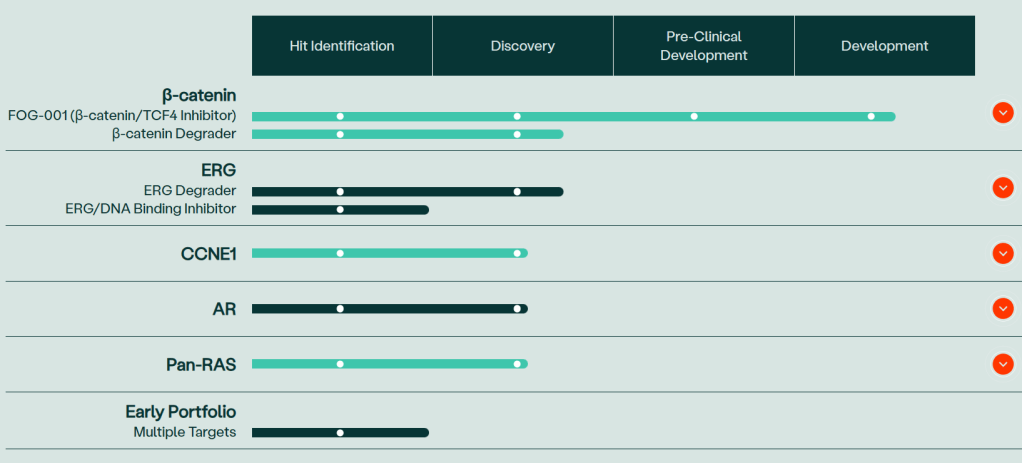
현재 Pipeline은 아래와 같습니다. FOG-001의 임상1/2상 데이타가 어떻게 나올지 궁금합니다.

부러우면 지는거다 (29) 최성락 경영학 박사

(Picture: 주간동아)

안녕하세요 보스턴 임박사입니다.

실제로 조기은퇴를 해 본 사람은 현상을보는 인식이 아무래도 보다 현실적이고 다르게 볼 수 밖에 없다고 생각하는데요 최근에 경영학 박사인 최성락 박사의 주간동아의 글을 읽으면서 많이 배우게 되어 글을 남기고자 합니다. 최성락 박사는 현재 주간동아 “돈의심리”라는 칼럼을 매주 한차례씩 쓰고 있는데요 글이 정말 읽을만 하다고 생각합니다.

최성락 박사는 본래 동양미래대 교수로 재직하다가 2021년에 비트코인 투자를 통해 50억 자산가가 되면서 파이어족으로 지내고 있다고 합니다.아래는 주간동아의 인터뷰 기사링크입니다.

투자로 50억 벌어 ‘파이어족’ 합류한 최성락 전 교수 – 주간동아 7/8/2023

인터뷰 기사 내용은 그리 특이한 것은 없다고 느꼈는데요 이 분의 글은 좀 다릅니다. 가장 최근에 올라온 글을 볼까요? 그냥 이론적인 글을 쓴 것이 아닌 것을 알 수 있습니다. 상당히 세세히 피부로 경험한 바를 적고 있다는 느낌이 들었습니다. 그래서 부러우면 지는거다에 최성락 박사를 올립니다.

직장인에게 은퇴 후 화려한 생활은 그저 꿈일 뿐 – 주간동아 3/2/2024

50대 중반 친구가 퇴직을 했다. 명예퇴직이었기에 몇 년 치 연봉에 해당하는 명예퇴직금을 받고 나왔다. 정식 퇴직금과 합하면 5억 원 넘는 돈을 손에 쥐었다. 이렇게 큰돈을 평생 만져본 적 없는 친구는 먼저 퇴직한 나에게 일종의 컨설팅을 부탁했다. 이 돈을 어떻게 운용해야 화려한 노년 생활을 준비할 수 있을까에 대한 것이었다. 친구가 원하는 건 현 생활수준을 유지하면서 여생을 살아가는 것이다. 이 수억 원 퇴직금으로 그게 가능할까. 앞으로 어떻게 해야 지금처럼 계속 살 수 있을까. 내 대답은 별로 긍정적이지 않다. 5억 원 넘는 돈은 굉장히 큰돈이긴 하다. 하지만 그 돈으로 현 생활수준을 유지하면서 사는 건 쉽지 않을 것이다. 예상하지 못한 재정적 변동도 발생할 수 있다.

퇴직자가 치킨집 차리는 이유

먼저 내 경우를 이야기해보자. 나는 일정 규모의 자산을 모은 후 2021년 8월 직장을 그만뒀다. 17년간 직장에서 근무했고, 퇴직금으로 1억6000만 원이 나왔다. 퇴직금을 받고 처음 든 생각이 이것이다. “내가 파이어족으로 직장을 그만둔 게 아니라, 다른 사정으로 어쩔 수 없이 직장을 그만뒀다면 치킨집을 하는 수밖에 없었겠구나.”

내가 투자로 돈을 벌지 않고 직장만 다니다가 50대 초반 나이에 퇴직했다면 어떤 인생이 펼쳐졌을까. 연금은 65세부터 나온다. 연금이 나오기 전까지 10여 년을 먹고살아야 하는데, 가지고 있는 현금은 퇴직금으로 받은 1억6000만 원이 전부다. 이 1억6000만 원으로 연금을 받기 전까지 살아간다면 1년에 1200만 원, 1달에 100만 원으로 생활해야 한다. 중산층으로 살아왔는데 당장 사회 최하소득층이 돼버리는 것이다.

그럴 순 없다. 뭔가 일을 해서 돈을 벌어야 한다. 그런데 50대 중반에 새로 직장을 얻기는 힘들다. 자영업을 해야 하는데 1억6000만 원으로 할 수 있는 게 뭐가 있을까. 목 좋은 곳에 프랜차이즈 커피숍을 여는 것도 몇억 원이고, 세탁소 프랜차이즈도 몇억 원이 필요하다. 특별한 기술 없이 이 돈으로 할 수 있을 것이라고 떠오른 일이 세 가지였다. 치킨집, 편의점, 조그만 커피숍. 그제야 한국에서 치킨집, 커피숍이 우후죽순 생기는 이유를 알았다. 자영업을 크게 하려면 자본금이 훨씬 많이 필요하다. 일반 퇴직자의 자금 수준에서 할 수 있는 것이 치킨집, 작은 커피숍뿐이다.

그동안 나는 한국 자영업자의 어려움을 이야기하곤 했다. 그런데 알고 보니 자영업자보다 더 어려운 이는 나이 들어 직장을 그만둔 사람들이다. 이들은 제대로 자영업을 시작할 돈도 없다. 직장을 그만두고 나면 자영업자들이 그 나름 성공한 것처럼 보인다. 어쨌든 퇴직금 1억6000만 원을 손에 쥐었다. 그럼 이 1억6000만 원이 고스란히 내 돈으로 남을까. 그렇지 않았다. 은행에서 마이너스 통장 대출금을 상환하라는 연락이 왔다. 직장을 다니면서 마이너스 통장을 만들었고, 10년 넘게 아무 이상 없이 사용하고 있었다. 그사이 마이너스 통장 한도는 점점 늘었다. 직장을 그만두니 마이너스 통장을 더는 쓸 수 없다고 했다. 마이너스 통장은 1년에 한 번 연장된다. 이때 직장이 없으면 재연장이 안 된다. 그때까지 사용하고 있던 마이너스 대출금을 모두 상환해야 한다. 마이너스 통장만이 아니다. 담보대출도 직장 소득 규모에 따라 대출액 규모가 달라진다. 직장을 그만둬 더는 정기 소득이 없으면 담보대출 한도도 줄어든다.

은퇴자 생활수준 하락은 현실

나는 이전보다 자산이 훨씬 많아져 직장을 그만뒀다. 경제 상태가 퇴직 전보다 좋았다. 하지만 은행에서 중요하게 생각하는 건 안정적인 월급이 들어오는 직장이 있는지 여부였다. 아무리 자산이 있어도 직장이 없으면 마이너스 통장을 사용할 수 없다. 나는 마이너스 통장 대출금 6000만 원을 상환해야 했다. 퇴직금 1억6000만 원에서 6000만 원 대출금 상환은 크다. 내가 퇴직금만 바라보고 있었다면 예상하지 못한 큰 지출 탓에 바로 재정적 어려움에 처했을 것이다.

은행 대출금 상환 이후 발생한 일은 직장에 다닐 때보다 훨씬 오른 국민건강보험료 고지서 수령이었다. 직장가입자에서 지역가입자로 변경되면서 국민건강보험료가 크게 올랐다. 보통 사람들이 직장을 그만두면 앞으로 어떻게 할지 걱정한다. 돈 걱정을 하고, 지금 있는 돈으로 뭘 어떻게 할지 고민한다. 더는 버는 돈이 없어 살아갈 일이 걱정인데, 국민건강보험료를 더 많이 내라고 고지서가 날아온다. 넘어진 사람을 밟는 격이다. 또 일반 신용카드면 모를까, 소위 프리미엄급 신용카드도 발급이 안 된다. 나는 해외항공권 서비스 등을 목적으로 프리미엄급 신용카드를 쓰고 있었다. 15년 동안 아무 문제없이 쓴 카드였다. 그런데 직장을 그만두니 재연장이 안 됐다. 은행처럼 신용카드사도 고객의 재산 상태보다 어떤 직장에 다니는지를 더 중요시했다. 한국 금융기관은 정말 바보 같다는 생각을 하게 됐지만, 사용하는 카드를 바꿀 수밖에 없었다.

친구는 퇴직금, 명예퇴직금으로 평생 처음 ‘자기 맘대로 쓸 수 있는 큰돈’을 손에 쥐어 기분 나쁘지 않은 상태였다. 기분 좋은 은퇴 생활을 기대했다. 나는 거기에 초를 쳤다. 일단 그게 다 쓸 수 있는 돈이 아니다. 은행 신용대출이 있으면 다음 심사 때 모두 갚아야 할 것이다. 지금까지처럼 연장이 잘 되지 않는다. 그리고 담보대출도 모두 다는 아니어도 몇천만 원은 분명 갚아야 한다. 그리고 현 생활수준을 유지하는 데 소모되는 돈은 이전보다 훨씬 늘어날 것이다. 전에는 평일에 일하고 주말에만 여행을 가거나 취미활동을 했다. 하지만 은퇴하면 평일에도 뭔가 활동을 하게 되는데, 그럼 필연적으로 돈을 쓰게 된다. 과거에는 일을 했던 시간에 이제는 돈을 쓴다. 국민건강보험료뿐 아니라 생활비도 더 들어간다. 직장을 그만둔 후 평일에는 아무것도 안 하고 집에서만 시간을 보내야 생활비 지출이 같아질 것이다.

5억 원 넘는 돈도 충분한 액수가 아니다. 이 친구가 현 생활수준을 유지하려면 매달 500만 원은 써야 한다. 그럼 1년에 6000만 원이고, 10년이면 6억 원이다. 지금 있는 돈은 모두 다 써버리는 것이고, 그다음에는 월 1백 몇십 만 원 연금을 받아서 생활해야 한다. 65세가 되면 생활수준이 팍 낮아져야 하는 것이다. 그때 충격을 막으려면 지금 월 300만~400만 원을 쓰고 65세 이후에 200만~300만 원을 쓰도록 해야 한다. 지금부터 생활수준을 낮춰야 한다. 젊어서 열심히 일하고 은퇴 후 화려한 생활을 한다는 건 신화다. 실제로는 생활수준이 대폭 내려간다. 앞으로 나아지리라는 기대를 가질 수 없는 생활수준의 하락이다. 은퇴 후 생활수준을 똑같이 유지하려면 몇 배나 많은 돈이 필요하다. 그럼 새로 직장을 구하면 괜찮을까. 직장을 구하면 이 과정이 뒤로 좀 더 미뤄질 뿐이다. 그 직장을 그만두면 어차피 똑같은 상황을 겪어야 한다. 그리고 50대에 퇴직해 새로 얻는 직장은 절대 이전 직장만큼 연봉을 주지 않는다. 생활수준 하락은 피할 수 없다.

퇴직금 투자 실패 확률 높아

그럼 이 퇴직금을 기반으로 투자를 하면 되지 않을까. 연 10% 수익을 얻으면 가진 돈을 거의 까먹지 않으면서 현 생활수준을 유지할 수 있다. 하지만 이에 대한 내 대답도 ‘노(NO)’다. 그동안 계속 투자를 해온 사람이 그 돈으로 투자하면 괜찮을 수 있다. 하지만 그동안 투자를 하지 않았던 사람이 큰돈이 생겼다고 투자를 시작하면 그냥 다 잃는다고 보면 된다. 돈만 많은 투자 초보자는 이 세계에서 그냥 밥이다. 몇 년 안에 큰돈을 잃는 경험을 할 것이라고 장담할 수 있다.

어쨌든 오랫동안 일만 해온 건 사실이니, 퇴직 후 크루즈 해외여행 등에 돈을 써도 된다. 하지만 그것은 은퇴 초기 어쩌다 한 번이다. 계속해서 그런 생활을 할 수는 없다. 몇 살까지 살지 불확실한 상황이니 계속 돈을 쪼개 쓰면서 생활해야 한다. 생활수준은 계속해서 하락할 것이다. 다만 사람은 적응의 동물이다. 이 때문에 불행해하지는 않을 것이다. 안분지족하며 그 나름 만족하며 살아갈 것이다. 한 가지 분명한 건 나이 들어 퇴직하면 생활수준이 유지되거나 나아질 가능성이 거의 없다는 점이다. 대다수 직장인에게 은퇴 후 화려한 생활은 그저 꿈일 뿐이다. 안타깝지만 그게 현실이다.

Image

BIOTECH (107) Sana Biotechnology의 Fusogen Platform 보류에 대한 소고

안녕하세요 보스턴 임박사입니다.

Sana Biotechnology에 대해서는 이전에 두차례 정도 글을 쓴 적이 있습니다. 창업스토리에 대해서 올린 적이 있고요

BIOTECH (48) – Sana Biotechnology Story

그리고 최근에 보고된 Hypoimmune Islet Cells에 대한 NHP Study 논문에 대해 글을 남긴 적이 있습니다.

BIOTECH (84) – Sana Biotechnology Hypoimmune Islet Cells Control Blood Sugar in NHP without Immunosuppressant or insulin – Type 1 Diabetes

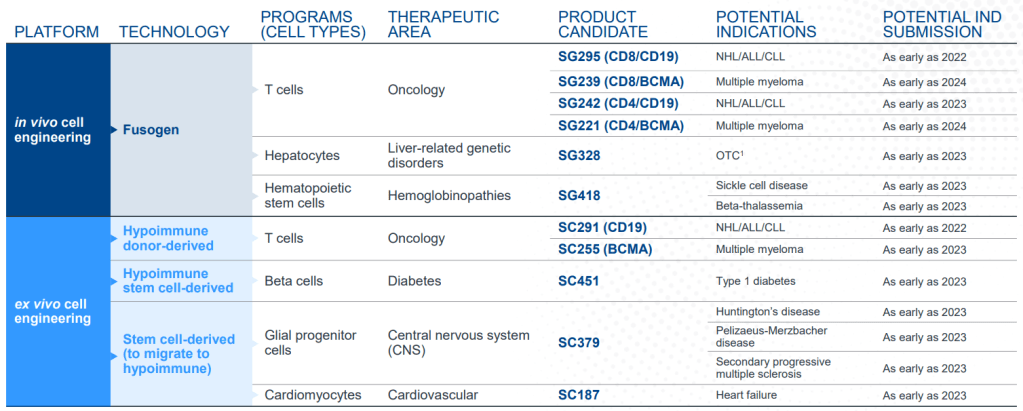
Sana Biotechnology가 2021년 2월에 Nasdaq IPO를 할 때 계획은 2022년에 Fusogen In Vivo Program인 SG295 (CD8/CD19)과 Ex Vivo Program인 SC291 (CD19)이 임상시험에 진입하는 것이었습니다. 하지만 계획과 달리 2022년말까지 한개도 임상시험에 진입하지 못하면서 결국 15% 구조조정을 하게 됩니다. 이 당시에 포기하는 프로그램은 Cardiomyocytes Ex Vivo Program인 SC187만 중단하는 것이었습니다.

Sana reshuffles drug pipeline, becoming latest biotech to cut staff – Biopharmadive 11/30/2022

Sana Biotechnology will cut its workforce by 15% and reprioritize its drug research in a company restructuring announced Wednesday. The Seattle-based biotechnology company, which is developing engineered cell therapies, is taking steps to extend its cash runway, including stopping further investment in a program using cardiac muscle cells to treat heart failure. The workforce reduction will trim its staff by about 75 employees, based on its Sept. 30 headcount of 494 full-time staff. With the layoffs, Sana joins a growing list of biotechs that have been forced to cut payroll this year.

Sana’s lead program, dubbed SC291, is a modified off-the-shelf cell therapy aimed at B cell cancers. The company expects to ask the Food and Drug Administration for permission to start clinical testing this year, with initial data expected in 2023. Sana is also planning to advance two other programs into trials next year, and another two in 2024.

With the restructuring, the company anticipates it will have enough cash to fund operations into 2025. Sana held $511 million in cash at the end of the third quarter. While that amount would be a comfortable sum for some companies, Sana spends heavily on research and development. R&D expenses totaled $76 million in the third quarter, and $222 million across the first nine months of the year.

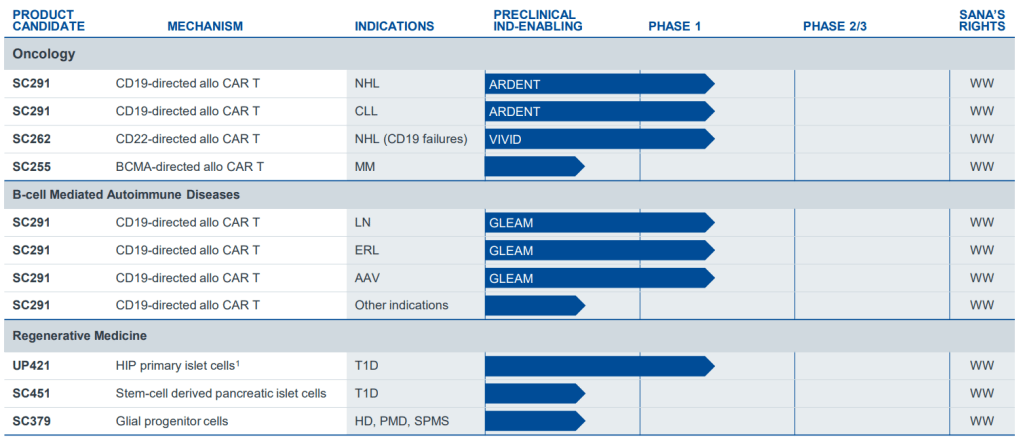
구조조정 후 1년이 지난 이후에도 임상진입을 하지 못한 채 Preclinical-Stage에 머물게 되었고 유상증자를 할 수 있는 상황도 되지 못한 나머지 결국 Fusogen In Vivo Program 전체를 중단하면서 29% 인력구조조정을 단행하게 됩니다.

Sana edits plans again, retreating from in vivo CAR-T delivery and laying off 29% of staff to cut costs – Fierce Biotech 10/11/2023

 Plans to get in vivo and ex vivo therapies into humans as early as 2022 slipped, and Sana narrowed its focus and laid off 15% of its staff late last year.

Eleven months later, and weeks after confirming cuts “within a single area of research,” the biotech has revealed it is reducing its head count by 29%. Sana ended June with 424 full-time employees, suggesting the layoffs will affect more than 100 people.

The cuts come as the biotech narrows its focus again. Last year, Sana dropped a heart failure program but kept investing in ex vivo candidates targeting CD19, CD22 and BCMA, an in vivo CD19-targeted CAR-T and a stem-cell-derived pancreatic islet cell therapy for patients with Type 1 diabetes. Now, the biotech has abandoned plans to take its in vivo CAR-T candidate into the clinic.

Pulling back from in vivo delivery represents a major pivot from Sana’s early ambition. When the biotech went public, in vivo programs made up the top half of its pipeline and were scheduled to enter human testing around the same time as the ex vivo assets. Sana pitched in vivo delivery as a way to avoid the cost and complexity of ex vivo CAR-T production and eliminate the need for conditioning regimens

Around 30 months later, Sana has abandoned plans to study its in vivo candidate in humans and has a pipeline led by an ex vivo, allogeneic CAR-T that requires patients to receive conditioning chemotherapy. 

The biotech will continue “focused research” on its in vivo platform, but the priority is now getting a set of ex vivo assets to clinical data drops. Sana began a phase 1 trial of the CD19-directed CAR-T SC291 in B-cell malignancies in May and aims to start delivering data this year. Submissions to study SC291 in autoimmune disorders, islet cells in diabetes and a CD22 CAR-T in leukemias are planned for this year.

Sana’s submission schedule positions it to deliver clinical data on three candidates in multiple settings next year. The latest restructuring extended the biotech’s cash runway “further into 2025,” suggesting it has time to deliver data that could renew investor enthusiasm for its assets—or report underwhelming results that send it deeper into the mire.

Sana Biotechnology가 2021년 2월에 Nasdaq IPO할 당시에 제시한 파이프라인에서 Fusogen In Vivo Platform은 전체 파이프라인의 절반에 해당했을 뿐만 아니라 ex vivo program보다 앞에 내세워질 만큼 경영진의 피치에서 중요한 부분이었습니다.

하지만 2번째 구조조정을 마친 2024년 2월에 발표한 Corporate Presentation에서 Fusogen은 완전히 사라졌습니다.

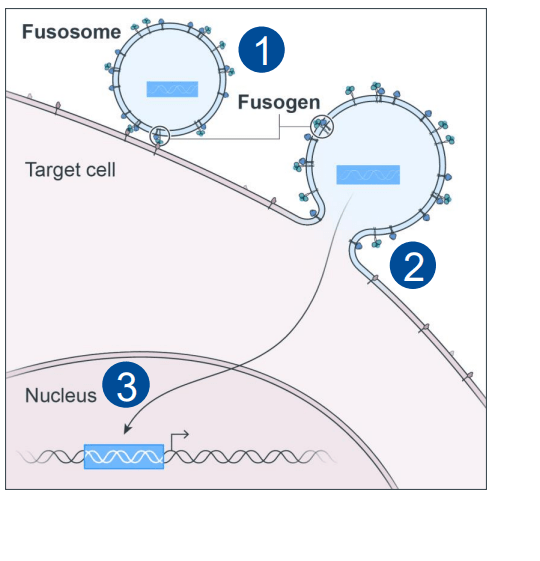
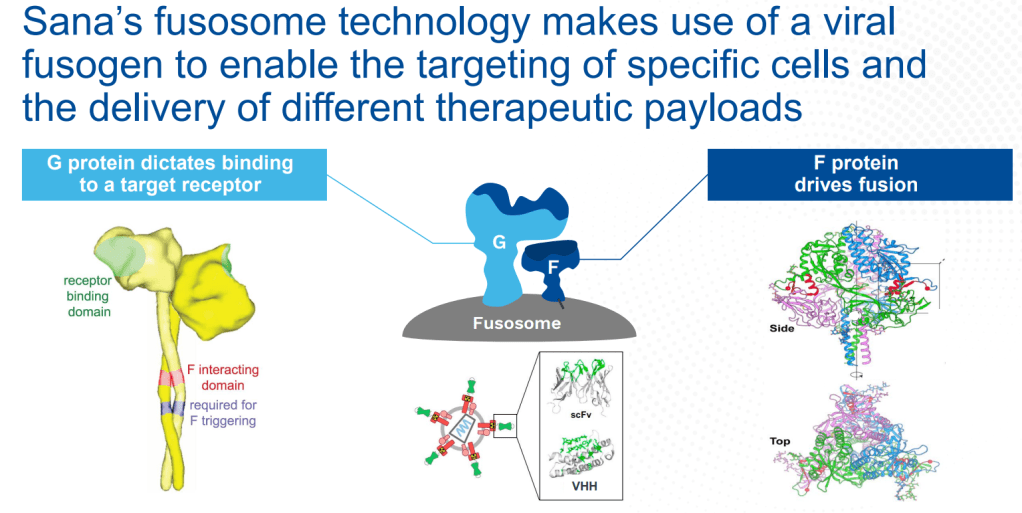
Fusogen Program이 중단된 배경이 Fusogen 자체의 Biology Risk나 Technology Risk 때문인지 여부는 아직 알려진 바가 없습니다. Fusogen에 대해 가장 최근에 발표한 자료는 2023년 12월에 있었던 ASH 학회에서 발표한 것입니다. Fusogen Technology는 G Protein과 F Protein을 통해서 Cell-Cell Fusion을 일으키는 메카니즘입니다.

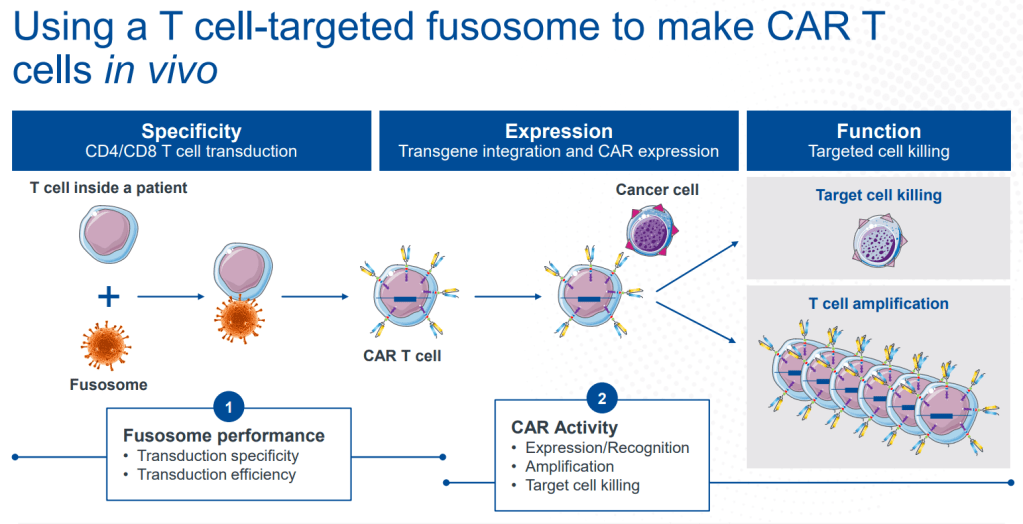
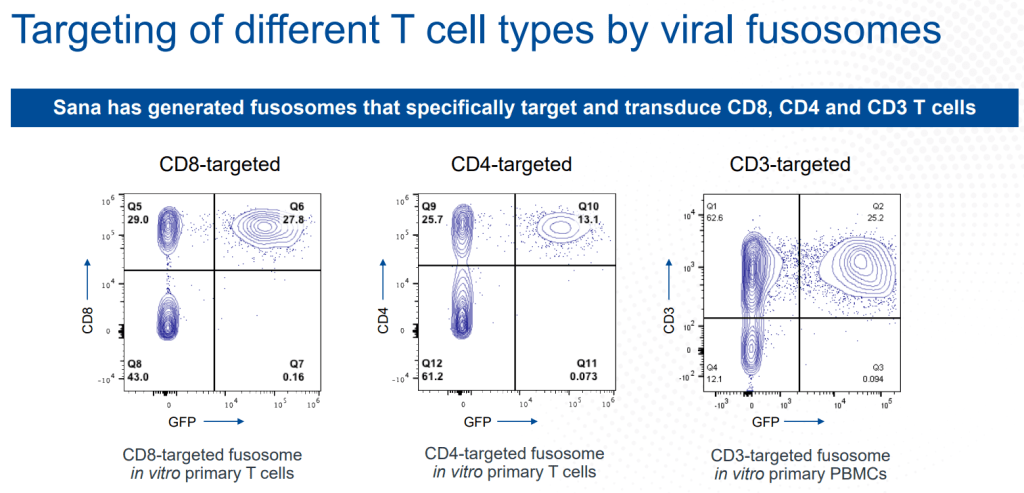
CD8, CD4, CD3 와 같은 T Cell Types에 Fusogen이 선택적으로 발현하는 것을 In Vitro primary T Cells에서 보고한 바 있습니다.

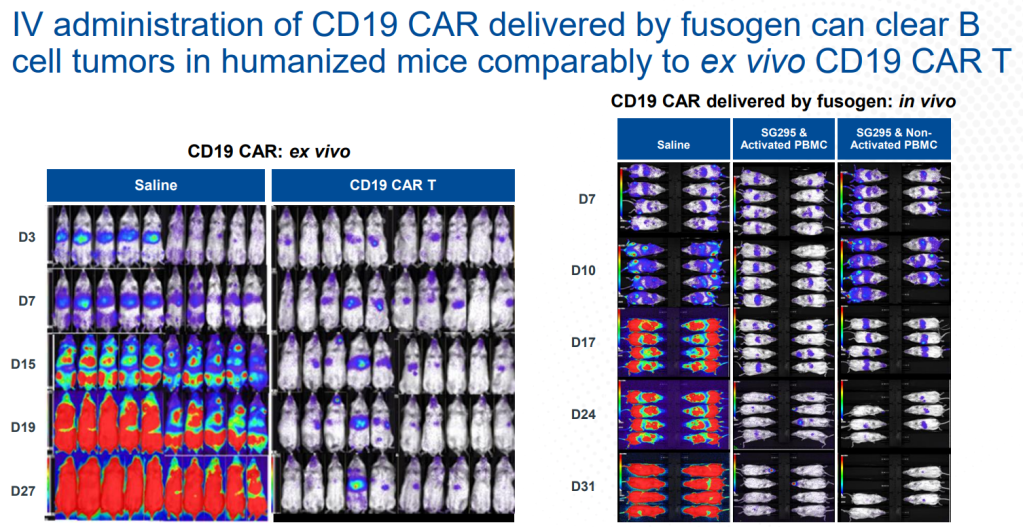
그리고 Humanized mouse model에서 ex Vivo CD19 CAR-T와 비교했을 때 Fusogen CD19 CAR-T가 B cell tumor를 사라지게 한 것이 확인된 바 있습니다. 이것이 Mouse PoC data였습니다.

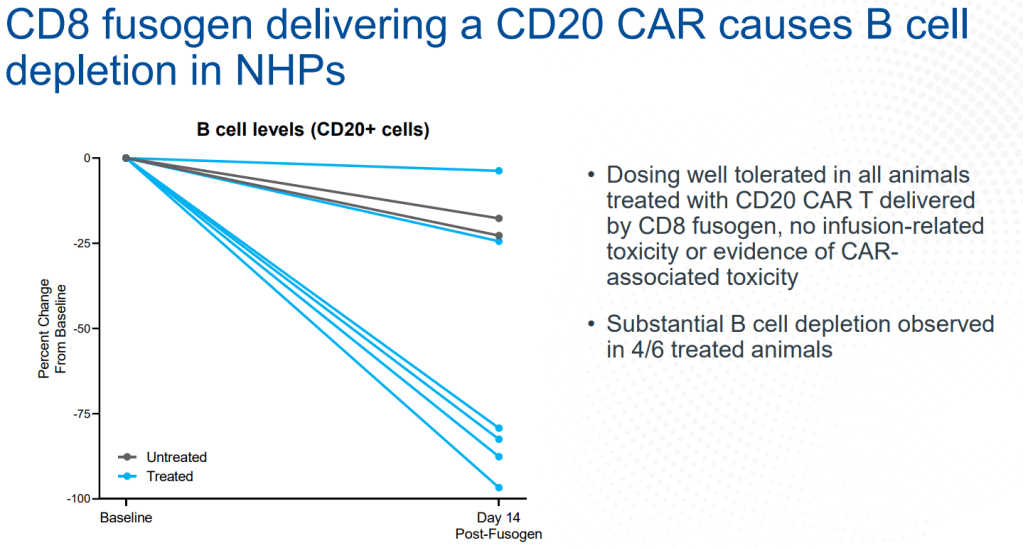
CD8/CD20 CAR-T를 Fusogen In Vivo Delivery 한 NHP 시험에서도 B cell depletion을 볼 수 있었습니다.

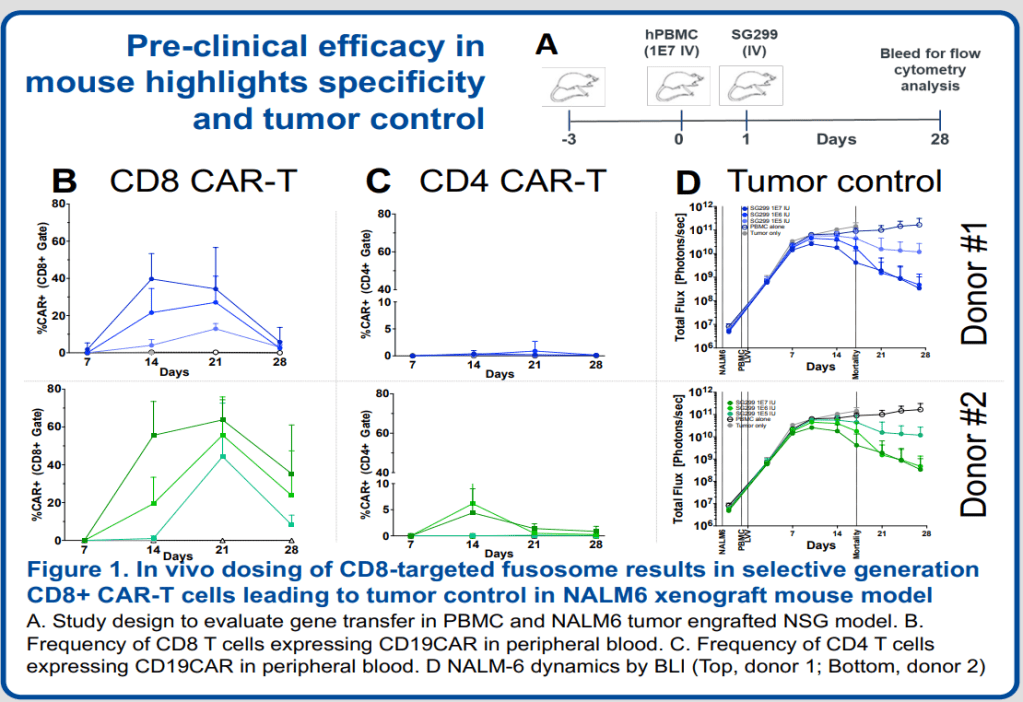
ASH 학회에서 발표한 자료에서는 먼저 NALM6 xenograft mouse model을 통해서 CD8 CAR-T와 CD4 CAR-T를 비교했을 때 CD8만 선택적으로 항암작용이 있는 것을 볼 수 있었고요.

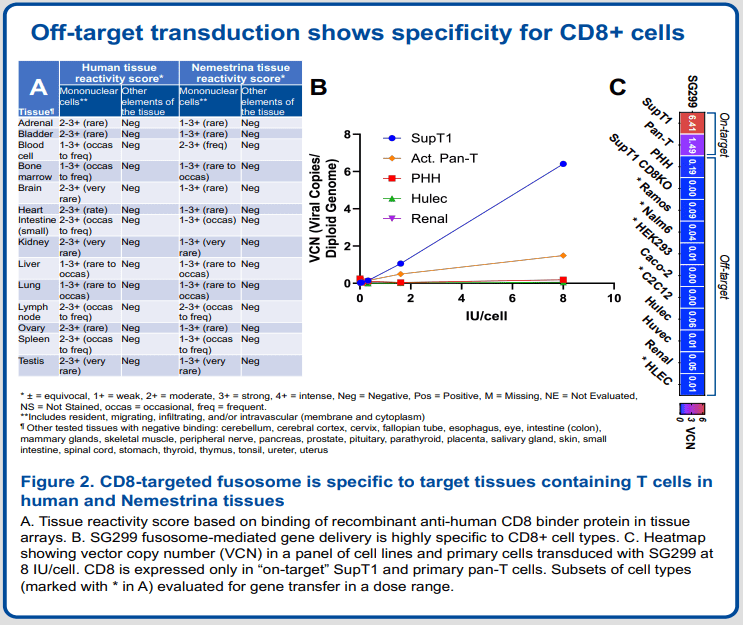
Fusogen이 T Cell에 거의 선택적으로 전달되는 것을 볼 수 있었습니다.

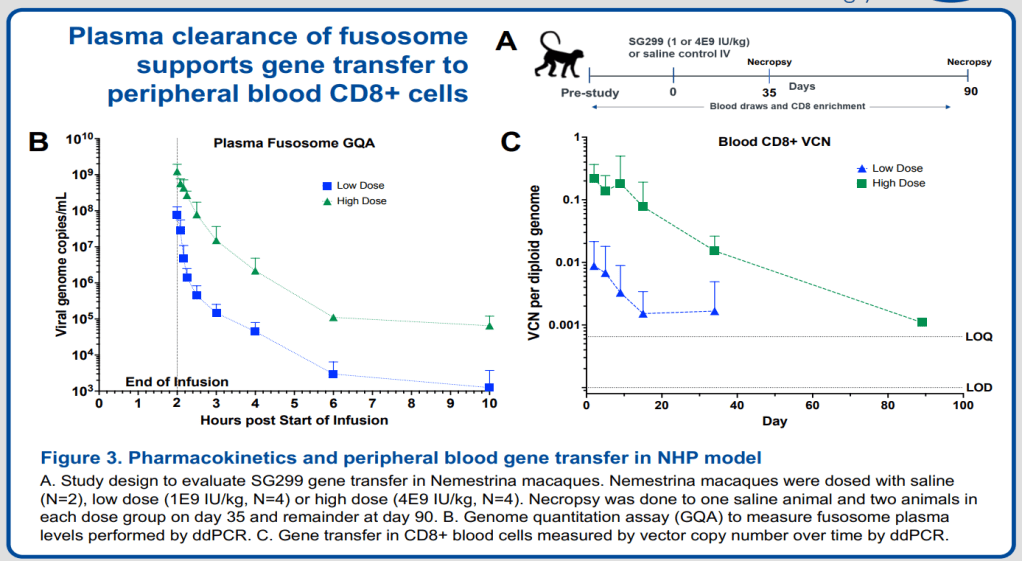
NHP PK를 봤을 때 plasma에서는 High dose의 경우 Fusogen이 10시간 이상 잔류하였고 CD8+는 100일 (3개월)까지도 유지되었습니다.

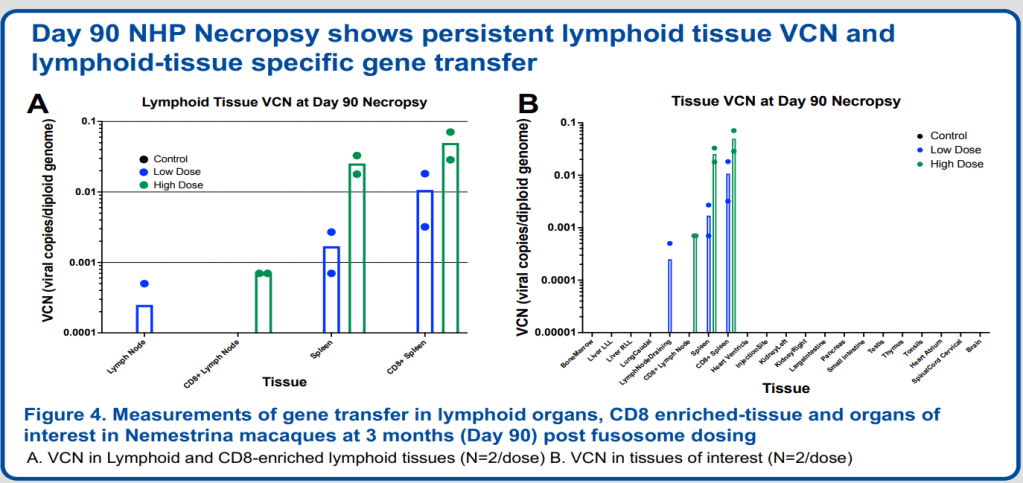
90일 이후에 NHP Necropsy를 했을 때 Gene Transfer가 Lymphoid-tissue specific하게 이루어졌슴을 알 수 있습니다.

약효나 PK 측면에서는 발표한 데이타를 참고해서 보았을 때 특이한 문제는 발견이 되지 않았는데요. 대신 독성에 대한 데이타는 발표한 것이 없어서 혹시 세포독성의 문제가 있지 않은지 의심해 볼 수는 있는 것 같습니다.

같은해 상반기에 있었던 AACR에서는 Fusogen Pipeline에 대해 4개의 Poster를 발표했었습니다.

  • Preclinical data demonstrate that CD19 CAR T cells generated in vivo by transduction of T cells with CD8-targeted fusosomes have anti-tumor efficacy comparable to ex vivo generated CAR T cells.
  • Improvements in fusosome manufacturing increased SG299 potency at least 50x in preclinical models.
  • IND for SG299 for Phase 1 study in hematologic malignancies expected in 2023.

Fusogen은 AAV와 LNP의 장점을 결합한 개념의 Next-Gen Gene Delivery System으로 주목을 받았고 Sana Biotechnology의 Stealth-mode 회사였던 Cobalt에서도 오랜 기간 연구를 했는데요 많이 아쉽게 되었습니다. Entos Pharmaceuticals도 다른 바이러스 G, F를 이용하지만 Fusogen을 Delivery System으로 쓰고 있어서 이 결과도 함께 보면 좋을 것 같습니다.

BIOTECH (105) Entos Pharmaceuticals: Fusogenix Proteolipid Vehicle (PLV) Platform

BIOTECH (106) Point Biopharma: Precision Radioligand Therapy (RLT)

안녕하세요 보스턴 임박사입니다.

Canada Toronto의 Princess Margaret Hospital의 Prostate Cancer Prevention Center의 대표였던 Neil Fleshner 박사는 2017년에 자신의 환자의 Radioligand 치료를 위해 독일로 보내야 하는 경험을 하게 되면서 Point Biopharma를 설립하고 경영진을 모으게 됩니다. Joe McCann박사를 CEO로, Neil Fleshner 박사는 CMO를 그리고 Michael Gottlieb는 CFO로 해서 Radioisotope supply와 생산기술 등을 전략적 제휴를 통해서 만들어내게 됩니다.

Toronto-founded cancer therapy maker Point Biopharma to list on Nasdaq with SPAC merger – The Globe and Mail 3/15/2021

Point was founded after Neil Fleshner, the Love Chair in Prostate Cancer Prevention at Toronto’s Princess Margaret Hospital, had to send a patient to Germany in 2017 to receive radioligand treatment. He sought to make such therapy more accessible, bringing together a corporate team.

Point Biopharma Launches With Radiopharmaceutical Development Focus – Biospace 2/25/2020

POINT Biopharma, a newly formed pharmaceutical company, is combining a seasoned management team with strategic partnerships in radio-isotope supply, manufacturing technology and novel direct to patient targeting to revolutionize radiopharmaceutical drug development and commercialization. Working closely with its scientific advisors, the Company anticipates commencement of its clinical trial programs in 2020.

Dr. Joe McCann, PhD has assumed the role of Chief Executive Officer.  An industry veteran with more than 10 years of proven radiopharmaceutical experience, Joe was most recently the CEO of Centre for Probe Development and Commercialization.  Dr. Neil Fleshner, an uro-oncologist, with more than 400 authored papers, has assumed the role of Chief Medical Officer and Michael Gottlieb, CPA, the former head of Sanofi Genzyme Canada’s Rare Disease Business joins as Chief Financial and Commercial Officer.

177Lu-PSMA Precision Radiopharmaceuticals인 PNT2002의 임상3상을 시작하면서 $20 Million Series A를 하게 됩니다.

POINT Biopharma Announces Successful USD $20M Series A Financing to Bring Precision Radioligand Therapy to Cancer Patients – Press Release 8/4/2020

“So far 2020 has been a very productive year for POINT,” Dr. McCann continued, “including the announcement of the Phase 3 clinical trial for PNT2002, our 177Lu-PSMA radiotherapeutic for the treatment of metastatic castrate-resistant prostate cancer, as well as the purchase and build-out of our 77,000 sqft radioligand manufacturing facility in Indianapolis, Indiana. Now, with the successful close of our Series A financing, POINT is well positioned to execute on our mission of making radioligands applicable to more cancers, accessible to more people, thereby improving the lives of patients and their families.”

그리고 7개월 후에 SPAC 상장에 의해 NASDAQ에 등록되고 이 때 $465 Million의 자금을 확보하게 됩니다. 이 자금으로 PNT2002의 임상3상과 Manufacturing Facility를 Indianapolis에 세우기 위한 충분한 자금이 확보된 것입니다.

Next-generation Radiopharmaceuticals Company POINT Biopharma to list on NASDAQ through merger with Research Alliance Corp. I – Globe News Wire 3/15/2021

POINT Biopharma Inc. (“POINT”), a late-stage biopharmaceutical company dedicated to bringing the many benefits of precision radiopharmaceutical therapies to patients with cancer, and Therapeutics Acquisition Corp., d/b/a Research Alliance Corp. I (Nasdaq: RACA) (“RACA”), a special purpose acquisition company, or SPAC, sponsored by RA Capital Management, today announced they have entered into a definitive business combination agreement 

A group of top-tier investors has committed to participate in the transaction through a common stock PIPE of approximately $165 million at $10.00 per share. Investors in the PIPE include lead investor RA Capital Management, an affiliate of RACA’s sponsor, as well as Johnson & Johnson Innovation – JJDC, Inc., Surveyor Capital (a Citadel company), Farallon Capital Management, L.L.C., BVF Partners L.P., Boxer Capital, Sphera Healthcare, Woodline Partners LP, Suvretta Capital, Fairmount Funds, and Perceptive Advisors. Assuming no redemptions are exercised, the Combined Company is expected to receive net proceeds of approximately $300 million at the closing of the transaction (inclusive of the trust account balance and the proceeds from the PIPE).

With the funds raised from this transaction, POINT will be well financed to complete our two Phase 3 trials for radioligands to treat prostate and neuroendocrine cancers, advance our early-stage pipeline, and complete construction on our manufacturing facility in Indianapolis, Indiana. 

SPAC 상장 1년여 후 Lantheus와 $260 Million upfront를 포함해서 $1.8 Billion까지 계약을 하고 PNT2002의 상용화 시 20% royalty, PNT2003의 경우는 15% rotyalty를 받을 수 있는 딜을 하게 됩니다.

POINT well made: Lantheus promises up to $2B for 2 of the biotech’s cancer radiopharmaceutical therapies – Fierce Biotech 11/14/2022

Lantheus is paying $260 million upfront for a double bill of licenses for two of POINT Biopharma’s radiopharmaceutical oncology candidateswith another $1.8 billion tied up in biobucks.

Under the agreements, POINT will continue to fund and complete its phase 3 SPLASH trial for PNT2002, a prostate-specific membrane antigen (PSMA)-targeting 177Lu-based radiopharmaceutical therapy for metastatic castration-resistant prostate cancer. After that, Lantheus will work with POINT to file the therapy for FDA approval.

The other candidate is PNT2003, a somatostatin receptor-targeted radioligand in development for gastroenteropancreatic neuroendocrine tumors. POINT will facilitate completion of the ongoing University Health Network-sponsored study in Canada, while Lantheus will prepare and submit the regulatory filings in the U.S.

Should the two assets secure FDA approval and then hit commercial milestones, POINT could be in line for up to $1.8 billion in biobucks plus royalties of 20% and 15% for PNT2002 and PNT2003, respectively.

그리고 1년 후에는 $125 Million의 유상증자를 하게 됩니다. PNT2002의 pivotal clinical trial 및 NDA Filing에 필요한 충분한 자금이 확보되었다고 할 수 있습니다.

POINT Biopharma Prices Public Offering of Common Stock – Globe News Wire 9/13/2022

The gross proceeds to the Company from the offering, before deducting underwriting discounts and commissions and other estimated offering expenses, are expected to be approximately $125 million.

2023년에 Eli Lilly는 준비된 Point Biopharma를 인수하기로 결정하게 됩니다. $1.4 Billion의 시총입니다. 전일 종가에 비해 87% 프리미엄의 좋은 딜이었습니다.

Lilly to Acquire POINT Biopharma to Expand Oncology Capabilities into Next-Generation Radioligand Therapies – PR News Wire 10/3/2023

POINT’s lead programs are in late-phase development. PNT20021 is a prostate-specific membrane antigen (PSMA) targeted radioligand therapy in development for patients with metastatic castration-resistant prostate cancer (mCRPC) after progression on hormonal treatment. Topline data from this study are expected in the fourth quarter of 2023. PNT20031 is a somatostatin receptor (SSTR) targeted radioligand therapy in development for the treatment of patients with gastroenteropancreatic neuroendocrine tumors (GEP-NETs). Beyond the late-stage clinical pipeline, POINT has several additional programs in earlier stages of clinical and preclinical development. Additionally, POINT operates a 180,000-square-foot radiopharmaceutical manufacturing campus in Indianapolis, as well as a radiopharmaceutical research and development center in Toronto. These facilities will be utilized alongside POINT’s extensive network of supply chain partners for sourcing radioisotopes and their precursors.

Lilly will commence a tender offer to acquire all outstanding shares of POINT for a purchase price of $12.50 per share in cash (an aggregate of approximately $1.4 billion) payable at closing. The transaction has been approved by the boards of directors of both companies. The purchase price payable at closing represents a premium of approximately 87% to POINT’s closing stock price on Oct. 2, 2023, the last trading day before the announcement of the transaction, and 68% to the 30-day volume-weighted average price. POINT’s board of directors unanimously recommends that POINT’s stockholders tender their shares in the tender offer.

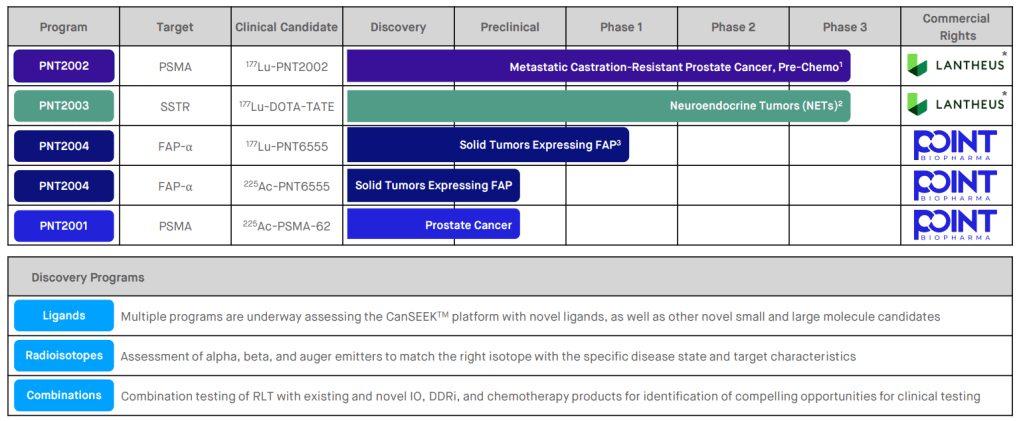
현재의 파이프라인과 2023년 6월 Investor Day Presentation을 아래에 올립니다. PNT2002와 PNT2003은 임상3상에 있꼬 PNT2004는 임상1상을 진행 중에 있습니다.

PNT2002는 Novartis의 Pluvicto의 경쟁제품이 될 것인데 승인이 되어서 전립선암 환자들에게 도움이 되기를 바랍니다.
BIOTECH (104) Novartis: Pluvicto (177Lu-PSMA-617) – the First Precision Radiopharmaceuticals

BIOTECH (105) Entos Pharmaceuticals: Fusogenix Proteolipid Vehicle (PLV) Platform

안녕하세요 보스턴 임박사입니다.
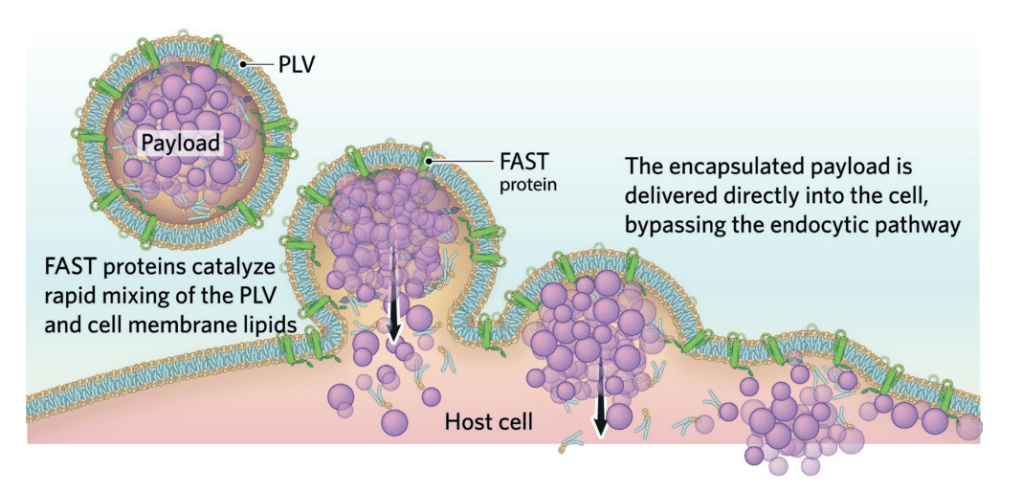
Entos Pharmaceuticals는 Cananda의 Dalhousie University에 있는 Roy Duncan 교수 연구실의 Fusogenic Proteolipid Vehicle (PLV) Delivery Platform을 기반으로 한 Gene Therapy Company입니다.
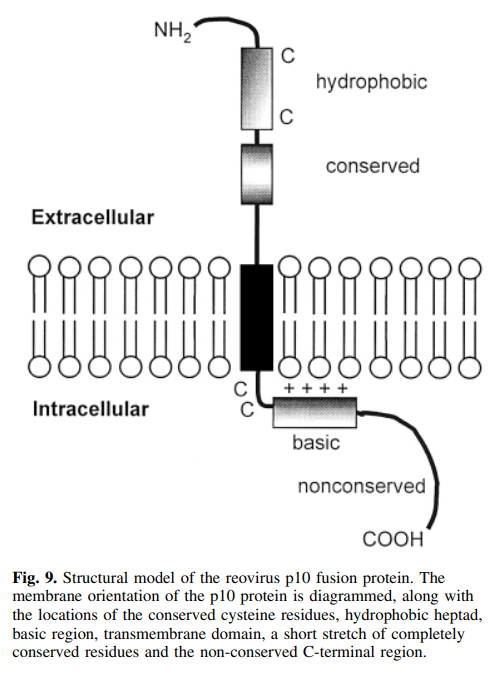
Roy Duncan교수의 Fusogenic PLV Platform은 Roy Duncan 교수가 세운 Fusogenix로 IP가 이전되었다가 Innovascreen으로 합병되어 2010년대에 기술 개발이 이루어집니다. Roy Duncan 교수는 2000년에 Embo Journal에 FAST Protein에 대해 최초로 보고합니다.
Innovascreen and Saint Mary’s University Partner to Advance Novel Brain Cancer Therapeutics – Biospace 2/17/2010

Innovascreen, Inc. Release: Tumor-Targeted Nanoparticles Evaluated Using Aset Platform Featured on the Cover of Small – Biospace 6/27/2011

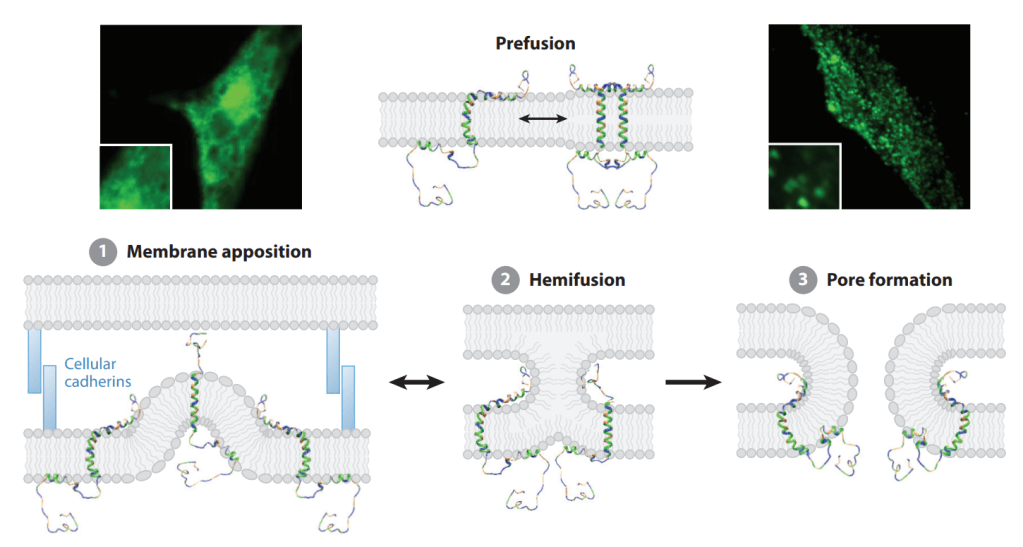
Roy Duncan 교수는 2010년부터 Fusogenic Reovirus를 이용하여 Fusion-Associated Small Transmembrane (FAST) Protein을 개발하였는데 이에 대해 본인이 2019년에 Annual Reviews에 기고한 논문이 있습니다.

Entos Pharmaceuticals Founder이자 CEO인 John Lewis 박사는 학회발표나 논문기고를 통해 Fusogenix FAST를 알리는데 열심히 노력을 했습니다.

COVID-19 Pandemic 기간 동안에 Entos Pharmaceuticals는 Covigenix DNA vaccine VAX-001의 임상을 진행하였습니다.

Aegis and Entos commence dosing in trial of Covid-19 DNA vaccine – Clinical Triasl Arena 4/19/2021

US company Aegis Life has initiated dosing of the first participants in a Phase I/II clinical trial with parent company Entos Pharmaceuticals’ novel DNA Covid-19 vaccine, Covigenix VAX-001, to induce immunity against SARS-CoV-2.

Entos to commence Phase II Covid-19 vaccine trial in South Africa – Pharmaceutical Technology 9/2/2021

Entos Pharmaceuticals has obtained approval from the South African Health Products Regulatory Authority (SAHPRA) to commence a Phase II clinical trial of its Covid-19 vaccine candidate, Covigenix VAX-001, in the country.

Made using the Entos’ Fusogenix proteolipid vehicle (PLV) nucleic acid delivery platform, the deoxyribonucleic acid (DNA) vaccine encodes the SARS-CoV-2 Spike protein. It also includes two genetic adjuvants to induce the innate and adaptive immune systems, offering efficient and long-term protection from Covid-19.

The Fusogenix platform leverages a new mechanism of action to carry molecules directly into the cytosol of intended cells in an intact and unaltered manner.

The latest approval is based on positive Phase I data, which showed that Covigenix VAX-001 met all the safety goals without any serious adverse events noted in the trial.

Entos Pharmaceuticals Passes Significant Enrollment Milestone in Phase 2 Clinical Trial of its COVID-19 DNA Vaccine – Financial Post 9/29/2022

이런 노력의 결과로 최근 BioMarin과 Eli Lilly와 잇달아 연구계약을 맺게 됩니다. 특히 Eli Lilly는 $50 Million Upfront 포함 $400 Million에 exclusive right을 얻게 되어 Eli Lilly가 개발 중인 Nucleic Acid Therapy에 Fusogenix PLV Platform을 사용할 계획입니다.

Entos and BioMarin Enter into Agreement for Product Candidates Incorporating Entos’ Fusogenix Drug Delivery Platform – PR News Wire 11/15/2021

“As a company committed to addressing the unmet therapeutic needs of patients living with genetic diseases, BioMarin values novel technologies that enable the development of transformative therapies,” said Brinda Balakrishnan, M.D., Ph.D., Group Vice President, Corporate and Business Development at BioMarin. “We believe that Entos’ Fusogenix platform offers potentially unique benefits for safe and effective tissue targeting compared with other lipid-based delivery systems. The Fusogenix PLV formulations generated under this agreement are a critical first step in determining how we may incorporate this promising platform into our drug development efforts.”

Eli Lilly taps Entos’ delivery tech in $50M-plus nucleic acid pact – Fierce Biotech 1/6/2022

Entos Pharmaceuticals’ star is rising. Just a few short months after the biotech’s nucleic acid delivery tech helped land a deal with BioMarin, the Edmonton, Alberta-based Canadian company has teamed up with Eli Lilly for $50 million upfront to drive its proteolipid vehicles (PLVs) toward a range of nervous system targets.

Eli Lilly has picked up exclusive right to Entos’ Fusogenix nucleic acid delivery technology, which it will use to research, develop and potentially sell nucleic acid-based therapeutics against targets in the central and peripheral nervous systems, the companies said Thursday.

The deal breaks down like this: Lilly and Entos will collaborate on multiple programs that wed Lilly-supplied therapeutic cargo to Entos’ PLVs. Entos is on deck to generate, develop and optimize those PLVs on its proprietary Fusogenix platform. Lilly will then select PLVs to take into the clinic.

Entos is in line to receive $50 million upfront from the R&D pact, which includes an equity investment in the company by Lilly. Each program under the collaboration could net Entos up to $400 million more in potential development and commercial milestones, plus royalties should any of the products reach the market.

Entos’ PLVs are formulated with so-called fusion-associated small transmembrane proteins, or FAST proteins, plus neutral lipids for better tolerability. Fusogenix, which can be used to deliver a range of therapy types, such as gene therapy, mRNA, miRNA, RNAi and CRISPR, delivers mRNA or DNA into target cells through direct fusion.

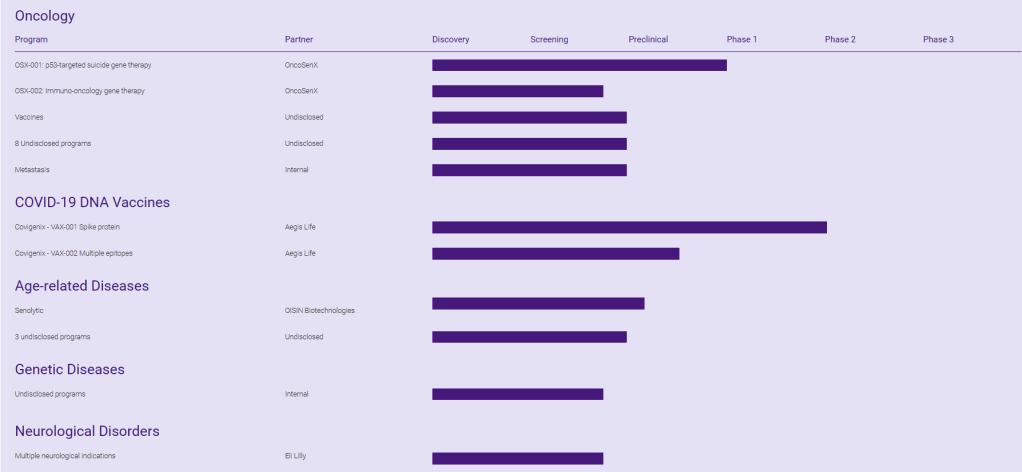
Entos Pharmaceuticals의 Pipeline은 아래와 같습니다. Fusogenix PLV가 Virus Vector나 LNP를 대체할 차세대 Gene Delivery System으로 상용화가 가능할지 주목됩니다.

Image

BIOTECH (104) Novartis: Pluvicto (177Lu-PSMA-617) – the First Precision Radiopharmaceuticals

안녕하세요 보스턴 임박사입니다.

방사선치료는 항암치료의 중요한 부분이지만 비선택적인 문제로 독성 부분이 문제가 되어왔습니다 하지만 최근에 개발된 Radiopharmaceuticals는 특정 암세포 표면항원에 표적함으로써 Precision Radiopharmaceuticals이라는 새로운 분야가 열리고 있습니다. 이를 선도하는 치료제로서 Novartis가 FDA 승인을 받은 Pluvicto (177Lu-PSMA-617) 의 개발 스토리에 대해 글을 적어보려고 합니다.

Pluvicto는 2016년에 독일 University of Heidelberg 의 Clemens Kratochwil 교수팀에 의해 Journal of Nuclear Medicine에 처음으로 보고했습니다. (Picture: Clemens Kratochwil at University of Heidelberg)

2017년 10월에 Endocyte는 ABX GmbH로 부터 Pluvicto (177Lu-PSMA-617)에 대한 exclusive right을 인수하게 됩니다.

Endocyte Announces Exclusive Worldwide License of Phase 3 Ready PSMA-Targeted Radioligand Therapy for Development in Prostate Cancer – Globe News Wire 10/2/2017

Endocyte, Inc. (NASDAQ Global Market:ECYT), a biopharmaceutical company developing targeted therapeutics for personalized cancer treatment,  today announced the completion of an exclusive worldwide license of PSMA-617 from ABX GmbH. Endocyte intends to move quickly into Phase 3 development of 177Lu-PSMA-617, a radioligand therapeutic (RLT) that targets the prostate-specific membrane antigen (PSMA), present in approximately 80% of patients with metastatic castration-resistant prostate cancer (mCRPC).

PSMA-617 was developed at DKFZ (German Cancer Research Center) and University Hospital Heidelberg and exclusively licensed to ABX GmbH in Germany for early clinical development

Pluvicto의 임상2상 결과는 2018년 The Lancet Oncology에 발표되었습니다.

177Lu]-PSMA-617 radionuclide treatment in patients with metastatic castration-resistant prostate cancer (LuPSMA trial): a single-centre, single-arm, phase 2 study. The Lancet Oncology 2018, 19, 825-833. Michael S. Hoffman et al.

그리고 Novartis는 Endocyte를 $2.1 Billion에 인수하게 됩니다.

Novartis to Acquire Endocyte for $2.1B, Expanding RLT Pipeline in Prostate Cancer – Globe News Wire 10/18/2018

Novartis has agreed to acquire Endocyte for $2.1 billion, the companies said today, in a deal that expands the buyer’s radioligand therapy (RLT) pipeline of targeted oncology treatments with a Phase III candidate and several early-stage candidates.

Endocyte’s lead candidate is 177Lu-PSMA-617, a potential first-in-class RLT candidate designed to treat metastatic castration-resistant prostate cancer (mCRPC)

Also in Endocyte’s pipeline are additional RLT candidates that include 225Ac-PSMA-617, now in preclinical studies for the treatment of mCRPC. The company has also applied its SMDC platform to develop chimeric antigen receptor T-cell (CAR-T) adaptor molecules, or CAMs, that are each constructed with one FITC molecule combined with a ligand capable of binding to cancer cells.

Endocyte’s planned acquisition comes a year after it agreed to license the RLT candidate from ABX for up to $172 million-plus, and refocus its development efforts around the prostate cancer treatment.

Four months earlier in June 2017, Sherman oversaw a restructuring in which Endocyte eliminated approximately 40% of its workforce, approximately 30 jobs, leaving it with 47 employees. Endocyte further shrunk its workforce last year, ending 2017 with 44 full-time employees, 33 of whom were engaged in R&D activities, according to the company’s Form 10-K annual report, filed February 27.

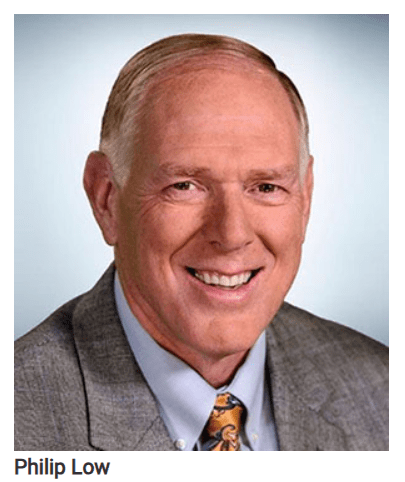
Endocyte의 Purdue University spin off로 창업부터 Novartis M&A까지 성공스토리는 Purdue University에서 자세히 다루었습니다. Endocyte는 Purdue University Philip Low 교수의 연구결과를 상용화하기 위한 목적으로 설립되었고 오랜기간 공동연구를 해 왔습니다. Philip Low 교수는 Umoja Biopharma의 Co-founder이기도 합니다.

BIOTECH (60) – Umoja Biopharma’s in vivo CAR-T Platform

Endocyte becomes first Purdue startup to reach $1.5B in value – Purdue University Press Release 10/3/2018

Founded in the Purdue Research Park, the biopharmaceutical company licensed its first technology through the Purdue Office of Technology Commercialization. Endocyte now has licensed several technologies developed at Purdue, most based on research led by Philip Low, the Purdue University Presidential Scholar in Drug Discovery and the Ralph C. Corley Distinguished Professor of Chemistry. 

A turning point for Endocyte came in the fall of 2017 when the company obtained exclusive worldwide rights from a Germany company to develop and commercialize Lu-PSMA-617, an injectable liquid that targets diseased cells with a beta-emitting radioactive isotope, while bypassing healthy cells. A video about Endocyte’s Lu-PSMA-617 can be viewed here.

“We’re working with Dr. Mike Jensen of the Seattle Children’s Research Institute to advance this CAR-T cell therapy into the clinic for the treatment of osteosarcoma, which is typically a pediatric bone cancer,” Low said. “The CAR-T cell program, like our radioligand therapy program is tumor targeted, and so we believe it could be useful for other types of cancers.”

2018년 8월에 발표한 Endocyte Inc의 Corporate Presentation은 아래에 올립니다. 인수당시 파이프라인은 아래와 같습니다.

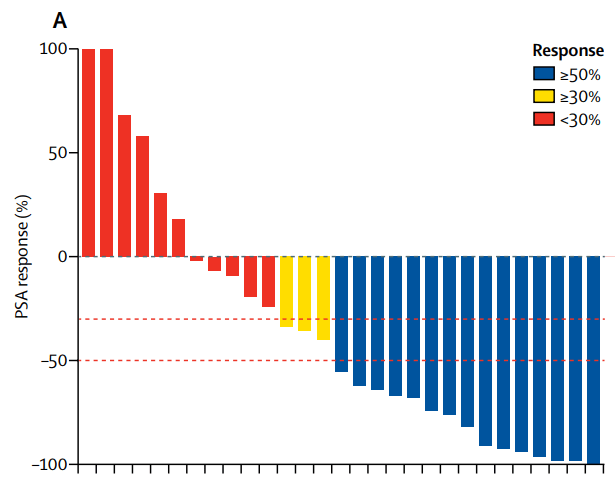
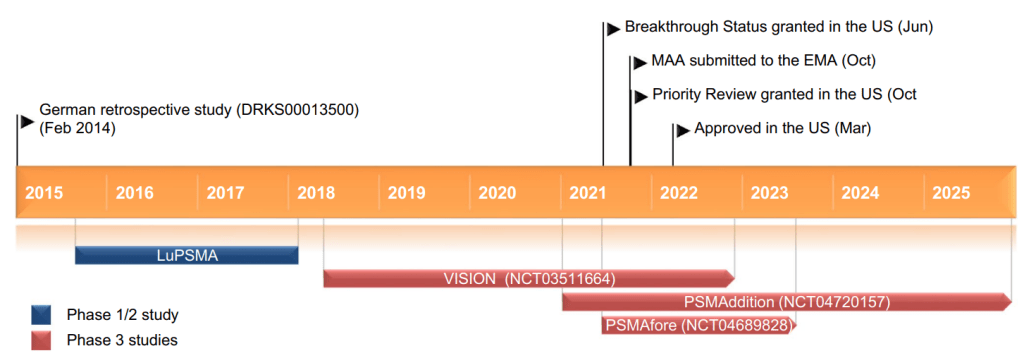
Phase 3 결과는 2021년 New England Journal of Medicine에 보고했습니다.

Novartis wins FDA OK for radiopharmaceutical drug, cashing in on Endocyte deal – Biopharmadive 5/24/2022

Novartis has won Food and Drug Administration approval to sell a radiopharmaceutical designed to treat a form of advanced prostate cancer in a key step forward for an area of research the Swiss drugmaker has prioritized in recent years. The FDA cleared the infusion, known as Pluvicto, based on study results showing it could cut the risk of death and slow tumor growth in some of the sickest patients. U.S. regulators also approved Novartis’s diagnostic imaging agent, Locametz, which is designed to help doctors find patients eligible for treatment with Pluvicto, Novartis said in a statement. Locametz is used in a PET scan to identify men whose cancer expresses a certain biomarker.

Novartis delays FDA filing for in-demand radiopharma drug – Biopharmadive 10/24/2023

Novartis is delaying a regulatory submission for its radiopharmaceutical drug Pluvicto in early prostate cancer following mixed results from a late-stage trial, the company said Tuesday as it reported its third quarter earnings. The Swiss drugmaker now plans in 2024 to ask for Food and Drug Administration approval, rather than by the end of this year.

Data released Monday at a medical meeting suggested trial enrollees who were assigned to take Pluvicto at the beginning of the trial might not be living longer than those who received hormone therapy. But the results were affected by patients in the hormone therapy arm who “crossed over” to receive treatment with Pluvicto when their disease progressed.

Novartis recorded $256 million in Pluvicto sales in the third quarter and $707 million for the first nine months of the year, making it the company’s fastest-growing drug. That growth has been aided by “unconstrained” supply after the FDA’s clearance of manufacturing at a factory in Milburn, New Jersey, which could soon be joined by an Indianapolis site now under FDA review.

Pluvicto는 Supply Chain Issue를 해결하기 위한 많은 노력이 있습니다.

Novartis expands Pluvicto manufacturing footprint with FDA blessing of Indianapolis radiotherapy facility – Fierce Pharma 1/5/2024

Novartis has been compensating for a temporary shortage of Pluvicto with aggressive expansion of manufacturing capacity. The new plant, located in Indianapolis, has won FDA approval to churn out commercial doses of Pluvicto,

Novartis’ radiotherapy production network also includes a Millburn, New Jersey, plant that the FDA cleared to produce Pluvicto for commercial use in April 2023. A site in Ivrea, Italy, has also been supplying the prostate cancer treatment to patients inside and outside the U.S., while a facility in Spain handles ex-U.S. demand.

Further expansions are on the way. Novartis recently unveiled an $85 million plan to build a new radiotherapy facility in China to potentially supply doses for the country starting in 2026. In November, Novartis’ Japan unit said it will invest $100 million in a factory in Sasayama to support radioligand therapy production.

First approved by the FDA in March 2022, Pluvicto quickly became a much-needed option for heavily pretreated patients with PSMA-positive metastatic castration-resistant prostate cancer. Demand exceeded Novartis’ expectations, leading to months of shortages and a halt of new patient starts in early 2023.

Novartis has figured Pluvicto could eventually reach more than $3 billion in peak sales if its late-stage development pans out.

Pluvicto의 Approval Story는 2022년에 Susan Keam에 의해 정리된 적이 있습니다.

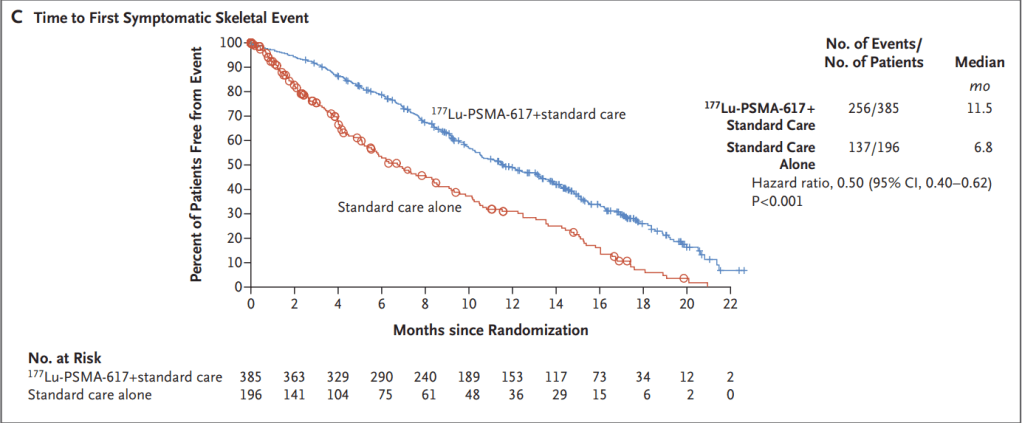
Pluvicto 승인 이후에도 PSMA-targeted Precision Radiopharmaceuticals는 계속 개발 중입니다 이에 대한 임상현황은 아래에 잘 정리되어 있습니다.